Paul Noble
Paul Noble Builds His World One Line At A Time
Artist Spotlight · The Collection Editorial
There are artists who depict the world as it is, and then there are artists who construct entire worlds from scratch. Paul Noble belongs firmly to the second category, and the ambition of that project has never felt more vivid or more relevant than it does right now. With works held in the permanent collections of Tate and the Museum of Modern Art in New York, and a practice that continues to expand from the intimate scale of pencil on paper into monumental sculptural form, Noble occupies a singular position in contemporary British art. His is a vision so specific, so complete, and so painstakingly realised that encountering it for the first time feels less like looking at a drawing and more like receiving the keys to a place that has been waiting patiently for you to arrive.
Paul Noble
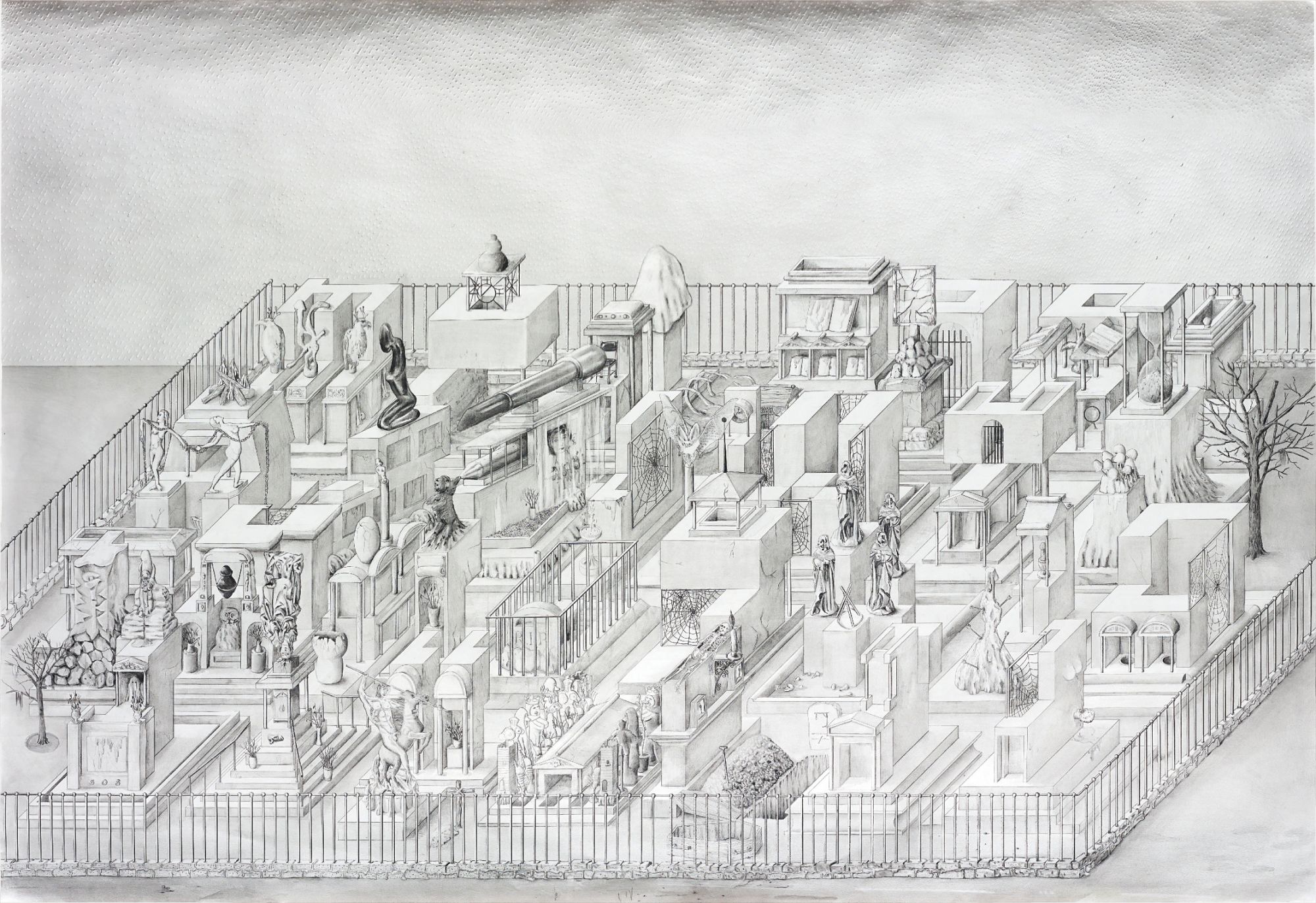
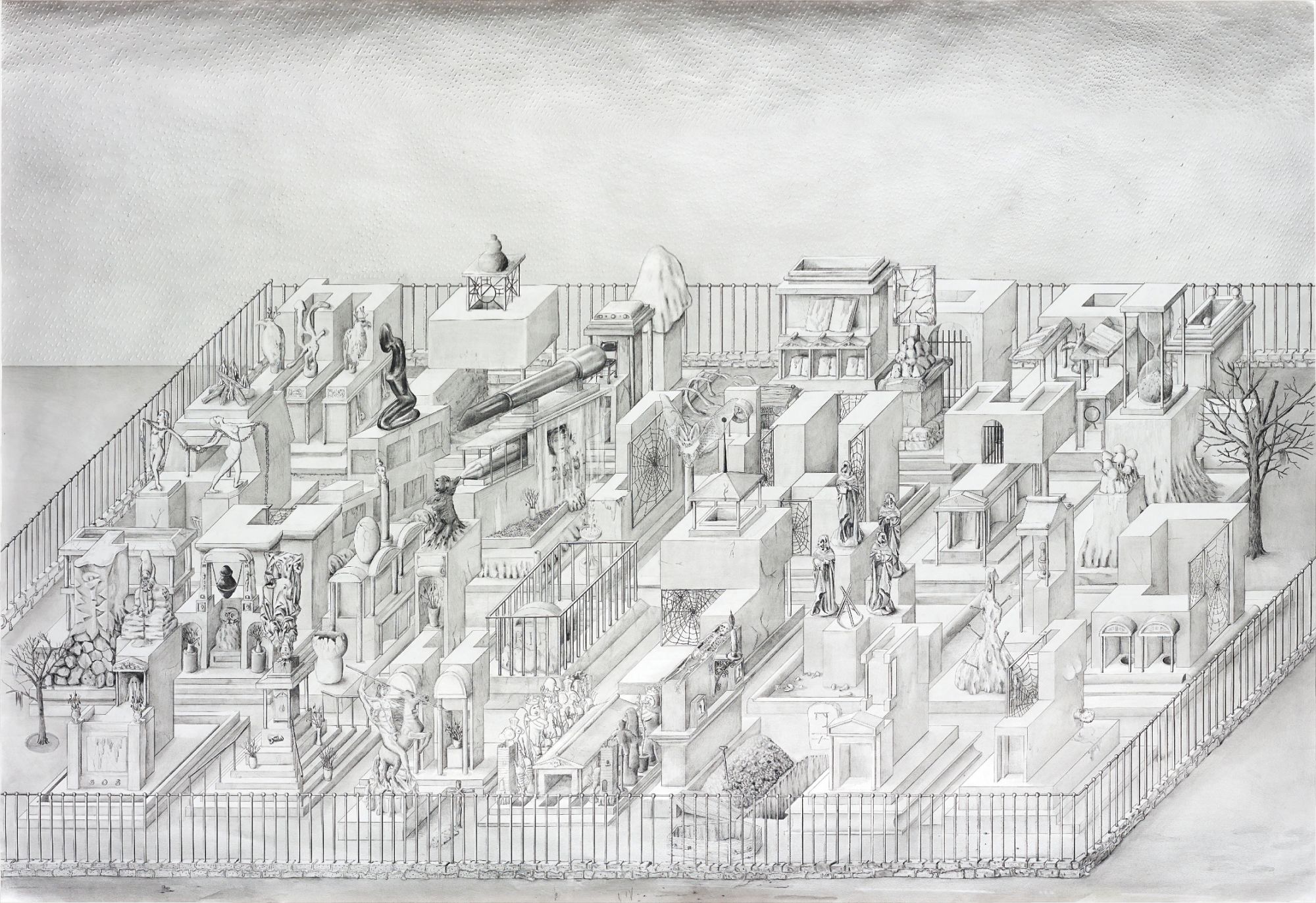
Nobsend
Born in 1963 in Dilston, Northumberland, Noble grew up in the northeast of England, a landscape of dramatic open country and post industrial towns that seems, in retrospect, to have left a deep imprint on his imagination. He studied at Newcastle Polytechnic before moving to London, where in the 1990s he became part of a generation of British artists whose ambition and irreverence reshaped the international conversation about contemporary practice. He was among the founders of City Racing, the influential artist run project space in Vauxhall that operated from 1988 to 1998 and served as an incubator for some of the most interesting art being made in Britain at the time. That spirit of collective endeavour and principled independence has remained a quiet constant in his approach ever since.
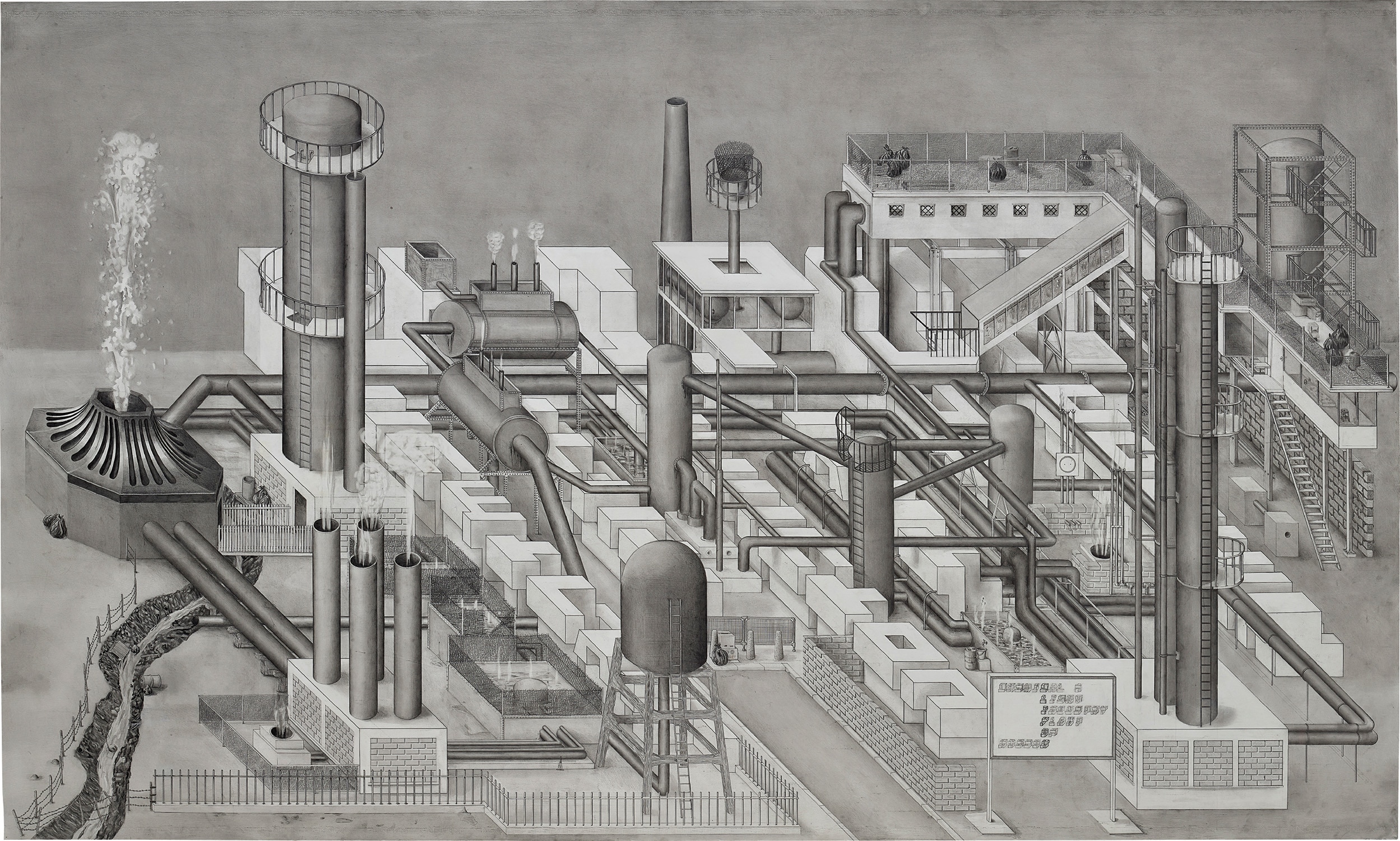
The work that would define Noble's reputation began to take shape in the mid 1990s with the first drawings of Nobson Newtown, a fictional city rendered in isometric projection with a density of invented detail that suggests years of civic planning undertaken by a single obsessive hand. The project is drawn entirely in pencil, which gives each work a quality that sits somewhere between architectural blueprint and visionary manuscript. Nobson Newtown has its own geography, its own logic, and its own alphabet, a bespoke font in which the letters themselves are constructed from the forms of buildings. Works such as Quarry N and C.
Paul Noble
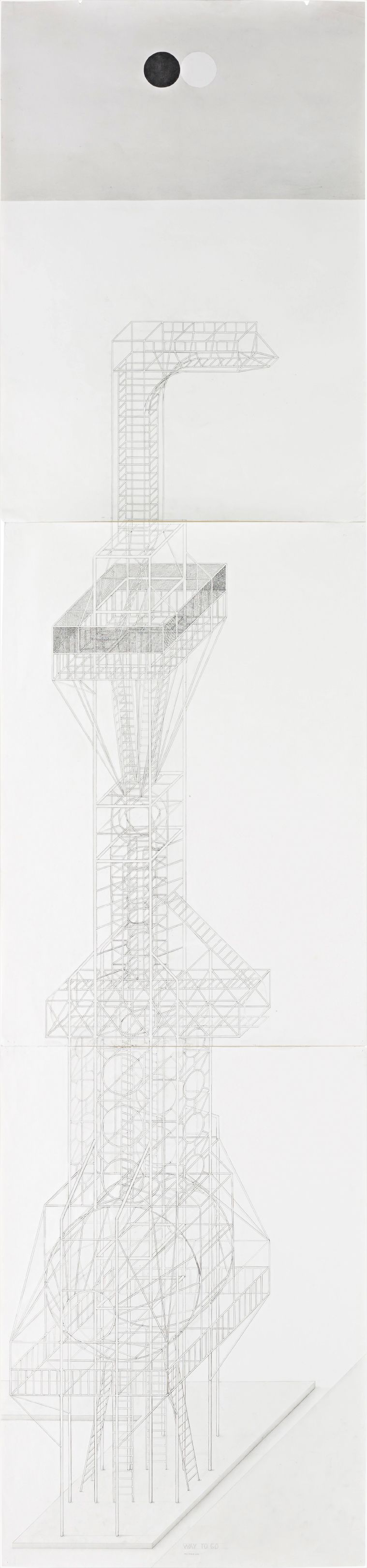
Way To Go
l.i.p.o.
n, both from 1997, established the foundational grammar of this world, introducing the viewer to a place that feels simultaneously utopian and melancholic, rational and absurd. The individual drawings within the Nobson Newtown cycle reward extended looking in ways that few contemporary works can match. Nobsend and Nobwaste explore the peripheral and the discarded zones of this imaginary urban fabric, places where the city trails off into entropy or accumulates its own residue. Way To Go, rendered in pencil on paper, carries the characteristic tonal richness that Noble achieves through sheer accumulation of graphite, building surfaces of almost photographic density entirely through manual repetition.
Paul Noble
C.l.i.p.o.n, 1997
A sun 4 sea 6, from 2005, demonstrates how the project has never been purely architectural in its concerns but has always been alive to landscape, to atmosphere, and to the subtle comedy that runs through all of Noble's thinking. The work Troubadour with Mountain Horn, from 2011, marks something of a pivot, introducing a figurative warmth and a slightly different register of fantasy that signals the expanding emotional range of the practice. In 2012 Noble was shortlisted for the Turner Prize, a moment of institutional recognition that brought his work to a far wider public audience and prompted fresh critical attention to the full scope of what the Nobson project represented. Around this time and in the years following, Noble began to develop a parallel strand of sculptural work, producing large scale objects in materials including Styrofoam that translate the vocabulary of Nobson Newtown into three dimensions.
These sculptures carry the same quality of deadpan invention as the drawings, occupying real space with a kind of confident absurdity that is entirely Noble's own. The move into sculpture did not represent an abandonment of drawing but rather an expansion of the same sustained inquiry into what an imagined place might feel like when you could walk around it. For collectors, Noble's work presents an unusually coherent and compelling opportunity. The Nobson Newtown drawings are not individual works that happen to share a style but genuine chapters in a sustained narrative, which means that acquiring one is also an act of entering into a relationship with the larger project.
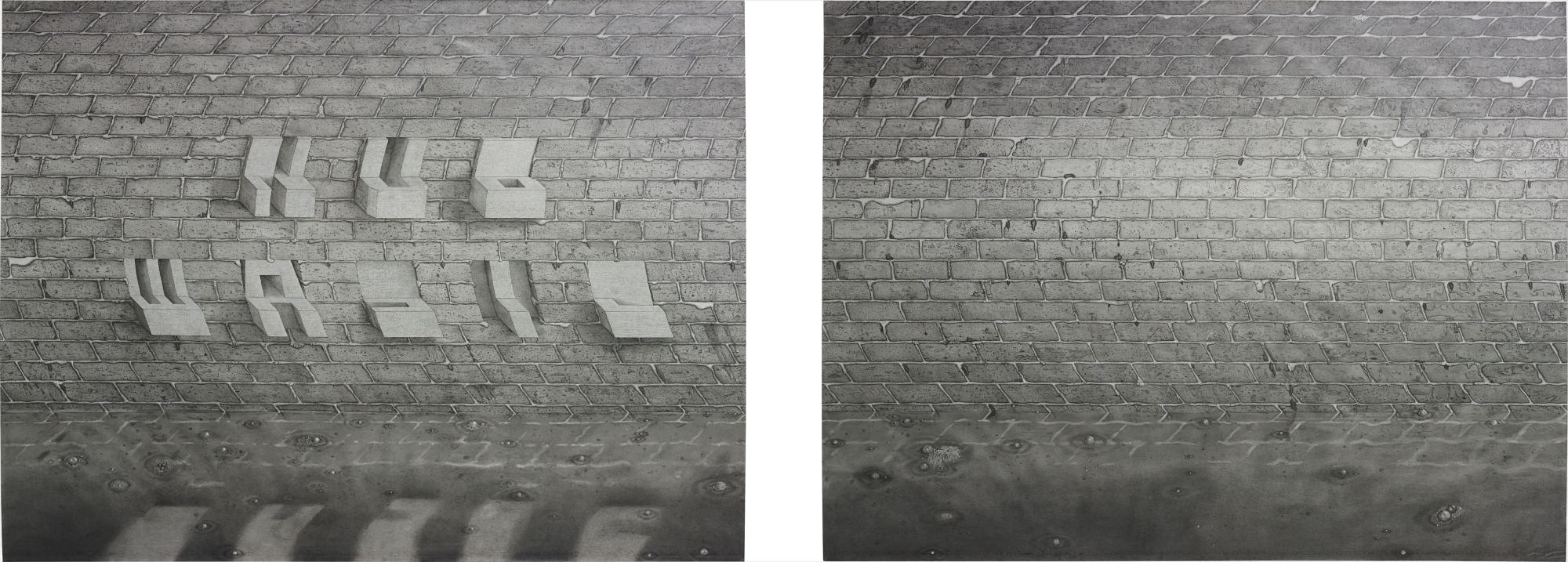
Paul Noble
Nobwaste
Works on paper by Noble, particularly the larger and more architecturally complex compositions, have attracted serious institutional and private attention, and the presence of his work in the collections of Tate and MoMA provides the kind of validation that speaks clearly to the long term seriousness of his practice. Collectors drawn to artists who work with comparable density of imagination and commitment to an invented symbolic world will find productive resonances with the work of Henry Darger, with the architectural drawings of Lebbeus Woods, or with certain aspects of the practice of Mike Kelley, though Noble's particular combination of English wit, draughtsman's discipline, and urbanist fantasy is genuinely without a direct parallel. What makes Paul Noble matter today is precisely the quality that might at first seem most eccentric about his project: its completeness. In an era saturated with imagery produced at speed and consumed even faster, Noble has spent decades building a single world by hand, one pencil mark at a time, with no apparent interest in acceleration.
Nobson Newtown is a place that takes time to make and takes time to understand, and that patience is not a limitation but a statement of values. There is something quietly radical about an artist who responds to the conditions of contemporary life by insisting on slowness, on craft, on the long arc of a project that cannot be summarised in a single image. Noble has built something genuinely rare in contemporary art: a body of work that grows richer the longer you spend inside it.