Paul Gauguin
Gauguin: Color, Vision, and Eternal Wonder
Artist Spotlight · The Collection Editorial
“I shut my eyes in order to see.”
Paul Gauguin, notebooks
There are painters who document the world, and there are painters who reimagine it entirely. Paul Gauguin belongs to the second and rarer category, a visionary whose chromatic boldness and spiritual restlessness permanently altered the course of Western art. His canvases continue to command extraordinary attention at auction and in museum retrospectives alike. In 2022, the Ny Carlsberg Glyptotek in Copenhagen mounted a deeply considered exhibition tracing his years in Polynesia alongside his Scandinavian connections, reminding audiences that Gauguin's reach across cultures was never simply a romantic flight of fancy but a fully considered artistic philosophy.
Paul Gauguin
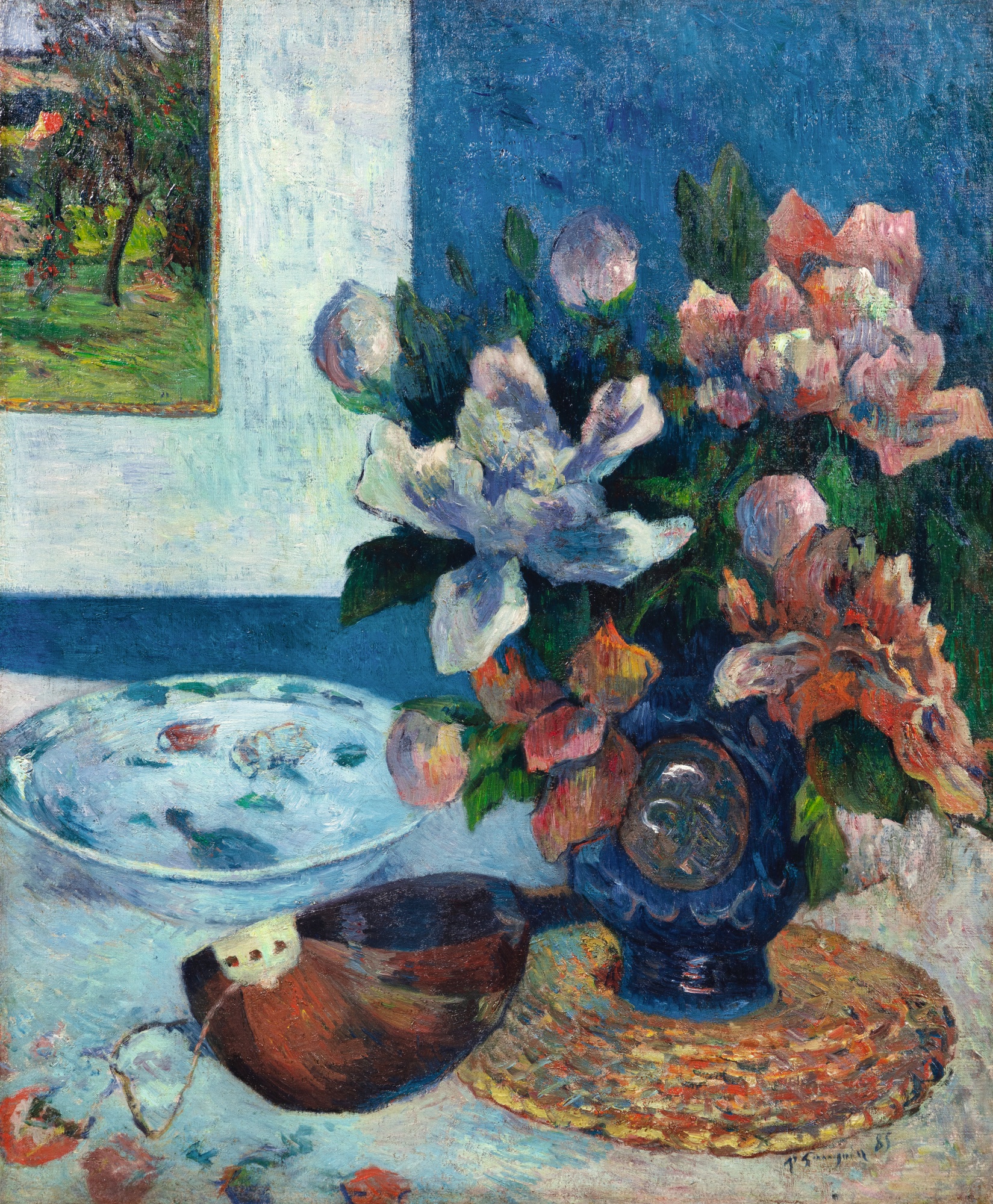
Nature morte avec pivoines de chine et mandoline, 1885
His work endures not as a relic of its era but as a living provocation. Gauguin was born in Paris on June 7, 1848, into a family with roots that stretched far beyond France. His mother, Aline Chazal, was of Peruvian descent, and the family spent several years in Lima during Gauguin's early childhood after his father died during the voyage to South America. This early exposure to a world beyond European conventions planted something in him that would take decades to flower.
He returned to France, spent time as a merchant marine, and eventually settled into a respectable career as a stockbroker in Paris, marrying the Danish Mette Sophie Gad in 1873 and becoming a prosperous, apparently conventional bourgeois. But painting had taken hold of him. During the late 1870s, Gauguin began collecting Impressionist works and painting seriously in his spare time, befriending Camille Pissarro and exhibiting alongside the Impressionists in their shows from 1880 onward. The financial crash of 1882 gave him the excuse, or perhaps the permission, he had long been seeking.
Paul Gauguin
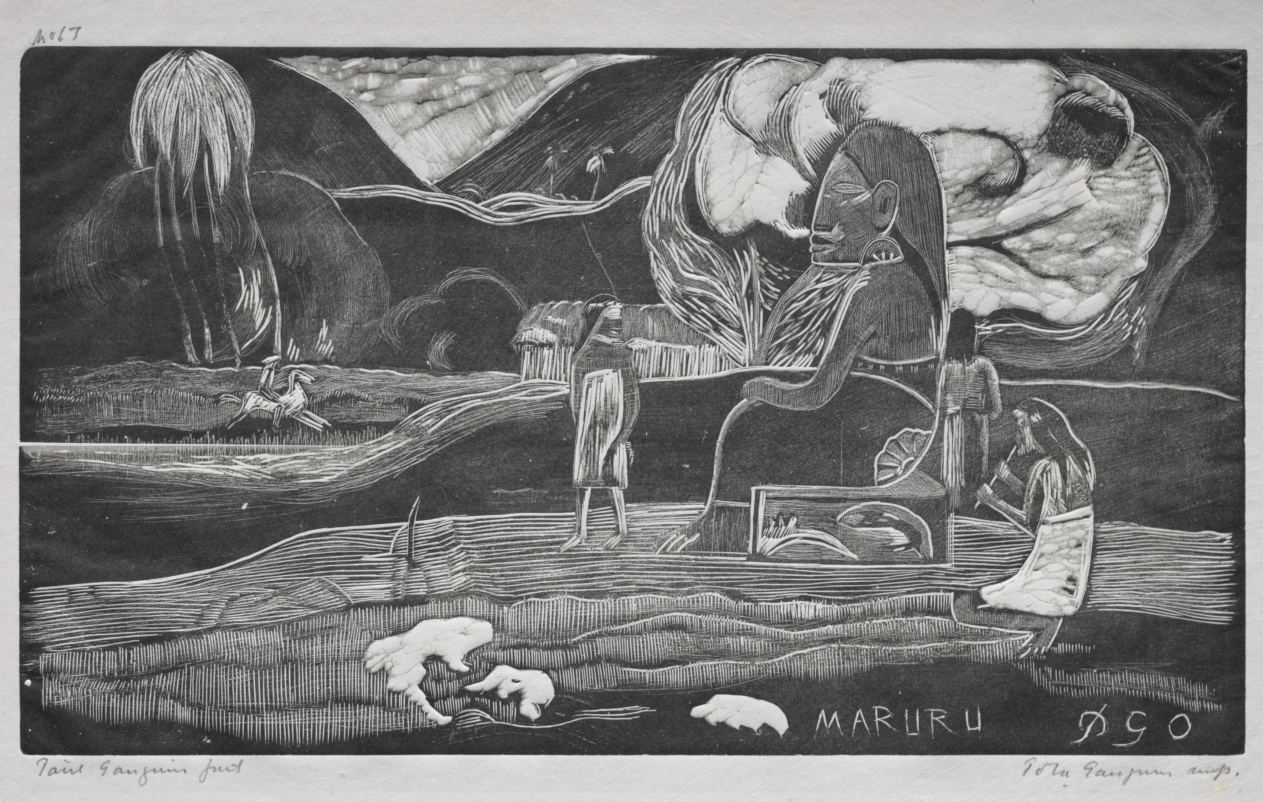
Tahitian Series: Worship, 1893
He left his career in finance and committed himself fully to art, a decision that cost him his marriage and his comfortable life but gave the world one of its most transformative bodies of work. Pissarro remained a mentor and a touchstone, but Gauguin was already searching for something that Impressionism, with its devotion to observed sensation, could not provide. His first great creative breakthrough came in Brittany, where he settled in and around Pont Aven beginning in 1886. The region's ancient Celtic traditions, its devout peasant culture, and its rugged landscape offered Gauguin a sense of primal authenticity he could not find in Paris.
“Art is either plagiarism or revolution.”
Paul Gauguin
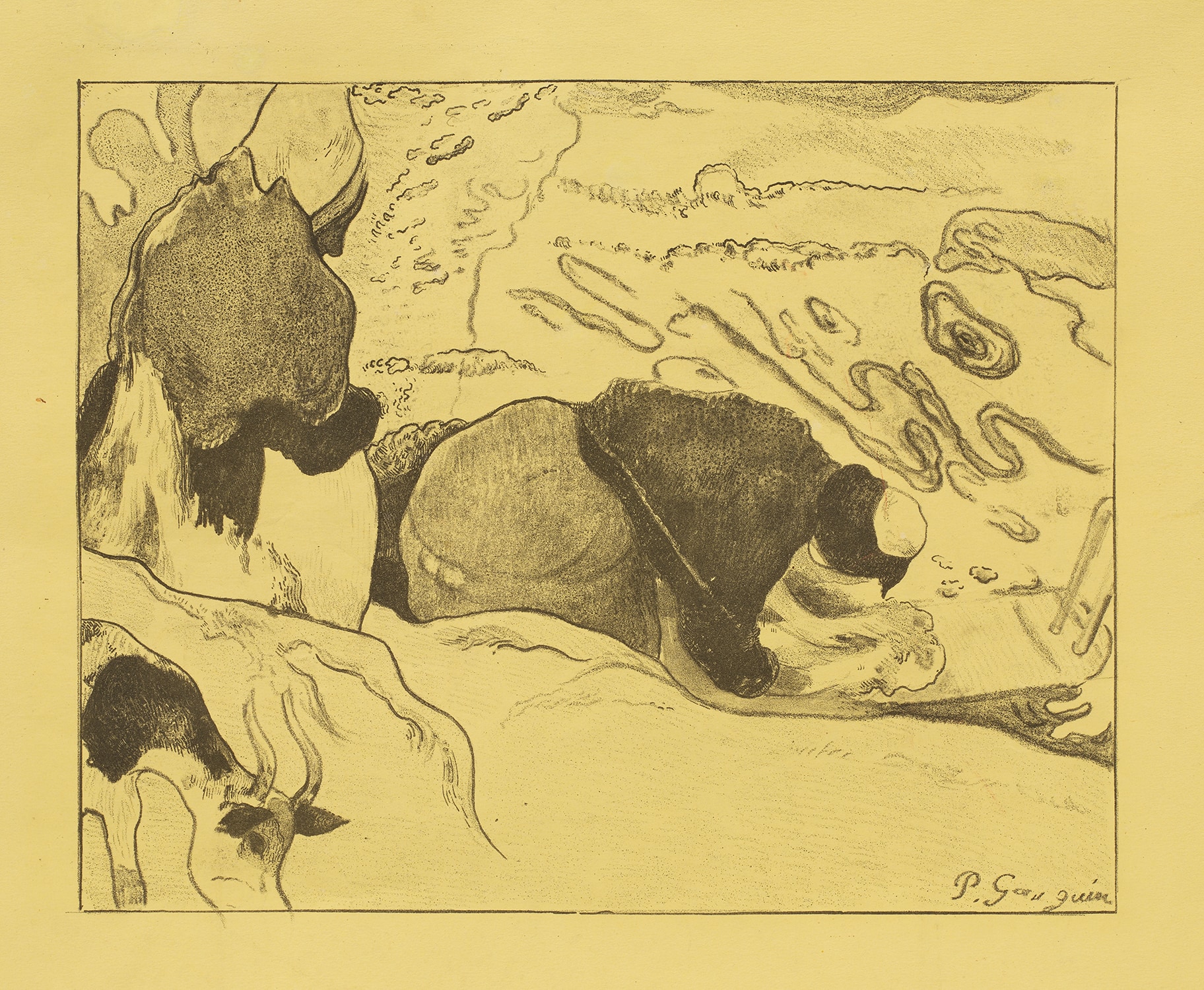
It was here that his style decisively diverged from Impressionism toward what would become known as Synthetism and later Post Impressionism, a method of painting that prioritized bold outlines, flat areas of saturated color, and symbolic or spiritual content over naturalistic representation. His 1889 Volpini Suite, a series of zincograph prints including the luminous Breton Women by a Gate, was shown that year during the Exposition Universelle in a cafe near the official exhibition grounds, a deliberately outsider gesture that announced a new sensibility to anyone paying attention. The prints are characterized by sweeping contour lines and an almost decorative flatness that looks forward to both Art Nouveau and twentieth century modernism. The works on paper Gauguin produced throughout his career reveal a printmaker of exceptional ambition and invention.
Paul Gauguin
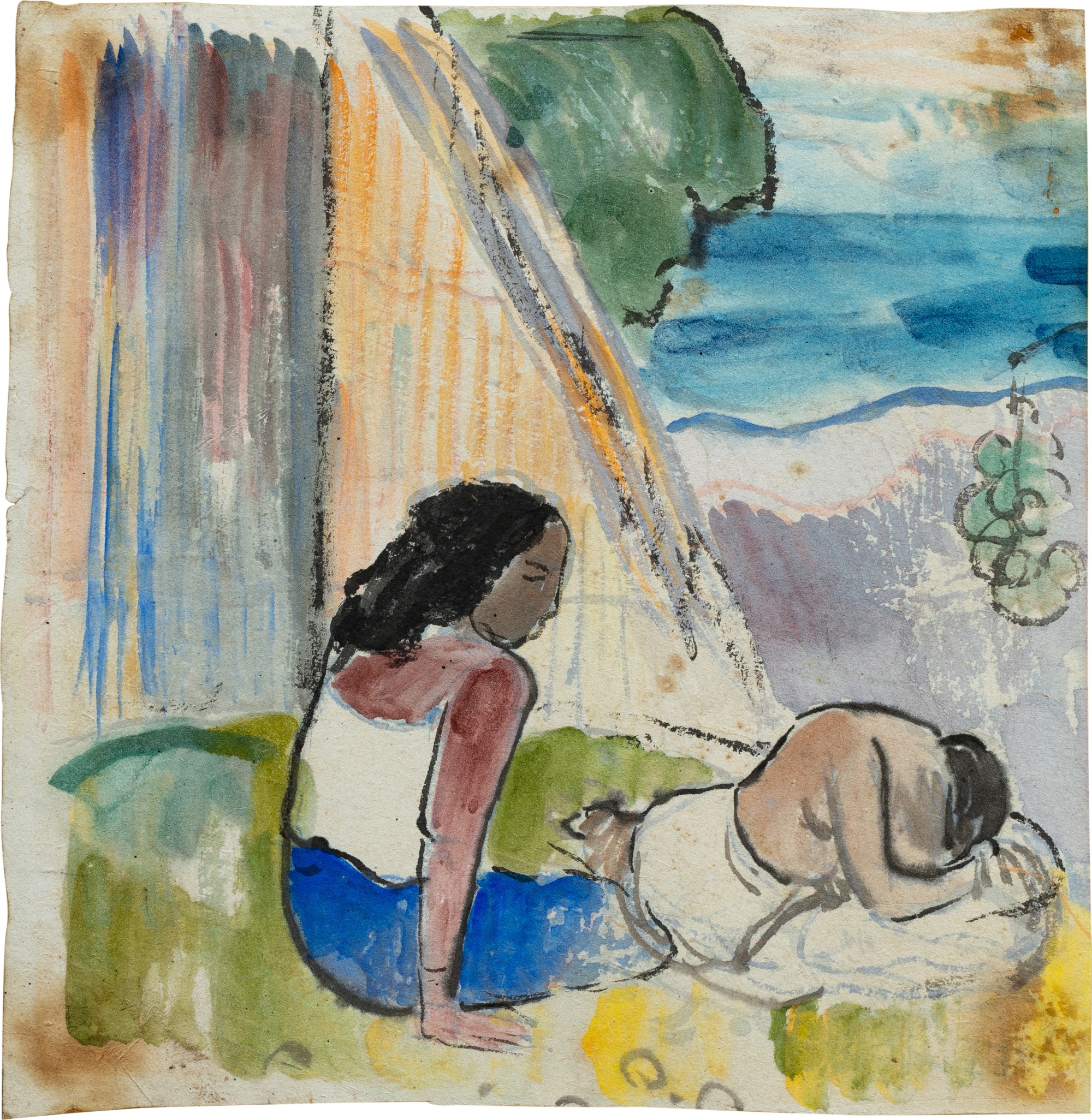
Deux Tahitiennes, 1894
His Misères Humaines lithograph of 1889, part of the Volpini zincograph suite, distills grief and weight into compressed, monumental form. The Portrait of Stéphane Mallarmé, an etching executed in 1891, demonstrates his sensitivity to the literary and intellectual community he inhabited, offering a searching, intimate likeness of the Symbolist poet who was a close friend. And the extraordinary Noa Noa woodcuts, produced after his first Tahitian sojourn, represent perhaps the most radical graphic work of the entire nineteenth century. Pieces like Manau Tupapau, printed in rich brown and black inks with selective wiping to create passages of atmospheric mystery, show a printmaker reinventing the medium from first principles, drawing on Japanese woodblock traditions, Polynesian motifs, and his own ferocious originality.
“In order to do something new we must go back to the source, to humanity in its infancy.”
Paul Gauguin, letters
In 1891 Gauguin sailed for Tahiti, and the paintings that resulted from his two extended stays in French Polynesia are among the most discussed and debated works in the Western canon. Mahana no Atua (Day of the God), painted in 1894 after his return to France and now in the collection of the Art Institute of Chicago, distills his Tahitian vision into a single breathtaking image: a monumental deity presiding over a frieze of figures arranged against bands of color that seem to exist outside of time. The deep greens, saturated pinks, and sonorous purples have no precedent in European painting. Deux Tahitiennes, rendered in gouache, watercolor, and ink, shows a different register: intimate, glowing, and almost tender in its close observation.
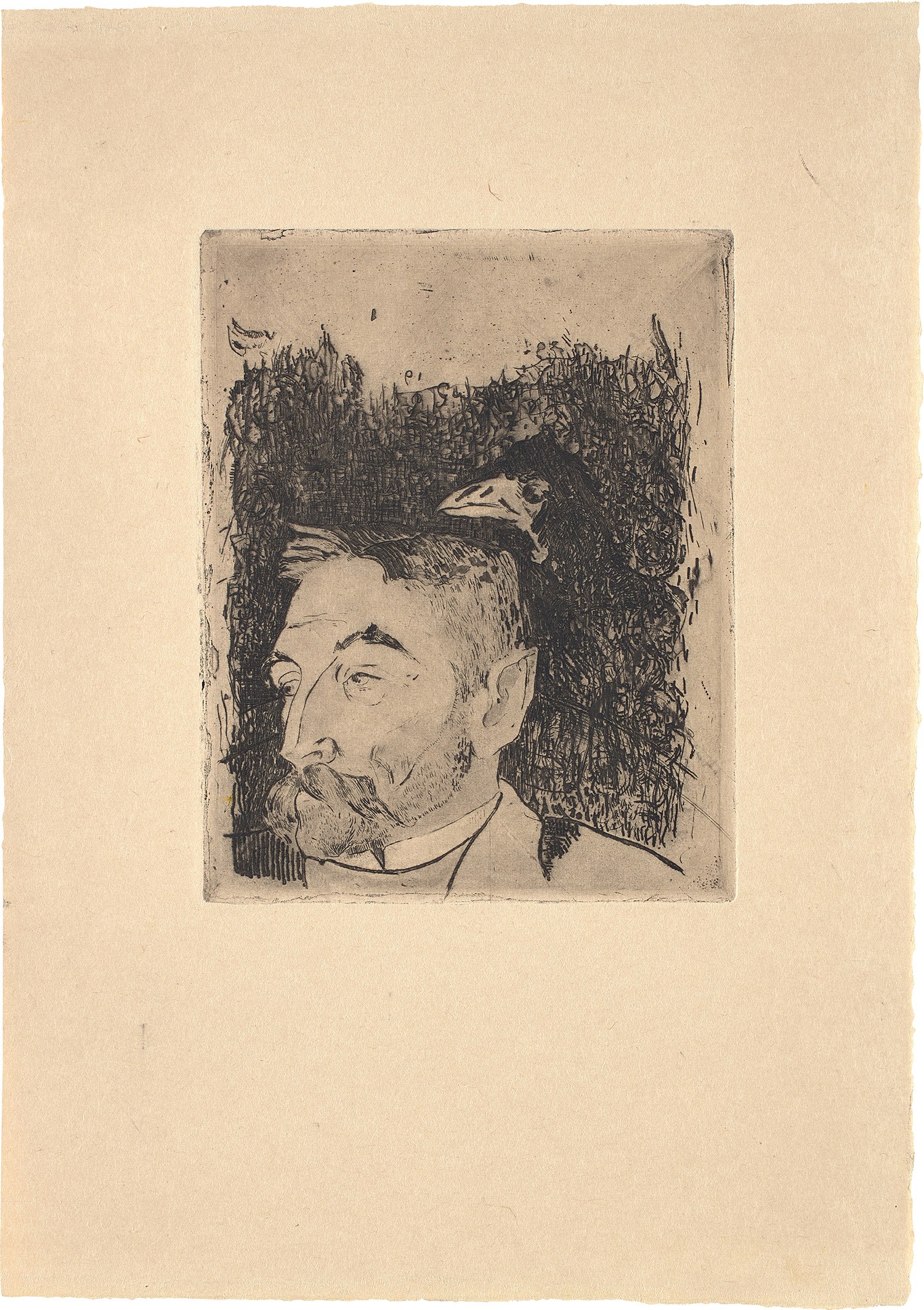
Paul Gauguin
Portrait de Stéphane Mallarmé (G. 14, M./K./J./S. 12)
These are works that reward sustained looking, revealing new relationships between figure, ground, and color with each encounter. For collectors, Gauguin represents one of the supreme prizes of the Post Impressionist canon, and works across all media command serious market attention. His paintings at major auction houses regularly achieve figures in the tens of millions, with his Tahitian period canvases drawing the fiercest competition. But the works on paper and prints, which are represented so richly on The Collection, offer a genuinely compelling entry point into his achievement.
These are not secondary works. The Noa Noa Suite woodcuts were conceived as integral artistic statements, produced in small editions and printed with extraordinary craft and intentionality. Collectors drawn to the graphic arts who engage seriously with Gauguin will find works that are historically pivotal, visually stunning, and far more accessible than his major canvases. The monotype Le Moulin David of 1894 exemplifies this: a singular, unrepeatable impression that carries all the directness and urgency of his hand.
To understand Gauguin's place in art history is to trace an almost unbroken line of influence across the twentieth century. His flattening of form and elevation of color as expressive rather than descriptive tools flow directly into Matisse and the Fauves, into the Expressionists of Die Brücke, and onward into the color field painters of mid century America. Vincent van Gogh, with whom Gauguin shared an intense and ultimately turbulent time in Arles in 1888, absorbed and transformed his ideas about symbolic color. Paul Cézanne, though a very different temperament, shared his conviction that painting must reach beyond appearances toward underlying structure.
These three figure together as the founding generation of modern painting, and among them Gauguin is arguably the most radical in his refusal of European pictorial convention. What draws us to Gauguin today, beyond the spectacle of his biography, is the seriousness of his spiritual searching and the uncompromising quality of his visual intelligence. He asked painting to carry the weight of meaning, mythology, and feeling that he believed modern European life had abandoned. Whether working on a zincograph in a Paris studio or carving a woodblock in Tahiti, he brought the same total commitment to making images that could reach beyond language.
The Collection's holdings across his paintings, prints, and works on paper offer an exceptional window into the full range of this ambition, from the intimate still life Nature Morte avec Pivoines de Chine et Mandoline of 1885, a quiet harbinger of things to come, to the thunderous spiritual landscapes of his Polynesian maturity. To collect Gauguin is to invest in one of art history's most transformative conversations, one that remains very much alive.
Explore books about Paul Gauguin
Paul Gauguin: A Life
Axel Madsen
Gauguin
Henri Perruchot
The Life and Work of Paul Gauguin
Charles Estienne
Gauguin: Life, Art, Inspiration
Michael Jacobs

Paul Gauguin: Letters to His Wife and Friends
Paul Gauguin
Gauguin's Paradise Lost
Frank Auerbach
The Spiritual Image in Modern Art
Sixten Ringbom
Gauguin and Impressionism
Christopher Lloyd