Paul Feiler
Paul Feiler: Light Made Luminous and Still
Artist Spotlight · The Collection Editorial
There are painters whose reputations grow quietly, accumulating depth the way light accumulates in a well made canvas, and Paul Feiler is among the finest of them. In recent years, major British institutions and the specialist auction houses have turned fresh attention toward the St Ives generation, and Feiler has emerged from that renewed scrutiny not as a peripheral figure but as one of its most philosophically rigorous voices. His work sits in significant public collections across the United Kingdom, and the sustained interest from discerning private collectors speaks to something that goes beyond period charm or regional association. These are paintings that ask to be sat with, returned to, and reconsidered across a lifetime of looking.
Paul Feiler
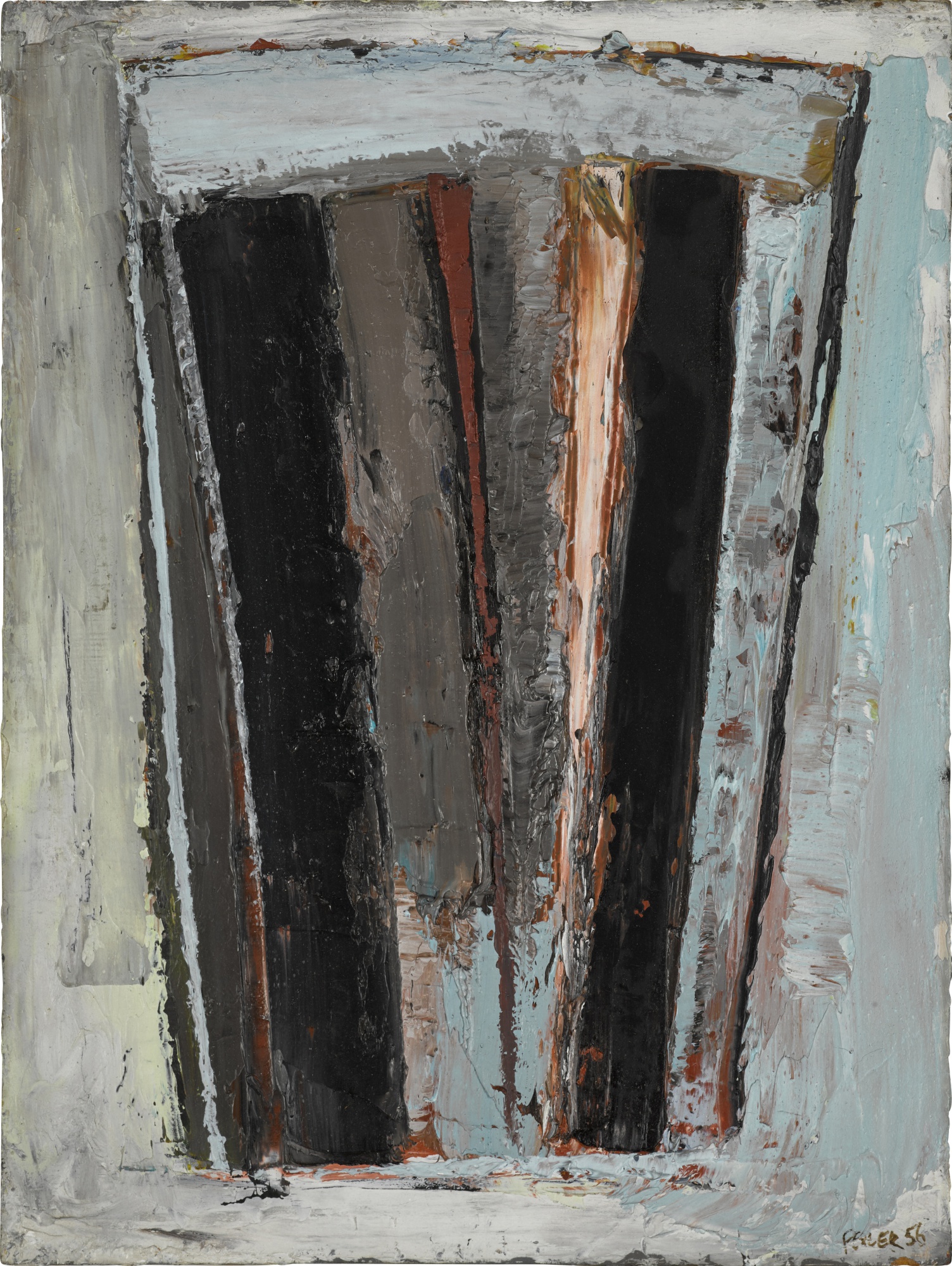
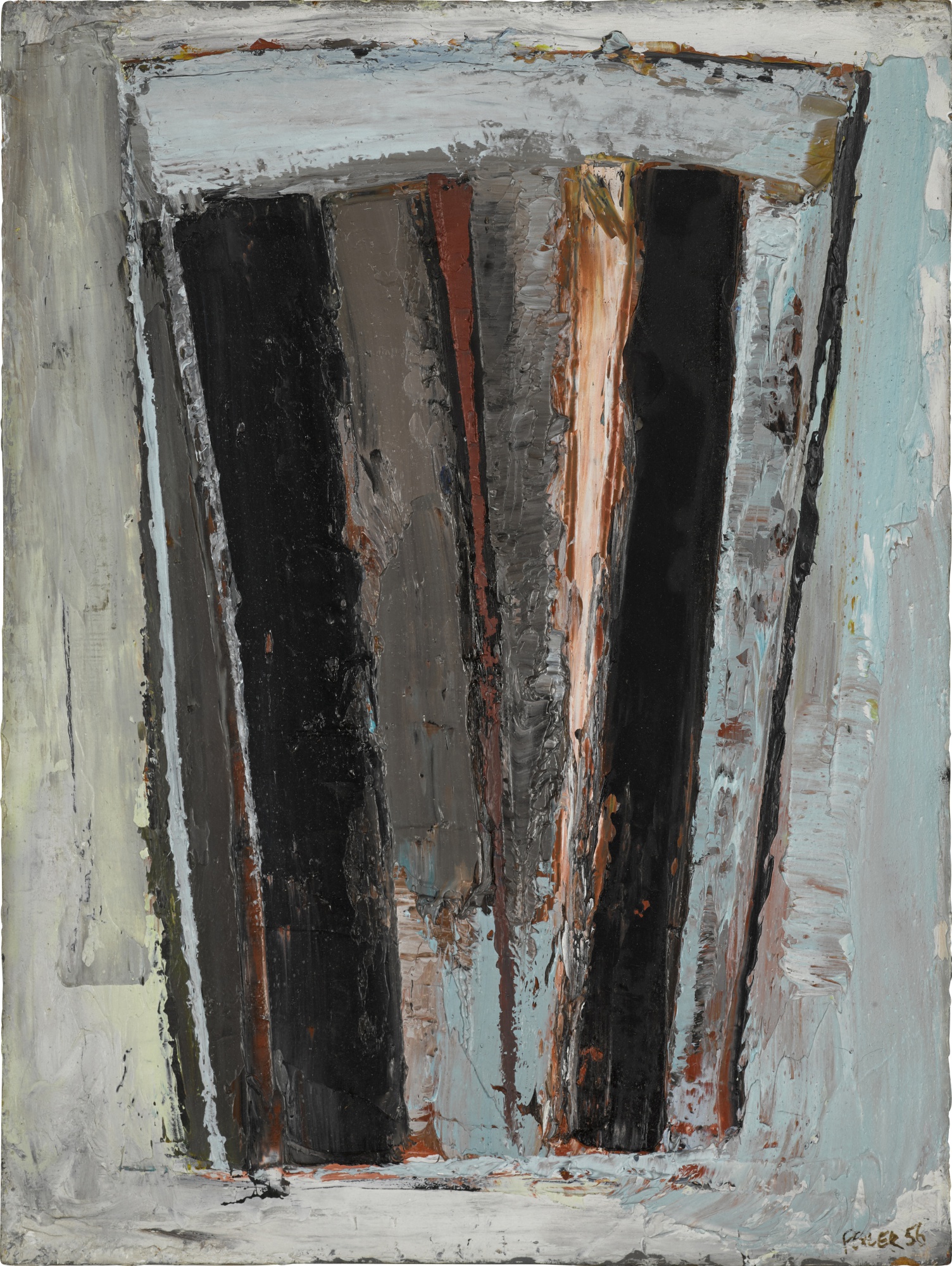
Gandria Grey & Black, 1956
Feiler was born in Frankfurt in 1918 into a cultured, assimilated Jewish family, and his early formation was shaped by the sophistication of Weimar Germany before circumstances demanded departure. He arrived in England in 1933, fleeing the rise of National Socialism, and eventually studied at the Slade School of Fine Art in London. The Slade in the late 1930s was a place of serious technical ambition, and Feiler absorbed its lessons in drawing and observation with characteristic thoroughness. He became a British citizen and, in time, a British artist in the fullest sense, though his European inheritance never entirely left the work.
There is a continental seriousness in even his most serene canvases, a sense that beauty has been earned rather than simply found. The decisive move came in 1945 when Feiler settled in Cornwall, eventually making his home and studio at Kerris near Penzance. Cornwall in the postwar decades was one of the most creatively charged landscapes in British art, drawing painters who wanted to think freshly about abstraction, landscape, and the relationship between the two. Feiler became part of that remarkable community centred on St Ives, exhibiting alongside Peter Lanyon, Patrick Heron, Bryan Wynter, and Terry Frost.
Paul Feiler
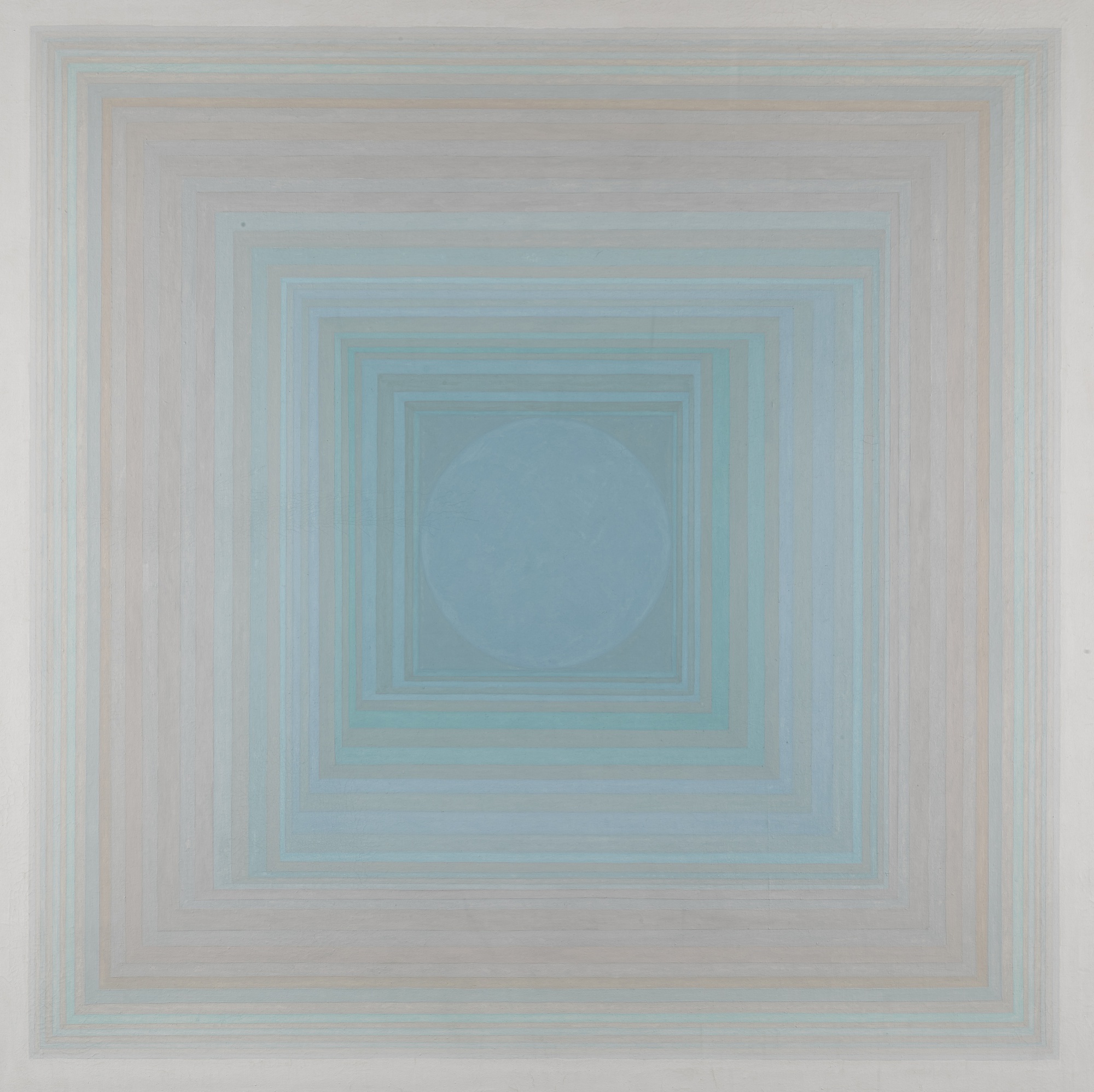
Aduton XXXIV, 1980
Like them, he found in the particular quality of Cornish light, its clarity, its restlessness, and its capacity to transform the most familiar view into something almost metaphysical, a subject that sustained decades of investigation. But where some of his contemporaries moved toward expressive gesture, Feiler gravitated toward stillness and geometric order. The arc of Feiler's development is one of the most coherent and compelling in postwar British art. His earliest Cornish works are post impressionist in sensibility, responding directly to specific places.
Works like Nanjizal, Summer from 1960 and the Boskenna series show a painter who knew these headlands and bays intimately, translating coastal experience into colour and tone with authority. By the mid 1950s, as seen in Gandria Grey and Black from 1956, the landscape references were beginning to dissolve into something more purely pictorial, the forms becoming more compressed, the palette more deliberate. This transition was not a rejection of place but a deepening of it, an attempt to reach what lay beneath appearances rather than describe their surface. By the late 1960s and into the 1970s, Feiler had arrived at the visual language for which he is now most celebrated.
Paul Feiler
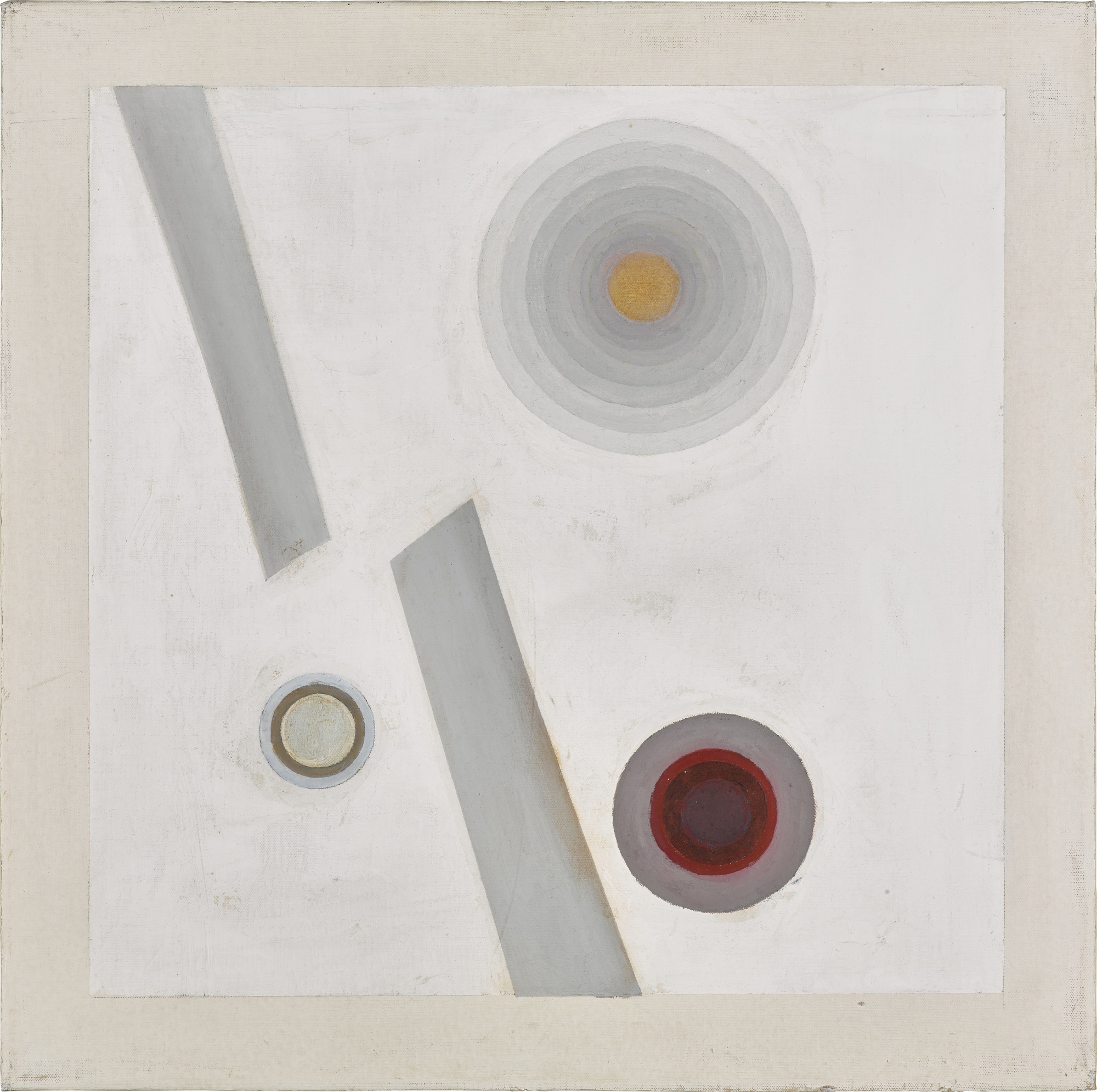
Lunatis V, 1968
Works such as Lunatis V from 1968 and the Aduton series that followed introduce the luminous, symmetrical forms that became his signature. These paintings typically feature a radiant central shape, oval or arch like, sometimes reminiscent of an apse or sanctuary, set against fields of deep, resonant colour. The Aduton series, the title drawn from the Greek word for the innermost sacred space of a temple, makes explicit the spiritual dimension that had always been implicit in Feiler's practice. Aduton XXXIV from 1980 and Aduton XXXVIII demonstrate the extraordinary range he achieved within what might appear, at first glance, to be a restricted formal vocabulary.
Each canvas is in fact a precisely calibrated emotional event. The comparison most often drawn is with Mark Rothko, and it is not unwarranted. Both painters pursued an art of concentrated feeling through colour relationships and the manipulation of light within the picture plane. But Feiler's geometry is more architecturally resolved, his surfaces more physically present through the use of layered oil and mixed media.
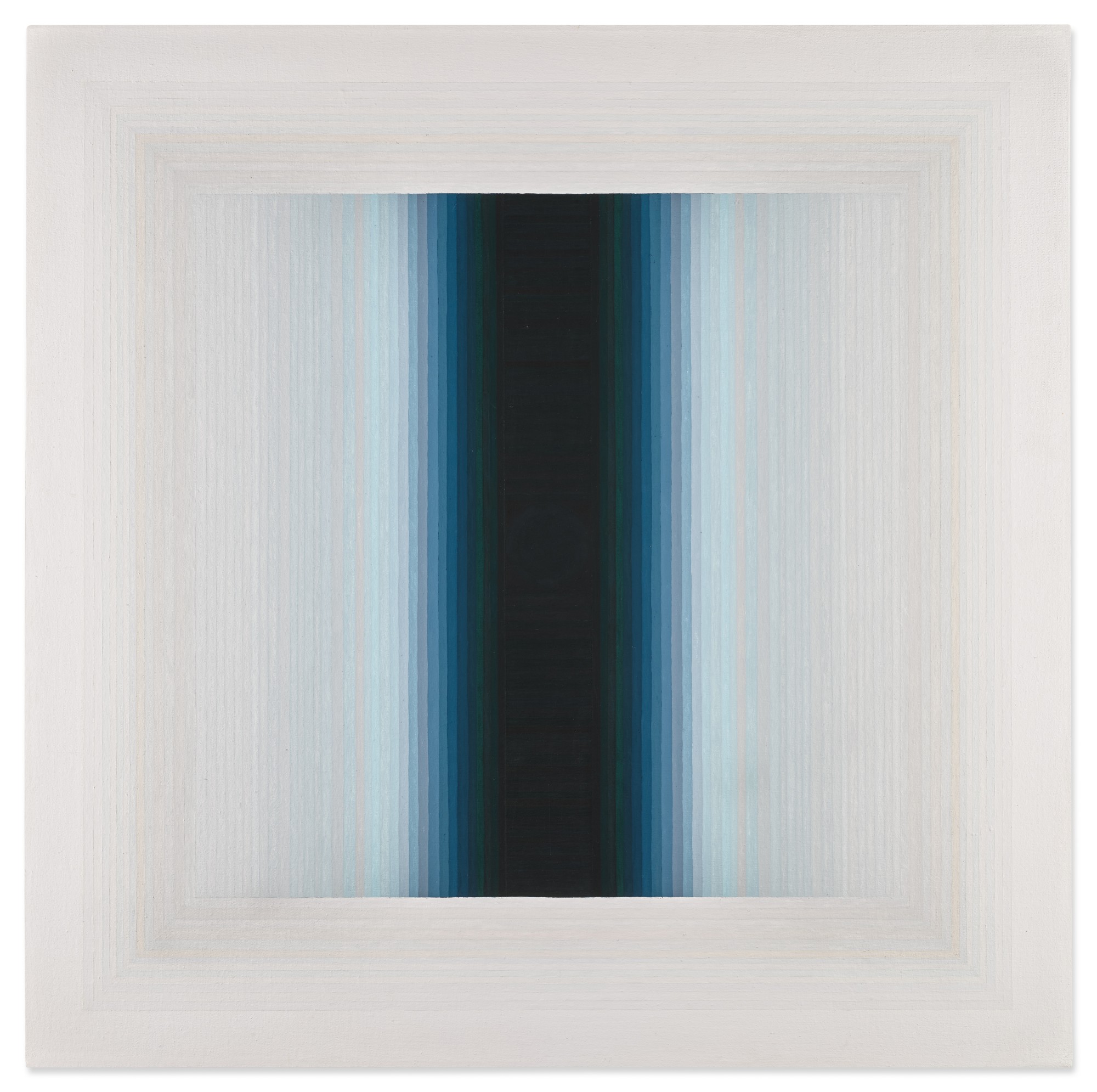
Paul Feiler
Ambit X, 1983
His later works, exemplified by the extraordinary Janicon LXXXIV from 2004, incorporate silver leaf and gold leaf alongside gesso and oil on canvas laid on board, giving the works an iconic quality that feels as much Byzantine as it does abstract expressionist. These are objects of contemplative beauty, made by an artist still at the height of his powers in his ninth decade. From a collecting perspective, Feiler represents an opportunity that serious buyers recognise with increasing frequency. His work has been handled by reputable galleries and has appeared at the major British auction houses, where strong results for his key periods have confirmed the depth of collector interest.
The works to seek out are those from the Aduton and Lunatis series, where his mature vision is most fully realised, though the transitional Cornish landscapes of the late 1950s and early 1960s offer an entry into his world with particular biographical richness. The mixed media late works on gessoed board are technically complex objects that reward close attention and condition scrutiny. Provenance from early British collections is an indicator of quality and authenticity worth seeking. Feiler belongs to a generation that transformed British painting without ever quite receiving the international recognition extended to American contemporaries working in broadly comparable territory.
Alongside Heron, Lanyon, and Frost, he helped establish that serious abstract painting could be made from a position that was simultaneously rooted in lived landscape and open to the most advanced formal ideas. As art history continues to reassess the full breadth of postwar abstraction beyond the New York School, the St Ives painters have risen in estimation, and Feiler's particular contribution, its intellectual precision, its spiritual aspiration, and its sheer quality of feeling, ensures his place among the most significant British painters of the twentieth century. He died in 2013 at the age of ninety four, leaving a body of work that continues to deepen in resonance the longer one lives with it.