Paul Delvaux
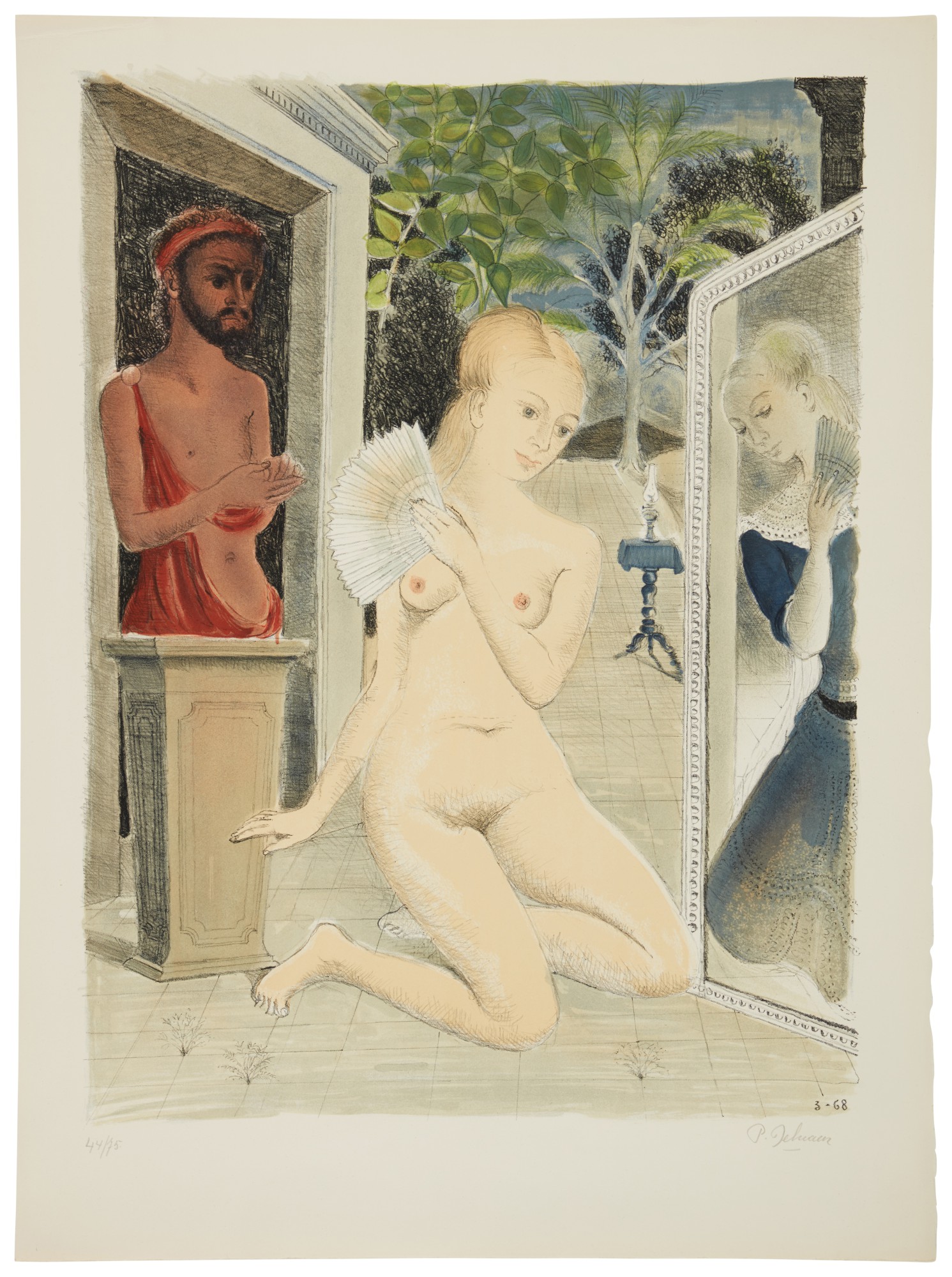
Paul Delvaux: Dreamer of Eternal Nights
Artist Spotlight · The Collection Editorial
“I want to create a world of silence and solitude that speaks to the soul.”
Paul Delvaux
There is a moment, standing before a Paul Delvaux canvas, when the rational world quietly recedes. Marble colonnades stretch into moonlit distances. Women in various states of undress move through ancient train stations with the unhurried grace of sleepwalkers. Skeleton figures mingle with the living without alarm.
Paul Delvaux
Silence (J. 63)
It is a world of perfect, uncanny stillness, and it has been captivating collectors, curators, and dreamers since the 1930s. The Musée Paul Delvaux in Sint Idesbald, Belgium, one of the few museums in the world dedicated entirely to a single artist, continues to draw devoted pilgrims to the Flemish coast, a testament to the enduring magnetism of this singular Belgian visionary. Paul Delvaux was born on September 23, 1897, in Antheit, a small town in the Liège province of Belgium. He grew up in a bourgeois Catholic family, and from an early age displayed a passion for classical literature and architecture that would never leave him.
His family relocated to Brussels, where he studied at the Académie Royale des Beaux Arts, initially training as an architect before surrendering entirely to painting. That architectural training left a permanent imprint on his work: the colonnades, the grand perspectival vistas, the Roman temples and railway halls that populate his canvases all carry the precision of a man who understood how space is constructed and how it can be made to feel infinite. His early career moved through several phases before he found his voice. He painted Impressionist landscapes and then moved into Expressionism under the influence of Gustave de Smet and Constant Permeke, two giants of the Flemish Expressionist tradition.
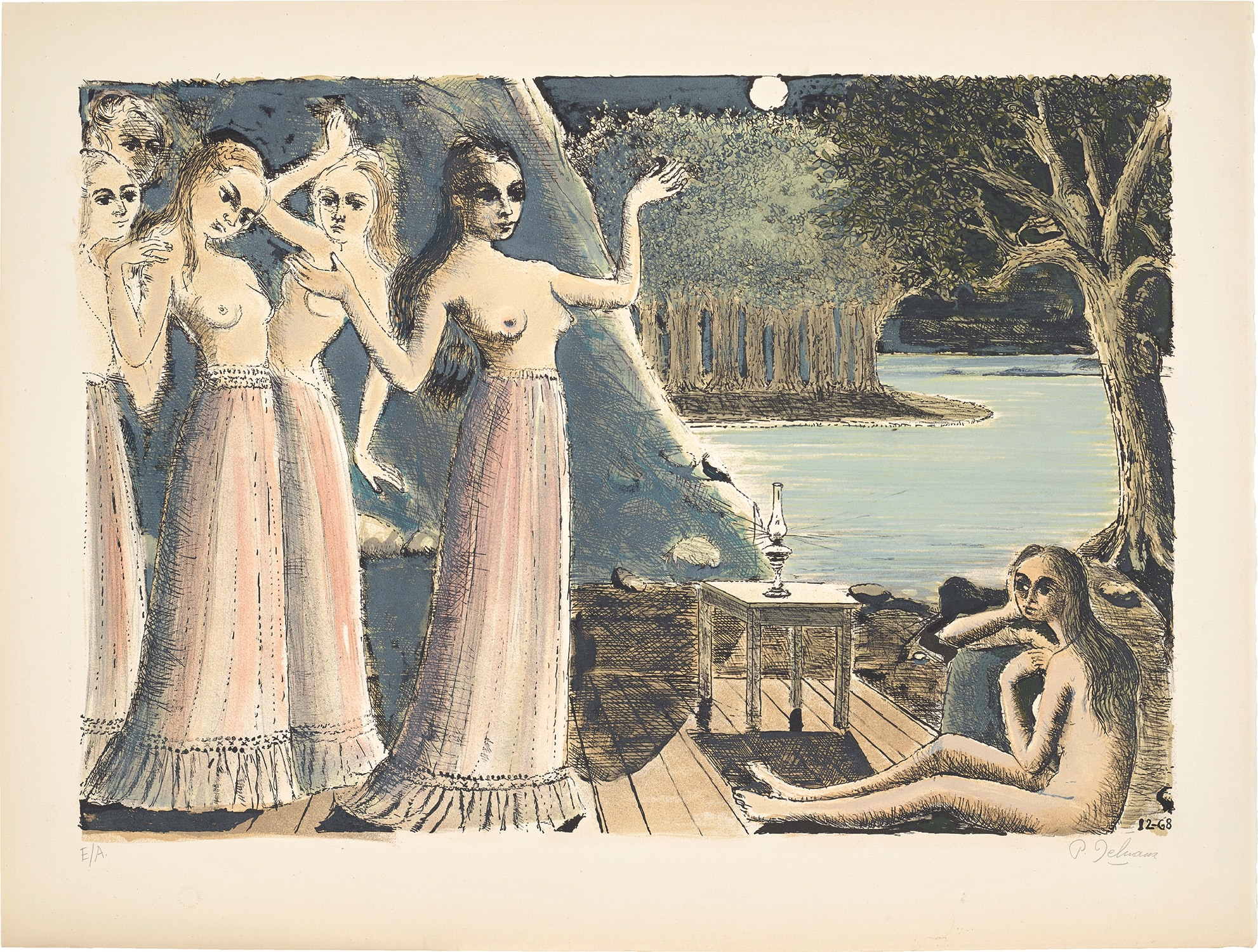
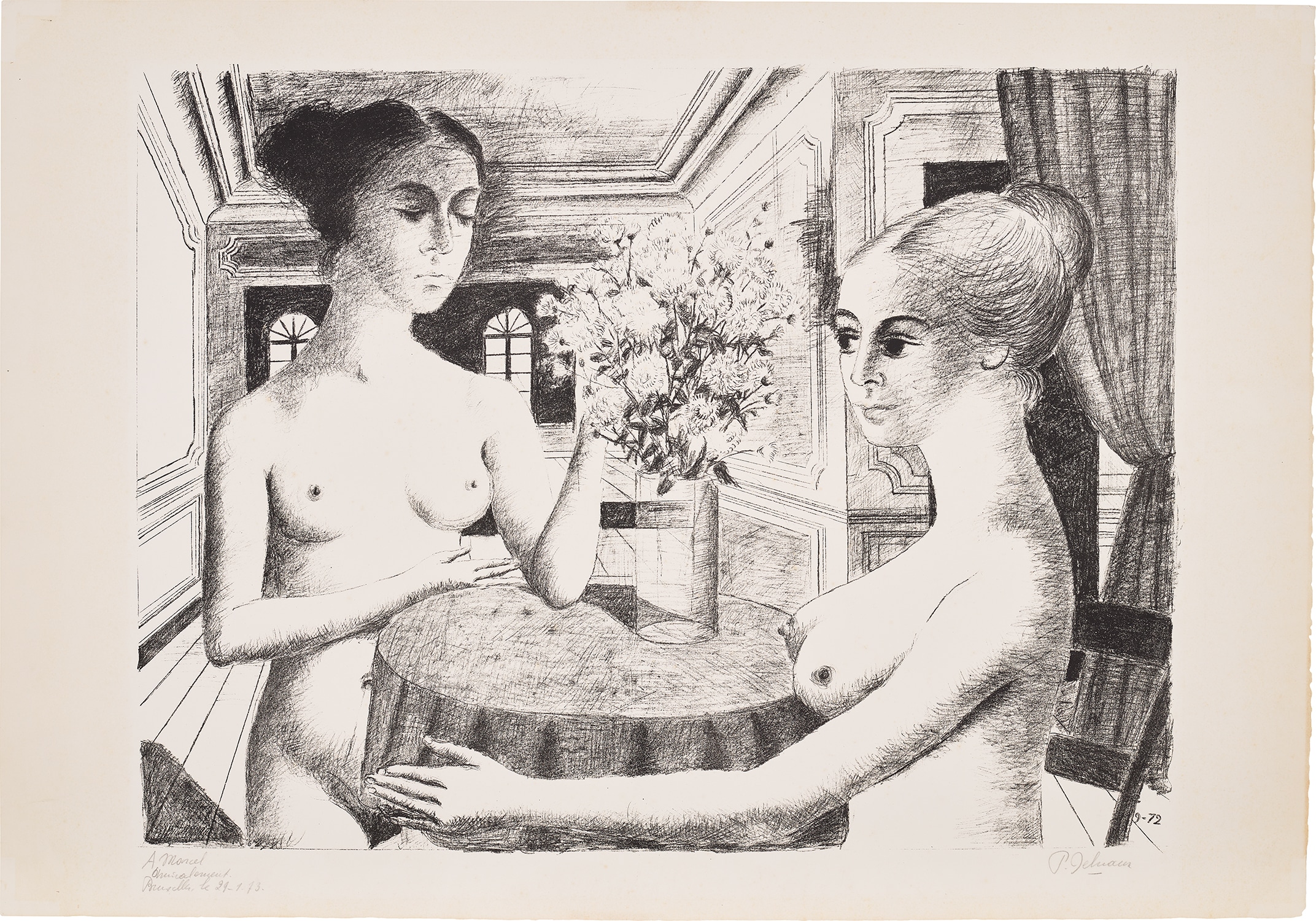
Paul Delvaux
Le Bout du Monde (The End of the Earth)
But it was a pair of encounters in the mid 1930s that catalyzed the transformation into the artist the world came to know. The first was a visit to the Musée du Cinquantenaire in Brussels, where he encountered anatomical wax figures and articulated skeletons that lodged themselves permanently in his imagination. The second was his discovery of the work of Giorgio de Chirico and René Magritte, whose metaphysical and Surrealist approaches revealed to Delvaux that painting could be a vehicle for the architecture of dreams. By the late 1930s and into the 1940s, Delvaux had arrived at the imagery that defines his legacy.
“The train has always fascinated me. It is a journey into the unknown, into dream.”
Paul Delvaux
His canvases from this period, including the monumental works he produced during the German occupation of Belgium, are among the most psychologically complex paintings of the twentieth century. Works such as La visite from 1944, an oil on canvas in the collection available on this platform, demonstrate his fully matured vision: somnambulant female figures inhabit spaces that conflate ancient antiquity with the industrial modernity of the railway age, all bathed in a cool, timeless light that feels neither day nor night but some luminous state between the two. There is eroticism in these works, but it is diffuse and melancholic rather than urgent, suffused with a longing that seems to arise from the unconscious rather than from desire alone. His works on paper and in printmaking reveal an equally commanding draughtsman.
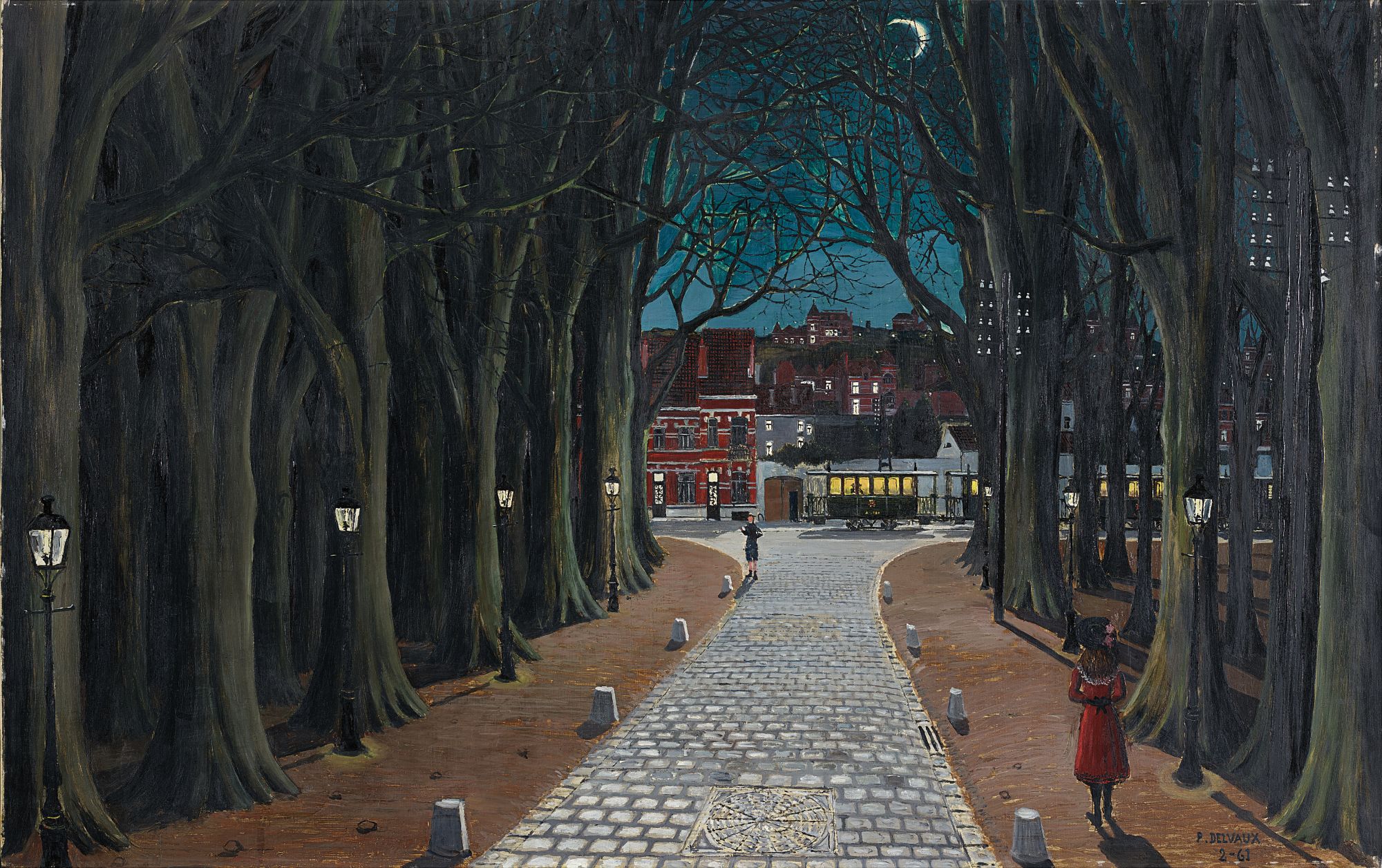
Paul Delvaux
Soir D’Hiver
La danse macabre, executed in pen and ink, gouache, and wash on card, shows how comfortably Delvaux moved between oil and works on paper, deploying the same architectural grandeur and figurative precision across different mediums. His lithographs, including Le Bout du Monde (The End of the Earth) on Arches paper and Silence (J. 64) on BFK Rives paper, demonstrate a particular sensitivity to tone and texture, the rich blacks and soft nocturnal blues of his printed work reinforcing the dreamlike atmosphere that defines his entire practice. The screenprint Murmures, printed on silk stretched over board, is an exceptional example of his experimental approach to surface, the translucency of the silk lending the image an almost spectral quality.
Maternité from 1955, rendered in India ink and watercolour on paper, shows a tenderness that balances the more unsettling elements in his larger paintings, a reminder that Delvaux's world, strange as it is, is never hostile. Although Delvaux is often grouped with the Surrealists, he consistently resisted that label, and the distinction is meaningful. He was never a member of André Breton's official circle, and his work lacks the programmatic quality of orthodox Surrealism. His dreamscapes are not the product of automatic writing or deliberately excavated psychic material.
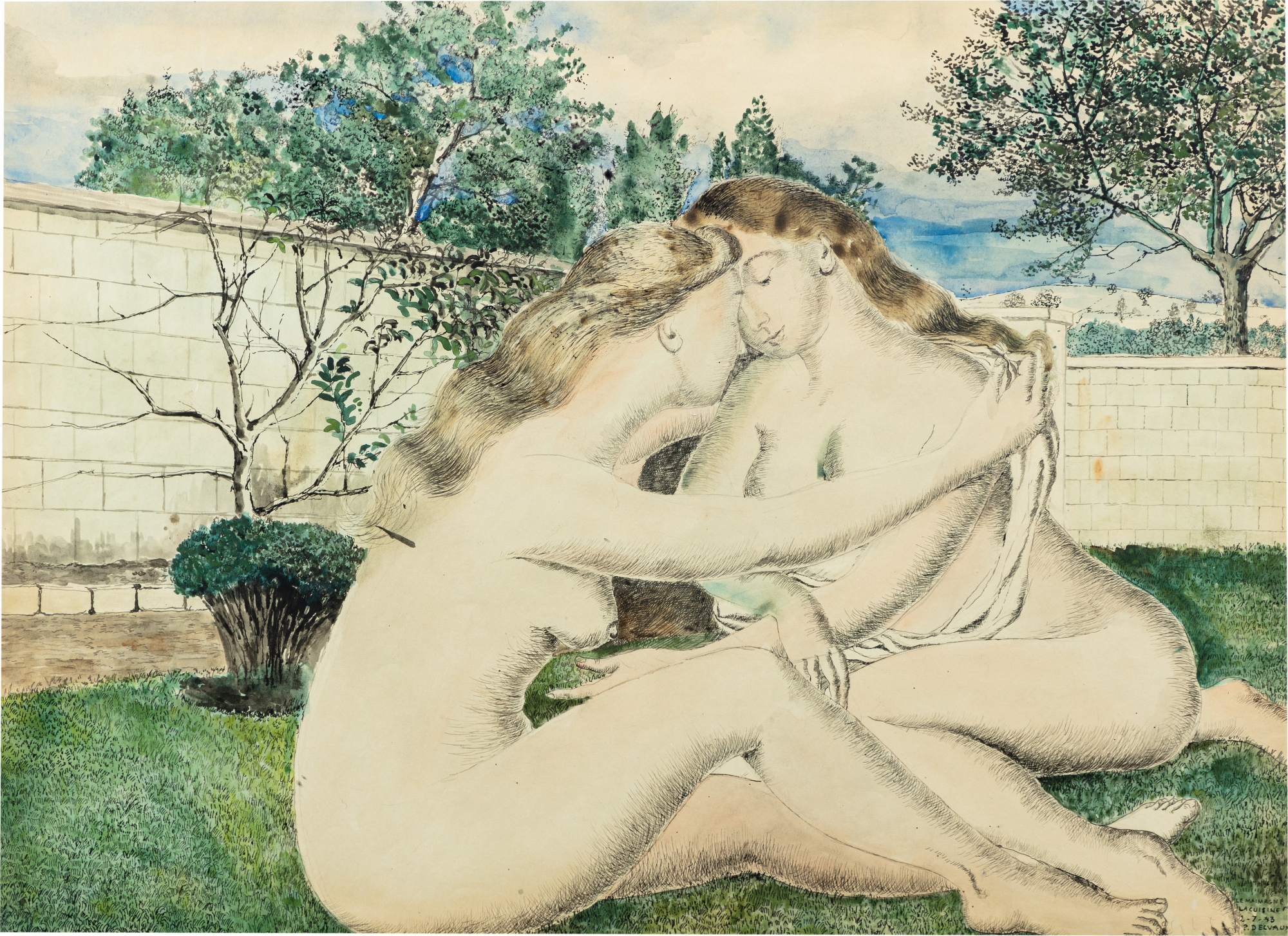
Paul Delvaux
Le Maimagné, Lacuisine
They are, instead, the result of an intensely disciplined formal intelligence applied to deeply personal obsessions: the female figure, the skeleton, the train, the classical ruin, the night sky. Collectors who understand this distinction find his work even more rewarding, because it occupies a genuinely independent position in the history of twentieth century painting. He shares imaginative territory with Giorgio de Chirico, Max Ernst, and René Magritte, and collectors drawn to any of those artists tend to find Delvaux a deeply satisfying companion acquisition. From a market perspective, Delvaux occupies a position of considerable prestige.
Major oil paintings by the artist have achieved significant results at Christie's, Sotheby's, and Bonhams, with his large format nocturnal canvases from the 1940s and 1950s representing the most sought after tier of his output. Works on paper, including his extraordinary drawings in ink and wash as well as his signed and numbered print editions, offer collectors a more accessible entry point to his practice without sacrificing the poetic intensity that makes him so collectable. Prints on prestigious papers such as Arches and BFK Rives, particularly those with full margins and strong impression quality, have shown consistent demand. Condition and provenance are especially important with his works on paper, as his characteristic washes can be sensitive to light exposure over time.
Paul Delvaux lived an exceptionally long life, dying in Veurne, Belgium, on July 20, 1994, at the age of ninety six. He painted actively into his eighties, and the body of work he left behind is both vast and remarkably coherent in its obsessions. The Foundation Paul Delvaux continues to steward his legacy with rigor and affection, and periodic retrospectives across European institutions have ensured that new generations of viewers keep discovering his quietly astonishing world. In an era of art that often prizes noise and disruption, his paintings offer something increasingly rare: a vision of beauty that is genuinely strange, a silence that opens rather than closes, and a dreamworld that, once entered, is nearly impossible to leave.
Featured Works
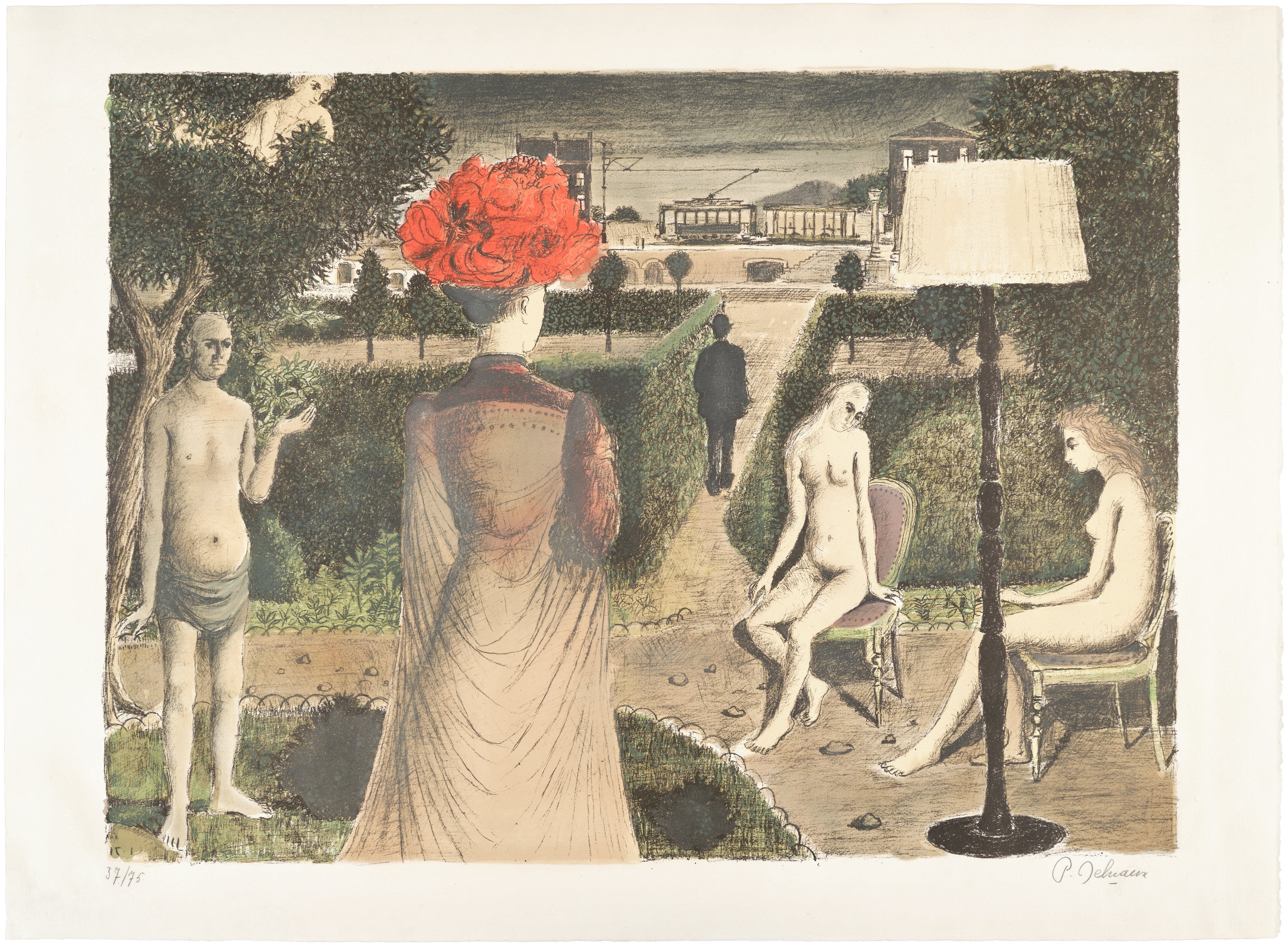
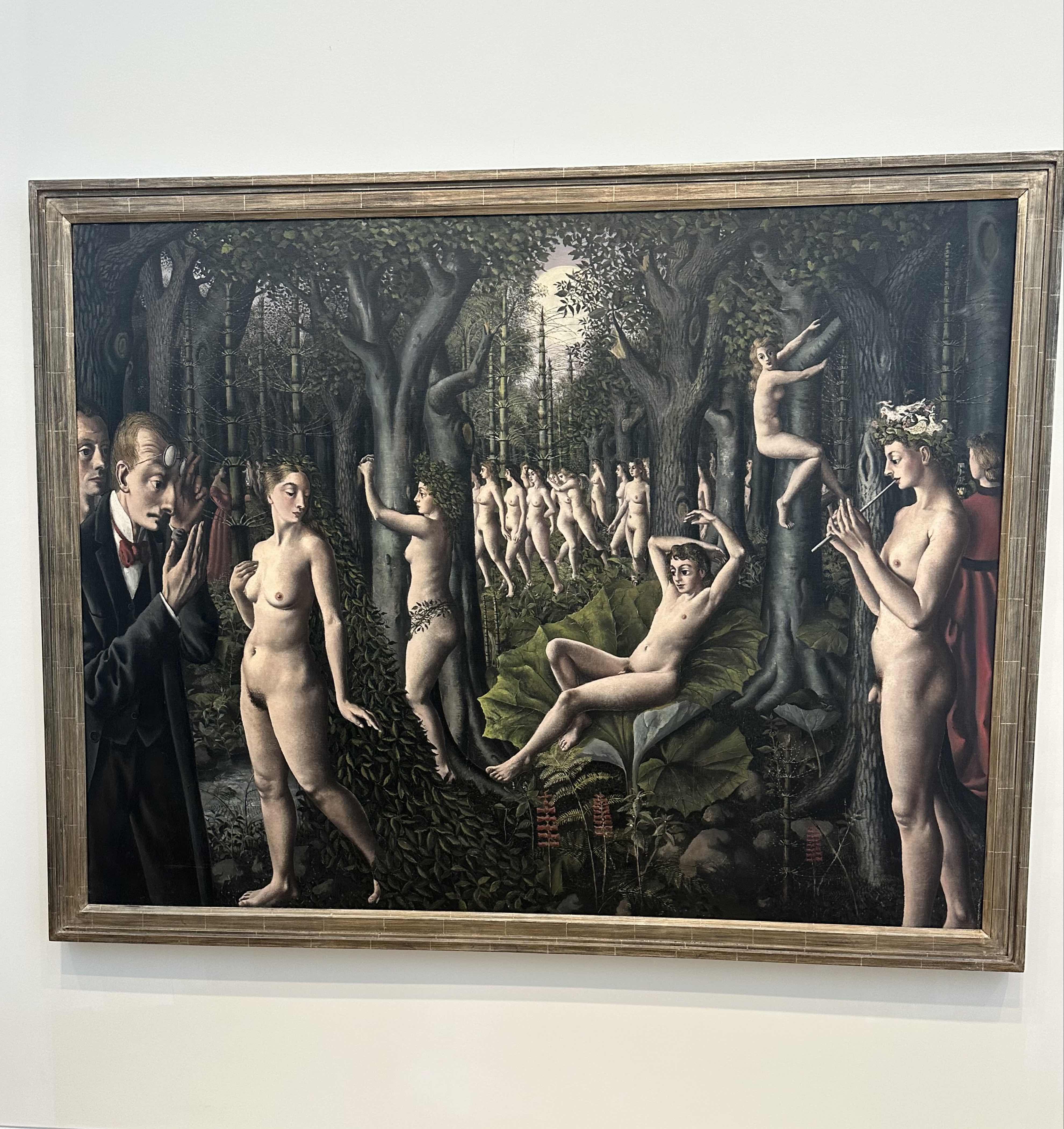
Explore books about Paul Delvaux
Paul Delvaux
Suzanne Houbart-Wilmet
Paul Delvaux: Catalogue Raisonné
Guy Dotremont

Paul Delvaux
Wieland Schmied

Delvaux: The Catalogues Raisonnés
Paul Delvaux Museum
Paul Delvaux: A Monograph
Pierre Restany
Paul Delvaux: Nudes and Trains
David Larsen