Paul Chan
Paul Chan Makes the World Think Again
Artist Spotlight · The Collection Editorial
“I want to make work that is alive in the sense that it is asking questions I cannot answer.”
Paul Chan
In the winter of 2007, Paul Chan did something that felt genuinely impossible. He staged Samuel Beckett's Waiting for Godot in the abandoned streets of post Katrina New Orleans, in the Ninth Ward and in Gentilly, neighborhoods that had been devastated by the storm and then largely forgotten by the institutions meant to protect them. The production, organized in collaboration with the Classical Theatre of Harlem and the New York based arts organization Creative Time, was not merely a theatrical event. It was a statement about waiting itself, about who is made to wait and who decides when waiting ends.
Paul Chan
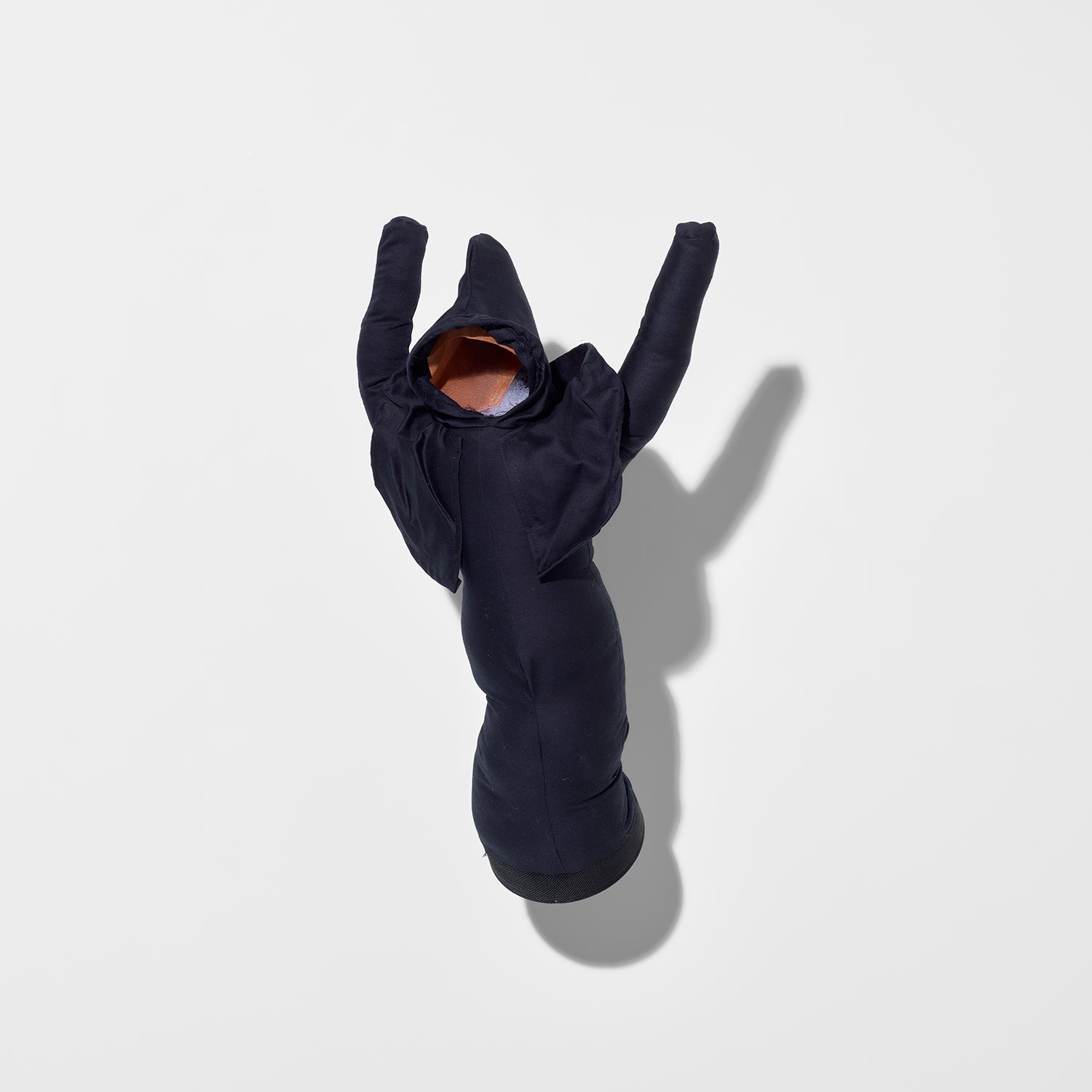
Biggie Model 2, 2018
That a work of Irish absurdist theater could be transformed into a living indictment of American neglect, and do so with beauty and without sentimentality, tells you almost everything you need to know about Paul Chan. Chan was born in 1973 and grew up between Hong Kong and Omaha, Nebraska, a biographical fact that already places him at a productive distance from any single cultural center. That experience of being between worlds, of navigating different registers of language and belonging, would prove formative. He studied at the School of the Art Institute of Chicago and later earned his MFA from Bard College, where he was exposed to the rigorous intellectual atmosphere that has shaped so many significant American artists of his generation.
His early interests were explicitly political. Before his art career gained momentum, he worked as an activist, traveling to Iraq in 2002 in the lead up to the American invasion as part of a peace delegation. That commitment to understanding power at its most brutal and consequential never left his practice. Chan's artistic development is difficult to describe through any single medium, because his refusal of medium specificity is itself part of the argument.
Paul Chan
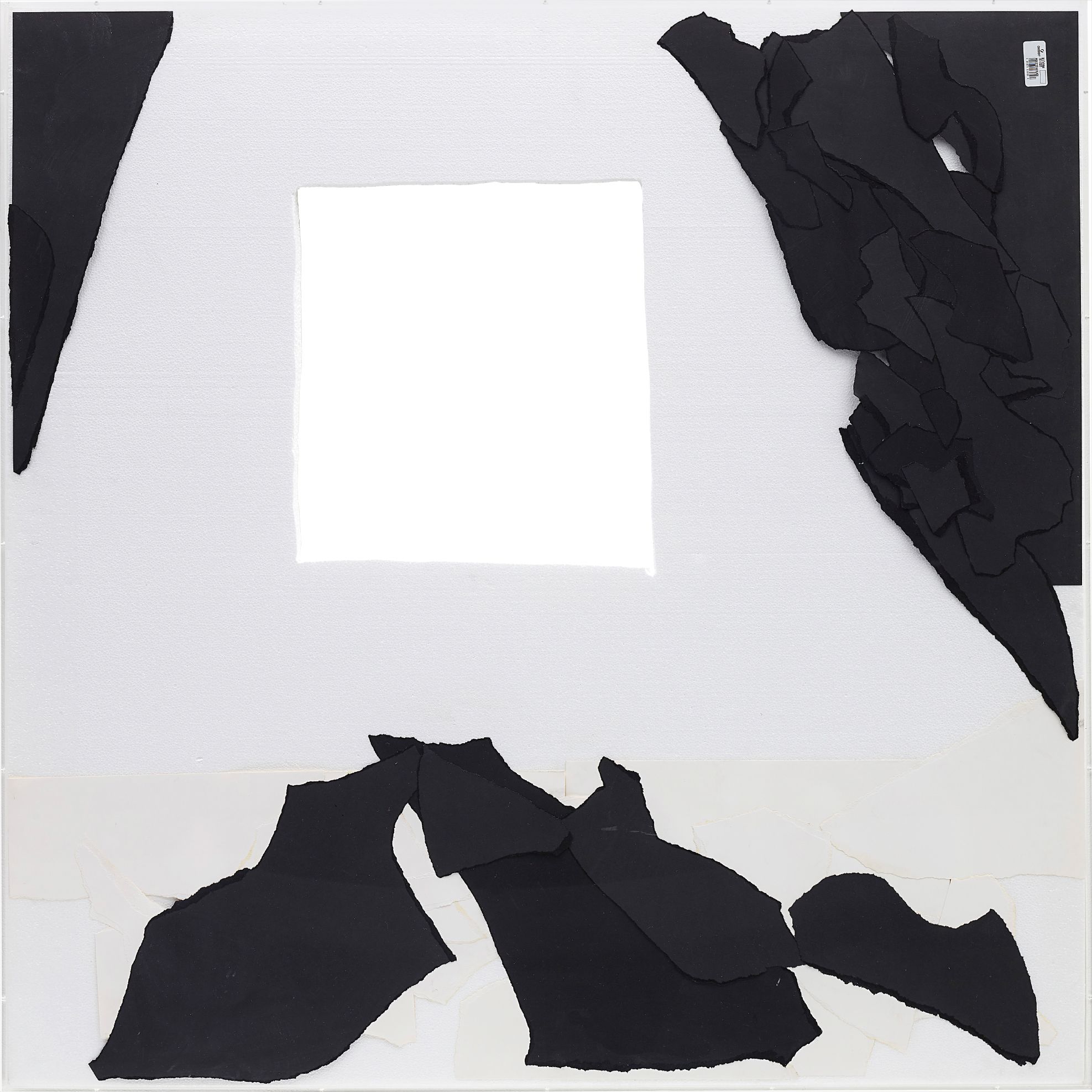
Black Republican 2, 2007
He works in video, digital projection, installation, drawing, and print, moving between forms with a restlessness that mirrors the instability of the ideas he pursues. His early videos, including works from the mid 2000s, drew on political imagery and internet culture to create something that felt urgent and strange at the same time. He has consistently cited philosophy as a primary influence, engaging seriously with thinkers from Plato to Walter Benjamin to Georges Bataille, and this philosophical seriousness gives his work a density that rewards sustained attention. The breakthrough that brought Chan to the widest attention was his series of digital projections titled 7 Lights, created between 2005 and 2007.
These works project animated silhouettes onto walls and floors, figures rising or falling, objects drifting upward against gravity, shadows performing a kind of theater that is at once peaceful and deeply unsettling. The imagery draws on Dante, on biblical allegory, and on the visual grammar of contemporary violence. The series was presented at major institutions including the Schaulager in Basel, and it established Chan as one of the most intellectually ambitious artists working anywhere in the world. His inclusion in both the Whitney Biennial and the Venice Biennale confirmed what attentive viewers already knew: that his practice was operating at the highest level of contemporary art.
Paul Chan
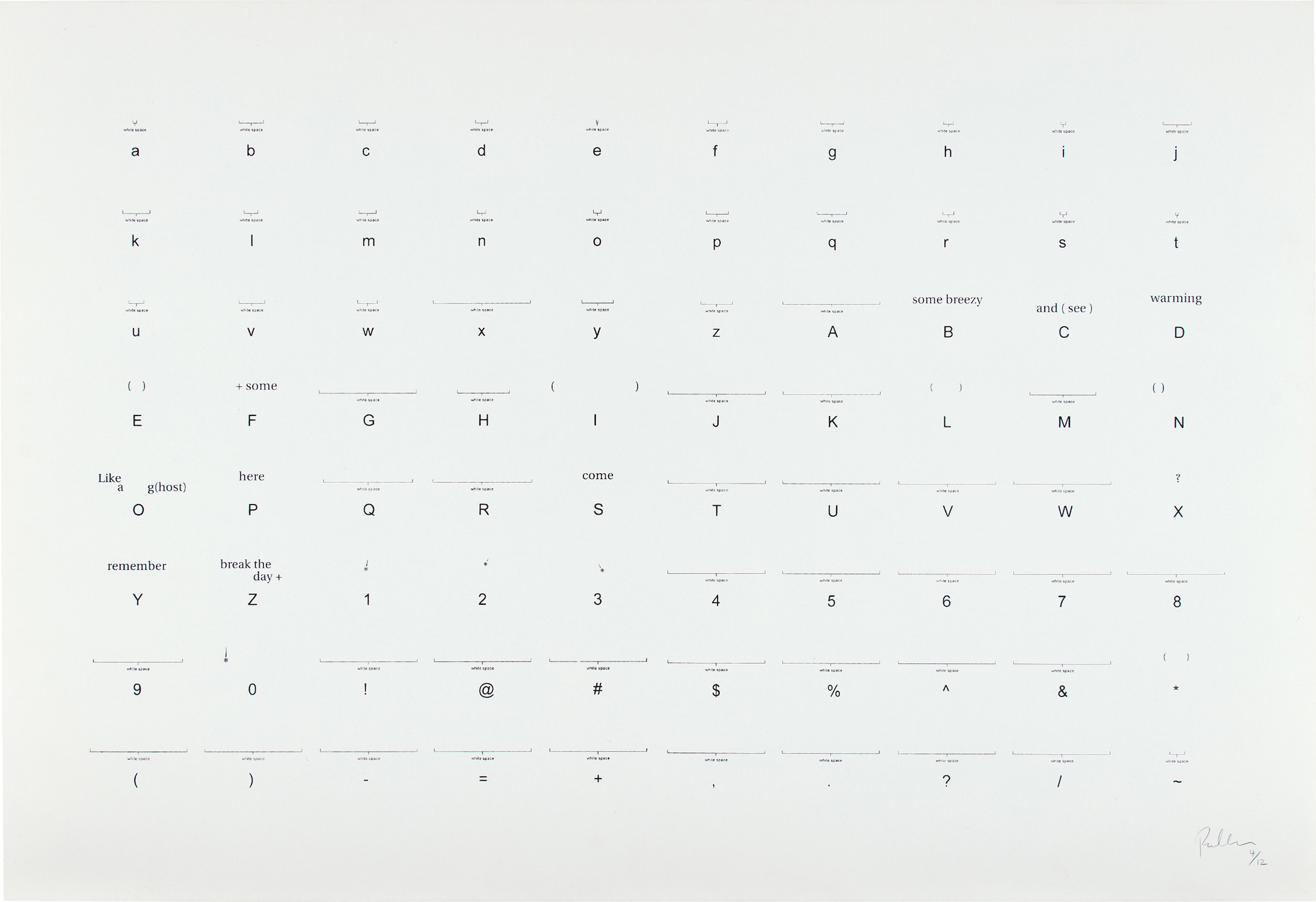
Blurry but not blind - after Mallarmé, from Alternumerics
Among the works available through The Collection, several reveal the breadth of Chan's engagement with language, literature, and visual form. His Alternumerics series, from which multiple screenprints on Stonehenge and Legion paper are drawn, represents a sustained investigation into typography, poetry, and the limits of readable meaning. Works such as Blurry but not blind, after Mallarmé reflect his long engagement with the French Symbolist poet whose own experiments with the printed page challenged what language could do. The Libertine Reader, printed in colors on natural woven rayon cloth with foil stamping and mounted on a wooden frame, is among the more sensuously material objects Chan has made, a work where the substrate itself becomes an argument about how knowledge is carried and consumed.
Black Republican 2 from 2007 demonstrates his capacity for pointed political observation delivered through aesthetic means that are never merely illustrative. These are works that reward the collector who enjoys sitting with an idea as much as with an image. From a collecting perspective, Chan occupies a particularly interesting position in the contemporary market. He is represented by Greene Naftali Gallery in New York, one of the most intellectually respected galleries in the city, which has long championed artists whose practices resist easy categorization.
Paul Chan
(Sexual Healing/Shift for Harassment), from Alternumerics
His works are held in the permanent collections of the Museum of Modern Art in New York and the Walker Art Center in Minneapolis, institutional endorsements that provide a meaningful foundation for any collector considering depth of engagement with his practice. His prints, including those from the Alternumerics series, offer a genuinely accessible entry point into a practice that also encompasses large scale installations that only major institutions can typically accommodate. Collectors drawn to artists who treat ideas as primary material, who are as likely to reference Hegel as they are to reference headline news, will find in Chan a practice that continues to deepen over time. The work Worldwide Trash, with its parenthetical address to Hegel, is a characteristic gesture: irreverent, learned, and genuinely funny.
Chan's place in the broader landscape of contemporary art becomes clearer when you consider the company he keeps in terms of intellectual ambition and political seriousness. Artists such as Kara Walker, whose engagement with history and silhouette has its own formal resonances with Chan's shadow projections, or Hito Steyerl, whose video practice similarly moves between philosophy and politics without sacrificing rigor for accessibility, suggest the kind of dialogue within which his work lives most naturally. Like theirs, his practice assumes that an audience is capable of being challenged and rewarded at the same time. He is also the founder of Badlands Unlimited, a publishing imprint he established in 2010 that produces books, ebooks, and print on demand objects that further extend his interest in the politics of how knowledge circulates and who gets to shape it.
What Paul Chan ultimately offers, both to the culture and to the collector, is a practice built on the conviction that art is one of the few remaining places where genuine thinking can happen in public. In an era when so much cultural production is optimized for speed and legibility, his commitment to difficulty, to beauty that earns its complexity, feels not just admirable but necessary. His works in major museum collections will be studied for generations, and the prints and objects available to private collectors carry with them the full weight of a practice that has never once settled for the obvious answer. To collect Chan is to collect a mind at work, and there are few more worthwhile things a collection can hold.
Explore books about Paul Chan
Paul Chan: Waiting for Godot in Baghdad
Paul Chan
Paul Chan: Selected Works 1992-2006
Paul Chan, Okwui Enwezor
Paul Chan: The 7 Lights
Paul Chan, Bennett Simpson
Paul Chan: Collected Writings
Paul Chan