Parker Ito
Parker Ito Paints the World Online
Artist Spotlight · The Collection Editorial
Something has shifted in the way we talk about art made in the age of the internet, and Parker Ito sits squarely at the center of that conversation. Over the past decade, the Los Angeles based artist has moved from being a celebrated provocateur of the early post internet moment to something more enduring: a genuine painter whose work rewards sustained looking. His canvases arrive layered with references to surf culture, meme aesthetics, art history, and the peculiar textures of digital life, yet they never feel exhausted by their own cleverness. If anything, Ito's practice has grown more assured and more deeply felt with each successive body of work.
Parker Ito
Memoirs of an Imperfect KawaiiTrill BB 4
Born in 1986, Ito came of age during the era when broadband was democratizing access to images on a scale no previous generation had experienced. He studied at the California Institute of the Arts, an institution with a long tradition of producing artists who think rigorously about the systems and structures surrounding art making, not just the objects themselves. That conceptual formation never left him, but neither did a genuine and persistent love of painting as a physical act. The tension between those two impulses, between dematerialized image culture and the irreducibly material fact of paint on canvas, became the engine of his practice.
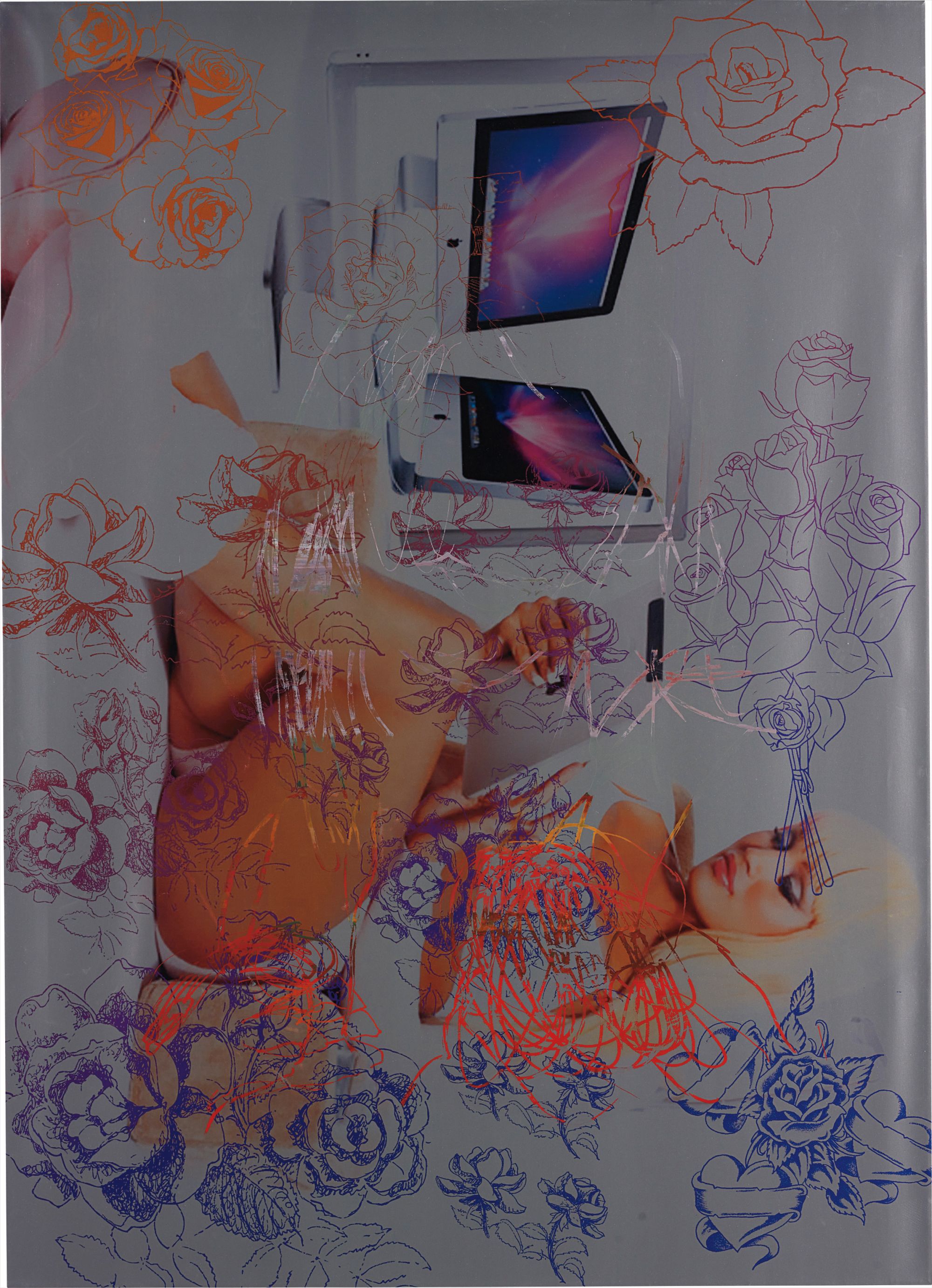
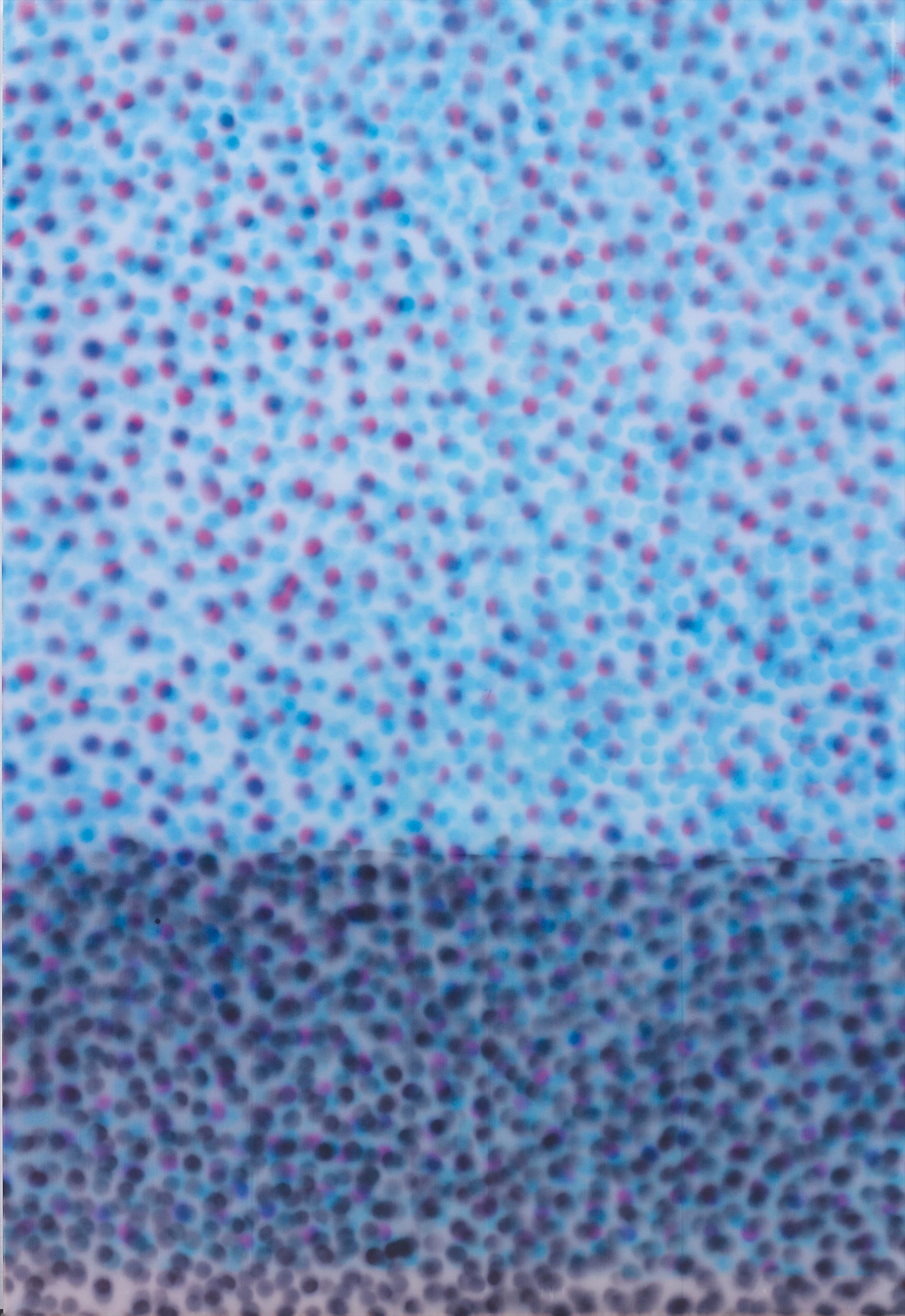
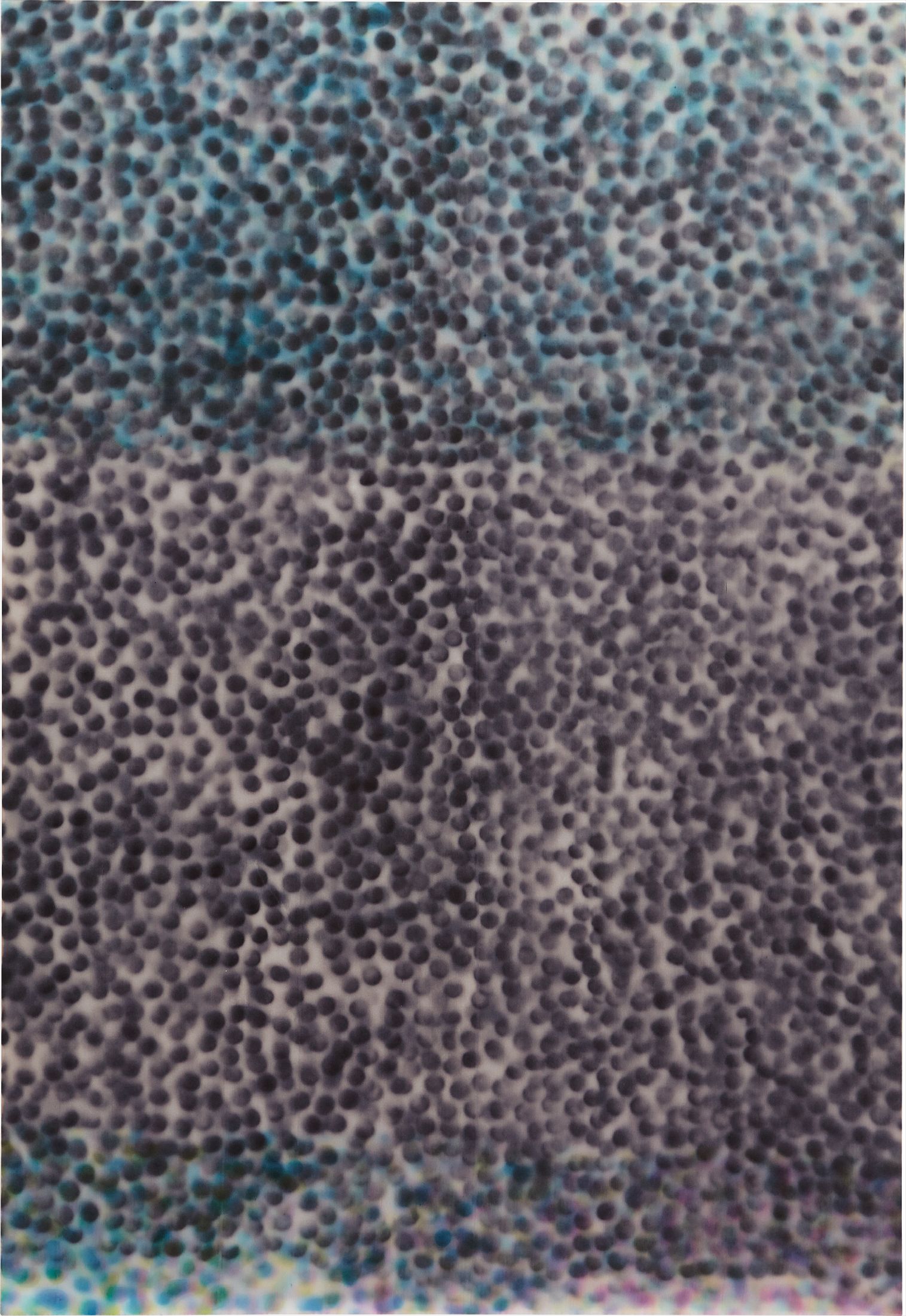
Ito first gained widespread attention through his Inkjet Paintings, works in which inkjet ink was applied directly to silk, producing surfaces of uncanny luminosity and delicacy. Works such as Inkjet Painting Number 18 from 2013 and Inkjet Painting Number 21 occupy a strange and compelling middle ground: they look like photographs, they look like paintings, and they look like neither. The silk support breathes and shifts with light in ways that a conventional canvas never could, and the images printed onto it carry the visual grammar of the web, compressed, saturated, and endlessly reproducible. Yet in Ito's hands they become singular objects, things you can only fully experience in person.
Parker Ito
Inkjet Painting #3
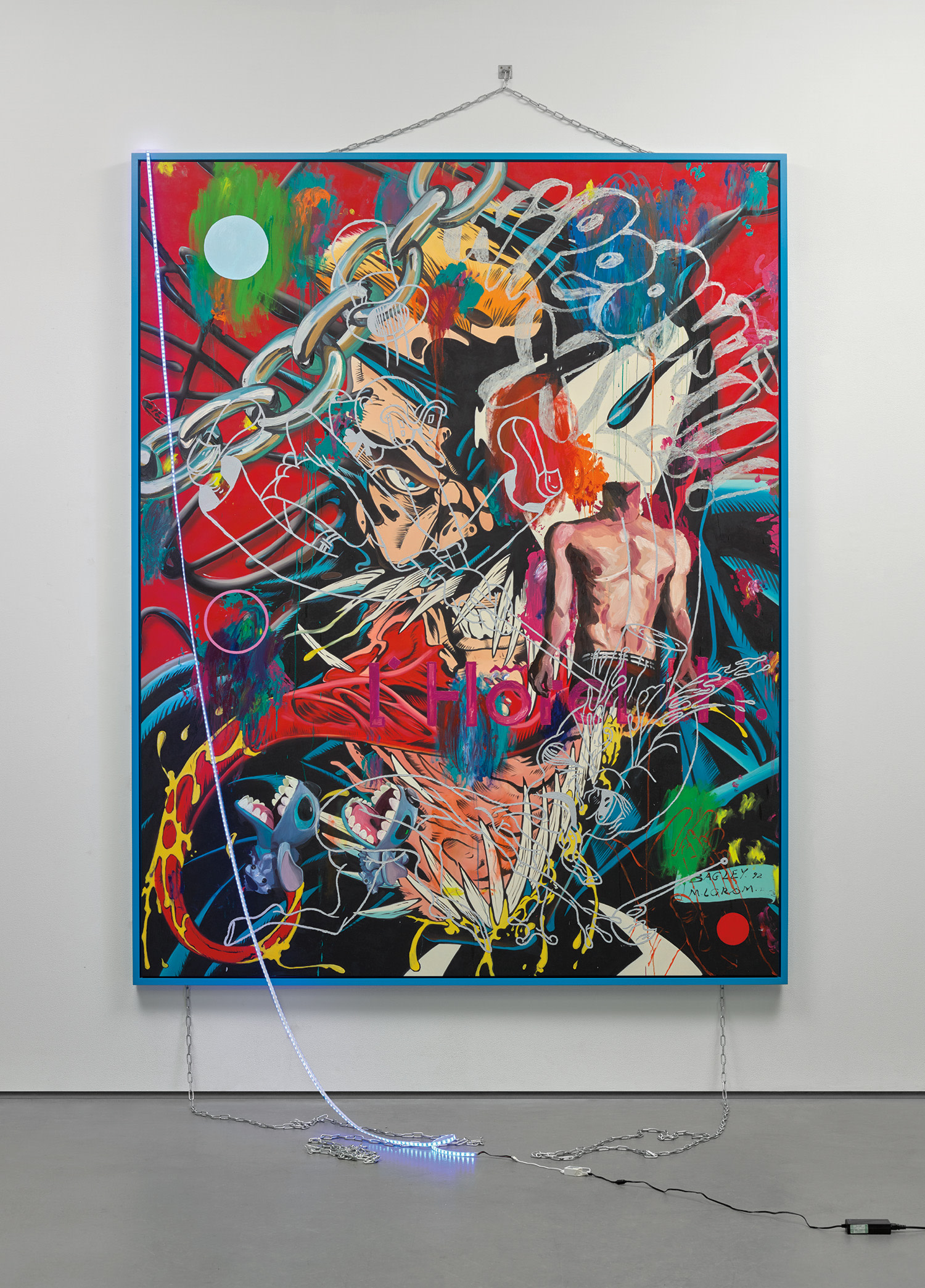
By 2014 Ito had expanded his vocabulary considerably, incorporating oil paint, aluminium frames of his own fabrication, LED strip tape, chains, and industrial hardware into works of considerable formal ambition. The piece known as Cheeto Returns, created in 2014, is exemplary of this period. An oil painting on canvas arrives inside a frame and strainer system the artist built and painted himself, augmented with LED lighting and hanging apparatus that transforms the act of display into part of the work's meaning. The title alone, with its breathless, internet forum energy, signals Ito's comfort with the registers of online speech, the way enthusiasm and irony collapse into each other in digital communication.
Similarly, The Most Infamous Girl in the History of the Internet from 2014 demonstrated Ito's ability to take the logic of viral celebrity and translate it into painting with genuine psychological weight. Ito's engagement with materials extends well beyond canvas and oil paint. His use of 3M Scotchlite, a retroreflective sheeting more commonly found on road signs and safety vests, produced works of startling visual effect. Pieces such as Contemporary Internet Lifestyles and The Agony and the Ecstasy deploy vinyl and enamel over Scotchlite surfaces that transform dramatically depending on the angle and intensity of light hitting them.
Parker Ito
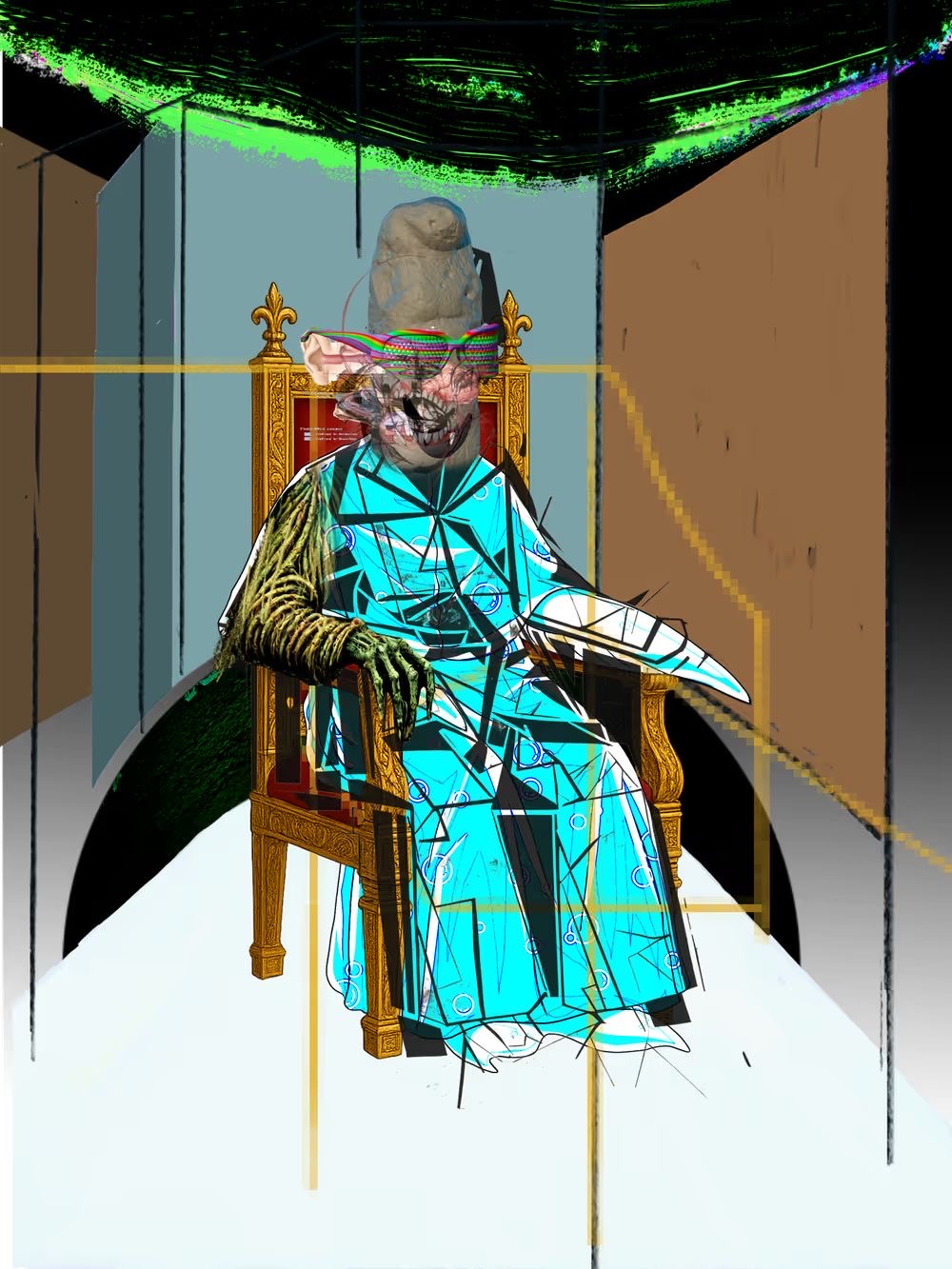
Profile Pictures #1120, 2025
In a darkened room with a direct light source, they blaze with an almost violent luminosity. In ambient light they read as relatively subdued. This responsiveness to viewing conditions is not a gimmick but a considered statement about how images behave differently across contexts, on a screen, in a gallery, in a reproduction. The series of Agony and the Ecstasy works, including the enamel on Scotchlite version numbered 23, shows Ito refining this investigation across multiple iterations with the patience of a true materialist.
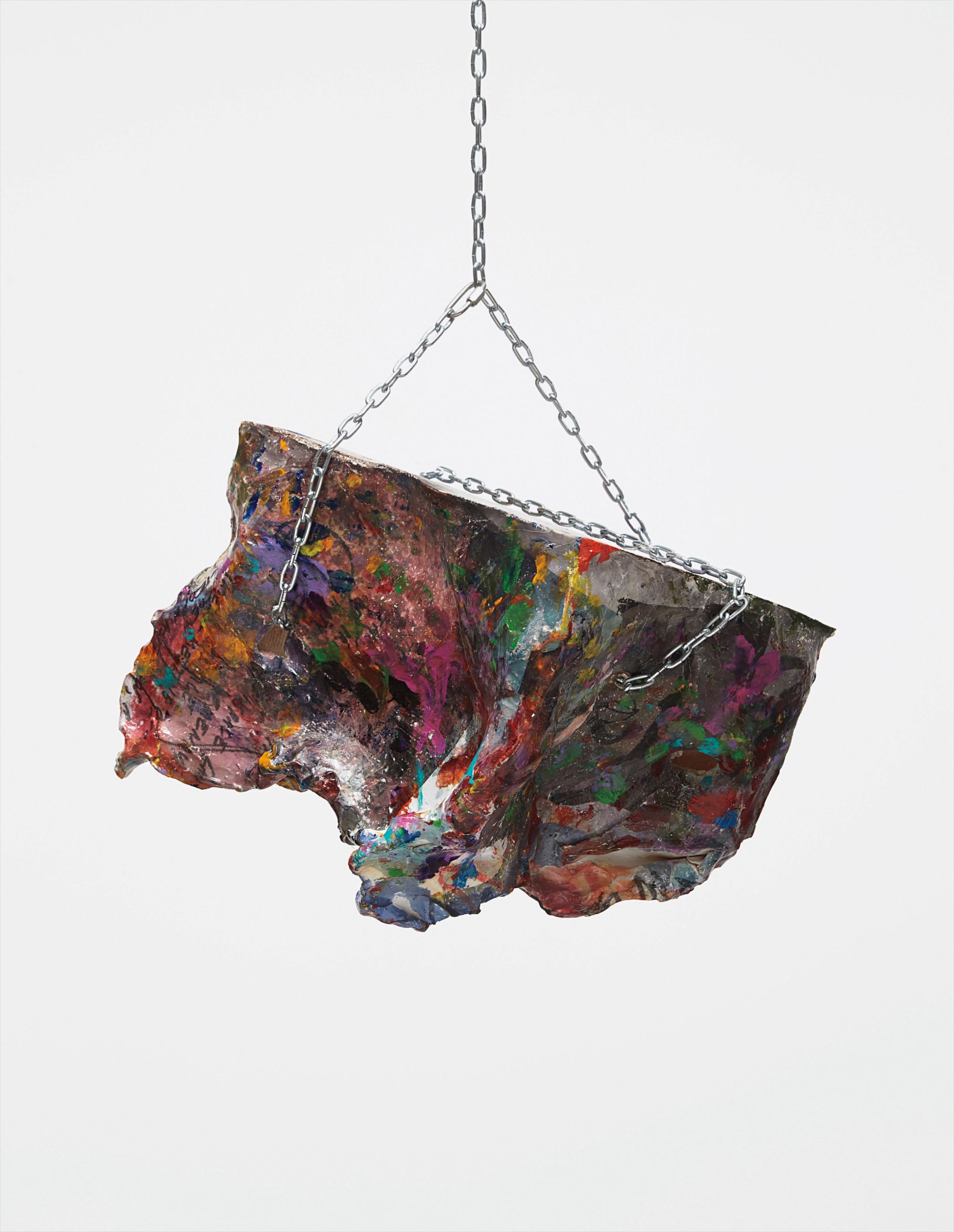
The ceramics Ito has produced, including the hydro dipped and glazed work Memoirs of an Imperfect Kawaii Trill BB 11, extend his interest in surface, finish, and the collision of subcultural references into three dimensions. Hydro dipping, a process most familiar from customized consumer goods and automotive parts, produces swirling camouflage like patterns of considerable visual complexity. Applied to ceramic forms and combined with glaze and hardware, the technique generates objects that sit provocatively between fine craft, industrial production, and internet native aesthetics. These are objects that a skater, a collector, and a ceramics scholar might each find compelling for entirely different reasons, which is precisely the kind of productive instability Ito seems to seek.
Parker Ito
Inkjet Painting #21
For collectors, Ito represents an exceptionally compelling proposition. His work sits at the intersection of several serious collecting categories: post internet art, contemporary painting, and the broader conversation about what painting means after photography and digital reproduction. Artists working in adjacent territory include the likes of Kerstin Brätsch, Lucien Smith, and Oscar Murillo, all of whom shared gallery walls and critical conversation with Ito during the height of the post internet and zombie formalism debates of the early 2010s. Ito's engagement with that discourse was never passive: he participated in it, pushed back against it, and ultimately outlasted the more reductive versions of it.
Works on Scotchlite in particular are highly coveted for the way they change in any given collection context, making them genuinely site responsive without demanding the enormous footprint of an installation. The question of legacy is one that feels almost premature to raise for an artist still in his thirties and producing some of the most interesting work of his career. Yet it is already clear that Ito's contribution to the conversation about painting's relationship to digital culture is substantive and lasting. He understood early, and has argued consistently through his practice, that the internet did not make painting obsolete.
It gave painting new problems to solve, new surfaces to think about, new registers of feeling and reference to absorb. His canvases and Scotchlite works and silk inkjet pieces are documents of a particular cultural moment, yes, but they are also, at their best, genuinely beautiful objects that reward the kind of sustained, embodied attention that screens can never fully provide. That combination of intellectual seriousness and sensory generosity is rare, and it is what makes Parker Ito an artist worth collecting with conviction.
Featured Works