Paolo Ventura
Paolo Ventura Builds Worlds Worth Dreaming
Artist Spotlight · The Collection Editorial
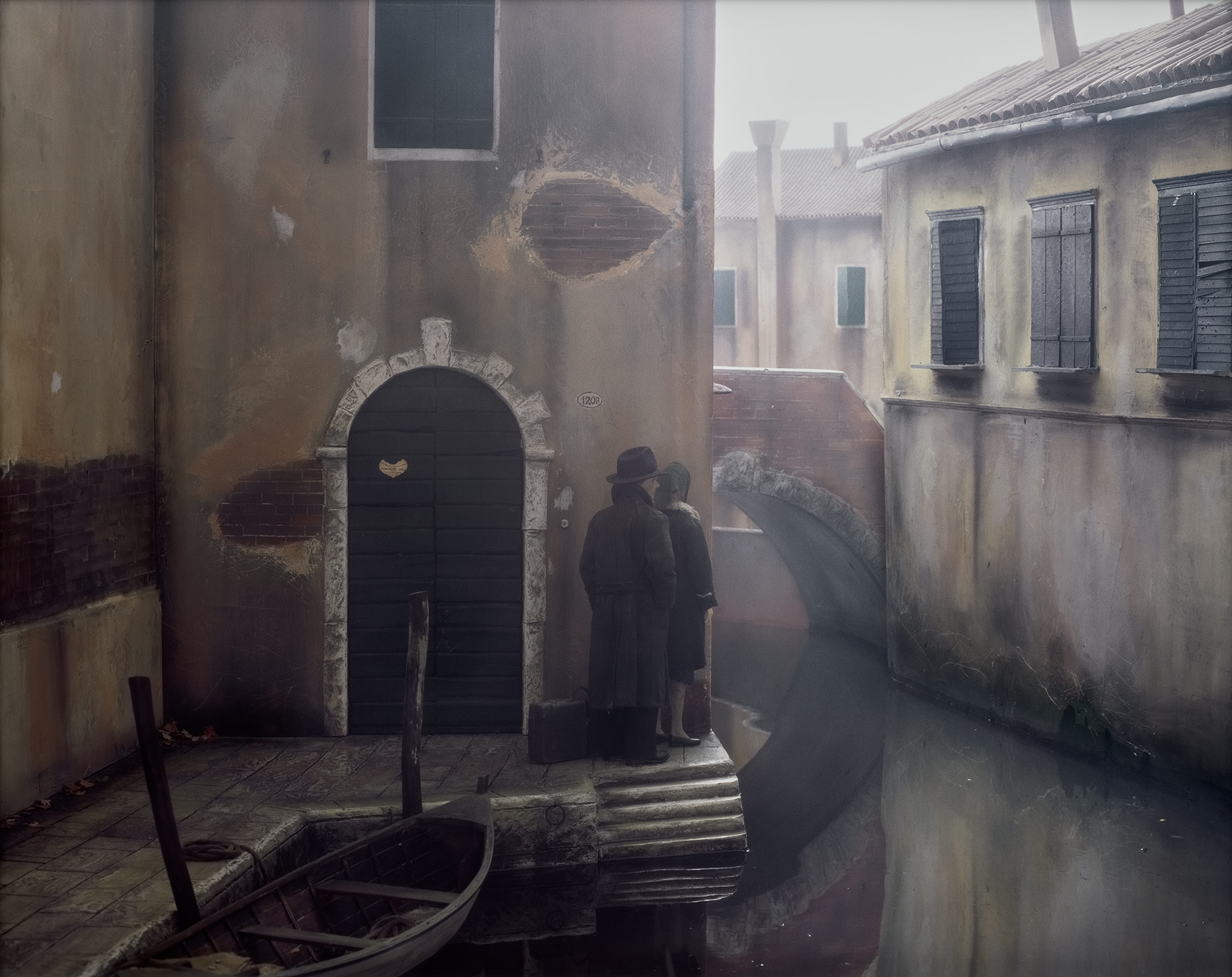
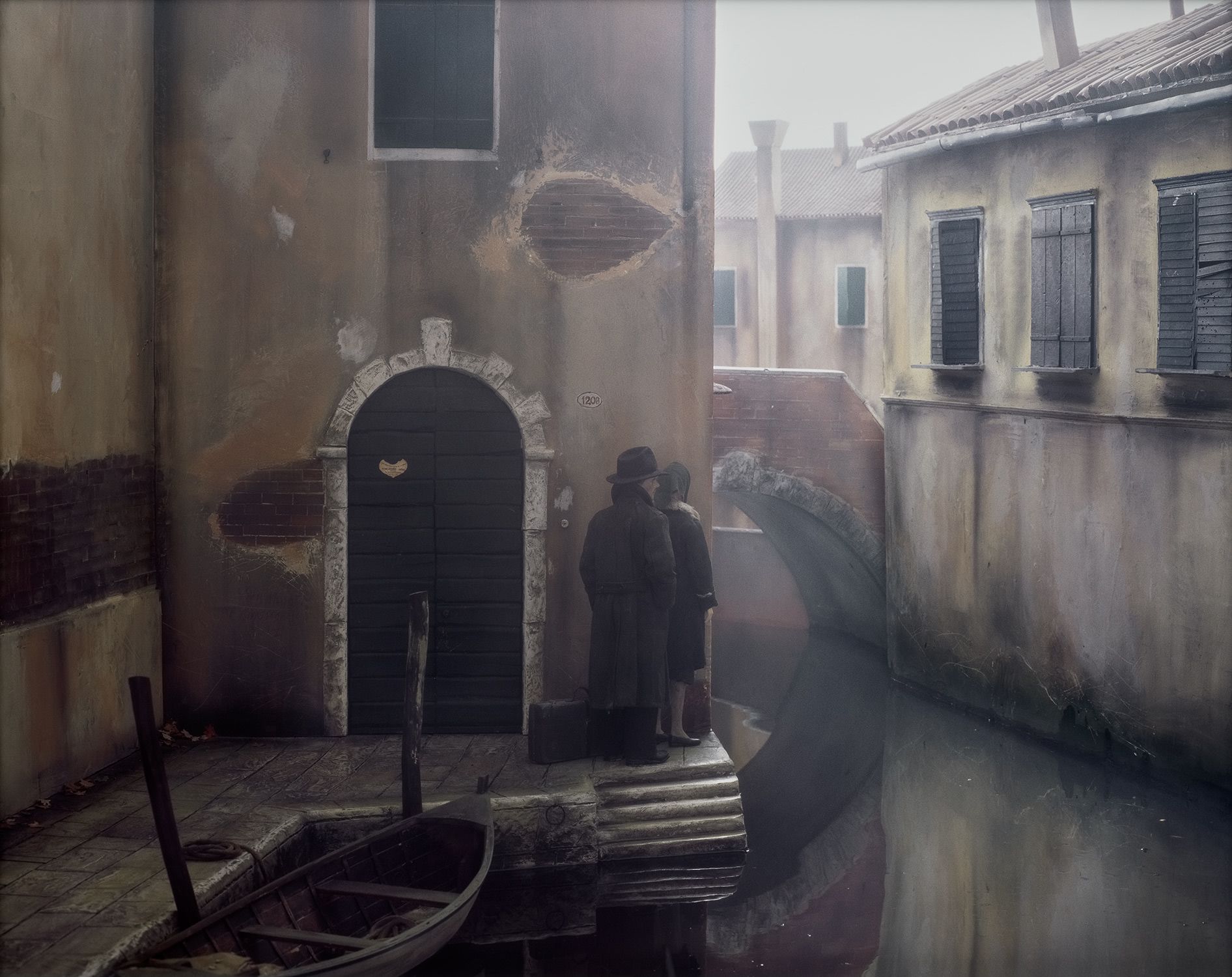
There is a particular kind of wonder that arrives when you stand before a Paolo Ventura photograph and realize, slowly and then all at once, that nothing you are seeing exists at the scale you assumed. The snow dusted alleyways, the hunched figures in wartime coats, the circus performers frozen mid gesture against a fading European sky: all of it was assembled by hand, inch by inch, in a studio. Ventura has spent more than two decades constructing an alternative memory of the twentieth century, one so persuasive and so tender that the question of whether it is real almost ceases to matter. His work has appeared in major galleries and institutions across Europe and North America, and as collectors deepen their appetite for photography that carries the emotional weight of painting, his reputation continues to rise with quiet and deserved momentum.
Paolo Ventura
Automaton #04
Ventura was born in Milan in 1968, a city that offered him both the grandeur of European cultural history and the particular melancholy of a postwar metropolis still negotiating its own identity. Milan in that era was a place of contradictions, glamorous and scarred, forward looking and haunted. It is not difficult to trace the origins of Ventura's preoccupations in that environment. He studied fashion in Milan before eventually relocating to New York, where he spent years working as a fashion photographer, an experience that sharpened his eye for composition, lighting, and the choreography of bodies within a frame.
That commercial discipline would later serve him in ways he likely could not have anticipated, giving him the technical fluency to construct images of extraordinary precision. The turn toward his signature practice came when Ventura left the fashion world behind and began building miniature theatrical sets in his studio. The shift was profound. Rather than photographing the world as it presented itself, he began constructing worlds from scratch, using balsa wood, paper, paint, cloth, and found objects to create dioramas that felt at once like architectural models and stage sets for forgotten operas.
Paolo Ventura
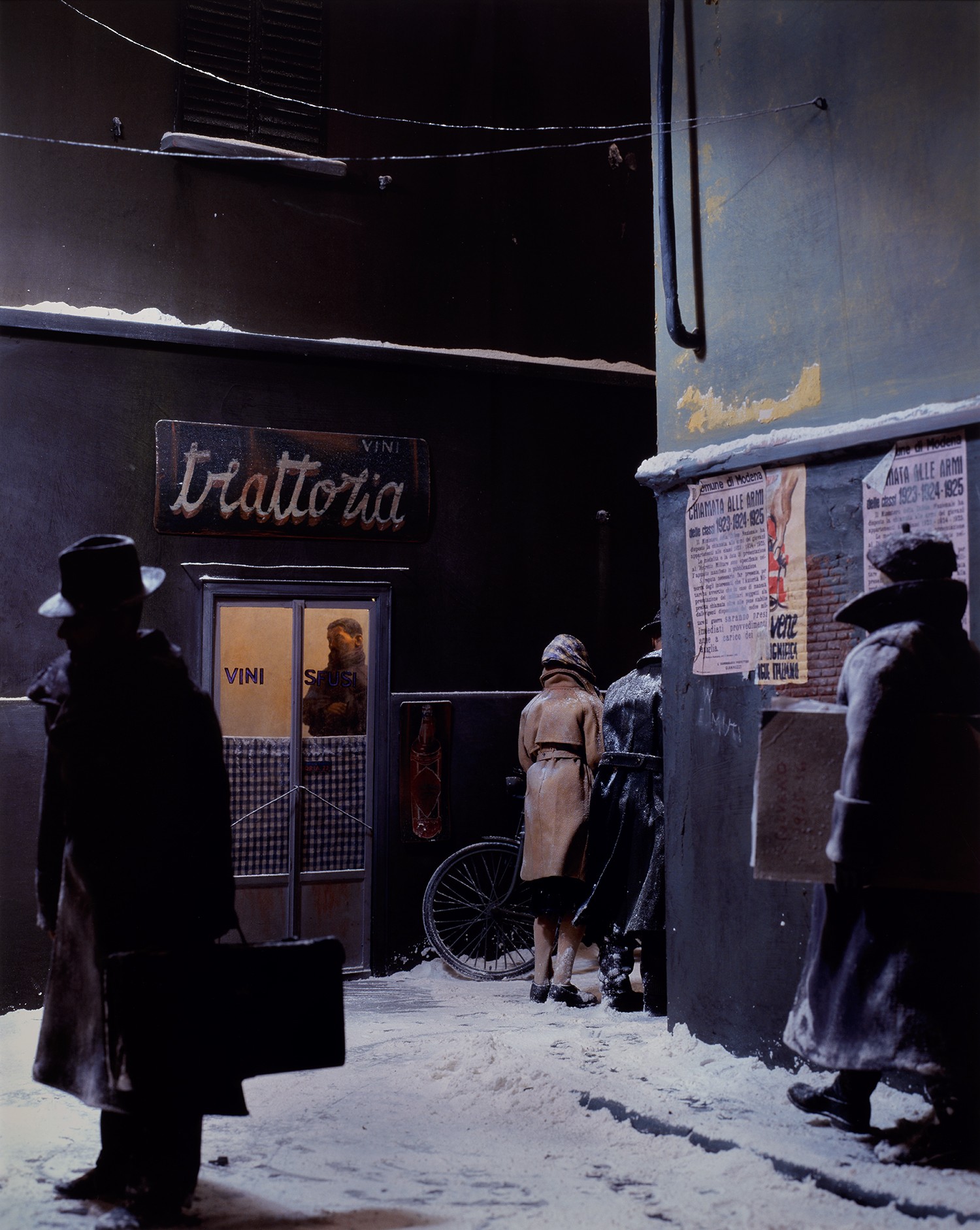
War Souvenir #26 (Christmas 1944)
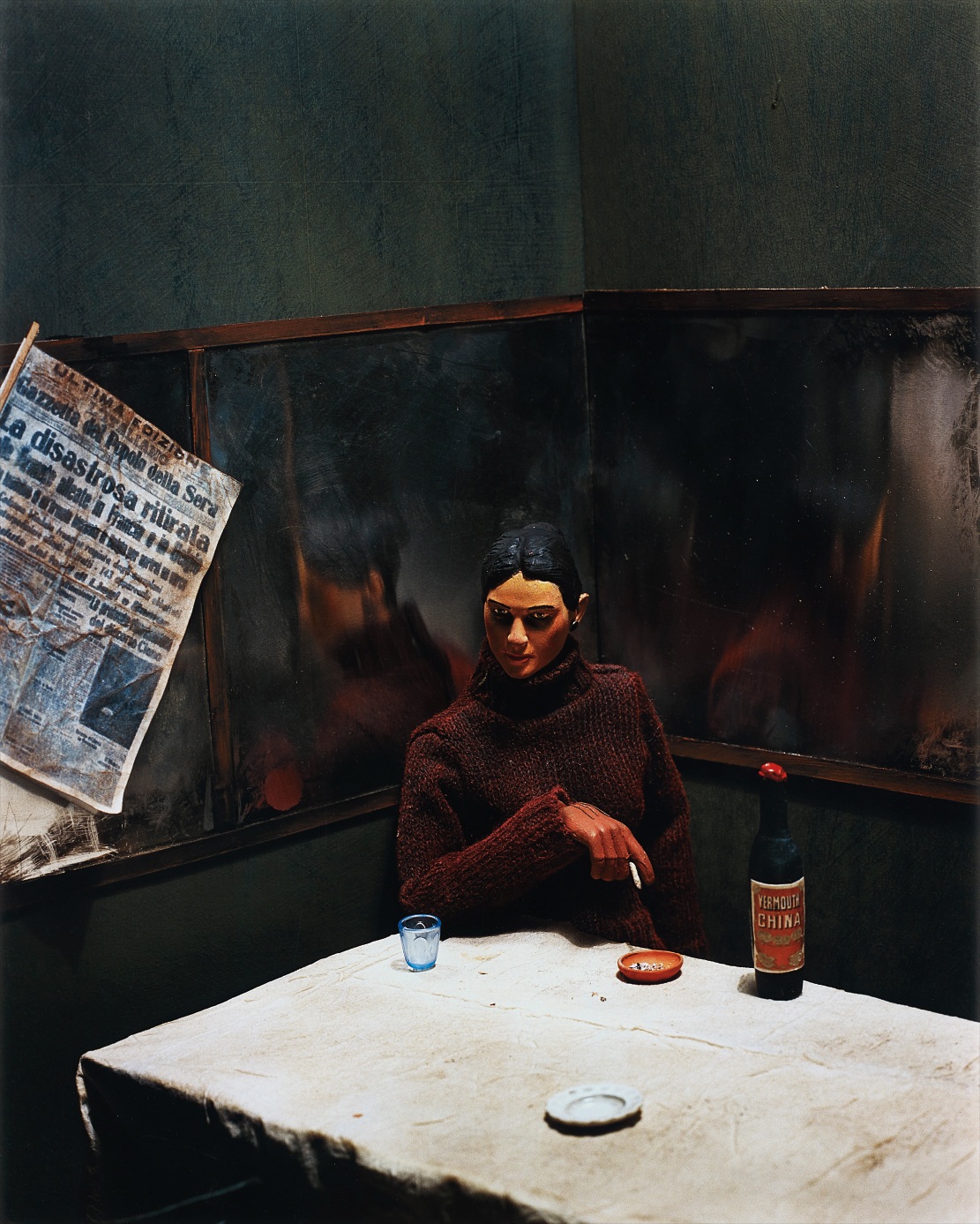
His characters, tiny figurines dressed and posed with meticulous care, inhabit scenes that draw on the visual language of Italian Neorealist cinema, Central European Jewish culture, commedia dell'arte, and the illustrated storybooks of his childhood. The result is a body of work that is entirely his own, instantly recognizable, and genuinely unlike anything else in contemporary photography. The series that first brought Ventura to wide critical attention was War Souvenir, a sustained meditation on the Italian experience of the Second World War. Works from this series, including War Souvenir Number 26 subtitled Christmas 1944, War Souvenir Number 4, and War Souvenir Number 9 subtitled Milan November 1944, are among the most emotionally resonant photographs produced by any artist of his generation.
Each image presents a scene of wartime life rendered in a palette of dusty ochres, cool blues, and faded reds that recall old postcards and family photographs damaged by time. The miniature scale of the sets, rather than distancing the viewer, intensifies the feeling of fragility and loss. These are small worlds in the most literal sense, and their smallness becomes a metaphor for the vulnerability of human life in extreme circumstances. The specificity of dates in the titles grounds the work in historical fact even as the imagery floats free into dream.
Paolo Ventura
War Souvenir #4
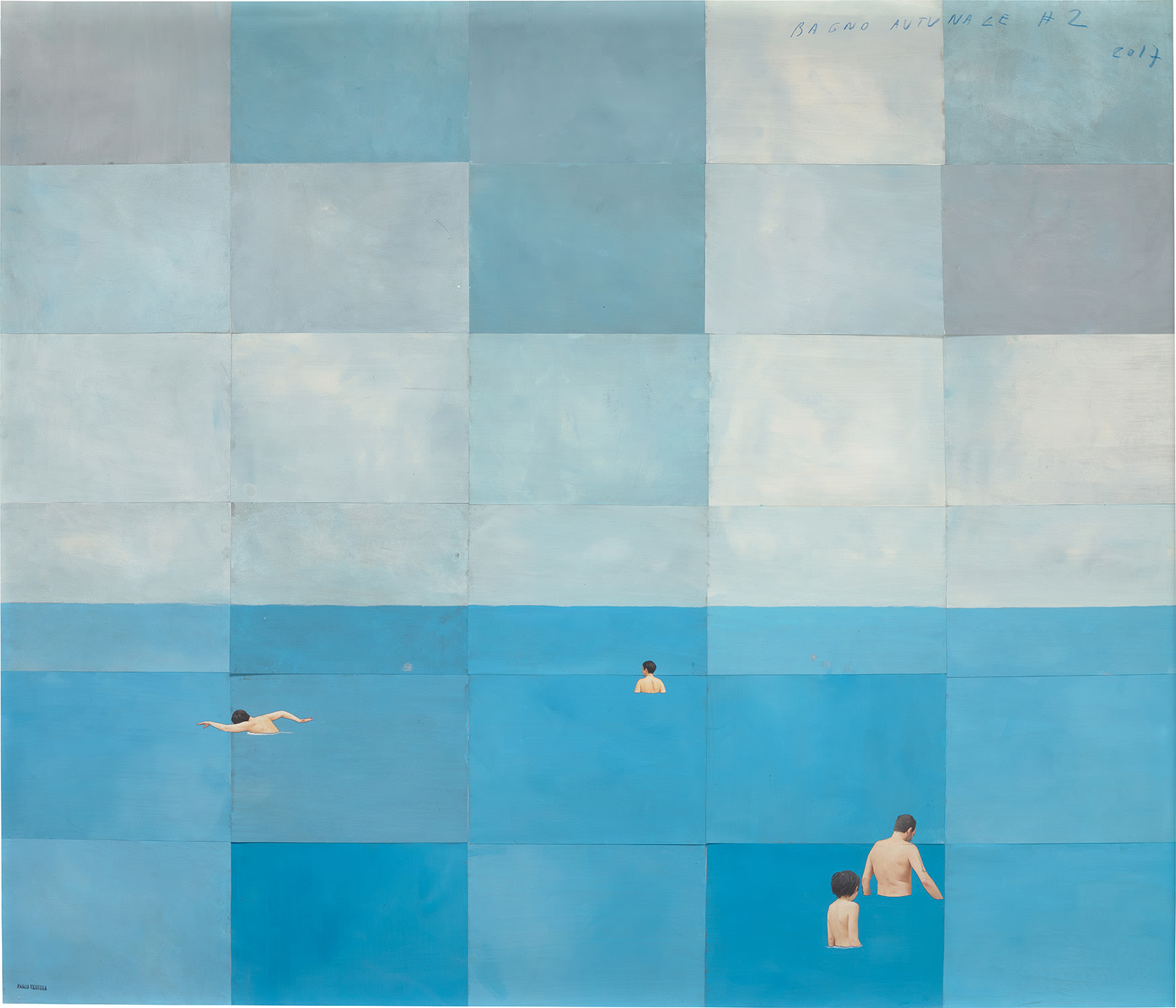
Beyond War Souvenir, Ventura has explored the world of street performers, automata, circus figures, and solitary wanderers in series including Winter Stories and Automaton. The work titled Automaton Number 04 belongs to a body of work that interrogates the boundary between the human and the mechanical, a theme with deep roots in European artistic and philosophical tradition. His Collage series, including Bagno Autunnale Number 2, introduced a new dimension to his practice, incorporating painted and drawn elements alongside photographic imagery to produce works that resist easy categorization. The piece titled The Very Old Elephant from Opera Unica deploys painting alongside photographic mixed media collage on paper, demonstrating the continued evolution of a practice that refuses to stand still.
In all of these works, Ventura positions himself not as a documentary photographer but as something closer to a novelist or a filmmaker, an author of fictions that tell deeper truths than facts alone can manage. For collectors, Ventura's work occupies a genuinely distinctive position in the market. His photographs are produced as chromogenic prints, often flush mounted, in limited editions that reflect both the craft involved and the seriousness with which his galleries and he himself regard the work. The Funeral of the Anarchist, available as a digital chromogenic print, is among the works that demonstrate his range, moving from intimate domestic tableaux toward scenes of collective drama and historical resonance.
Paolo Ventura
Paolo Ventura
Collectors drawn to artists such as Gregory Crewdson, with his cinematic staged photography, or Sandy Skoglund, with her constructed and surreal environments, will find in Ventura a similarly rigorous and imaginative sensibility combined with a more European melancholy and a deeper rootedness in art historical tradition. His work also invites comparison with the narrative photography of Cindy Sherman and the theatrical constructions of Thomas Demand, though Ventura's handmade aesthetic and his embrace of warmth and nostalgia set him apart from both. What draws serious collectors to Ventura is precisely the quality that can be hardest to articulate: his work makes you feel something before you understand it. The images arrive as memories rather than observations, as if they belong to an experience you once had and cannot quite place.
This is not a small achievement. Photography at its most powerful does not simply record; it invents, and Ventura is among the most committed inventors working in the medium today. His continued presence in major international collections and his sustained critical attention across Europe and the United States confirm that his is not a peripheral or fashionable practice but a central and enduring contribution to the art of our time. For those who have not yet encountered his work, the invitation is open and the reward is genuine.
Explore books about Paolo Ventura
Paolo Ventura: War Souvenir
Paolo Ventura
Paolo Ventura: Storyteller
Paolo Ventura
Paolo Ventura: Winter Stories
Paolo Ventura
Paolo Ventura: Photographers of Desire
Paolo Ventura, Marco Delorenzo
Paolo Ventura: Where the Shadows Dance
Paolo Ventura