Pamela Rosenkranz
Pamela Rosenkranz Makes the Body Beautiful
Artist Spotlight · The Collection Editorial
When Pamela Rosenkranz filled the Swiss Pavilion at the 56th Venice Biennale with a pool of flesh toned liquid, the art world took notice in a way that felt genuinely electric. That 2015 installation, titled 'Our Product,' submerged visitors in a sensory environment saturated with the color of commercially idealized skin, the smell of human pheromones, and the ambient hum of a world processed and packaged for consumption. The work was not merely provocative. It was precise, deeply researched, and unexpectedly moving, the kind of statement that announces an artist fully in command of her vision.
Pamela Rosenkranz
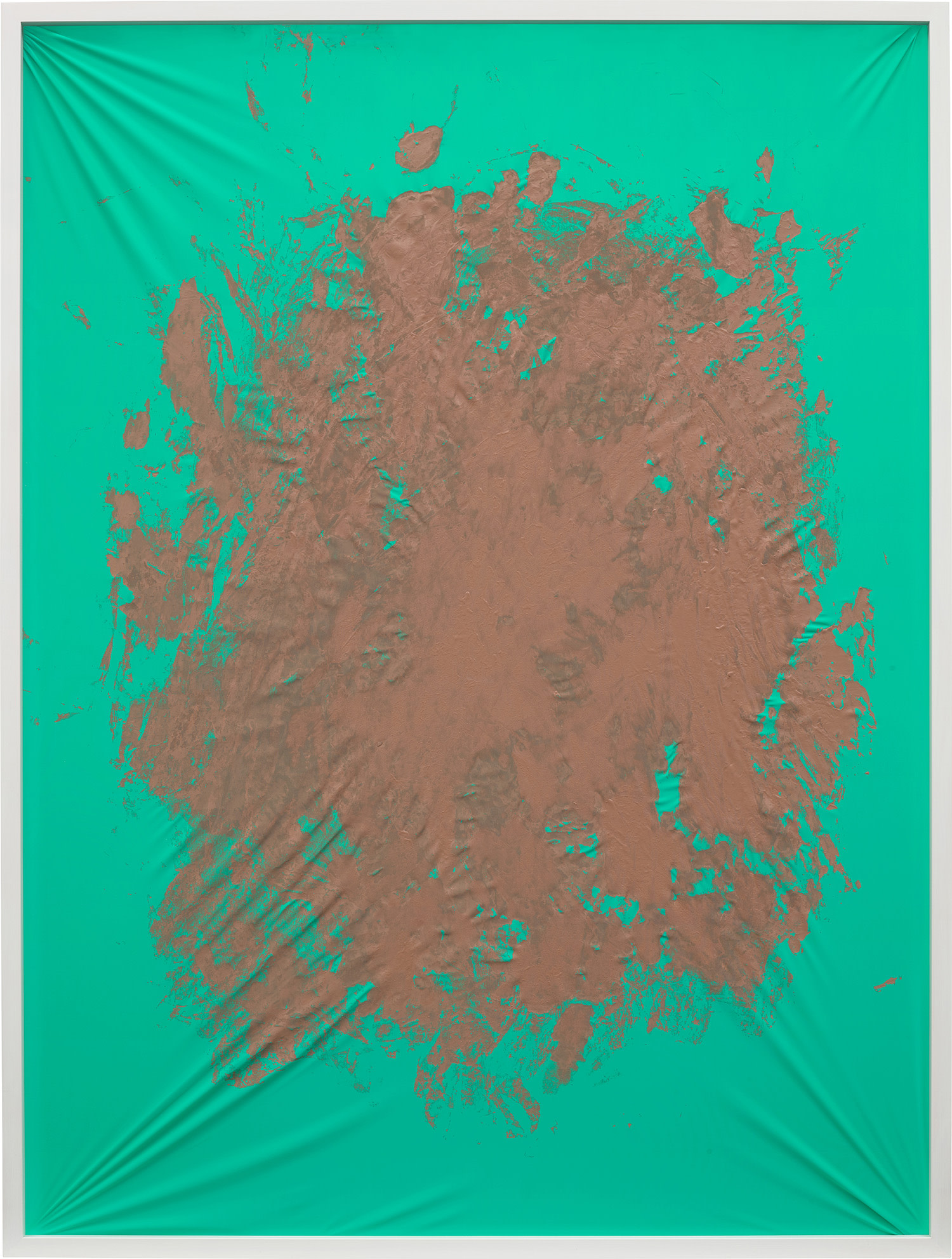
Drinking Water (Grip), 2013
Rosenkranz was born in Switzerland in 1979, and her formation carries the particular intellectual rigor that Swiss art education tends to cultivate. She studied at the Hochschule für Gestaltung und Kunst in Zurich, an institution with a strong tradition of connecting conceptual ambition to material discipline. Switzerland, a country with a complex relationship to pharmaceutical industry, banking, and ideas of purity and neutrality, provided a quietly perfect backdrop for an artist who would go on to interrogate the invisible assumptions embedded in everyday materials and consumer aesthetics. The cultural landscape around her, shaped by precision, cleanliness, and a certain constructed idea of the natural, would find its way into nearly every work she made.
Her early practice drew on a wide range of intellectual sources, from evolutionary biology and cognitive science to the history of color theory and the semiotics of branding. What distinguished Rosenkranz from peers working in similar territory was her refusal to let theory overwhelm sensation. Her works are intellectually layered but also immediately physical. They ask you to feel something before they ask you to think, and then they make the thinking inseparable from the feeling.
Pamela Rosenkranz
Look Deeper (Let In), 2016
By the late 2000s and into the early 2010s, she had developed a recognizable methodology: selecting materials freighted with cultural meaning, pharmaceutical packaging, emergency blankets, spandex, skin tone pigments, and combining them with an almost clinical compositional restraint. The works from this formative period remain some of the most sought after in her catalogue. 'Avoid Contact (Discharge Shadow)' from 2011, acrylic on spandex mounted in the artist's chosen frame, exemplifies her ability to make a painting that is simultaneously a painting and something else entirely. The spandex ground gives the surface a slight elasticity, a bodily quality, while the color references both medical aesthetics and the uncanny neutrality of consumer skin care advertising.
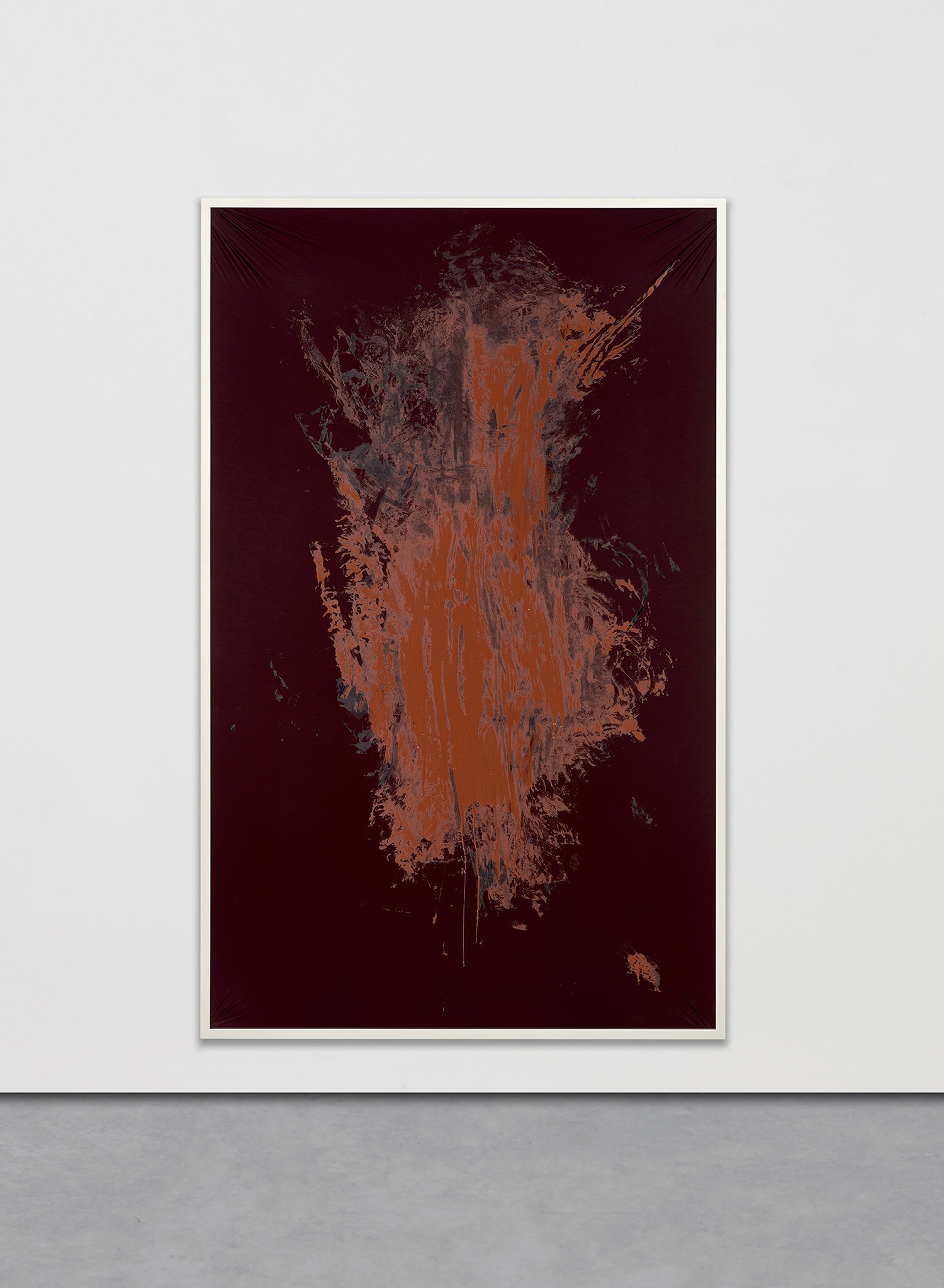
'Express Nothing (Rain In)' from 2012, rendered in acrylic on emergency blanket, introduces a material associated with survival and emergency response into the pristine vocabulary of painting. The reflective surface catches light unpredictably, making the viewer aware of their own presence in the room, their own body in relation to the work. 'Because they tried to bore holes in my greatest and most beautiful work,' also from 2012, carries a title of almost confrontational confidence, and the work delivers on that promise with characteristic intelligence. The series of 'Drinking Water' and 'Look Deeper' works extended this inquiry into the early and mid 2010s.
Pamela Rosenkranz
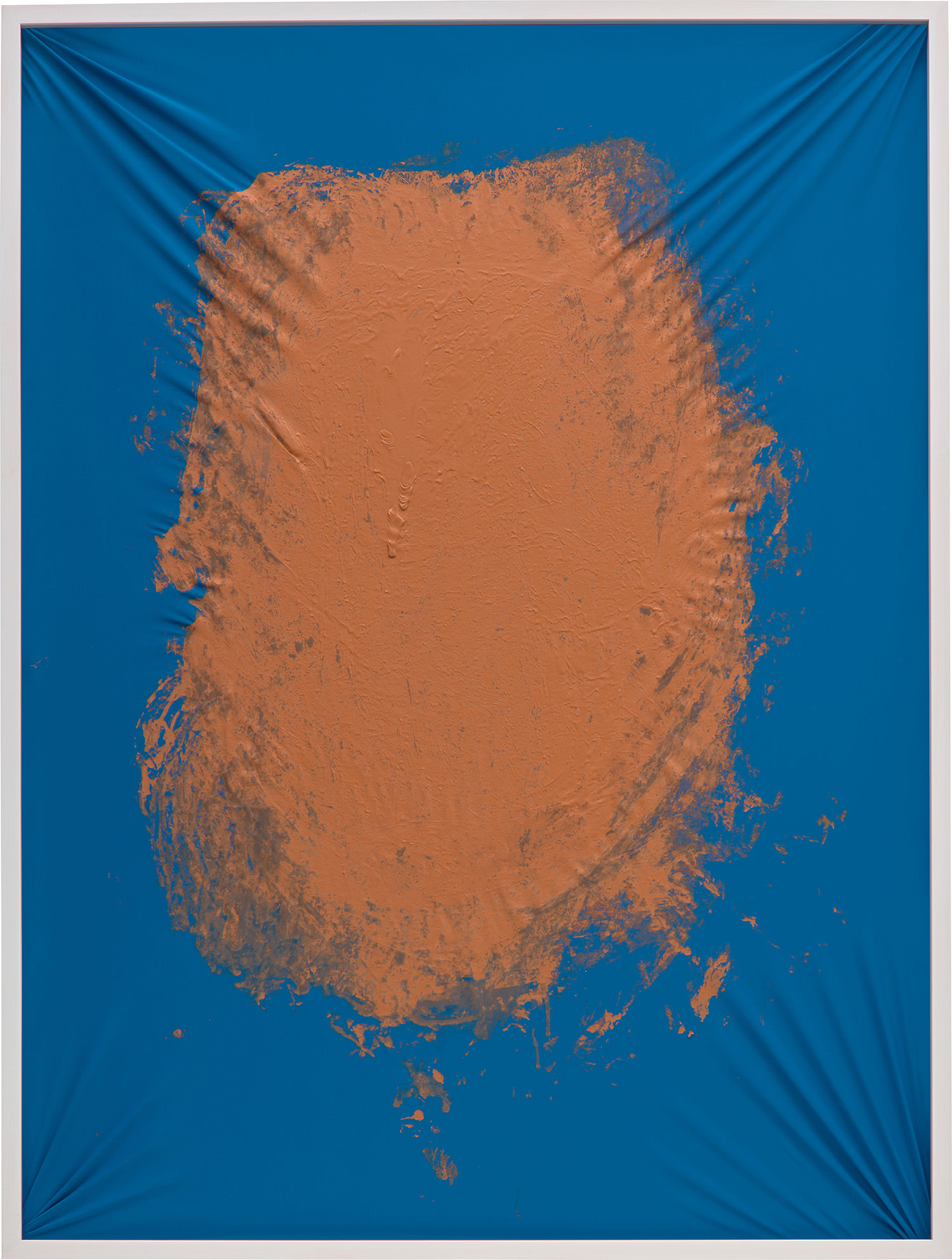
Look Deeper (No Summer), 2016
'Drinking Water (Grip)' from 2013, acrylic on rayon, and 'Express Nothing (Peachy Beige Smart Water)' from the same year, fold branded water culture and ideas of hydration and purity into the visual grammar of abstraction. The 'Look Deeper' paintings from 2016, using acrylic on spandex, intensify the bodily register, the titles reading almost as cosmetic advertising copy repurposed as philosophical instruction. 'Sexual Power (Viagra Painting, Feeling Green)' from 2020, in acrylic on aluminum, continues her engagement with pharmaceutical culture and the politics of body modification, bringing a deadpan humor to bear on some of the most loaded territories in contemporary life. 'Fire and Ice (Plastic Soul)' in acrylic on silk spandex, with its near erotic material sensitivity, demonstrates her ongoing refinement of touch and surface.
And 'Bow Human' from 2010, a sculptural work in aluminum, rescue blanket, AcrylCast, vaseline, and iron, shows the sculptural dimension of a practice often discussed primarily in terms of painting. For collectors, Rosenkranz represents something rare: an artist whose work rewards deep looking, whose individual pieces function powerfully on their own terms while also building meaning in relation to one another. The framing choices, always specified as the artist's own, are not incidental. They complete the works formally and conceptually, and condition how the paintings meet the wall and the room.
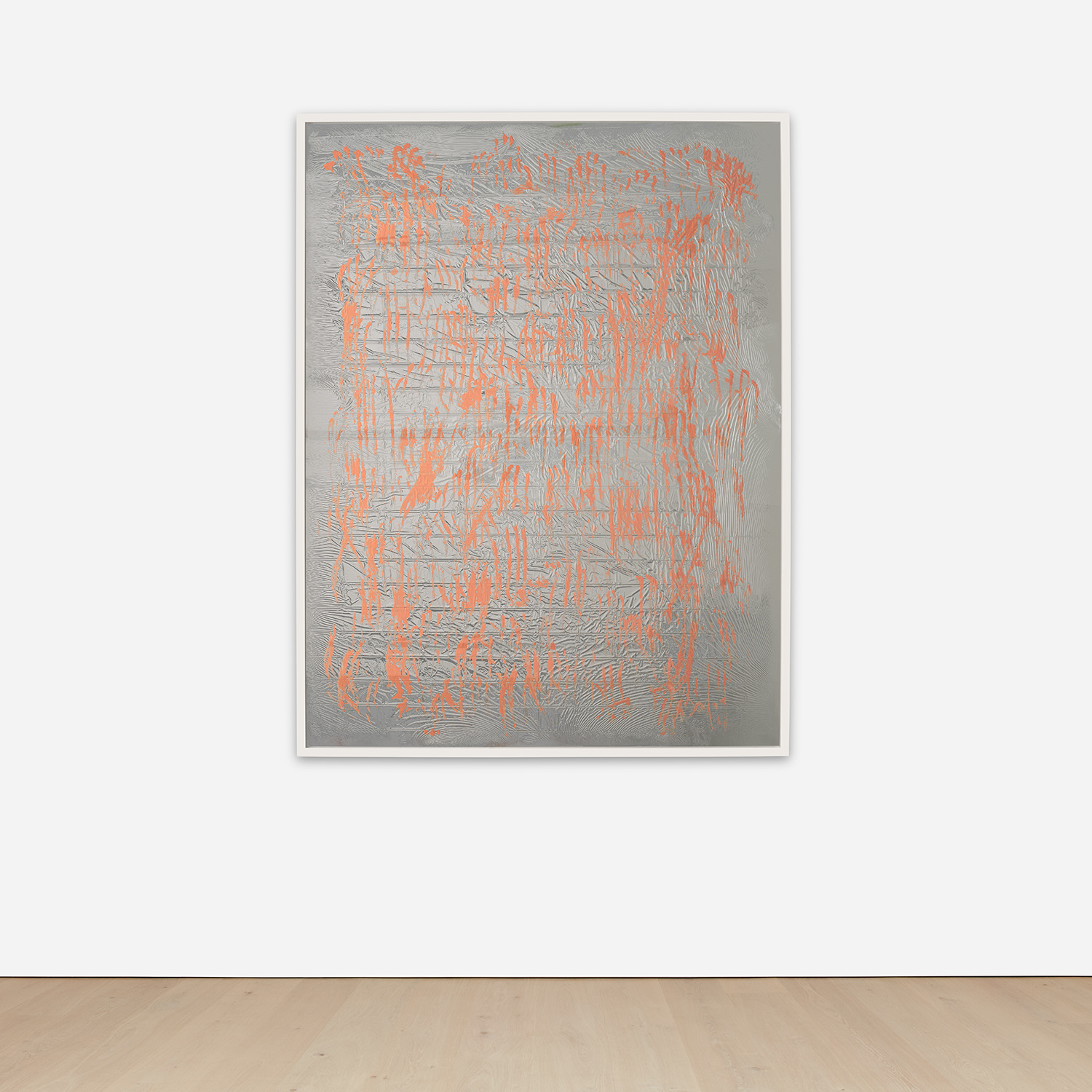
Pamela Rosenkranz
Express Nothing (Rain In), 2012
Collectors who have assembled multiple works from different series find that the practice reveals itself across time, the recurrence of certain colors, materials, and conceptual moves accumulating into something that feels almost like a language. Her works have been exhibited at institutions including the Kunsthalle Zürich and galleries of international standing, and her Venice representation brought significant sustained critical attention. The market for her work reflects genuine institutional and critical consensus rather than speculative heat, which is precisely the kind of foundation that supports long term significance. In terms of art historical context, Rosenkranz belongs to a lineage of artists who have taken the color of skin and the materials of everyday life as serious conceptual territory.
One thinks of the chromatic investigations of Sigmar Polke, the material politics of Mike Kelley, or the biopolitical concerns of artists like Hito Steyerl, but Rosenkranz's sensibility is distinctly her own. She is less interested in critique as rupture than in a kind of forensic tenderness, turning over the objects and colors of contemporary life to see what they reveal about how bodies are valued, standardized, and made legible within systems of capital and medicine. Artists like Ryan Sullivan or Kerstin Brätsch share certain affinities in the way they push painting into material uncertainty, but Rosenkranz's grounding in biological and pharmaceutical thinking gives her work a conceptual specificity that is genuinely singular. What makes Rosenkranz essential today is the urgency of the questions she has been asking for more than a decade.
At a moment when conversations about skin, identity, biology, and technology have never felt more charged, her work arrives with the authority of an artist who got there early and has never stopped going deeper. Her paintings and sculptures do not illustrate these conversations. They create the conditions for experiencing them. That is the measure of an artist whose importance only grows with time, and whose works, wherever they are encountered, whether in a museum pavilion in Venice or on the wall of a thoughtfully assembled private collection, continue to open the world up rather than close it down.