Pablo Picasso
Picasso: The Genius Who Remade Everything
Artist Spotlight · The Collection Editorial
“Every act of creation is first an act of destruction.”
Pablo Picasso
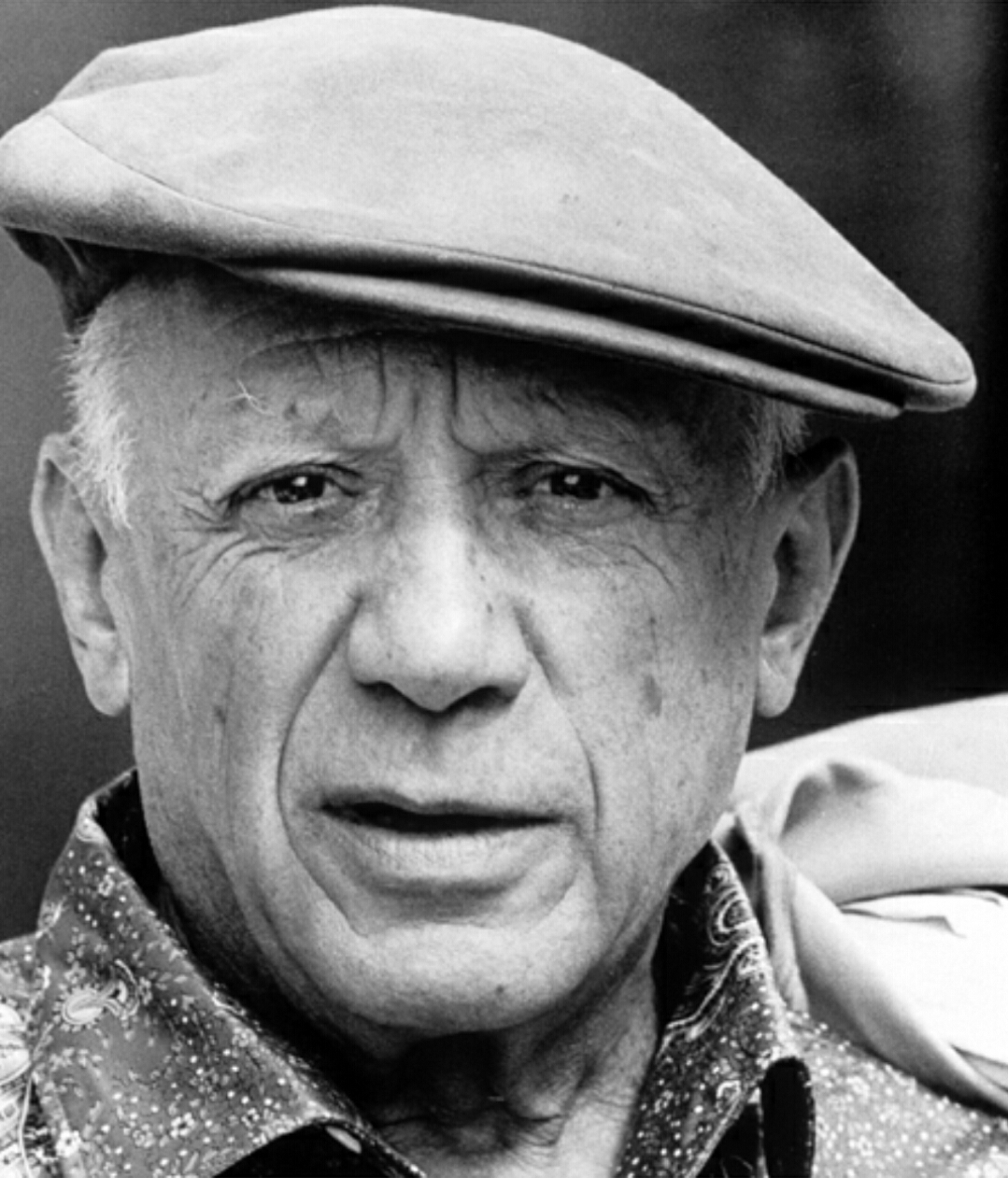
In the spring of 2023, the Museu Picasso in Barcelona welcomed its ten millionth visitor, a milestone that speaks to something enduring and irresistible about the man and his work. That same year, a luminous 1932 portrait from his celebrated Marie Thérèse series achieved extraordinary results at auction, reaffirming what collectors and institutions have known for decades: Pablo Picasso is not merely an art historical category but a living force in the market, in the museum, and in the broader cultural imagination. Few artists born in the nineteenth century feel as urgently contemporary as he does today. Pablo Ruiz Picasso was born on October 25, 1881, in Málaga, in the Andalusian south of Spain, to José Ruiz Blasco, an art teacher and painter, and María Picasso López.
Pablo Picasso
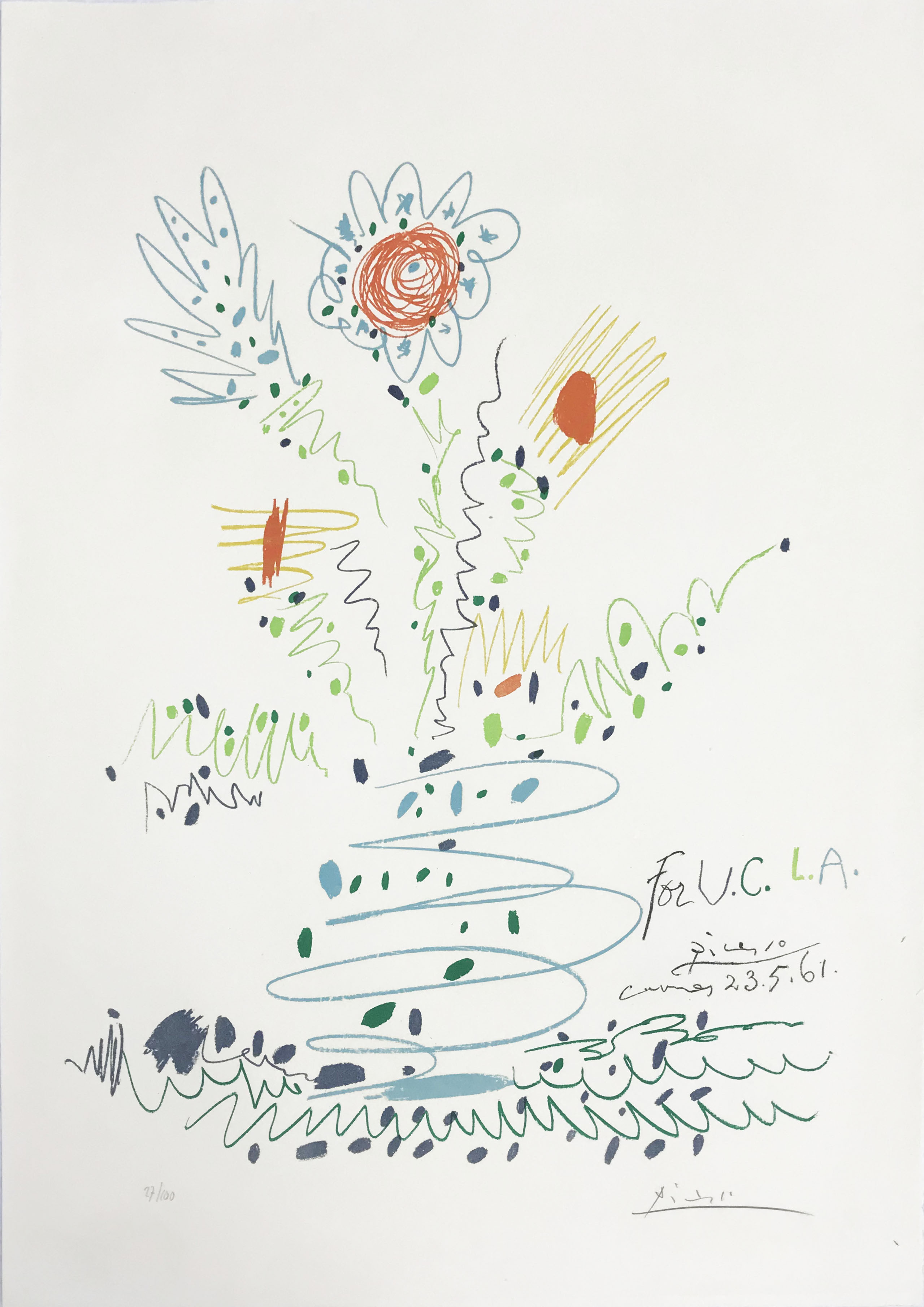
Fleurs (for UCLA), 1961
The family relocated to Barcelona in 1895, where his father secured a post at the School of Fine Arts, and it was here that young Pablo passed the entrance examination for the advanced class in a single day, a feat that reportedly astonished the faculty. By the time he made his first extended visit to Paris in 1900, he was already exhibiting, already restless, and already searching for a visual language that none of his teachers could give him. The city would become his adopted home and the stage for one of the most extraordinary careers in Western art. The arc of Picasso's development resists easy summary because he refused to settle.
His Blue Period, running roughly from 1901 to 1904, emerged from genuine personal anguish, most notably the suicide of his close friend Carlos Casagemas, and produced works of harrowing emotional depth rendered in cool, mournful tonalities. The Rose Period that followed brought warmth and tenderness, populated by circus performers and acrobats observed with quiet affection. Then, between 1907 and 1914, working alongside Georges Braque and drawing inspiration from Paul Cézanne's structural experiments and the formal power of African and Iberian sculpture, Picasso helped dismantle the foundations of pictorial representation entirely. Cubism was not a style so much as a revolution, a way of insisting that a painting was an object in the world rather than a window onto it.
Pablo Picasso
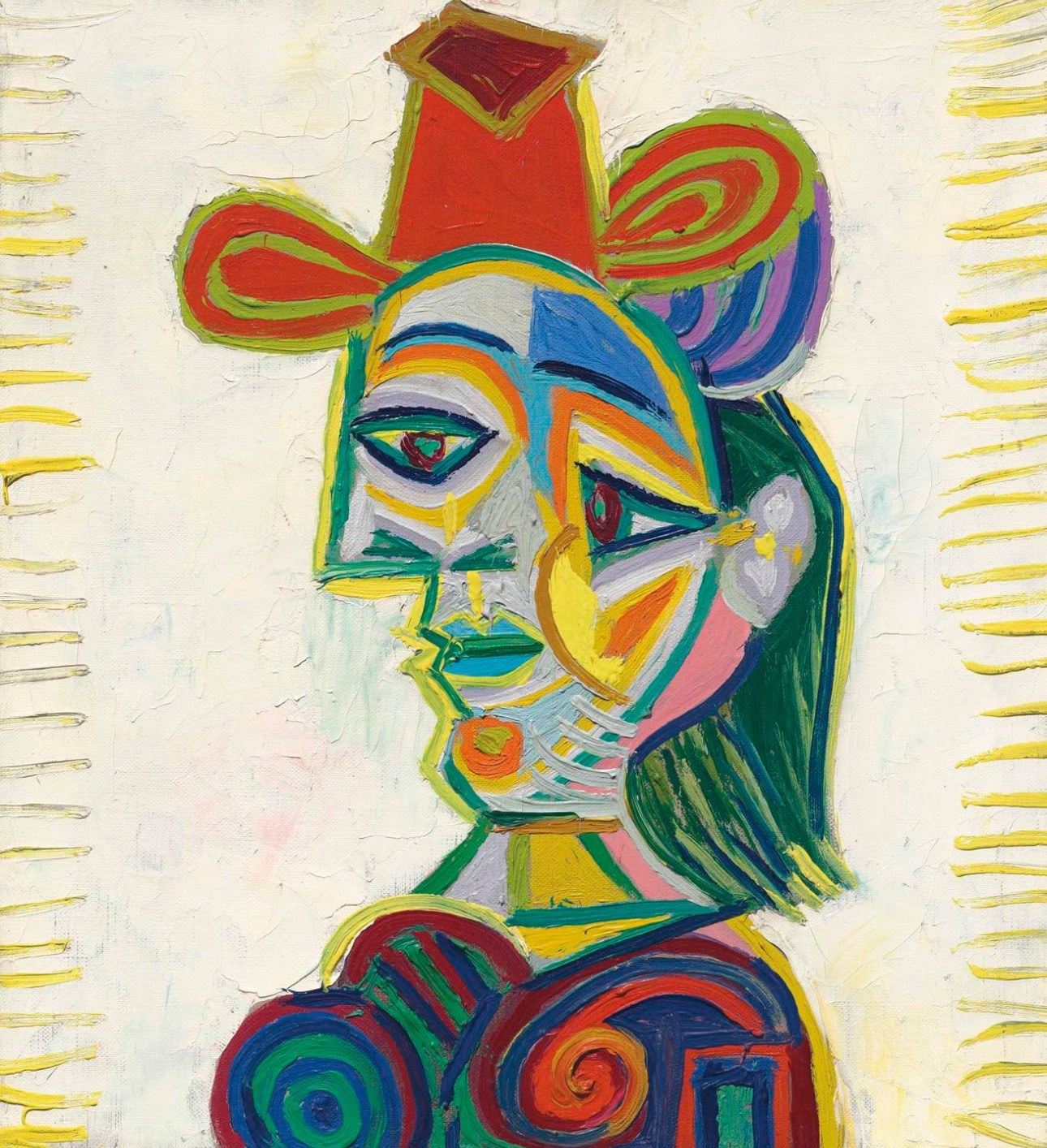
Buste De Femme (Dora Maar), 1938
To follow Picasso's career through the decades is to encounter a mind constitutionally incapable of repetition. His Neoclassical works of the early 1920s, monumental and serene, sit alongside jagged Surrealist inventions that distort the human face into something simultaneously terrifying and tender. His political commitments produced some of the most powerful protest art of the twentieth century: the etchings of Sueño y mentira de Franco, created in 1937, deploy savage satire against the Nationalist cause, while Guernica, painted that same year for the Spanish Pavilion at the Paris International Exposition, became the defining image of civilian suffering in wartime. His ceramics, produced in enormous quantity beginning in 1947 at the Madoura pottery in Vallauris, demonstrated that his curiosity about materials was boundless.
“The purpose of art is washing the dust of daily life off our souls.”
Pablo Picasso
His prints, spanning lithography, etching, aquatint, and linocut, constitute a body of work that would alone place him among the supreme printmakers of any era. The works available through The Collection offer a remarkable cross section of this range and ambition. The 1938 Buste de Femme depicting Dora Maar captures the charged, fractured intensity of his late Surrealist portraiture, a period in which his intimate relationships and his formal innovations became inseparable. The Old Guitarist from 1903 is one of the defining images of the Blue Period, spare and aching in its empathy.
Pablo Picasso
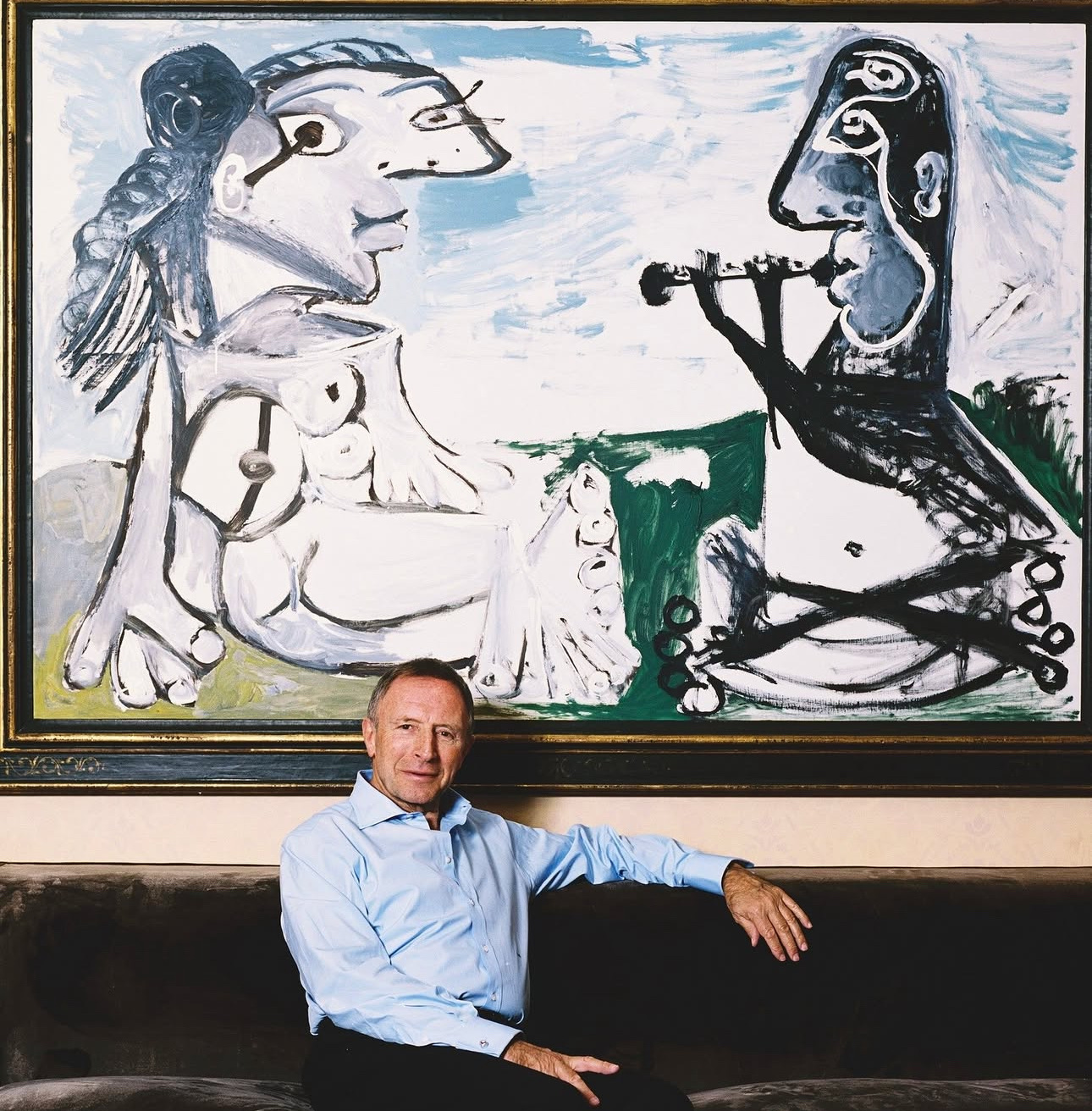
L’Aubade, 1967
The complete set of Sueño y mentira de Franco etchings on Montval laid paper represents Picasso the political conscience, an artist willing to use printmaking as a weapon of resistance. His ceramics, including the white earthenware forms painted with characteristic economy and wit, reveal a more playful register, the artist delighting in the transformation of humble clay into something both functional and charged with meaning. The silver and gold plates created in collaboration with silversmith François Victor Hugo, begun following Picasso's conversations about Venetian and Augsburg metalwork traditions of the sixteenth and seventeenth centuries, are among the rarest and most intimate objects in his entire output, existing in editions of only fifteen to twenty examples due to the extraordinary labour involved in heating and hammering metal into wax matrices. From a collecting perspective, Picasso occupies a position that very few artists in history have held: he is simultaneously a blue chip investment and a source of genuine aesthetic discovery.
“It took me four years to paint like Raphael, but a lifetime to paint like a child.”
Pablo Picasso
His work appears across every segment of the market, from major paintings that command nine figures at the leading auction houses to prints and ceramics that offer serious collectors a point of entry at more accessible levels. What draws discerning buyers is not merely the name but the quality of documentation, provenance, and condition that accompanies the finest examples. Catalogue raisonné references, such as those to the Bloch and Baer print catalogues or the Ramié ceramic catalogue, are essential signifiers of authenticity and scholarly standing. Collectors who approach Picasso with patience and genuine curiosity tend to find that the market rewards specificity: a great example of a secondary medium, properly documented and in fine condition, often outperforms expectations while delivering lasting aesthetic pleasure.
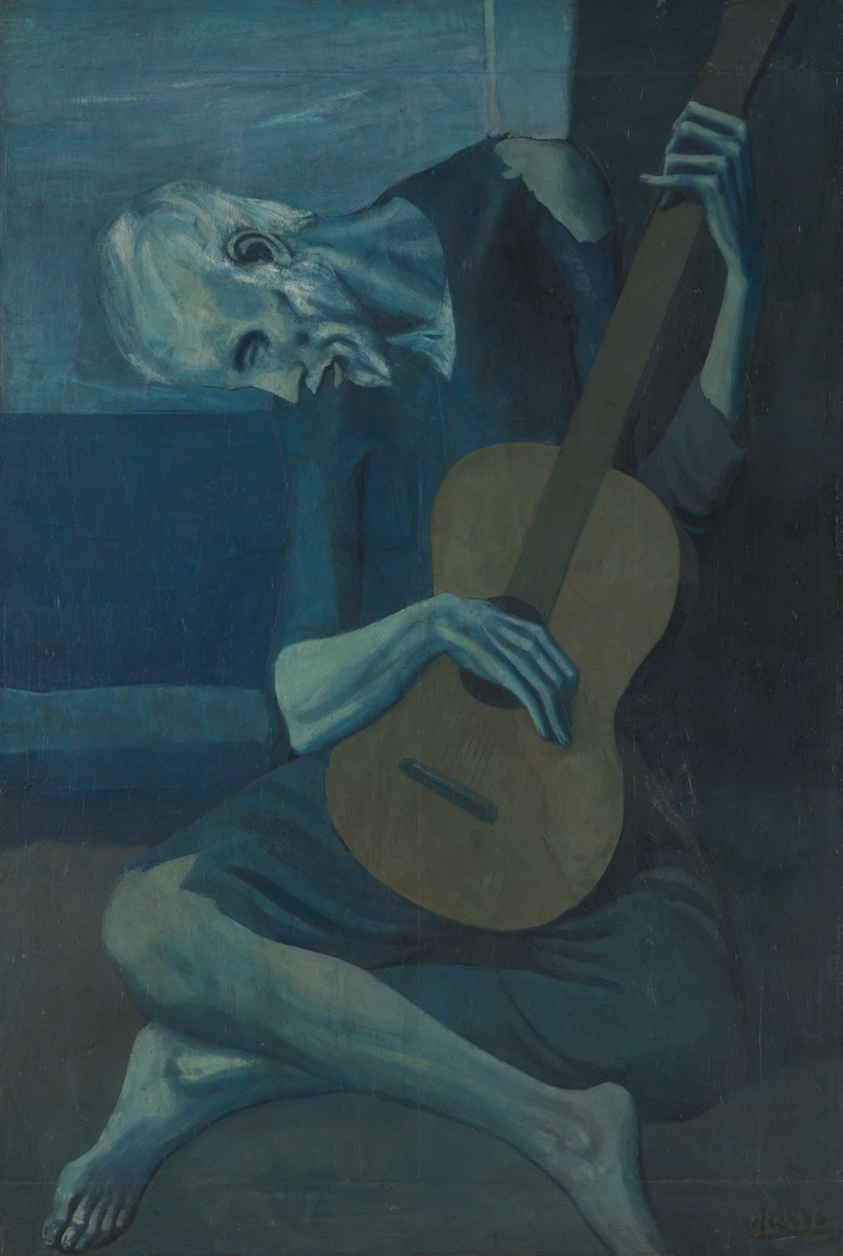
Pablo Picasso
The Old Guitarist, 1903
To understand Picasso fully it helps to place him within a constellation of peers and contemporaries. His dialogue with Georges Braque was among the most productive collaborations in modern art history. Henri Matisse was his great rival and, ultimately, his great friend, their careers in productive tension for five decades. The Surrealist movement brought him into contact with Joan Miró, Salvador Dalí, and Max Ernst, all of whom drew from his example even as he drew from theirs.
His Spanish inheritance connects him to Francisco Goya's unflinching social vision and to the formal severity of El Greco. His legacy runs forward through Francis Bacon, who cited the Surrealist distortions of Picasso's figure paintings as a decisive early influence, and through generations of artists who continue to reckon with what it means to represent the human form after Cubism. What makes Picasso matter today, fifty years after his death in Mougins on April 8, 1973, is not nostalgia but relevance. His insistence that art must be made with full engagement with the present moment, with politics, with love, with grief, with formal experiment, remains a challenge and an invitation.
The breadth of The Collection's holdings reflects an artist whose restlessness was not a weakness but his deepest strength. To live with a Picasso, whether a charged etching, a tender ceramic vessel, or a monumental painting, is to keep company with one of the most alive minds the world of art has ever produced.
Explore books about Pablo Picasso
Picasso: His Life and Work
Roland Penrose

Picasso and Braque Go to the Movies
Guillaume Apollinaire
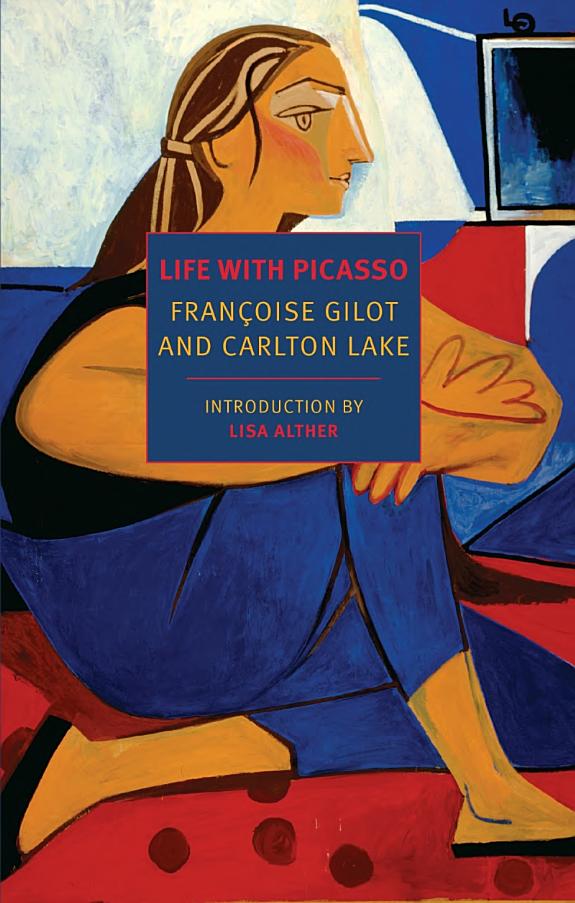
Life with Picasso
Françoise Gilot and Carlton Lake
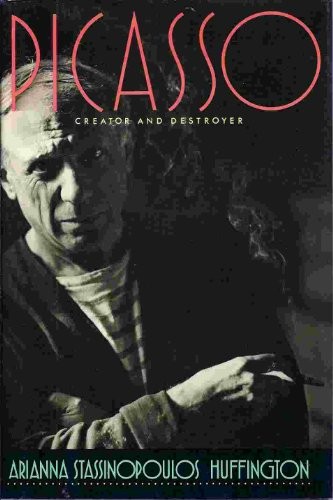
Picasso: Creator and Destroyer
Arianna Stassinopoulos Huffington
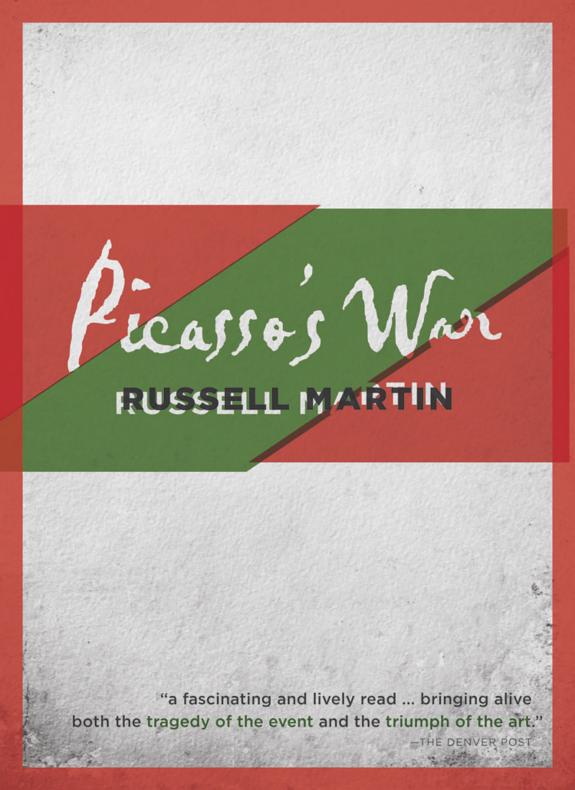
Picasso's War: The Destruction of Guernica and the Masterpiece That Changed the World
Pete Hamill

The Young Picasso: Blue and Rose Periods
Michael C. FitzGerald
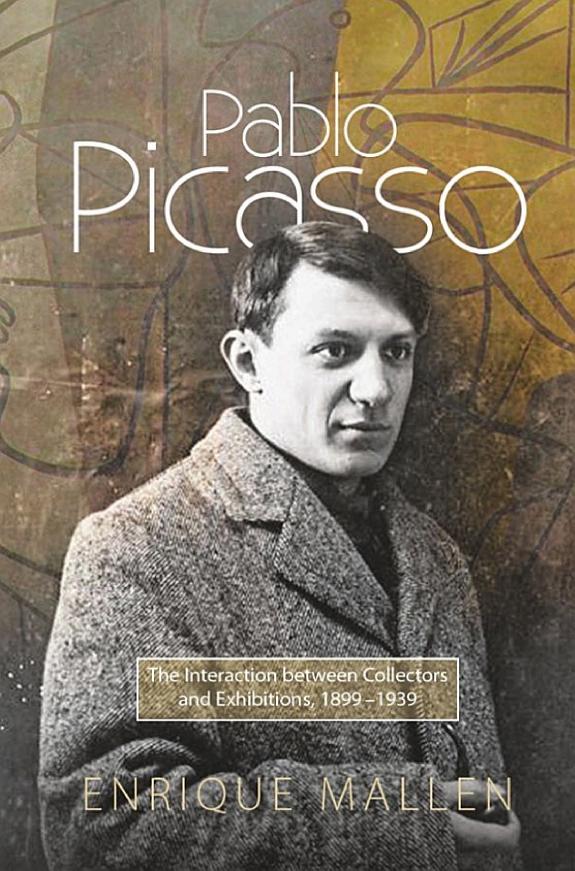
Picasso: The Great Modernist
Pierre Daix
Picasso: Style and Meaning
Meyer Schapiro