Pablo Atchugarry
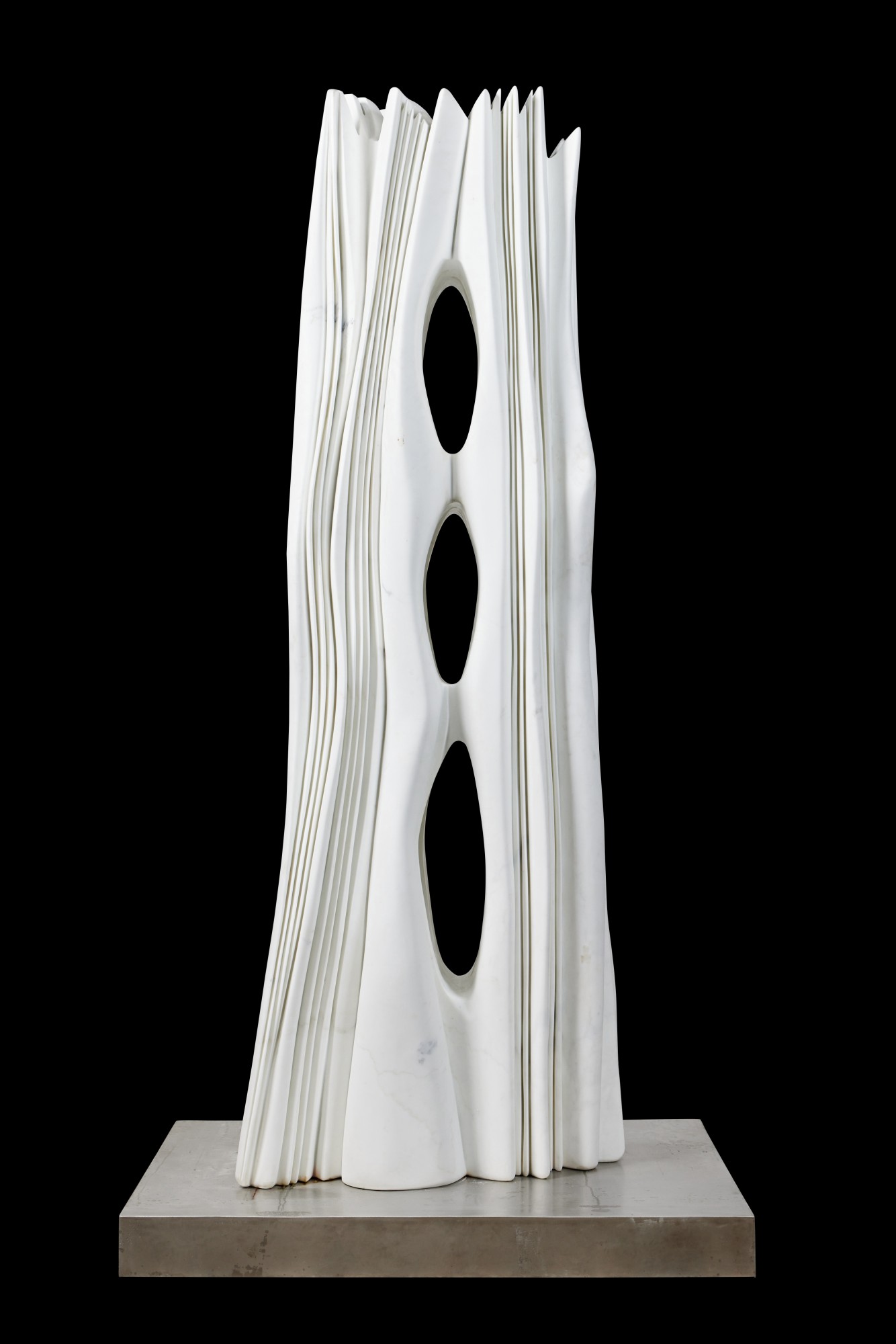
Pablo Atchugarry: Light Made Permanent in Marble
Artist Spotlight · The Collection Editorial
In the spring of 2023, visitors to the Fondazione Internazionale Atchugarry in Manantiales, Uruguay, encountered something that stops a person in their tracks: towering spires of white Carrara marble rising from the surrounding landscape, catching the coastal light and bending it into something that felt almost alive. The foundation, which Atchugarry established as both a creative campus and a public cultural institution, has become one of South America's most quietly remarkable destinations for contemporary sculpture. That a Uruguayan artist working in a classical Italian medium has built this kind of institution on his home soil speaks to the singular ambition and spiritual generosity that define everything Pablo Atchugarry does. Pablo Atchugarry was born in Montevideo in 1954, into a family with deep cultural roots and an appreciation for making things by hand.
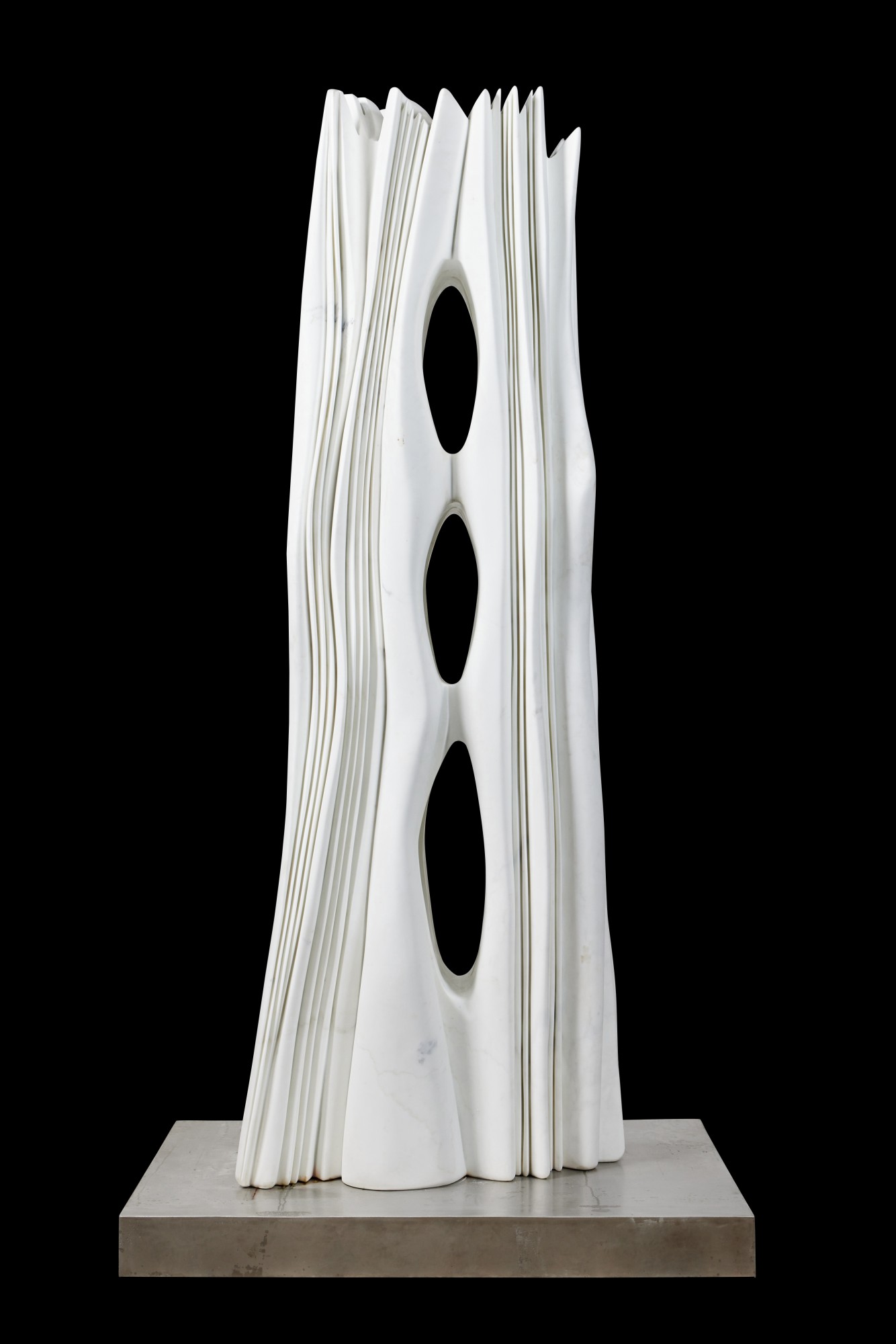
Pablo Atchugarry
Evolution of a Dream, 2019
From an early age he demonstrated an unusual sensitivity to form and material, and he pursued formal artistic training with the seriousness of someone who understood that mastery of craft was not a limitation on expression but a precondition for it. By his twenties he had made his way to Italy, the country that would become his second home and the source of the stone that defines his practice. Settling in the Brianza region of Lombardy, he immersed himself in the centuries old traditions of Italian stone carving, absorbing the lessons of a culture that had been thinking rigorously about marble since antiquity. The move to Italy was transformative in ways that went beyond access to material.
Atchugarry encountered firsthand the great tradition of European modernist sculpture, and he came to understand his own work in dialogue with that lineage while remaining distinctly Latin American in his sensibility. He visited the Carrara quarries in Tuscany and developed the kind of relationship with raw stone that only comes from sustained, physical engagement. He learned to read the interior life of a block of marble before the chisel ever touched it, a skill that would later allow him to produce works of breathtaking fluidity from a material that most people associate with rigidity and weight. The signature formal language that Atchugarry developed over decades is immediately recognizable and yet endlessly inventive.
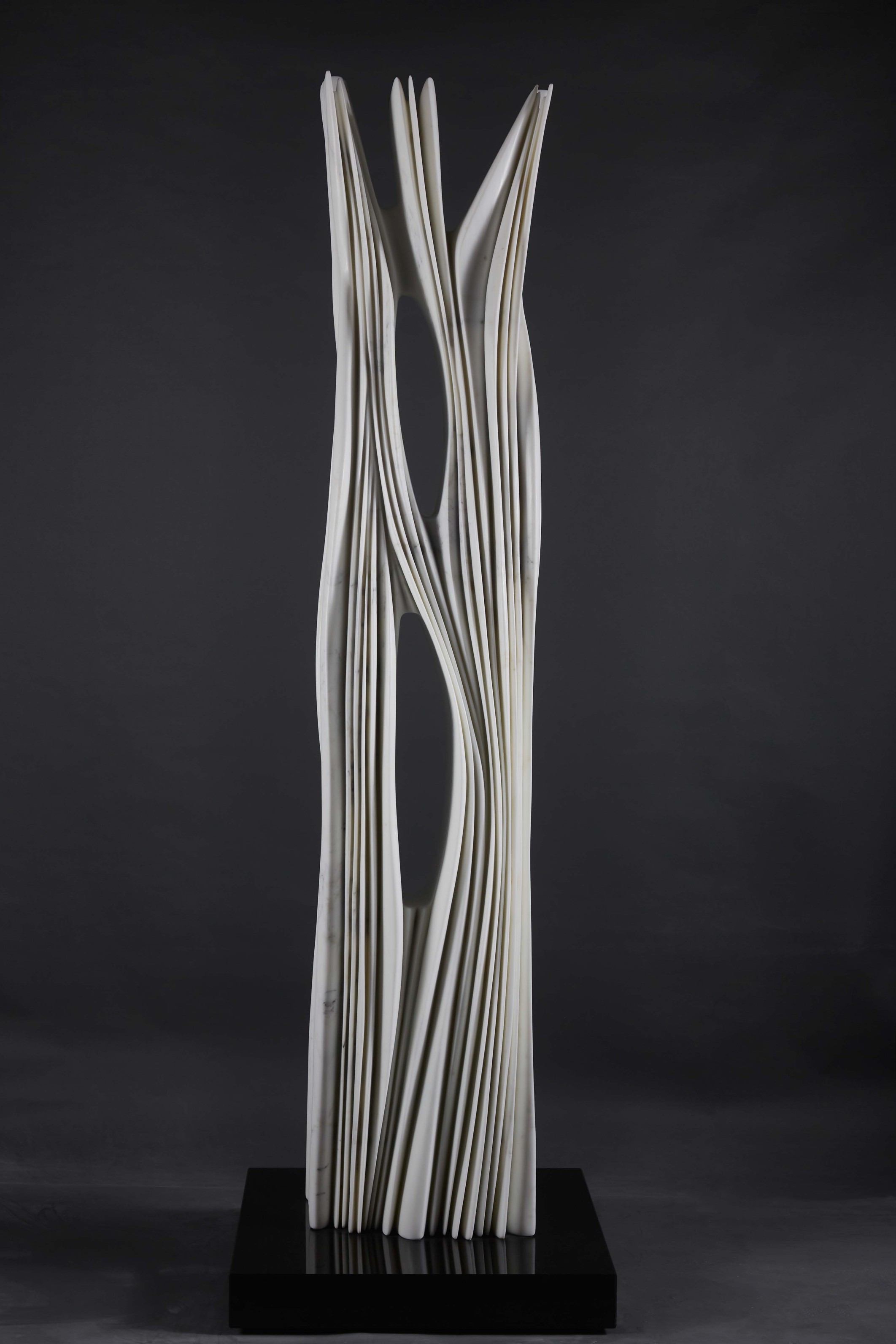
Pablo Atchugarry
Sin título, 2020
His sculptures most often take the form of ascending, spiraling columns or sweeping curved planes that seem to have been caught mid movement, as though the stone were fabric frozen in a gust of wind. Works like Armonía Vitale, completed in 2007 and set on a granite base, demonstrate his mastery of tension within marble: the surface appears to breathe, and the form suggests both rootedness and flight simultaneously. His 2019 work Evolution of a Dream exemplifies the philosophical dimension of his practice, encoding within its elegant geometry a meditation on aspiration and the passage of time. Libro de la Sabiduría, from 2020, transforms the ancient metaphor of the book as repository of human knowledge into a sculptural object of striking formal beauty.
Each of these works rewards sustained looking, offering new angles and new relationships between mass and void as the viewer moves around them. What drives collectors to Atchugarry is a combination of factors that is relatively rare in the contemporary market. His technical virtuosity is unimpeachable, and this matters to serious collectors who understand how difficult it is to carve marble at monumental scale without mechanical assistance. His conceptual framework, rooted in ideas of spiritual elevation, organic growth, and the relationship between human consciousness and natural form, gives his work intellectual substance without obscuring the immediate emotional impact of encountering these objects in person.
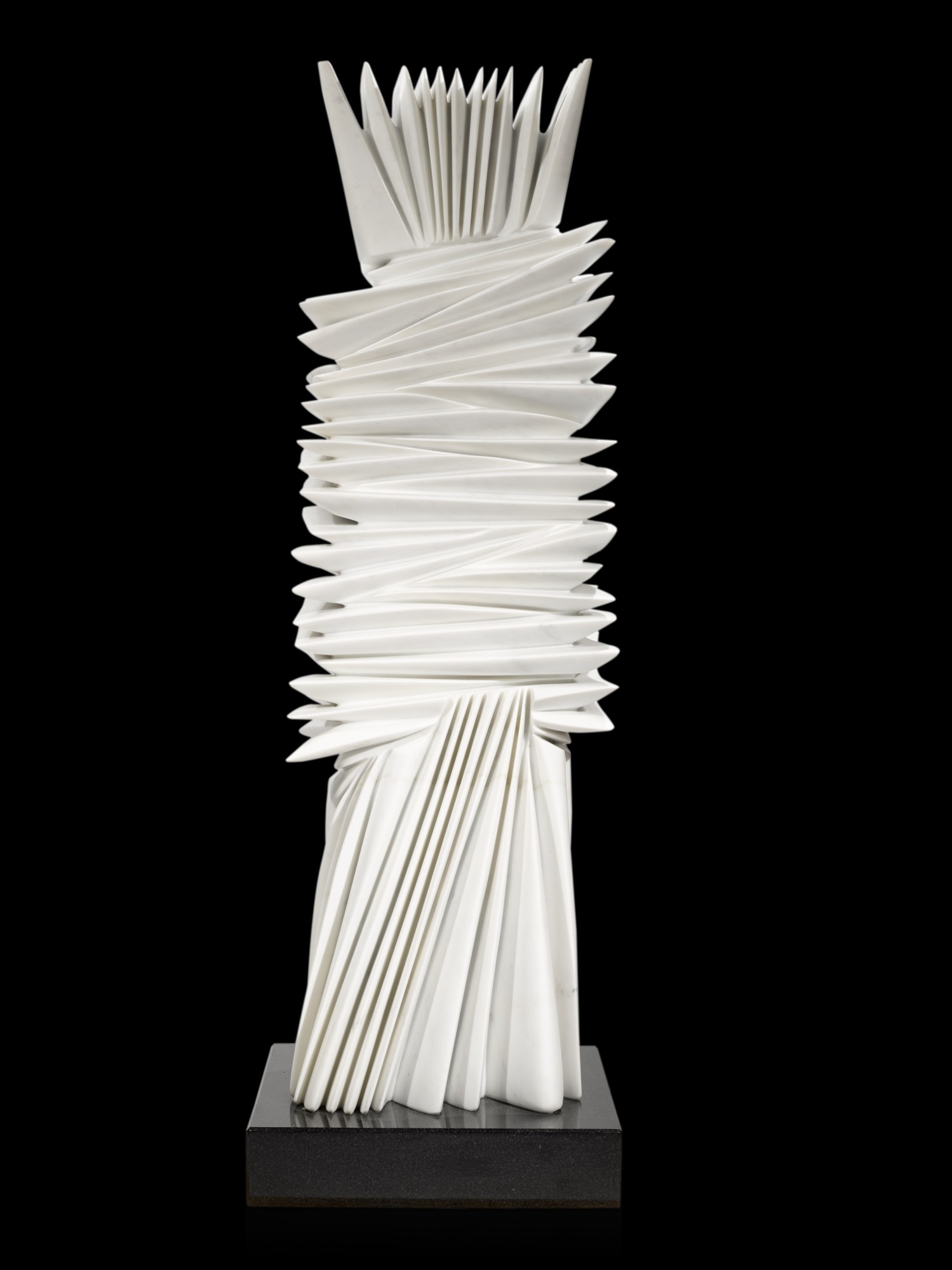
Pablo Atchugarry
Libro de la sabiduría, 2020
Smaller works and intimate pieces in his catalogue offer entry points for collectors who cannot accommodate a monumental sculpture, while major works have entered significant private collections across Europe, the Americas, and beyond. The consistency of his vision across decades of production is also a reassuring quality for collectors thinking about long term value: there is no jarring stylistic rupture in Atchugarry's body of work, only a deepening and refinement of a coherent artistic project. In the broader context of art history, Atchugarry occupies a fascinating position. His work is in genuine conversation with the great European abstract sculptors of the twentieth century, particularly Constantin Brancusi, whose pursuit of essential form in stone and bronze established the vocabulary that later sculptors working in abstraction have had to reckon with.
There are also resonances with the Italian sculptor Arnaldo Pomodoro in the way Atchugarry balances surface polish with an underlying sense of dynamic energy, and with the spiritual abstraction of Isamu Noguchi in his sensitivity to the inner life of natural materials. Yet Atchugarry is not derivative of any of these predecessors. His specific treatment of marble, his characteristic upward movement, and the particular quality of transcendence his works pursue are his own contributions to the sculptural tradition. The Fondazione Internazionale Atchugarry represents perhaps the most tangible expression of the artist's commitment to something larger than his own career.
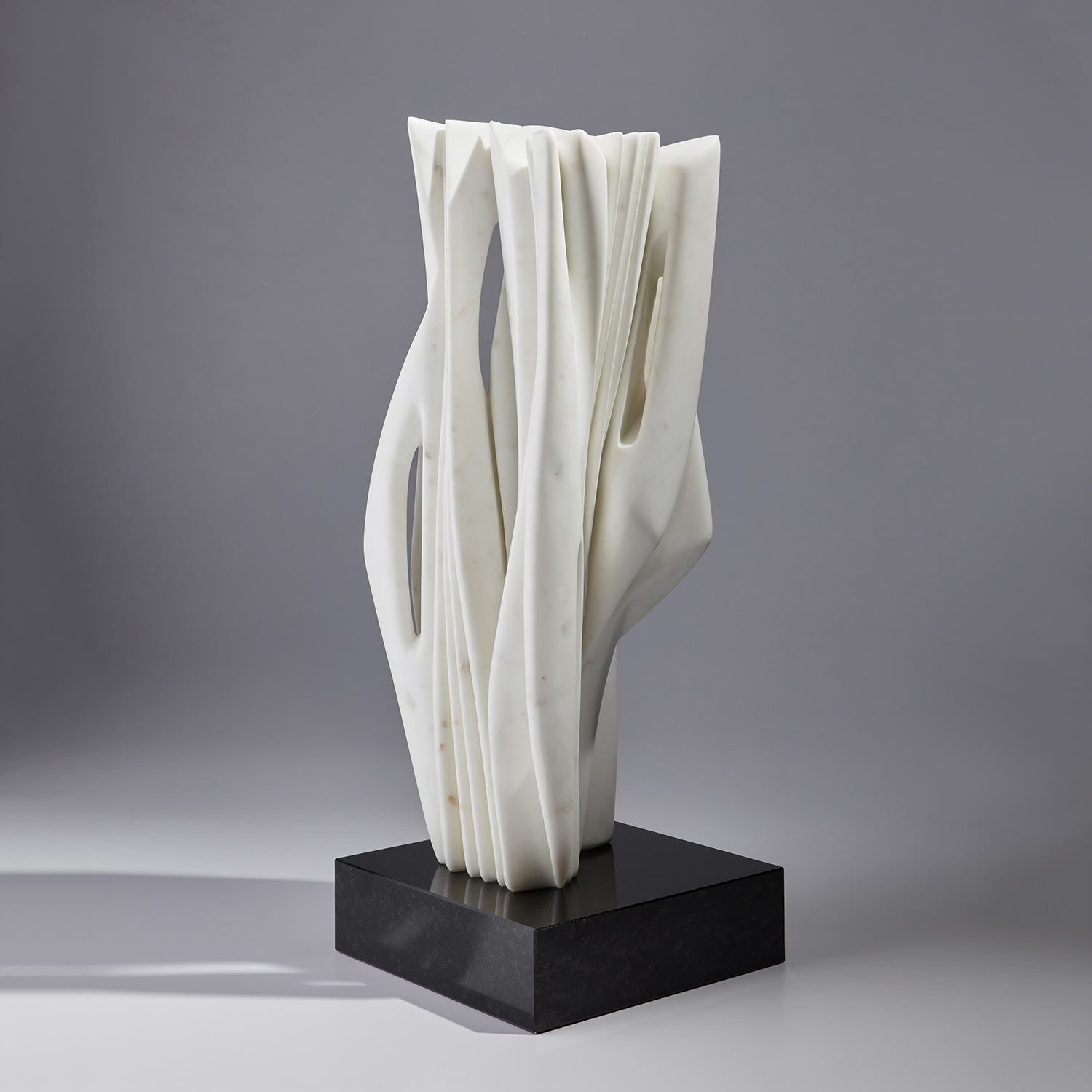
Pablo Atchugarry
Armonía Vitale, 2007
Established as a space for artistic education, cultural exchange, and the permanent display of sculpture in a landscape setting, it reflects a vision of art as fundamentally communal and rooted in place. Atchugarry has spoken and written about his belief that art carries a responsibility to elevate the communities it touches, and the foundation is the institutional embodiment of that conviction. It has brought international artists, scholars, and visitors to Uruguay and placed the country in a global cultural conversation in ways that extend well beyond any single sculpture. Pablo Atchugarry matters today because he proves that working within a classical medium and a tradition of spiritual abstraction is not a retreat from the contemporary but a legitimate and vital response to it.
In a moment when the art world often prizes disruption and novelty above all else, his patient, devoted, technically demanding practice is a reminder that some of the most profound artistic experiences come not from shock but from sustained engagement with beauty, craft, and meaning. His marble carries the light of Carrara and the light of the South Atlantic simultaneously, and it offers to anyone who stands before it a moment of genuine stillness in a very loud world.