Otto von Faber du Faur
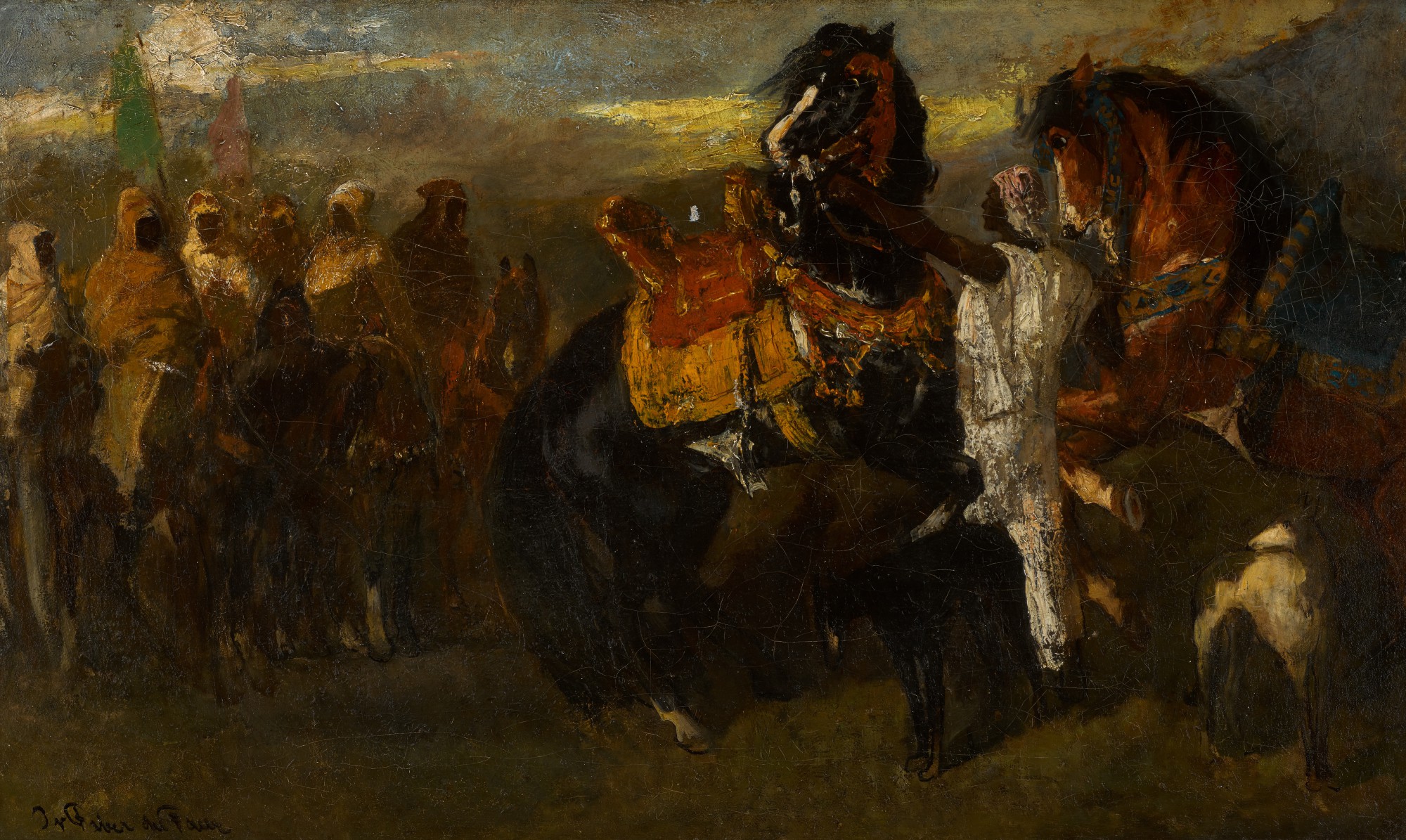
Otto von Faber du Faur, Witness to Wonder
Artist Spotlight · The Collection Editorial
There is a moment in every great painting of horses and desert light when the viewer stops being a spectator and becomes a traveler. Otto von Faber du Faur understood this instinctively. His canvases carry the smell of dust and the heat of open ground, the sense that the world depicted is not a reconstruction but a lived memory. To stand before one of his oils is to understand why the Romantic movement produced some of the most viscerally convincing documentary art in European history.
Otto von Faber du Faur
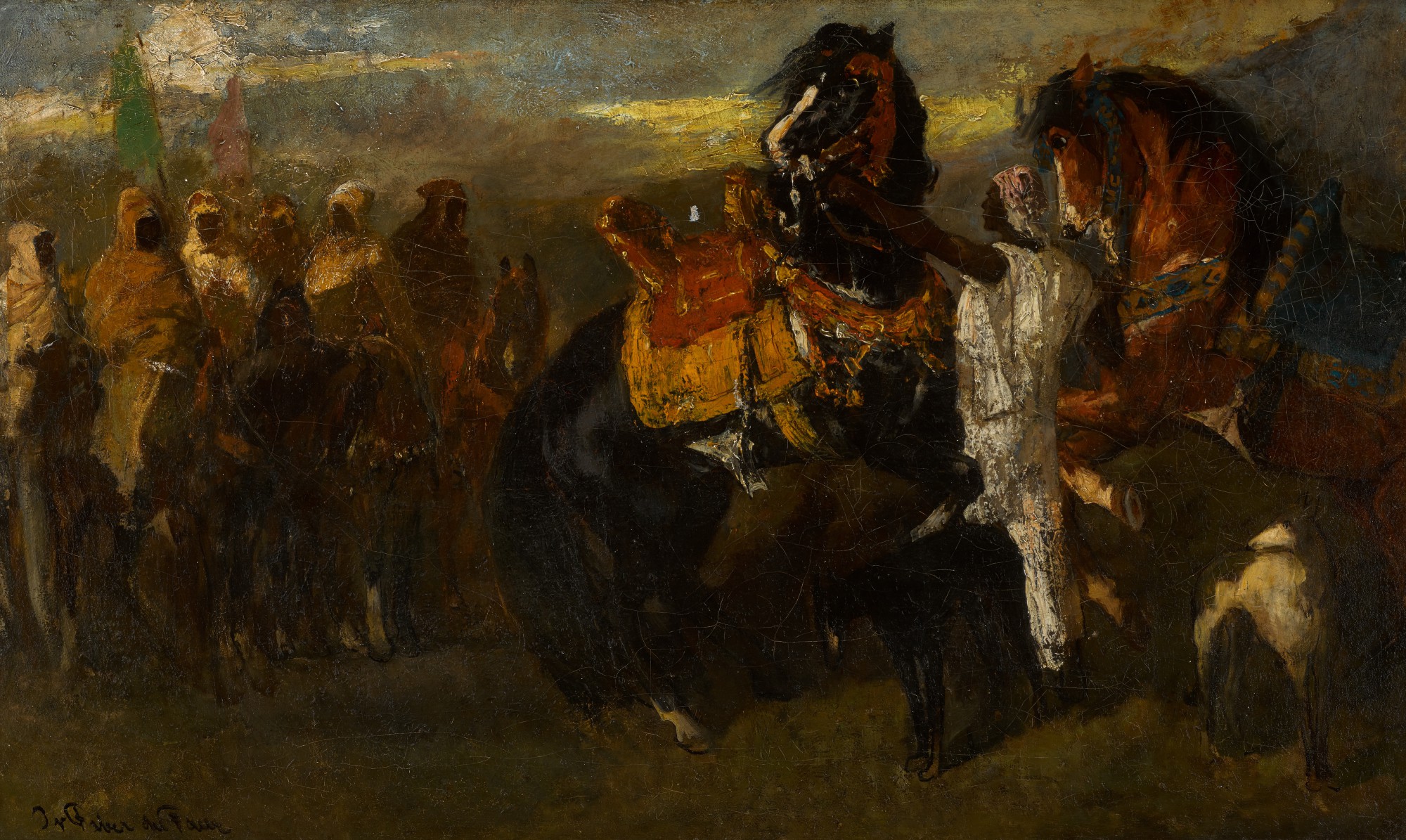
Bedouin Riders
Otto von Faber du Faur was born in 1828 into a family with deep roots in both military culture and artistic ambition. His father, Christian Wilhelm von Faber du Faur, was himself a painter of considerable reputation, best known for his harrowing visual chronicle of the Napoleonic retreat from Moscow, a body of work that burned a specific visual vocabulary into the younger Faber du Faur from childhood. Growing up surrounded by images of soldiers in extreme conditions, of horses straining against cold and chaos, of landscapes as protagonists rather than backdrops, Otto absorbed a set of artistic priorities that would define his entire career. The family heritage was not simply biographical context; it was a creative inheritance of the most formative kind.
Faber du Faur came of age during a period when German Romanticism was wrestling productively with its own ambitions. The movement had by mid century developed a sophisticated tension between the grandiose and the intimate, between panoramic historical ambition and the quietly observed detail. Faber du Faur trained within this tradition and showed an early aptitude for lithography, a medium that rewarded both discipline and spontaneity. Lithography in the nineteenth century was not merely a reproductive tool; it was a primary artistic form, capable of capturing texture, atmosphere, and movement with a directness that etching could not always match.
Otto von Faber du Faur
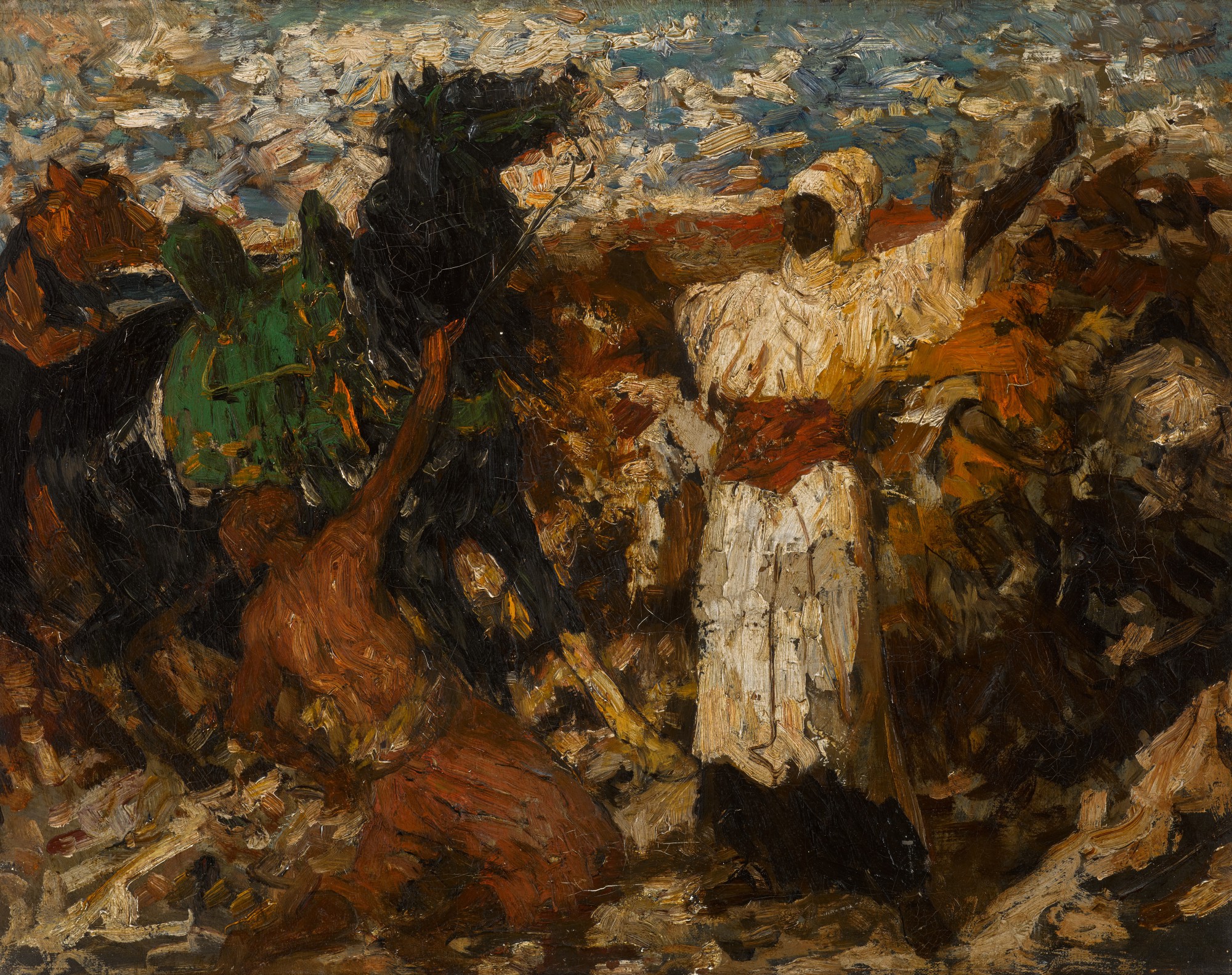
Reining in the Horses
His work in this medium established his eye for tonal contrast and his respect for the weight of shadow, qualities that would translate powerfully into his oils. The decisive turn in his artistic development came through his engagement with military subject matter and, crucially, with the landscapes of North Africa and the Near East. The Orientalist current running through European art in the second half of the nineteenth century drew many painters toward the light and cultures of the Arab world, and Faber du Faur was among those who approached this subject with genuine curiosity rather than mere exoticism. His painting Bedouin Riders stands as one of the clearest expressions of this engagement.
The work captures mounted figures with a command of equine anatomy and motion that speaks to a painter who had spent serious time observing horses not as symbols but as living, breathing, physically demanding subjects. The composition breathes. The riders carry themselves with a dignity that Faber du Faur renders without sentimentality, and the landscape around them is specific rather than generalized, a place rather than a fantasy. Reining in the Horses, another of his significant oils, demonstrates a different register of the same obsessions.
Where Bedouin Riders moves outward toward the horizon, Reining in the Horses compresses the drama into a moment of concentrated physical tension. The act of restraint, of force meeting counterforce, becomes a kind of theater. Faber du Faur understood that the most interesting moment in any scene of action is often not the explosion but the instant before or after it, when will and energy are suspended in a visible negotiation. This instinct for the charged pause gives his best work a narrative depth that elevates it well beyond illustration into something approaching genuine psychological portraiture of both horse and rider.
For collectors approaching Faber du Faur today, the appeal is layered and genuinely rewarding to unpack. His work occupies a historically rich intersection between military art, Orientalist painting, and Romantic landscape, three categories that each carry their own serious collecting tradition and their own scholarly literature. Paintings with his quality of finish and his command of animal motion are relatively rare in this period, and his family lineage adds a layer of art historical context that enriches any acquisition. Works by artists in adjacent territory, painters like Adolf Schreyer, whose Arabian and Cossack scenes share Faber du Faur's appetite for equestrian drama, or Carl Haag, who brought comparable devotion to North African light, have performed consistently well with serious private collectors and at auction houses including Christie's and Sotheby's.
Faber du Faur belongs in that conversation and deserves to be collected with the same seriousness. Within the broader arc of nineteenth century German art, Faber du Faur represents a strand that is sometimes overshadowed by the more celebrated figures of the Düsseldorf School or the grand history painters associated with Munich, yet his contribution is precisely the kind that rewards closer attention. He was a documentarian in the deepest sense, someone committed to the idea that art could hold historical experience accountable. His father had done this with the catastrophe of the Napoleonic campaign; Otto extended the practice into landscapes and cultures that were themselves undergoing transformation during the age of European expansion.
Whether one views that documentary impulse with admiration or with the critical distance that contemporary scholarship appropriately applies to Orientalist painting, the quality of observation in his best work remains undeniable. The legacy of Otto von Faber du Faur is one of a painter who asked serious questions through serious craft. He worked in an era that demanded both technical command and the courage to place oneself, literally or imaginatively, in difficult terrain. His lithographs demonstrate that he understood the discipline of the medium at a high level, and his oils show what happened when that discipline met an expansive visual imagination shaped by family, tradition, and genuine curiosity about the world.
For collectors and institutions building collections that honor the full complexity of nineteenth century European art, his work offers something rare: the feeling that a skilled and thoughtful witness was present, and that his testimony still has something to say.