Oswaldo Guayasamín
Guayasamín: A Voice Painted in Light
Artist Spotlight · The Collection Editorial
“I paint to show the world what we have done to man.”
Oswaldo Guayasamín
In the grand atrium of the Casa Museo Guayasamín in Quito, Ecuador, something remarkable continues to happen decades after the artist's death in 1999. Visitors arrive from across Latin America and the wider world, standing before monumental canvases that seem to breathe with grief and tenderness in equal measure. The museum, which Oswaldo Guayasamín designed and willed into being as a living legacy, draws more attention with each passing year, as a new generation of collectors and scholars rediscovers one of the twentieth century's most emotionally fearless painters. His work is not merely art history.
Oswaldo Guayasamín
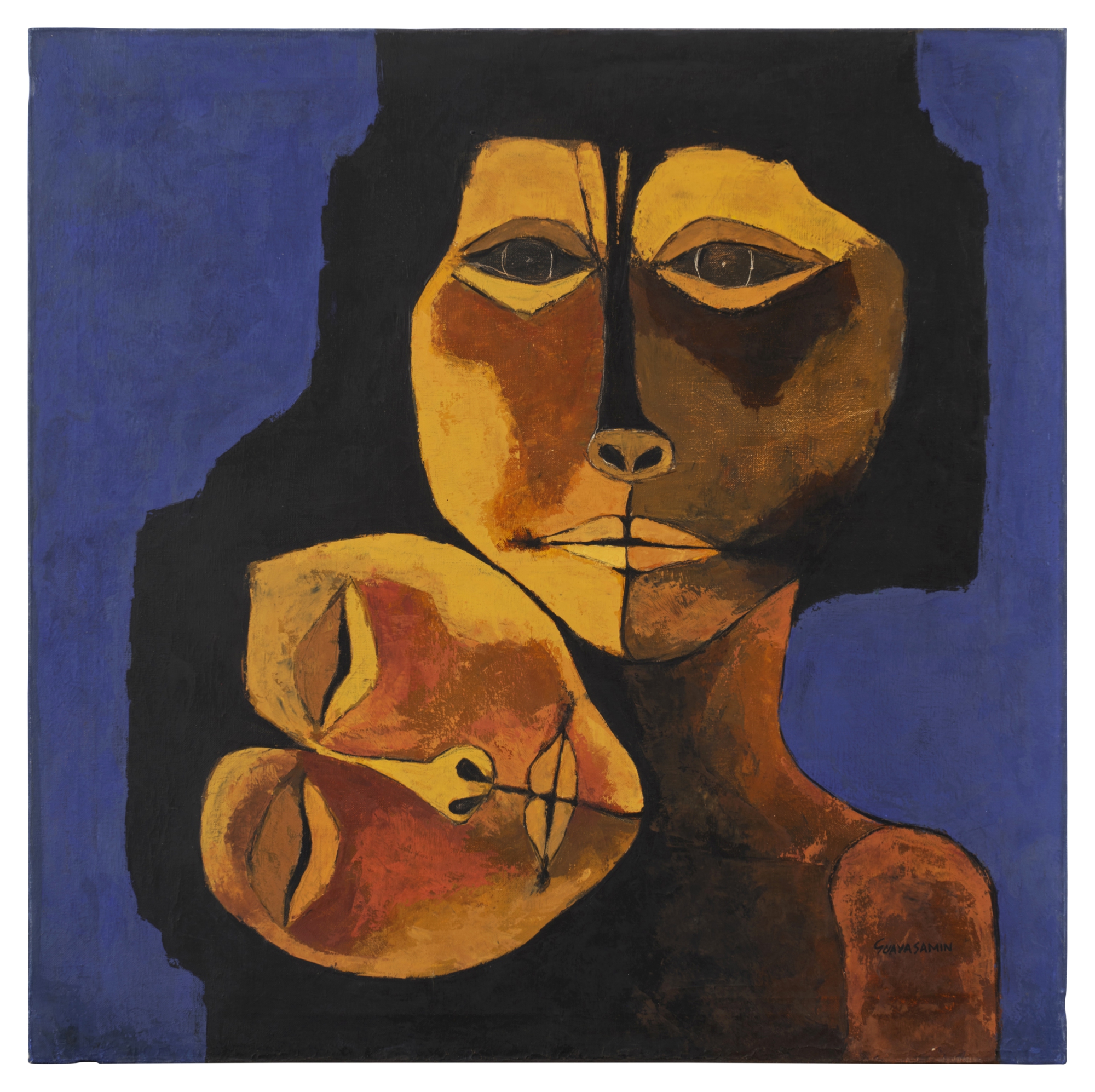
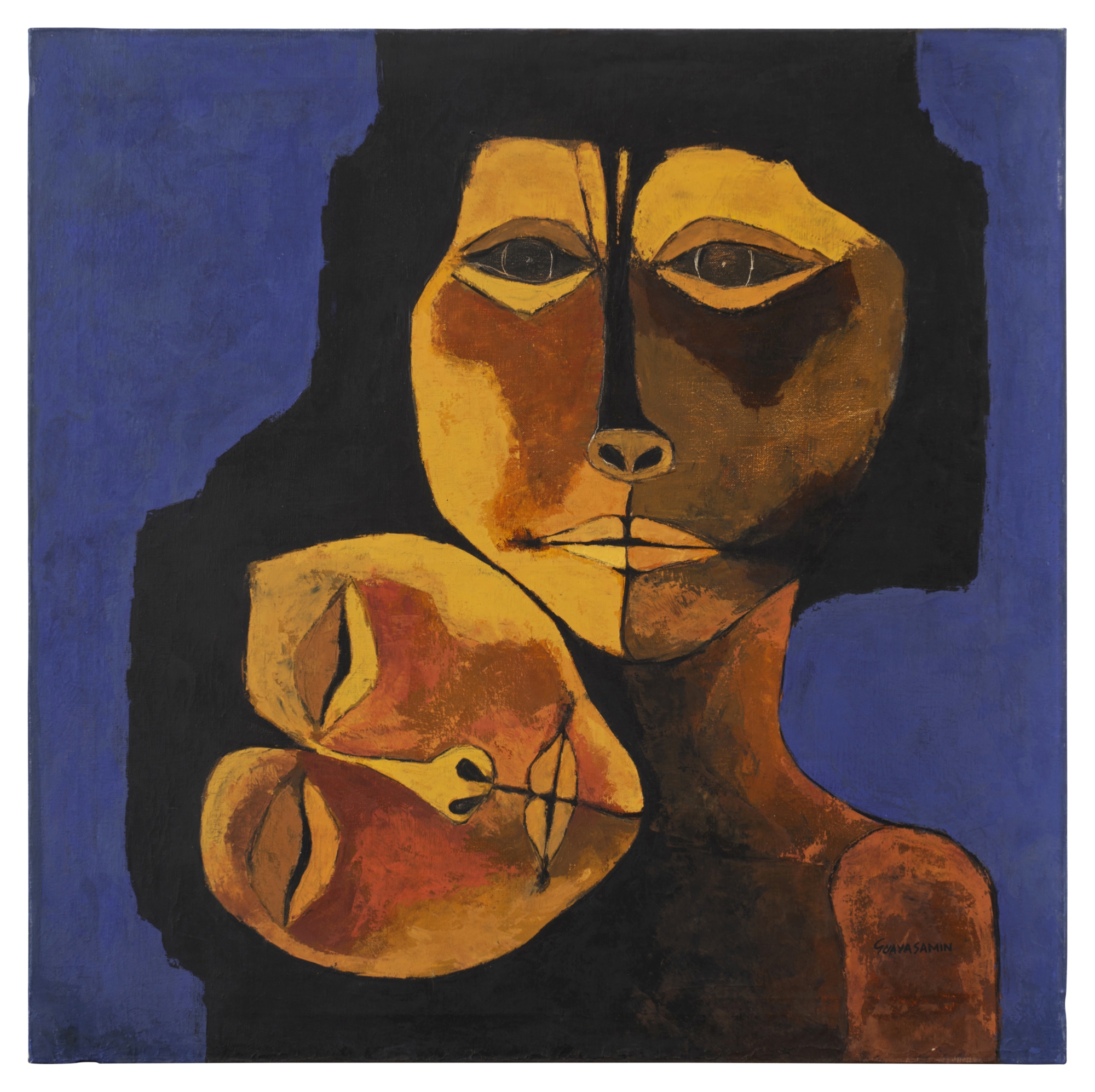
Madre y niño, 1992
It is an ongoing conversation about what it means to be human, to suffer, to love, and to endure. Oswaldo Guayasamín was born in Quito in 1919, the eldest of ten children in a family of Indigenous and mestizo heritage. His father was a carpenter of Quechua descent, and the texture of that background, the manual labor, the economic precarity, the Indigenous pride held quietly against colonial pressure, never left his canvases. He showed exceptional talent from childhood and won a scholarship to the Escuela de Bellas Artes in Quito, where he studied under the painter Víctor Mideros.
His formation was rigorous and traditional in its foundations, but Guayasamín was already looking beyond academic convention toward something more urgent and personal. The decisive turning point in his early career came in 1943, when the American muralist Nelson Rockefeller, traveling through Latin America on a cultural diplomacy mission, encountered Guayasamín's work and arranged for him to travel to the United States and Mexico. The encounter with the great Mexican muralists, particularly José Clemente Orozco, Diego Rivera, and David Alfaro Siqueiros, was transformative. Guayasamín absorbed their monumental ambition and their conviction that art could carry the full weight of political and social truth.
Oswaldo Guayasamín
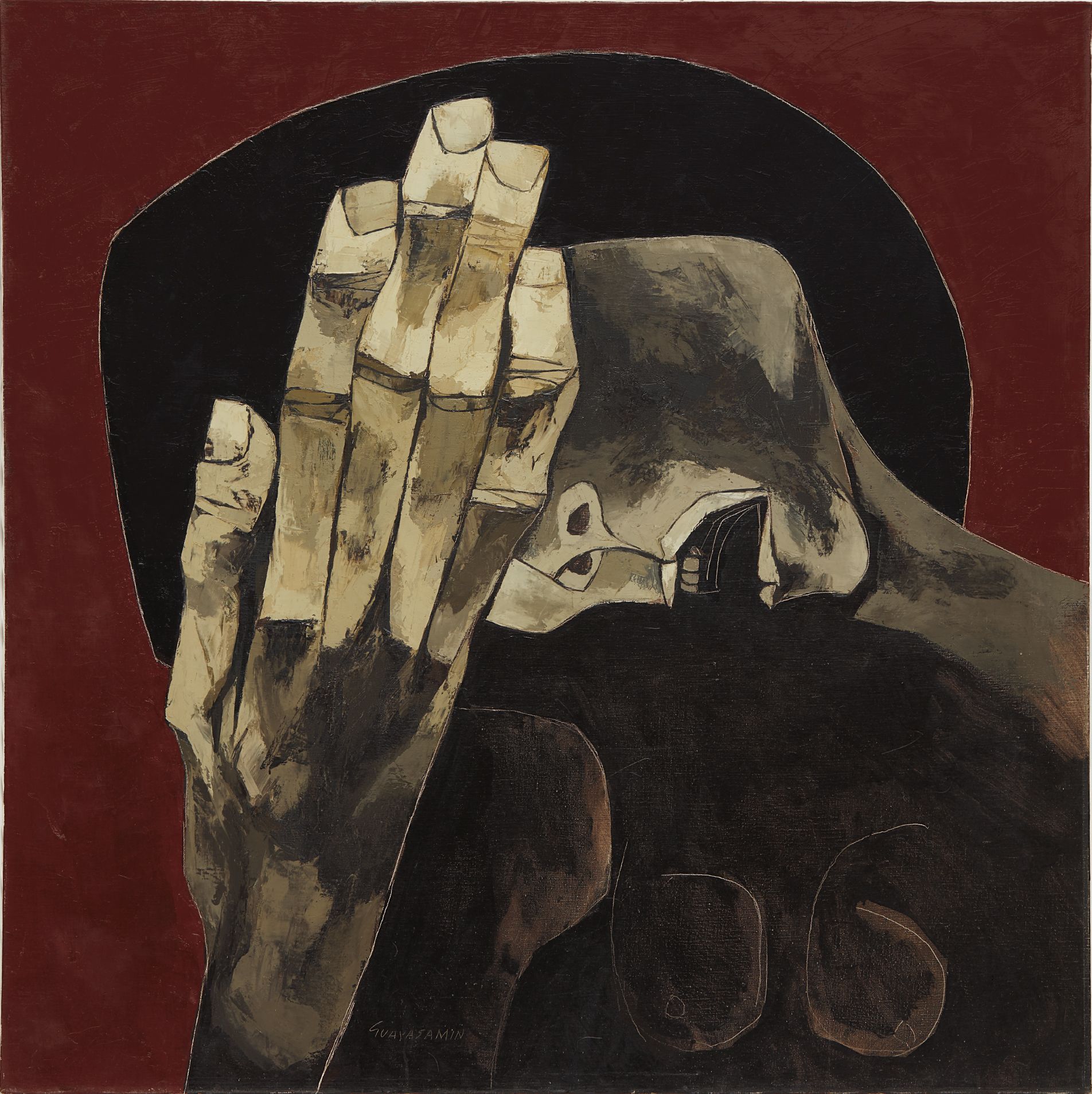
Mujer llorando
He returned to Ecuador not merely as a student who had seen the world, but as a painter who had found his calling. He would spend the rest of his life working toward a visual language that could hold the suffering and dignity of the Americas in a single gesture. Guayasamín's mature practice is organized around several great series, each a sustained meditation on a theme that consumed him over years and sometimes decades. The series Huacayñan, completed in the late 1940s, drew directly from his extensive travels through South America and documented the lives of Indigenous and Black communities with an unflinching, loving eye.
“My painting comes from the anguish of the people and is a protest against misery and injustice.”
Oswaldo Guayasamín
His most celebrated cycle, La Edad de la Ira (The Age of Wrath), occupied much of the 1960s and 1970s and responded to the political violence of that era with imagery of twisted hands, elongated figures, and faces contorted not in defeat but in an almost sculptural resistance. The final great series, La Edad de la Ternura (The Age of Tenderness), turned toward the mother and child as a universal symbol of hope, producing some of the most tender and luminous works of his career. Across all three cycles, the hand remains his central motif, a recurring emblem of labor, prayer, grief, and connection. Among the works available through The Collection, the range of Guayasamín's register is beautifully evident.
Oswaldo Guayasamín
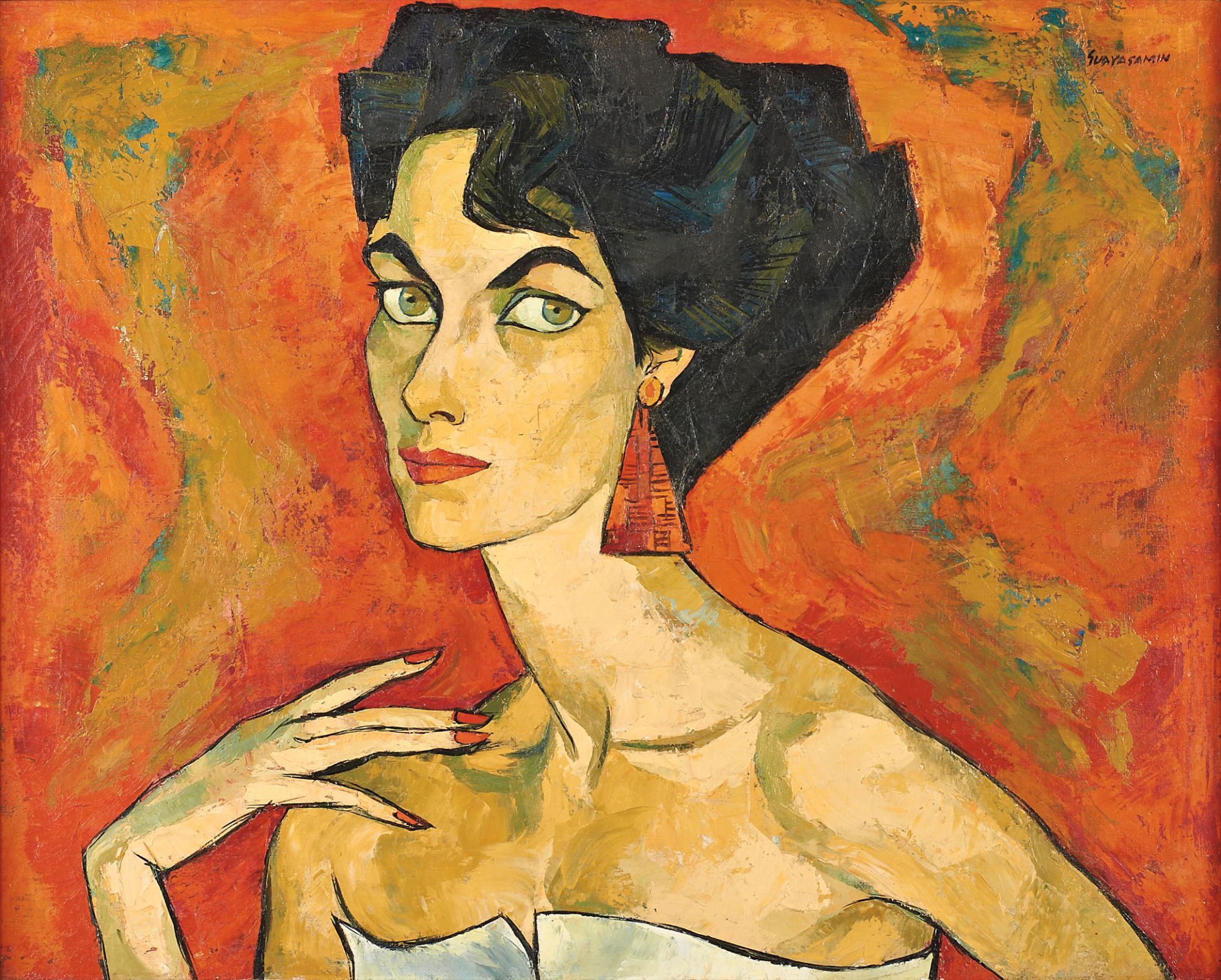
Portrait of Mary Waller
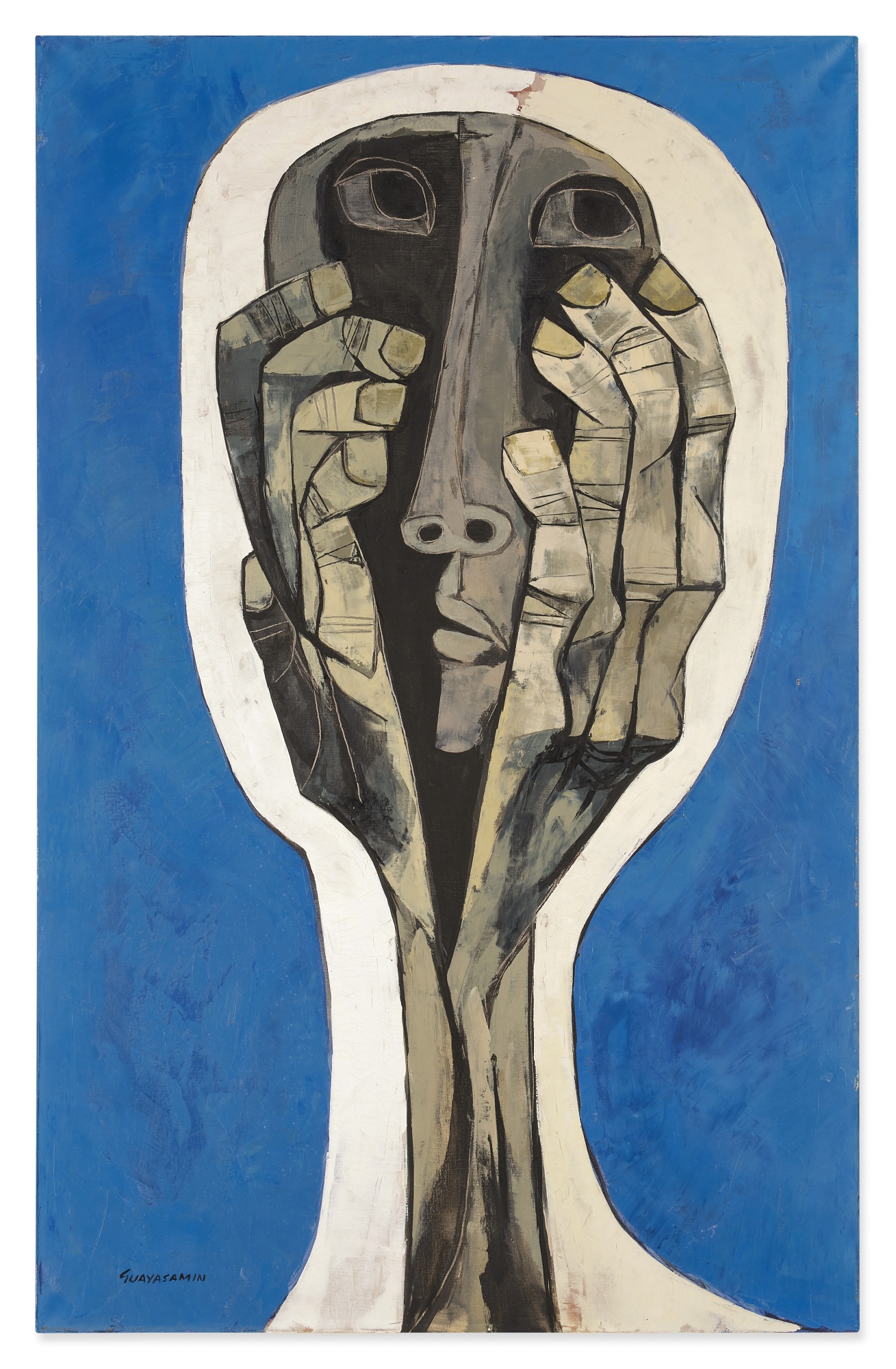
Madre y niño from 1992 belongs to the late flowering of La Edad de la Ternura, its forms simplified to near abstraction but radiating an almost sacred warmth. Indígenas from 1941 is a remarkable early document, painted on burlap in a manner that speaks to both material humility and the rough hewn dignity of its subjects. Mujer llorando and Cabeza y mano from 1973 sit firmly within the vocabulary of La Edad de la Ira, with that characteristic elongation of form and the compressed, expressive intensity that made his work so immediately recognizable and so widely reproduced. Cabeza from 1956 captures a transitional moment, the formal influence of Picasso's Cubism absorbed and transformed into something distinctly Andean in spirit.
The Portrait of Mary Waller stands slightly apart, demonstrating Guayasamín's considerable gifts as a portraitist of individuals, a dimension of his practice sometimes overshadowed by his grand thematic cycles. For collectors, Guayasamín represents an artist whose market has grown steadily rather than in speculative bursts, which speaks to the genuine depth of institutional and scholarly support behind his reputation. Major museums throughout Latin America hold significant works, and his pieces appear regularly at leading auction houses including Christie's and Sotheby's, where strong results have reflected sustained international demand. Works on burlap from his early Huacayñan period carry particular historical significance, while the large format oils from La Edad de la Ira command attention for their raw formal power.
Oswaldo Guayasamín
Cabeza, 1956
The late Ternura paintings, with their luminous grounds and simplified mother and child figures, attract collectors drawn to the meditative and the timeless. Condition, provenance tracing to his studio or the Fundación Guayasamín, and documentation are the key considerations for any serious collector approaching his work. To understand Guayasamín within art history is to place him at the intersection of several vital currents. He shares with Francisco Goya a willingness to look directly at human suffering without aestheticizing it into beauty.
His debt to the Mexican muralists is explicit and acknowledged, but he arrived at a more intimate scale than Orozco or Siqueiros, turning the mural's public ambition inward. In his handling of the elongated figure he invites comparison with El Greco, another artist who understood that distortion is not a departure from truth but its amplification. Among his South American contemporaries, Fernando Botero and Rufino Tamayo share something of his rootedness in Latin American identity, though each arrived at radically different formal solutions. What distinguishes Guayasamín is the total integration of political conscience and personal tenderness, the sense that the two are never in opposition but are expressions of the same urgent love.
His legacy is, in every sense, alive. The Capilla del Hombre (Chapel of Man) in Quito, a vast cultural space he designed and devoted the final years of his life to completing, was inaugurated in 2002 and stands as his ultimate statement, a monument to the suffering and resilience of the peoples of the Americas. He painted murals for institutions and public spaces across several countries, and his image of clasped hands has become one of the most reproduced symbols of Andean solidarity. But it is in the individual canvas, in the single face or pair of hands rendered in that unmistakable chromatic language of ochre, brown, and deep sienna relieved by sudden light, that his genius is most intimate and most lasting.
For collectors who believe that art should ask something of the viewer while also offering something sustaining in return, there are few artists in the twentieth century canon who answer that call more completely than Oswaldo Guayasamín.
Explore books about Oswaldo Guayasamín
Oswaldo Guayasamín: Una vida para el arte
Hernán Rodríguez Castelo
Guayasamín
José María Moreno Villa
Oswaldo Guayasamín: El expresionismo de un pintor comprometido
Jaime Menéndez Menéndez
Guayasamín: Catálogo Razonado de la Obra Pictórica
Various contributors