Oscar Tuazon
Oscar Tuazon Builds the World Anew
Artist Spotlight · The Collection Editorial
In the spring of 2023, the Dia Art Foundation confirmed Oscar Tuazon as a central figure in the ongoing conversation about sculpture, architecture, and social responsibility in contemporary American art. His long standing project Water School, which he initiated in collaboration with the Standing Rock Sioux Tribe and other Native American communities to address the clean water crisis on tribal lands, brought his practice into a genuinely new register, one where the stakes of making things extend well beyond gallery walls. That a sculptor known for raw concrete, steel frames, and precarious glass slabs would become equally recognized for building water filtration infrastructure is not a contradiction but a clarification of everything his work has always been about: what it means to construct something, and for whom. Tuazon was born in Seattle in 1975 and came of age in a cultural moment shaped by the residue of West Coast countercultural thinking, the legacy of land art, and a generation of artists who were beginning to question the inherited hierarchies of the art world.
Oscar Tuazon
"I hope that the effect of my work is mostly physical. That’s what I like....having an experience of the weight of things, or an experience of balance."
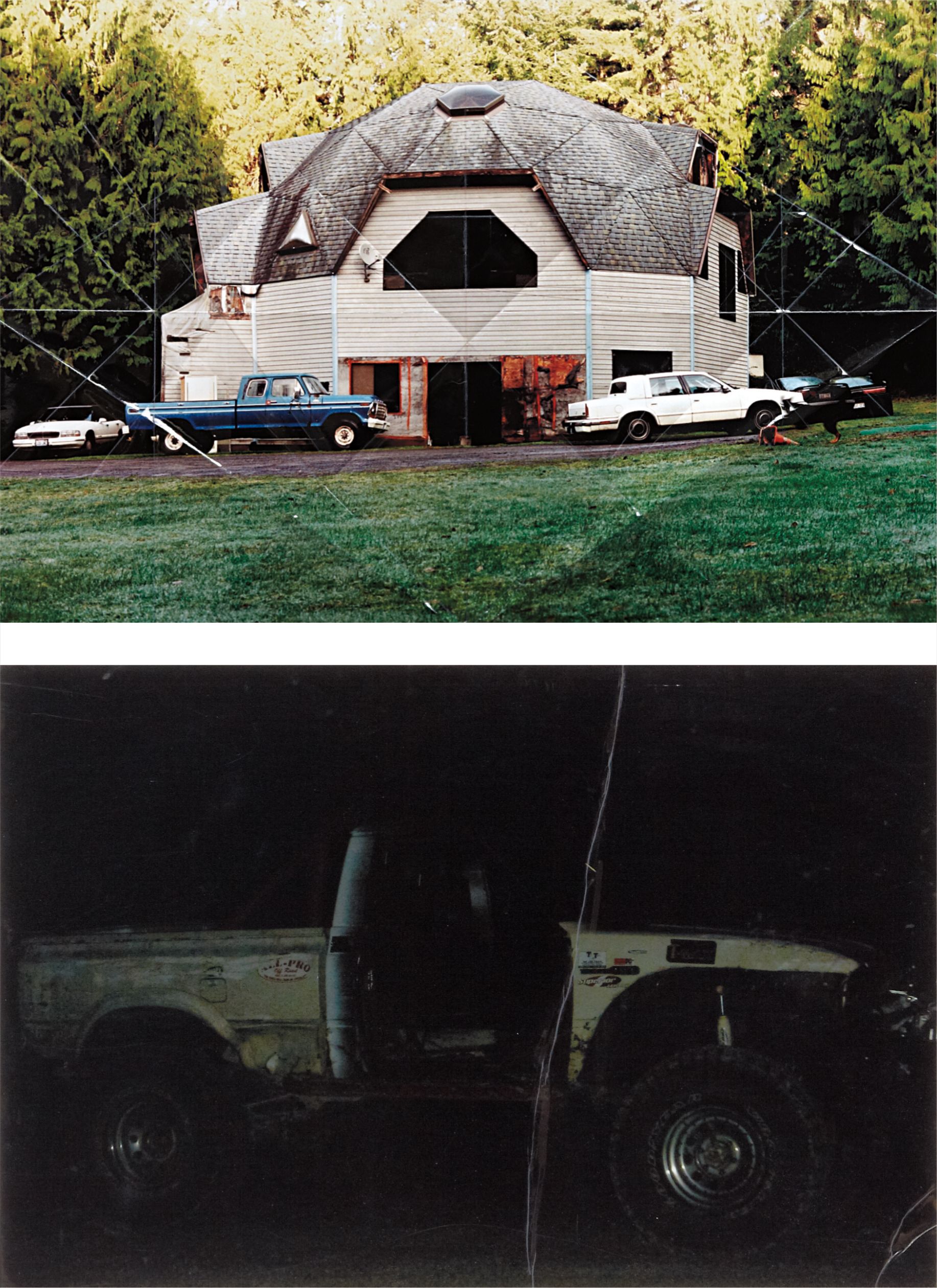
He studied at the Cooper Union in New York and later at the Whitney Independent Study Program, two institutions with a long tradition of producing artists who treat theory and material practice as inseparable. The Whitney program in particular gave him sustained engagement with critical theory and institutional critique, frameworks that would quietly animate even his most seemingly formal works for decades to come. His early work drew heavily on the vernacular of self built and improvised structures, shelters, sheds, lean tos, and geodesic experiments that sit somewhere between architecture and sculpture without fully belonging to either. Works like the 2007 piece Two Works: Geodesic Dome House and Off Road announced the terms of his practice with remarkable confidence.
The geodesic dome, that symbol of utopian self sufficiency associated with Buckminster Fuller and the back to the land movement, arrives in Tuazon's hands looking battered, tested, and real rather than idealized. There is a roughness to his structures that is never accidental. It speaks to the actual conditions of building and dwelling rather than to any polished architectural fantasy. By the late 2000s, Tuazon had developed a signature approach to material that set him apart from both the slick minimalism still dominant in much institutional sculpture and the more theatrical installations of his peers.
Oscar Tuazon
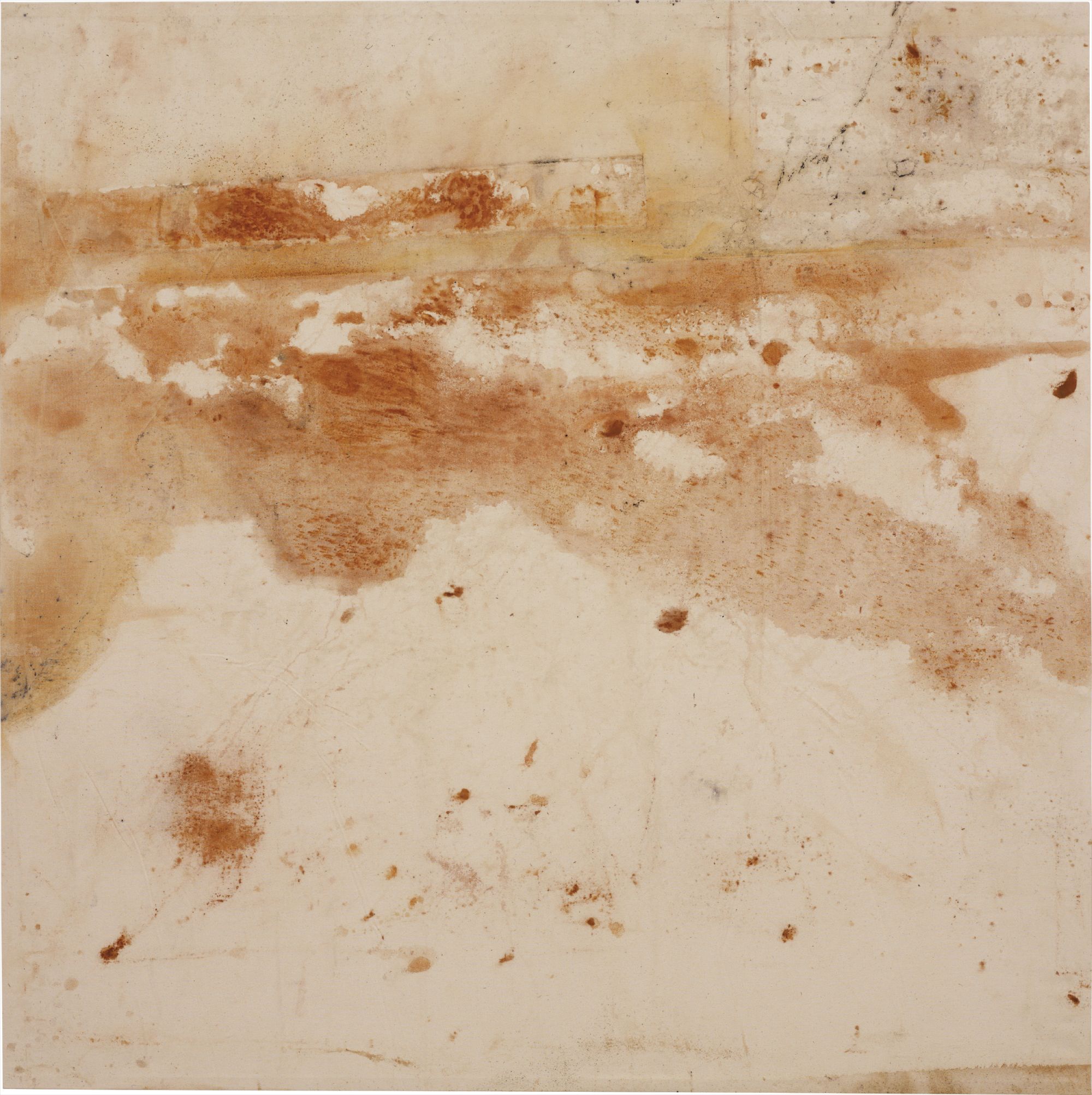
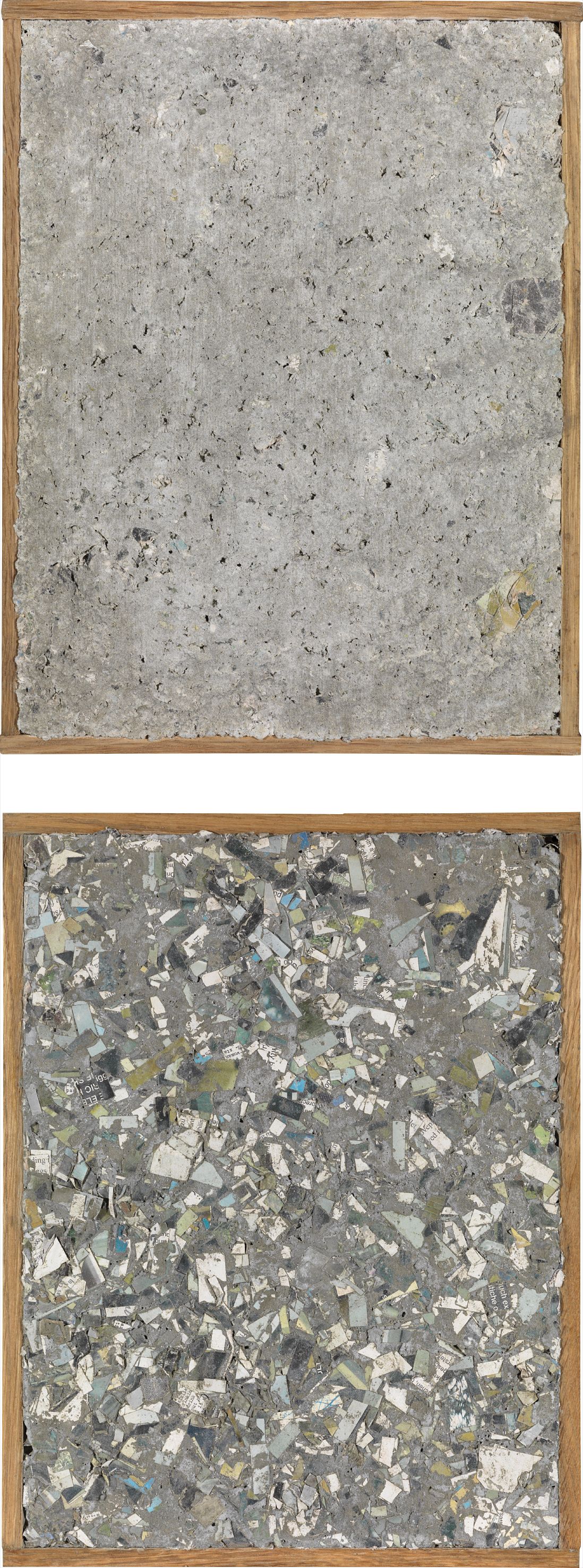
Two works: I Can't See (Papercrete Edition)
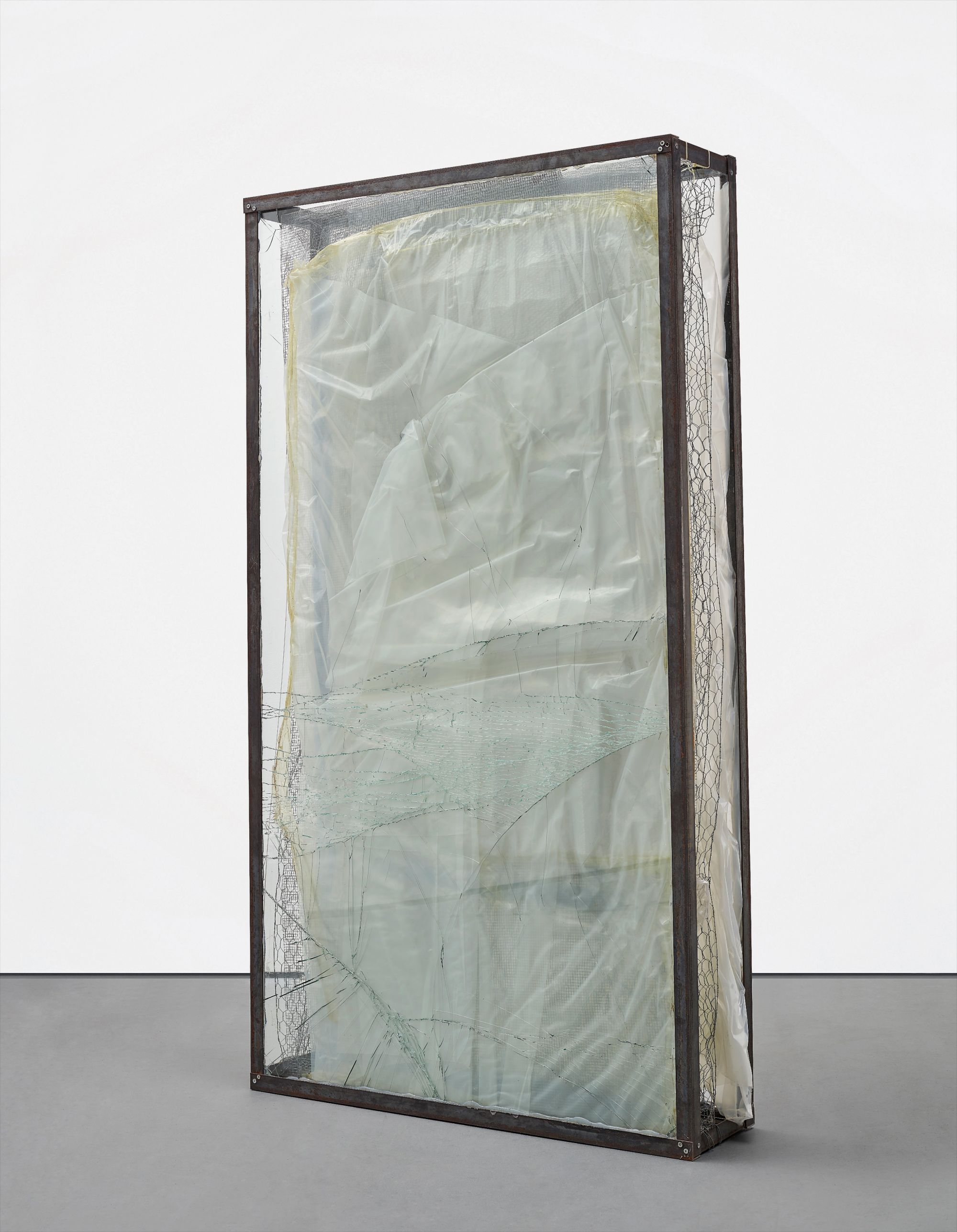
Works such as Papercrete from 2009 and Glassed Slab from the same year introduced a vocabulary of hybrid and unlikely materials. Papercrete, a mixture of paper pulp and concrete, carries associations with both the monumental and the disposable. Glassed Slab combines steel security glass, Plexiglas, fiberglass, wire mesh, plastic sheeting, bubblewrap, silicone, and wire into a single object that looks simultaneously like something under construction and something in the process of collapse. The tension between those two states is where Tuazon lives as an artist.
His 2011 works, including Table Sculpture 1 in steel, pine, oak, chrome steel, and plastic, and the enigmatically titled Another Thing, extended this approach with a quiet confidence, treating the studio and the building site as equivalent spaces of production. The work titled This Work Is Unique deserves particular attention as a statement of intent embedded in an object. Made from steel, broken security glass, Plexiglas, plastic tarp, steel mesh, silicone, fiberglass, and tracing paper, it draws on the language of institutional bureaucracy (the certificate of authenticity, the declaration of singularity) while simultaneously undermining any pretense of preciousness through its battered, provisional materials. It is a work that holds its own paradox with great wit.
Oscar Tuazon
Glassed Slab, 2009
The I Can't See series, including multiple Papercrete Editions, carries a similar layered quality, with the title functioning as both a phenomenological observation and a broader social provocation about visibility, access, and who gets to see and be seen within systems of culture and power. For collectors, Tuazon's work offers something increasingly rare in the current market: a practice that is intellectually serious, materially distinctive, historically grounded, and genuinely expanding in ambition over time. His sculptures have been acquired by significant institutional collections and have appeared in major international exhibitions. The works on paper and smaller sculptural editions provide points of entry for collectors who want to engage with the full arc of his thinking without the logistical demands of his larger architectural pieces.
When approaching his work as a collector, the key is to understand that condition and material integrity are central to the meaning of each object. A Tuazon is not meant to be immaculate. The marks of making are the work. Tuazon occupies a distinctive place within a lineage of artists who have challenged the boundary between sculpture and architecture, between art and use.
Oscar Tuazon
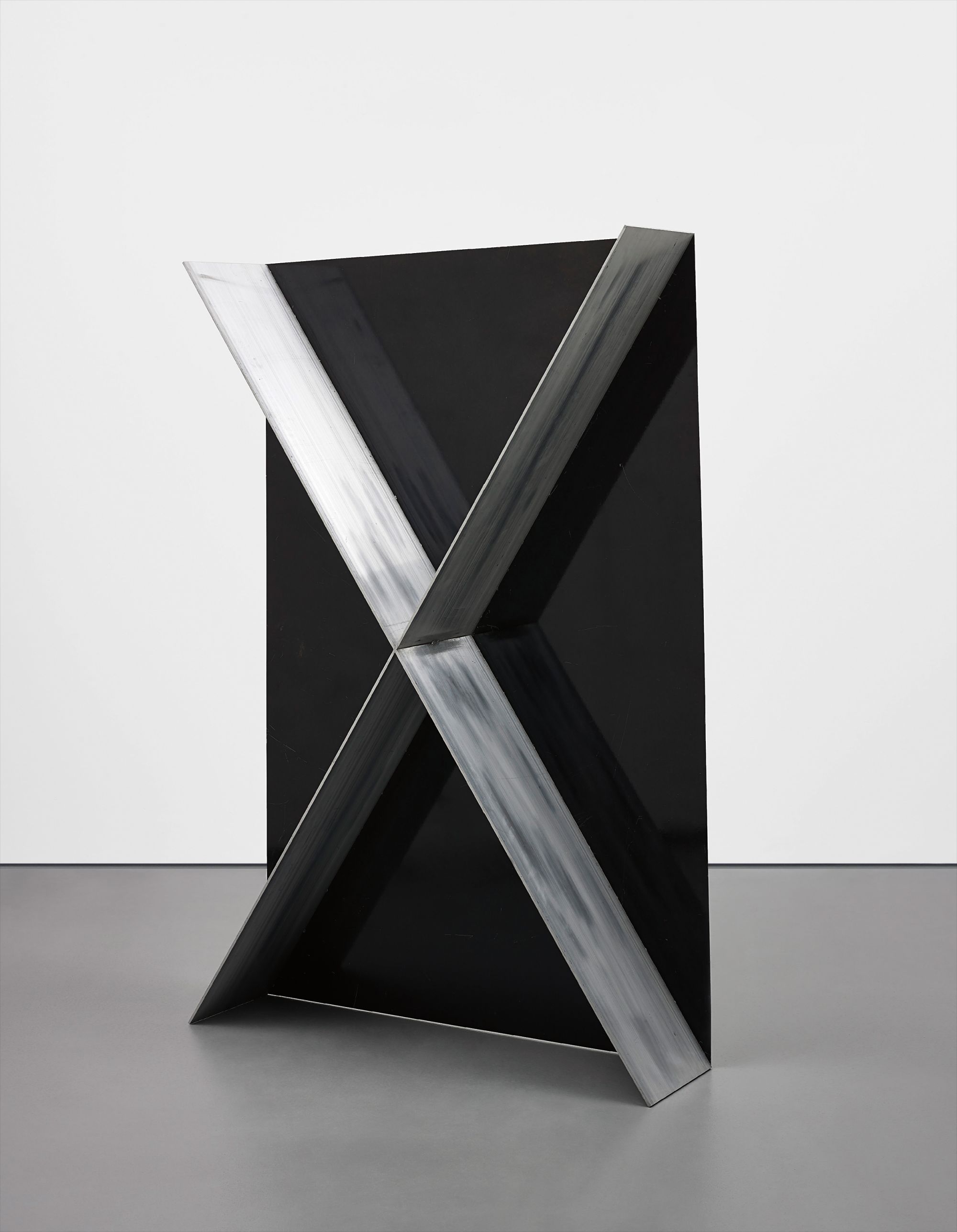
Las Vegas, 2011
His conversation partners across art history include Gordon Matta Clark, whose interventions into existing buildings remain a touchstone for anyone thinking about structure as subject, as well as Bruce Nauman, whose investigations of the studio and the body as sites of knowledge shaped a generation of American artists. Among his contemporaries, there are resonances with the work of Theaster Gates in his commitment to community infrastructure as artistic practice, and with Liz Diller and other practitioners who move fluidly between design and critical discourse. But Tuazon's particular synthesis is his own: raw, principled, and quietly radical. What makes Tuazon genuinely important as we move further into the 2020s is the coherence between his aesthetic choices and his ethical commitments.
The Water School project is not a departure from his sculpture but its fullest expression, a recognition that the questions embedded in his material practice (who builds, who inhabits, what constitutes shelter and sustenance) have consequences in the real world that art can choose to engage or ignore. Tuazon has made his choice with consistency and conviction across more than two decades of work. For collectors, institutions, and anyone paying attention to where art is going, his practice stands as one of the most compelling arguments for what sculpture can still do.
Featured Works
"I hope that the effect of my work is mostly physical. That’s what I like....having an experience of the weight of things, or an experience of balance."
Two works: I Can't See (Papercrete Edition)
Glassed Slab
2009
Las Vegas
2011
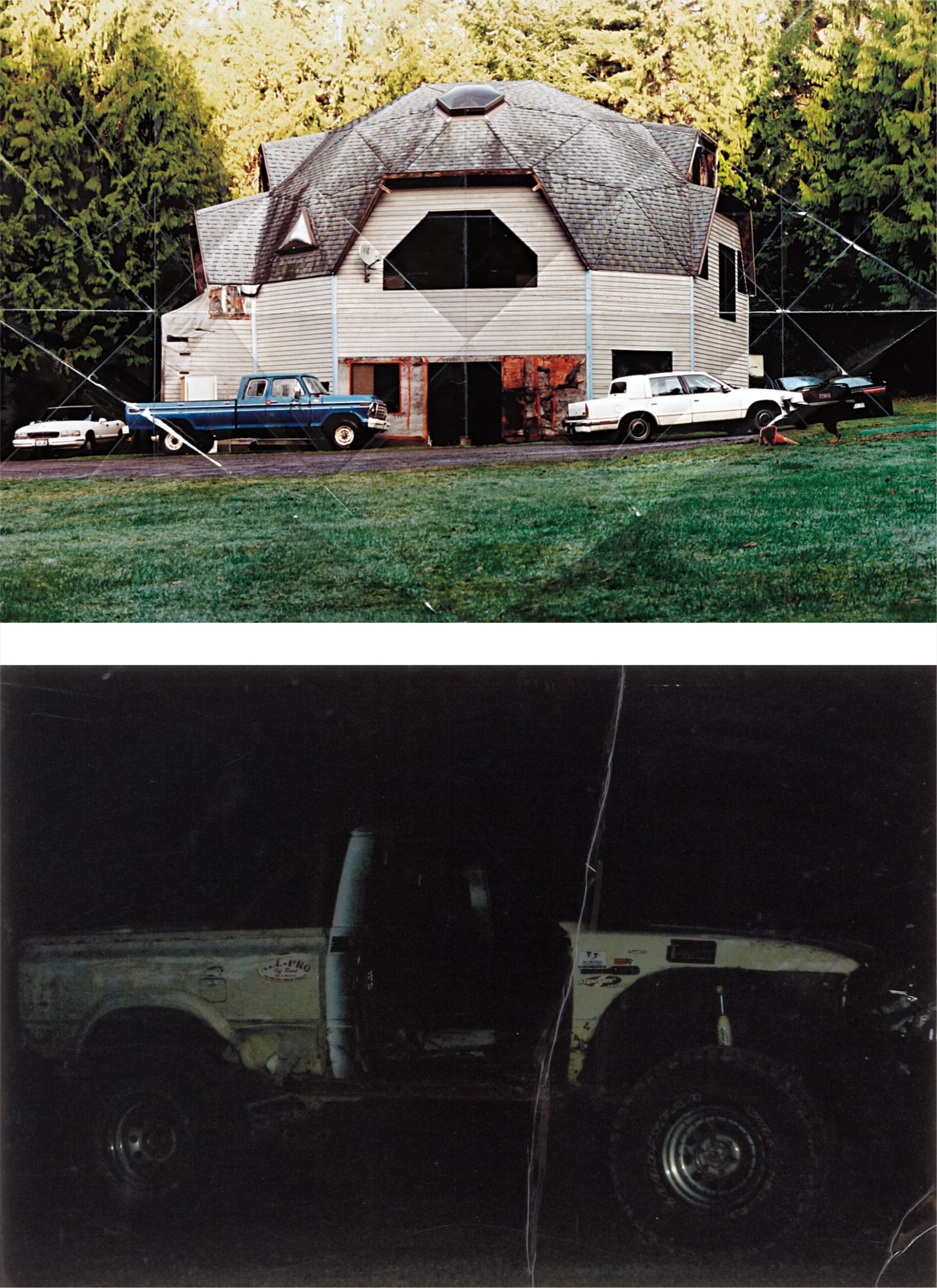
Two Works: i) Geodesic Dome House; ii) Off Road
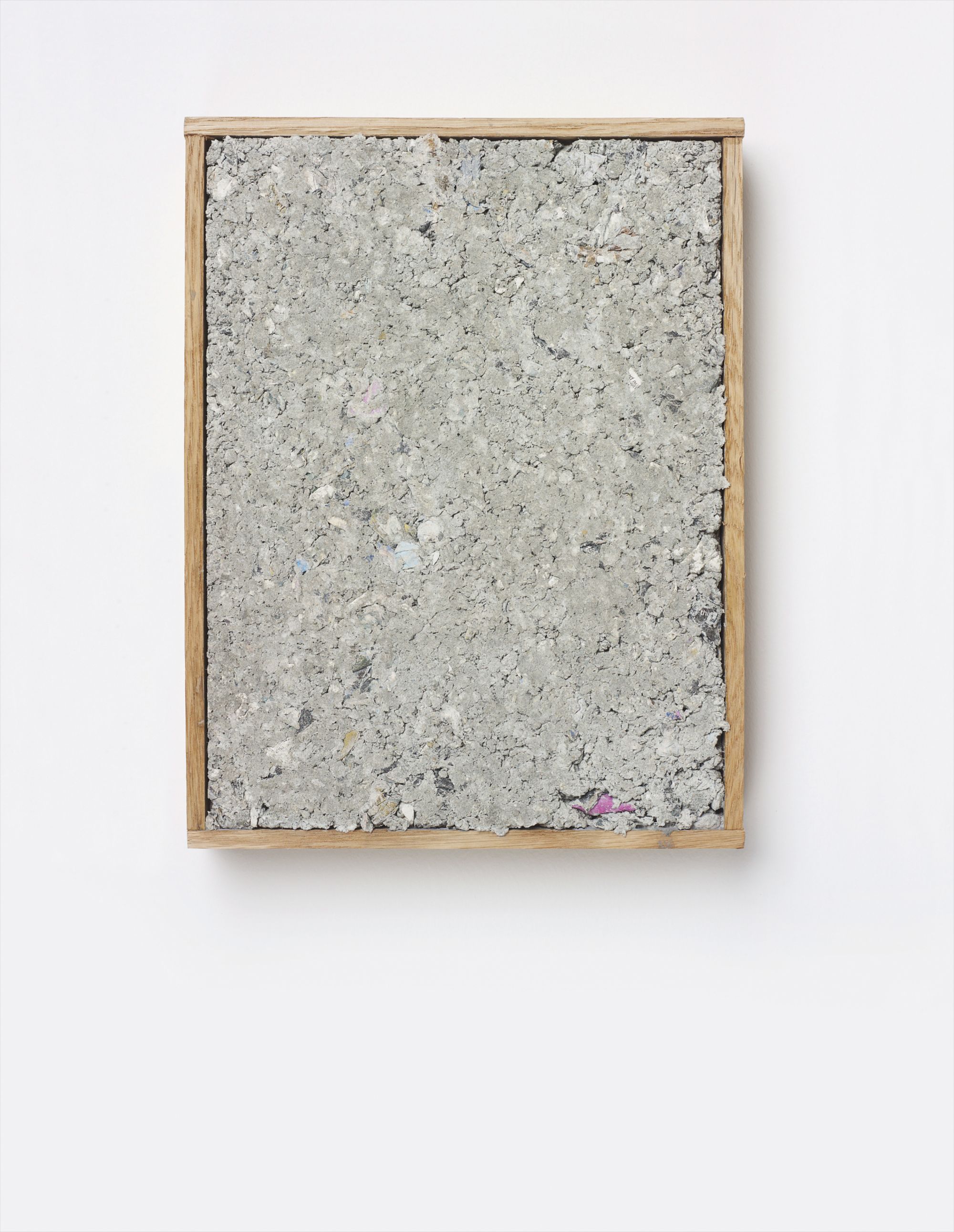
I can't see (Papercrete Edition)
Explore books about Oscar Tuazon