Oscar Bluemner
Oscar Bluemner: America's Poet of Radiant Color
Artist Spotlight · The Collection Editorial
“Color is the keyboard, the eyes are the harmonies, the soul is the piano with many strings.”
Oscar Bluemner, personal writings
There is a particular kind of red that belongs to Oscar Bluemner alone. It burns from the canvas like a held breath, saturating humble water towers, factory walls, and New Jersey riverbanks with a heat that feels less meteorological than metaphysical. When the Whitney Museum of American Art mounted its landmark survey of American modernism and positioned Bluemner among its founding voices, a new generation of curators and collectors was reminded that this German born architect turned painter had always been one of the most original sensibilities to emerge from the ferment of early twentieth century American art. Today, as interest in the Stieglitz circle and the pioneering generation of American modernists continues to intensify at auction and in scholarly circles alike, Bluemner feels not like a rediscovery but like an arrival long overdue.
Oscar Bluemner
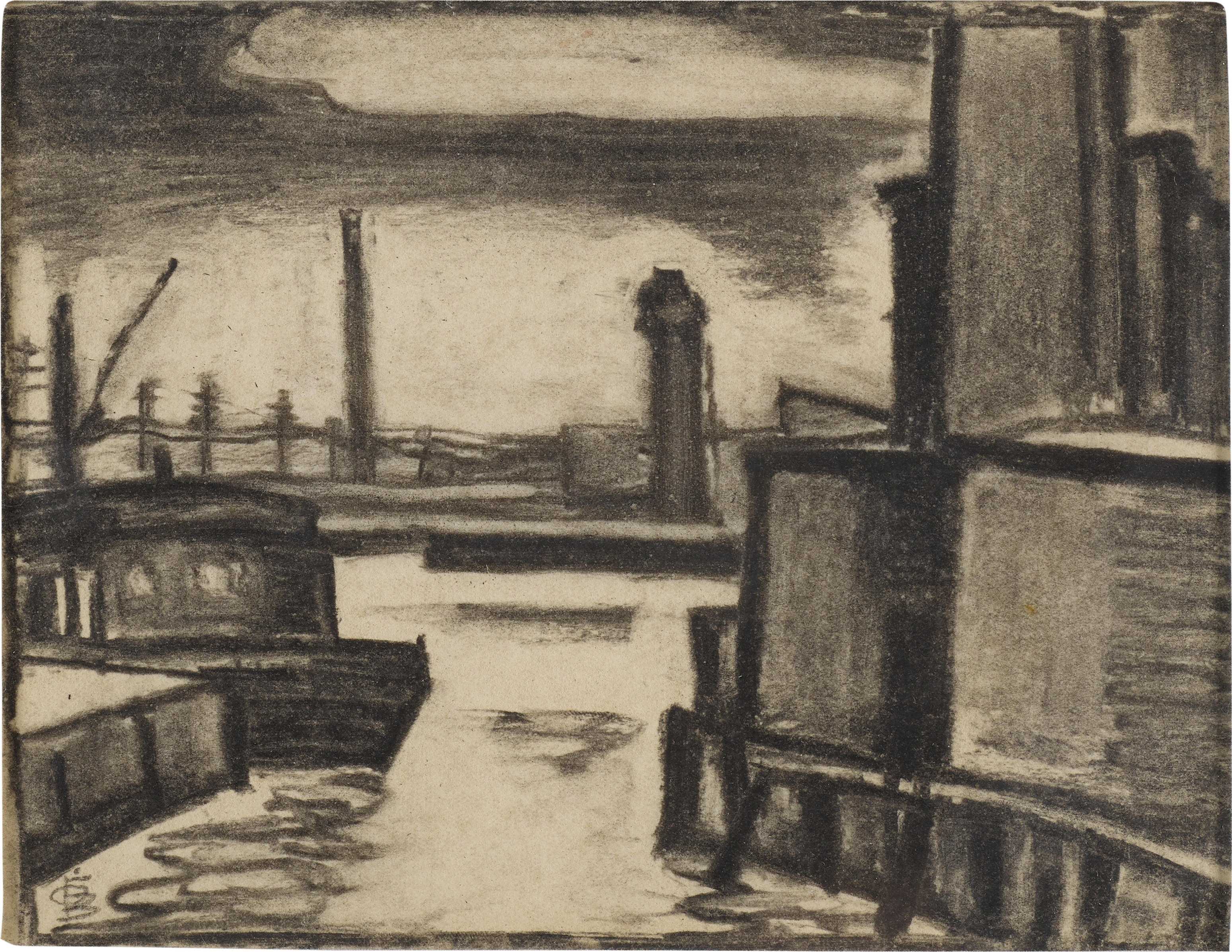
Sketch for "Port of Elizabeth, New Jersey", 1925
Oscar Florian Bluemner was born in 1867 in Prenzlau, in the Kingdom of Prussia, and trained rigorously as an architect before emigrating to the United States in 1892. He arrived in New York with serious credentials and genuine ambition, and for years he practiced architecture with considerable skill, contributing to projects in Chicago and eventually New York. It was a professional life that gave him something most painters never possess: a structural intelligence, a feel for mass and geometry, and an intuitive understanding of how built space relates to light. These were not incidental qualities.
They would become the very armature of his painting. The turn toward painting came gradually, then completely. By the first decade of the twentieth century, Bluemner had begun exhibiting work and aligning himself with the vanguard forces reshaping American visual culture. The decisive public moment arrived in 1913, when five of his paintings appeared in the Armory Show, the legendary International Exhibition of Modern Art that introduced European modernism to American audiences and set the terms of aesthetic debate for a generation.
Oscar Bluemner
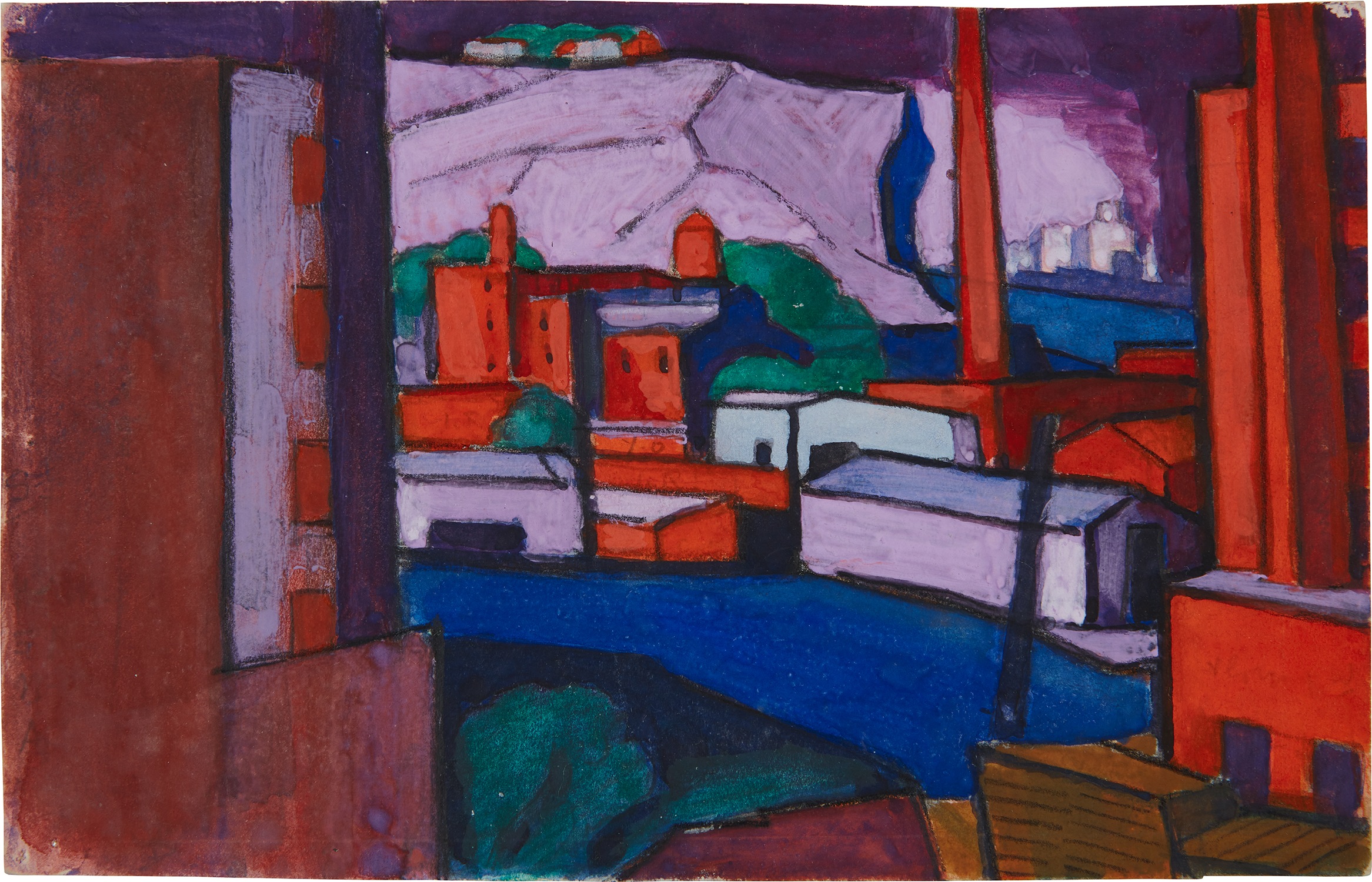
Hoboken, N5
To be included was itself a statement. Bluemner was not a peripheral figure absorbing outside influences; he was a practitioner whose work could stand beside Cézanne, Matisse, and the German Expressionists without apology. His relationship with Alfred Stieglitz, the gallerist, photographer, and impresario of American modernism, proved formative and sustaining. Stieglitz exhibited Bluemner's work at his celebrated 291 gallery on Fifth Avenue, placing him in a constellation that included Georgia O'Keeffe, Marsden Hartley, John Marin, and Arthur Dove.
These were artists who shared a conviction that painting could carry interior emotional truth rather than merely document external appearances. Bluemner absorbed this conviction and made it incandescent. His landscapes of industrial New Jersey and the Hudson River Valley towns are not reportage; they are transmissions, each color chosen for its psychological resonance as much as its optical accuracy. The signature works of Bluemner's mature practice demonstrate a formal intelligence that rewards sustained looking.
Oscar Bluemner
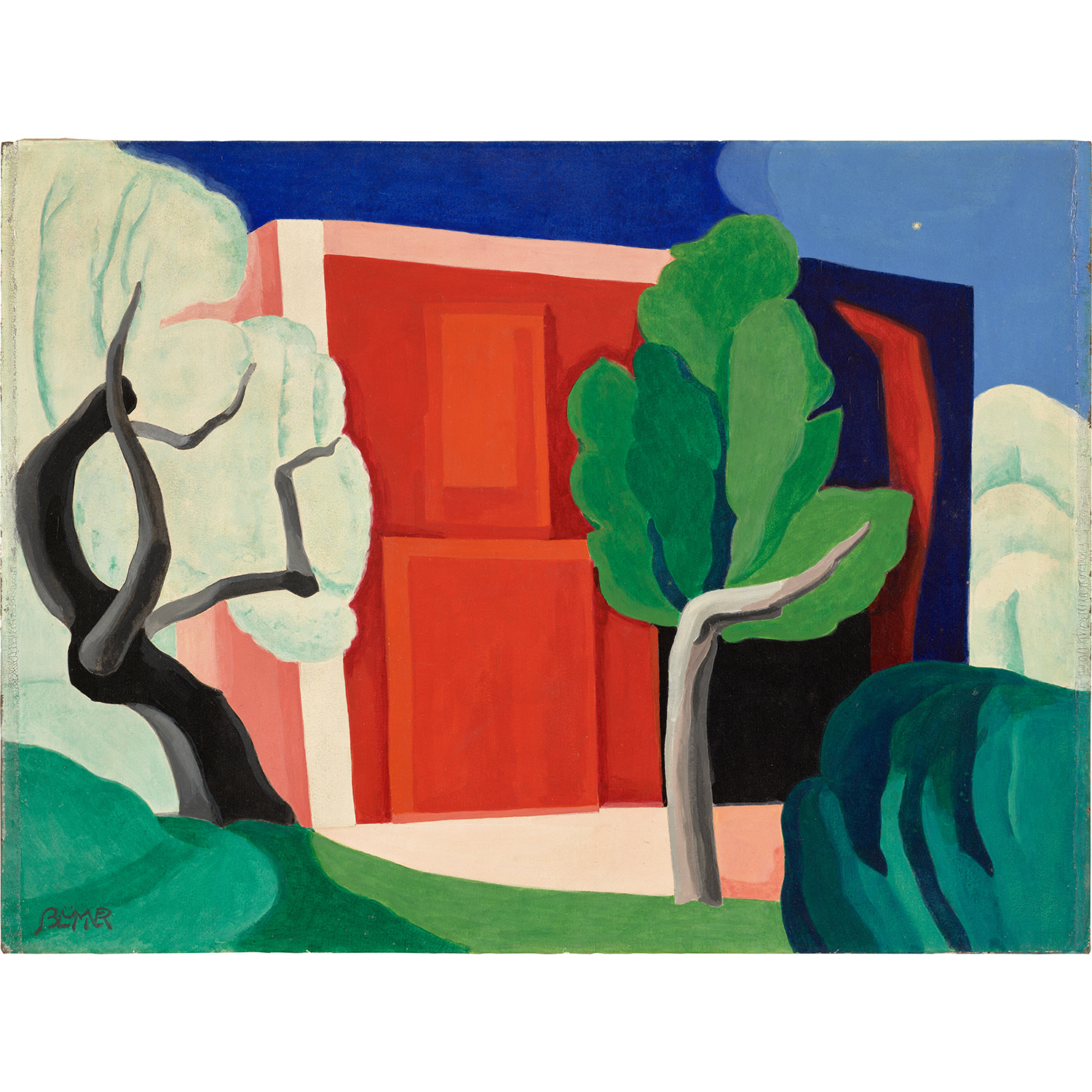
Colors of May, 1930
His treatment of architecture within landscape is particularly distinctive: barns, silos, bridges, and factory buildings are simplified into geometric solids that anchor compositions with an almost monumental calm, even as the colors surrounding them vibrate with feeling. The 1925 charcoal study known as Sketch for Port of Elizabeth, New Jersey reveals the structural thinking beneath his finished work, showing how carefully he orchestrated mass and void before ever reaching for pigment. Hoboken N5, rendered in watercolor, gouache, and charcoal on wove paper, demonstrates his mastery of works on paper as a medium fully equal to his oil paintings, with the preliminary sketch and notes on the reverse offering a rare window into his working process. Colors of May from 1930 captures the particular ecstasy of seasonal transition in tempera on board, while Black by Gold from 1934 shows a painter pushing toward greater abstraction and tonal drama in the late career, unafraid to let darkness and luminosity contest the same surface.
Bluemner wrote extensively about color theory, drawing on European sources including Goethe's writings on color and the ideas circulating in German Expressionist circles, and his theoretical commitments were serious and sustained. He understood red not merely as a hue but as a psychological event, capable of evoking urgency, desire, and spiritual intensity depending on its context and companions. This intellectual rigor distinguishes his practice from painters who arrive at emotional effects intuitively; Bluemner calculated his emotions, which paradoxically makes them feel more rather than less genuine on the canvas. He wanted color to do the work that music does, operating below rational understanding and moving the viewer directly.
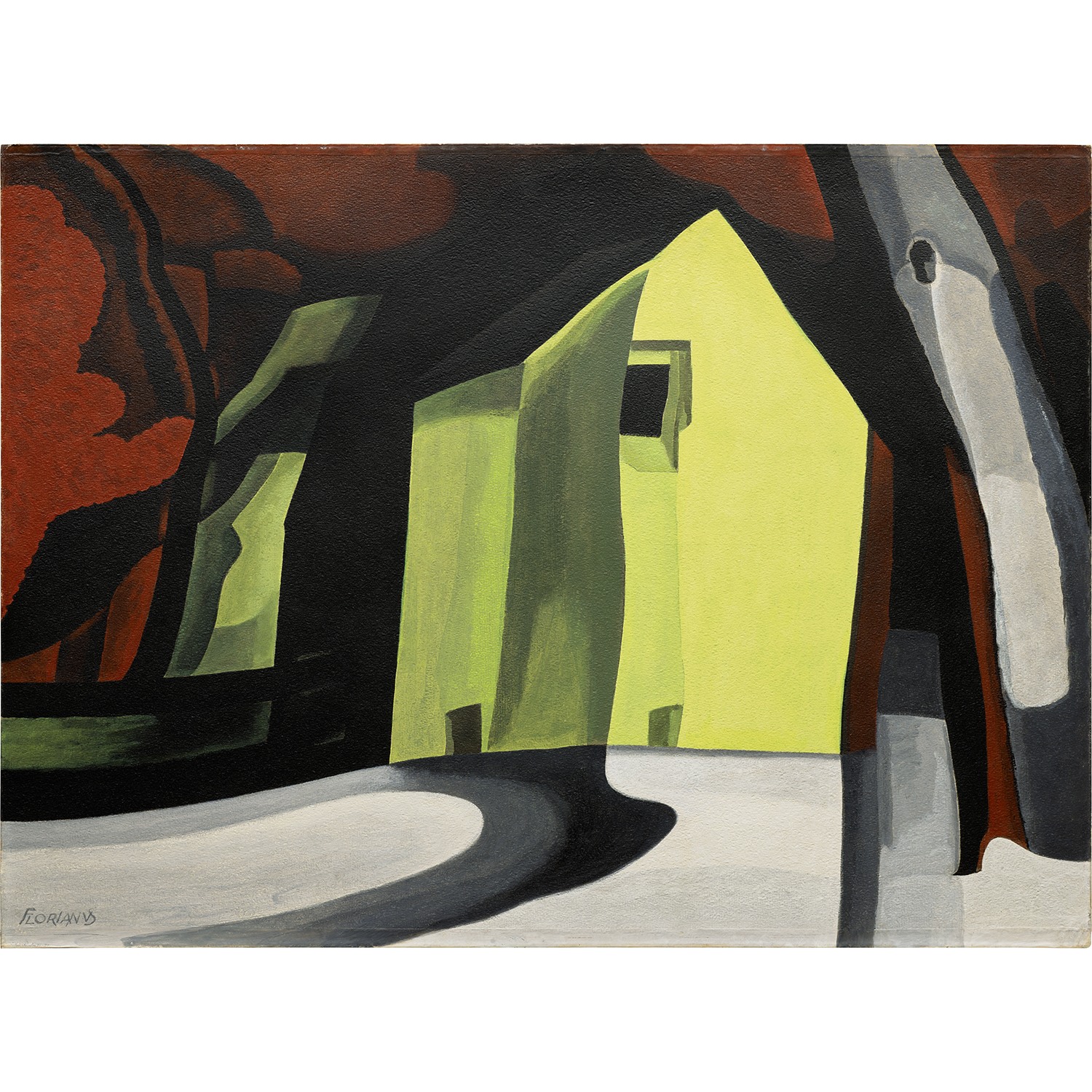
Oscar Bluemner
Black by Gold, 1934
For collectors, Bluemner presents a compelling proposition. His works on paper, including the watercolors, gouaches, and charcoal drawings that he produced throughout his career, offer entry points into a major modernist practice with a range of scale and price. The provenance of his finest works frequently traces back to significant early collections and institutions that recognized his importance during his own lifetime, which speaks to the authenticity of his historical standing. When strong examples appear at auction, they draw serious attention from collectors of American modernism, particularly those whose interests extend to the Stieglitz circle and the broader early twentieth century avant garde.
The relative scarcity of his finest finished works makes each significant piece an event. Understanding Bluemner in art historical context means placing him in productive conversation with artists who share his preoccupation with color as emotional language and geometry as structural truth. Charles Demuth and Charles Sheeler, the Precisionist painters, worked adjacent territory in their fascination with American industrial architecture, though with a cooler, more ironic temperament. Marsden Hartley, his colleague in the Stieglitz circle, shared the Expressionist inheritance and the willingness to let feeling overwhelm description.
Among European forebears, the influence of Cézanne is structural and profound, while the German Expressionists, particularly the painters of Der Blaue Reiter group, offered Bluemner permission to treat color as a primary bearer of meaning rather than a descriptive afterthought. What makes Bluemner genuinely matter today is the quality of his seeing. In an era of renewed interest in the emotional and spiritual dimensions of painting, in what color can carry beyond the merely decorative, his work speaks with uncommon directness. The industrial landscapes he chose as his subjects were not picturesque; they were the working world, the immigrant world, the world of labor and infrastructure that built modern America.
He looked at this world and found in it the raw material for art of lasting beauty and seriousness. That combination of clear eyes and luminous vision, of structural intelligence and emotional courage, is what places Oscar Bluemner among the essential voices of American modernism and ensures that his paintings will continue to reward every collector patient enough to spend time in their presence.
Explore books about Oscar Bluemner