Oliver Laric
Oliver Laric Transforms Everything He Touches
Artist Spotlight · The Collection Editorial
When the Skulpturensammlung und Museum für Byzantinische Kunst in Berlin invited Oliver Laric to engage with its permanent collection, the resulting project, Versions, felt less like an artist in residence and more like a quiet revolution. Laric produced high resolution 3D scans of sculptures from the museum's holdings and released them freely online, inviting anyone in the world to download, remix, print, and transform them. It was a gesture that compressed centuries of art history into a single open source act, and it announced, without fanfare, exactly what kind of artist Laric is: one for whom the copy is not a diminishment but a continuation. Oliver Laric was born in Innsbruck, Austria in 1981, and came of age in a Central European cultural landscape dense with institutional memory and historical weight.
Oliver Laric
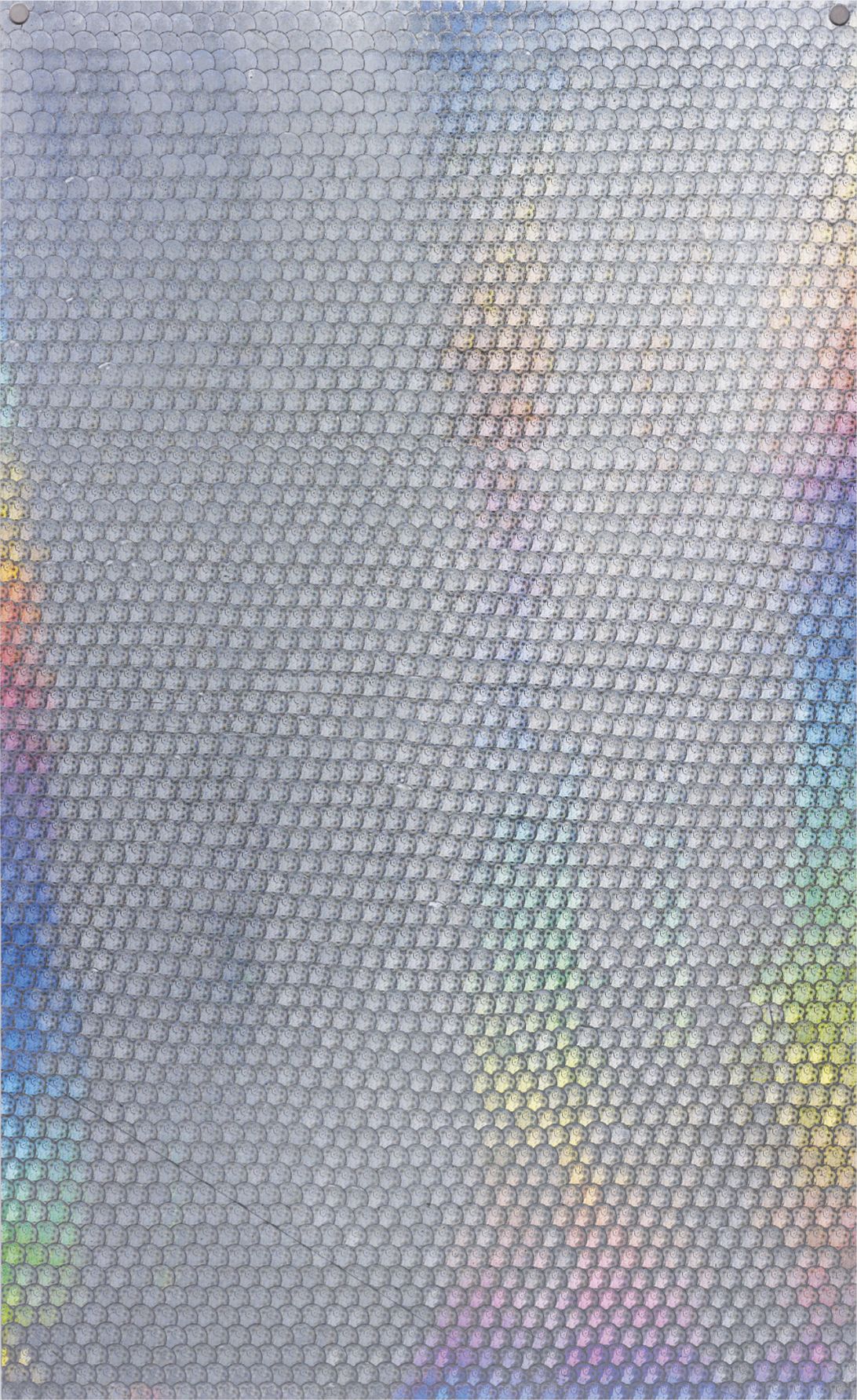
Wu Tang Guilloche Rodin
He studied at the University of Applied Arts Vienna before relocating to Berlin, the city that would become his permanent base and, in many ways, his conceptual mirror. Berlin in the early 2000s was a place of radical openness and productive friction, a city still negotiating its own layered identities and reconstructed histories. For a young artist fascinated by how images travel, mutate, and carry meaning across time, it was a nearly perfect environment. Laric emerged into wider attention through the post internet art milieu of the late 2000s, a loosely affiliated group of practitioners who treated the internet not as a medium in itself but as a fundamental condition of contemporary life.
He co founded Troll Thread, the influential online publishing platform that circulated experimental texts and art writing, and became associated with peers including Artie Vierkant and DIS Magazine contributors who were collectively rethinking what it meant to make objects in an age of infinite reproducibility. His early video work, particularly the Versions series begun around 2009, established the philosophical framework that continues to animate everything he makes: the idea that no image is ever truly original, that all visual culture is a series of transformations, and that this is cause for wonder rather than anxiety. What distinguishes Laric from artists who merely appropriate is the intellectual generosity built into his practice. He is not a polemicist.
Oliver Laric
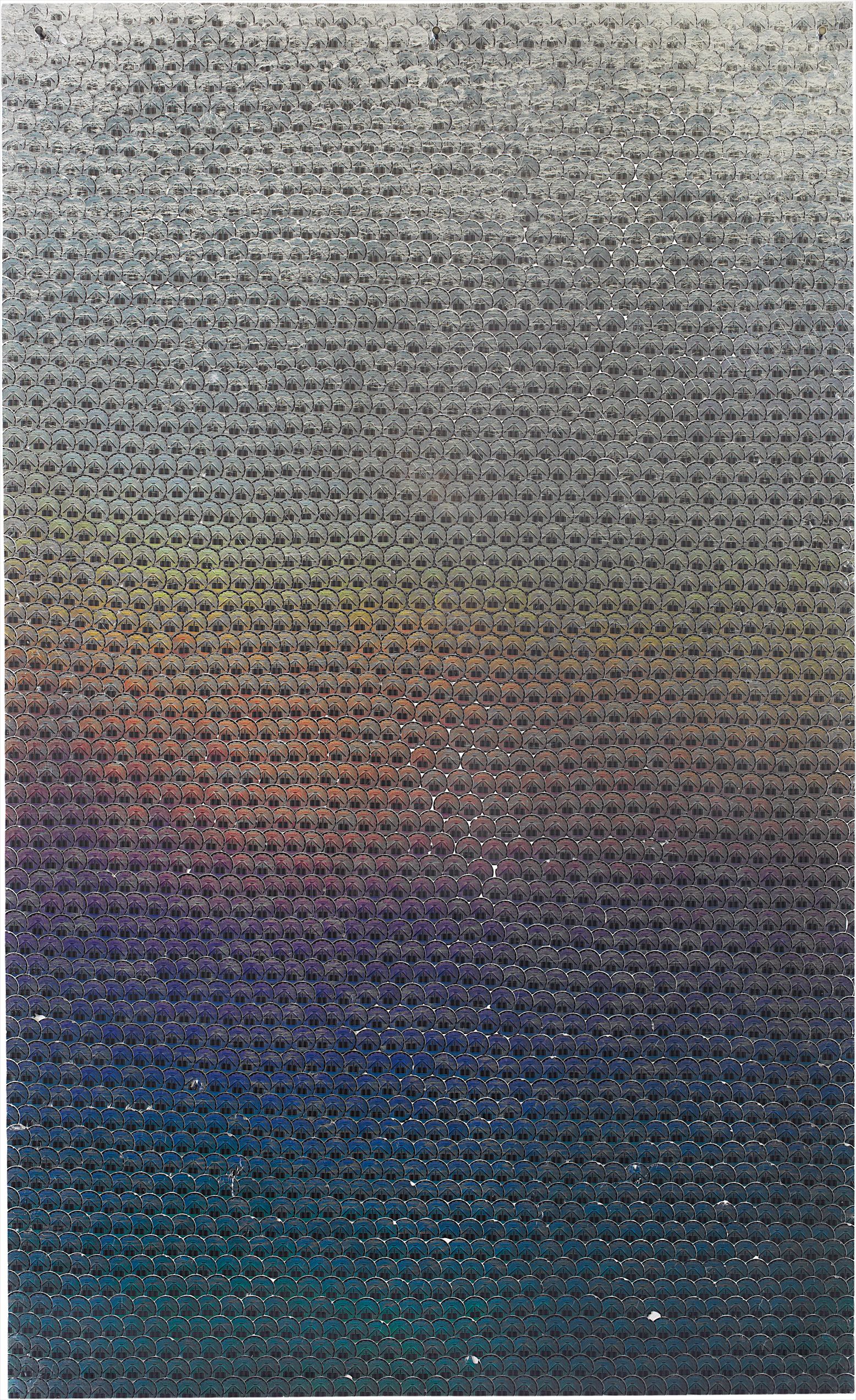
Ise Guilloche
His work does not argue that originality is a myth so much as it demonstrates, with genuine curiosity and even tenderness, how forms accumulate meaning through repetition and variation. His 3D scanning projects, through which he has processed everything from ancient Greek sculpture to objects drawn from diverse ethnographic and decorative traditions, carry this spirit most visibly. By releasing the scans as open files, Laric collapses the distance between museum archive and living studio practice, between the ancient and the contemporary, between authorship and collective making. The works available on The Collection offer a particularly concentrated view of one of the most distinctive veins in Laric's practice: his use of guilloche patterns and tamper evident security materials.
Works such as Wu Tang Guilloche Rodin, Ise Guilloche, and Discobolus Guilloche overlay canonical sculptural subjects with the dense, mathematically generated linework traditionally found on banknotes and official documents. The collision is precise and genuinely strange. Rodin's tectonic surfaces, the sacred geometry of the Ise shrine in Japan, the classical athleticism of the Discobolus, all rendered through the visual language of institutional authority and anti counterfeiting technology. Laric is asking, with characteristic obliqueness, what it means to authenticate an image, and who has the power to do so.
Oliver Laric
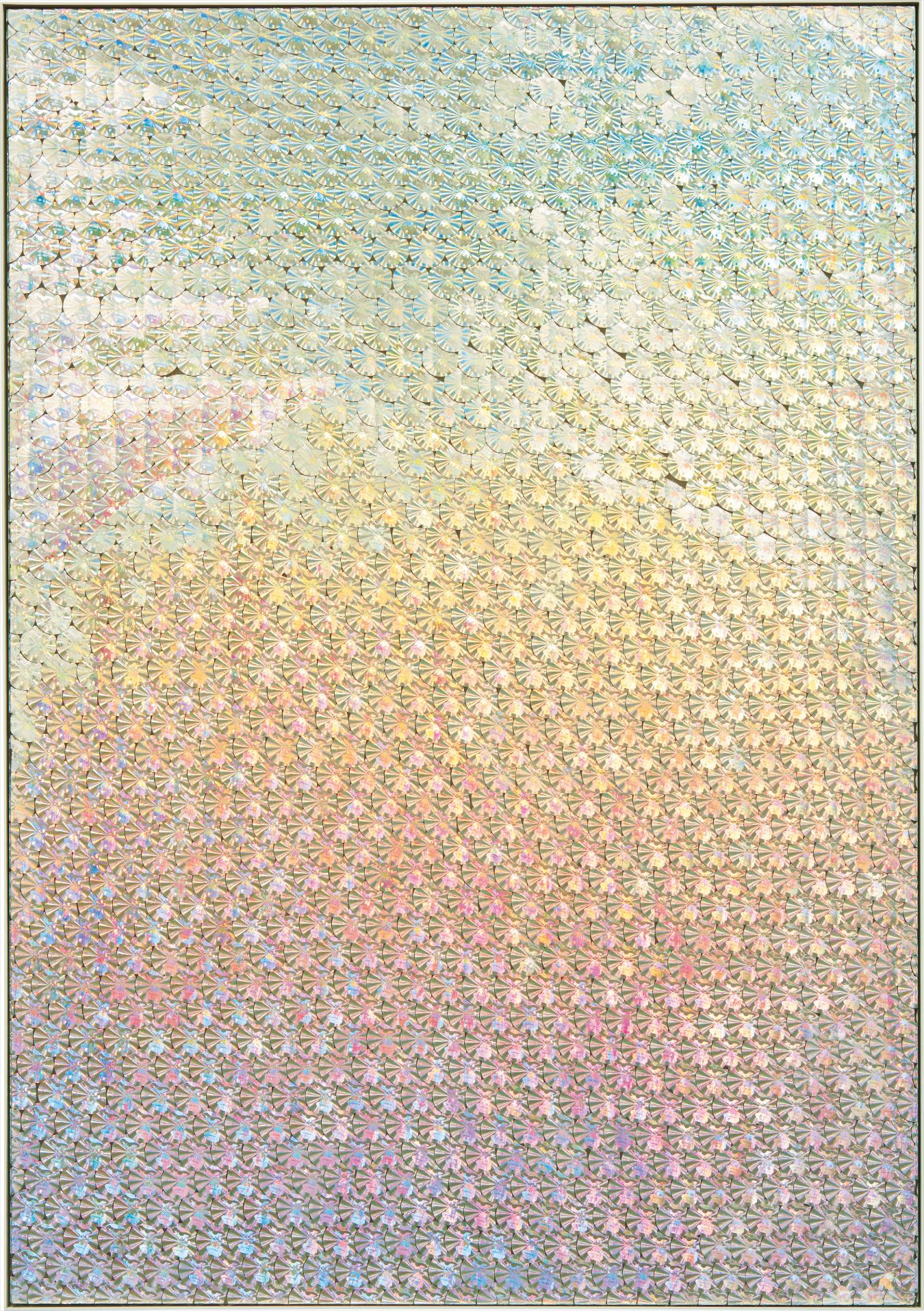
察察 (Cha Cha)
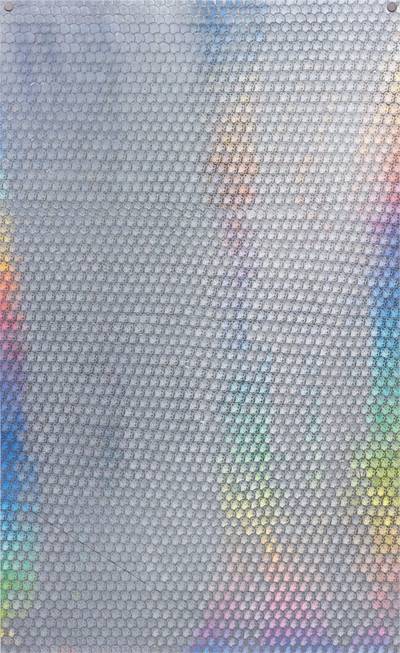
The hologram works deepen this inquiry with material directness. Schengen Visa Hologram and related pieces use actual tamper evident security hologram stickers applied to acrylic glass with airbrushed clear coating, transforming bureaucratic authentication materials into objects of considerable visual beauty. There is something quietly charged about holding a work that uses the physical infrastructure of border control and identity verification as its primary medium. Laric is a European artist of the Schengen generation, and these pieces carry a political subtext that never tips into didacticism.
They are formally extraordinary objects that reward sustained looking, and they happen to be made from the materials that govern the movement of people across the continent he grew up in. For collectors, Laric's work occupies a position that is both intellectually rigorous and aesthetically compelling, a combination that has historically aged well in the market. His practice spans unique objects, limited editions, and open source digital releases, which means collecting him involves navigating a range of entry points. The material works, particularly the hologram and guilloche pieces, are physically arresting in ways that photographs do not fully convey.
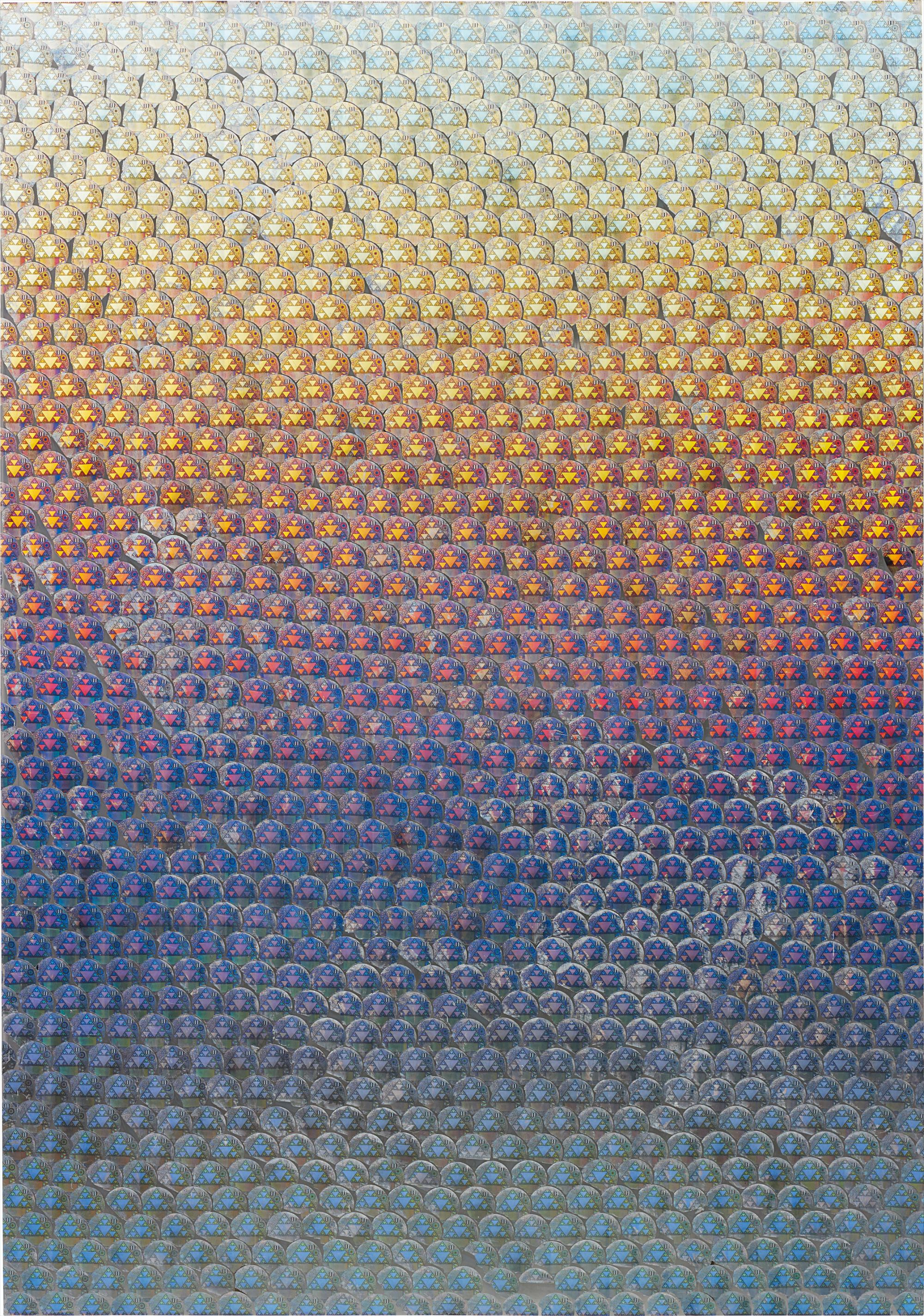
Oliver Laric
Wholeness and the Implicate Order
The layering of stickers, the iridescence of the holographic material, the precision of the acrylic grounds: these are objects that justify physical encounter. Collectors drawn to artists working at the intersection of conceptual art, sculpture, and digital culture, including those who admire the practices of Cory Arcangel, Seth Price, or Artie Vierkant, will find in Laric a more historically grounded and formally sophisticated version of similar preoccupations. Laric's place in art history is still being written, which is part of what makes collecting him now feel meaningful. He emerged from a specific moment in contemporary art that is already being reassessed with critical seriousness, and he is one of the figures from that moment whose work has continued to grow in complexity and ambition rather than remaining fixed to its origins.
His engagement with sculpture history connects him to a lineage running from Marcel Duchamp through Richard Prince and Sherrie Levine, artists for whom the found or reproduced object is a site of genuine philosophical investigation. But Laric's particular warmth toward the images he works with, his apparent delight in the endless life of forms across time, gives his practice a quality that sets it apart from the cooler gestures of his predecessors. To encounter Laric's work is to be reminded that images do not belong to anyone, that they move through time like water through stone, changing both the form and the medium they pass through. That is not a melancholy thought in his hands.
It is, somehow, an invitation.