Oleg Vassiliev
Oleg Vassiliev: Painting Light Into Memory
Artist Spotlight · The Collection Editorial
There is a particular quality of light in the paintings of Oleg Vassiliev that collectors and curators describe almost universally in the same way: it seems to come from inside the canvas rather than fall upon it. That luminous, interior glow, at once tender and melancholy, suffuses landscapes and interiors with the feeling of a half remembered afternoon, a place seen once and carried ever since in the mind's eye. Vassiliev spent decades perfecting this effect in near obscurity within the Soviet underground, and the growing recognition of his work in Western institutions and the international art market represents one of the more gratifying rediscoveries in recent art history. Oleg Vassiliev was born in Moscow in 1931 and came of age in a city where official Socialist Realism governed every brushstroke permitted in public life.
Oleg Vassiliev
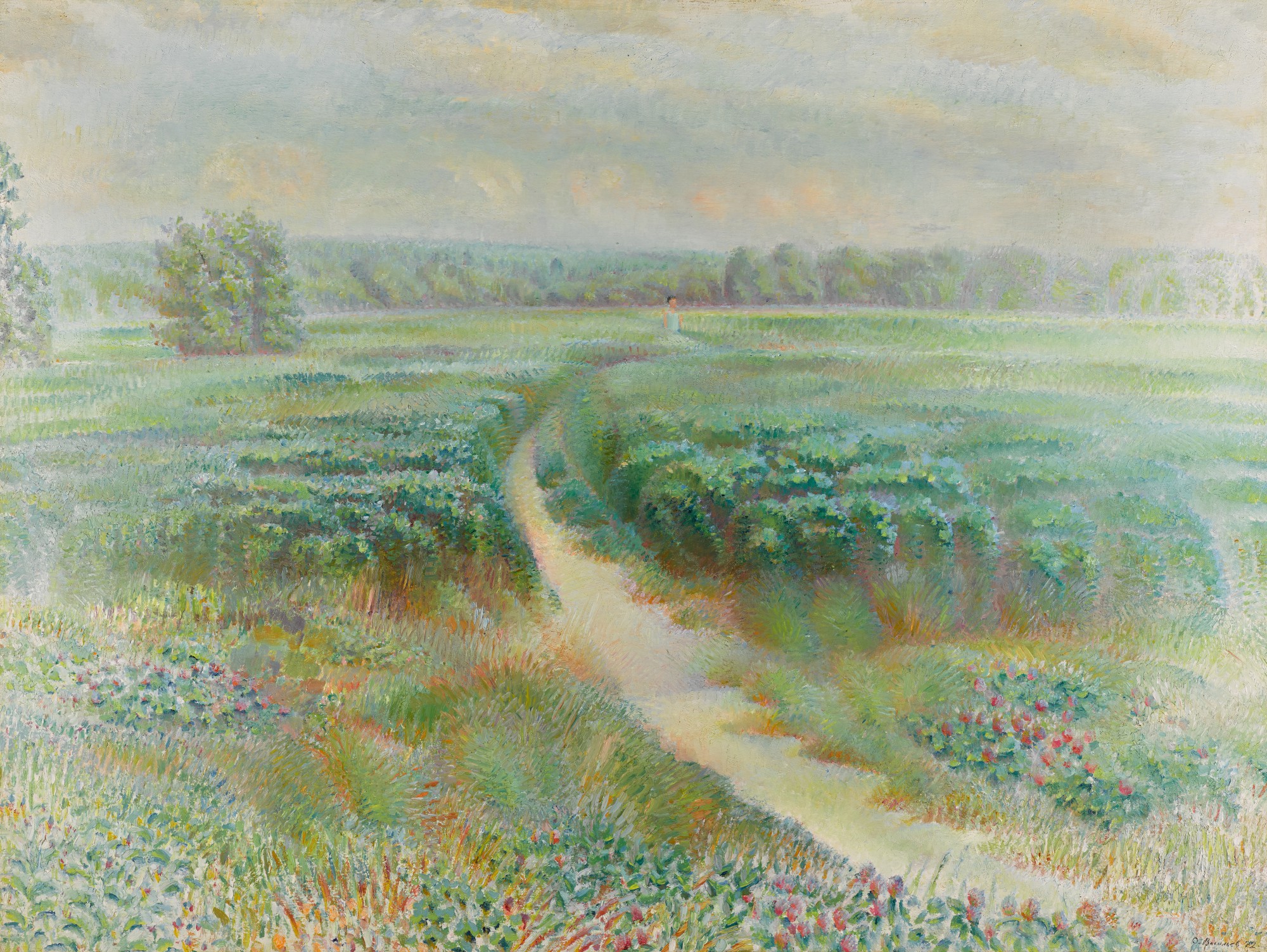
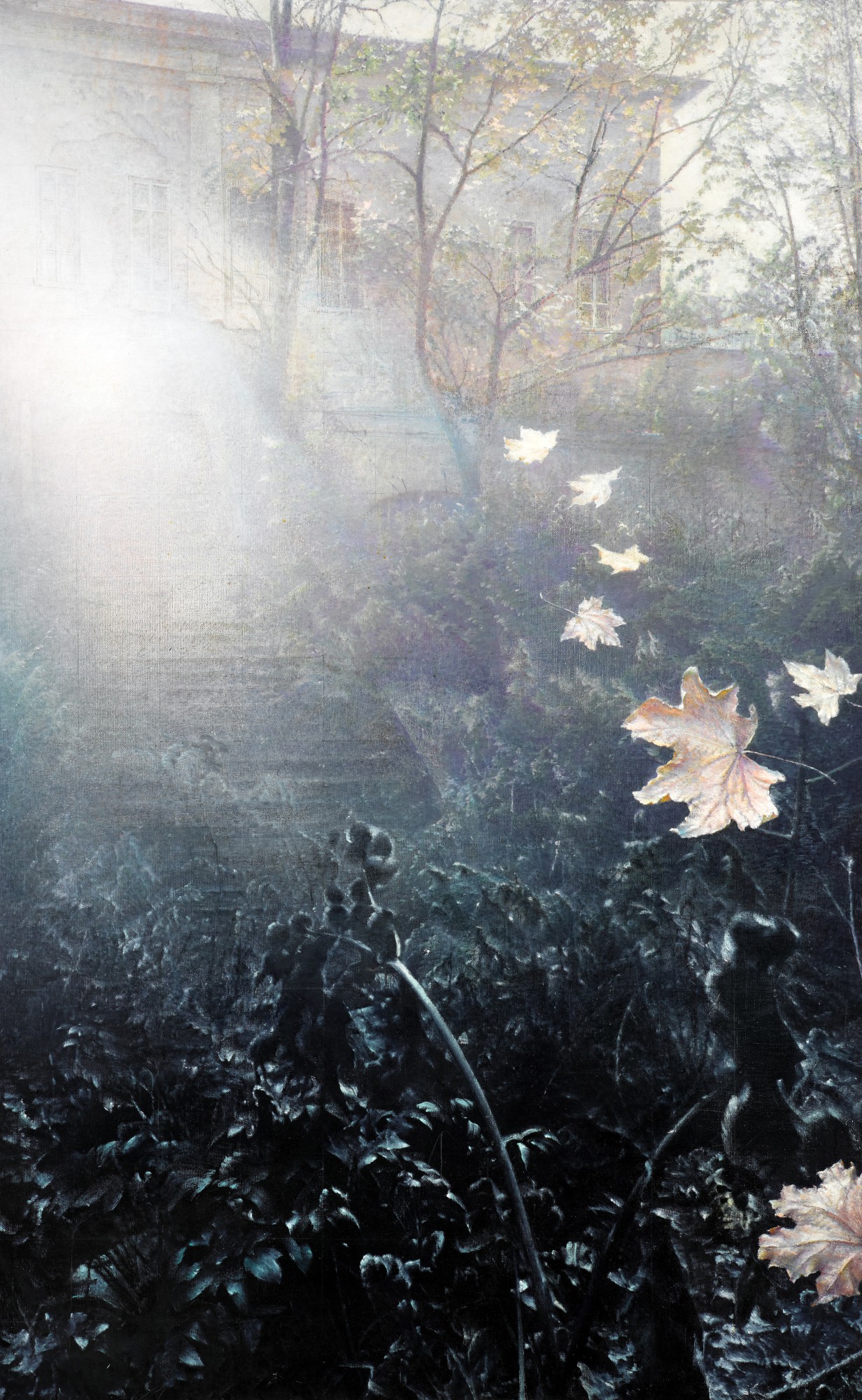
The Old Country House in Pushchino
The aesthetic orthodoxy of the Stalin era was not merely a bureaucratic inconvenience for young artists of his generation; it was a form of enforced silence, demanding that painting serve ideology rather than perception. Vassiliev studied at the Moscow Polygraphic Institute in the 1950s, where he trained as an illustrator, a discipline that would leave its mark on his extraordinarily refined sense of pictorial structure. It was also where he formed the foundational friendships that would define his artistic life, most notably with Erik Bulatov and Ilya Kabakov, two figures who would become giants of Russian nonconformist art. The Moscow underground of the 1950s through the 1980s was a world of kitchen gatherings, unofficial exhibitions, and works passed quietly between trusted hands.
Vassiliev was a central, if characteristically understated, presence within it. He and Bulatov shared a studio for many years and worked in close dialogue, collaborating on children's book illustrations to earn a living while pursuing their independent painting practice in the hours and spaces that remained. This dual existence, one foot in the official economy of Soviet culture and one foot entirely outside it, was common to their generation, but Vassiliev navigated it with particular grace. His children's book work, produced with Bulatov under considerable constraint, developed a visual economy and clarity that quietly informed his fine art practice.
Oleg Vassiliev
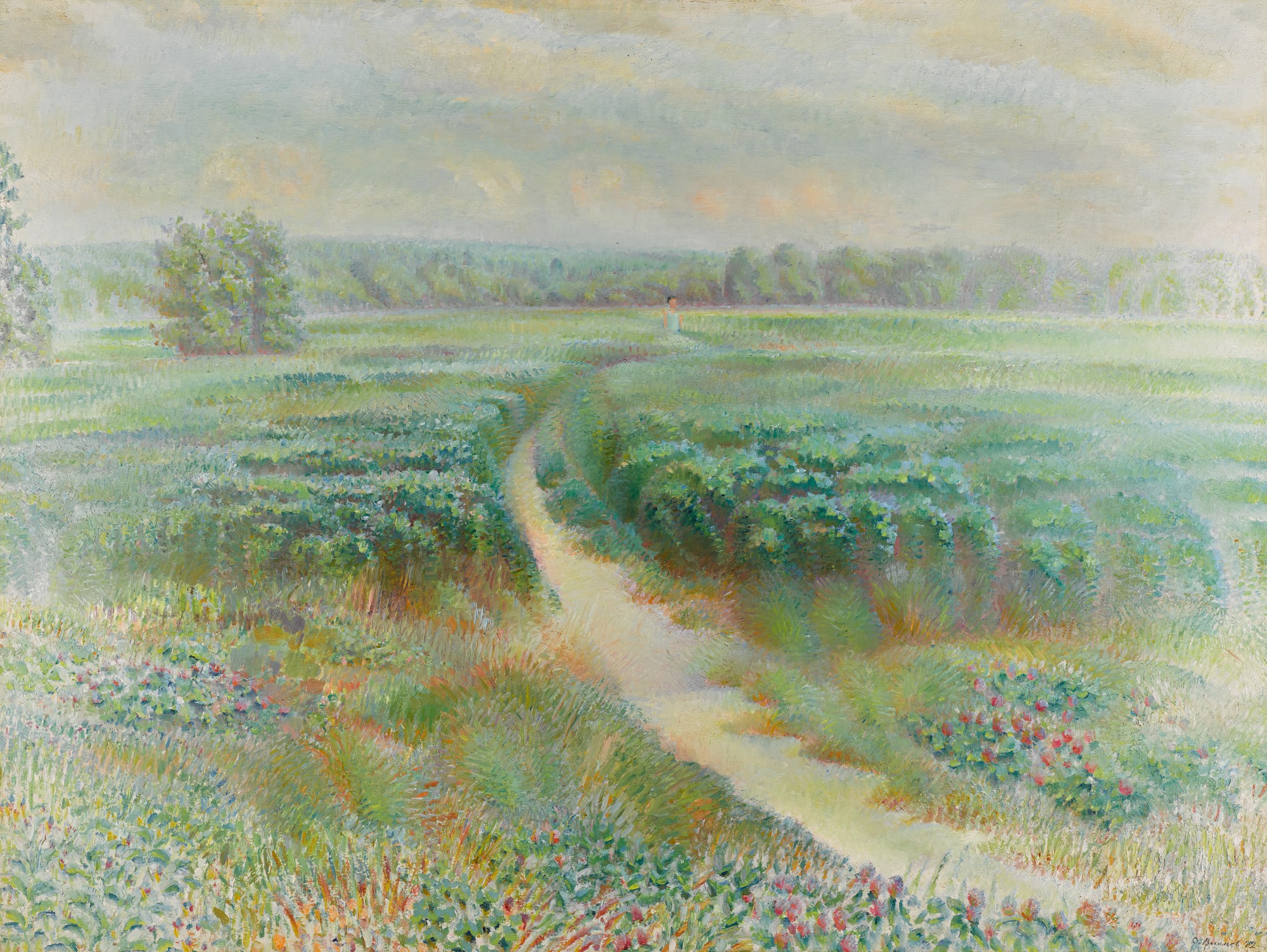
In the Field (Abramtsevo)
Vassiliev's painting evolved through several distinct but interconnected phases. In his early work he was drawn to the Russian landscape in a way that acknowledged the great tradition of nineteenth century painters such as Isaac Levitan while pushing steadily toward something more interior and psychological. His canvases began to dissolve conventional pictorial space, replacing solid form with fields of suffused light and atmospheric haze. By the 1970s and 1980s his signature approach had fully crystallized: figures and landscapes rendered in soft, almost photographic blur, as though seen through a veil of time or sleep, suspended between the concrete and the ineffable.
The effect owes something to photography and something to the Russian symbolist tradition, but it is ultimately entirely his own. Among the works that best demonstrate his achievement, "The Old Country House in Pushchino" stands as a quiet masterpiece of the genre. The painting captures a wooden dacha in the dissolving light of a Russian afternoon with a tenderness that feels both documentary and elegiac. "In the Field (Abramtsevo)" draws on the storied landscape of the Abramtsevo estate, a site freighted with Russian cultural memory, and transforms it into something dreamlike and personal.
Oleg Vassiliev
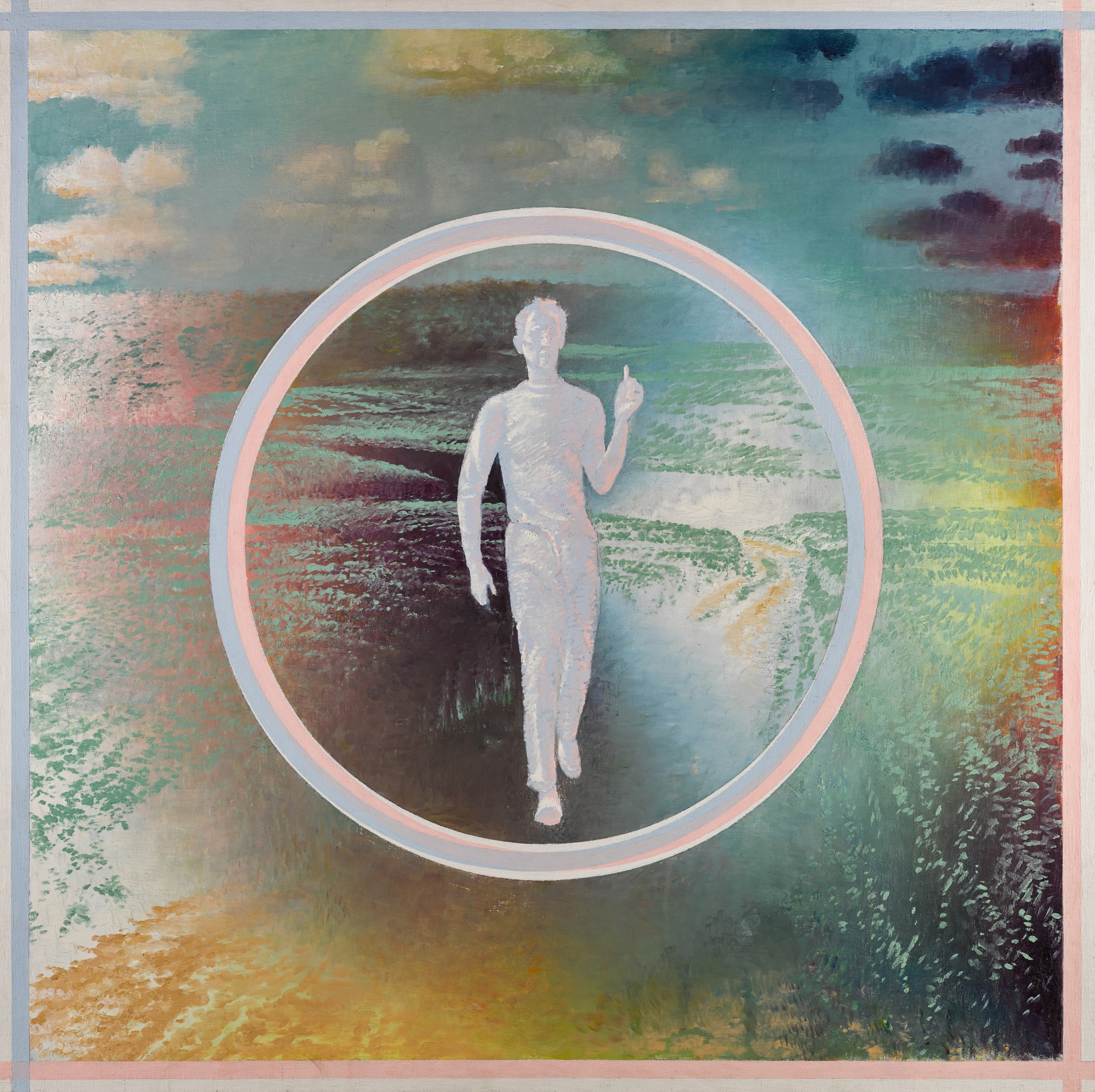
Figure in a Circle
The "White House" series, from which "Home II" (1993) emerges, marked a significant development after his emigration, with Vassiliev using the white ground of his canvases as both a formal device and a metaphor for distance, displacement, and the fragility of recollection. These works were made in the United States but they breathe the air of another country, another time. The intimate works on paper and board are equally important to understanding Vassiliev's range and emotional intelligence. "Erik Bulatov By The Campfire" in colored pencil, and its later oil counterpart "By a Campfire, Erik Bulatov, 1962" (1996), return to a specific moment shared with his closest artistic companion, treating friendship and shared youth as subjects worthy of the most careful pictorial attention.
These are not sentimental works; they are acts of sustained looking, attempts to hold onto the texture of lived experience against the erosion of time. "The Materialisation of Gloom," painted on masonite, demonstrates his willingness to push his investigation of light to its opposite extreme, finding in shadow and atmospheric density the same kind of transcendent quality he locates in brightness. For collectors, the appeal of Vassiliev's work operates on several levels simultaneously. His technical mastery is immediately evident and deeply satisfying, the kind of painting that rewards close, sustained attention in ways that images of it on a screen can only hint at.
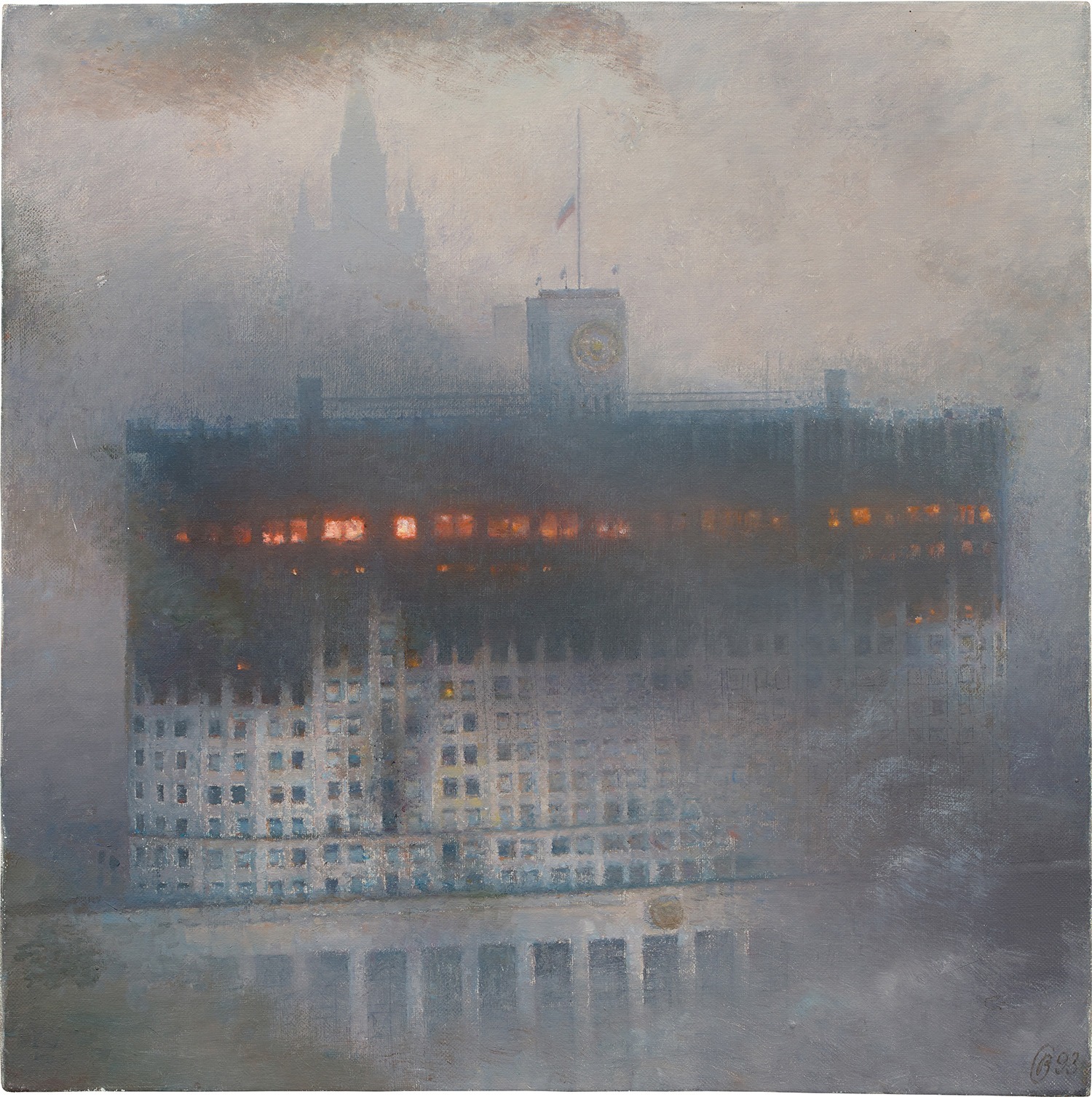
Oleg Vassiliev
Home II (from the White House series), 1993
His position within the history of Russian nonconformism gives his work genuine art historical weight, situating it in relation to Bulatov's text laden conceptualism and Kabakov's installation based explorations of Soviet interiority. Works by this circle have attracted sustained interest from major private collections and institutions in both Europe and North America, and Vassiliev's paintings, when they appear at auction or through specialist dealers, draw serious attention from collectors who understand the significance of this generation. Given the relative scarcity of his oils on the market, each appearance represents a meaningful opportunity. Vassiliev emigrated to the United States in 1988, settling in New York, and continued to work there until his death in 2013.
The emigration did not fracture his vision; if anything, the distance from Russia sharpened his engagement with memory as a subject and intensified the quality of longing that runs through the late work. He exhibited with the Phyllis Kind Gallery in New York, one of the most respected venues for Russian nonconformist art in the American market during the 1990s and 2000s, and his work entered significant private collections on both sides of the Atlantic. His reputation has continued to grow in the decade since his death as the art world has developed a richer and more nuanced understanding of the Soviet underground and its extraordinary creative achievement. What Vassiliev ultimately offers is something that the most enduring art always provides: a way of seeing that is irreducibly personal and yet immediately recognizable as true.
His paintings know something about the way consciousness works, about the softening effect of time on experience, about the way a particular quality of light on a field or the silhouette of a friend by a fire can become the whole of what we mean by the word home. To live with one of his works is to live with that knowledge made visible, held steady on a canvas, radiant and still.