Odinakachi Okoroafor
Odinakachi Okoroafor Renders the Interior World Luminous
Artist Spotlight · The Collection Editorial
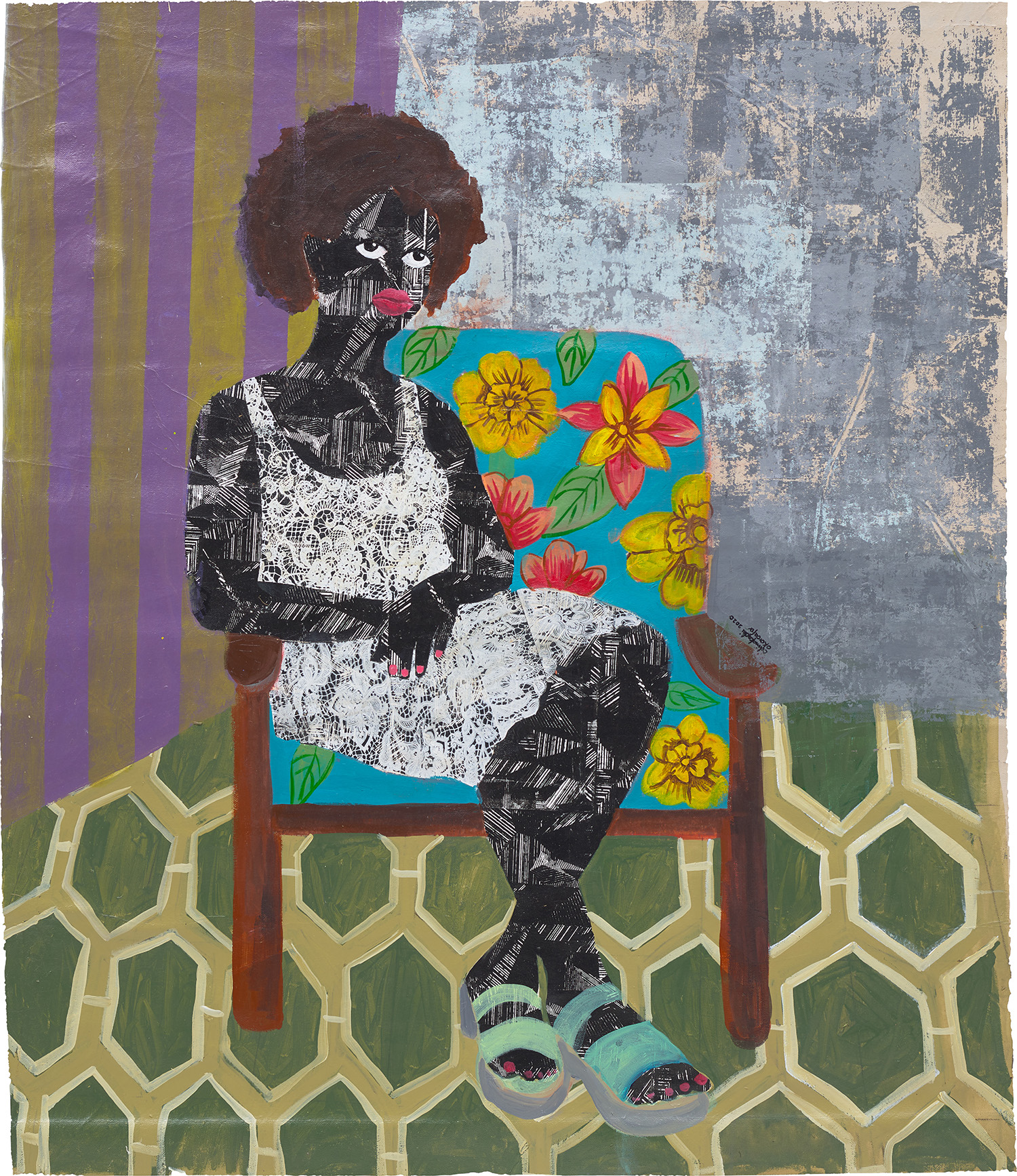
There is a particular kind of attention that Nigerian painter Odinakachi Okoroafor brings to the intimate spaces of Black womanhood, one that feels at once urgent and unhurried, tender and precise. Her canvases have been gathering momentum across the Lagos and London art scenes, drawing the eyes of collectors who sense that something quietly significant is happening in her studio. Working with acrylic, photo transfer, paper collage, and textile ink, Okoroafor builds layered surfaces that read as both document and dream, placing her firmly among the most compelling voices to emerge from contemporary African painting in recent years. The conversation around her practice has grown steadily, and those who encountered her work early are watching her ascent with the particular satisfaction of having known.
Odinakachi Okoroafor
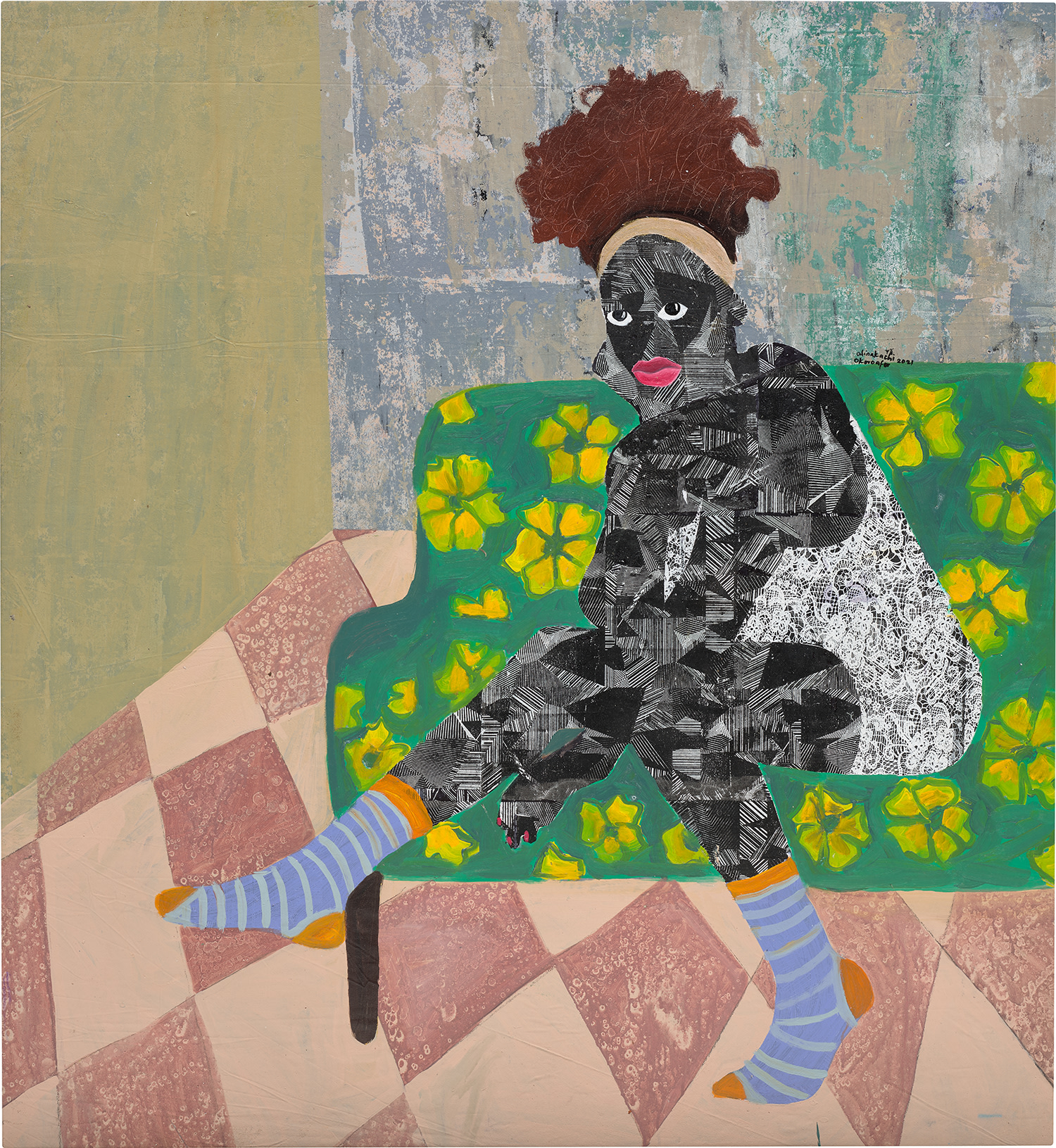
Blue Socks, 2021
Okoroafor's formation as an artist is inseparable from her Nigerian identity and the textures of life she observed closely growing up. The specificity she brings to her subjects, her willingness to name them, to render them fully clothed in their own personhood rather than as symbols or types, speaks to an upbringing that valued individual dignity and relational intimacy. Her titles alone signal this commitment: works named after people, after states of being, after small domestic details that carry enormous emotional weight. This is not an artist who traffics in abstraction for its own sake; her abstractions are always in service of a particular truth about a particular life.
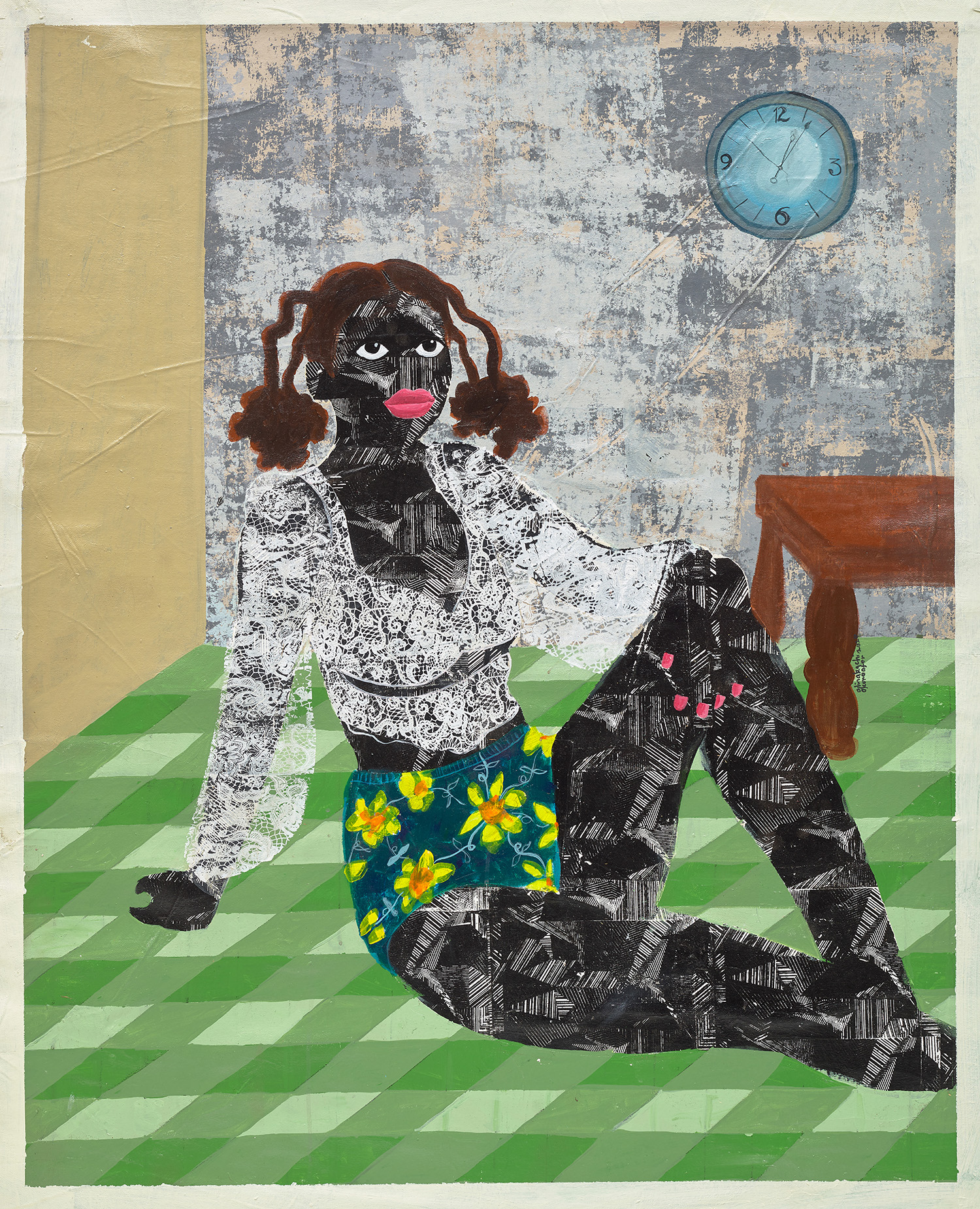
Her artistic development accelerated noticeably around 2020, a year that for many artists became a crucible. Working through the conditions of lockdown and global uncertainty, Okoroafor produced the Isolation series, canvases that took the enforced stillness of that period and transformed it into something contemplative rather than merely confined. The mixed media approach she deployed in works like Isolation III, combining acrylic with paper collage and textile ink on canvas, suggests an artist reaching beyond a single language to say something that one medium alone could not contain. It was during this period that the formal confidence of her practice became unmistakable.
Odinakachi Okoroafor
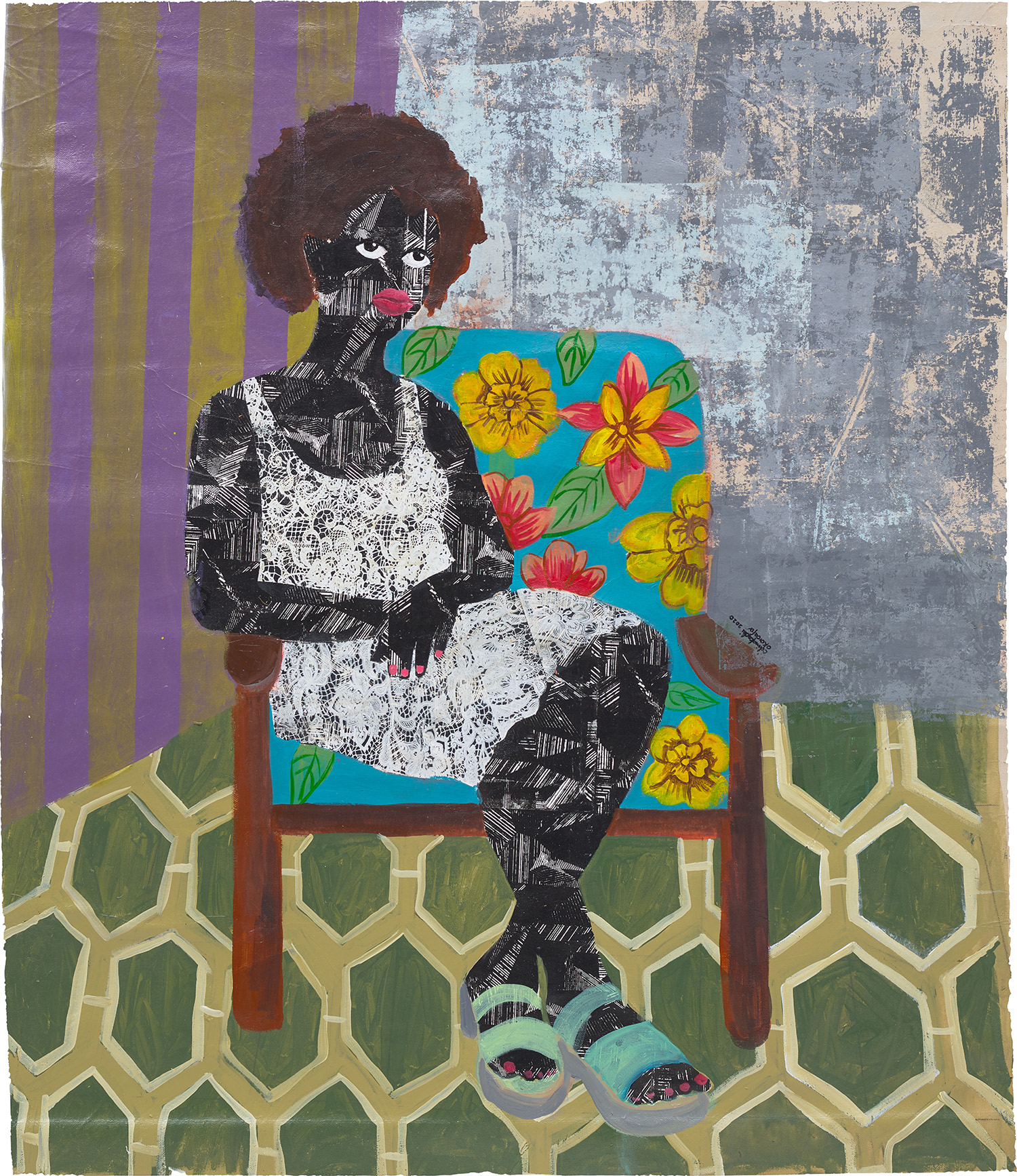
Spinster, 2020
The introduction of photo transfer into her work, seen to striking effect in Blue Socks and Chidiogo, both completed in 2021, represents a significant evolution in her visual thinking. Photo transfer brings with it the indexical weight of photography, the sense that something real was here, that a body existed in a particular moment. By layering this quality onto acrylic painting, Okoroafor creates a temporal tension: the painted and the photographed coexist on the same surface, neither fully subordinate to the other. In Chidiogo, this technique takes on a deeply personal register, the name itself a Igbo name meaning God is good, suggesting portraiture that is also an act of gratitude and witness.
Blue Socks, meanwhile, anchors the viewer in the domestic and the specific, a detail so ordinary it becomes, under Okoroafor's attention, a kind of monument to everyday presence. Spinster, her 2020 acrylic on canvas, deserves particular consideration as a statement work. The word itself carries centuries of loaded meaning, used historically to diminish and reduce women who lived outside the expected social scripts. Okoroafor's choice to title a canvas with this word is neither ironic nor aggressive; it is reclamatory, a reframing of solitude and self determination as subjects worthy of serious pictorial attention.
Odinakachi Okoroafor
Isolation III, 2020
In this she joins a broader lineage of artists, among them Njideka Akunyili Crosby, whose large scale mixed media works also interrogate Nigerian domestic and diasporic experience, and Toyin Ojih Odutola, whose constructed portraits challenge the stability of Black identity and narrative. Okoroafor works on a more intimate scale than either, but the thematic ambition is entirely commensurate. For collectors, Okoroafor's work offers a rare combination: genuine conceptual depth and a technical range that rewards close looking, presented at a moment in her career when acquiring her work still feels like discovery rather than obligation. The layered surfaces of her mixed media canvases age beautifully and repay repeated viewing, offering new details as light and proximity shift.
Her palette tends toward the warm and luminous, with blues and ochres and the particular quality of late afternoon light that feels distinctly West African even when the subject matter is interior and quiet. These are works that hold their own in a room, that ask to be lived with. Within the broader context of contemporary African art, Okoroafor sits comfortably alongside a generation of painters who are expanding the terms of figuration to encompass memory, texture, and the politics of visibility. Artists such as Amoako Boafo, whose richly pigmented portraits of Black subjects commanded significant auction results beginning around 2020, and Otis Kwame Kye Quaicoe, whose figurative practice similarly foregrounds Black interiority, provide useful context, though Okoroafor's mixed media approach gives her work a distinctly haptic quality that sets it apart.
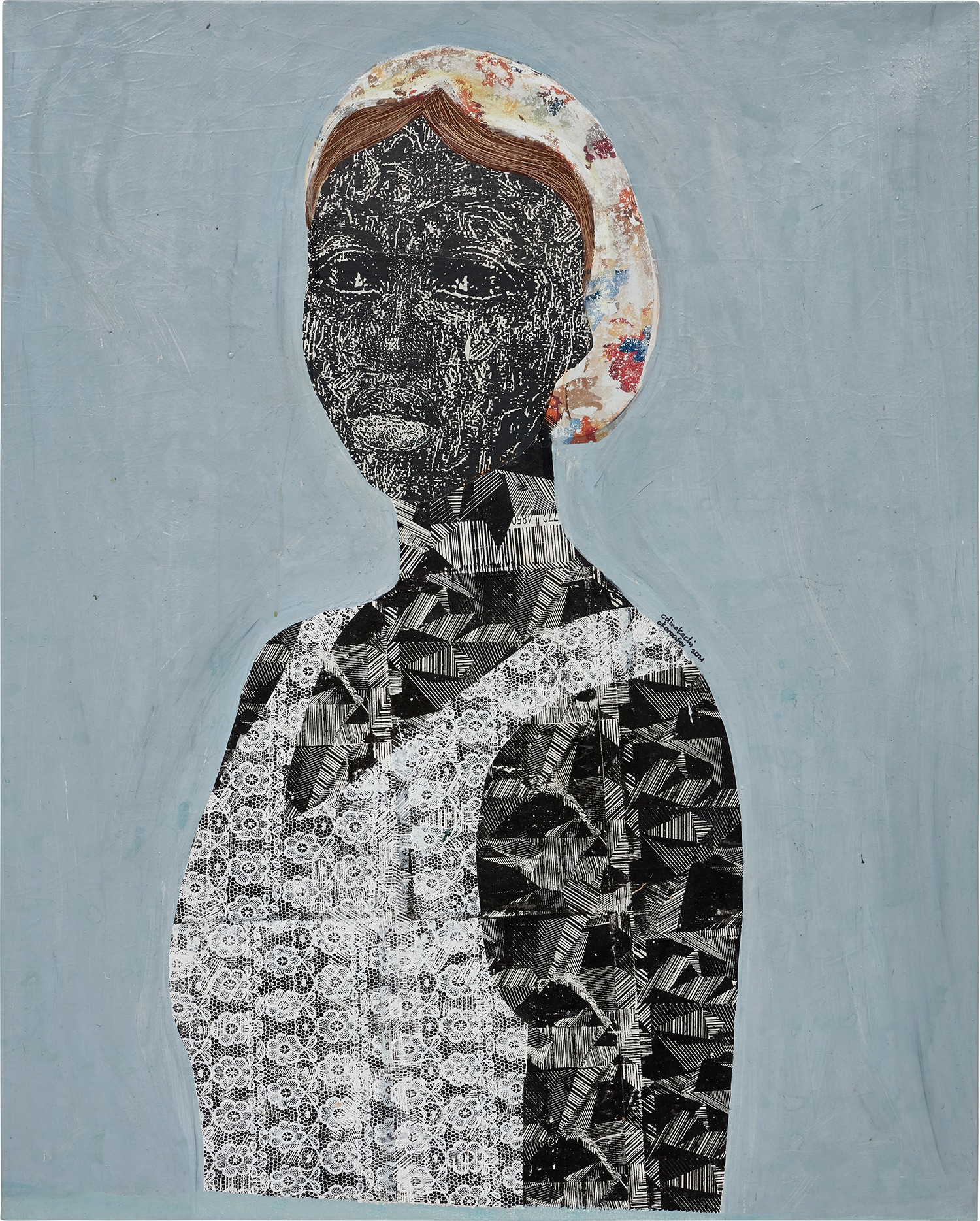
Odinakachi Okoroafor
Chidiogo, 2021
She is also clearly in dialogue with the longer history of feminist art making globally, bringing that inheritance into conversation with specifically Nigerian and Igbo frameworks of meaning. Okoroafor's legacy, still being written with each new canvas, rests on her insistence that the lives of Black women, their solitude, their names, their small beloved details like the color of their socks, are not peripheral subjects requiring justification but the very center of what painting is for. At a moment when the art world is actively, if imperfectly, expanding its canon, she arrives with a practice already fully formed in its values even as it continues to evolve in its means. To collect her work now is to participate in a story that is just beginning to be told at full volume.