Odilon Redon
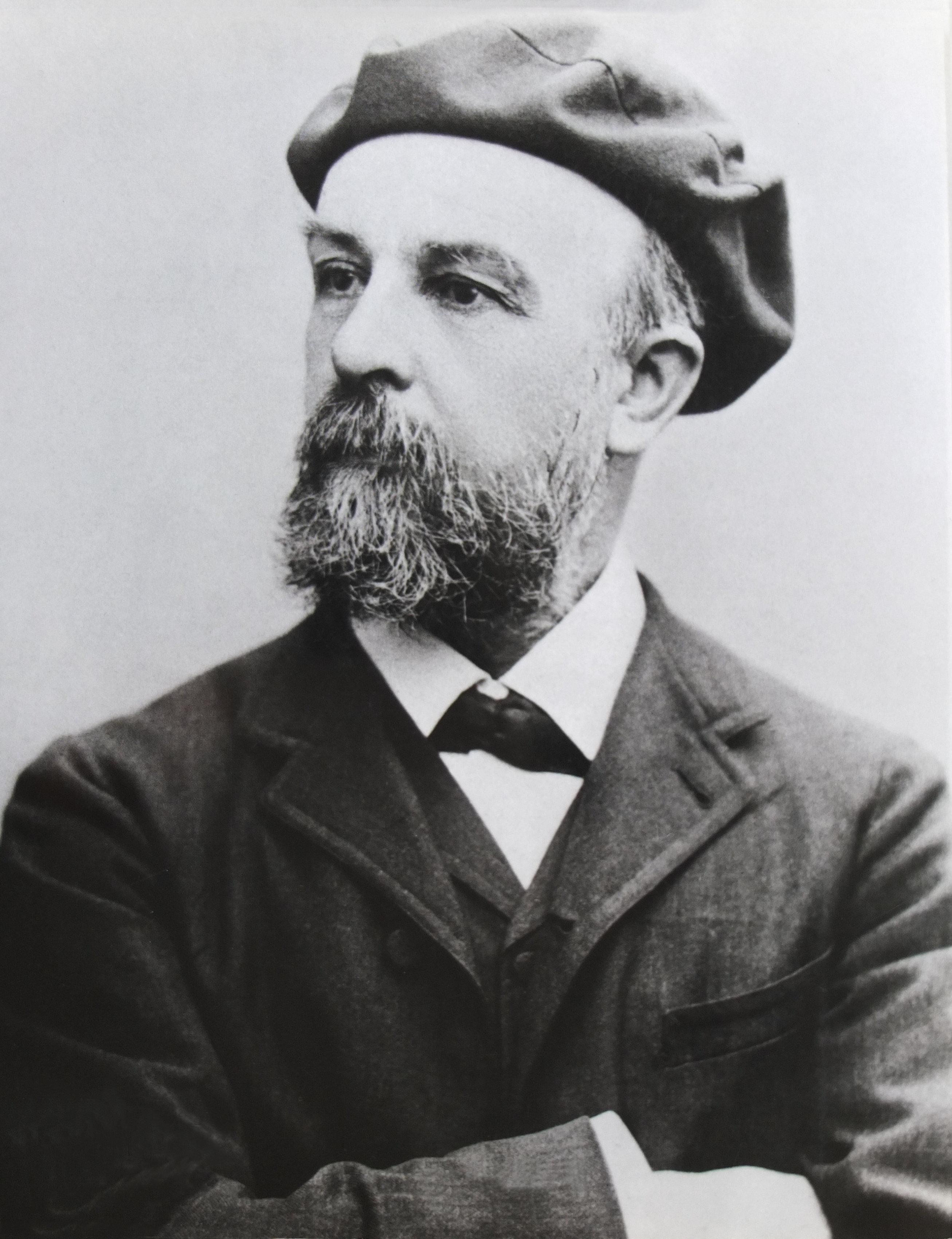
Odilon Redon: Master of the Luminous Dream
Artist Spotlight · The Collection Editorial
“I have made an art according to myself. I have done it with my eyes open to the marvels of the visible world.”
Odilon Redon, journal notes collected in À Soi-Même
There is a moment, standing before a late Odilon Redon pastel, when the eye simply stops negotiating with reality. The flowers seem to bloom from no earthly soil. The colors, impossible pinks and incandescent golds and blues that have no name in any meteorological record, appear to generate their own interior light. This is the sensation that has drawn curators, scholars, and devoted collectors back to Redon's work for well over a century, and it shows no sign of fading.
Odilon Redon
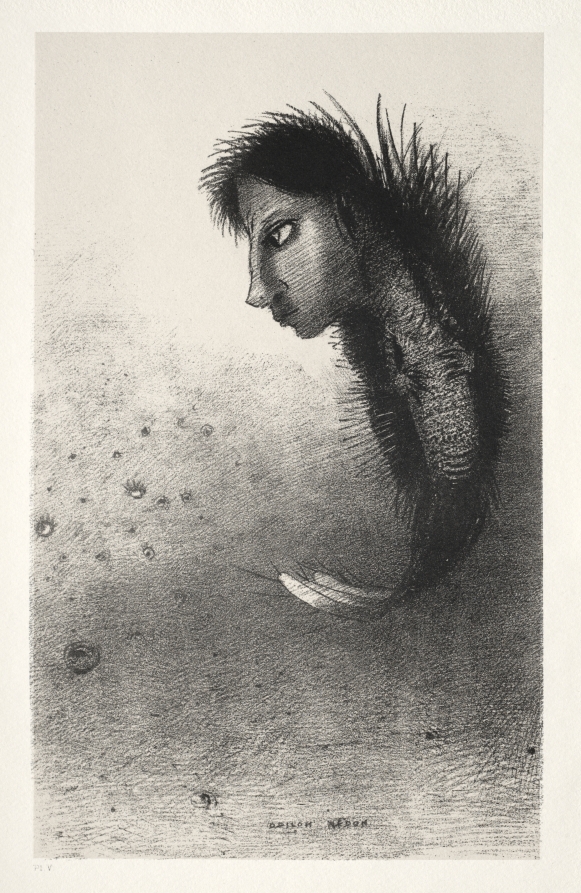
Then There Appears a Singular Being, Having the Head of a Man on the Body of a Fish, 1888
The Museum of Modern Art in New York holds significant examples of his work, as does the Art Institute of Chicago, the Kröller Müller Museum in the Netherlands, and the Musée d'Orsay in Paris, where his presence in the permanent collection serves as a quiet argument that visionary art and enduring importance are not mutually exclusive categories. Odilon Redon was born in Bordeaux in 1840, the second son of a Creole mother from Louisiana and a French father whose business interests kept him traveling. The circumstances of his early childhood were unusual and, by Redon's own account, formative in ways that went beyond mere biography. He spent long stretches of his youth at Peyrelebade, the family's rural estate in the Médoc region, largely isolated from other children and left to wander the flat, atmospheric landscape of that corner of southwestern France.
That solitude nourished something inward and visionary in him. He encountered the botanist Armand Clavaud, who introduced him to microscopic imagery, the strange and teeming life visible only at the threshold of human perception, and the encounter left a permanent impression on how Redon understood the relationship between the seen and the imagined. His formal training was fitful and at times resistant. He studied briefly with the academic painter Jean Léon Gérôme in Paris, a relationship that proved ill suited to his temperament, and later found more congenial instruction from the etcher Rodolphe Bresdin in Bordeaux, whose densely detailed, fantastical prints awakened in Redon a deep affinity for the graphic arts.
Odilon Redon
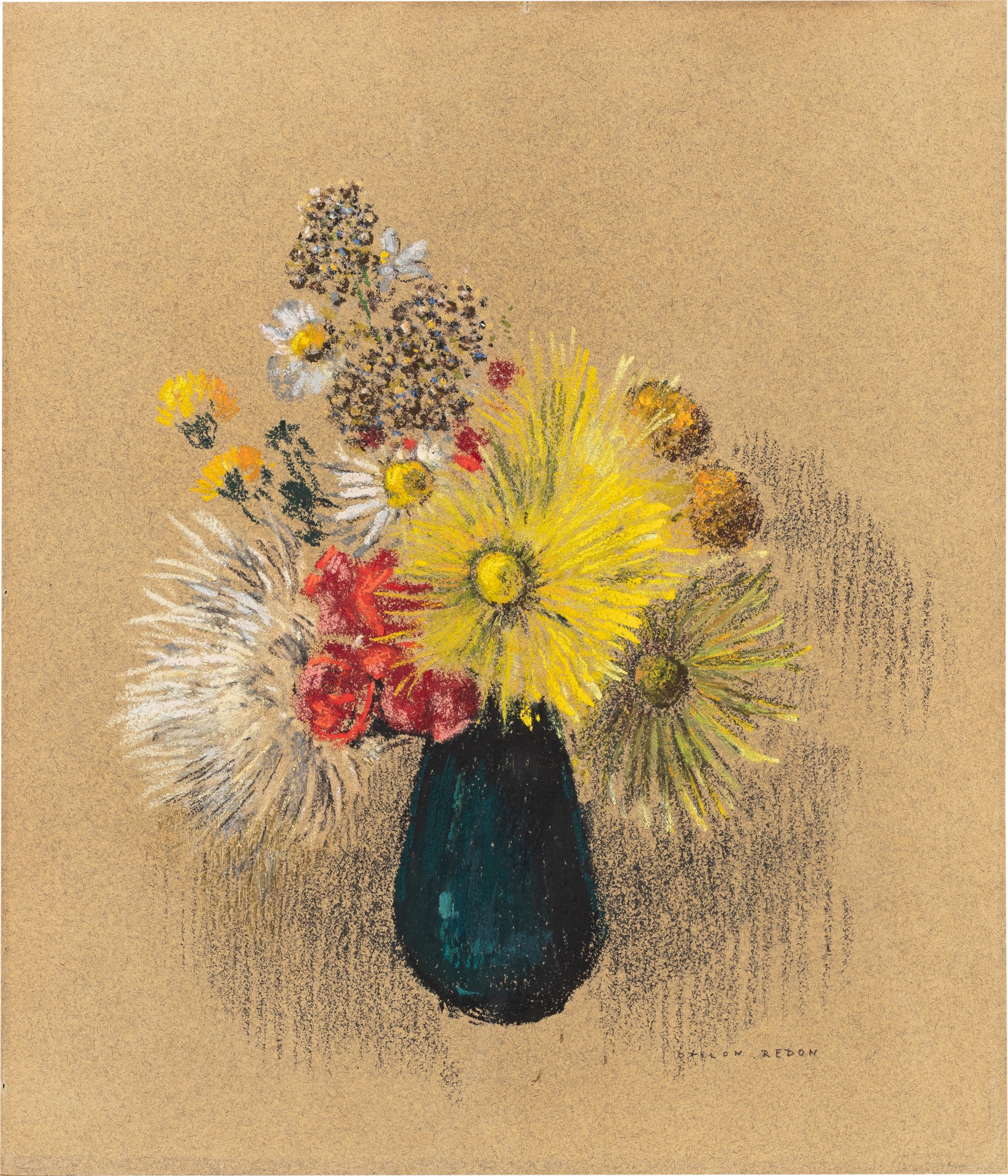
Fleurs, 1910
He also absorbed the lessons of Francisco Goya and Eugène Delacroix with particular intensity, finding in both artists a permission to pursue the emotional and the extraordinary over the merely descriptive. By the time he settled seriously into his career in Paris in the 1870s, he had fashioned for himself an aesthetic outlook that belonged to no existing school, though it would eventually give its energy to several. For the first two decades of his mature career, Redon worked almost exclusively in black and white. His noirs, the charcoals and lithographs produced between roughly 1870 and the early 1890s, remain among the most haunting bodies of graphic work in the history of Western art.
“My whole originality consists in making improbable beings live humanly according to the laws of the probable.”
Odilon Redon, À Soi-Même
Albums such as Dans le Rêve (1879), À Edgar Poe (1882), and the series Hommage à Goya (1885) established him as an artist of rare psychological penetration. These works deal in disembodied eyes floating through space, hybrid creatures suspended between species, figures of myth and nightmare rendered with the precision of scientific illustration and the logic of fever dream. The lithograph In My Dream I Saw in the Sky a Face of Mystery, from 1885, exemplifies this period with extraordinary economy: a vast, ambiguous face drifting above a darkened earth, neither benevolent nor malevolent, simply present, watching, unclassifiable. Then There Appears a Singular Being, Having the Head of a Man on the Body of a Fish, from 1888, carries the same quality of calm impossibility, as though the strangeness on view is simply the natural order of things observed from a sufficient distance.
Odilon Redon
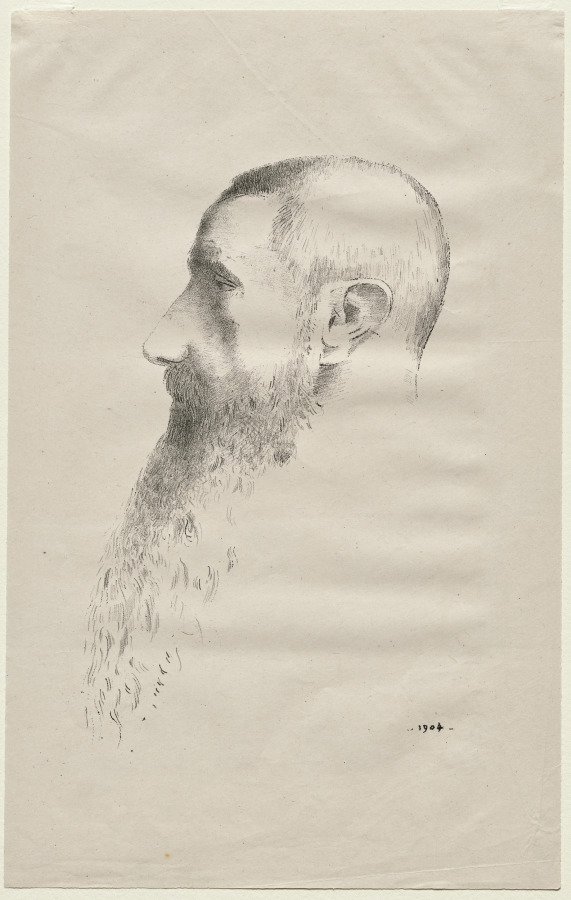
Roger Marx, 1904
The transformation that overtook Redon's practice in the 1890s is one of the more remarkable pivots in the story of modern art. Partly through personal circumstance, including the birth of his son Ari and a corresponding shift in his emotional life toward hope and warmth, and partly through an evolving technical fascination, Redon turned with increasing commitment to color. Pastels, oils, and finally a flood of flower paintings and mythological decorative panels occupied his later years, and the effect was not of an artist softening but of one expanding into a register he had earned through years of disciplined darkness. Works such as Fleurs from 1910 and La Danse du centaure from the same year demonstrate a chromatic confidence that places him in conversation with the Symbolists, with Paul Gauguin, and even, glancingly, with the emerging Fauvists, though Redon always remained his own category.
“Nothing in art is achieved by will alone. Everything is done by docile submission to the unconscious.”
Odilon Redon, À Soi-Même
The pastel Intérieur de Cathédrale from 1905 shows how thoroughly he had absorbed the architecture of light itself, treating stone and stained glass not as objects to be recorded but as pretexts for color to perform. For collectors, Redon presents a rich and layered opportunity. His prints, particularly the lithographs on China paper laid on wove paper, which appear in significant examples across The Collection, represent an accessible entry point into one of the defining graphic imaginations of the nineteenth century. Works such as the Roger Marx portrait lithograph of 1904, a tribute to the influential critic who championed Redon's cause, and the darkly theatrical It Is the Devil, Bearing Beneath His Two Wings the Seven Deadly Sins from 1888 demonstrate the range of register available within the graphic work alone.
Odilon Redon
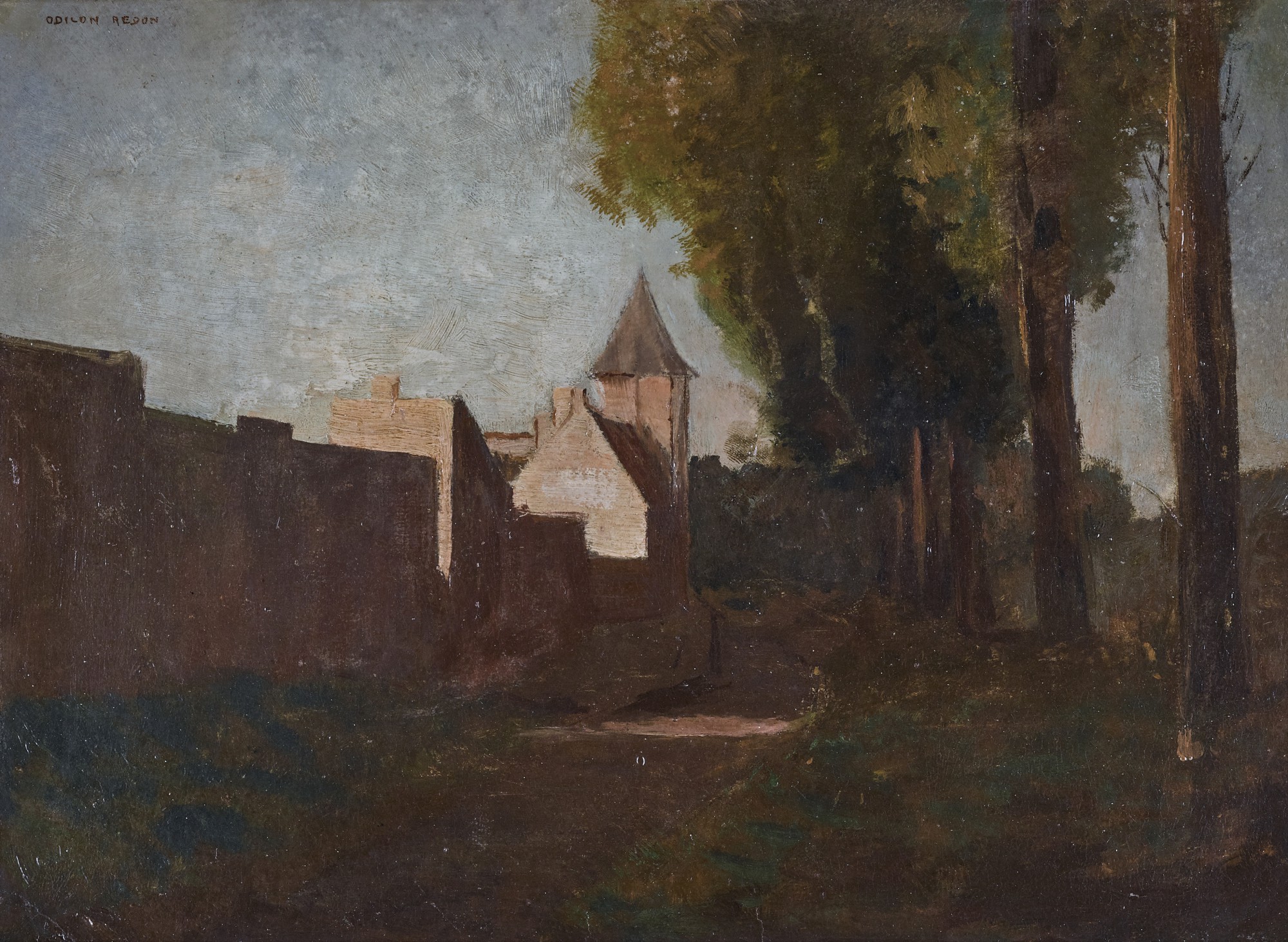
Village fortifié
At auction, Redon's pastels have commanded significant sums at the major houses, reflecting sustained institutional and private appetite, while his works on paper remain actively sought by collectors who value the intimacy and directness of the medium. The charcoal Femme, depicting a young woman standing in that luminous, unlocatable space Redon favored, carries the particular tenderness of his figurative work and rewards extended looking. Redon's place in art history is both singular and surprisingly connective. The Symbolist writers Stéphane Mallarmé and Joris Karl Huysmans were among his earliest and most eloquent admirers.
The Nabis, particularly Paul Sérusier and Maurice Denis, drew on his example. Marcel Proust responded to his work with evident feeling. Gustave Moreau, though a different temperament, shares with Redon a commitment to the mythological and the interior. James Ensor's carnival grotesques and Gustav Klimt's shimmering decorative symbolism both find points of contact with Redon's vision, and a line runs forward from his noirs to the Surrealists, who recognized in him an ancestor of the first order.
André Breton admired him, and it is not difficult to see why: Redon had mapped the unconscious in charcoal and pastel decades before the movement had a name. What makes Redon urgent now, at a moment when the boundaries between disciplines and between modes of perception are being negotiated with new intensity, is precisely his insistence that imagination is not an escape from reality but its deepest form of engagement. He worked at the intersection of science and myth, of botanical precision and pure fantasy, of grief and joy, of darkness and the most extravagant color. His Village fortifié, rendered in oil on cardboard, reminds us that he was also capable of grounded, earthly observation, that the dreamer was always also a careful looker.
To spend time with Redon's work is to be invited into a consciousness that found the world insufficient not because it was too much, but because it contained, just beneath the visible surface, so much more than could be seen with the naked eye alone. That invitation has not expired.
Explore books about Odilon Redon
Odilon Redon: Prince of Dreams
Douglas Druick and Peter Zegers
Odilon Redon
Alec DMax Wildenstein
The Art of Odilon Redon
Roseline Bacou
Odilon Redon: Pastels
Jodi Hauptman
Redon
John Rewald

Odilon Redon: His Life and Work
Madeleine Octave Maus
Odilon Redon and the Literature of Dreams
Peter Cooke

The Drawings of Odilon Redon
Roseline Bacou