Norman Seeff
Norman Seeff: The Eye Behind the Energy
Artist Spotlight · The Collection Editorial
“The camera is a vehicle for me to enter into the experience of another human being.”
Norman Seeff
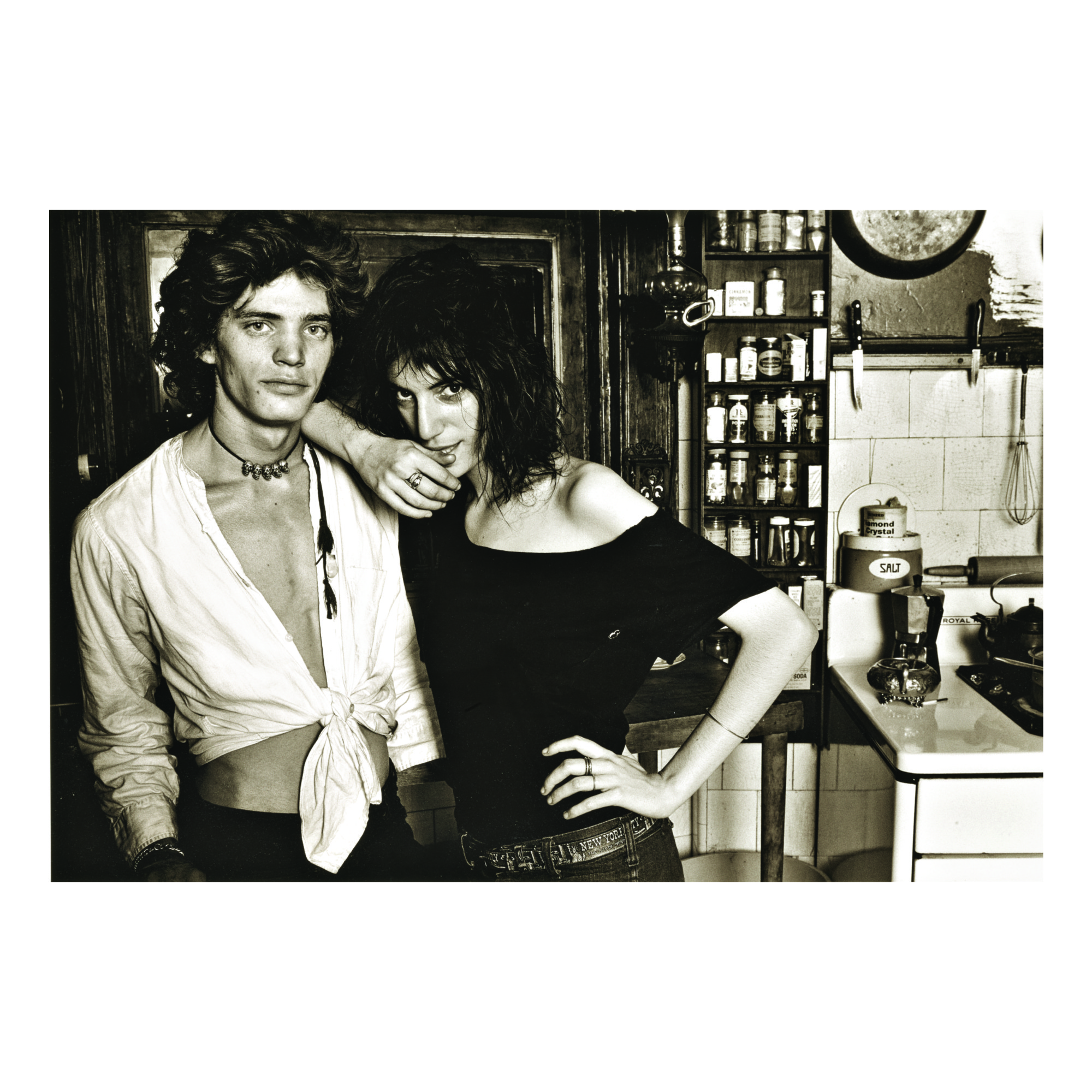
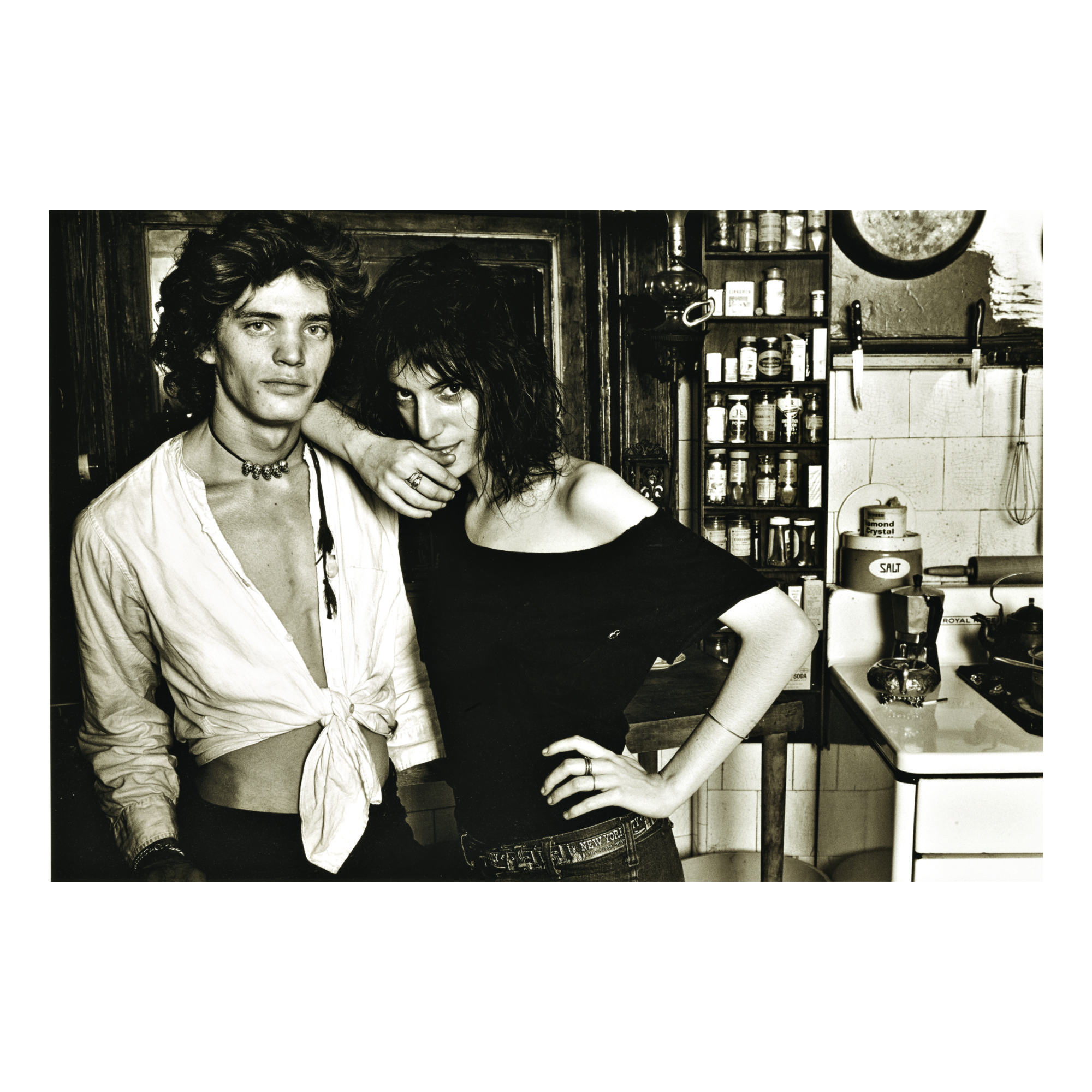
There is a photograph that stops you cold. Robert Mapplethorpe and Patti Smith, caught together in New York, radiate something that most photographers spend entire careers chasing and never quite reach. In Norman Seeff's image, they are not posed subjects but living presences, two artists in full creative communion, their personalities spilling across the frame with an almost reckless generosity. It is the kind of photograph that reminds you what portraiture, at its highest level, is actually for: not documentation, not decoration, but revelation.
Norman Seeff
Robert Mapplethorpe And Patti Smith, N. Y.
Norman Seeff was born in Johannesburg, South Africa, in 1939, into a world far removed from the rock and roll mythology he would later help define. He trained as a medical doctor, completing his degree in South Africa before an inner restlessness drew him toward something less clinical and more alive. The late 1960s found him relocating to New York City, where the cultural voltage of that particular moment, the convergence of music, visual art, film, and social transformation, proved irresistible. He arrived not as a photographer but as someone still in the process of becoming one, carrying a physician's trained attention to the human body and a genuine curiosity about what people reveal when they feel safe enough to stop performing.
Seeff's transition from medicine to photography was not as improbable as it might first appear. Both disciplines require an acute reading of the person in front of you, an ability to earn trust quickly and to observe without flinching. When he moved to Los Angeles in the early 1970s and began working with United Artists Records, he found himself with extraordinary access to the musicians and cultural figures reshaping American life. The record label work gave him not just subjects but a particular kind of permission: time.
Where commercial photographers often work in compressed sessions measured in minutes, Seeff developed an approach built around extended encounters that could last hours, entire days, or stretch across multiple visits. This methodology, which Seeff has described as a kind of creative excavation, produced images unlike anything being made in the mainstream of commercial photography at the time. He was not interested in the curated public face of celebrity. He wanted the moment before the mask settles back into place, the instant of pure creative spontaneity that most photographers never get close enough to witness.
The results were extraordinary. His sessions with Tina Turner, Mick Jagger, The Rolling Stones, Joni Mitchell, and countless others generated images that functioned simultaneously as album cover art, as photojournalism, and as genuine fine art portraiture. The album cover format, often dismissed as mere commercial packaging, became in Seeff's hands a legitimate site for serious image making. The work created during his years in Los Angeles through the 1970s and into the 1980s forms the core of what collectors and institutions now recognize as his major contribution to American photography.
His images of Tina Turner in particular stand as some of the most powerful portraits of a performing artist made in the twentieth century, capturing a physical and emotional intensity that transcends any single musical moment and speaks to something essential about creative power itself. The photograph of Robert Mapplethorpe and Patti Smith, available through The Collection, belongs to this tradition of images that outlast the moment of their making. Mapplethorpe would become one of the most celebrated and controversial photographers of his generation, and Smith one of the defining voices of punk and American poetry. To see them together, young and electric, through Seeff's lens is to stand at a specific crossroads in cultural history.
For collectors approaching Seeff's work, there are several dimensions worth considering carefully. His prints exist at the intersection of documentary photography and fine art, which means they carry both historical weight and genuine aesthetic distinction. Works that depict multiple subjects, as the Mapplethorpe and Smith image does, offer a layered value: the appeal of Seeff's vision combined with the biographical and cultural significance of the subjects themselves. Collectors drawn to the photography of Annie Leibovitz, whose intimate access portraits of musicians and cultural figures share certain qualities with Seeff's approach, or to the work of Richard Avedon, whose portraits similarly sought to strip away artifice in favor of raw presence, will find in Seeff a parallel and equally significant voice.
The market for serious twentieth century portrait photography has shown sustained strength, and images tied to the specific cultural energy of 1970s and 1980s New York and Los Angeles continue to attract both institutional and private collector attention. Seeff's place within the broader history of American photography is still being fully understood, in part because his work lived for so long within the commercial world of the music industry rather than in gallery exhibitions or museum collections. This is beginning to change. As the boundary between commercial and fine art photography continues to dissolve, and as serious scholarship around rock era visual culture deepens, Seeff's contribution looks increasingly significant.
He documented a specific and unrepeatable moment in American cultural life with the eye of a fine artist and the emotional intelligence of someone who genuinely loved his subjects. His images are not observations from a distance. They are invitations into intimacy. What makes Seeff's legacy feel urgently relevant today is precisely his insistence on the extended creative session as the foundation of meaningful portraiture.
In an era of instant image making, where a portrait can be captured, filtered, and distributed in seconds, his patient, immersive approach reads as almost radical. He understood that the most interesting thing a photograph can do is show you who someone actually is, not who they have decided to present to the world. That commitment to authentic encounter, to the creative space that opens up between photographer and subject when genuine trust has been established, is the animating principle of his entire body of work. It is also, for collectors with an eye for images that carry real emotional and historical weight, exactly what makes his photographs worth living with.