Norman Parkinson
Norman Parkinson: Fashion, Life, Pure Glamour
Artist Spotlight · The Collection Editorial
“A photographer without a magazine is like a painter without a gallery. Both need a wall.”
Norman Parkinson
Picture London in the early 1950s, a city still shaking off the grey dust of austerity, and a tall, moustached photographer striding into Hyde Park with a model, a camera, and an absolute conviction that fashion belonged to the living world. Norman Parkinson was not interested in the controlled hush of the studio. He wanted wind in the fabric, sunlight on a cheekbone, the suggestion that the woman in the frame had somewhere magnificent to be. That instinct, radical at the time, changed the language of fashion photography entirely and secured his place among the most consequential image makers of the twentieth century.
Norman Parkinson
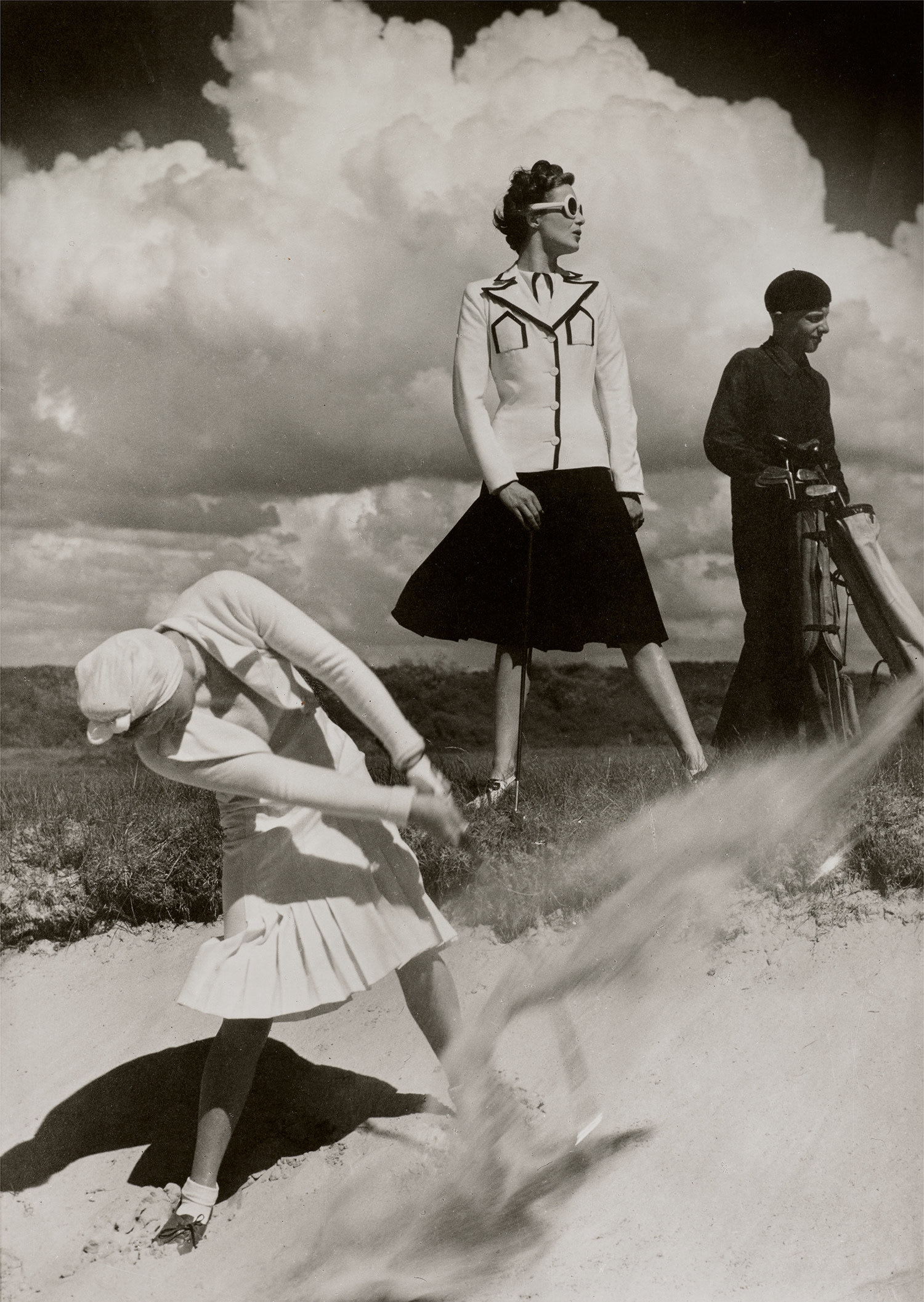
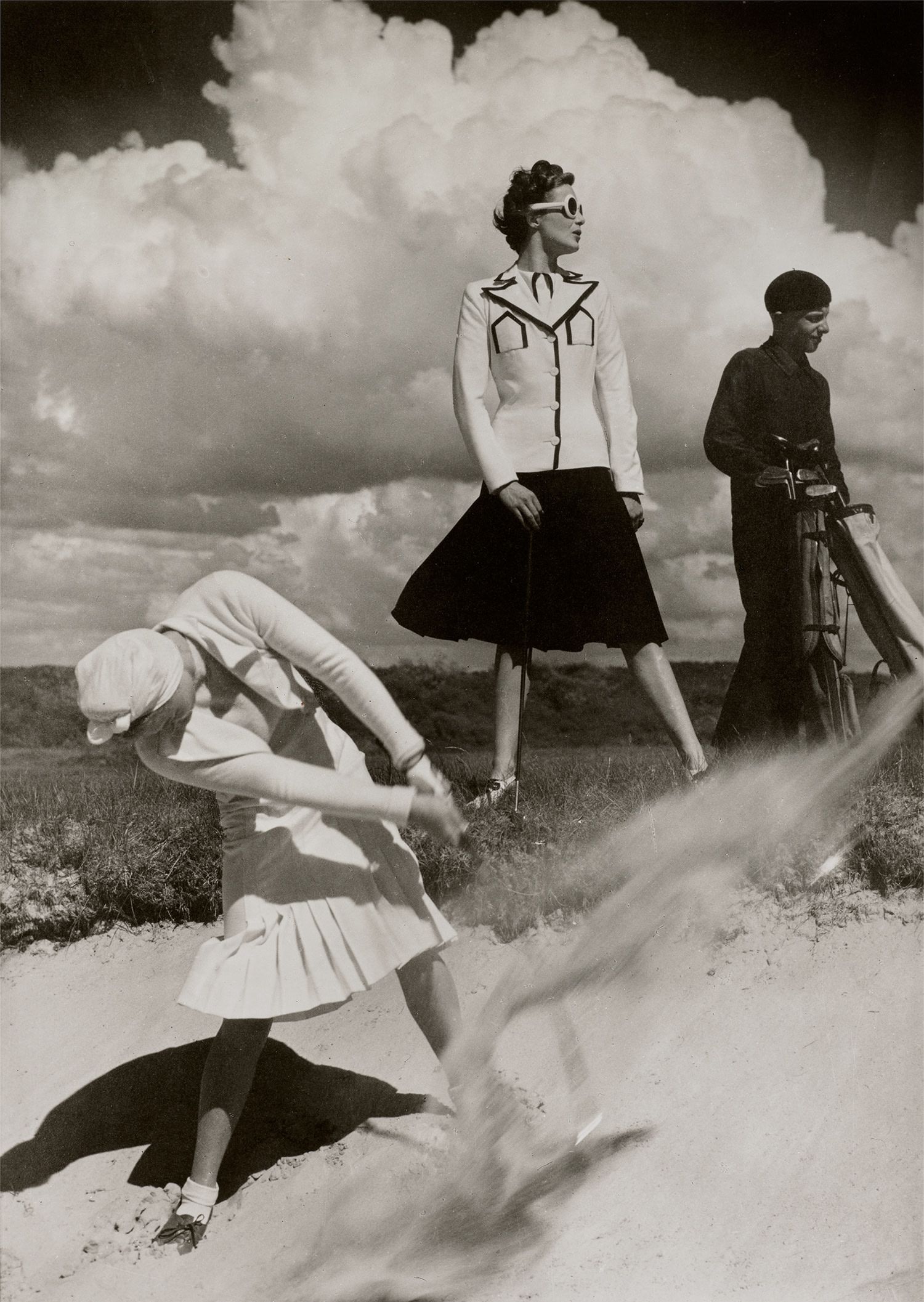
Le Touquet
Norman Parkinson was born Ronald William Parkinson Smith in London in 1913. He trained as a photographer from the age of seventeen, apprenticing under the court photographer Richard Speaight, and by the mid 1930s he had opened his own studio on Dover Street in Mayfair. The fashionable address suited his ambitions perfectly. He was already developing the wit and social ease that would define his persona as much as his pictures, a man who moved through the worlds of aristocracy, couture, and creative bohemia as though he had been born to all three simultaneously.
His early editorial work for Harper's Bazaar UK showed a young photographer testing the boundaries of what a fashion image could be, already restless with the conventions he had inherited. The decisive breakthrough came in the postwar years when Parkinson joined British Vogue, a relationship that would anchor his career for decades. It was here that his signature vision crystallised: models placed not in front of painted backdrops but in streets, fields, on rooftops, beside cars, in the rain. The images crackled with movement and personality.
Norman Parkinson
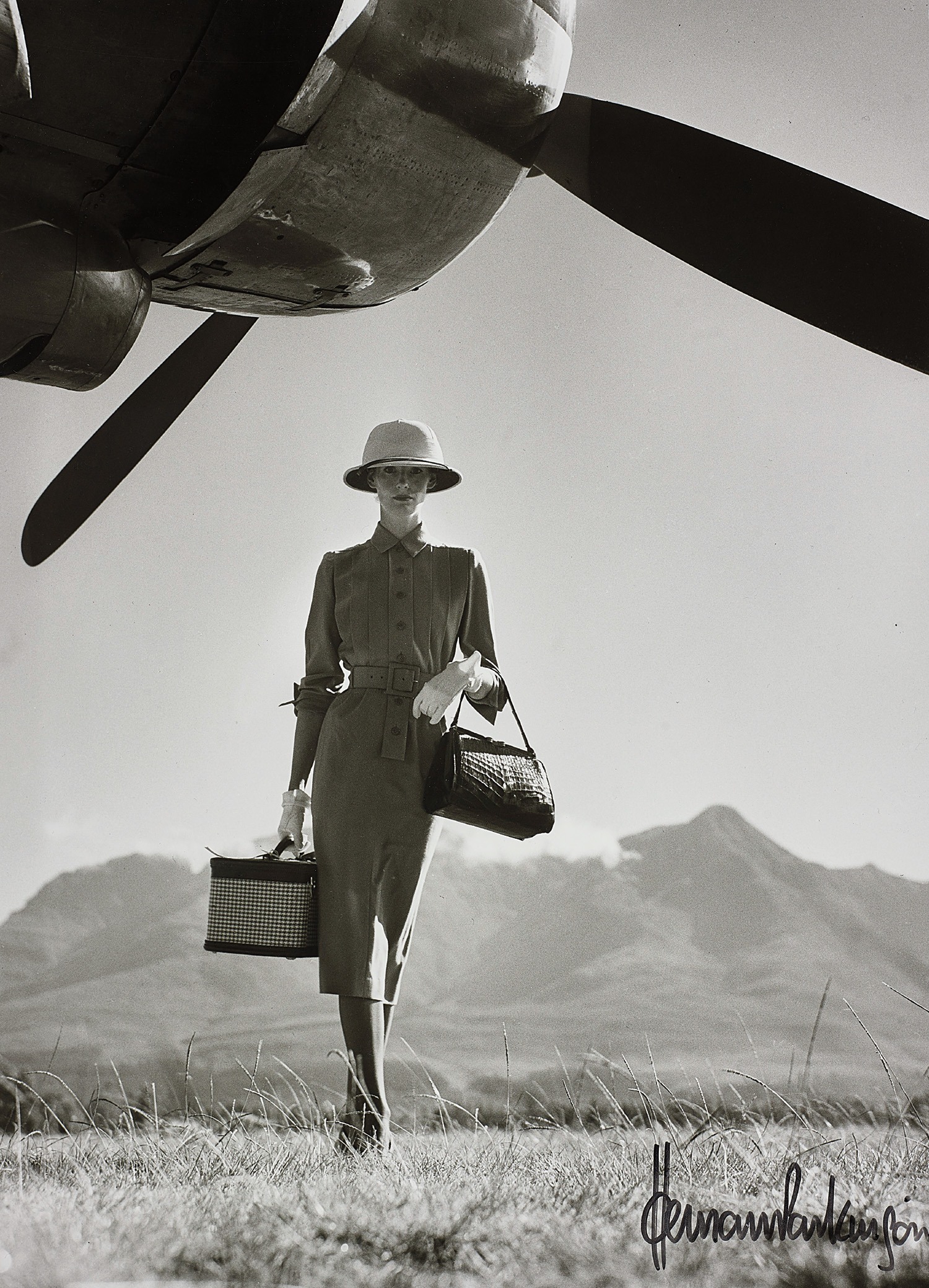
The Art of Travel
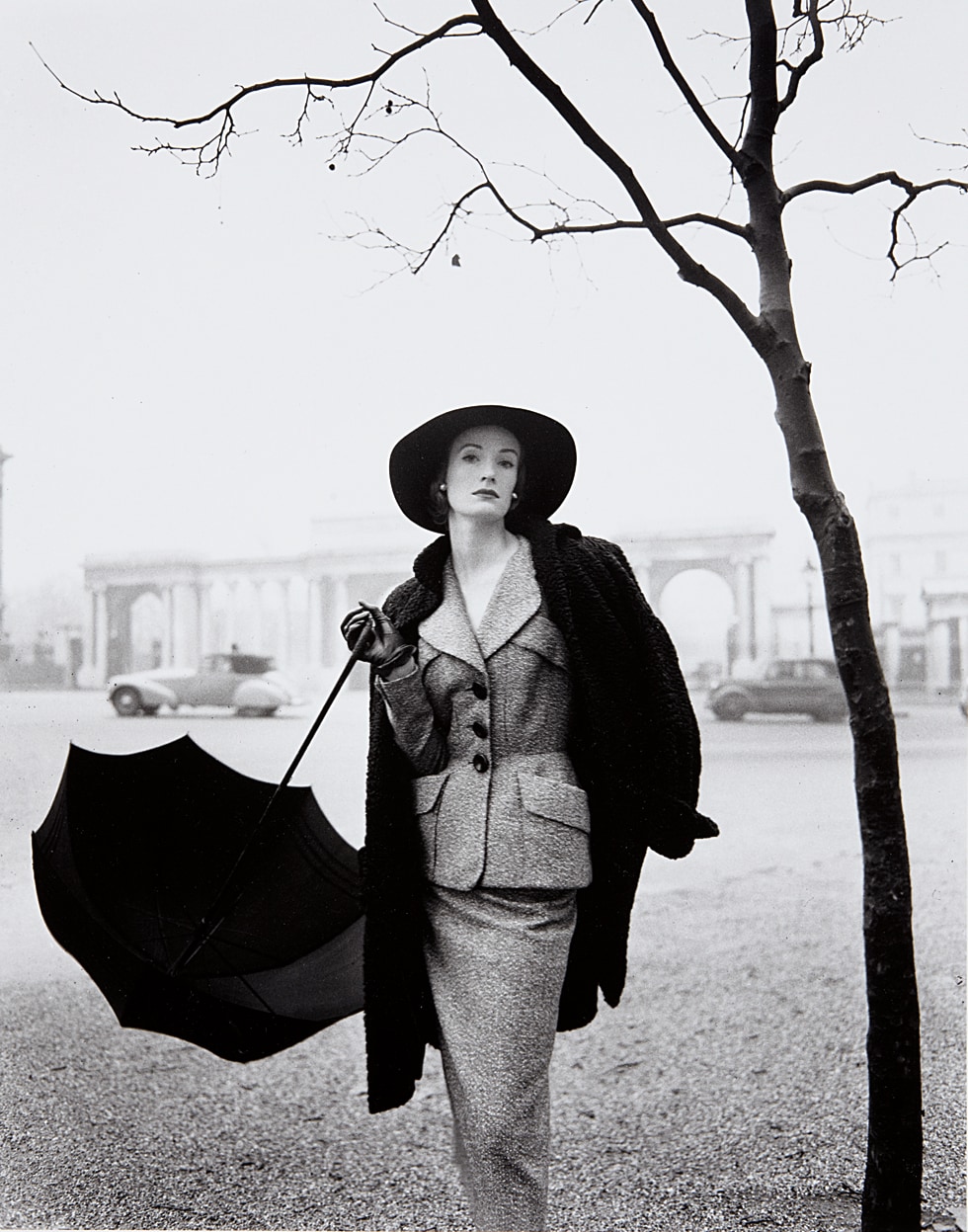
His work was never cold or abstract. There was always a sense that the subject was genuinely alive inside the frame, caught mid thought or mid stride, complicit in a shared joke with the photographer. His long creative partnership with his wife Wenda Rogerson, herself a model of luminous presence, produced some of his most beloved images. Works such as Wenda, Rotten Row, Hyde Park and Woman with Tram, Wenda, Peabody Buildings capture a tender intelligence at work, an artist photographing someone he truly saw.
“I am not a great photographer. I am a very good photographer who has had great sitters.”
Norman Parkinson
Parkinson's range extended well beyond the pages of fashion magazines. His portrait work brought him into close contact with the defining cultural figures of the century. His celebrated portrait session with Audrey Hepburn, from which Audrey Hepburn with Flowers II, Rome endures as a deeply affecting document, reveals a photographer capable of extraordinary sensitivity. Where some of his contemporaries imposed a graphic severity on their subjects, Parkinson allowed vulnerability and warmth to surface.
Norman Parkinson
Wenda, Rotten Row, Hyde Park
He was appointed an official royal portrait photographer, producing images of the British Royal Family that are now part of the national visual memory. His work for Town and Country further extended his reach across the Atlantic, making him one of the rare British photographers who commanded equal prestige on both sides of the ocean. The prints that circulate among collectors today reward careful attention to medium and period. Parkinson worked predominantly in gelatin silver, and the later prints made from his original negatives carry the characteristic richness and tonal depth that his darkroom collaborators understood so well.
Works such as Le Touquet and Golfing at Le Touquet demonstrate his gift for composing leisure and elegance into images that feel at once documentary and theatrical. Hat fashions, the New York skyline from the roof of the Conde Nast building on Lexington Avenue, printed in chromogenic colour and mounted to Plexiglas, represents the bolder, more architecturally ambitious side of his practice, placing the clothed body against the hard geometry of the modern city with enormous confidence. The dye transfer print Wenda over the Rolls, Vogue, April is a particular prize for collectors who appreciate the specific saturated quality that the dye transfer process produces, a luminosity that digital reproduction simply cannot replicate. On the auction market, Parkinson's prints have maintained consistent and appreciating interest.
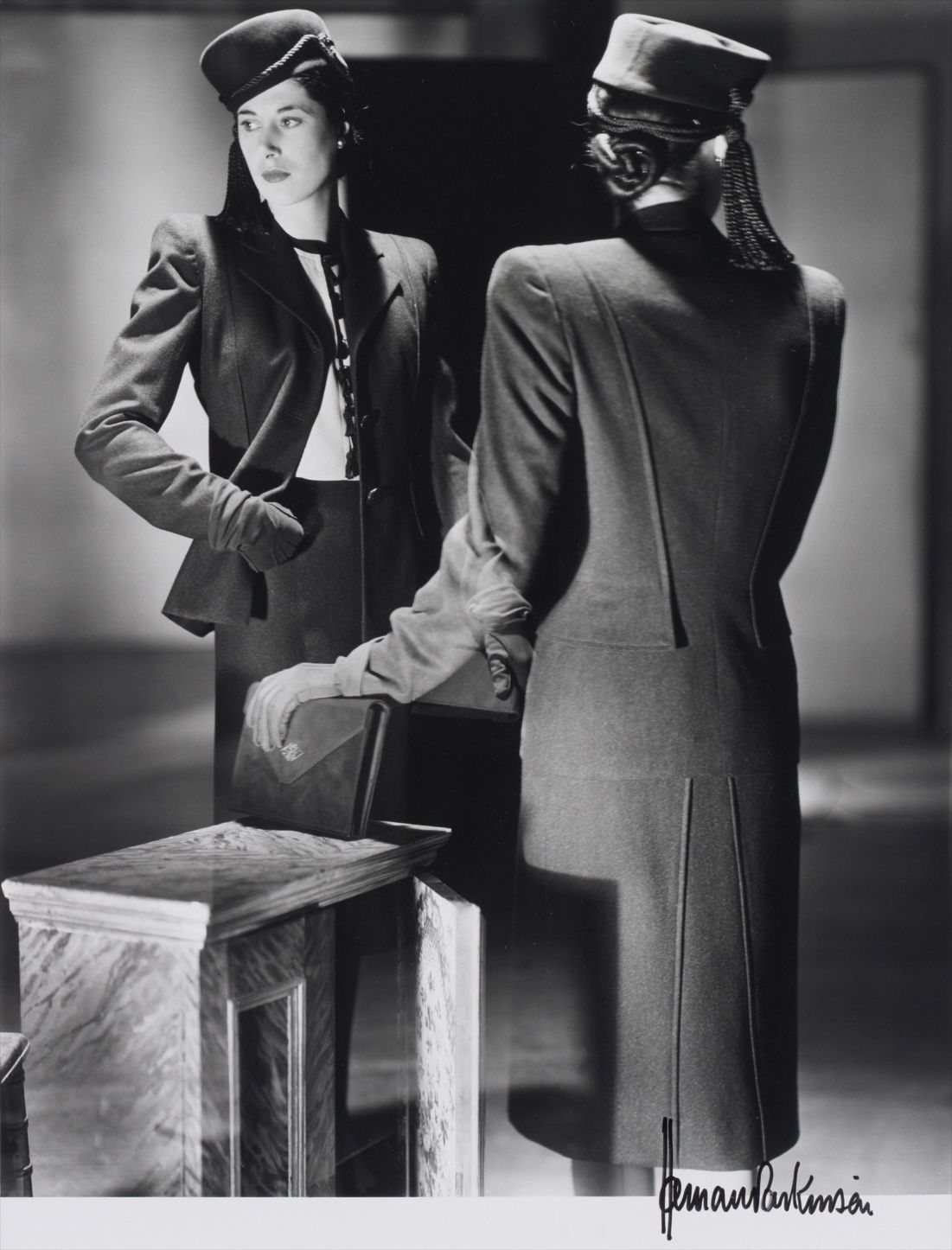
Norman Parkinson
Fashion shot from Shadow Pictures
Major auction houses including Christie's and Sotheby's have offered his work across dedicated photography sales, and prices for his most iconic gelatin silver prints have climbed steadily as the field of twentieth century photography collecting has matured. Collectors are drawn to Parkinson for several converging reasons. His images occupy a rare position in which art historical significance and sheer visual pleasure reinforce each other rather than pulling in opposite directions. There is no austerity tax to pay when you live with a Parkinson.
The photographs are genuinely joyful to look at, day after day, in the way that only the work of truly great photographers manages to sustain. For collectors building collections that speak to the postwar British moment or the golden era of magazine culture, Parkinson is an essential and still relatively accessible figure. Within the broader history of photography, Parkinson belongs to a generation that also includes Irving Penn, Richard Avedon, and Helmut Newton, contemporaries who each staked out distinct territories in the landscape of fashion and portrait imagery. Where Avedon brought psychological intensity and Penn brought graphic austerity, Parkinson brought irrepressible warmth and an Englishman's eye for the comedy and beauty in social performance.
He is perhaps most productively compared to Cecil Beaton in his command of glamour and his ease among the British establishment, though Parkinson's work is consistently more outdoors, more physical, more in love with the contingency of the real world. Parkinson died in Singapore in 1990 while on an assignment, which feels, on reflection, entirely in character for a man who spent his career treating the world as both his studio and his subject. His legacy is held in part by the Norman Parkinson Archive and his work continues to be exhibited, published, and collected with genuine enthusiasm. In an era when fashion photography has fragmented across platforms and formats, Parkinson's images remind us what it looks like when a photographer truly inhabits their moment, when technical mastery, personal charm, and a deep love of human presence combine into something that outlasts the season it was made for.
To collect Parkinson is to bring that sustaining energy into a home or a collection, and to align yourself with one of the most purely pleasurable bodies of work in the history of the medium.
Explore books about Norman Parkinson
Norman Parkinson: A Life
Terence Pepper
Norman Parkinson: Photographs 1935-1994
Norman Parkinson
Norman Parkinson: Sixty Years of Portraits and Fashion
Terence Pepper
The Best of Norman Parkinson
Norman Parkinson
Norman Parkinson: Glamour, Beauty and Eccentricity
Terence Pepper