Norman Lewis
Norman Lewis, Painting Freedom Into Being
Artist Spotlight · The Collection Editorial
“I want my work to be felt as well as seen.”
Norman Lewis
In 2015, the Pennsylvania Academy of the Fine Arts mounted a landmark retrospective of Norman Lewis titled "American Hieroglyphics," a show that traveled to the Mnuchin Gallery in New York and reintroduced one of the most quietly radical figures in twentieth century American art to a new generation of collectors and curators. The exhibition arrived at a moment of acute cultural reckoning, when the questions Lewis had spent decades encoding into paint, questions about race, resistance, and visibility in American life, felt as urgent as ever. For those who encountered his shimmering, densely layered canvases for the first time, the experience was revelatory: here was an artist who had been hiding the whole story of his era inside what looked, at first glance, like pure abstraction. Norman Wilfred Lewis was born in New York City in 1909, the son of Barbadian immigrants who had settled in Harlem.
Norman Lewis
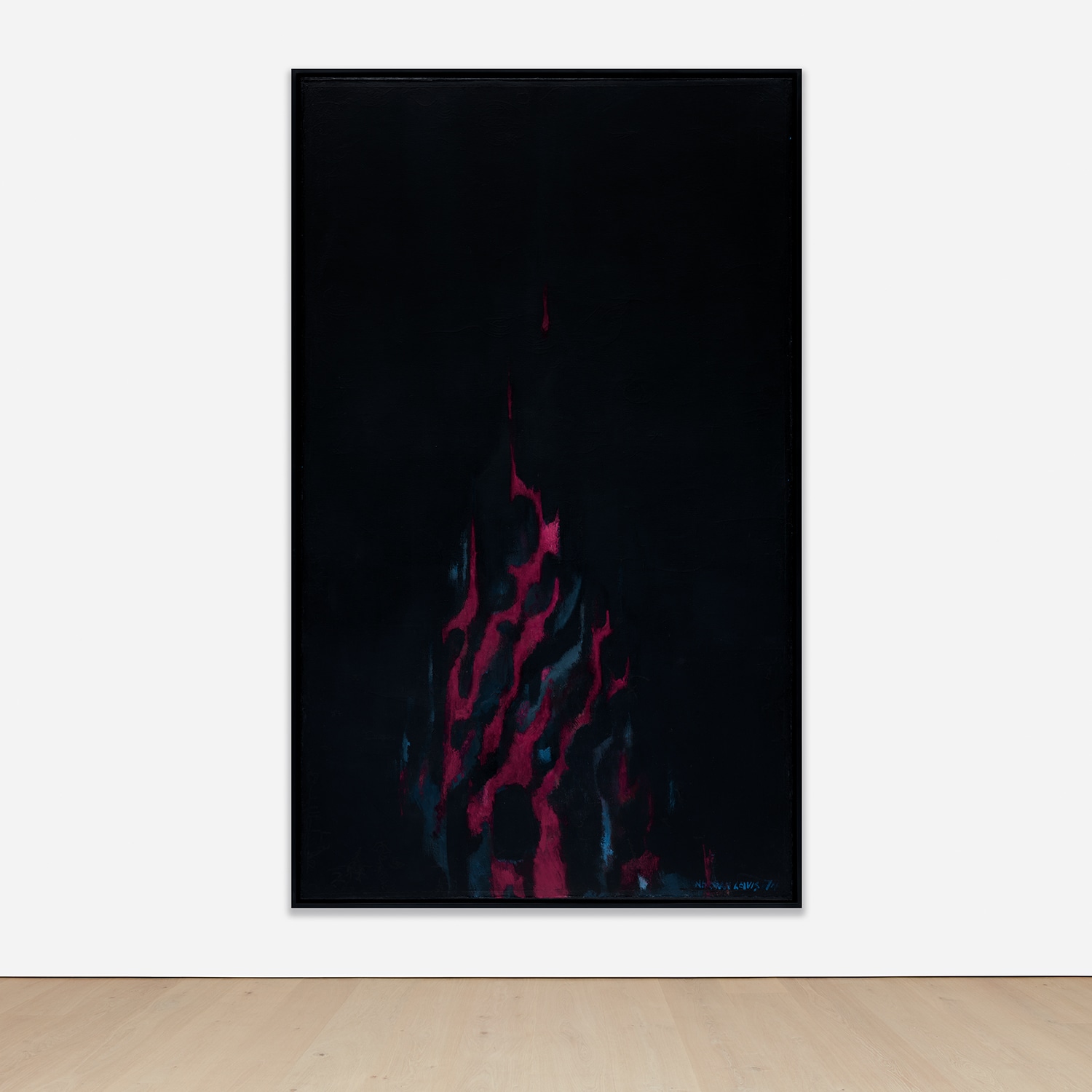
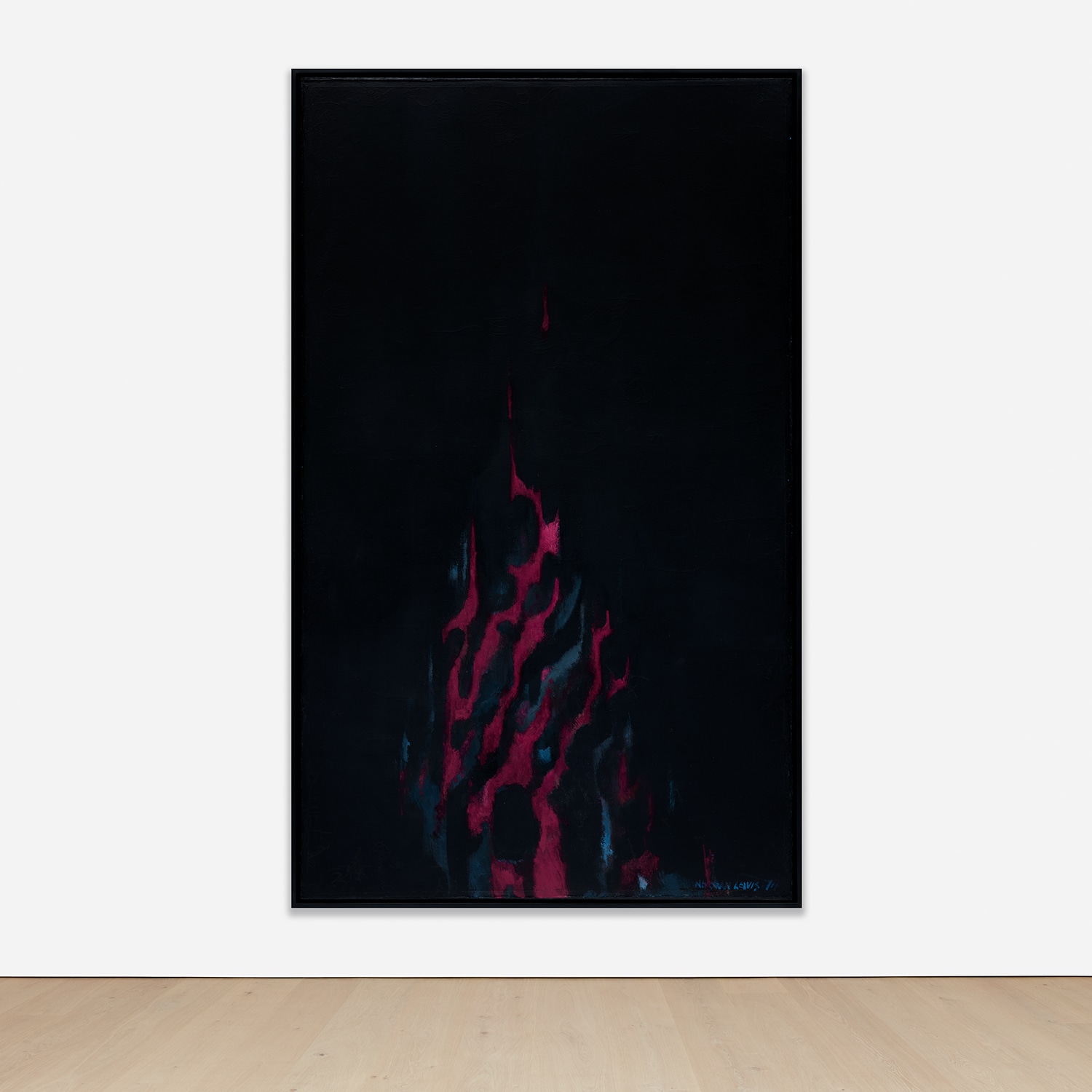
Fleshy Phase, 1973
Growing up in that neighborhood during its great cultural flowering gave Lewis an education no classroom could replicate. He was surrounded by the intellectual ferment of the Harlem Renaissance, absorbing the ideas of figures like Alain Locke and the visual energy of artists including Aaron Douglas. He studied at the John Reed Club, a left leaning arts organization that deepened his social conscience, and later trained under Augusta Savage, the celebrated sculptor whose studio in Harlem served as an incubator for Black artistic talent throughout the 1930s. These formative years instilled in Lewis a conviction that art was inseparable from the life of a community and from the struggle for justice.
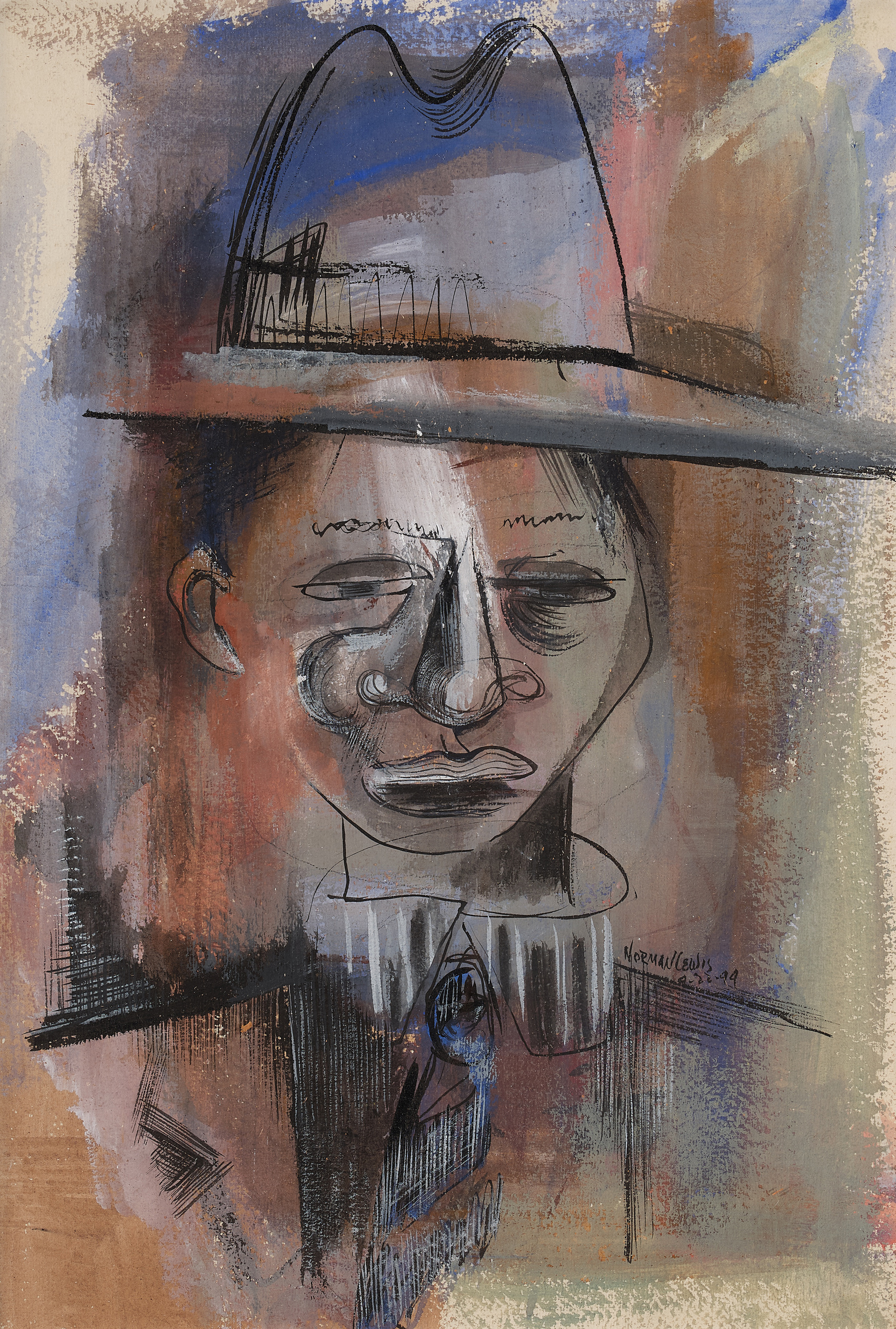
By the late 1930s and into the 1940s, Lewis was working in a more figurative mode, producing works that engaged directly with street life, labor, and urban experience. His 1940 mixed media and collage work "News Boy" belongs to this period, a piece animated by the raw energy of the city and by Lewis's instinct for observational tenderness. His 1944 watercolor "Untitled (Portrait)" similarly reflects this early phase, demonstrating a fluid draftsmanship and a sensitivity to the human figure that would quietly persist even as his style evolved. The transition to abstraction was not a retreat from subject matter but a transformation of method.
Norman Lewis
Untitled (Portrait), 1944
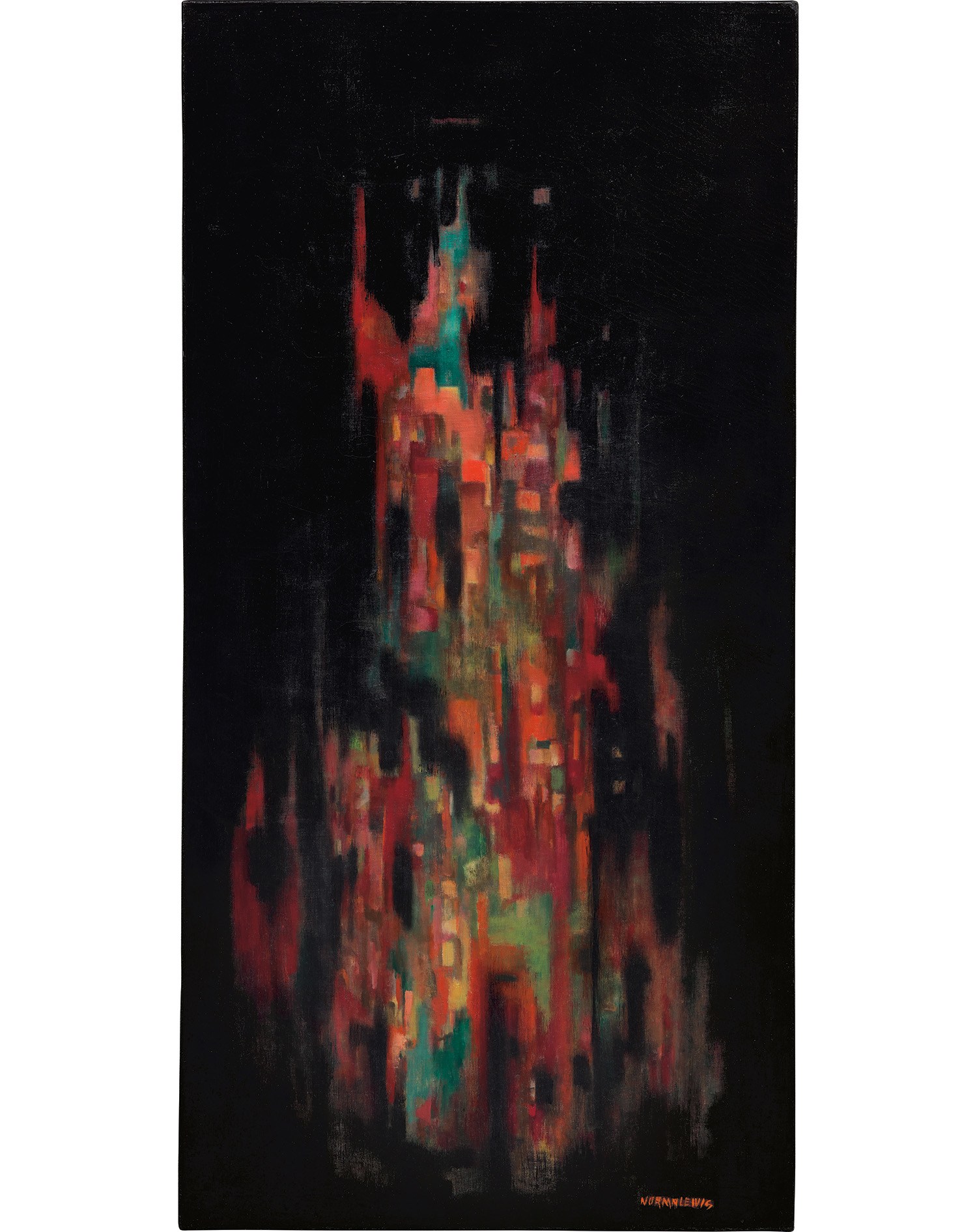
Lewis came to believe that the language of pure form could carry political and emotional weight more powerfully than literal depiction, that a surge of calligraphic marks across a dark field could evoke a crowd, a march, a moment of collective grief or defiance, more viscerally than any painted banner. The late 1940s and 1950s represent Lewis's most concentrated period of breakthrough. Works like "Snow in the City" from 1949 and "Abstract City" from 1950 show him synthesizing the influence of Abstract Expressionism, a movement in which he was a genuine participant, with a vision entirely his own. He was a founding member of the Spiral group, formed in 1963 alongside Romare Bearden, Charles Alston, and other Black artists who gathered to discuss the relationship between their art and the civil rights movement.
His canvas "Procession," one of his most celebrated works, distills a nighttime march into streams of luminous white figures against a black ground, an image that operates simultaneously as formal poetry and political witness. "Night Vision" from 1952 and the magnificent "Eye of the Storm" from 1973 bookend a career spent probing the threshold between seeing and knowing, between what is shown and what is felt. For collectors, Lewis presents one of the most compelling and still relatively accessible opportunities within the canon of American modernism. His market has grown steadily since the early 2000s, with institutions including the Metropolitan Museum of Art, the Whitney Museum of American Art, and the Smithsonian American Art Museum holding significant works.
Norman Lewis
Abstract City, 1950
Major auction houses have seen his paintings achieve prices in the hundreds of thousands, and his estate, stewarded with care, has worked to ensure that his legacy is properly contextualized within art history rather than treated as a footnote to the careers of his white Abstract Expressionist peers. Works on paper, including watercolors and collages from the 1940s, offer a point of entry for collectors earlier in their journey, while the large oil paintings from the late 1960s and 1970s, such as "Fleshy Phase" from 1973 and "Serpentine" from 1970, represent the full maturity of his vision and command growing institutional and private interest. To place Lewis within the broader landscape of American art is to understand how much the standard account of Abstract Expressionism has long needed revision. He was a peer of Willem de Kooning, Franz Kline, and Mark Rothko, exhibiting alongside them and engaging seriously with the same formal problems.
Yet Lewis carried an additional burden and an additional gift: his experience as a Black man in mid century America meant that his abstractions were never purely formal. They were always also testimony. Collectors drawn to the emotional depth of Rothko or the gestural urgency of Kline will find in Lewis a painter who offers both of those qualities and layers them with a historical specificity and a moral seriousness that is genuinely rare. His affinities with Romare Bearden in their shared use of the city as subject and with Ad Reinhardt in their mutual interest in dark grounds and luminous form also reward close study.
Norman Lewis
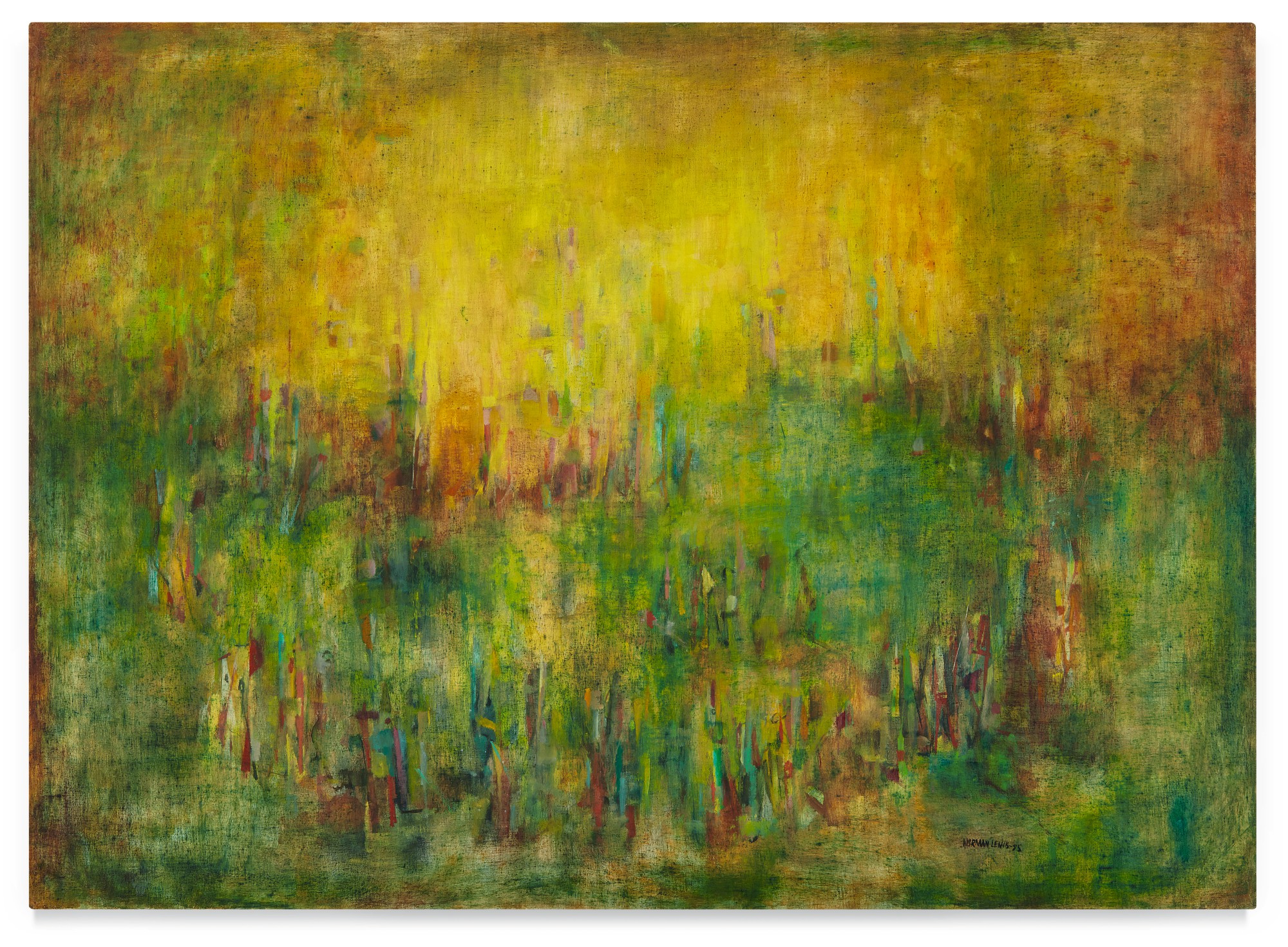
Evening Rhapsody
The renewed critical attention surrounding Lewis in recent years reflects not simply a correction of historical oversight but a genuine recognition of his singular achievement. He spent decades teaching at the Art Students League in New York, shaping generations of artists while continuing to develop his own practice with remarkable consistency and ambition. His late paintings, made in the 1970s as his health declined, lose none of their authority. "Evening Rhapsody" and "Eye of the Storm" pulse with the same searching intelligence that animated his earliest Harlem canvases.
Norman Lewis died in 1979, leaving behind a body of work that becomes more essential with each passing year, a quiet archive of feeling and resistance encoded in color, mark, and light, waiting for the attentive eye to receive it.
Explore books about Norman Lewis
Norman Lewis: Black Paintings
Peter Halley
Norman Lewis: A Retrospective
Richard J. Powell
Norman Lewis: Between Worlds
Catherine Morris
Norman Lewis: Works on Paper 1945-1980
Kinshasha Holley
Norman Lewis: Abstraction and Social Resistance
Paul Gilroy