Nicole Eisenman
Nicole Eisenman, Painting Life With Joyful Ferocity
Artist Spotlight · The Collection Editorial
In 2023, the New Museum in New York mounted a major retrospective of Nicole Eisenman's work, and the effect was something close to revelation. Spread across multiple floors, the exhibition gathered three decades of paintings, sculptures, drawings, and prints into a portrait of an artist who has spent her career doing something genuinely rare: telling the truth about how people actually feel, look, and behave, with a generosity of spirit that makes even the most uncomfortable scenes feel like an embrace. Critics and collectors arrived already admiring Eisenman. Many left convinced she is among the most important painters working in America today.
Nicole Eisenman
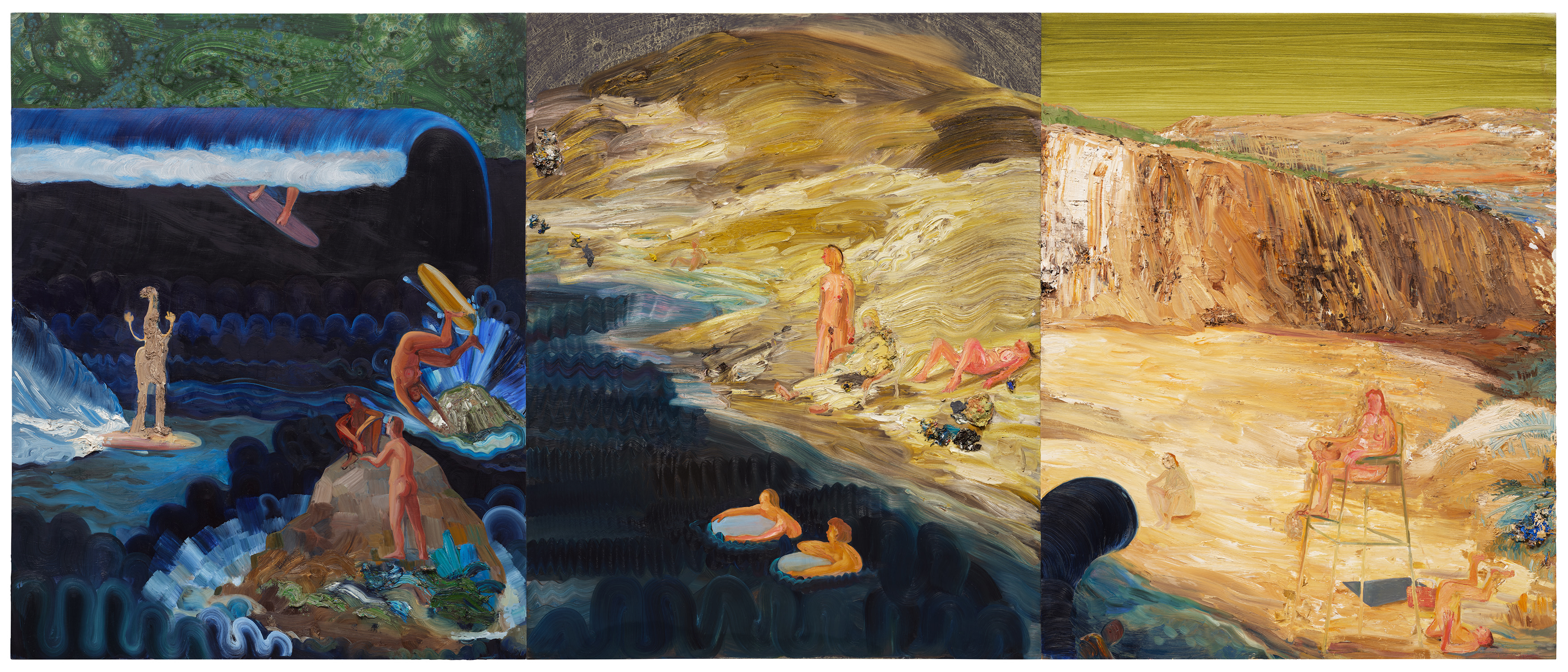
Team Shredder, 2006
Eisenman was born in 1965 in Verdun, France, and raised in the United States, eventually studying at the Rhode Island School of Design, where she received her BFA in 1987. Her formation as an artist was shaped by wide reading in art history, a sharp political consciousness, and an immersion in queer culture that would inform every aspect of her practice. Coming of age during the culture wars and the AIDS crisis gave her work an urgent social charge that never fully dissipated, even as her vocabulary grew more layered and art historically rich over time. She arrived in New York in the late 1980s as part of a generation of young artists wrestling seriously with figuration at a moment when the art world was still ambivalent about it.
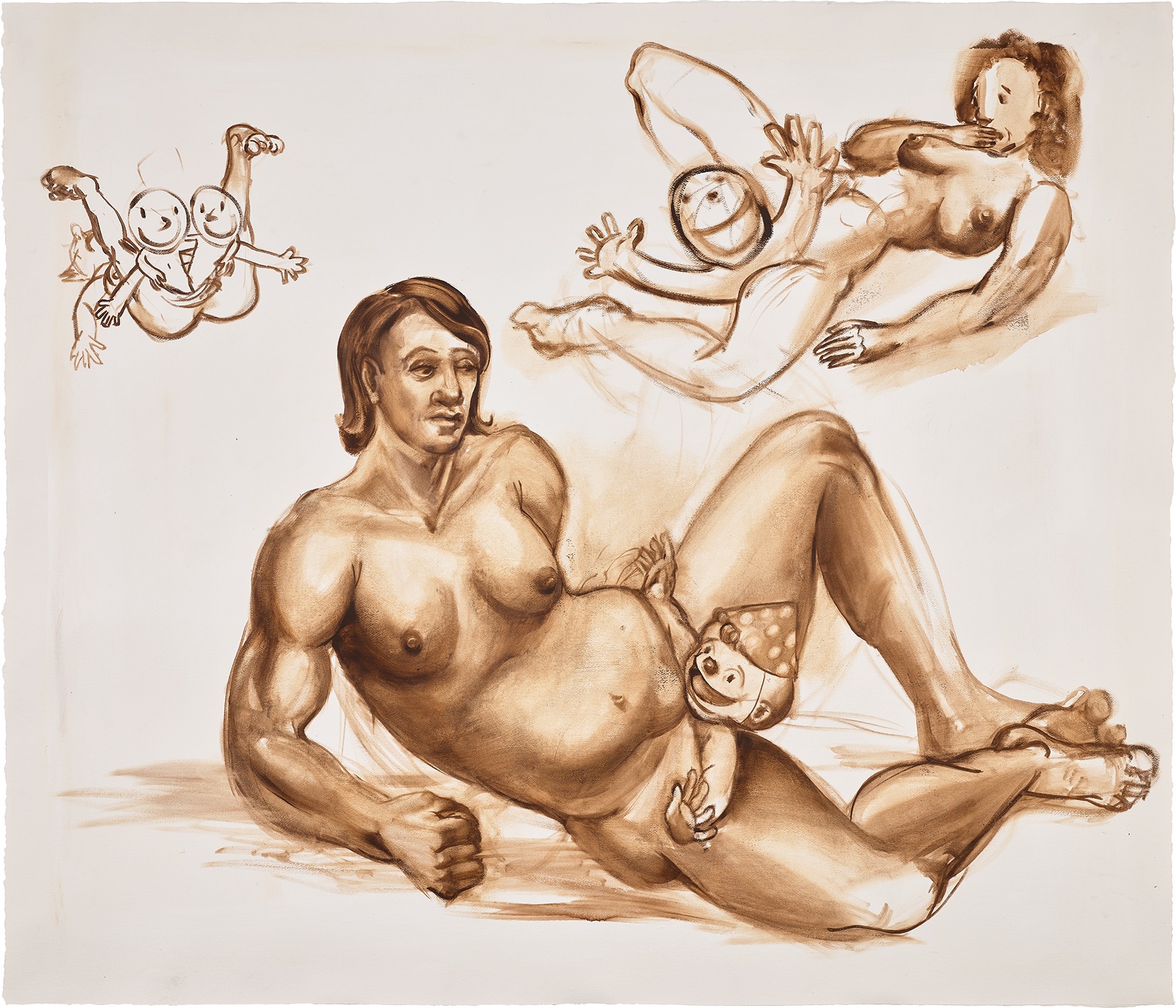
Her early work announced a sensibility that was immediately distinctive. Works on paper from the late 1980s and early 1990s showed a command of line and a pleasure in the grotesque and the comic that recalled sources as diverse as Honoré Daumier, Paula Rego, and the irreverent energy of underground comics. Her 1992 watercolor and ink work "Captured Pirates on the Island of Lesbos" is a perfect emblem of this period: riotous, knowing, politically alive, and completely assured. The 1995 "Clown Birth" extended this vernacular into stranger and more psychologically probing territory.
Nicole Eisenman
Clown Birth, 1995
By the mid 1990s it was clear that Eisenman was not simply reviving figuration but reinventing what figurative painting could hold. The 2000s marked a significant deepening of her ambitions. Paintings grew larger and more architecturally complex. The figure of the beer garden or the communal gathering became a recurring site, a way of thinking about collective experience, belonging, and alienation simultaneously.
Works like "Tennis Ball" from 2004, which combines oil with printed paper collage on canvas, show her pleasure in mixing materials and cultural registers. Her 2006 triptych "Team Shredder," executed in mixed media on panel, demonstrates her ability to build elaborate, almost novelistic pictorial worlds in which dozens of figures interact across a fractured and layered surface. The painting rewards prolonged attention in the way the best narrative art always does. "Drunk Driver" from 2006 similarly captures her capacity to locate psychological weight inside an apparently casual or even absurdist image.
Nicole Eisenman
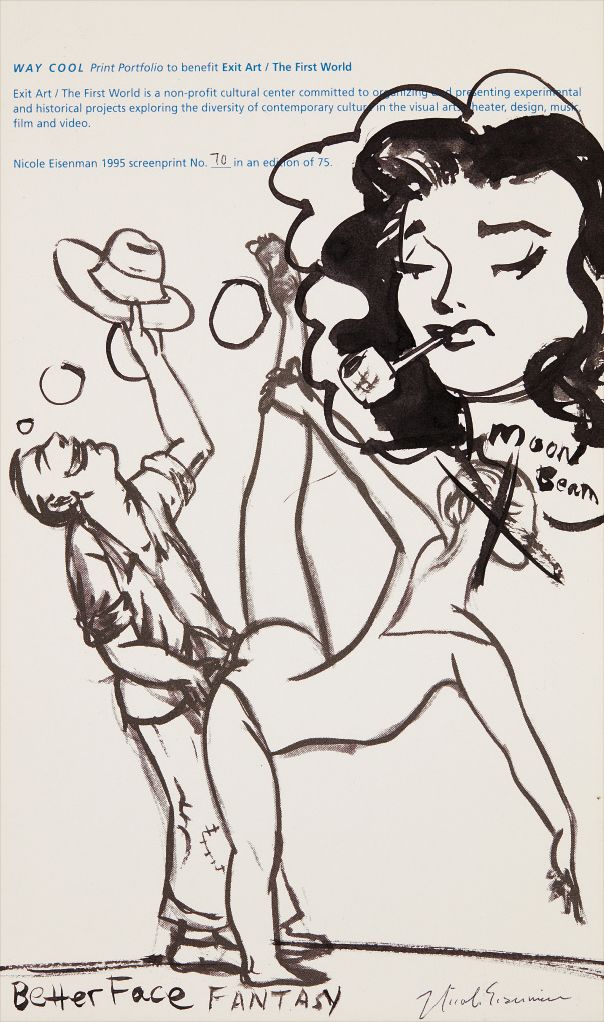
Better Face FANTASY, from WAY COOL
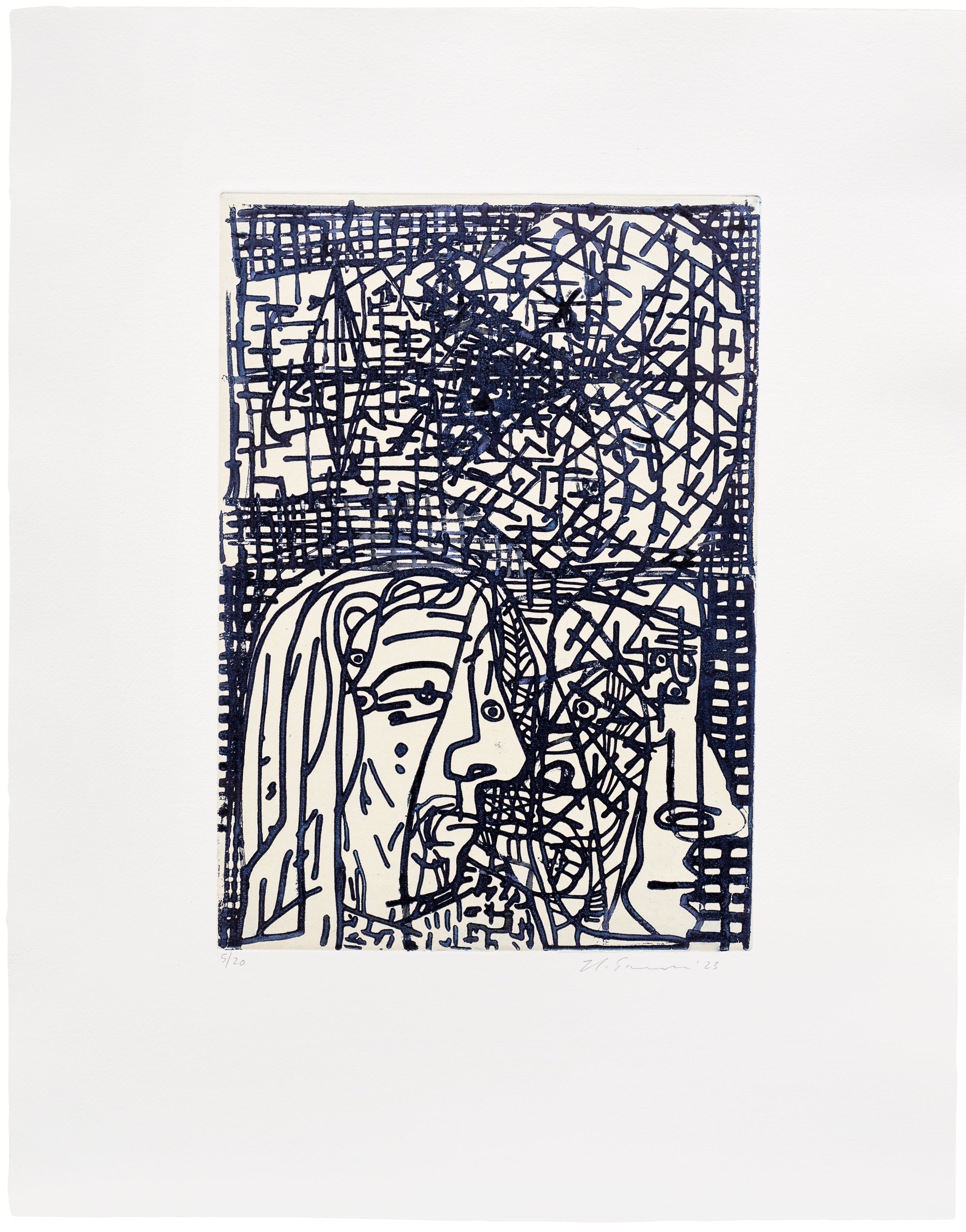
Across her career Eisenman has worked with exceptional fluency across media. Her prints and works on paper are not secondary to her painting practice but genuinely central to it. The etching "Worst Case Scenario," produced on Somerset paper with full margins, and the screenprint "Better Face FANTASY, from WAY COOL," which features extensive hand additions in black ink, demonstrate an approach to printmaking that is expansive and individual rather than merely reproductive. Each work on paper feels like a distinct statement.
Her sculptures, which began appearing with greater frequency in the 2010s, brought a new spatial dimension to the same cast of characters: slumped, yearning, celebratory, defeated, human figures navigating a world that is simultaneously absurd and tender. The sculpture presented at the Venice Biennale in 2015 brought her international recognition on a new scale, and the MacArthur Fellowship she received that same year confirmed what her most attentive admirers had long understood. For collectors, Eisenman represents a convergence of critical seriousness and genuine market strength that is increasingly rare. Her works appear regularly at major auction houses and command sustained institutional attention, reflecting a collector base that spans museums, serious private collections, and a younger generation drawn to the directness and humanity of her vision.
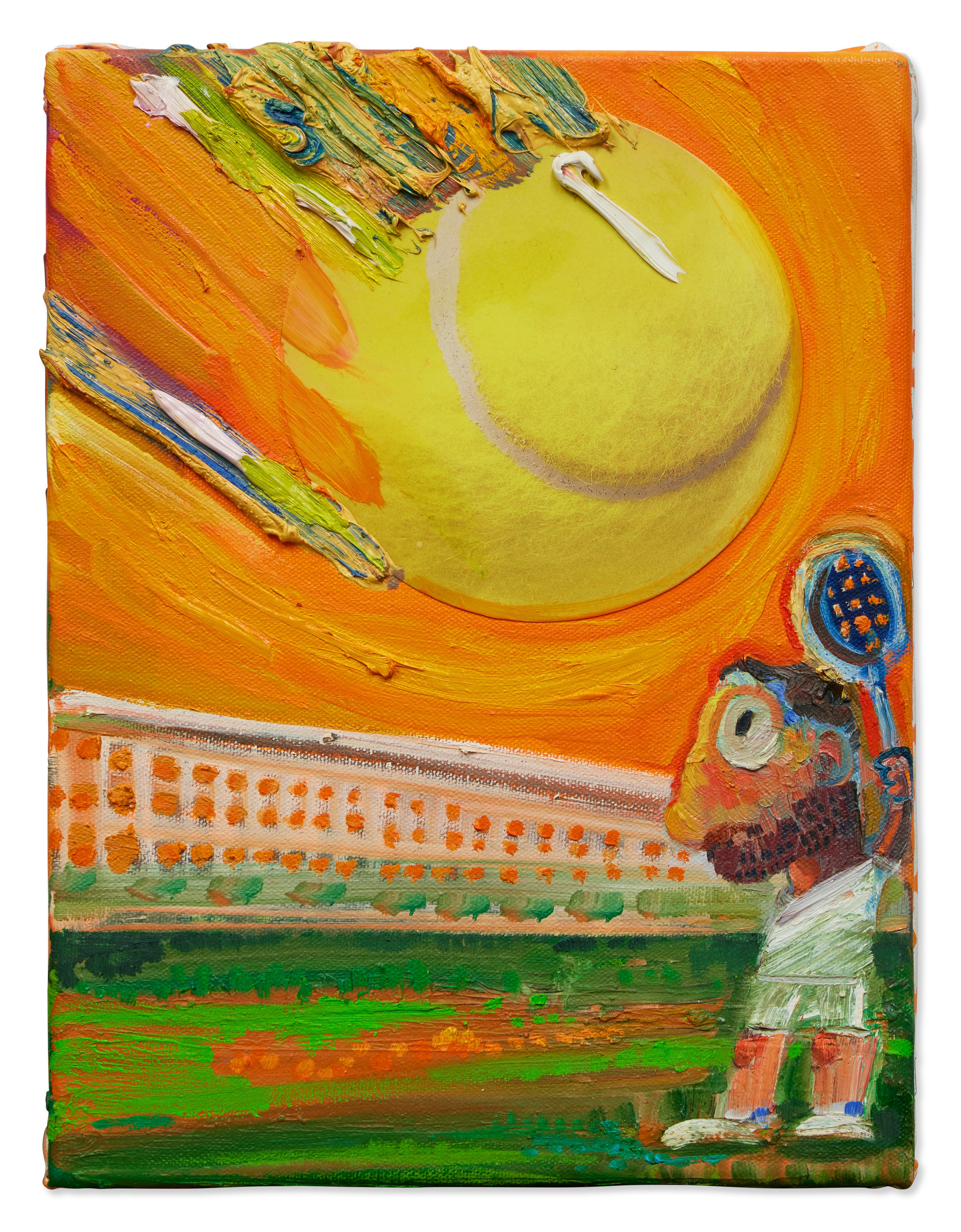
Nicole Eisenman
Tennis Ball 網球, 2004
Works on paper and prints offer meaningful points of entry for collectors building a relationship with her practice, while her paintings on canvas and panel occupy the upper registers of the contemporary market with increasing confidence. What distinguishes collecting Eisenman is the quality of the thinking embedded in each work. She is not an artist whose images become easier or simpler the longer you live with them. They accumulate meaning.
Contextually she belongs in conversations alongside artists such as Philip Guston, whose late career she clearly absorbed; Maria Lassnig, whose unflinching approach to the body shares something essential with Eisenman's; and Carroll Dunham, another figure who refused the divide between high and low pictorial traditions. Eisenman's place in art history is still being written, which is one of the most exciting things about collecting a living artist of her stature. She has expanded the territory available to figurative painting by insisting that humor, sexuality, political anger, and formal rigor are not in tension with one another but are, in fact, inseparable. Her work has made space for a younger generation of painters who might not have had permission to be simultaneously funny, serious, queer, and painterly without her example.
The 2023 New Museum retrospective was not a valediction but a demonstration of momentum: an artist still working at full intensity, still finding new forms for the full complexity of lived experience. To own a work by Nicole Eisenman is to own a piece of that ongoing, necessary, and genuinely joyful conversation.