Nick Cave
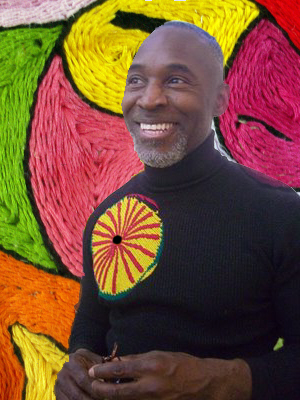
Nick Cave Dresses the World in Wonder
Artist Spotlight · The Collection Editorial
“I want to create work that addresses what it means to be a Black man in America today, while also celebrating survival.”
Nick Cave, interview with Art21
In the spring of 2022, Nick Cave's landmark retrospective Forothermore opened at the Guggenheim Museum in New York, filling the institution's spiraling rotunda with cascading color, sound, and movement. It was a homecoming of sorts for an artist who has spent decades building one of the most emotionally resonant and visually extraordinary bodies of work in contemporary American art. The exhibition drew enormous critical acclaim and introduced Cave's practice to new generations of collectors and cultural enthusiasts who were stopped in their tracks by the sheer generosity of his vision. For those already devoted to his work, Forothermore was confirmation of what they had long believed: Nick Cave is one of the defining artists of his era.
Nick Cave
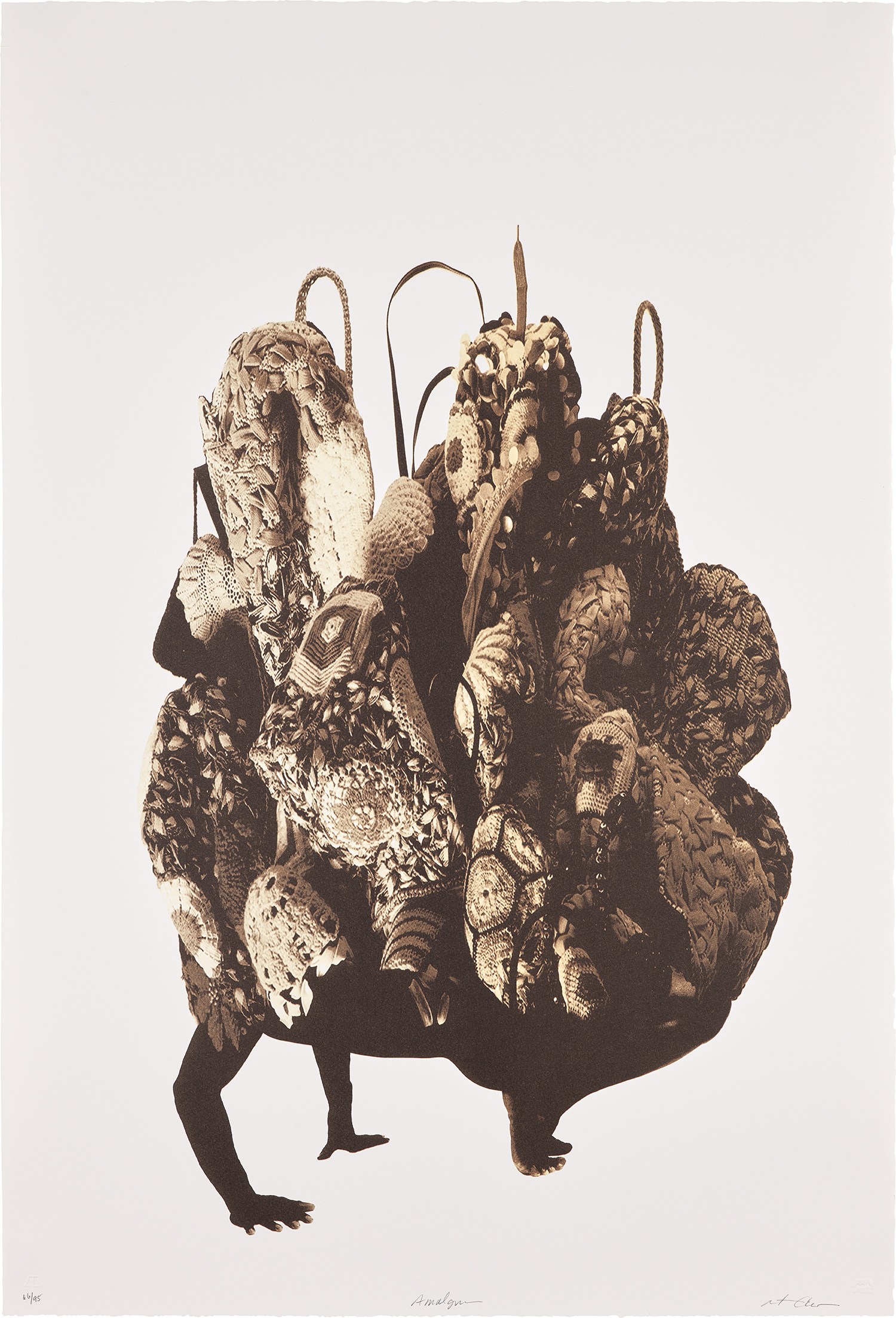
Amalgam (brown) (T. 15-301)
Cave was born in 1959 in Fulton, Missouri, the sixth of seven brothers, and grew up in circumstances that were both materially modest and creatively rich. He has spoken openly about the experience of being a young Black man navigating rural Missouri, where the pleasures of movement, music, and imagination became tools of both survival and self expression. He went on to study at the Kansas City Art Institute and later earned an MFA from Cranbrook Academy of Art in Michigan, a school with a distinguished legacy of shaping American artists and designers. These years of formal training gave Cave a rigorous foundation in textile and material culture, but it was his life experience, and particularly his response to the social and political conditions facing Black Americans, that gave his practice its urgent and irreducible humanity.
The pivotal moment in Cave's artistic development came in the aftermath of the Rodney King beating in 1991 and the subsequent Los Angeles uprising. Devastated and searching for a way to process his feelings of grief, rage, and powerlessness, Cave retreated to a park in Chicago and began gathering materials from the ground: leaves, twigs, found objects, and fragments of everyday life. From this instinctive gathering came the seed of what would become the Soundsuit, the series of wearable sculptures that would define his international reputation. The suits transformed the body into something simultaneously alien and intimate, protecting and concealing the wearer's race, gender, and class, while also becoming jubilant and almost overwhelming celebrations of form and material.
Nick Cave
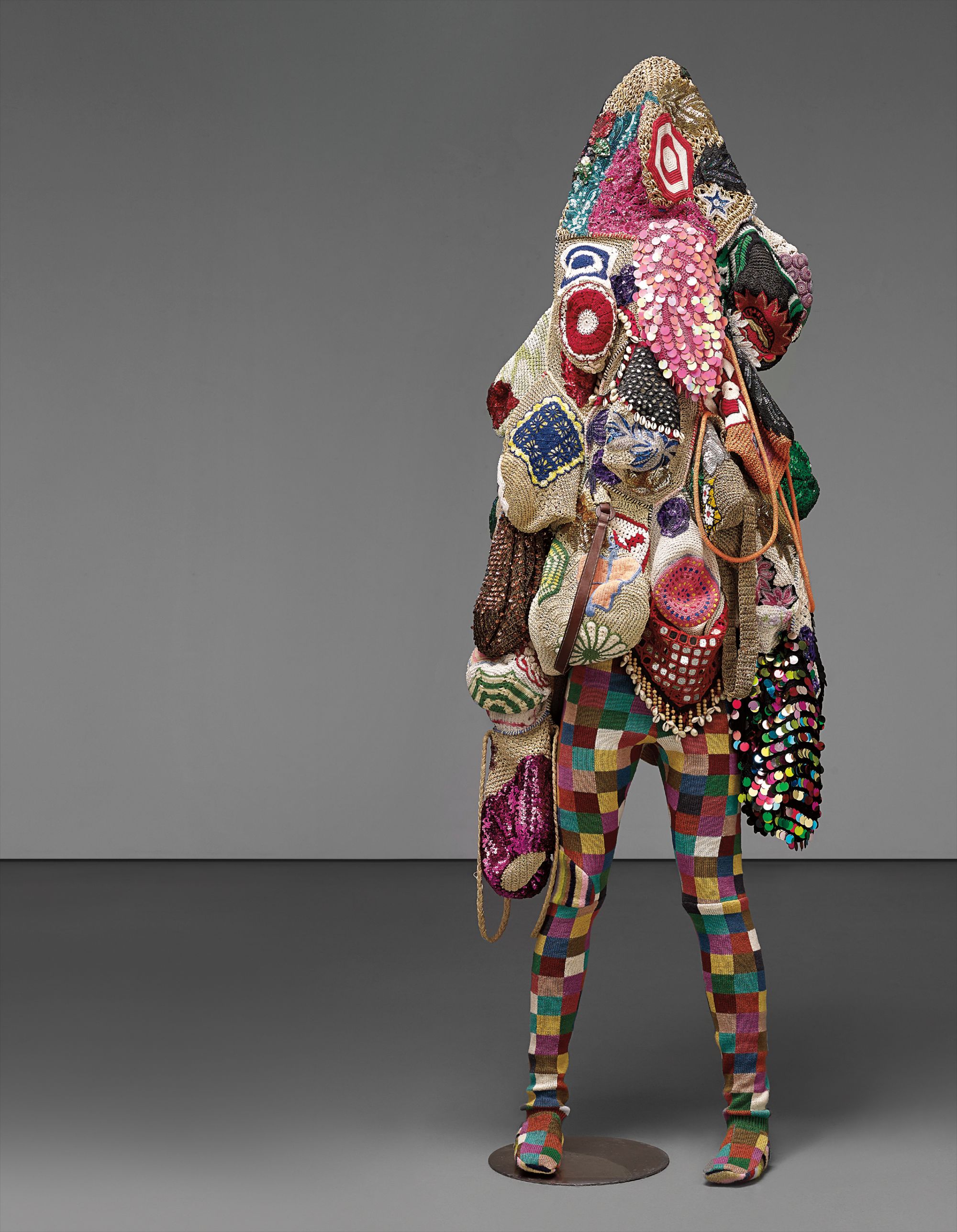
Soundsuit_NC09.073
The act of making, in Cave's practice, is always also an act of healing. The Soundsuits, of which Cave has produced hundreds over the course of more than three decades, are the works for which he is best known and most collected. Each suit is assembled from an extraordinary range of materials: vintage buttons, human hair, raffia, wire, found toys, sequined fabric, beaded garments, and discarded objects gathered from thrift stores and flea markets across America. The result is objects that feel simultaneously ceremonial and carnivalesque, rooted in African masquerade traditions, Dada assemblage, and the exuberant visual language of American folk art.
“The Soundsuit hides race, gender, and class, and forces you to look at the work without those filters.”
Nick Cave, Guggenheim Museum interview, 2022
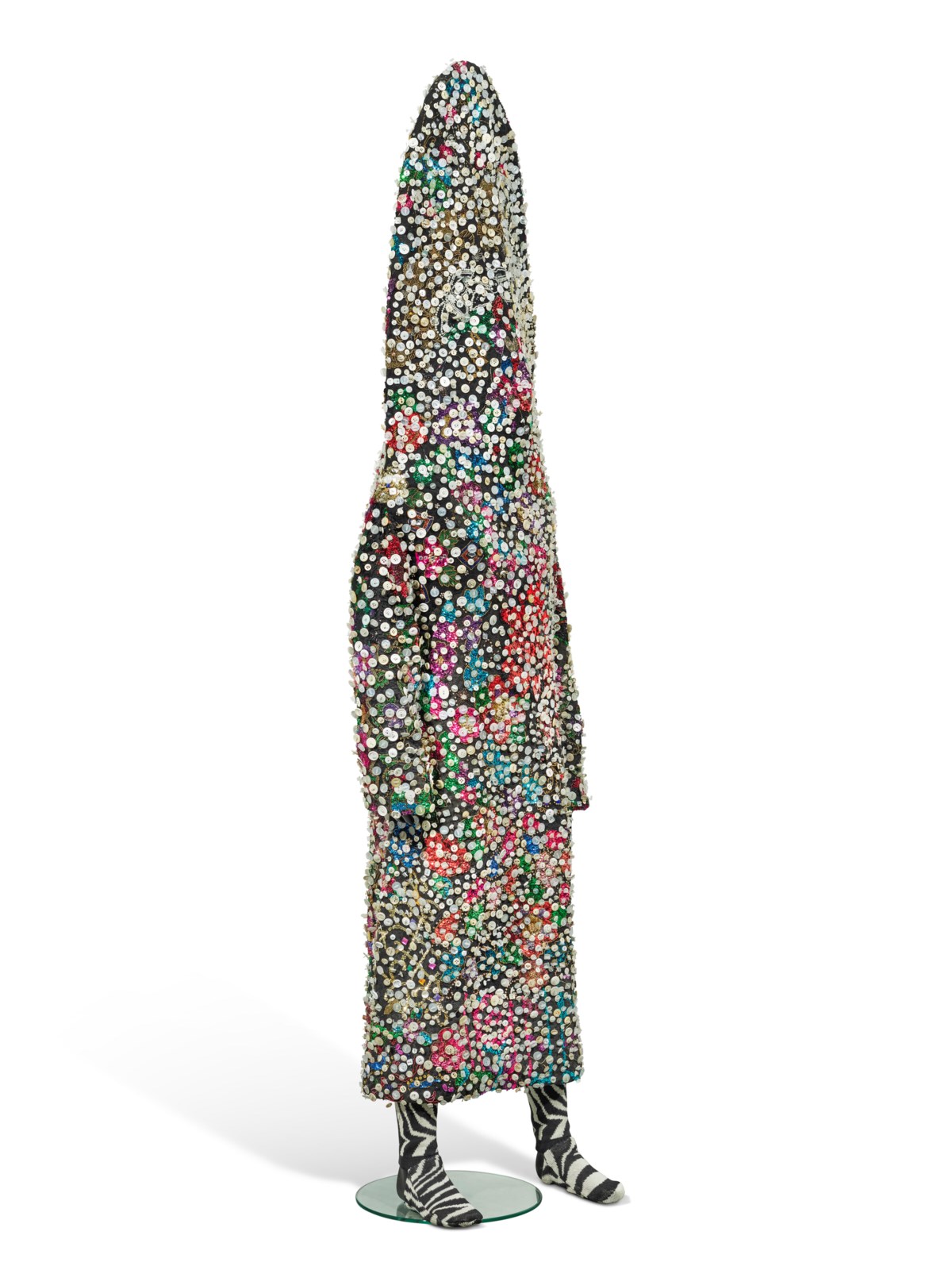
Works such as Soundsuit NC09.073 exemplify this approach: the textile and mixed media construction sits on its artist's stand with a commanding physical presence, inviting the viewer to consider both its material richness and the conceptual weight it carries. His 2009 and 2010 Soundsuits, representative of a particularly prolific and critically celebrated period, demonstrate Cave's mastery of scale, texture, and emotional charge. Beyond the Soundsuits, Cave's practice extends into printmaking and works on paper that reveal a different register of his visual intelligence.
Nick Cave
Soundsuit, 2010
His Amalgam series of lithographs in colors, produced on Somerset paper with full margins, shows Cave's command of the print medium and his ability to distill the formal energy of his three dimensional work into a more intimate format. These works on paper are particularly compelling for collectors who wish to engage with Cave's vocabulary at a scale suited to domestic or smaller institutional spaces. The lithographs, with their layered fields of color and material references, reward close looking and hold their own within any serious collection of contemporary American art. For collectors, Nick Cave represents an exceptional opportunity on multiple levels.
His market has grown steadily and significantly over the past two decades, with institutional acquisitions from major museums including the Art Institute of Chicago, the Museum of Modern Art, and the Los Angeles County Museum of Art helping to anchor his secondary market standing. Auction results at Christie's and Sotheby's have reflected sustained and growing demand, particularly for Soundsuits in excellent condition with strong provenance. Cave is represented by Jack Shainman Gallery in New York, one of the most respected galleries in the American contemporary art world, and their careful stewardship of his market has contributed to the confidence collectors feel when acquiring his work. For those entering his market now, works on paper offer an accessible and rewarding point of entry, while the textile sculptures represent rarer and more significant collecting propositions.
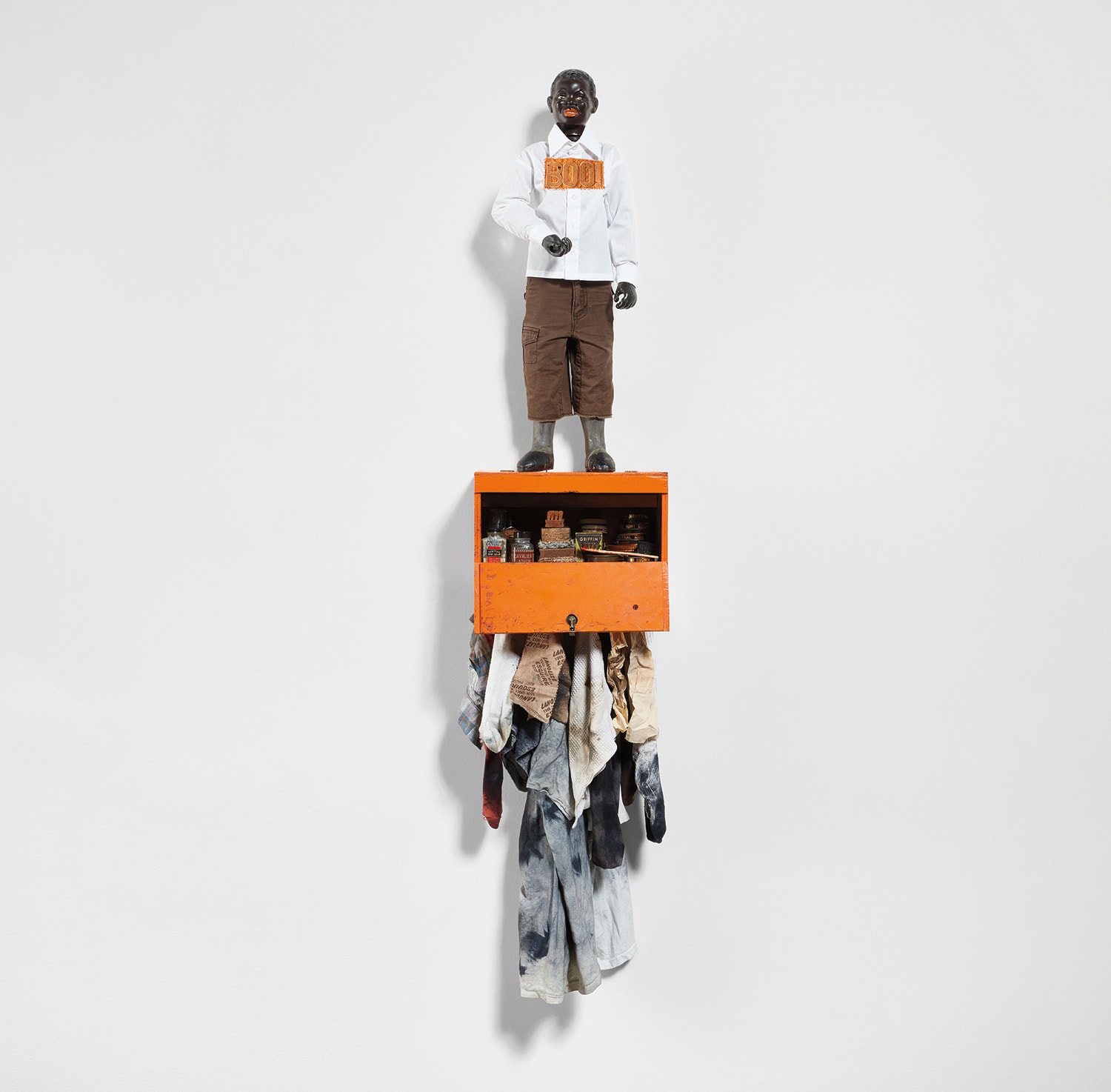
Nick Cave
Boo, 2009
Within the broader landscape of contemporary American art, Cave occupies a singular position that is nonetheless richly connected to a tradition of artists working at the intersection of the body, race, and material culture. His practice invites comparison with artists such as Kara Walker, whose silhouettes interrogate the visual history of race in America with comparable force and wit, and with Hank Willis Thomas, whose work similarly mines American cultural history through formal innovation. Cave's use of the body and costume also resonates with the performance and textile traditions explored by artists such as Senga Nengudi and David Hammons, both of whom have used ephemeral and found materials to articulate experiences that resist straightforward representation. Cave's achievement, however, is distinctly his own: the Soundsuit stands as one of the great original inventions in the history of contemporary sculpture.
Nick Cave's importance to the cultural moment we inhabit cannot be overstated. At a time when questions of visibility, identity, and belonging are at the center of public life, his work offers something rare and precious: a vision of transformation that is neither naive nor despairing, but profoundly alive with possibility. He makes suits that protect and liberate. He makes prints that hum with energy.
He fills rooms with joy that has been hard won. For collectors who believe that art should move them, challenge them, and endure, Cave is an artist whose work will only deepen in resonance and significance in the years to come.
Explore books about Nick Cave