Neo Rauch
Neo Rauch Dreams Germany Into Being
Artist Spotlight · The Collection Editorial
“I am a seismograph for the subterranean rumblings that have shaped this region.”
Neo Rauch, interview with Der Spiegel
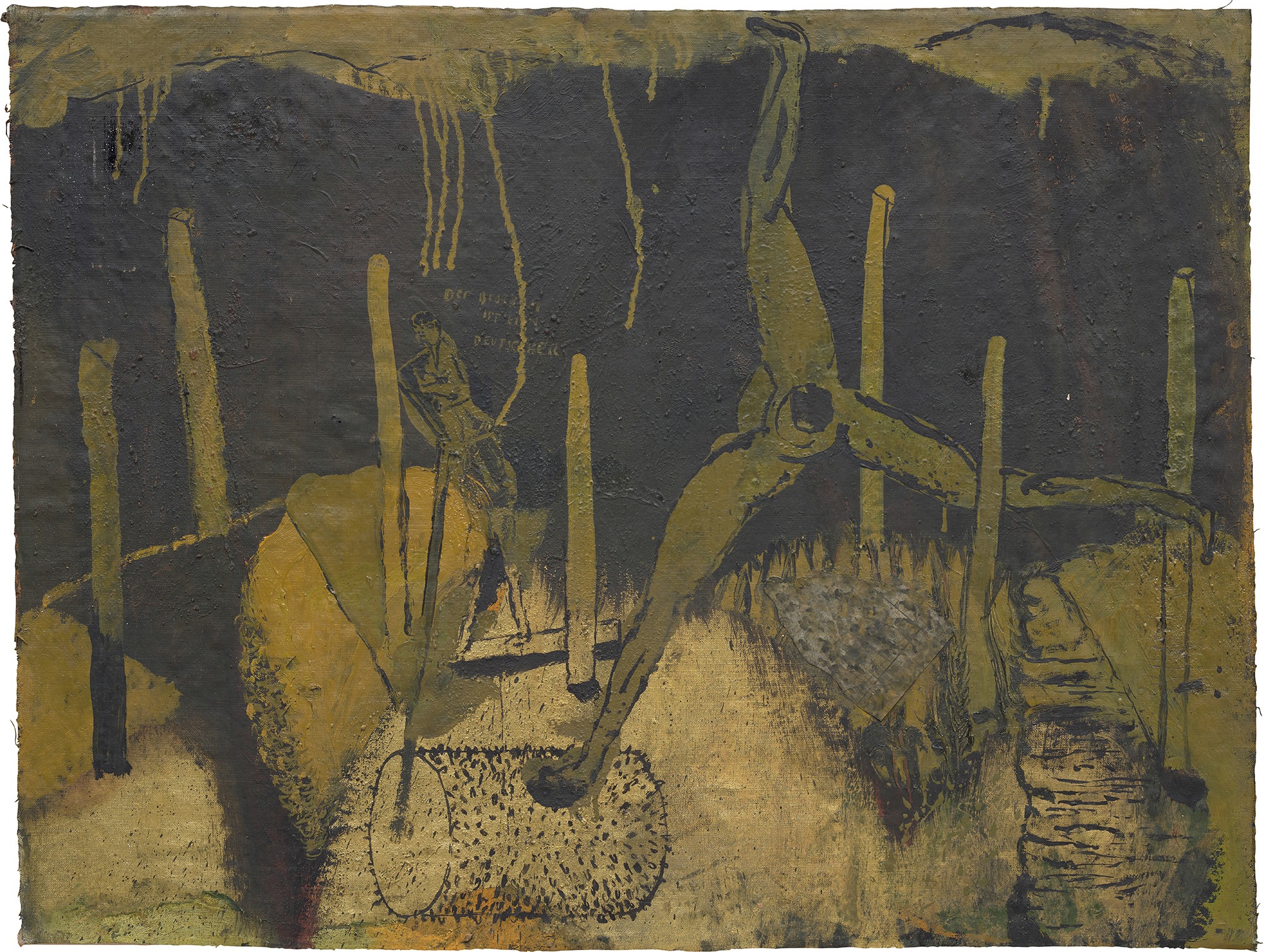
In the autumn of 2023, the Kunstmuseum Wolfsburg mounted a significant survey of Neo Rauch's work, drawing visitors from across Europe and reaffirming what serious collectors have understood for decades: that Rauch is among the most singular and consequential painters alive today. His canvases have become touchstones for a generation reckoning with history, memory, and the strange persistence of the past in the present. At auction houses from Leipzig to New York, his works command prices that reflect not just market enthusiasm but genuine cultural weight. To stand before a Rauch painting is to enter a world that feels both deeply familiar and utterly inexplicable, a quality that grows more rare and more precious with each passing year.
Neo Rauch
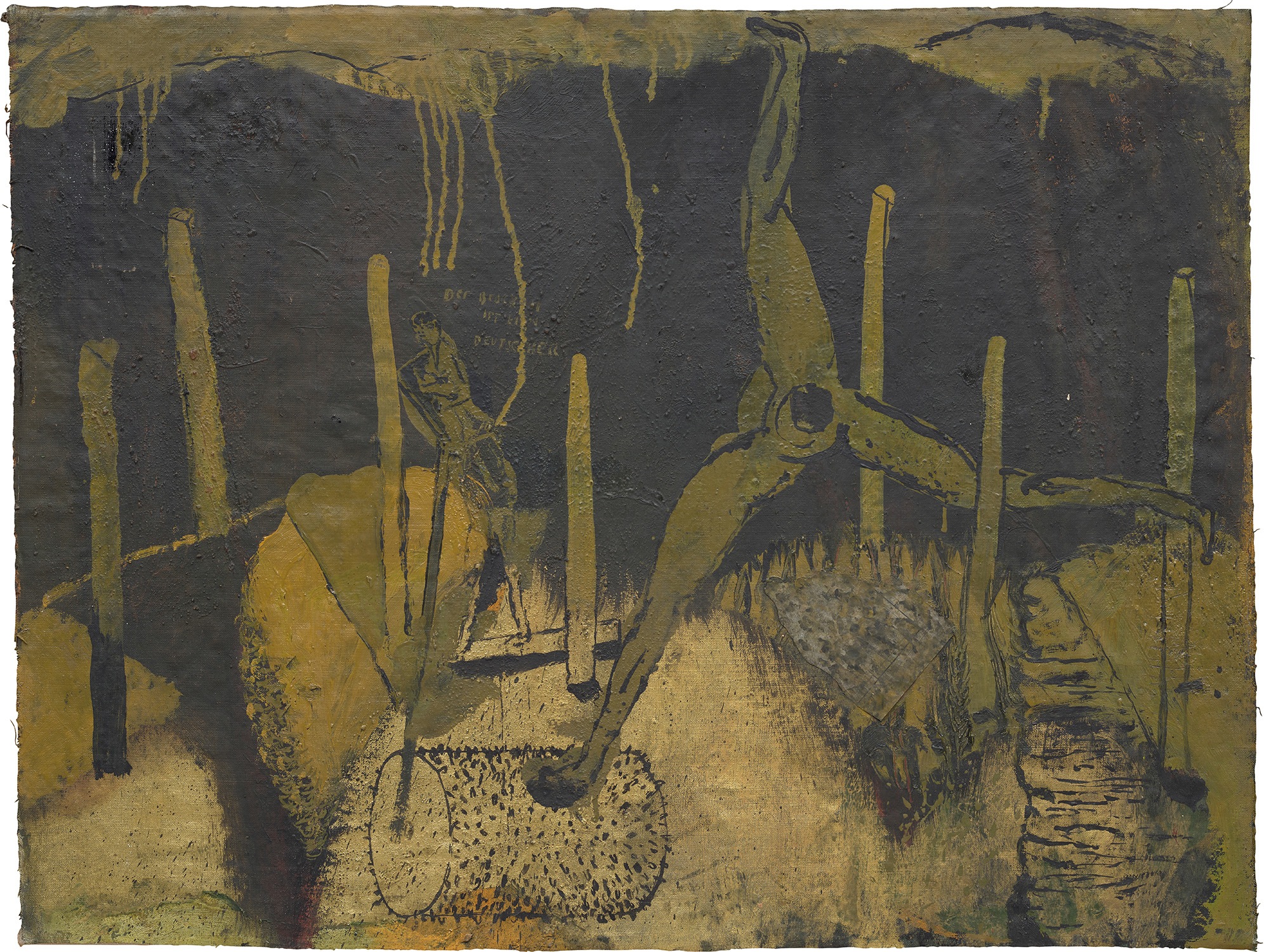
Der Brocken ist ein Deutscher, 1989
Neo Rauch was born in Leipzig in 1960, and the circumstances of his early life are inseparable from the mythology of his art. His parents died in a railway accident when he was just a few weeks old, and he was raised by his grandparents in the small Saxon town of Aschersleben. He came of age entirely within the German Democratic Republic, studying at the Hochschule für Grafik und Buchkunst in Leipzig, the storied institution now known simply as the Leipzig Academy of Visual Arts. His teacher there was Arno Rink, a painter of considerable skill who helped shape an entire generation of figurative artists working in a tradition that never abandoned the human form even when Western modernism had long declared it unfashionable.
The GDR context is not merely biographical color. It is the very substance of Rauch's imagination. He absorbed Socialist Realism not as ideology but as visual language, the muscular figures, the heroic postures, the sense that labor and collective purpose could be rendered in paint with a kind of monumental gravity. When the Wall fell in 1989, Rauch was nearly thirty, old enough that the world he had known was genuinely lost, young enough that he could channel that loss into something transformative.
Neo Rauch
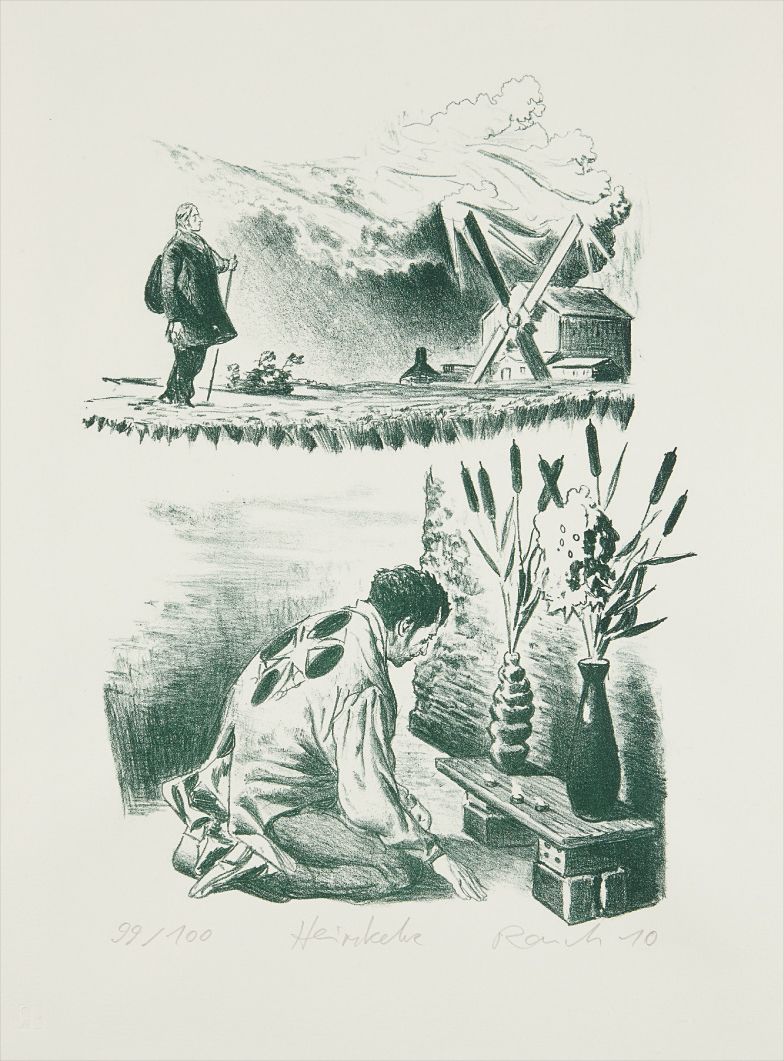
Heimkehr
The early 1990s found him working in a studio on the grounds of the Leipzig Academy, painting through a period of profound personal and national disorientation. Those years produced some of his most raw and searching canvases. What Rauch developed over the following decade was a visual language with no precise precedent. He drew on the figurative traditions he had inherited, on Surrealism, on the sequential logic of comics and graphic novels, on dreams, and on something that can only be described as the sediment of collective East German experience.
“My paintings are not puzzles to be solved. They are offers made to the viewer.”
Neo Rauch, interview with Monopol Magazine
His figures inhabit landscapes that seem to exist at the edge of waking, performing tasks whose purpose is never quite clear. Workers in overalls stand alongside figures in medieval dress. The sky in a Rauch painting might be the color of a bruised peach or an industrial grey, and the light falls from no identifiable source. Time collapses.
Neo Rauch
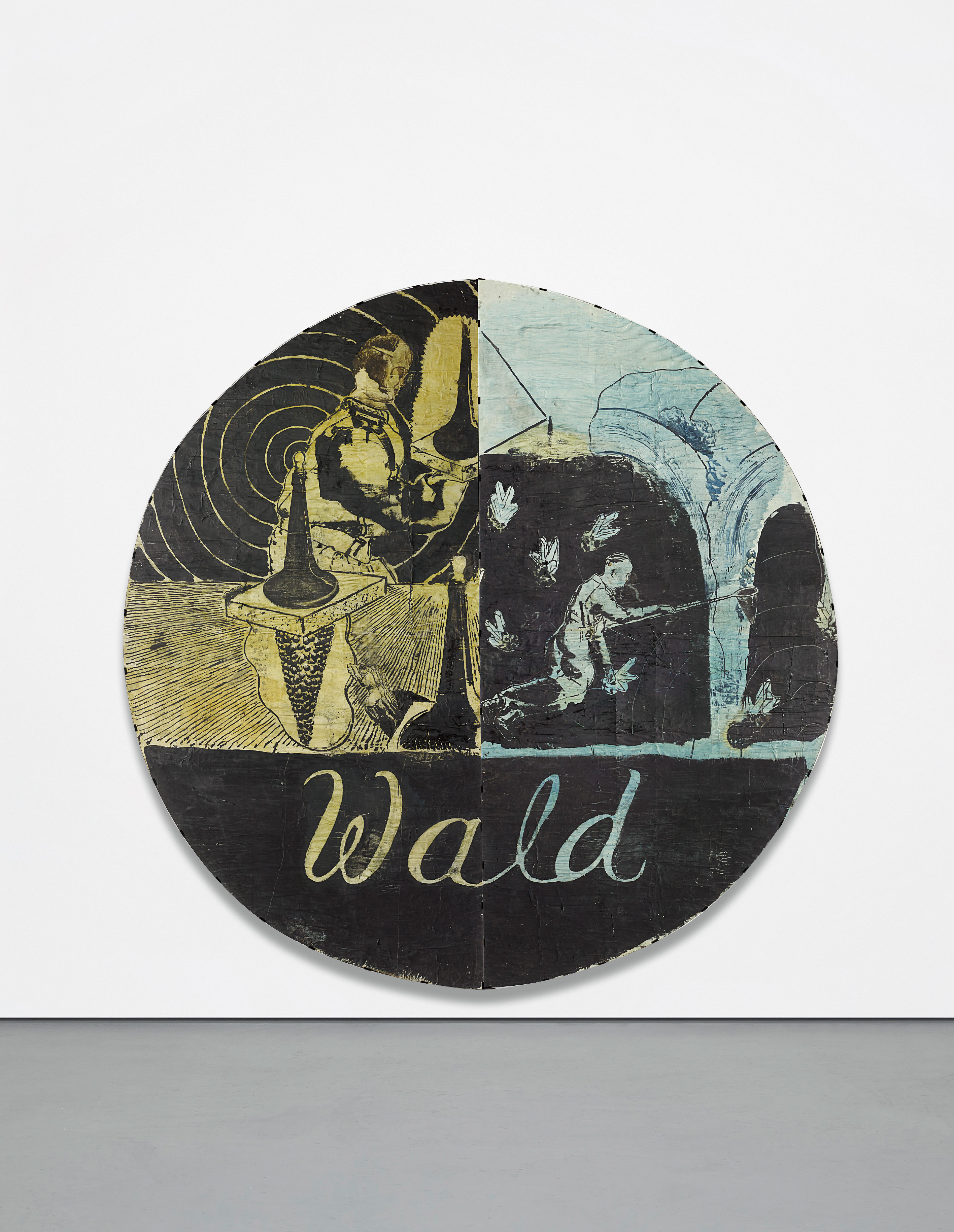
Wald
Narrative teases and withholds. The result is painting of extraordinary psychological richness. Among the works that define his achievement, "Die Lage" stands as a masterclass in controlled enigma, its figures arranged with the confidence of a history painter and the unease of a dream. "Wald" demonstrates his remarkable ability to work with oil on paper laid onto panel, a format that gives his surfaces a particular luminous intimacy.
"Landschaft mit Sendeturm" from 1996 is an early and prescient example of how he places the technological and the pastoral in unresolved conversation, a transmission tower rising from a landscape that seems to belong to no particular century. "Fastnacht" brings the carnivalesque into his repertoire with characteristic ambiguity, the festive surface barely containing something more unsettling beneath. His lithographs and screenprints, including the richly atmospheric "Heimkehr," show that his vision translates seamlessly across media, losing none of its intensity. The market for Rauch's work began its ascent in the late 1990s when Galerie EIGEN + ART in Leipzig, led by the visionary dealer Gerd Harry Lybke, began bringing sustained international attention to him and other Leipzig painters.
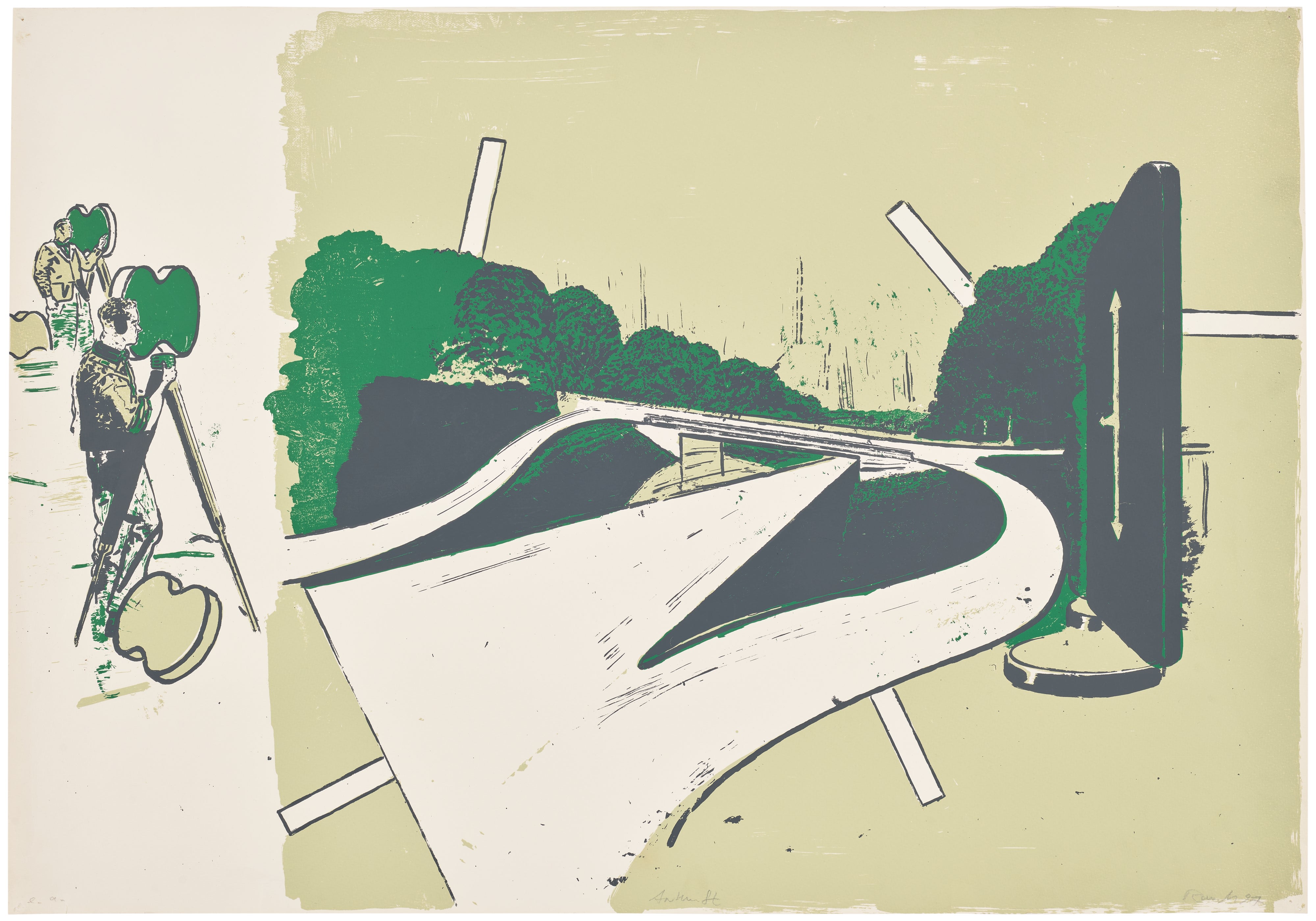
Neo Rauch
Ankunft / Erwartung (Arrival / Expectation) (S. p. 73)
The gallery's New York presence and its relationships with major international art fairs accelerated awareness dramatically. By the early 2000s, Rauch was represented by David Zwirner in New York, one of the most powerful galleries in the world, and his prices moved accordingly. A major oil on canvas can now achieve seven figures at auction, with works from the late 1990s and early 2000s particularly sought after. Collectors who acquired works during his earlier period have seen extraordinary appreciation, and those entering the market now find that prints, works on paper, and multiples offer meaningful points of access to a body of work that will endure.
Rauch belongs to a conversation that spans art history in ways that enrich any collection surrounding him. His figurative intensity connects him to the tradition of Max Beckmann and the German Expressionists, while his dreamlike spatial logic recalls Giorgio de Chirico and the metaphysical painters. Closer to his own time, he is the most internationally celebrated product of the New Leipzig School, a loose grouping that also includes painters such as Tim Eitel and Matthias Weischer. Yet Rauch resists any simple categorization.
He is not a Surrealist, not a Socialist Realist, not a postmodernist ironist. He is something rarer: a painter with a genuine interior world who has found the technical and imaginative means to externalise it fully. The legacy of Neo Rauch is still actively being written, which is part of what makes collecting him so compelling at this moment. He continues to paint with remarkable productivity from his studio in Leipzig, the city that formed him and that he has in turn helped make into one of the most watched locations in contemporary art.
His work asks fundamental questions about what painting can do that no other medium can, about how images carry the weight of history without being crushed by it, about what it means to inherit a world and try to understand it through the act of making pictures. For collectors who believe that art should not merely decorate but genuinely illuminate, there are few living painters who deliver on that belief more completely.
Explore books about Neo Rauch
Neo Rauch: Catalogue Raisonné 1993-2003
Darsie Alexander

Neo Rauch
Werner Busch
Neo Rauch: Neue Rollen
Various
Neo Rauch: The Possibility of Painting
Robert Storr
Neo Rauch: Katalog der Gemälde
Franziska Lentzsch