Nelson Shanks
Nelson Shanks, Master of the Living Portrait
Artist Spotlight · The Collection Editorial
“The portrait must capture the spirit, the soul of the sitter, not merely the surface appearance.”
Nelson Shanks
There is a particular kind of painting that stops a room. Not through scale or spectacle, but through an uncanny sense that the figure within it is about to breathe. Nelson Shanks made those paintings with extraordinary consistency across a career spanning more than five decades. His portrait of Diana, Princess of Wales, completed in 1994, remains one of the most discussed and psychologically complex official portraits of the twentieth century, a luminous work in which the Princess appears both regal and quietly interior, her gaze carrying a weight that no camera ever quite captured.
Nelson Shanks
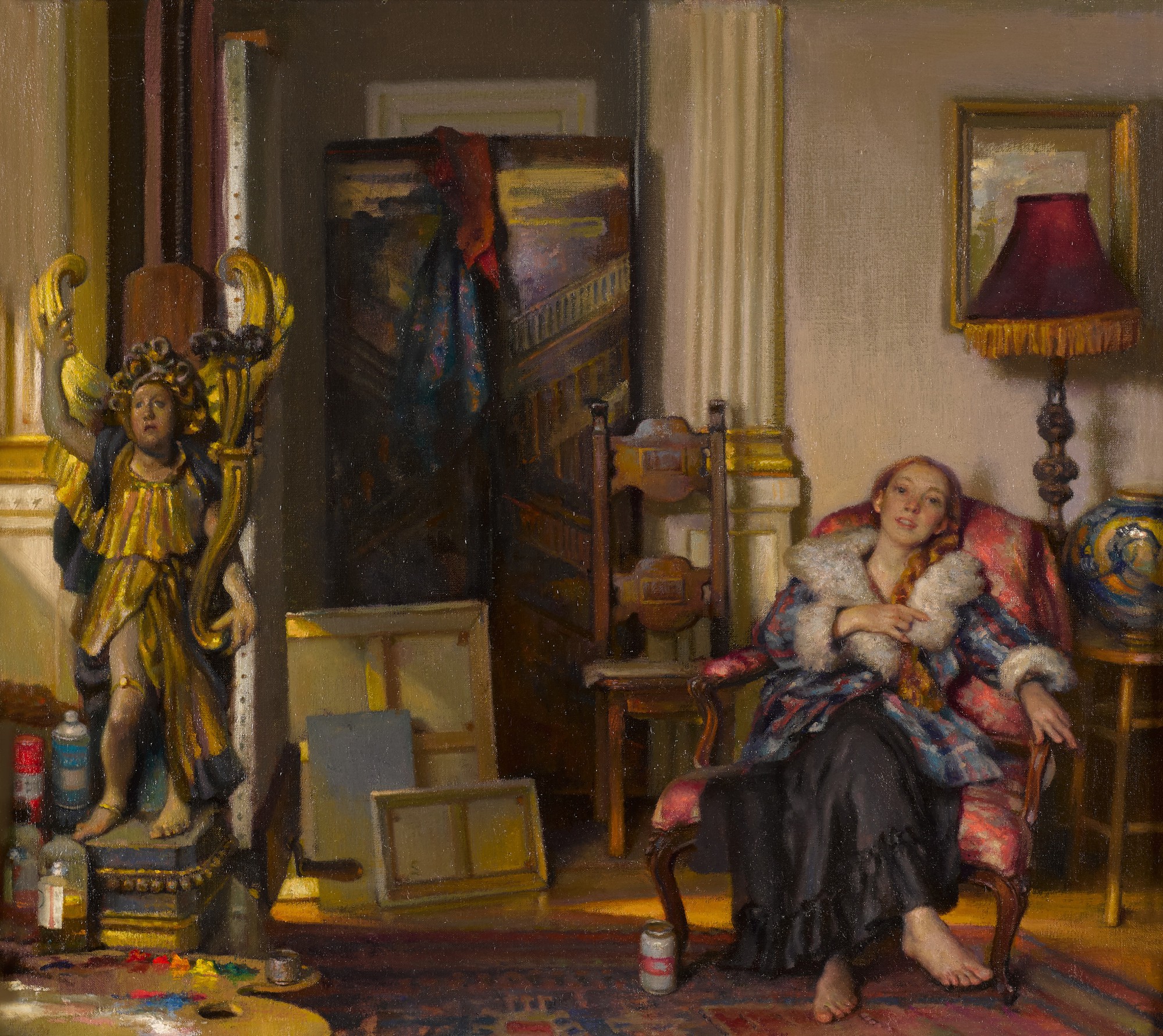
Gramercy Studio
That single canvas, now among the most recognized works of American portraiture from its era, tells you almost everything you need to know about what made Shanks remarkable. John Nelson Shanks was born in 1937 in Bridgeport, Connecticut, and came of age at a moment when American painting was in vigorous, sometimes combative conversation with itself. Abstract Expressionism dominated the critical conversation, and figuration was often treated as a retrograde impulse. Shanks moved against that current with quiet conviction.
He trained rigorously, studying at the Kansas City Art Institute and later at the Art Students League of New York, where he absorbed the technical traditions that would anchor his practice for the rest of his life. He also spent time studying in Europe, immersing himself in the Old Masters with the kind of sustained attention that art schools of that era rarely required and that contemporary programs rarely permit. What emerged from that formation was a painter who understood that classical technique was not a limitation but a vocabulary, one capable of extraordinary range in the right hands. Shanks became deeply fluent in the traditions of Velázquez, Sargent, and the great Flemish portraitists, and he brought that fluency to bear on subjects drawn from the full breadth of contemporary life.
Nelson Shanks
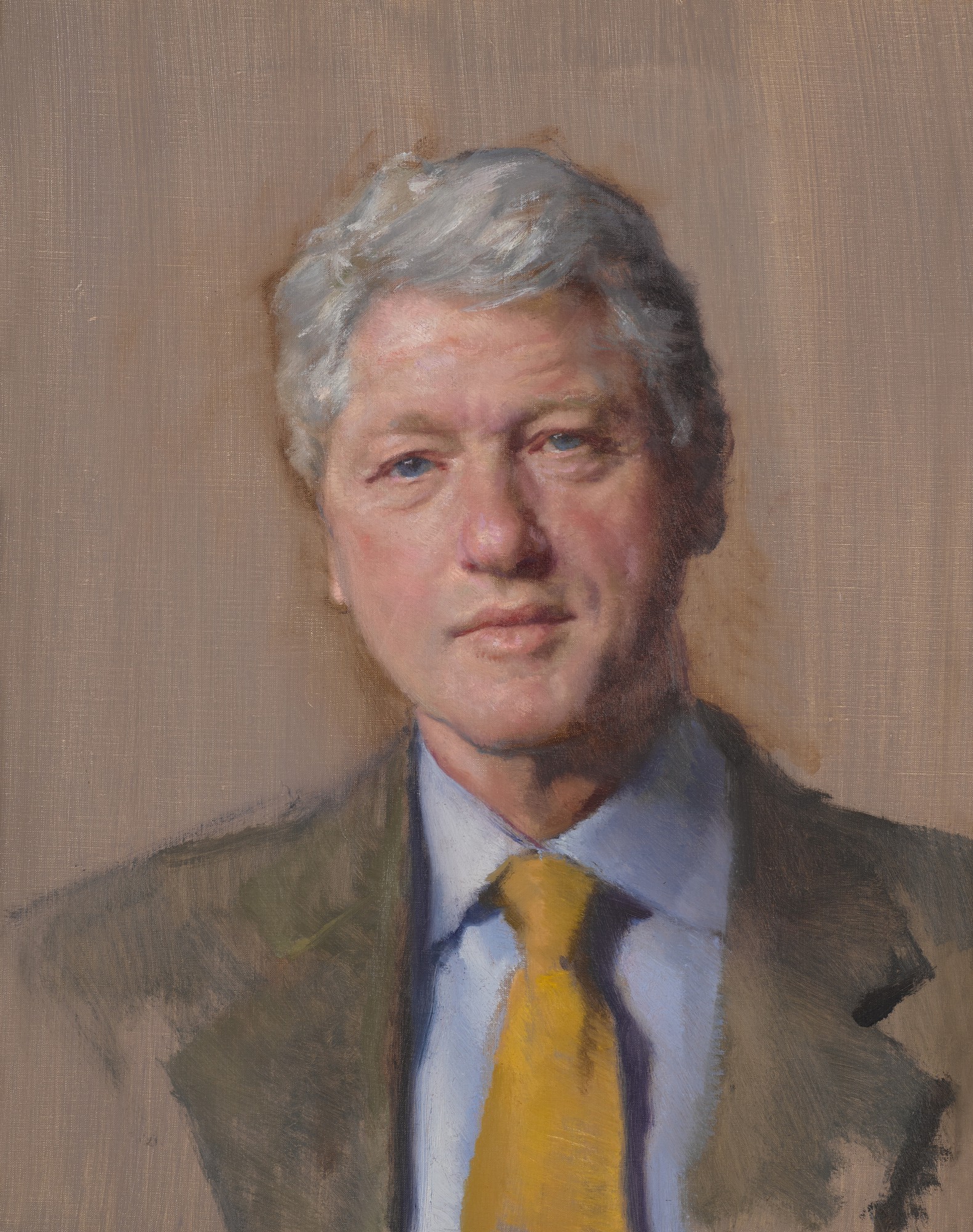
William Jefferson Clinton (A Sketch)
His handling of light is perhaps the most immediately striking quality of his mature work. He painted light as a substance, something that falls across skin and fabric and objects with its own logic and weight. The surfaces of his canvases reward close looking in a way that reproductions simply cannot capture. The arc of Shanks's career as a portraitist is remarkable for both its ambition and its breadth.
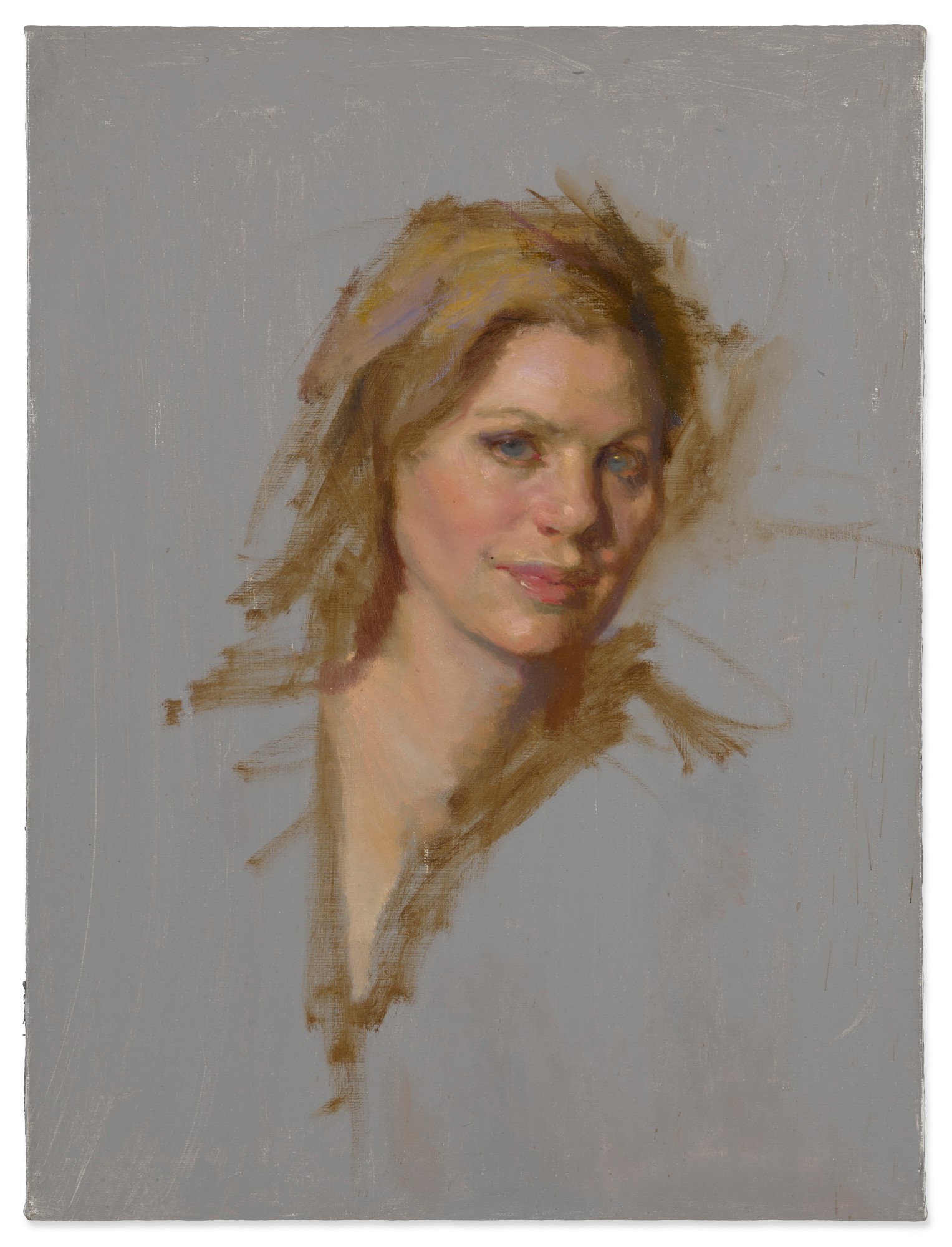
He painted presidents and performers, royalty and private individuals, bringing the same concentrated attention to each. His official portrait of President Bill Clinton, commissioned for the National Portrait Gallery in Washington, became one of the more talked about works in that institution's distinguished collection, in part because of Shanks's later public remarks about the composition and in part because of the sheer quality of its execution. His portrait of Luciano Pavarotti captures the great tenor with a vitality that feels almost musical. His study of Renée Fleming conveys the particular intelligence that defines one of the finest voices of her generation.
Nelson Shanks
Renée Fleming (A Sketch)
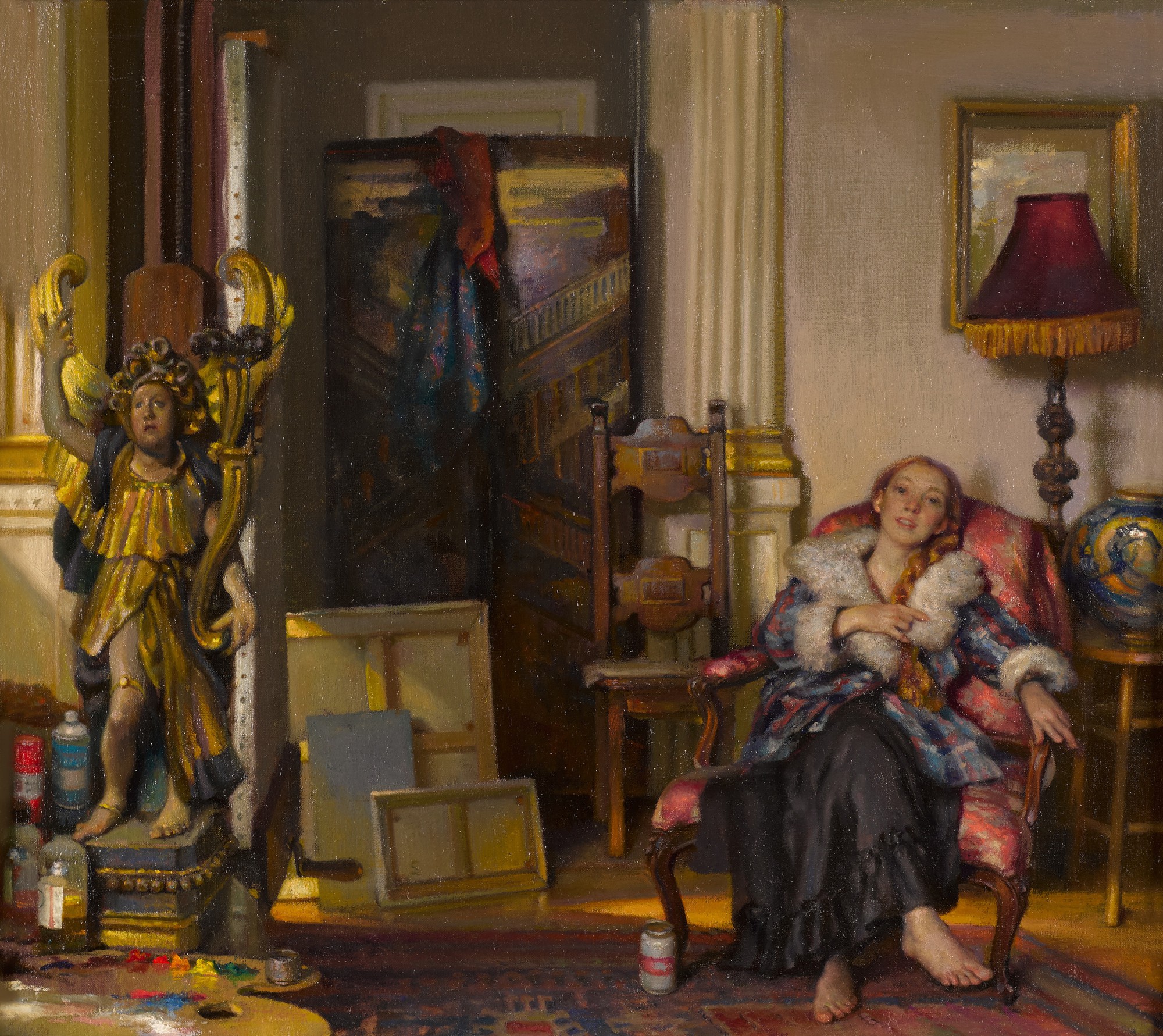
In each case, Shanks was not simply recording a likeness but interpreting a person, finding the quality of presence that distinguished them. The works available through The Collection offer a genuinely compelling window into the range of Shanks's practice. Gramercy Studio, an oil on canvas, reveals his intimate side, a painter at ease within the spaces of working life, attentive to the quiet drama of light moving through a room. Houdon and Coins is a beautiful demonstration of his still life sensibility, connecting him to a long tradition of objects as vehicles for meditation.
The sketch works, including his studies of Clinton, Reagan, Fleming, and Pavarotti, are particularly valuable for collectors because they reveal the artist in a more immediate register. A sketch by a painter of Shanks's caliber is not a lesser thing. It is a direct record of looking, the trace of a mind working at full intensity without the distance that finished surfaces sometimes impose. These are works that show you how a great portrait painter thinks.
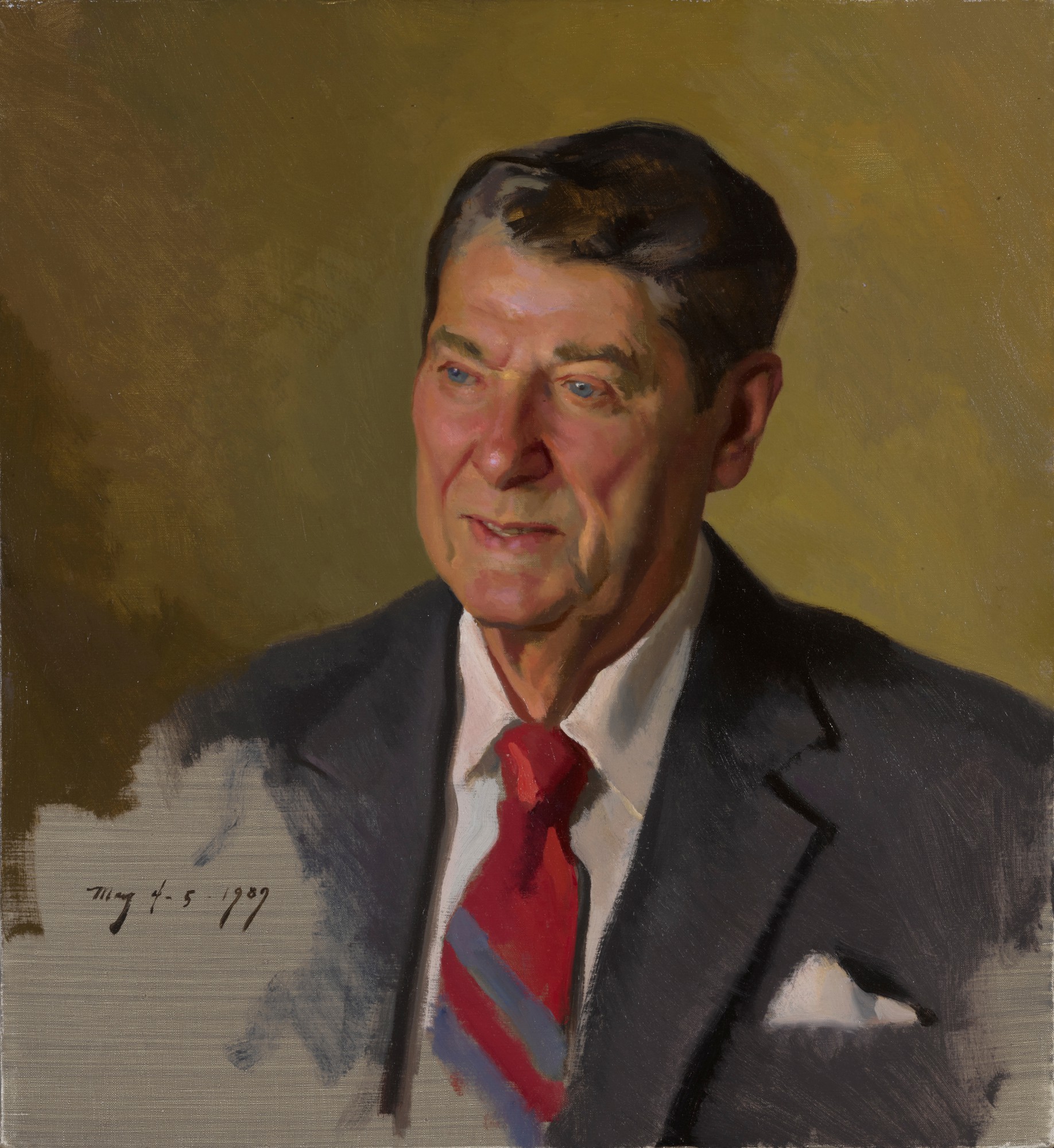
Nelson Shanks
Ronald Reagan (A Sketch)
For collectors approaching Shanks, it is worth understanding where he sits within the broader history of American realism. He is a central figure in the revival of classical figurative painting that gathered momentum across the latter decades of the twentieth century, a movement that includes artists such as Odd Nerdrum, Lucian Freud, and the American painters associated with the Boston school and the broader atelier tradition. Shanks was not merely a participant in that revival but one of its most articulate champions, and his influence through teaching may ultimately prove as significant as his painted legacy. In 2000 he founded Studio Incamminati in Philadelphia, a school dedicated to the rigorous transmission of contemporary realist methods.
The name is a deliberate homage to the Carracci academy of the late sixteenth century, and the ambition is similarly serious: to train painters who can carry a living tradition forward. The market for Shanks's work reflects a growing recognition of his importance. As collectors who came of age in the era of conceptual and abstract dominance have broadened their looking, and as a younger generation has rediscovered the intellectual and emotional richness of representational painting, the demand for serious figurative work has strengthened considerably. Shanks occupies a position in that market that is still, in some respects, undervalued relative to his stature.
His portrait commissions placed him in the company of the most significant official painters of his era, and his best canvases stand comparison with the finest American portraiture of the twentieth century. For a collector with genuine looking skills, there is real opportunity here. Nelson Shanks died in Philadelphia in 2015, leaving behind a body of work that grows more significant with time. His legacy is threefold: the paintings themselves, which will endure on the walls of private collections, museums, and institutions; the school he built, which continues to train painters in the traditions he loved; and the quiet argument his entire career made against the idea that beauty and rigor and deep human attention are somehow beside the point.
He believed that painting a person well was one of the most serious and demanding things an artist could do. The work on these walls makes that case without a single word of explanation needed.