Neil Raitt
Neil Raitt Paints Youth Into Timelessness
Artist Spotlight · The Collection Editorial
Something quietly remarkable has been happening in British figurative painting, and Neil Raitt sits at its luminous centre. Over the past decade, his canvases have moved through the rooms of discerning collectors and appeared at Phillips auction house, where the sustained appetite for his work speaks to a deeper cultural hunger for painting that feels simultaneously intimate and monumental. Raitt occupies a singular position in contemporary portraiture, an artist whose surfaces are so controlled, so breathtakingly precise, that standing before one of his paintings feels less like looking at a canvas and more like pressing your face to a window into someone else's private world. Born in 1979, Raitt grew up in Britain during a period when the country's cultural identity was being remade in real time.
Neil Raitt
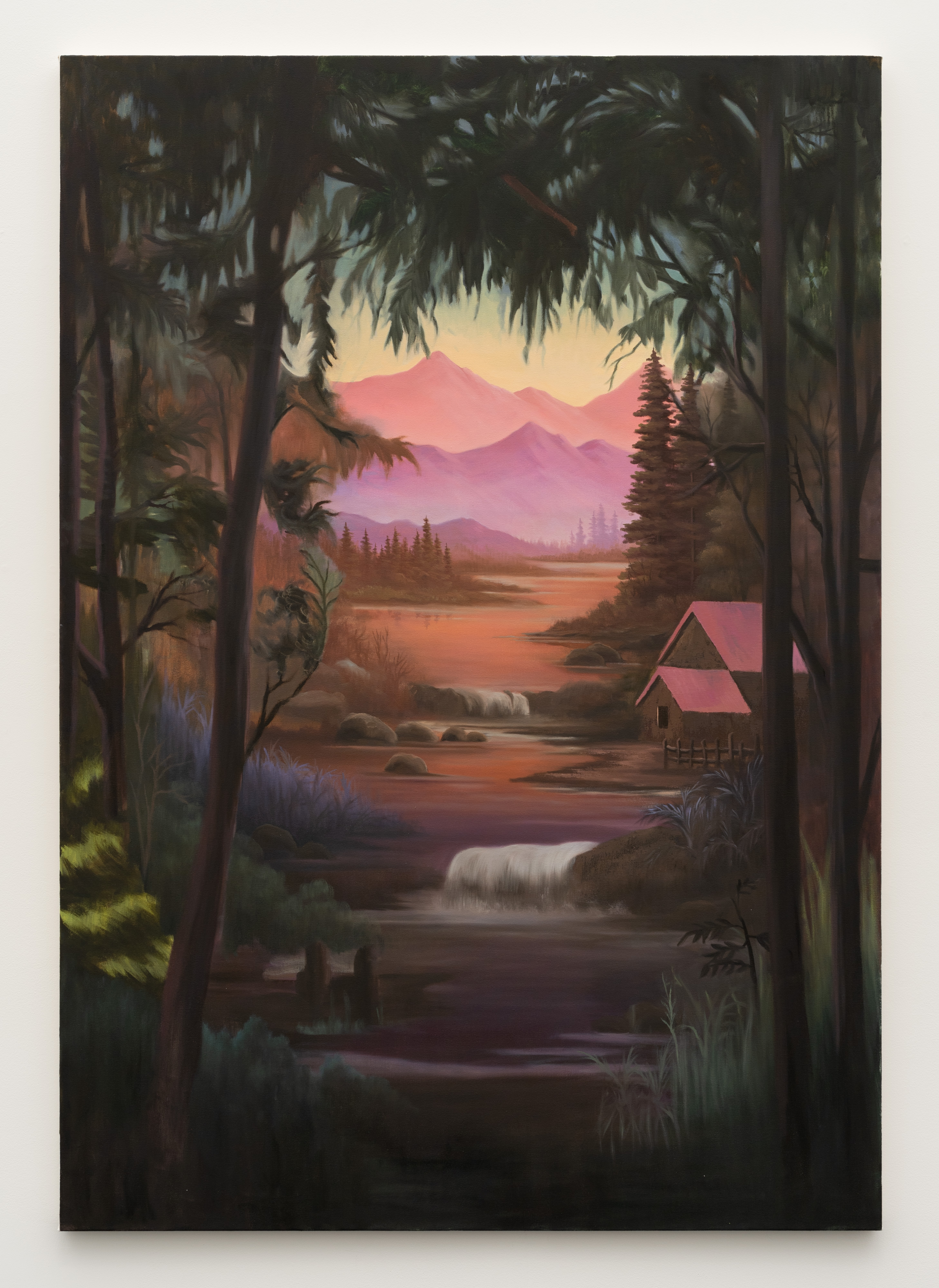
Forest Clearing (Tangerine Stream), 2021
The 1980s and 1990s shaped a generation acutely aware of image, of style, of the way youth constructs and performs itself for an audience. These formative decades left their mark on Raitt's sensibility in ways that are visible in every canvas he produces. There is a tenderness toward his subjects that speaks to someone who understands youth not as nostalgia but as a living, breathing condition worth recording with the seriousness once reserved for royalty or myth. Raitt trained as a painter at a time when British art education was grappling with the legacy of the Young British Artists movement and the competing pull of figuration versus conceptual practice.
Rather than choosing sides, Raitt developed a practice that is technically demanding in ways that recall the Old Masters while remaining completely embedded in the present moment. His command of oil paint is exceptional, building surfaces of almost impossible smoothness that carry no visible trace of the labour behind them. This quality, far from feeling cold or mechanical, gives his figures a kind of suspended grace, as though they have been caught in a moment that the painter has decided, quietly and firmly, will last forever. The development of Raitt's distinctive visual language can be traced through a body of work that spans roughly a decade of sustained ambition.
Neil Raitt
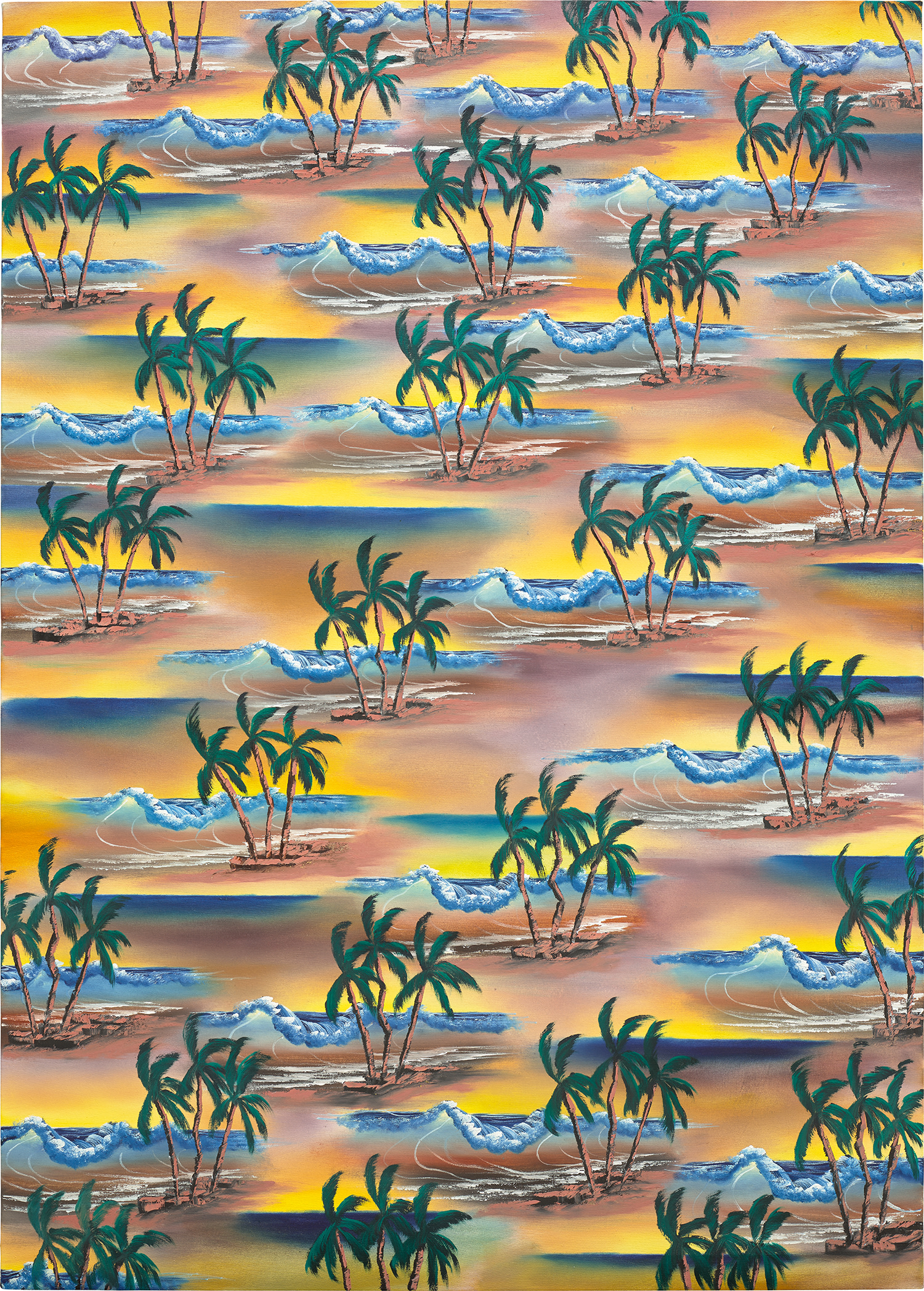
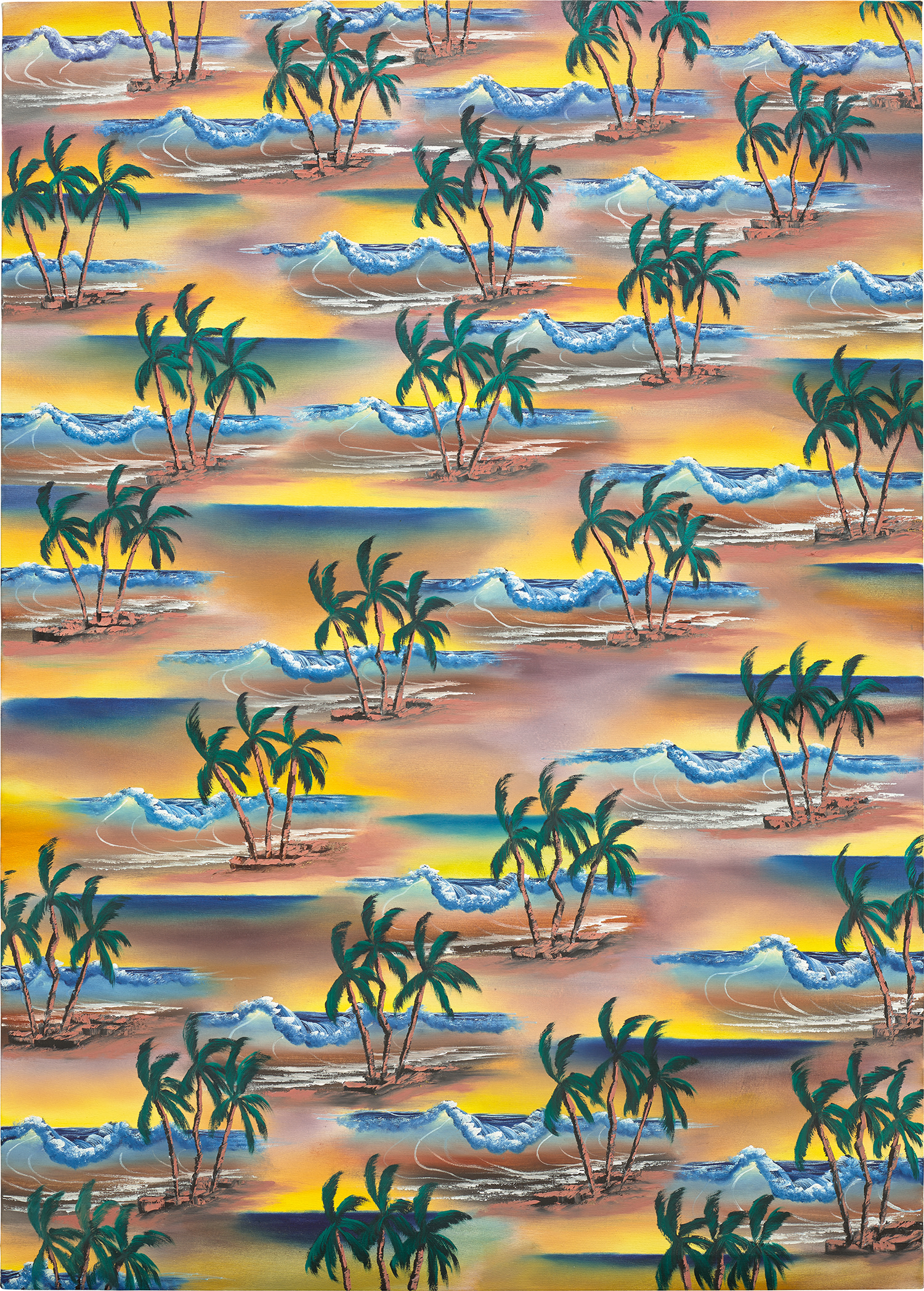
Golden Tide, 2016
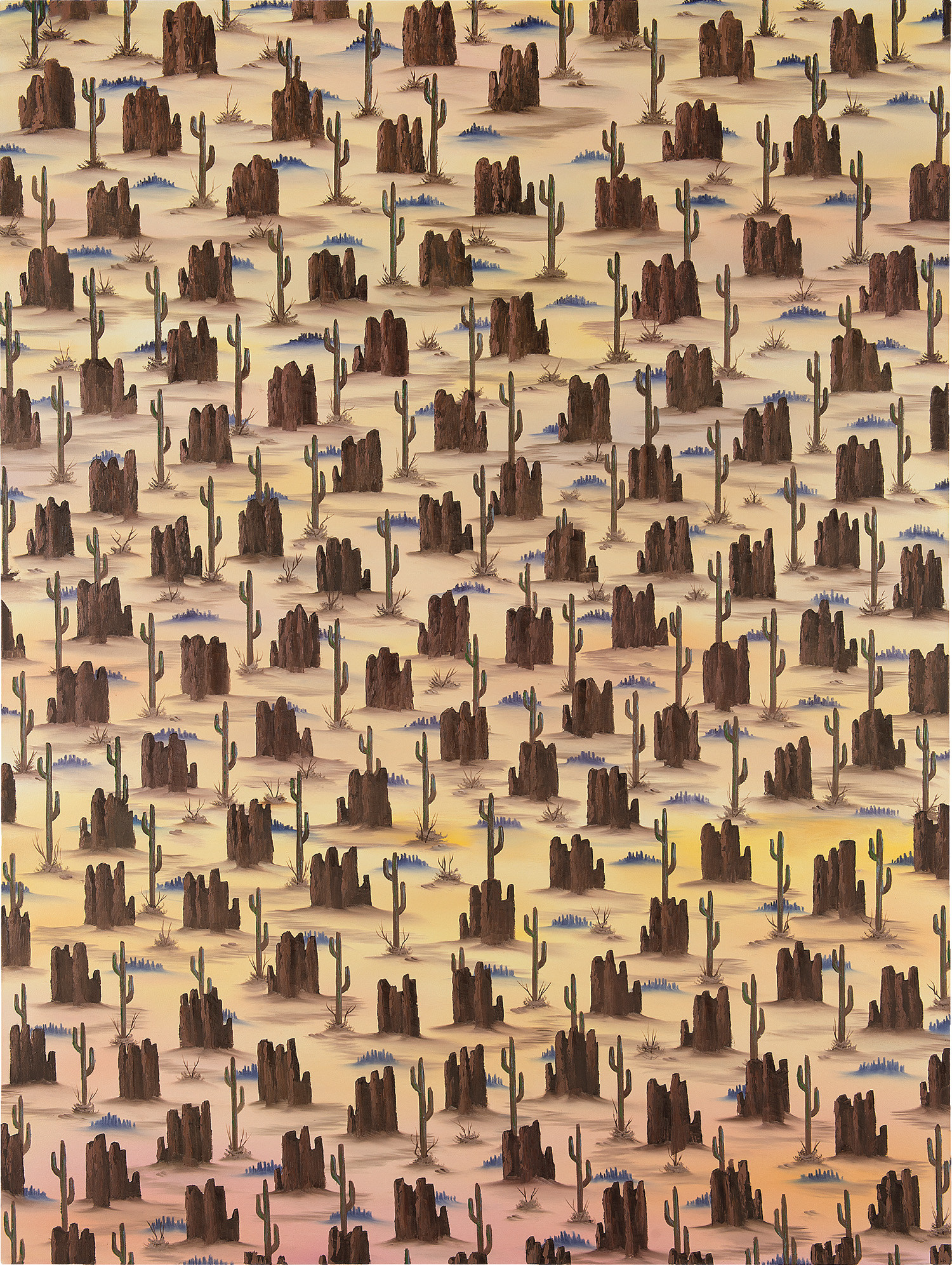
His earlier canvases, among them the striking Alpine 19:21 and the quietly haunting Mountain Cabin (Fade), both from 2014, establish what would become a characteristic tension in his practice: the pairing of youthful figures with landscape settings that feel simultaneously specific and archetypal. The mountains, forests, and open terrain that appear in his work are not picturesque backdrops. They function as psychological space, vast and indifferent environments against which the particularity of a young face becomes almost unbearably significant. Desert Glow (Sheriff), from 2015, extends this sensibility into a warmer, more saturated palette, the golden light reading as both cinematic and deeply personal.
By 2016, with Golden Tide, Raitt had arrived at a mature command of his compositional instincts. The painting demonstrates his ability to use light as a structural element, flooding a scene with a warmth that feels earned rather than applied. Forest Clearing (Tangerine Stream), completed in 2021, represents perhaps the fullest expression of where his practice has arrived in recent years. Here the light is extraordinary, filtering through a forest setting with the kind of specific atmospheric truth that takes years of looking to achieve.
Neil Raitt
Desert Glow (Sheriff), 2015
The title itself is characteristic of Raitt's approach: poetic without being pretentious, precise without being clinical, suggesting an experience rather than simply naming a place or a person. What draws collectors to Raitt's work is partly technical admiration and partly something harder to articulate. His paintings operate at the boundary between photography and painting in a way that is genuinely rare. Where some artists use photorealism as a kind of provocation or conceptual gambit, Raitt uses it as a vehicle for emotional honesty.
The smooth, almost frictionless surfaces of his canvases create an effect of immediacy, as though the image has arrived fully formed rather than been constructed stroke by stroke. Yet the choices he makes, in cropping, in lighting, in the particular quality of attention he pays to his subjects, are unmistakably those of a painter thinking deeply about what painting can do that no other medium can. Collectors who live with his work report that it rewards sustained looking, that details and atmosphere reveal themselves slowly over time. In terms of art historical context, Raitt belongs to a tradition of British figurative painters who have approached the human figure with rigour and psychological intelligence.
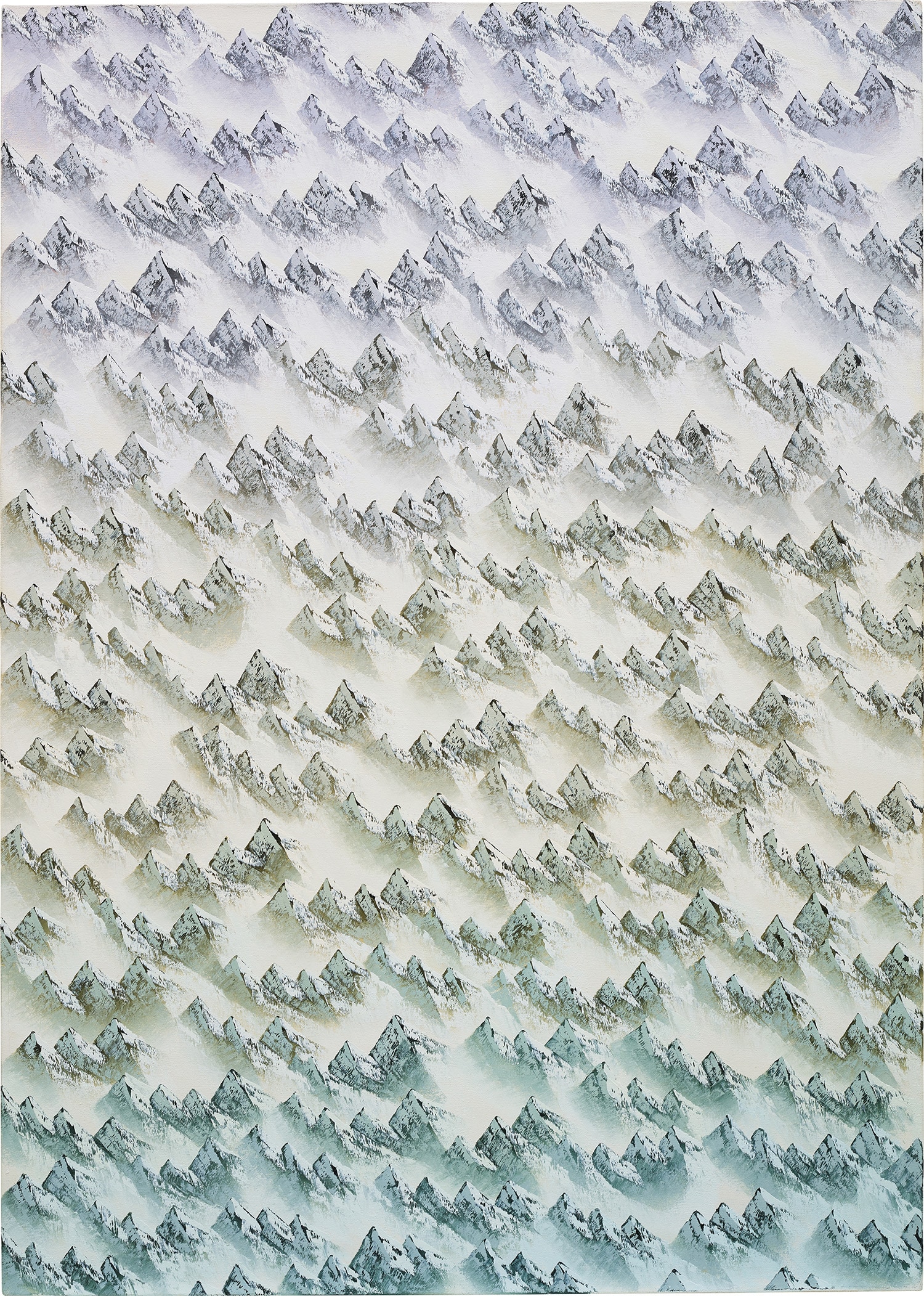
Neil Raitt
Alpine 19:21, 2014
The precision of his surfaces invites comparisons with painters working in the photorealist tradition on both sides of the Atlantic, while his choice of subject matter and his emotional register place him closer to the intimate figuration of artists like Cecily Brown or the generational portraiture associated with the Saatchi Gallery's early championing of new British talent. He also shares something with the American painter John Currin in his willingness to treat contemporary social types with the formal seriousness of earlier centuries, though Raitt's emotional temperature is considerably warmer and less ironic than Currin's. His closest artistic kinship may ultimately be with painters who understand that the best figurative art is always, at some level, about the passage of time. The question of legacy is one that feels premature to raise about a painter who is, by any measure, still in the midst of his most productive years.
But the cultural contribution Raitt is already making deserves acknowledgment. At a moment when the art world oscillates between abstraction, digital practice, and various forms of conceptual provocation, Raitt's commitment to the human figure rendered with patience, skill, and genuine feeling represents something valuable and increasingly rare. He insists, quietly and through the evidence of the work itself, that painting a face carefully is not a conservative act but a radical one. The young subjects who appear in his canvases are given a dignity and a permanence that contemporary image culture, with its endless scroll and instant obsolescence, almost never affords them.
That is a gift, and it is one that collectors, institutions, and eventually historians will return to for a very long time.