Neil Jenney
Neil Jenney: Nature, Atmosphere, and Radical Clarity
Artist Spotlight · The Collection Editorial
There are moments in art history when an artist arrives precisely at the right time and proceeds to rewrite the terms of engagement entirely. Neil Jenney is one of those artists. In recent years, major institutions have returned to his work with fresh urgency, recognizing that his decades long project of painting the natural world under siege feels less like a period statement and more like a prophecy fulfilled. His canvases, with their thick black frames and spare, declarative imagery, have a way of stopping a viewer cold, demanding not admiration but reckoning.
Neil Jenney
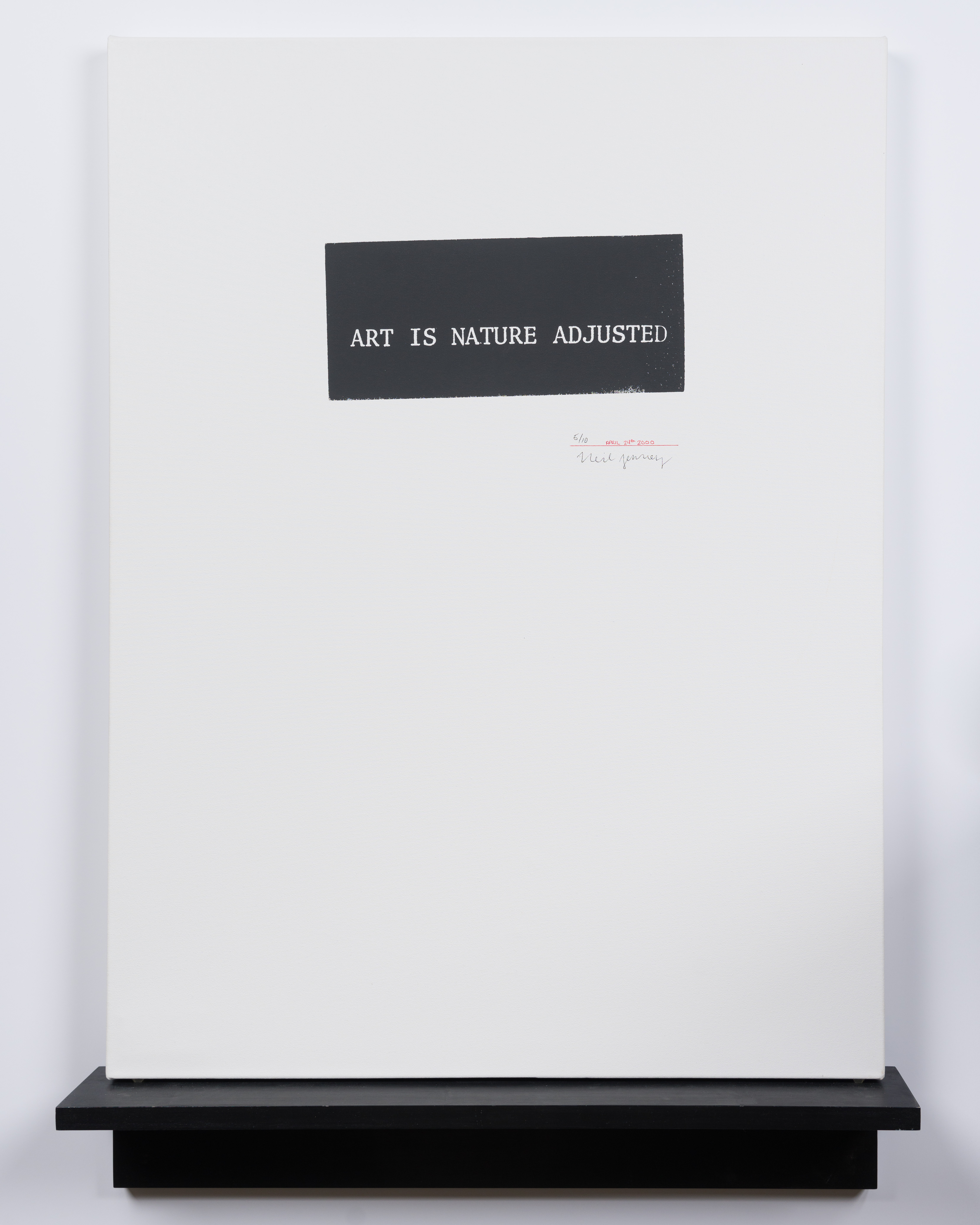
Art is Nature Adjusted , 2000
To stand before a Jenney is to be reminded that painting can still carry genuine moral weight. Jenney was born in 1945 in Torrington, Connecticut, and came of age during one of the most turbulent periods in American cultural life. He did not follow a conventional academic path, and that independence of spirit became fundamental to his practice. Where many of his contemporaries were shaped by graduate programs and institutional mentorship, Jenney charted his own course, arriving in New York as the art world was fracturing into competing orthodoxies.
Minimalism was in full command, Conceptualism was gathering force, and the very act of painting was being called into question. Jenney chose painting anyway, but on his own radical terms. In the late 1960s, Jenney emerged alongside artists who would become associated with what critics called Bad Painting, a deliberately loose and irreverent approach that pushed back against the cool perfectionism of the dominant avant garde. Works like Lines and Track from 1969, executed in acrylic on canvas and housed in one of his now signature heavy artist made frames, announced a sensibility that was rough hewn and confrontational.
Neil Jenney
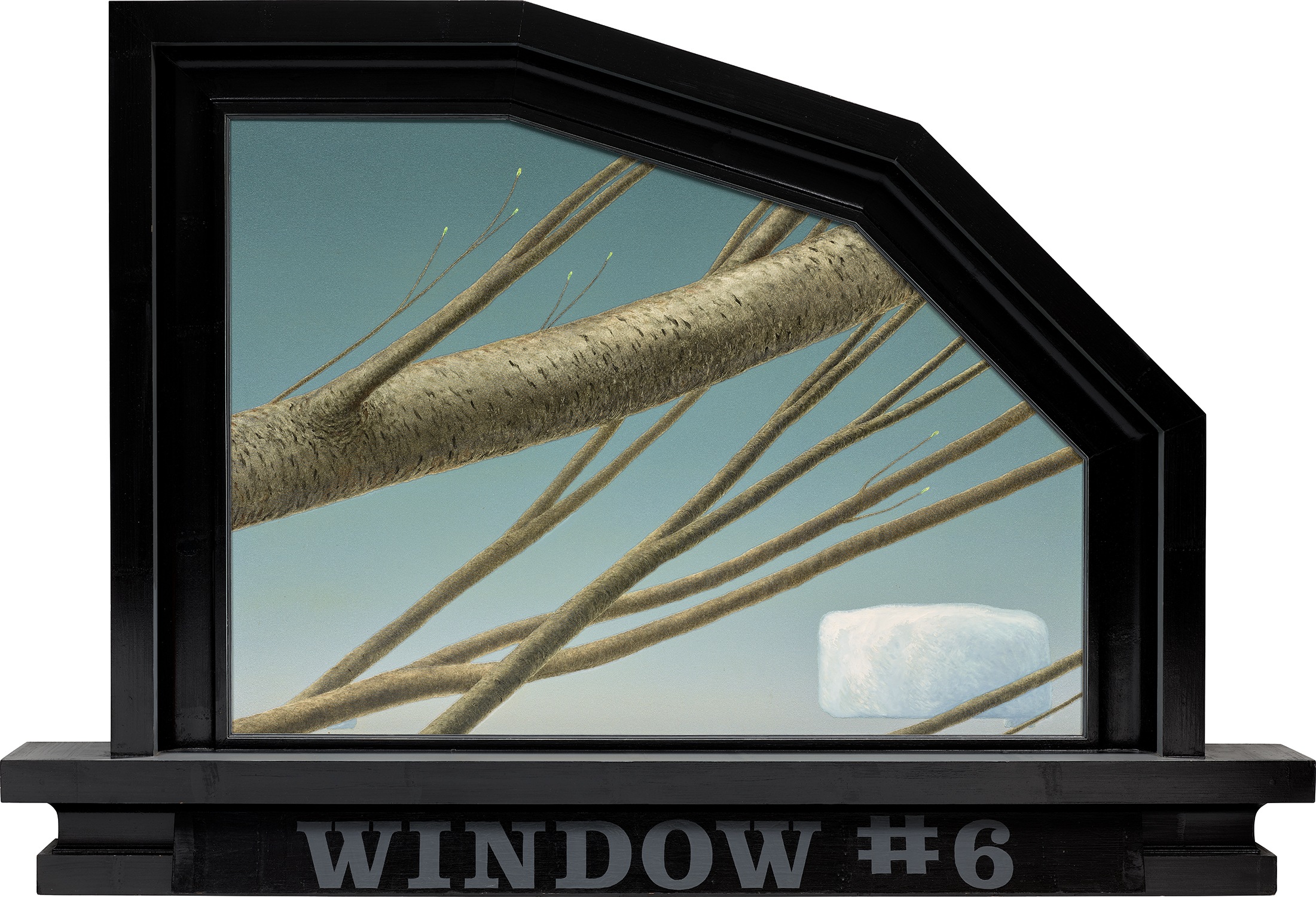
Window #6, 1971
The imagery was blunt, the brushwork insistently unpolished, and the frames declared that each work was a complete object, not merely a window into illusion. This was painting as proposition, as argument, as fact. By the early 1970s, Jenney had already pivoted toward what would become the central obsession of his career. Works such as Window Number 6 from 1971 and Biosphere Number 3, also from 1971, reveal an artist turning his attention to the natural world with the same unsparing directness he had brought to his earlier figurative work.
Both are oil on panel, both enclosed in artist built frames that function almost like specimen cases or scientific displays. The titles themselves carry a clinical weight that amplifies the emotional resonance of the imagery. These are not landscapes in any traditional sense. They are diagnostics.
Neil Jenney
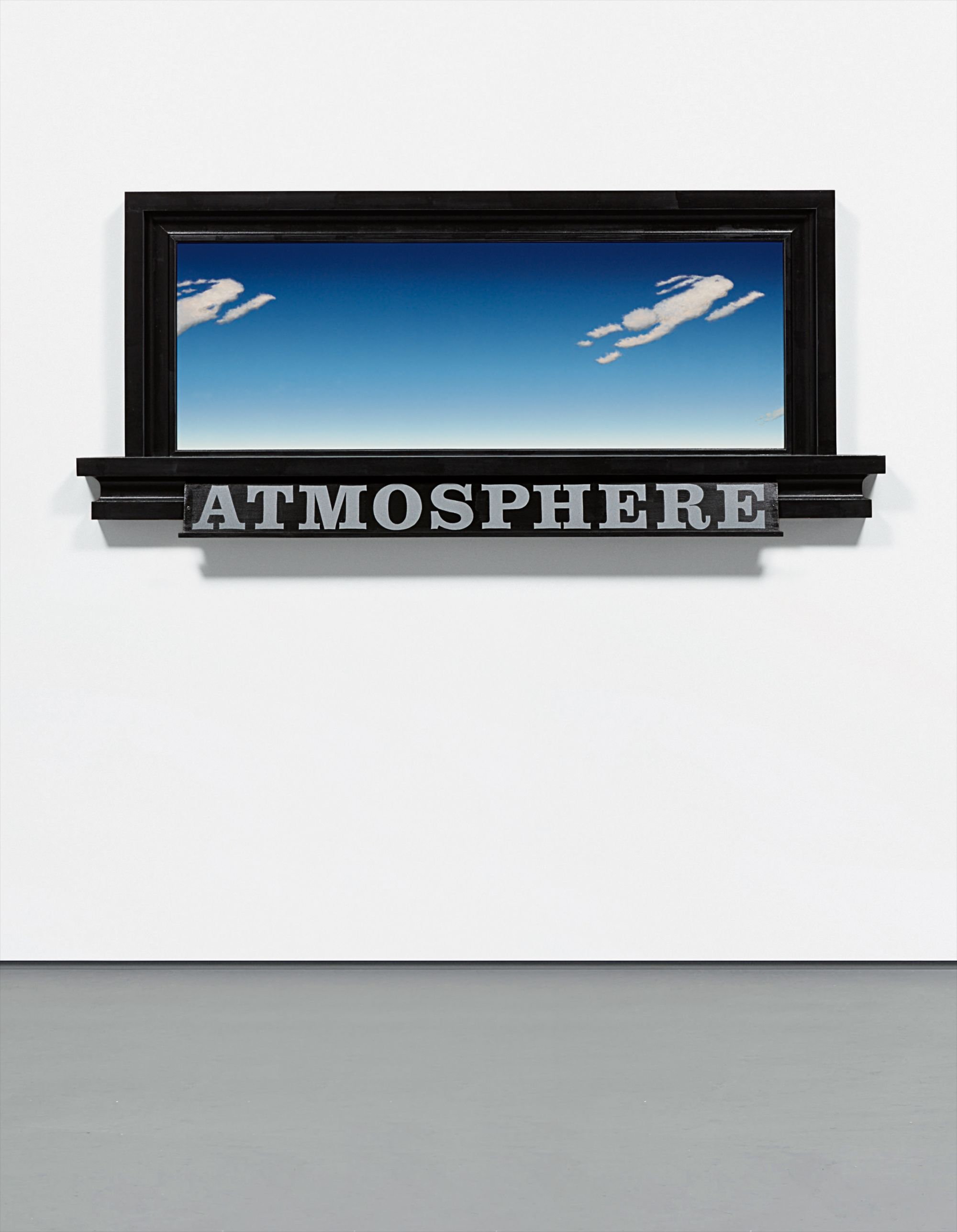
Atmospheric Formation, 2003
The framing device is perhaps Jenney's most distinctive and original contribution to contemporary painting. Where other artists treat frames as neutral furniture, Jenney treats them as integral to meaning. Wide, dark, and often inscribed with the work's title in capital letters, the frames slow the viewer down and formalize the act of looking. They make each painting feel like evidence, like something preserved and presented for consideration.
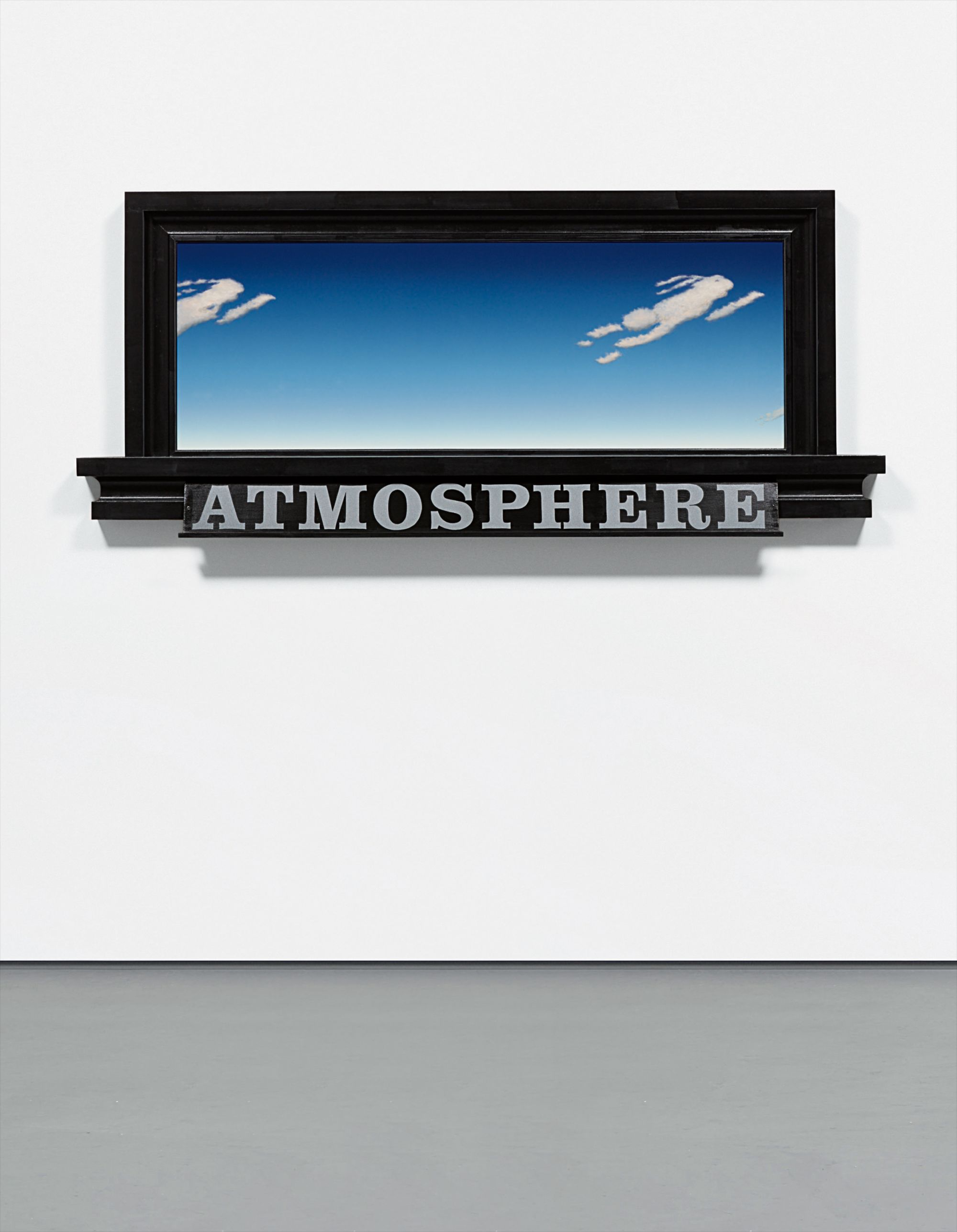
When paired with imagery of trees, sky, atmosphere, and the natural systems that sustain life on earth, this effect becomes quietly devastating. The beauty of the image is always accompanied by the gravity of the frame. Jenney's mature ecological paintings, including works such as Atmospheric Formation from 2003 and Atmosphere, both oil on panel, represent the fullest realization of his vision. By the time these works were made, the conversation around environmental fragility had shifted from the margins to the mainstream, and Jenney's long held concerns suddenly looked less eccentric and more essential.
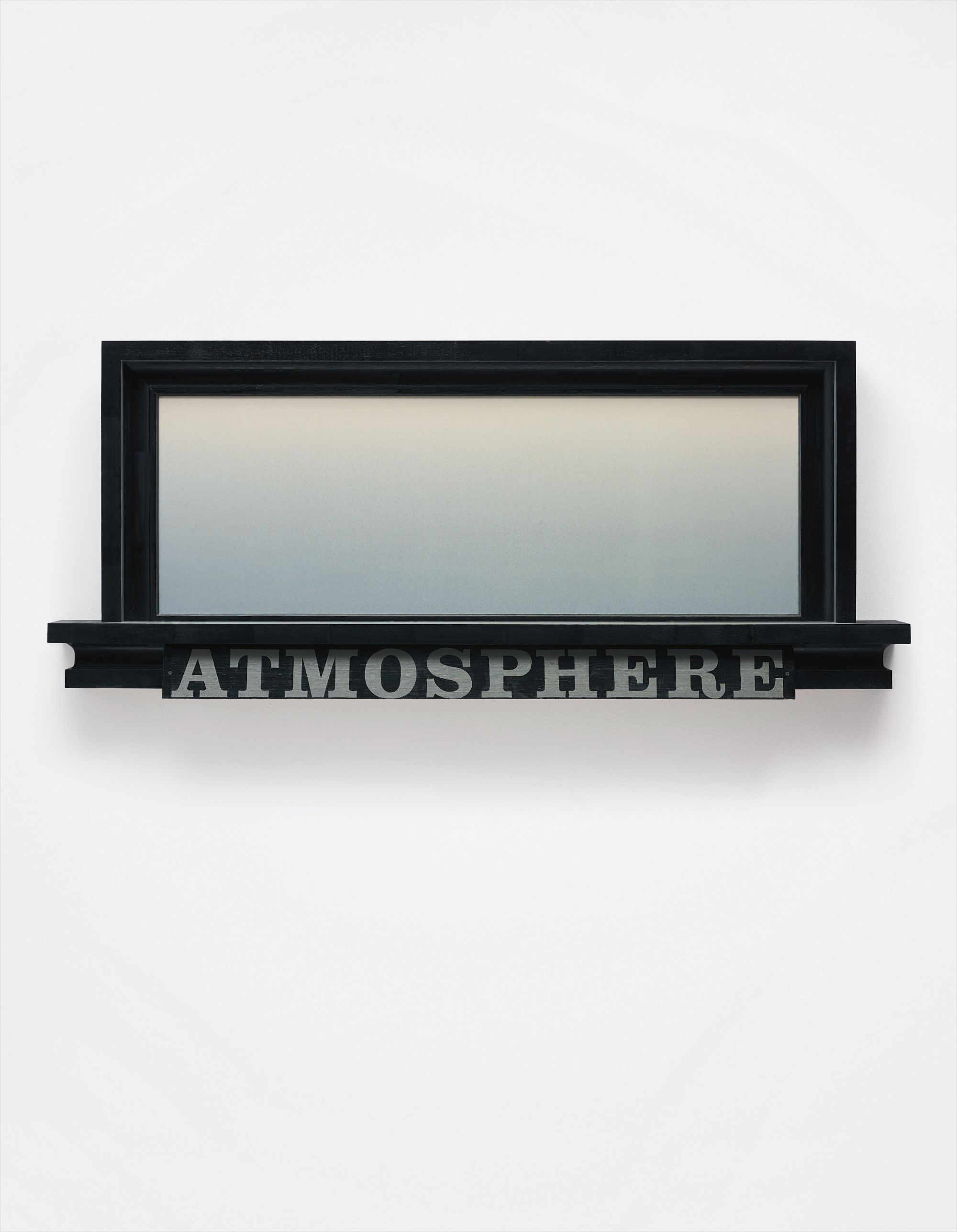
Neil Jenney
Atmosphere
The paintings from this period have a luminous, almost photographic quality that contrasts sharply with the architectonic severity of the frames. Light filters through painted skies with an attention to meteorological specificity that rewards sustained looking. These are paintings made by someone who has studied not just art history but the actual behavior of light in an atmosphere under pressure. From a collecting perspective, Jenney occupies a singular position in the American art market.
His output has always been relatively limited, a function of his exacting standards and deliberate pace, which means that significant works are genuinely rare when they appear. Auction houses and private dealers have consistently noted strong interest from serious collectors who recognize that his work sits at the intersection of several major art historical conversations: the critique of Minimalism, the legacy of Bad Painting, and the early emergence of environmental consciousness in contemporary art. Collectors drawn to artists such as Philip Guston, David Salle, or Julian Schnabel will find in Jenney a figure who shares their commitment to figurative painting as a vehicle for ideas, but who pursues that commitment with a formal rigor that is entirely his own. It is worth situating Jenney within the broader landscape of American painting to understand his lasting significance.
He emerged in the same creative ferment that produced artists like Joan Snyder, Susan Rothenberg, and Robert Moskowitz, all of whom were finding ways to reinvest painting with personal and political meaning after the austerities of the 1960s. But Jenney's ecological focus gave his work a dimension that has only grown more resonant with time. Where some of his contemporaries look like products of their moment, Jenney looks increasingly like a visionary who understood something about the relationship between humanity and the natural world long before it became urgent cultural common ground. The legacy of Neil Jenney is still being written, and that is part of what makes engaging with his work so rewarding right now.
He is an artist whose importance has tended to grow in retrospect, each decade revealing new layers of intention and consequence in work that initially seemed idiosyncratic. The artist made frames, the declarative titles, the limited palette, the spare and atmospheric imagery: all of these elements cohere into a vision of remarkable consistency and depth. For collectors, institutions, and anyone who believes that painting can still do serious work in the world, Jenney represents exactly the kind of practice worth understanding, acquiring, and championing. His art does not ask to be liked.
It asks to be taken seriously. That is a rarer quality than it might appear.
Explore books about Neil Jenney