Neil Beloufa
Neil Beloufa Makes the System Visible
Artist Spotlight · The Collection Editorial
When Neil Beloufa's sprawling installation work dominated the galleries of the Palais de Tokyo in Paris, something shifted in the conversation around contemporary French art. Here was an artist barely past thirty commanding institutional spaces with the confidence of a seasoned provocateur, deploying custom software, sculptural debris, and looping video to create environments that felt simultaneously like a crime scene, a tech startup, and a philosophical proposition. That moment crystallised what curators and collectors had been quietly saying for years: Beloufa is among the most genuinely original minds working in installation and new media art today. Born in Paris in 1985 to a French Algerian family, Beloufa grew up navigating the layered cultural inheritances that would come to define so much of his thinking.
Neil Beloufa
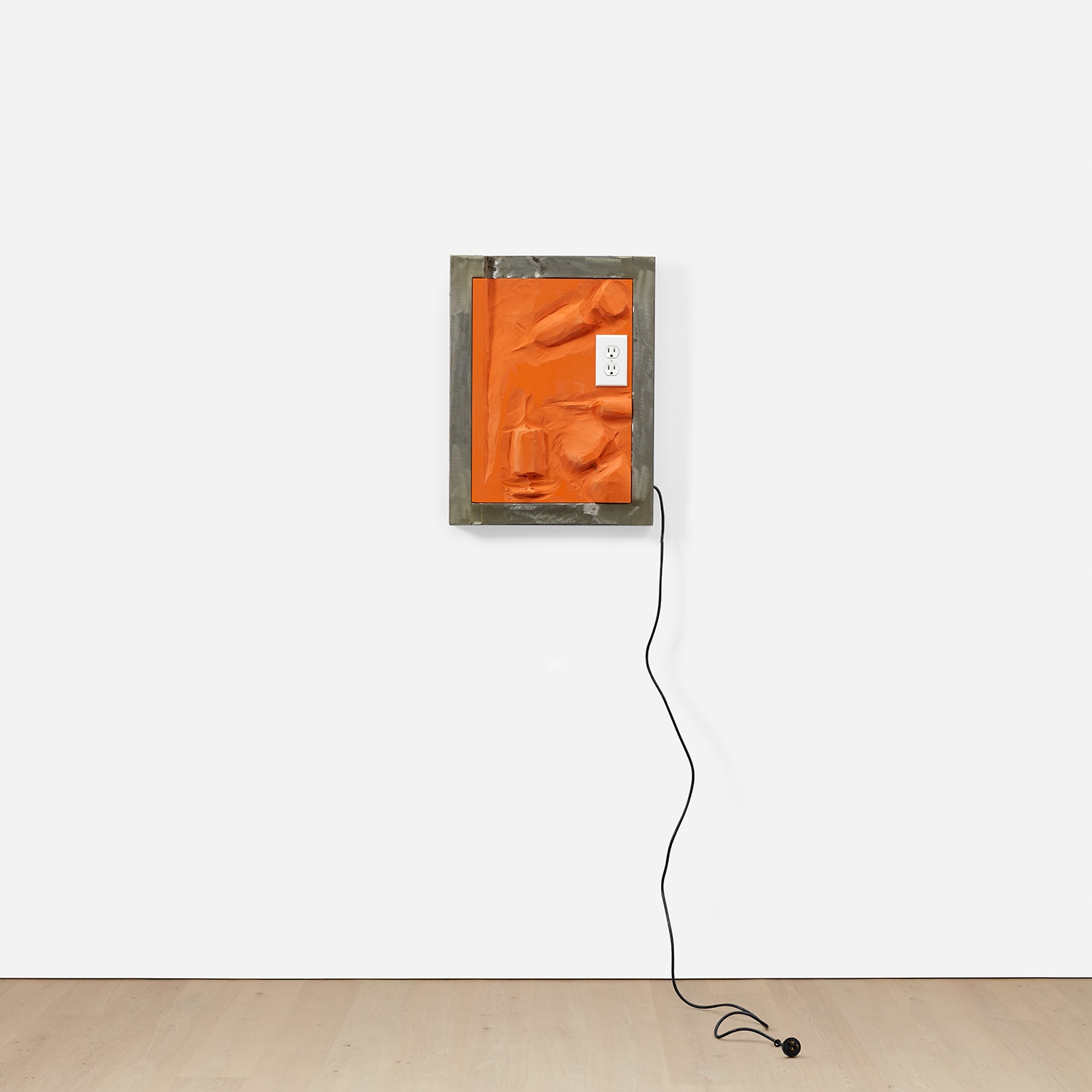
Vintage Series: syringe
He studied at the École Nationale Supérieure des Beaux Arts in Paris before completing a residency at CalArts in Los Angeles, a combination that proved formative. The tension between European conceptual rigour and American vernacular storytelling, between institutional critique and popular culture, runs through everything he has made. Los Angeles in particular gave him a deep fluency in the grammar of cinema, advertising, and screen culture, materials he would later treat not as references but as raw sculptural matter. His early breakthrough came with Kempinski, a 2007 video work filmed in Mali in which local residents were invited to describe their visions of the future.
The result was something that confounded easy categorisation, neither documentary nor fiction but a kind of speculative anthropology that turned the camera's inherent authority back on itself. The work announced a practice built on a single insistent question: who gets to construct reality, and by what means. From that foundation Beloufa developed rapidly, expanding into large scale installations that incorporated the physical infrastructure of display itself, cables, monitors, scaffolding, and custom built platforms becoming as much the subject as any image projected onto them. Central to understanding Beloufa is his Vintage Series, a body of work that exemplifies his lateral intelligence.
Neil Beloufa
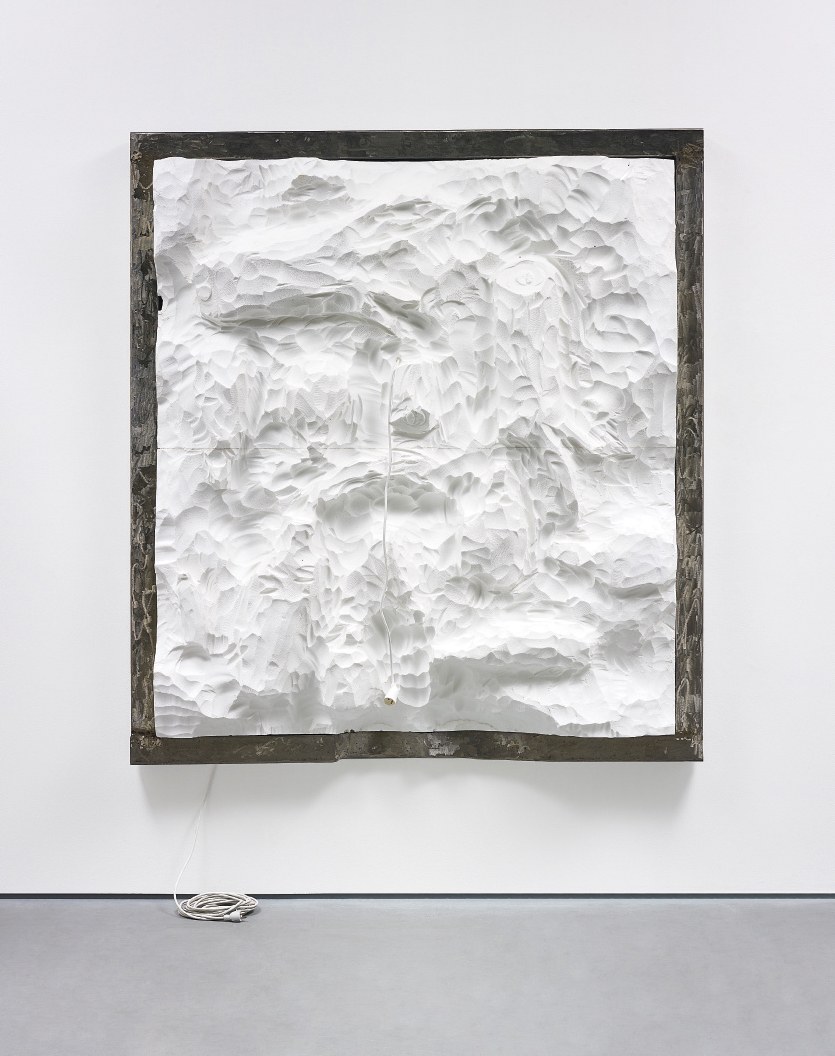
Show off
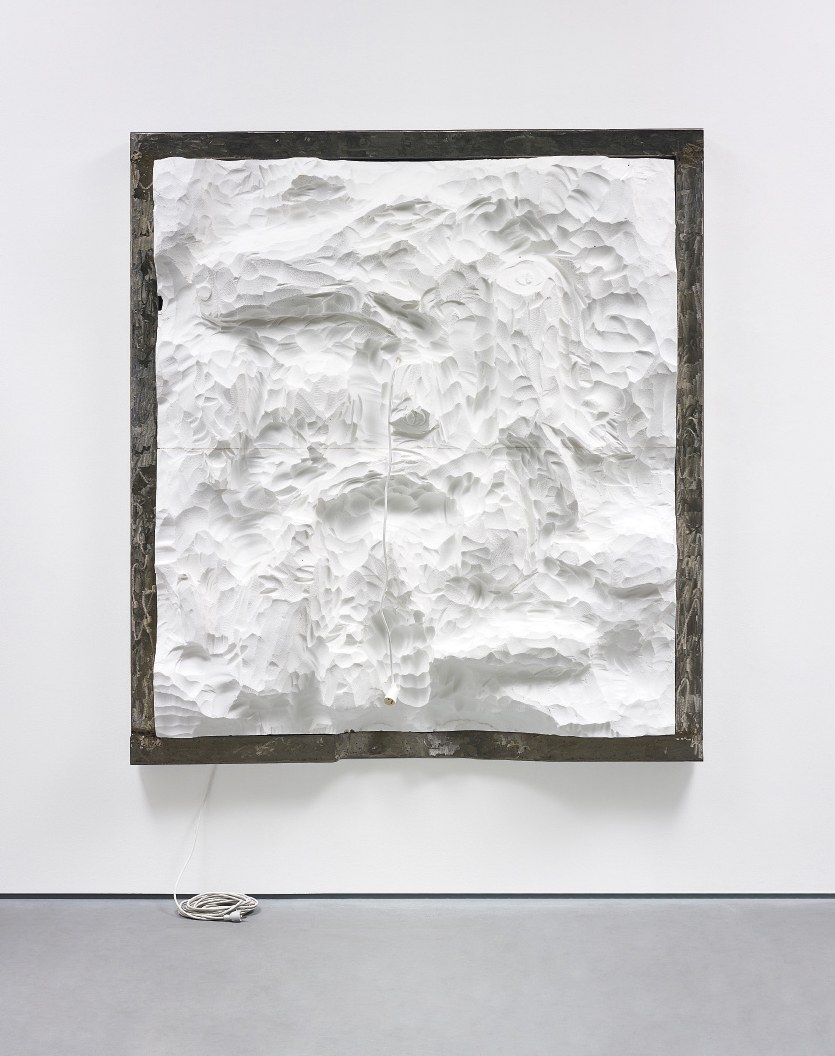
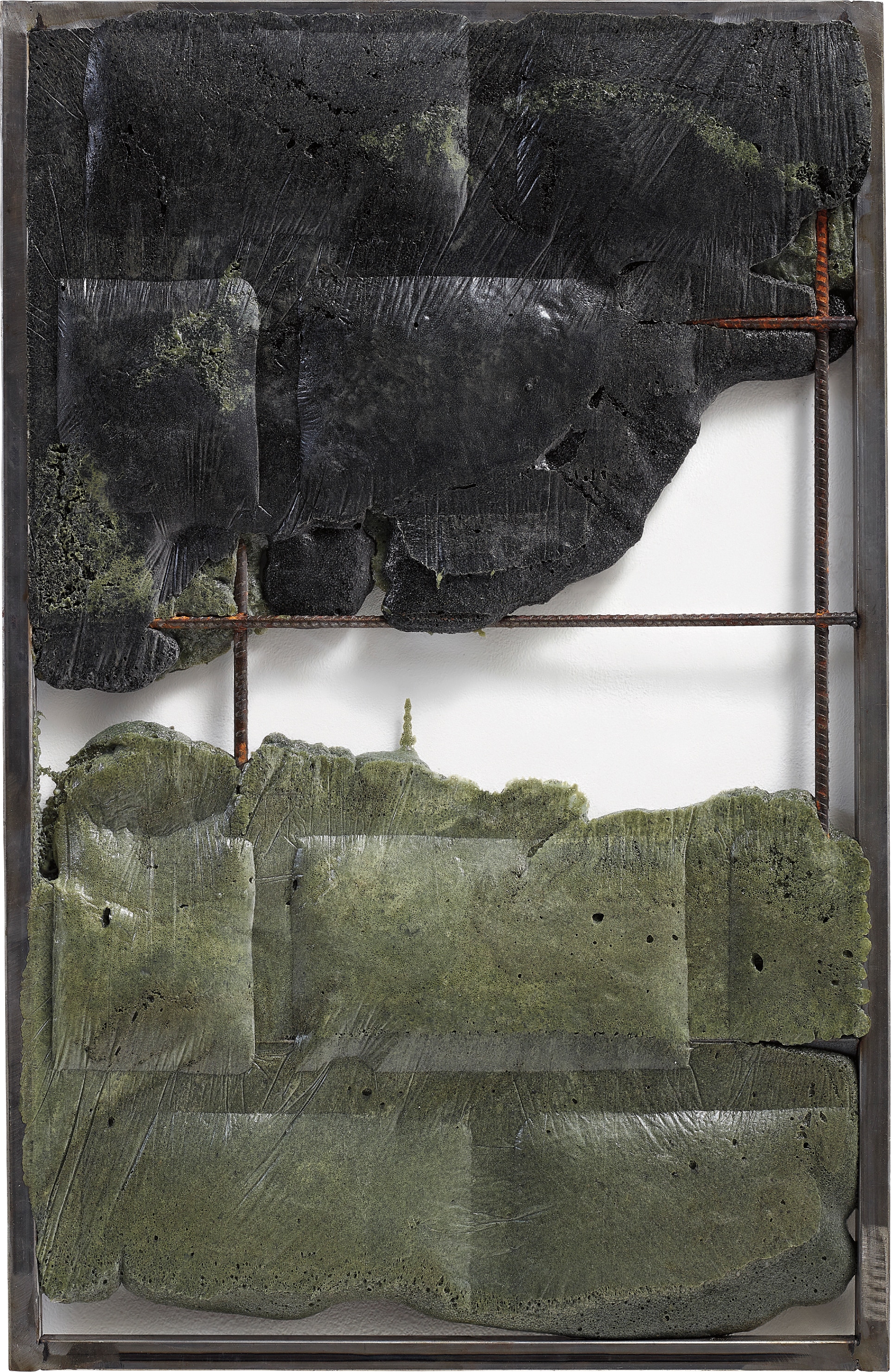
Works such as Vintage Series: Lighters from 2013 and Vintage 2: Yummy from 2012 bring together steel, acrylic, MDF, electronic components, and found imagery in relief compositions that sit somewhere between wall mounted sculpture and ersatz advertising panel. Objects like syringes, pliers, and hangers are rendered in a vernacular that borrows from trade catalogues and hardware stores, fused with electronic elements that hint at surveillance or data collection. The series asks what value means in a world saturated by images of commodities, and it does so with a wit that keeps the work from tipping into didacticism. The Secured Wall Series from 2015, with its foam, pigment, and iron forms presented in the artist's own frames, extends this inquiry, treating the gallery wall itself as a kind of contested territory.
What makes Beloufa's practice so compelling to serious collectors is precisely this refusal to settle into a legible style. His work demands engagement rather than passive appreciation. Each piece operates as a kind of proposition, an invitation to notice the structures that organise meaning in everyday life: the logic of display, the rhetoric of technology, the theatrics of security and control. Collectors who have acquired works from the Vintage Series frequently describe a process of discovery that continues long after the work is installed, new details surfacing as the domestic or institutional context shifts around them.
Neil Beloufa
Secured Wall Series, 2015
This is art that earns its place in a serious collection by remaining genuinely active. In terms of market positioning, Beloufa occupies a particularly interesting moment. Represented by Kamel Mennour in Paris and previously shown with galleries including Ghebaly Gallery in Los Angeles, he has built a consistent exhibition record across Europe and North America without the kind of speculative price inflation that can distort an artist's trajectory. His works in mixed media and sculpture offer collectors a relatively accessible entry point into a practice that carries serious institutional weight.
For those building collections with an eye on conceptual rigour and long term relevance, the Vintage Series works in particular represent a coherent and historically significant body of objects made during a decisive period in the artist's development. Within the broader landscape of contemporary art, Beloufa's practice resonates with a generation of artists interrogating the boundaries between image, object, and system. His concerns place him in productive dialogue with artists such as Hito Steyerl, whose video and installation work similarly targets the politics of image circulation, and with figures like Ryan Trecartin, whose immersive video environments share Beloufa's interest in how digital culture reshapes subjectivity. There are also meaningful echoes of institutional critique forebears such as Hans Haacke and Michael Asher in his willingness to implicate the gallery infrastructure itself as part of the work's meaning.
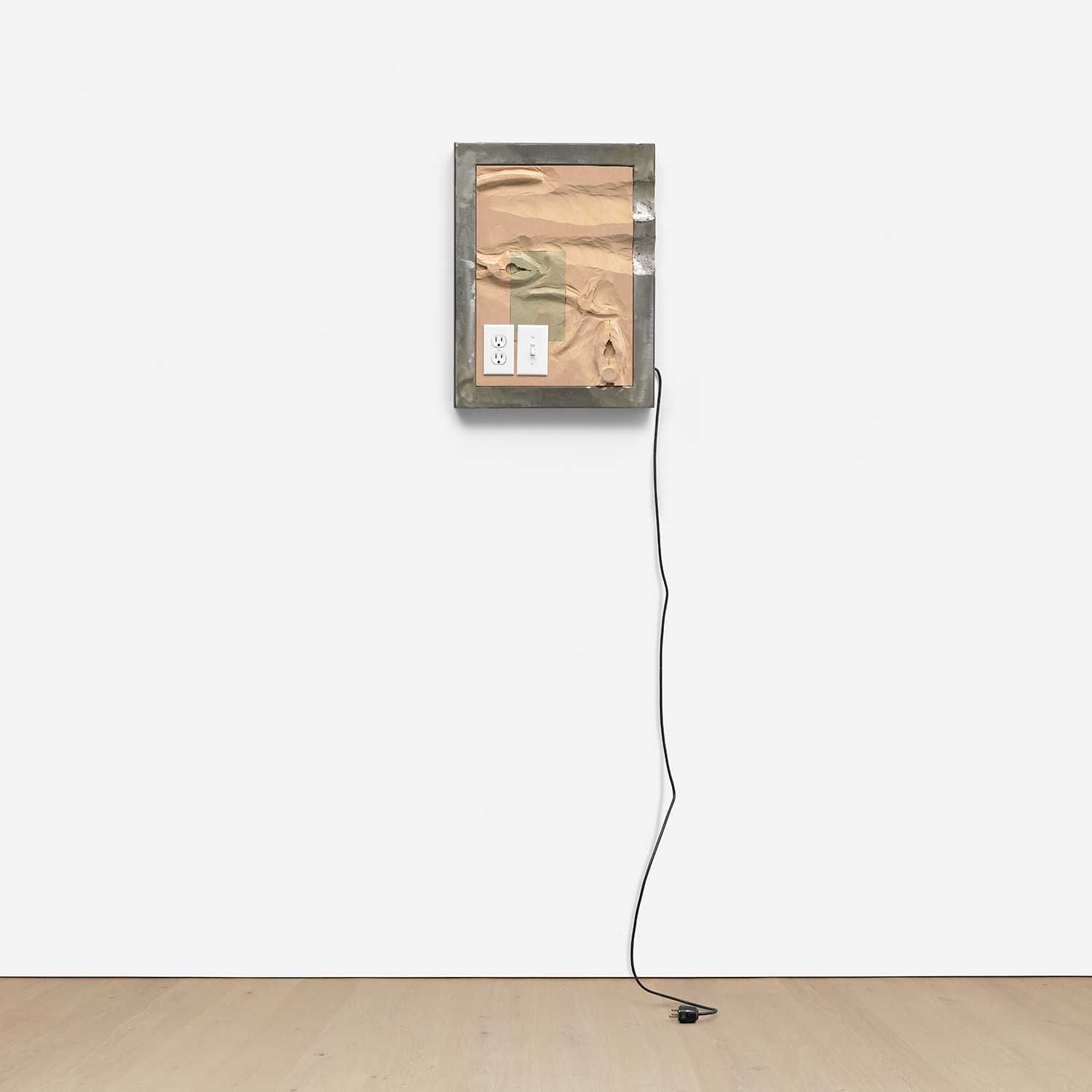
Neil Beloufa
Vintage Series (Pliers, green), 2014
Yet Beloufa's voice remains entirely his own, inflected by his Algerian French identity and his particular formation across two continents. The question of legacy is always premature when an artist is not yet forty, but in Beloufa's case the foundations are unmistakably solid. He has made work that will be referenced when scholars and curators attempt to understand how artists at the turn of the twenty first century processed the collision of digital networks, colonial afterlives, and consumer culture. His installations do not merely comment on systems of power; they enact those systems in ways that make them palpable and therefore possible to think about clearly.
That is a rare and valuable thing. For collectors, institutions, and anyone paying genuine attention to where contemporary art is going, Neil Beloufa remains essential viewing.