Neapolitan School, 17th Century
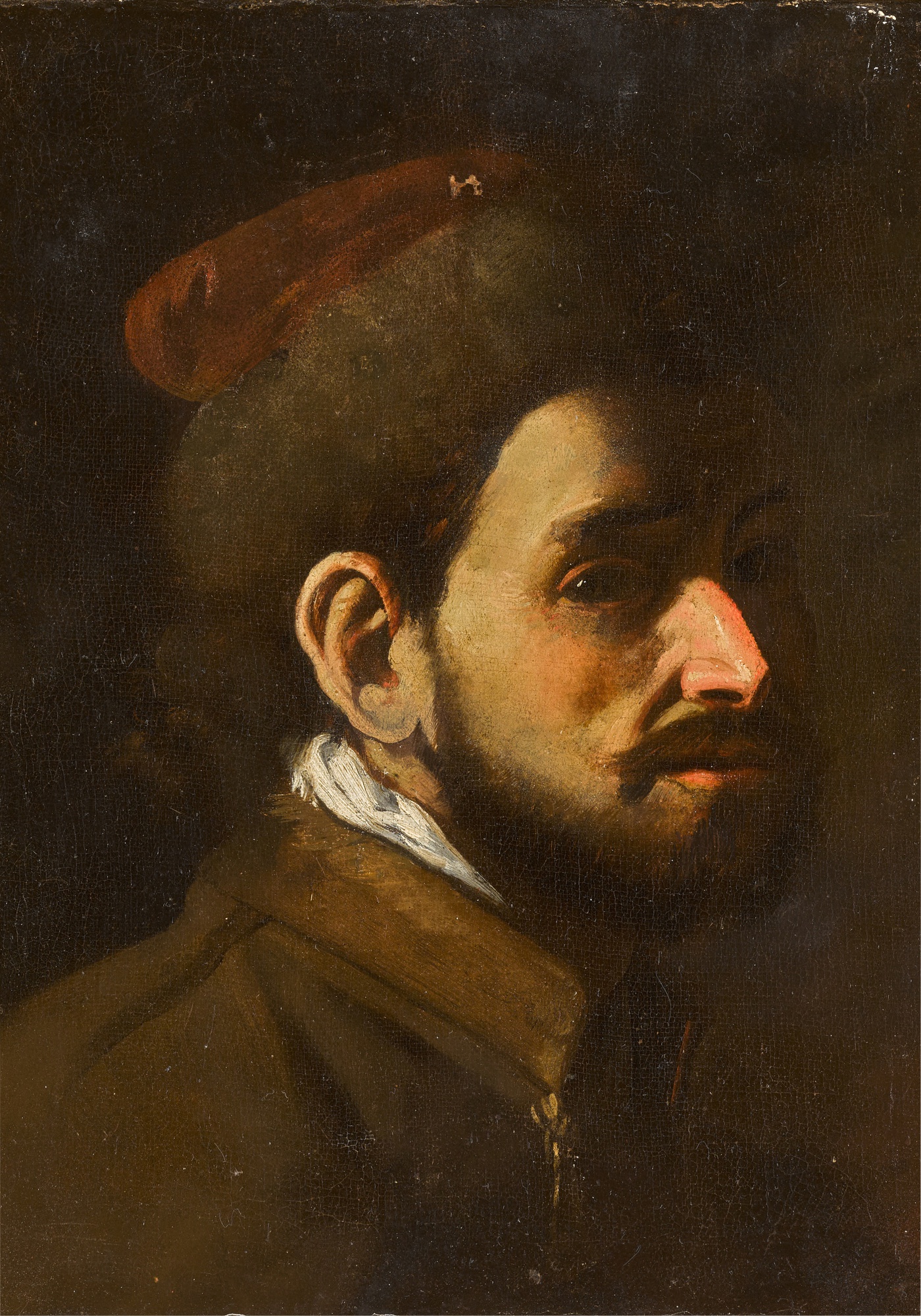
Naples Burns Bright With Eternal Fire
Artist Spotlight · The Collection Editorial
There are moments in art history when a city transforms into the center of the known world, and for a blazing stretch of the seventeenth century, Naples was exactly that place. The arrival of Michelangelo Merisi da Caravaggio in 1606, fleeing Rome after a fatal brawl, ignited something irreversible in the city's artistic culture. What followed was not mere imitation but a full flowering, a school of painting so assured in its drama, so unflinching in its humanity, that its influence has never truly faded. Today, institutions from the Museo di Capodimonte in Naples to the Prado in Madrid and the Metropolitan Museum of Art in New York continue to mount major exhibitions celebrating the Neapolitan masters, and the market for works associated with this tradition remains robustly alive among collectors who understand what genuine painterly power looks like.
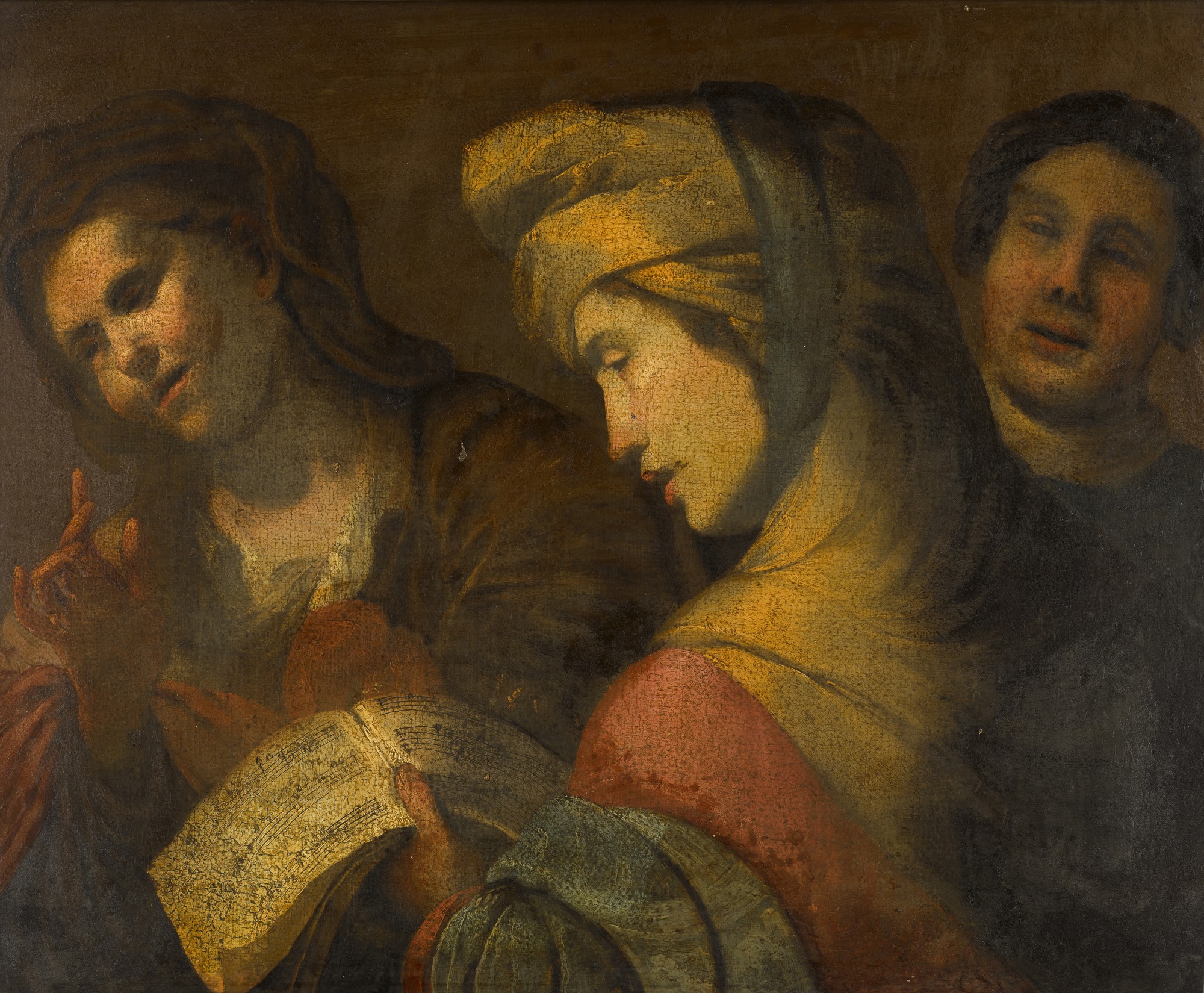
Neapolitan School, 17th Century
Three women singing
To understand the Neapolitan School, one must first understand Naples itself as it existed in the seventeenth century. It was then one of the largest cities in Europe, a Spanish viceroyalty teeming with contradictions: extraordinary wealth and grinding poverty, magnificent churches and volatile street life, the grandeur of aristocratic patronage and the rawness of daily survival. This was not a city that produced polished, courtly art as a matter of course. Naples produced painters who looked at the world with open eyes, who found holiness in the faces of ordinary people and terror in the shadow that fell across every human endeavor.
The environment was not merely a backdrop but an active force shaping the art that emerged from it. Caravaggio's two visits to Naples, in 1606 and again in 1609 and 1610, left the city permanently altered. His works created for Neapolitan churches, including the monumental Seven Works of Mercy painted in 1607 for the Pio Monte della Misericordia, demonstrated what painting could be when it abandoned idealization entirely. Light became a weapon.
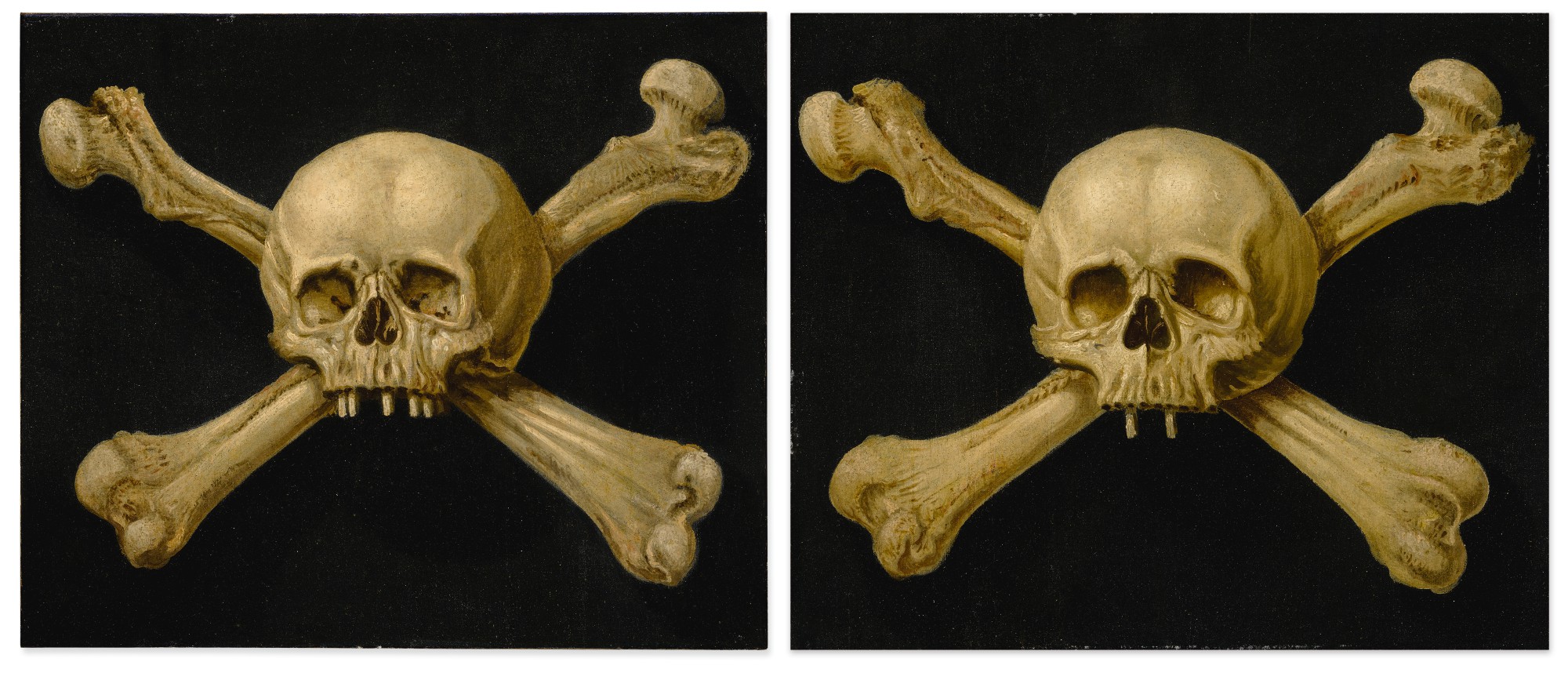
Neapolitan School, 17th Century
A Pair Of Memento Mori With Skulls And Crossbones
Shadow became a subject. Emotion ceased to be decorative and became structural. The painters who absorbed these lessons and carried them forward were not passive inheritors. They were ambitious, technically brilliant artists who took Caravaggesque chiaroscuro and pushed it in directions even its originator had not fully imagined.
Jusepe de Ribera, the Spanish born master who settled in Naples and became its dominant artistic personality for decades, exemplified what the school could achieve at its most serious. His depictions of saints and philosophers, his martyrdom scenes and his portraits of beggars and scholars rendered with equal dignity, established a standard of psychological intensity that shaped European painting well into the following century. Ribera brought a ferocious commitment to observed reality, painting wrinkled skin, calloused hands, and anguished expressions with a directness that could be almost overwhelming. His Drunken Silenus of 1626 and his numerous depictions of Saint Jerome remain among the most compelling achievements of the entire period.
Luca Giordano, by contrast, was prolific and exuberant, capable of absorbing influences from Venice and Flanders and weaving them into a Neapolitan idiom of remarkable fluency. Mattia Preti, the Calabrian knight who worked extensively in Naples during the 1650s and 1660s, brought yet another temperament to the tradition, one marked by sweeping compositional ambition and an almost theatrical management of light and space. The works associated with this school that appear in private collections today reveal the extraordinary range the tradition encompassed. A painting such as Three Women Singing captures something essential about the Neapolitan sensibility: figures caught in a moment of shared human experience, rendered with warmth and psychological specificity, the paint itself carrying the weight of observation.
Equally revealing are works in the memento mori tradition, the paired skull paintings that reminded patrons and viewers alike of mortality's proximity. These were not morbid exercises but deeply serious philosophical statements, rooted in a culture that lived with death intimately and found in its contemplation not despair but clarity. Such works stand in dialogue with the great Vanitas traditions of Flanders and Spain, and they remind us that the seventeenth century was an age preoccupied with the deepest questions of existence. From a collecting perspective, works attributed to or associated with the Neapolitan School occupy a fascinating position in the market.
Attribution in this field is genuinely complex, owing to the sheer number of highly skilled painters working in the city throughout the century and the degree to which workshop practices, copying, and stylistic convergence were all standard features of the period. This complexity, rather than being a deterrent, is for knowledgeable collectors part of the appeal. Acquiring a work in this tradition is an act of sustained looking and genuine connoisseurship. Major auction houses including Christie's and Sotheby's regularly present Italian Old Masters from this period, and prices reflect both the quality of individual canvases and the increasing scholarly attention the field has received.
The Capodimonte in Naples, with its extraordinary permanent collection, has served as an anchor for ongoing reattribution and reassessment, and its scholarship informs the broader market. The Neapolitan School sits in close and productive dialogue with several other major traditions of the period. The influence of Caravaggio connects it directly to the Roman Caravaggisti, including Orazio Gentileschi and Carlo Saraceni, as well as to the Utrecht Caravaggists working in the Netherlands. Spanish Golden Age painting, already tending toward sober naturalism through figures like Francisco de Zurbarán and Diego Velázquez, shares deep temperamental affinities with the Neapolitan masters.
Flemish painting, particularly in its treatment of light and its appetite for still life and allegory, also maintained an active conversation with Naples throughout the century. Collectors drawn to any of these adjacent traditions will find the Neapolitan School an essential and rewarding area of study. What ensures the enduring fascination of seventeenth century Neapolitan painting is its insistence on the full range of human experience as worthy subject matter. These painters did not flinch.
They painted suffering and joy, celebration and contemplation, the sacred and the profoundly ordinary, with equal seriousness and equal craft. In an era when so much contemporary collecting gravitates toward the comfortable and the decorative, there is something bracing and ultimately life affirming about bringing a work from this tradition into one's home or collection. It asks something of the viewer. It rewards sustained attention.
And it connects the collector to one of the most concentrated and consequential moments in the entire history of Western art.
Explore books about Neapolitan School, 17th Century
Caravaggio and His Followers
Howard Hibbard
Painting in Naples 1606-1705: From Caravaggio to Giordano
Clovis Whitfield
Luca Giordano
Michael Levey
The Baroque in Naples
Francis Haskell
Artemisia Gentileschi and the Authority of Art
Mary D. Garrard
The Seicento: Italian Painting 1600-1700
Michael Levey
Salvator Rosa in French Literature
Helen Langdon
The Golden Age of Neapolitan Art
Raffaello Causa