Nathaniel Mary Quinn
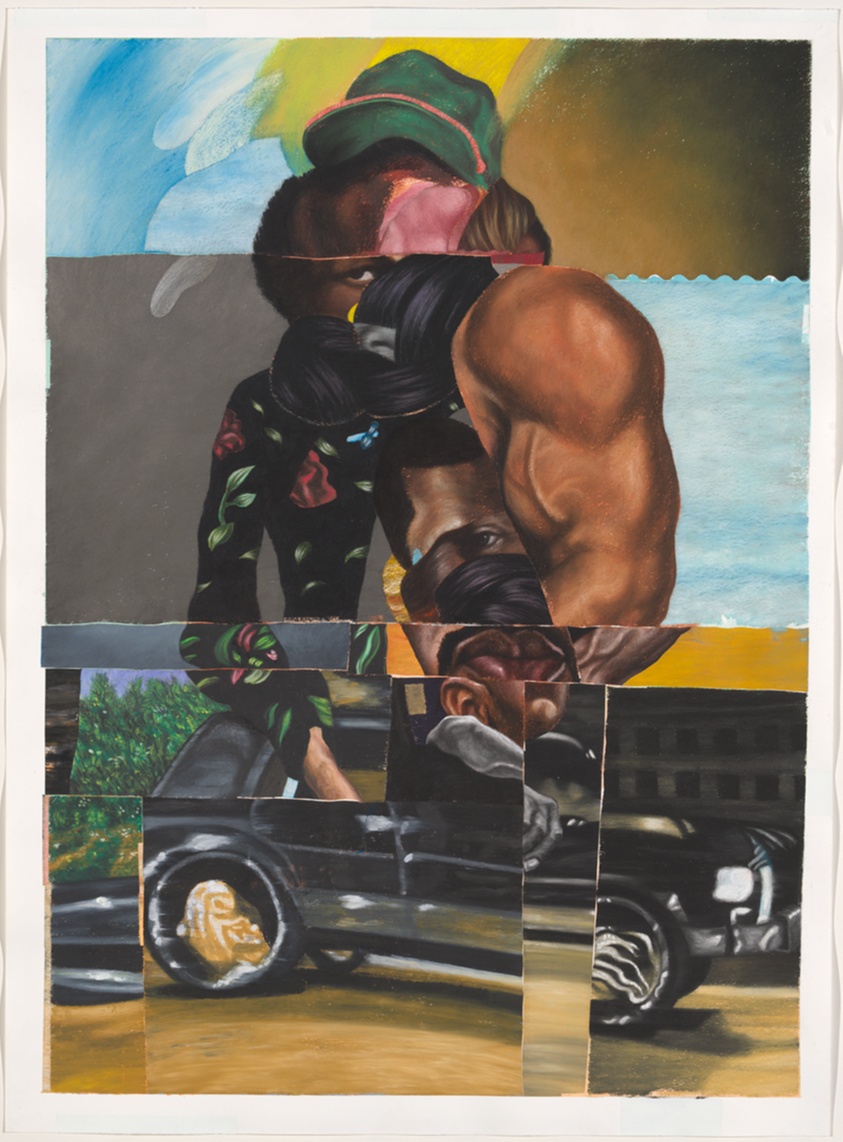
Nathaniel Mary Quinn Builds Faces From Memory
Artist Spotlight · The Collection Editorial
“I paint from memory. I paint to remember the people I have lost.”
Nathaniel Mary Quinn
When the Brooklyn Museum presented work by Nathaniel Mary Quinn, it confirmed what a growing circle of collectors and curators had long understood: this Chicago born painter had found a genuinely new way to picture the human face. His portraits do not simply render a likeness. They assemble one, drawing from memory, grief, tenderness, and the visual chaos of a life fully felt. In a contemporary art world that sometimes prizes cool detachment, Quinn's work arrives with an almost overwhelming emotional temperature, and audiences have responded accordingly.
Nathaniel Mary Quinn
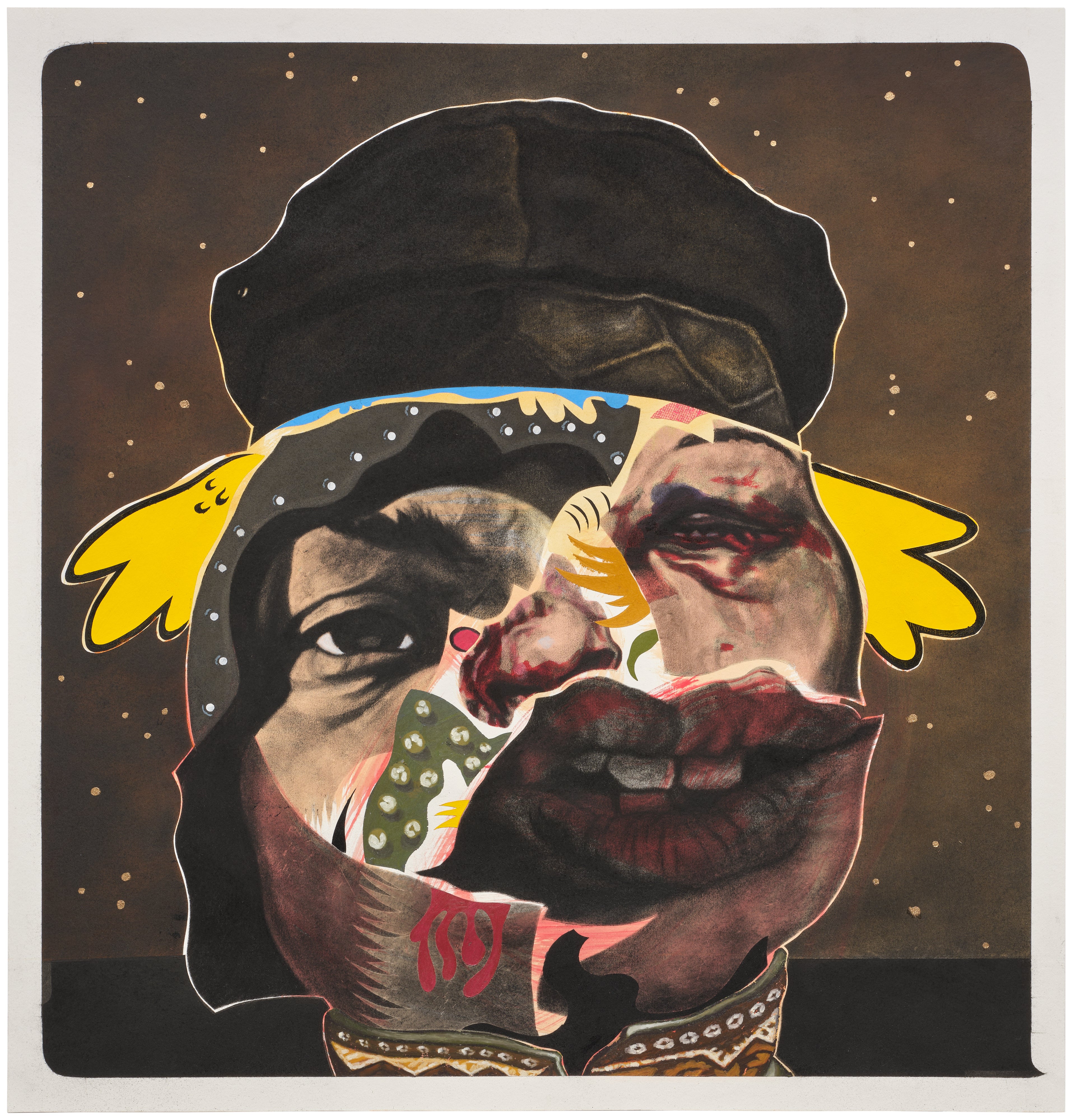
Swollen, 2014
Quinn was born in 1977 and grew up on the South Side of Chicago, an environment that would leave a permanent mark on his imagination and his method. He has spoken openly about the profound losses of his early life, including the deaths of family members and the dissolution of the household he knew as a child. Those absences became the engine of his practice. Unable to hold complete images of the people he loved, he began working from fragments, from the partial pictures that grief and time leave behind.
The South Side itself, with its particular social textures and visual culture, remained a constant reference point, a place he has returned to again and again in his titles and his subjects. His formal education gave him the technical grounding to pursue those emotional ambitions with discipline and precision. Quinn studied at Indiana University and later at New York University, where he developed the rigorous command of drawing that underpins even his most fragmented compositions. The Studio Museum in Harlem, one of the most important institutions for artists of African descent working in the United States, recognized his practice early, and that relationship helped situate his work within a conversation about Black identity, representation, and the history of portraiture that stretches back centuries.
Nathaniel Mary Quinn
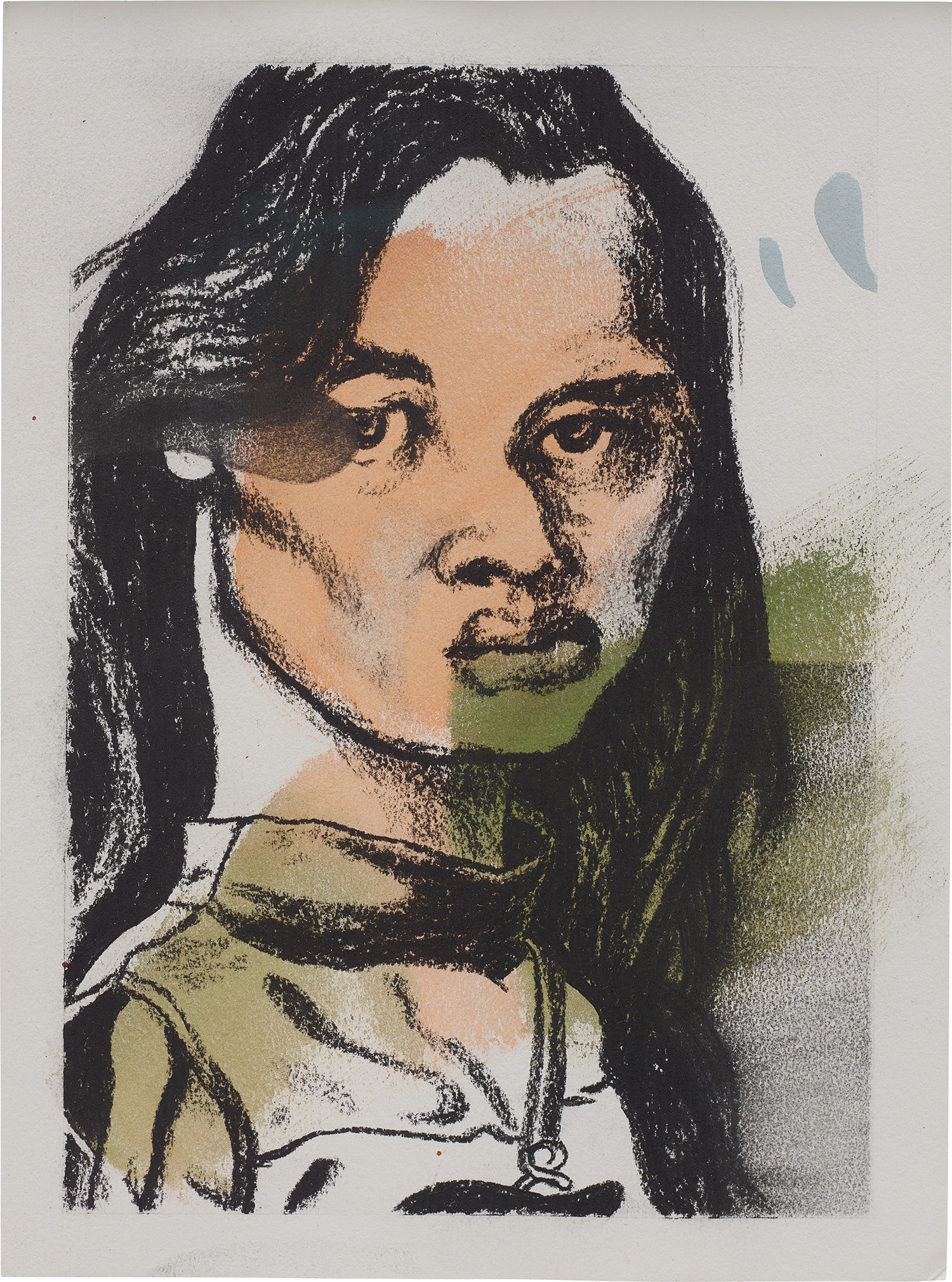
Young Pilcher and Vietnam, 2019
By the time he was exhibiting regularly in New York, he had assembled a visual language that was entirely his own. The signature quality of a Quinn portrait is its deliberate fracture. He combines photorealistic passages of intense observational drawing with areas of pure abstraction, flat color, and collaged paper elements, sometimes within a single face. A jaw might be rendered with the precision of a Renaissance study while the forehead dissolves into a smear of oil pastel or a torn fragment of paper.
This is not surrealism and it is not mere formal experiment. It is a pictorial account of how memory actually works, assembling the faces of the people we love from incompatible sources and incomplete data. The effect is startling and deeply moving in equal measure, and it has no real precedent in the history of painting. Among the works that best demonstrate this achievement, Swollen from 2014 stands as an early landmark.
Nathaniel Mary Quinn
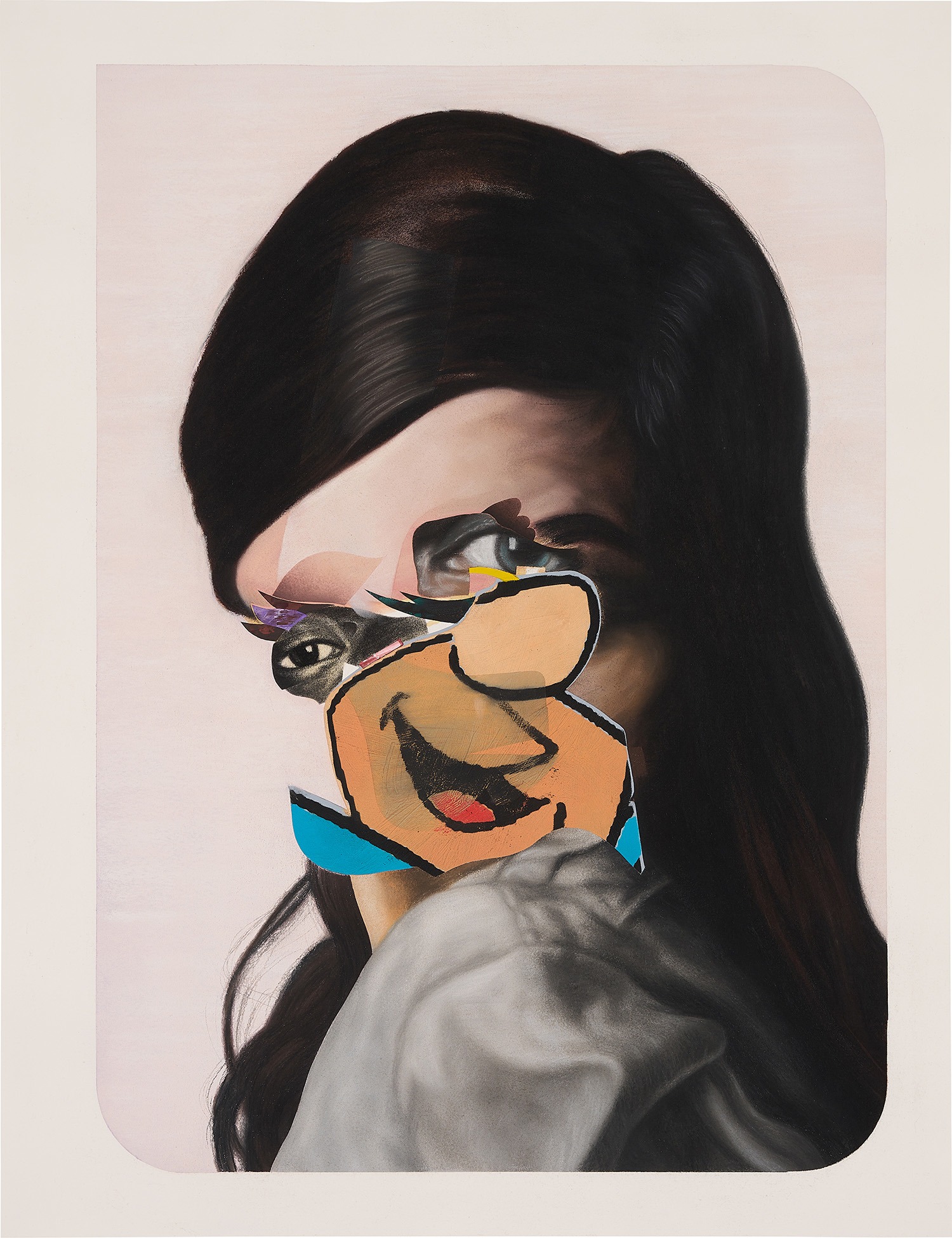
Hosie's Lady, 2016
Executed in charcoal, gouache, oil pastel, oil, paintstick and paper collage on Coventry vellum paper, the piece shows Quinn's command of surface fully formed even at this relatively early stage. The vellum paper, which he returns to throughout his career, has a particular translucency and resistance that suits his layered method beautifully. Dome, also from 2014 and worked in black charcoal, oil pastel, oil, paintstick and gouache on Lenox paper, confirms that this was a year of genuine breakthrough. By 2016, Hosie's Lady brought a new tenderness to his palette, combining charcoal, gouache, soft pastel and oil pastel into a portrait of quiet authority.
Works like Diddy and JB and Bobby from 2018 show his confidence expanding, moving between canvas and vellum, between intimate scale and ambitious reach. Swingin' from the same year introduces acrylic gold leaf into the mix, a gesture of celebration and elevation that lifts its subject into something close to iconhood. The collecting world has taken notice with considerable enthusiasm. Quinn's work is held in significant private collections and his market has strengthened steadily as his institutional profile has grown.
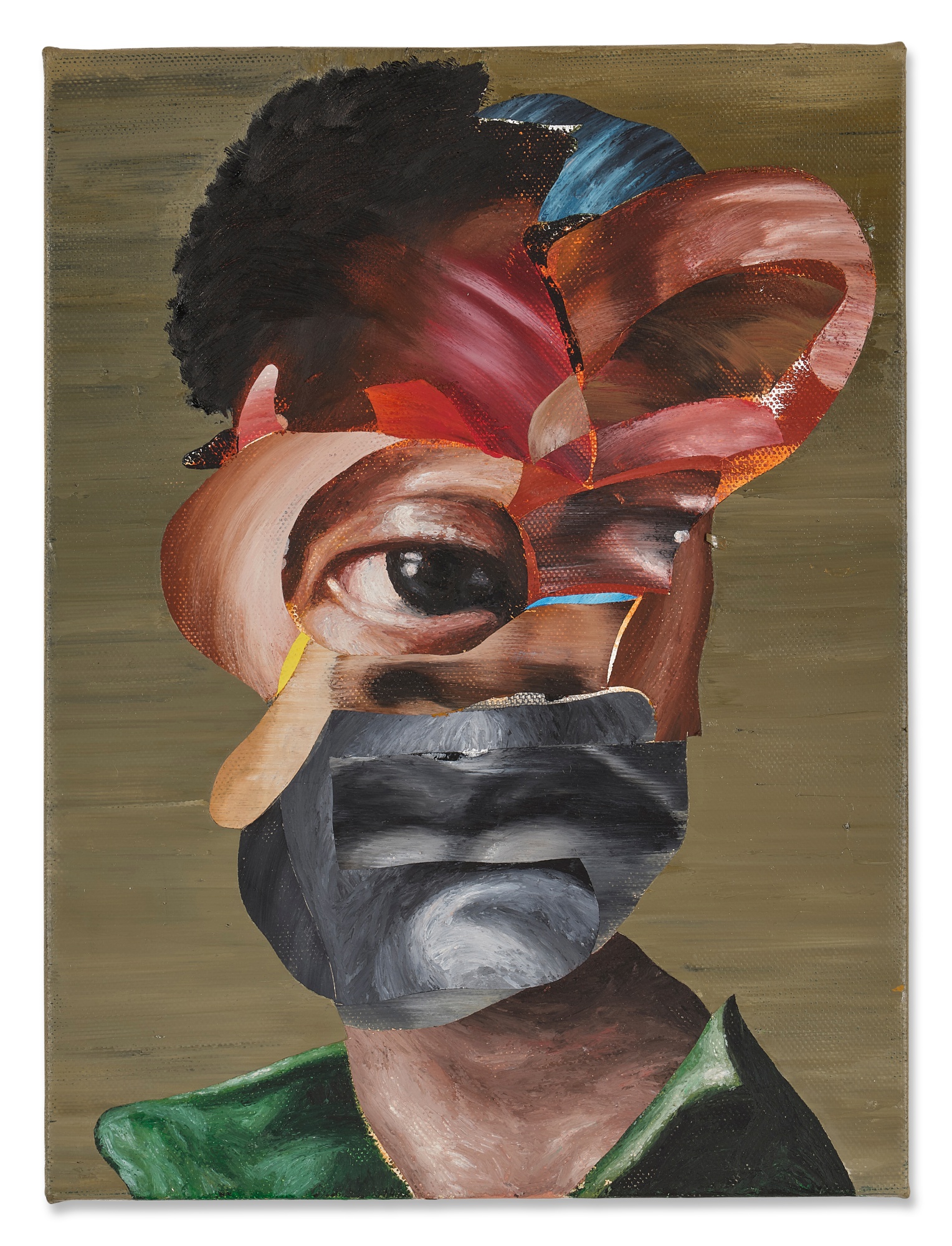
Nathaniel Mary Quinn
Diddy, 2018
Collectors are drawn first by the visual force of the work, that immediate, almost physical impact when a Quinn portrait is encountered in person. They stay for the depth of the conceptual framework and for the quality of the making, which rewards close looking in ways that reproductions simply cannot capture. The materiality of his surfaces, the layering of charcoal beneath pastel beneath collaged paper, is something that has to be experienced directly. For advisors working with collectors who are building serious holdings in contemporary portraiture, Quinn represents one of the most compelling and coherent practices at work today.
Within the broader history of portrait painting, Quinn occupies a distinct position that nonetheless resonates with a range of predecessors and peers. The emotional intensity of his work invites comparison with Francis Bacon, whose fractured figures also explored the limits of representation, though Quinn's approach is warmer and more specifically rooted in personal narrative. His engagement with Black identity and memory places him in productive dialogue with artists like Kerry James Marshall and Jordan Casteel, both of whom have rethought the terms on which Black subjects are portrayed in Western painting. Lorna Simpson's exploration of memory and the photographic fragment is another touchstone, even though Quinn works in an entirely different medium.
He is not derivative of any of these figures, but understanding his work is enriched by knowing that conversation. What Quinn has built over the past decade is something rare in contemporary art: a body of work that is formally innovative, emotionally truthful, and personally necessary all at once. His portraits insist that the people he depicts matter, that their faces deserve the full force of his attention and skill, even when, especially when, those faces must be reconstructed from what loss has left behind. As his profile continues to rise and his work enters more museum and private collections, the terms of that achievement become clearer.
He is not simply a talented painter working in an interesting style. He is an artist who has found a form adequate to what he needs to say, and that is the rarest thing of all.