Nathan Hylden
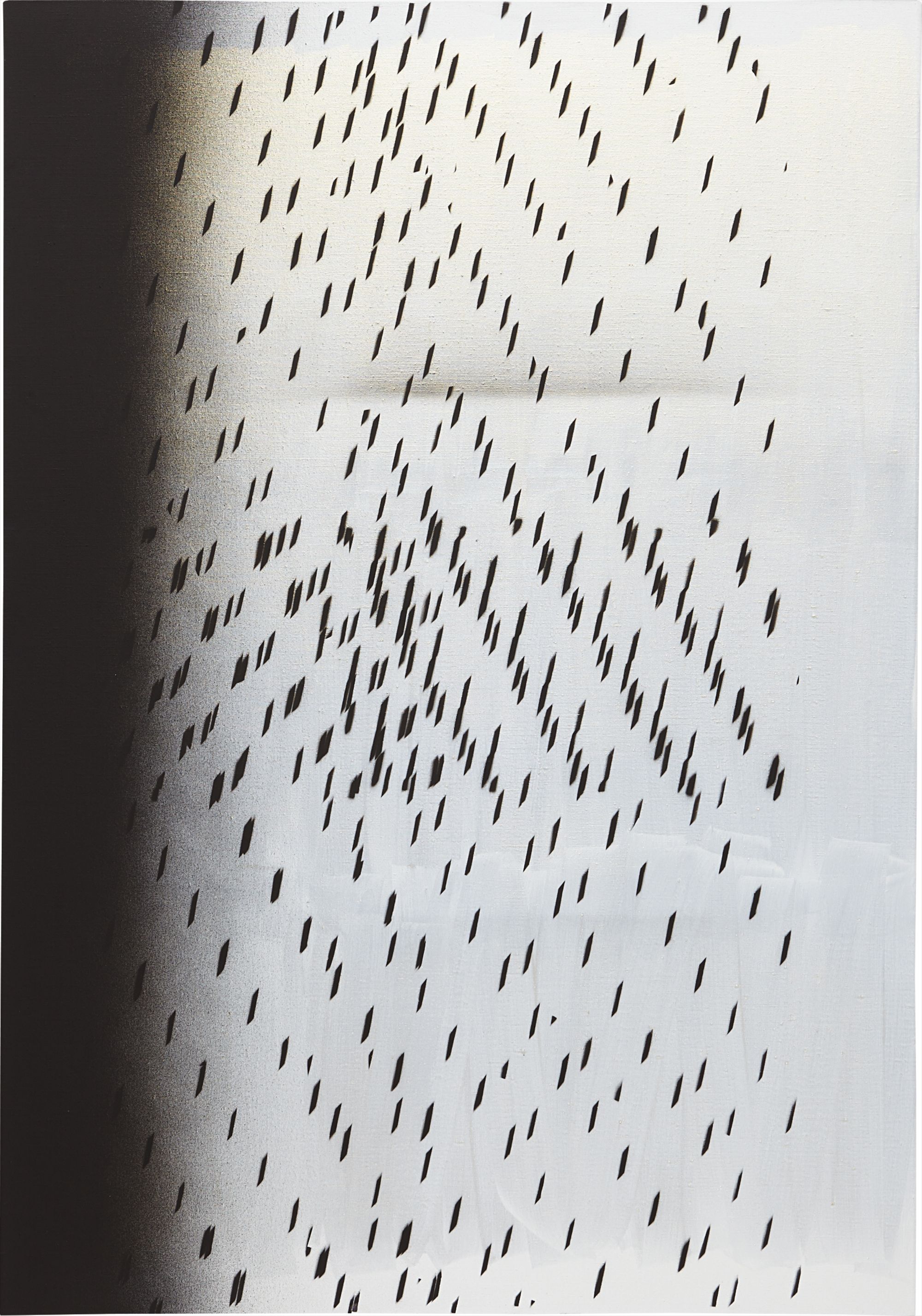
Nathan Hylden Makes the Invisible Visible Again
Artist Spotlight · The Collection Editorial
There is a particular kind of attention that Nathan Hylden's paintings demand. Standing before one of his works, whether a luminous spray painted surface on aluminum or a quietly insistent acrylic composition on linen, the viewer becomes aware of something that most art lets you forget: that a painting is always, at some level, a document of the conditions under which it was made. Over the past two decades, Hylden has built a practice devoted to that awareness, and the art world has been catching up to him steadily ever since. His work has appeared in gallery presentations across Los Angeles, New York, and Europe, earning him a reputation as one of the more intellectually serious painters working in the tradition of American abstraction today.
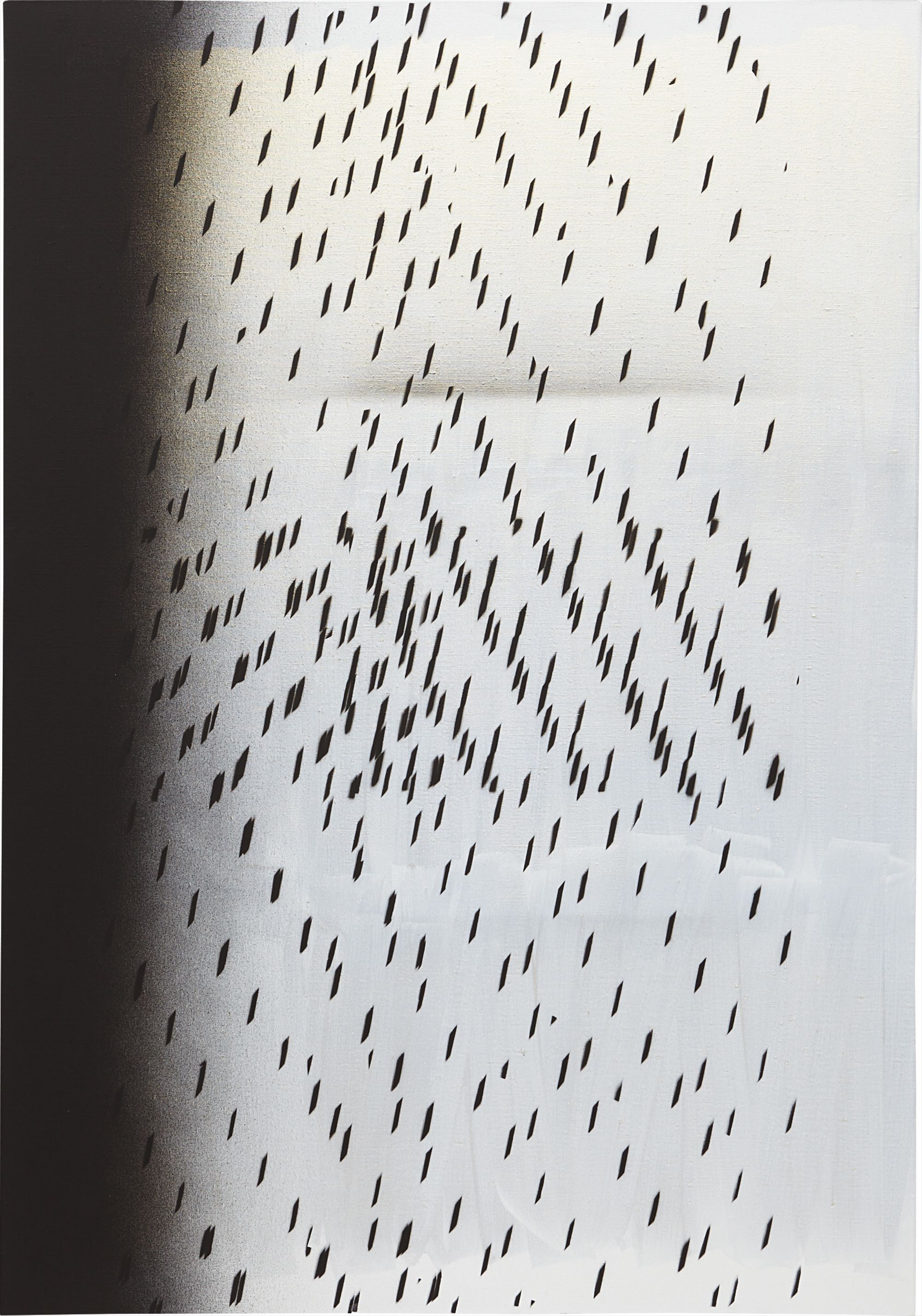
Nathan Hylden
This work is accompanied by a certificate of authenticity.
Hylden was born in 1978 in the United States, and his formation as an artist took place during a period when painting itself was being fiercely debated. The 1990s and early 2000s were a time when conceptualism had deeply infiltrated studio practice, and younger artists were no longer content to treat the canvas as a neutral ground. Hylden absorbed these arguments and arrived at his own answer: that painting could be both rigorous in its ideas and genuinely compelling as an object. His education grounded him in the history of abstraction while also exposing him to the critical frameworks of postconceptual practice, and that combination has defined his sensibility ever since.
The early development of his practice centered on questions of reproduction and display. What happens to an image when it is copied, circulated, or transferred from one surface to another? Hylden approached these questions not through irony or detachment but through a sustained material investigation. He began working with industrial supports, particularly aluminum panels, and employing spray paint in ways that deliberately foregrounded the mechanics of application.
Nathan Hylden
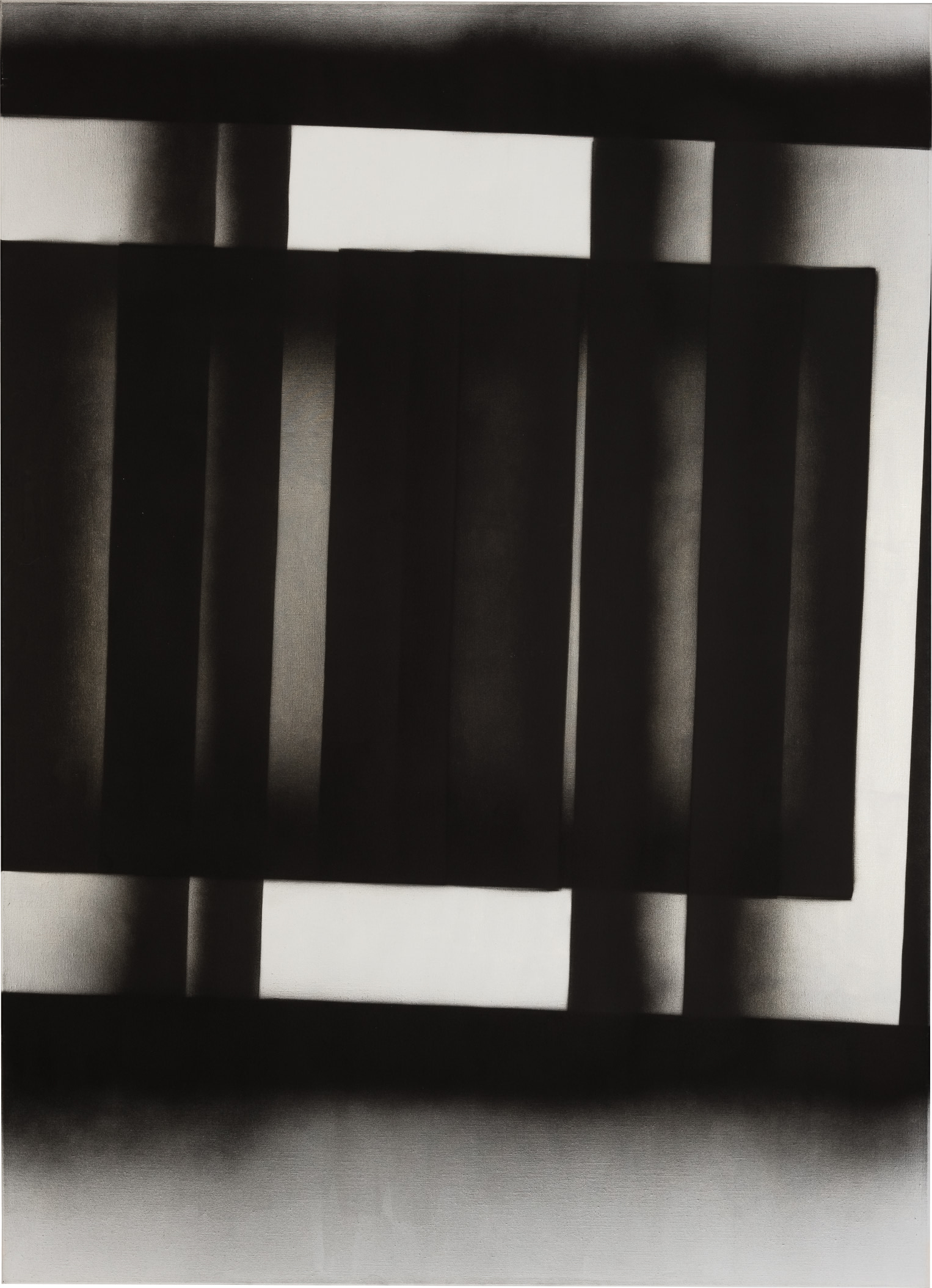
Some Other Way of Counting
The result was a body of work that felt both cool and intimate, systematic and deeply felt. By the mid 2000s he had developed a consistent language that drew on Minimalism and Conceptualism while remaining committed to the specific pleasures of painting. Among his most celebrated works is the series known as "Some Other Way of Counting," in which acrylic and metallic paint on linen are layered with a precision that rewards close looking. The metallic surfaces catch light differently depending on where the viewer stands, so that the work is never quite the same object twice.
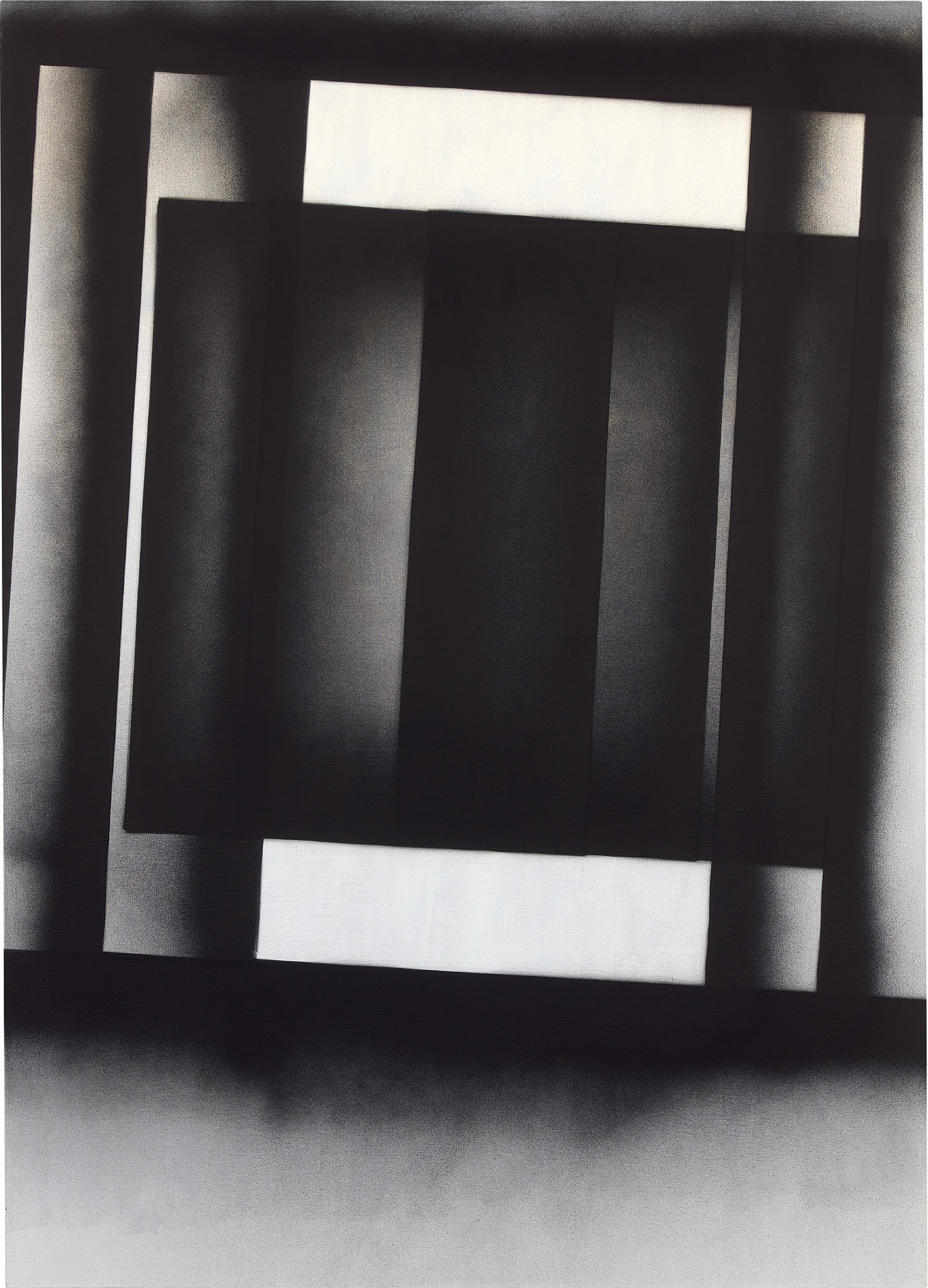
This quality of contingency, of meaning that shifts with context, is central to Hylden's thinking. He is fascinated by the gap between what an image is and what it appears to be, and his paintings make that gap palpable. "Some Other Way of Counting III," completed in 2007, exemplifies the spare elegance he had arrived at by that point: restrained in palette, quietly monumental in presence, and charged with a conceptual intelligence that does not announce itself loudly. The pentaptych "Not Working III" represents another significant strand of his practice, one in which the relationship between painting and printmaking becomes the subject.
Nathan Hylden
Some Other Way of Counting III, 2007
Executed in spray paint and silkscreen on paper across five panels, the work meditates on seriality and failure, on what it means for a process to produce something other than the intended result. The title itself is a kind of proposition: not working as malfunction, but also not working as the condition that opens space for something unexpected. Hylden has spoken in interviews about his interest in the gap between intention and outcome, and this work makes that interest concrete and visible in a way that few of his peers have managed. For collectors, Hylden's work offers something increasingly rare: a painting practice that is genuinely ideas driven without sacrificing the object quality that makes collecting meaningful over time.
His works age beautifully, their industrial materials proving durable and their conceptual premises remaining generative long after the initial encounter. The fact that many of his works are accompanied by certificates of authenticity speaks to the care he takes with provenance and documentation, treating each work as a complete and considered proposition rather than simply an aesthetic gesture. Collectors drawn to artists such as Wade Guyton, R. H.
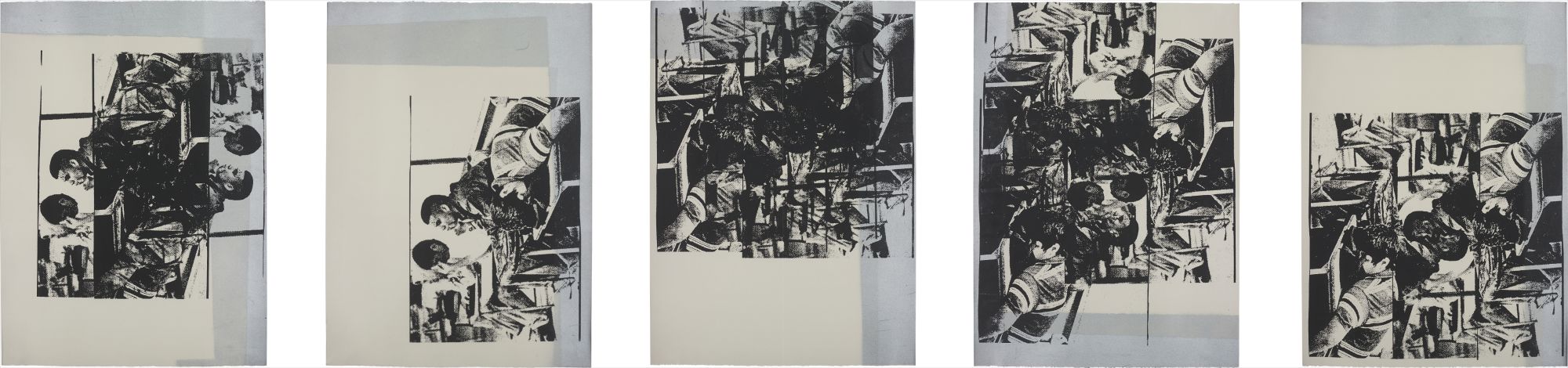
Nathan Hylden
Not Working III (pentaptych)
Quaytman, or Kelley Walker will find in Hylden a figure whose concerns overlap with those peers while maintaining a distinct and personal voice. In the broader context of contemporary painting, Hylden occupies a meaningful position within what might be called the postconceptual wing of abstraction. Artists such as Gunter Umberg, Mary Weatherford, and Monique Prieto share something of his commitment to exploring what painting can still say about itself after decades of theoretical interrogation. But Hylden's particular focus on reproduction and display, on the mechanics of how images move through the world, gives his work a specificity that sets it apart.
He is thinking not just about painting in the abstract but about the conditions of contemporary visual culture, and that makes his practice feel urgently relevant in the present moment. The legacy Hylden is building is one of sustained intellectual integrity paired with genuine visual pleasure. He has resisted the temptations of novelty and spectacle, choosing instead to deepen and refine a set of questions that he genuinely believes painting is uniquely equipped to address. For those who have been following his work across gallery presentations in Los Angeles and beyond, the sense is of an artist whose best years are still ahead, whose practice has the density and the flexibility to continue evolving in surprising directions.
To collect Hylden now is to participate in that unfolding, to own a piece of one of the more quietly significant conversations in painting today.