Nan Goldin
Nan Goldin: Intimacy Elevated to Pure Art
Artist Spotlight · The Collection Editorial
“I want to show how much I love these people and how beautiful their lives are.”
Nan Goldin, Interview Magazine
In 2023, the art world turned its collective gaze toward Nan Goldin with renewed and profound admiration when the documentary 'All the Beauty and the Bloodshed,' directed by Laura Poitras, won the Golden Lion at the Venice Film Festival. The film braided together two of the most significant threads of Goldin's life: her revolutionary photographic practice and her fierce, ultimately successful campaign against the Sackler family's role in the opioid crisis. For many who had long revered her work, the film felt like a culmination, a public reckoning with a lifetime of courage, both personal and political. For a new generation encountering her for the first time, it was an awakening.
Nan Goldin
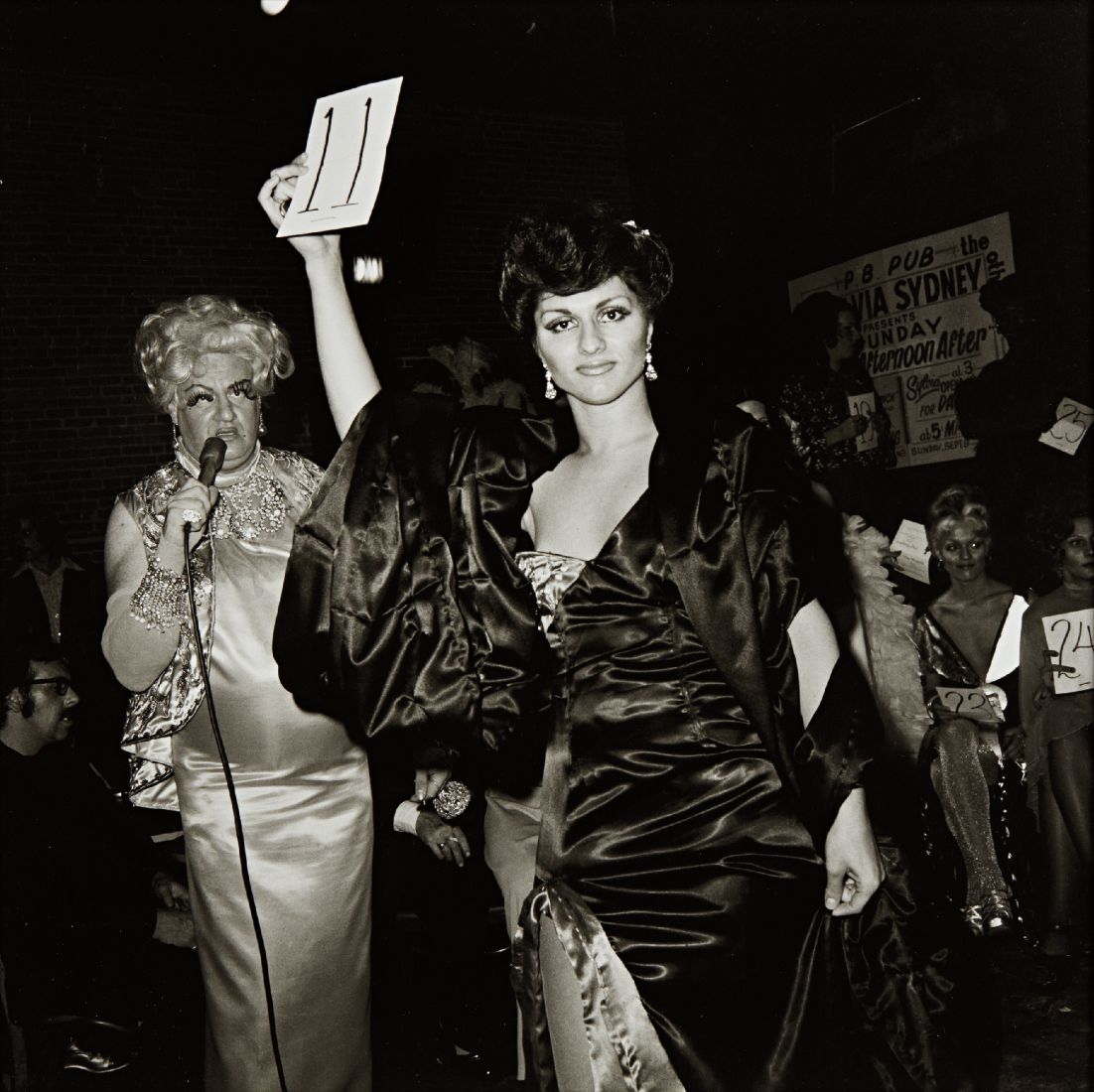
Colette modeling in the Beauty Parade, Boston
Nan Goldin was born in Washington, D.C. in 1953 and grew up in the Boston suburbs, shaped early by loss. The suicide of her older sister Barbara in 1965, when Goldin was just eleven, cast a long shadow over her childhood and became a formative force in her desire to witness, to document, and to hold onto the people she loved with the permanence only a photograph could offer.
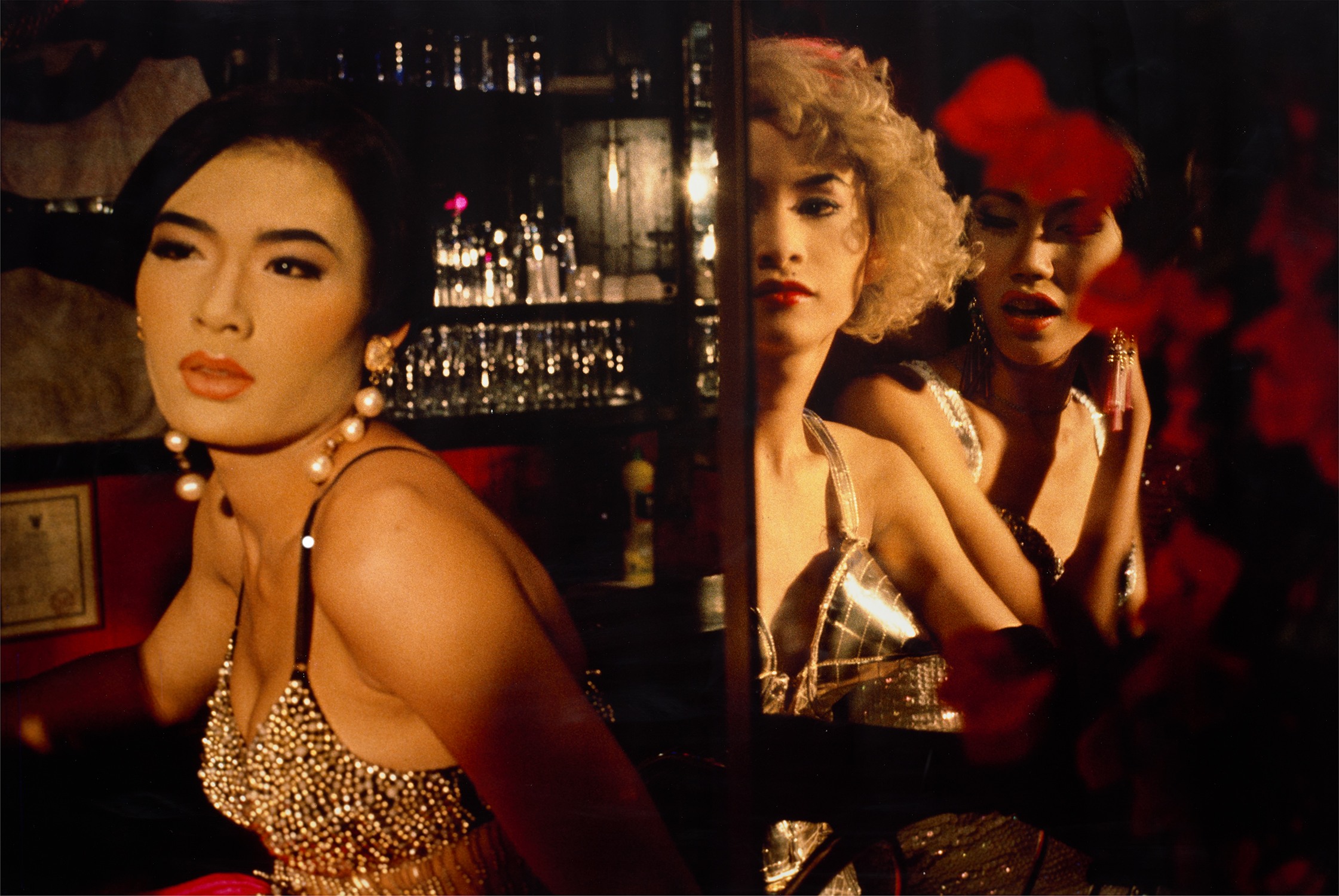
She discovered photography as a teenager and enrolled at the School of the Museum of Fine Arts in Boston, where she found not only a technical education but a community. The bohemian, queer, and counterculture circles she moved through in Boston during the 1970s became the first subjects of her lens, and the intimacy she brought to those early portraits announced something entirely new. Moving to New York City in the late 1970s, Goldin immersed herself in the downtown scene centered around neighborhoods like the Bowery and the vibrant nightlife of drag bars, artists' lofts, and punk venues. Her camera was never far from her side, and what she was building was less a body of work than a living archive of her own existence and the existence of those she loved.
Nan Goldin
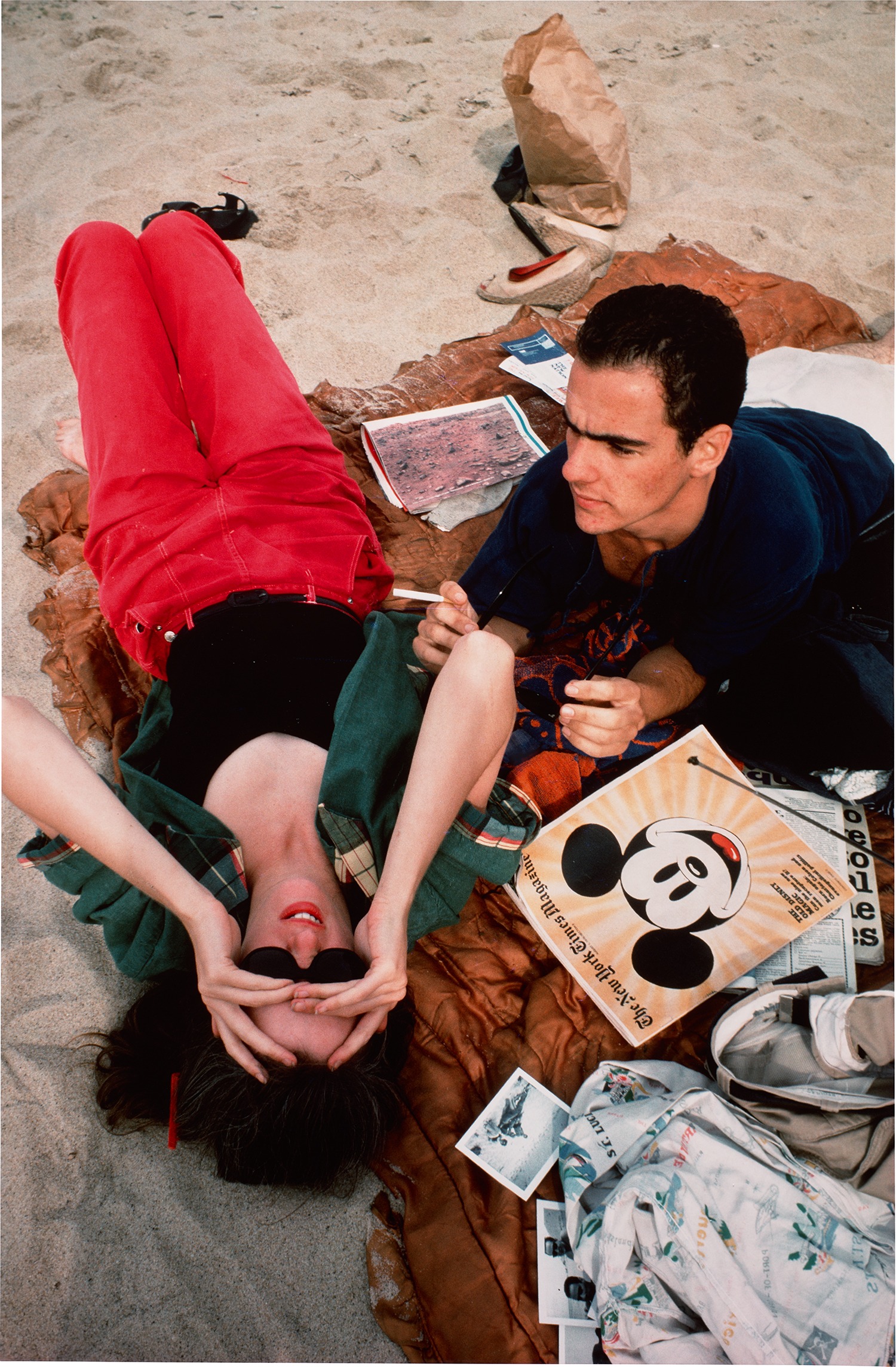
C.Z. and Max on the beach, Truro, MA.
She shot on slide film and began presenting her photographs as slideshows set to music, an experiential format she called 'The Ballad of Sexual Dependency.' First shown in small clubs and bars in the early 1980s, the slideshow grew over years into an epic meditation on love, desire, domesticity, violence, and loss, eventually comprising hundreds of images set to a carefully chosen soundtrack. 'The Ballad of Sexual Dependency' became one of the defining artistic statements of its era when it was exhibited at the Whitney Museum of American Art in 1985 and subsequently published as a book by Aperture in 1986. That book remains in print today and is widely considered one of the most important photography publications of the twentieth century.
“I used to think I could never lose anyone if I photographed them enough.”
Nan Goldin, The Ballad of Sexual Dependency, 1986
Goldin's images refused the distance that conventional documentary photography maintained between photographer and subject. She was always inside the frame, emotionally if not physically, photographing friends, lovers, and herself with a radical tenderness that changed what portrait photography could mean. Works such as 'Nan one month after being battered' from 1984 demonstrated that her lens could confront the most difficult truths without ever becoming exploitative, transforming pain into something luminous and enduring. The works available through The Collection offer collectors a remarkable window into the full range of Goldin's vision.
Nan Goldin
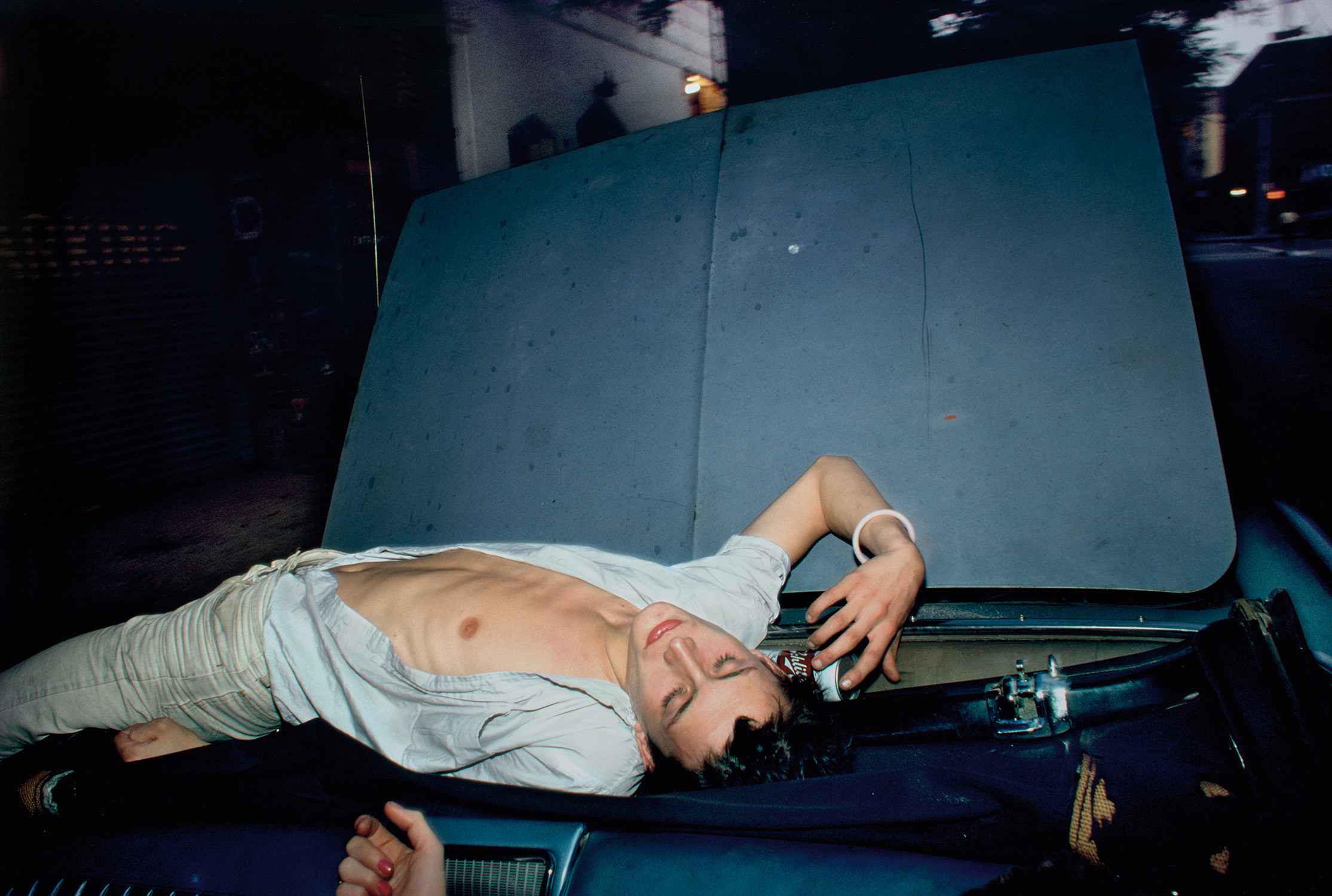
French Chris on the convertible, NYC
Dye destruction prints such as 'C.Z. and Max on the Beach, Truro, MA' and 'Valerie Floating in the Sea, Mayreau Island' showcase her extraordinary sensitivity to color and light, the way a saturated moment of leisure carries within it the full weight of a relationship and a life. 'French Chris on the Convertible, NYC' captures that particular downtown energy, the freedom and beauty that Goldin found in her world.
The portfolio 'Cookie in the NY Inferno,' produced in 2000 to honor artists lost to AIDS, is among the most emotionally significant works she has made available in edition form, a tribute to her close friend Cookie Mueller and a testament to the devastating losses of a generation. Gelatin silver prints such as 'Colette Modeling in the Beauty Parade, Boston' reveal the roots of her practice in the rich subcultures of New England's counterculture scene. The portfolio 'James King: Supermodel,' published by Matthew Marks Gallery in 1995, reflects her ongoing commitment to celebrating gender nonconformity and the beauty she found in those who lived outside prescribed norms. From a collecting perspective, Goldin's work occupies a position of remarkable strength and continued relevance in the market.
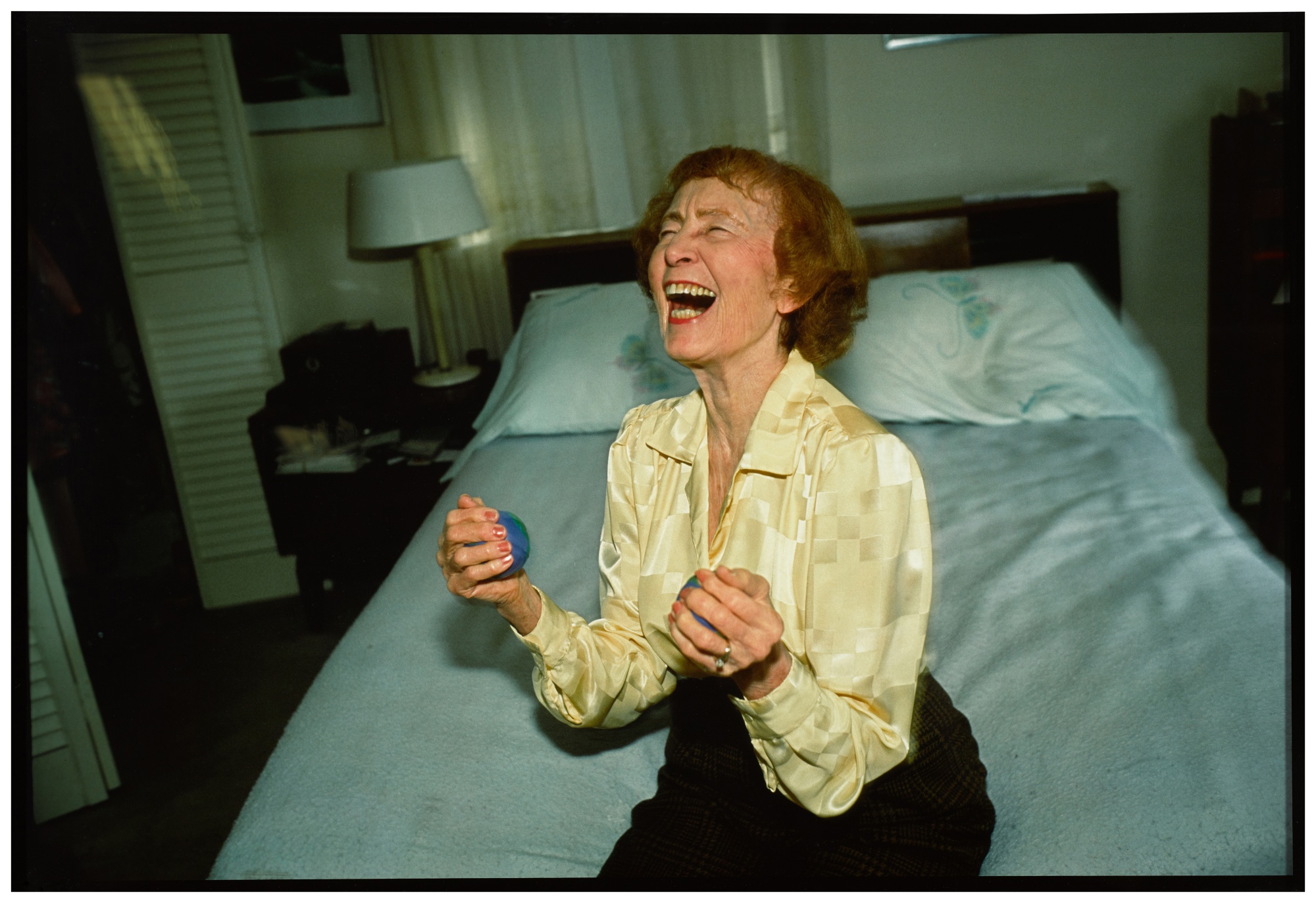
Nan Goldin
Lil Laughing, Swampscott, MA, 1996
Her prints are held in the permanent collections of major institutions including the Museum of Modern Art in New York, the Whitney Museum of American Art, the Centre Pompidou in Paris, and the Tate Modern in London, among many others. The combination of institutional validation, her sustained critical reputation, and the renewed public attention following 'All the Beauty and the Bloodshed' has brought significant collector interest from both established collections and a younger generation of buyers. Edition works and later prints offer accessible entry points into a practice that commands serious respect, while unique and early works represent a deeper tier of collecting. For those drawn to photography as a medium and to the social and cultural history of late twentieth century America, Goldin's work is essential.
Goldin's place within art history becomes richer when considered alongside a constellation of photographers and artists who share her commitment to intimacy and the documentary impulse. Her work draws natural comparison to that of Larry Clark, whose 'Tulsa' series from 1971 preceded and in some ways anticipated her approach to photographing subcultures from within. The influence of Diane Arbus, who photographed marginalized communities with deep empathy, is also part of the lineage Goldin both inherits and transforms. Among her contemporaries, photographers such as Wolfgang Tillmans and Ren Hang carry forward the spirit of honest, affectionate portraiture that Goldin helped to make possible.
She also connects meaningfully to the broader tradition of feminist and queer art practice, standing alongside figures such as Cindy Sherman and David Wojnarowicz in the story of how American art confronted identity, politics, and the body in the final decades of the twentieth century. What makes Nan Goldin's legacy so durable is precisely the quality that made her work so startling when it first appeared: she gave her subjects the gift of being truly seen. At a moment when photography often served to categorize or othologize, she photographed with love. The communities she documented, the drag queens of Boston, the downtown New York art world, the friends who died of AIDS, the lovers who hurt and sustained her, were not subjects of study but participants in a shared life.
That ethical commitment, combined with an extraordinary eye for color, light, and the decisive emotional moment, produced a body of work that continues to expand and deepen in meaning with every passing year. To collect Nan Goldin is to align oneself with one of the great humanist projects in the history of photography.
Explore books about Nan Goldin
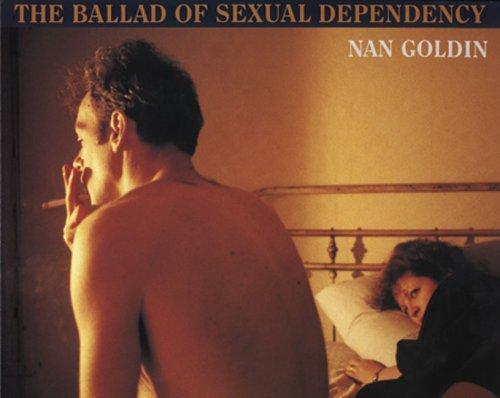
The Ballad of Sexual Dependency
Nan Goldin
I'll Be Your Mirror: The Selected Diaries of Nan Goldin
Nan Goldin

Nan Goldin: All That's Pretty
Nan Goldin
Nan Goldin: The Other Side
Nan Goldin
Nan Goldin: Works 1979-2007
Nan Goldin
Nan Goldin
Elisabeth Sussman