Mustafa Hulusi
Mustafa Hulusi: Beauty With Something to Say
Artist Spotlight · The Collection Editorial
There is a particular kind of painting that stops you cold before you understand why. Mustafa Hulusi makes those paintings. In recent years, his work has found renewed resonance in conversations about post colonial aesthetics and the politics of visual pleasure, appearing in group exhibitions and institutional discussions that place him squarely within the most urgent debates in contemporary art. Collectors who discovered him early speak of his canvases with the quiet pride of people who recognised something important before the rest of the world caught up.
Mustafa Hulusi
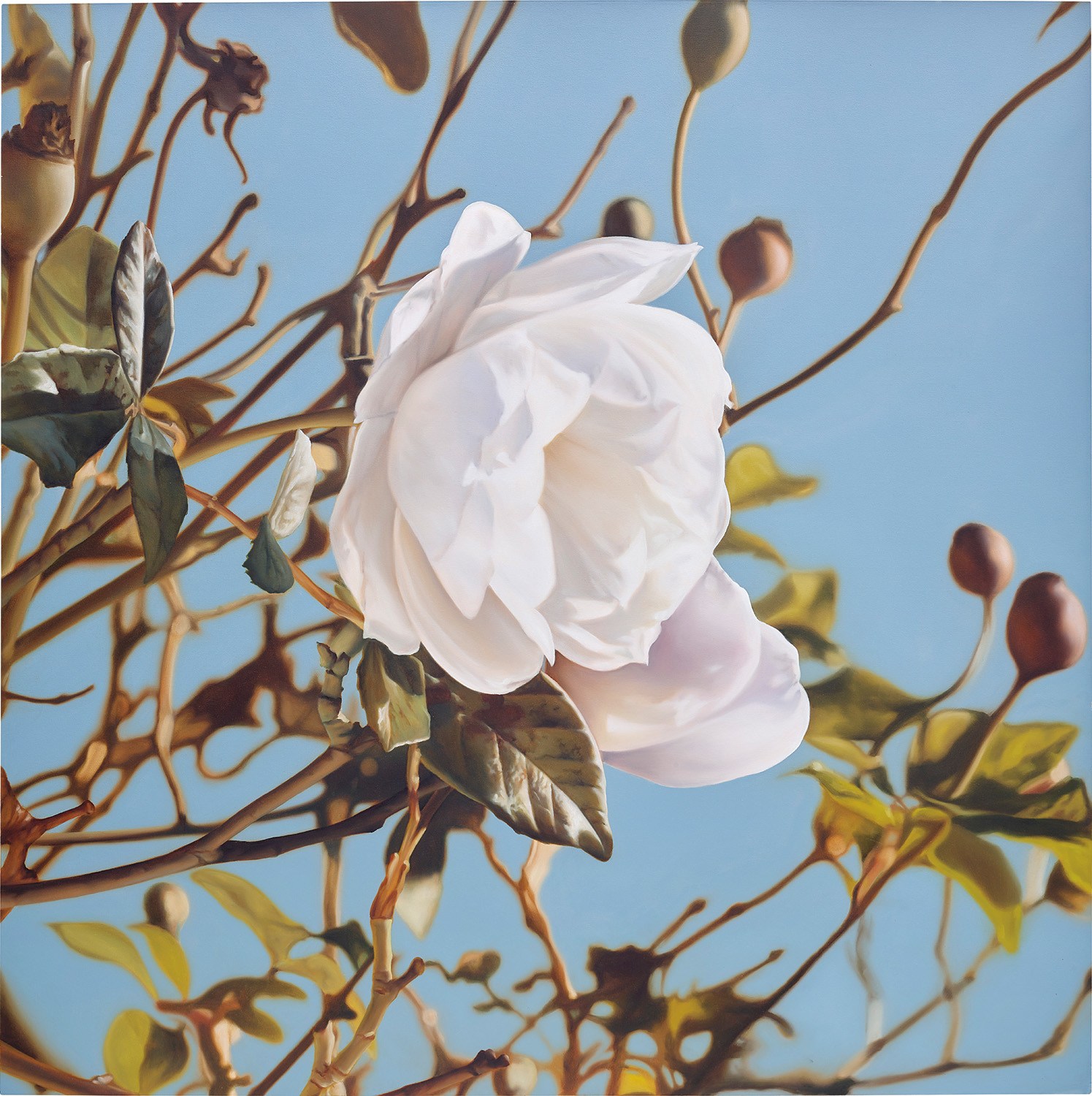
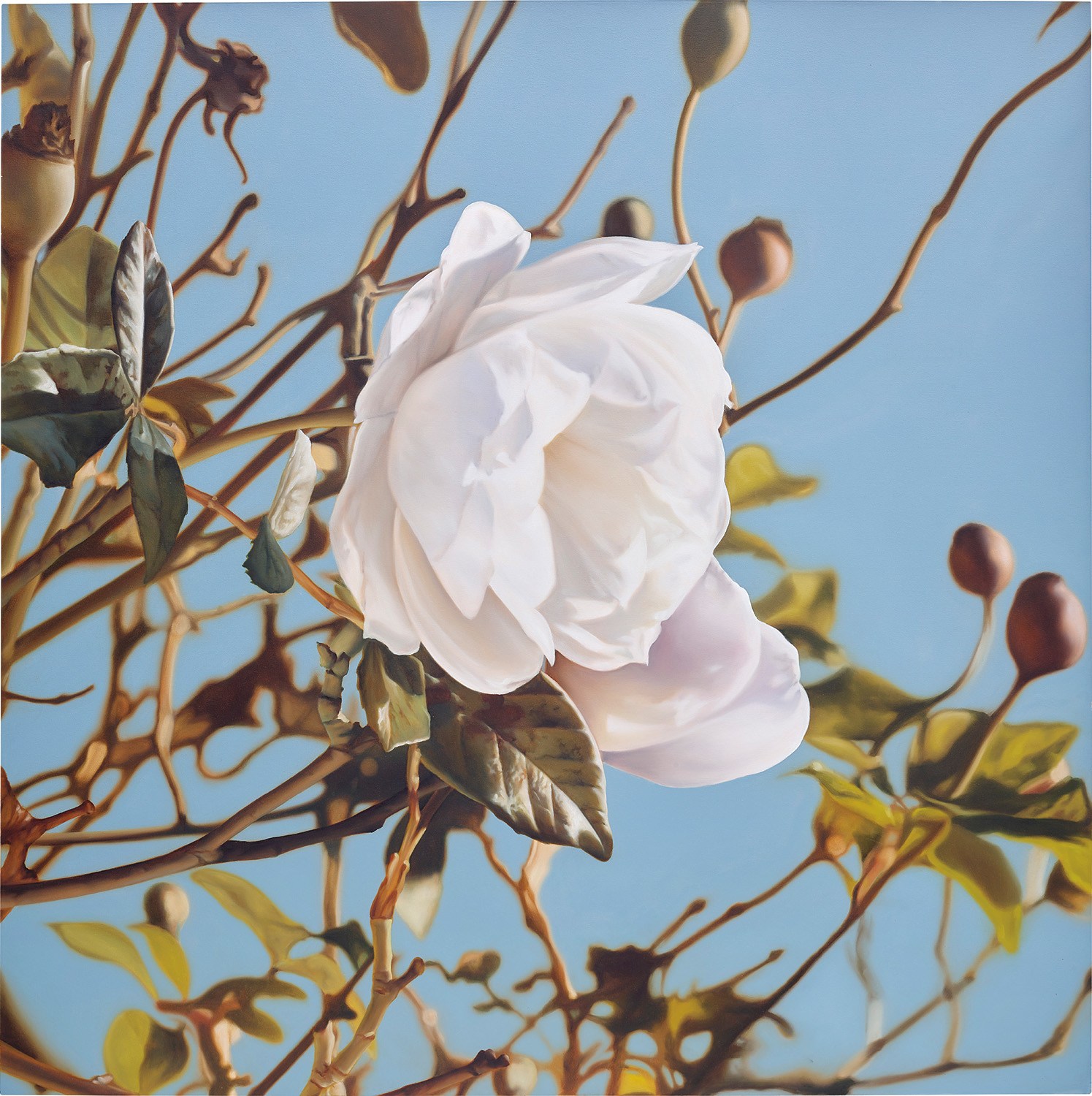
Winter Rose, 2006
Hulusi was born in 1971 into a British Cypriot family, and that dual inheritance, caught between the Mediterranean world and British cultural life, became the fault line along which his entire artistic vision would develop. Growing up with one eye on the lush imagery of the eastern Mediterranean and another on the saturated visual culture of consumer Britain gave him an unusually sharp sensitivity to the way images seduce, persuade, and ultimately control. He studied in London, immersing himself in a moment when artists across the city were reckoning with questions of cultural identity, globalisation, and the seductive grammar of advertising. His early practice drew on the visual language of pop art while pushing well beyond its ironic detachment.
Where artists like Andy Warhol treated consumer imagery with a cool, knowing remove, Hulusi brought genuine heat to the question. He was interested not just in the fact of seduction but in its machinery, in the way certain images of landscape, produce, and natural beauty had been conscripted into the service of colonial fantasy and commercial desire. His paintings are beautiful in a way that implicates you, that makes your pleasure the subject of the work. The years around 2006 to 2010 represent a particularly concentrated flowering of his vision.
Mustafa Hulusi
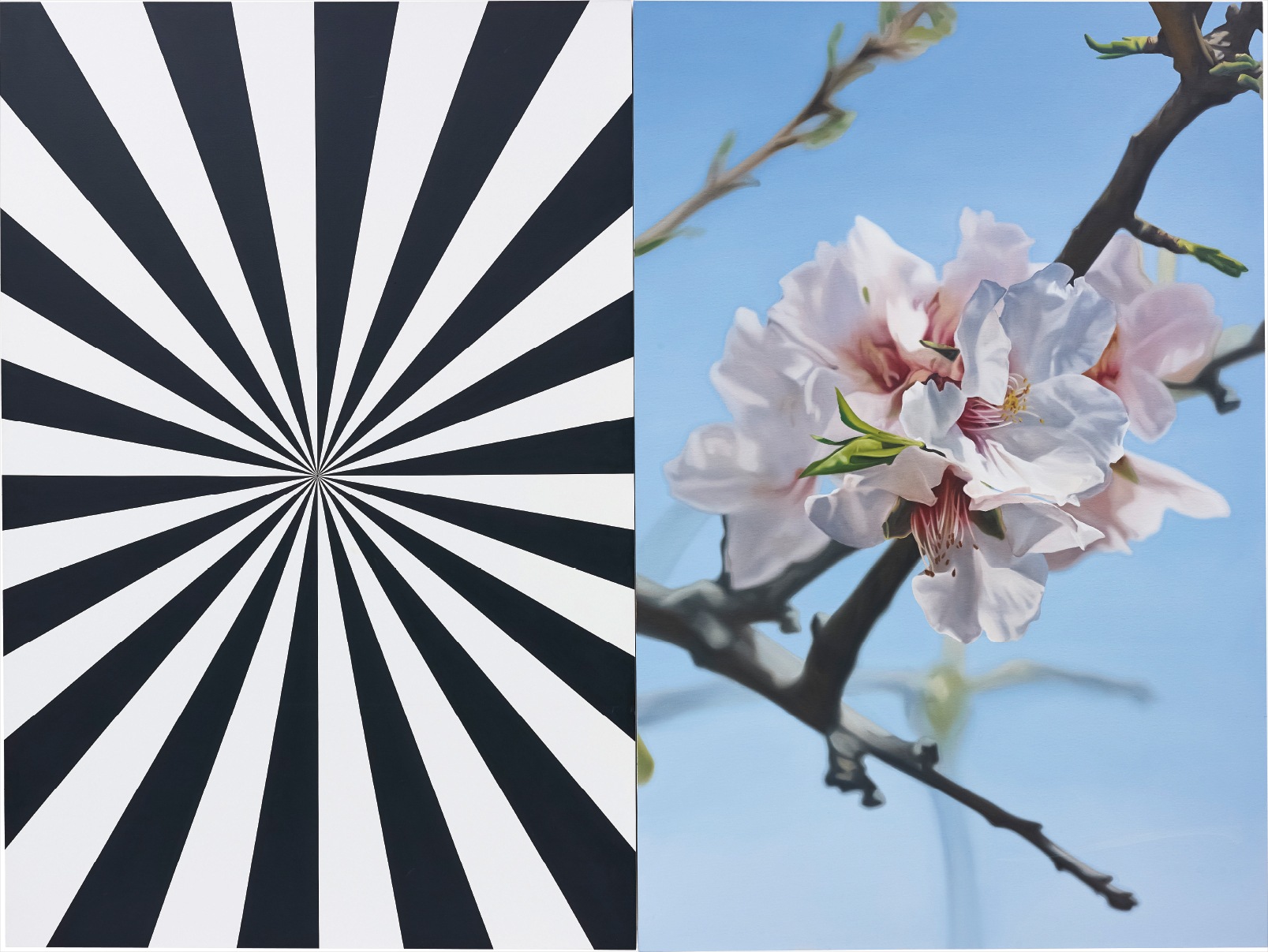
Exstacy Almond Blossom 8, 2008
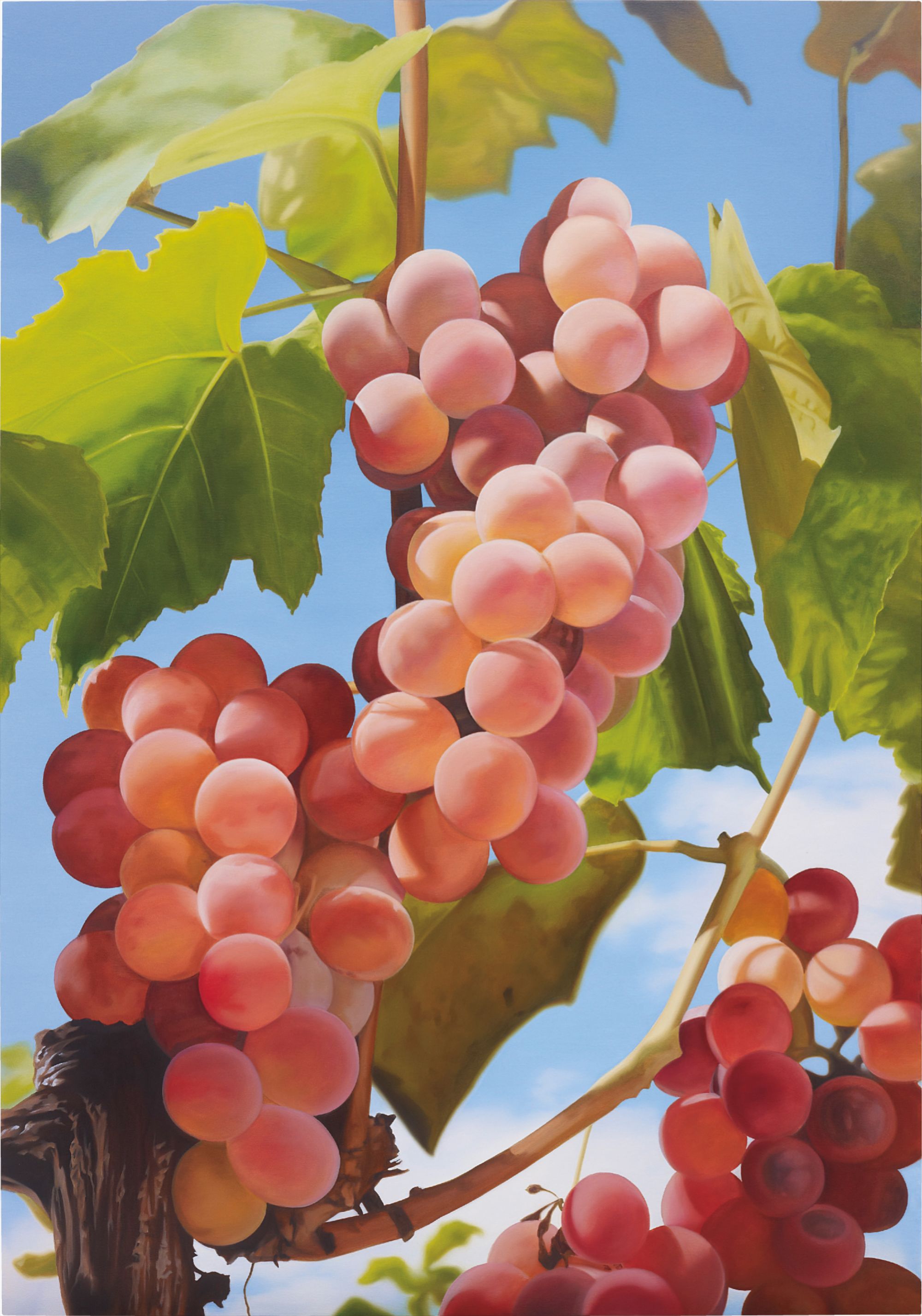
Works from this period, including the luminous oil on canvas titled Winter Rose from 2006 and the ambitious two part painting Exstacy Almond Blossom 8 from 2008, show an artist in full command of his means. The almond blossom works are especially remarkable: rendered with a richness that recalls both Japanese woodblock print traditions and the heightened colour of commercial photography, they hover between the natural and the artificially perfect. The title itself, with its deliberate alternate spelling of ecstasy, signals that Hulusi is thinking carefully about pleasure, about altered states, about the way beauty functions as a kind of chemical agent in the mind. Grapes I, another signature canvas, demonstrates his ongoing engagement with fruit as a loaded cultural symbol.
Grapes carry millennia of meaning, from classical still life painting through to the imagery of Mediterranean tourism and the global food trade. Hulusi paints them with a voluptuousness that makes you aware of how much visual history is compressed into a single bunch, how many fantasies of abundance and exotic pleasure have been projected onto the simple fact of a piece of fruit. These are paintings that reward sustained looking because they keep opening onto new layers of reference and implication. For collectors, the appeal of Hulusi's work lies in a combination of qualities that is genuinely rare.
Mustafa Hulusi
Grapes I
The paintings are visually generous, the kind of works that live well in a room and reward daily attention. But they also carry intellectual substance that makes ownership feel meaningful rather than merely decorative. His canvases operate simultaneously as objects of beauty and as critical propositions about beauty itself, which is precisely the kind of tension that distinguishes lasting art from the merely fashionable. Works from the mid 2000s onward represent a particularly coherent body of practice, and collectors who focus on this period are building a relationship with some of the most considered painting of that generation.
In terms of art historical context, Hulusi occupies a distinctive position within a broader conversation that includes artists like Hew Locke, Hurvin Anderson, and Jadé Fadojutimi, painters who engage with questions of cultural identity and representation through formally ambitious work that refuses to sacrifice visual pleasure to didactic purpose. He shares with Glenn Ligon and Fred Wilson an interest in the way images carry ideological freight, though his method is painterly rather than appropriative. There is also a connection to the tradition of artists who have worked with the aesthetics of advertising and commercial culture, from Richard Hamilton forward, though Hulusi brings a specifically post colonial perspective that reframes the entire conversation. What makes Hulusi matter today, in a cultural moment defined by urgent questions about whose visions of beauty get to circulate and whose desires are catered to by the image world, is precisely his insistence on pleasure as a site of politics.
He does not ask you to choose between enjoying his paintings and thinking critically about them. He insists that both are happening at once, that the enjoyment is the thinking. This is a sophisticated and genuinely generous artistic proposition, one that trusts the viewer while also challenging them. As institutions and collectors continue to reappraise the art of the past two decades with fresh eyes, Hulusi's work stands as a body of achievement that deserves the widest possible attention and the most thoughtful stewardship.