Mona Hatoum
Mona Hatoum: Art That Transforms the World
Artist Spotlight · The Collection Editorial
“I want the work to be in a state of permanent instability, to shift between attraction and repulsion, seduction and fear.”
Mona Hatoum, interview with Michael Archer, 1997
When Tate Modern dedicated a major retrospective to Mona Hatoum in 2016, visitors stood before her monumental installations in something close to reverence. The exhibition, which travelled to the Centre Pompidou in Paris and the Kiasma Museum in Helsinki, confirmed what the art world had understood for decades: Hatoum is among the most essential artists working today. Her ability to render the familiar strange, to locate both beauty and menace in the objects of everyday life, has made her work a touchstone for collectors, curators, and anyone who believes that art can hold the full complexity of human experience. Hatoum was born in Beirut in 1952 to a Palestinian family who had been displaced from Haifa in 1948.
Mona Hatoum
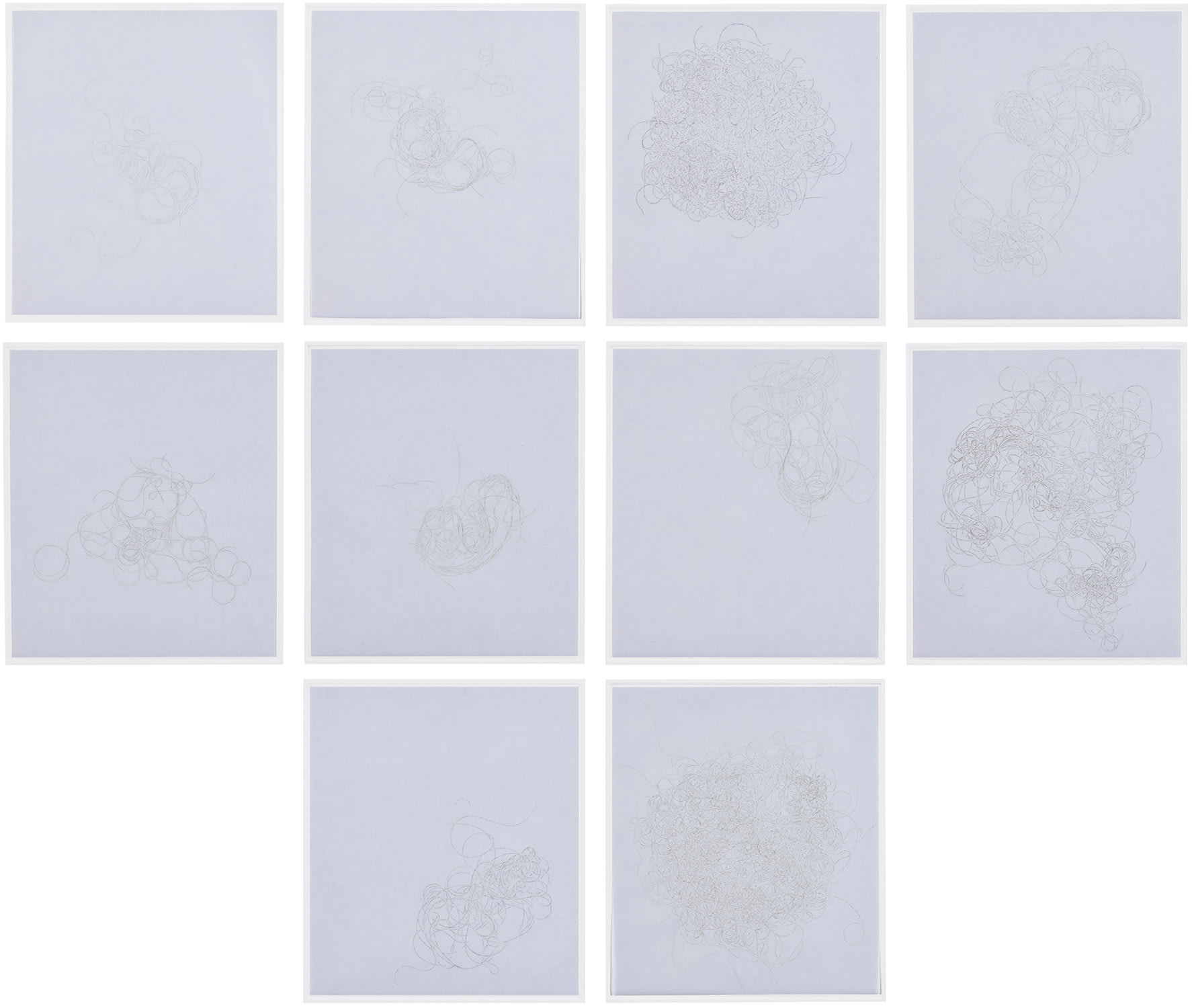
hair there and everywhere
Growing up in a household shaped by the memory of exile, she absorbed early on the precariousness of belonging, the fragility of home, and the weight of a history that refused to stay in the past. In 1975, at the age of twenty three, she travelled to London for what was intended to be a brief visit. The outbreak of the Lebanese Civil War made return impossible. That rupture, that permanent interruption, became the emotional and intellectual foundation upon which her entire practice was built.
She enrolled at the Byam Shaw School of Art and later completed her postgraduate studies at the Slade School of Fine Art, graduating in 1981. London in the early 1980s was a charged environment for artists grappling with questions of identity, politics, and the body, and Hatoum found her voice amid that energy. Her early work was rooted in performance, often placing her own body at the centre of durational actions that confronted audiences with the physicality of displacement and resistance. These performances were raw, demanding, and deeply personal, establishing her as an artist unafraid to use vulnerability as a form of power.
Mona Hatoum
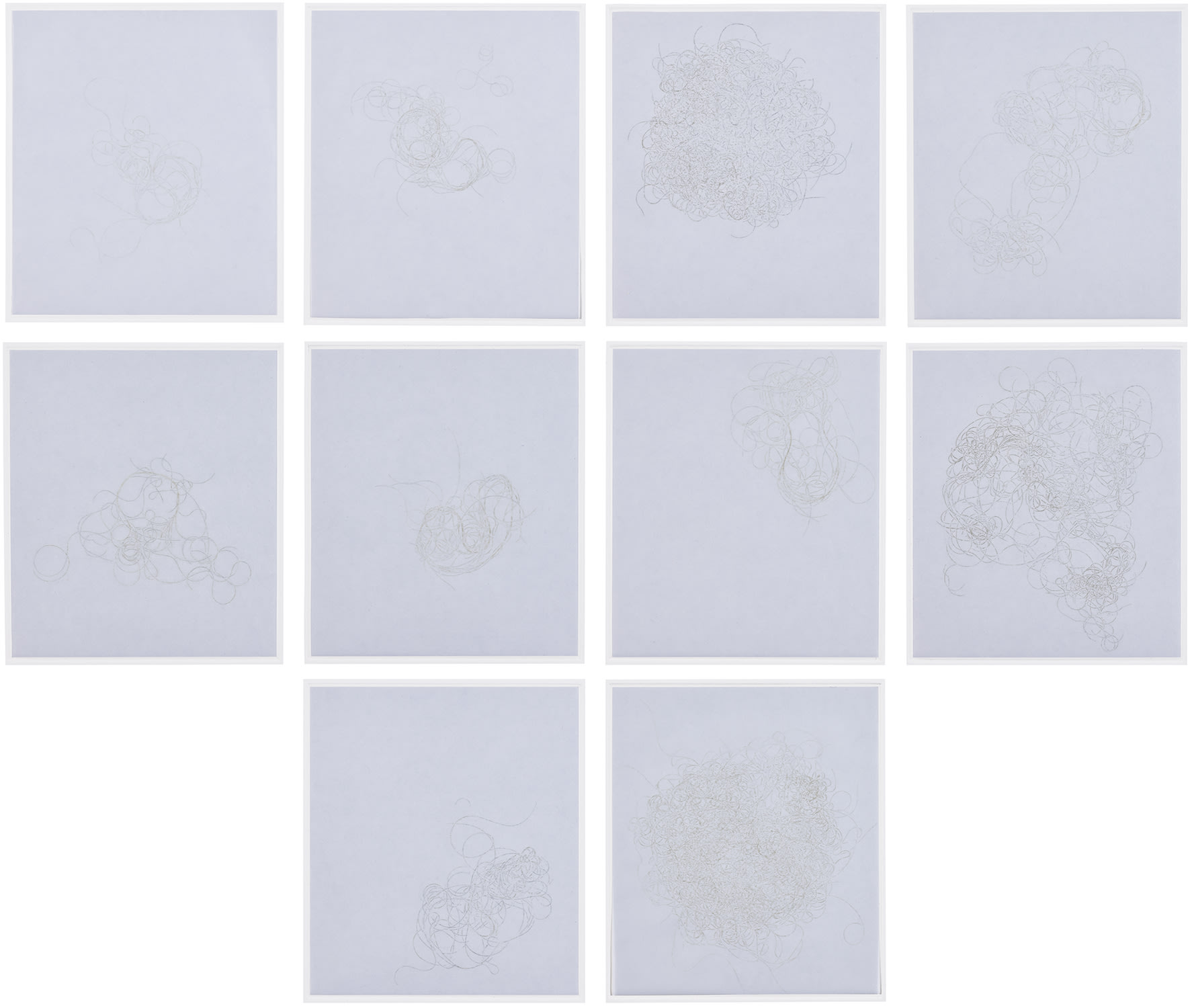
wax paper
Through the late 1980s and into the 1990s, Hatoum's practice expanded into the large scale installation work for which she became internationally celebrated. Works such as Corps étranger from 1994, in which endoscopic footage of the interior of her own body was projected within a cylindrical chamber, collapsed the distance between the intimate and the abject, between scientific scrutiny and visceral humanity. Light Sentence, created the same year, filled a room with wire mesh lockers illuminated by a single moving bulb, casting shadows that transformed the gallery into something between a prison and a hallucination. These were works that operated on multiple registers simultaneously, political and poetic, precise and overwhelming.
“Home is always an imagined place. It is something constructed in the mind as much as in reality.”
Mona Hatoum
Hatoum's sculptures and objects occupy a particular position within her practice, one that collectors have long found compelling. She takes the vocabulary of the domestic, the kitchen grater, the map, the cradle, the carpet, and subjects it to transformations that reveal hidden tensions. Her ongoing series of map works, in which the continents of the world are rendered in glass marbles, powdered spices, or other unstable materials, speaks to the constructed nature of borders and the impermanence of geopolitical certainty. Her use of hair, a material that appears across multiple works including pieces such as Stream (light), where human hair is laid upon toilet paper in delicate, unsettling accumulation, draws the body back into spaces from which it appears to have retreated.
Mona Hatoum
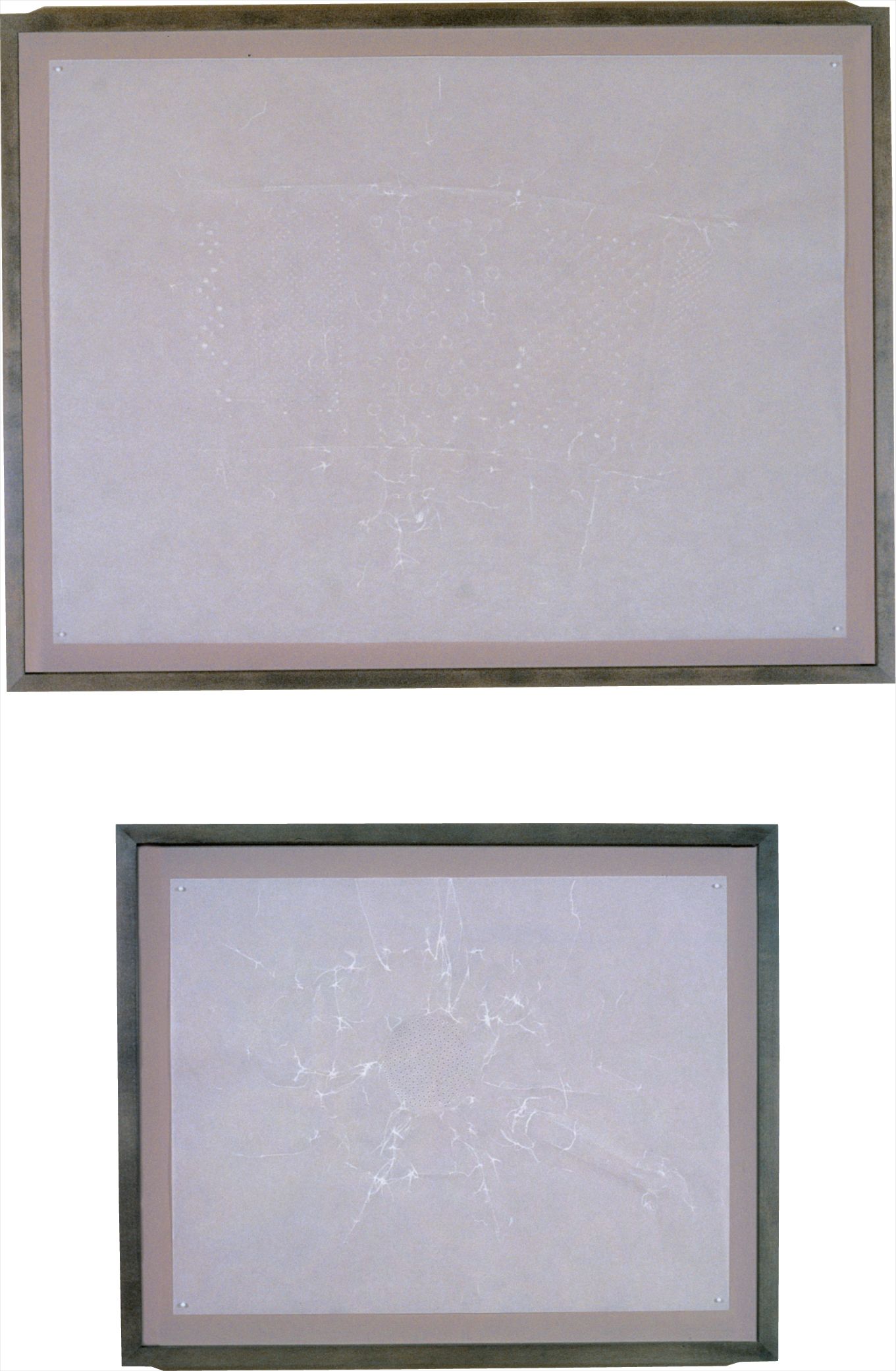
Set in Stone
The effect is always intimate, always charged. For collectors, Hatoum's works on paper and her editions represent an accessible and deeply rewarding entry point into a practice of genuine historical significance. Screenprints such as The Blues and signed limited edition works demonstrate the same rigorous formal thinking that animates her large installations, condensed into formats that sustain prolonged and rewarding attention. Her multiples, including the quietly extraordinary T42, a stoneware cup and saucer that carries its conceptual weight with remarkable lightness, show an artist who brings the same intelligence to every scale of work.
Given the international trajectory of her reputation and the depth of institutional support behind her practice, works on paper and editions by Hatoum represent not only cultural value but considered long term collecting decisions. Within the broader landscape of contemporary art, Hatoum occupies a position alongside artists such as Louise Bourgeois, Doris Salcedo, and Kara Walker, artists who have used the language of sculpture, installation, and the body to address histories of trauma, displacement, and resistance with formal brilliance. Like Bourgeois, she transforms personal and political biography into universal emotional experience. Like Salcedo, she understands absence as a material, a thing that can be shaped and placed in a room.
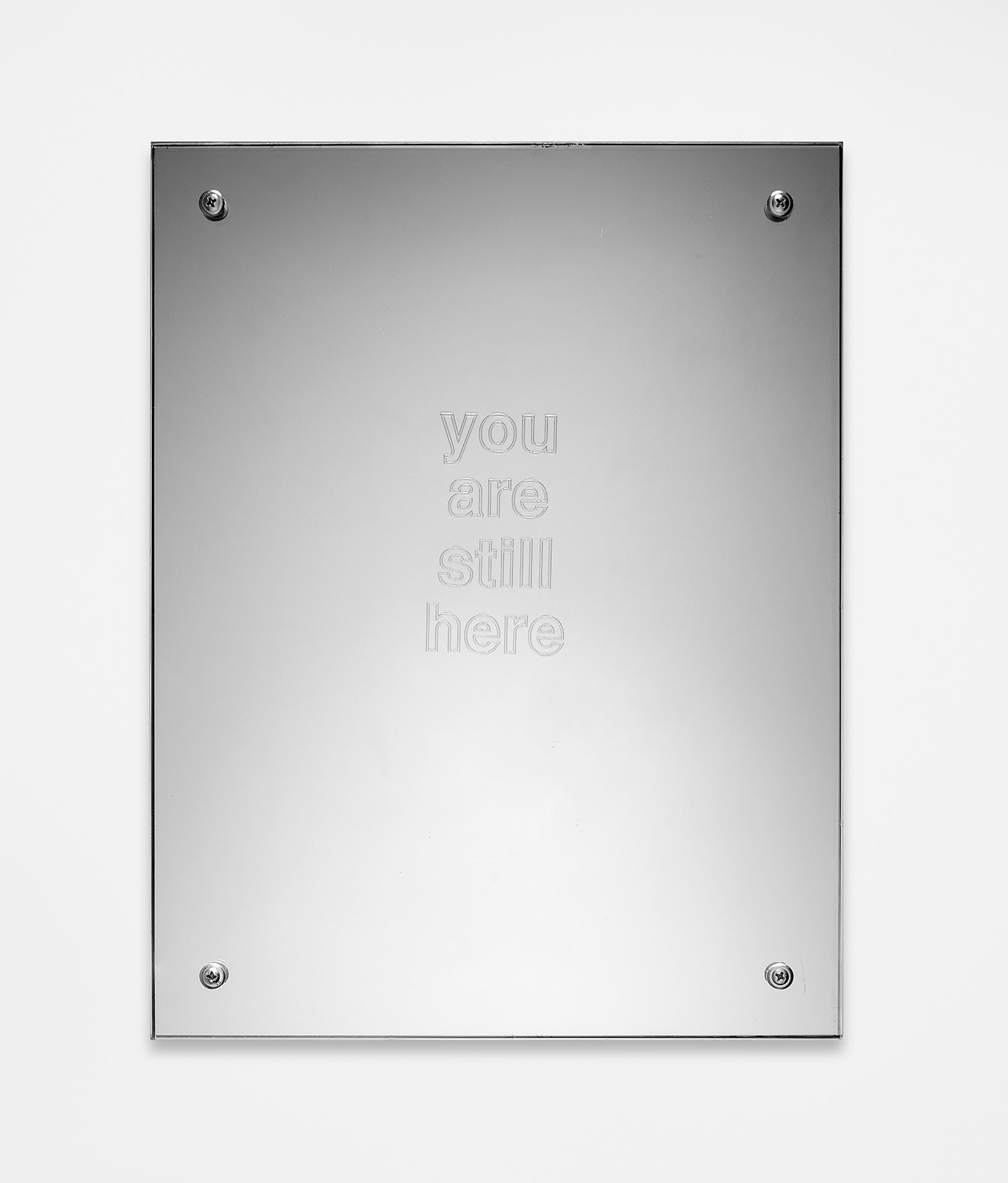
Mona Hatoum
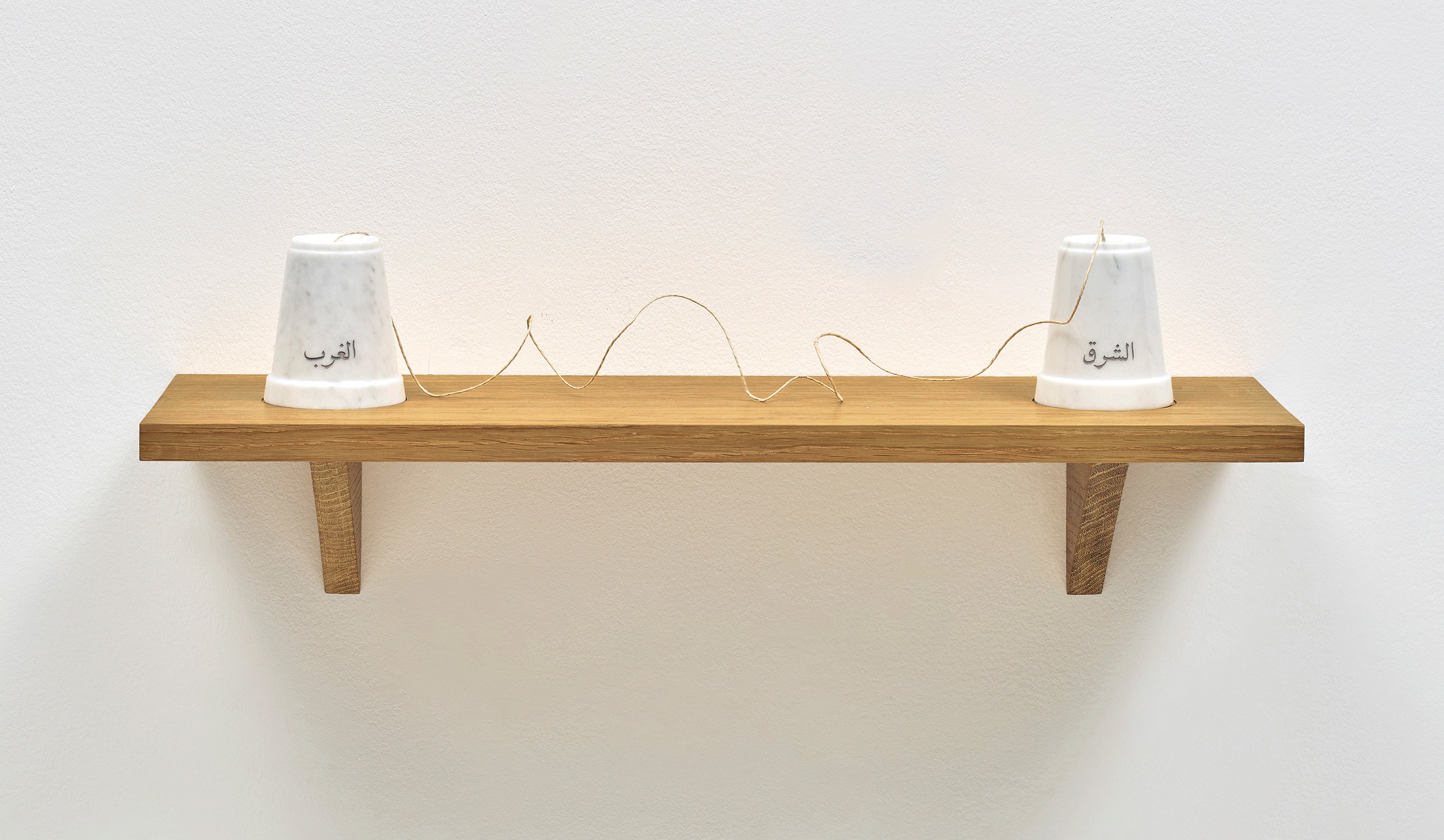
You Are Still Here
Her work is frequently discussed alongside that of other artists who emerged from diasporic contexts to reshape Western contemporary art, including Walid Raad and Emily Jacir, and she is rightly understood as a central figure in the flowering of Middle Eastern and Palestinian art on the global stage. Hatoum's legacy is not a matter of speculation. It is already a fact, woven into the collections of the Tate, the Museum of Modern Art in New York, the Centre Pompidou, and dozens of major institutions worldwide. She has received the Sonning Award, one of Scandinavia's most prestigious cultural prizes, and has been shortlisted for the Turner Prize, among many other honours.
But the deeper significance of her work lies in its refusal to be exhausted by context. However much one knows of her biography and history, standing before a Hatoum is always a fresh encounter with something that feels both ancient and urgently present. She makes art that asks you to feel the ground shift beneath your feet, and then to look more carefully at the ground on which you stand.
Explore books about Mona Hatoum
Mona Hatoum
Hamza Walker
Mona Hatoum: The Entire World as a Foreign Land
Okwui Enwezor
Mona Hatoum: Domestic Disturbance
Museum of Modern Art
Mona Hatoum
Michael Archer
Mona Hatoum: Turbulence
Catherine de Zegher
Mona Hatoum: Present Tense
Ruba Katrib