Moïse Kisling
Kisling: Montparnasse's Most Luminous, Beloved Painter
Artist Spotlight · The Collection Editorial
In the grand salons of Paris and the sun drenched terraces of Sanary sur Mer, the name Moïse Kisling has never stopped resonating. Recent years have brought renewed institutional attention to the École de Paris and its most charismatic members, with major European museums revisiting the cosmopolitan brilliance of Montparnasse in the 1910s through 1930s. Kisling sits at the very heart of that reassessment, his canvases appearing with increasing frequency at auction houses including Christie's and Sotheby's, where his nudes and portraits reliably draw spirited bidding from collectors who recognize in his work something genuinely rare: technical mastery worn with absolute ease. Moïse Kisling was born in Kraków in 1891, into a Jewish family of modest means.
Moïse Kisling
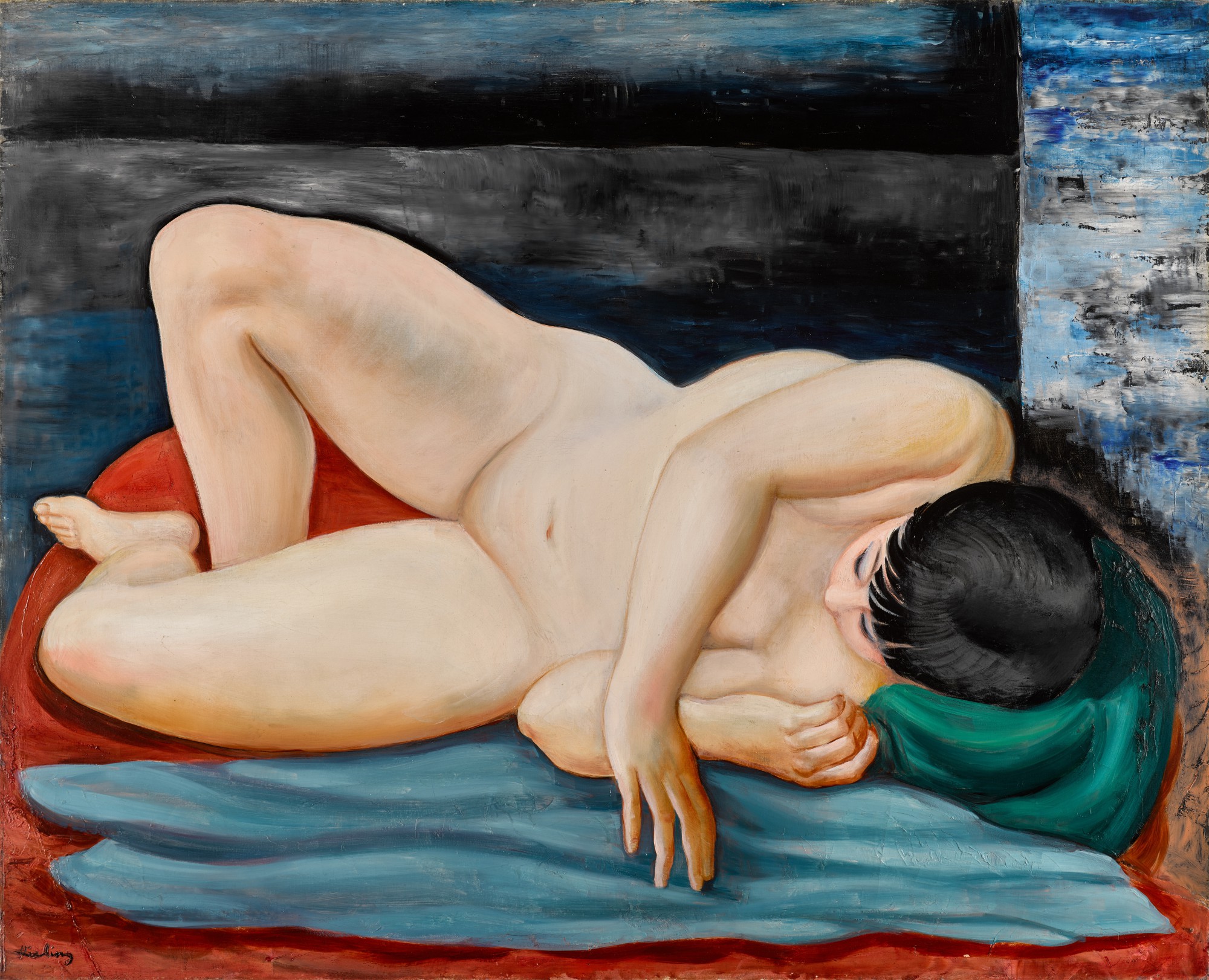
Nu allongé sur drap rouge et vert, 1927
He showed exceptional promise early, studying at the Kraków School of Fine Arts under the painter Józef Pankiewicz, who recognized in his young student an instinct for color that formal training could refine but never manufacture. Pankiewicz, himself deeply influenced by Impressionism and French painting, encouraged Kisling to look westward. In 1910, at the age of nineteen, Kisling arrived in Paris with little money and enormous ambition, settling quickly into the bohemian world of Montparnasse that would define his life and legacy. Paris in 1910 was an extraordinary place to be a young painter.
Kisling took a studio on the Rue de Montparnasse and fell immediately into the circle of artists who gathered at the Café du Dôme and La Rotonde, friendships that would shape his entire career. He became close to Amedeo Modigliani, with whom he shared a deep mutual affection, as well as Pablo Picasso, Max Jacob, and Jules Pascin. These relationships were not merely social. They represented a continuous, electric exchange of ideas about form, color, and the human figure.
Moïse Kisling
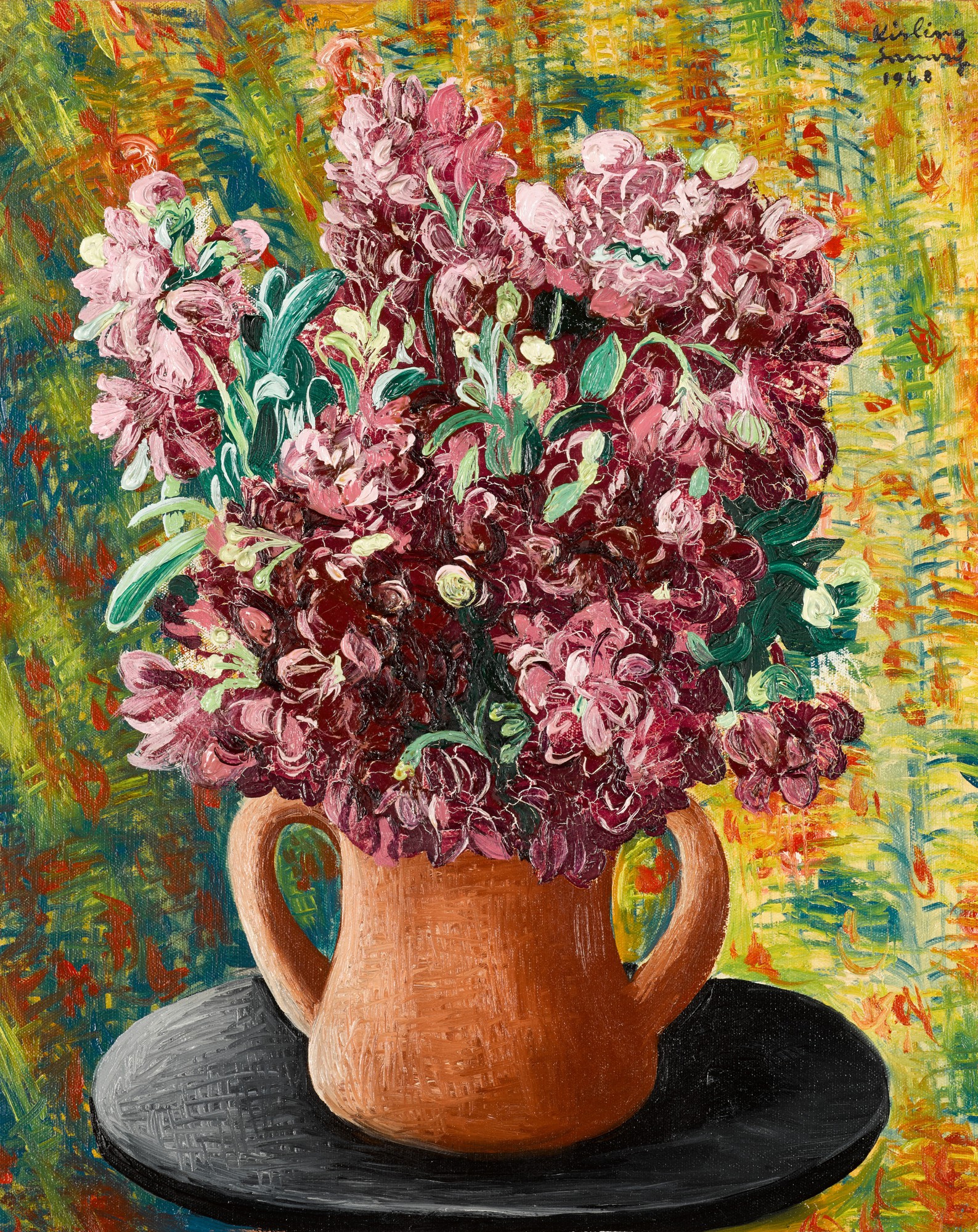
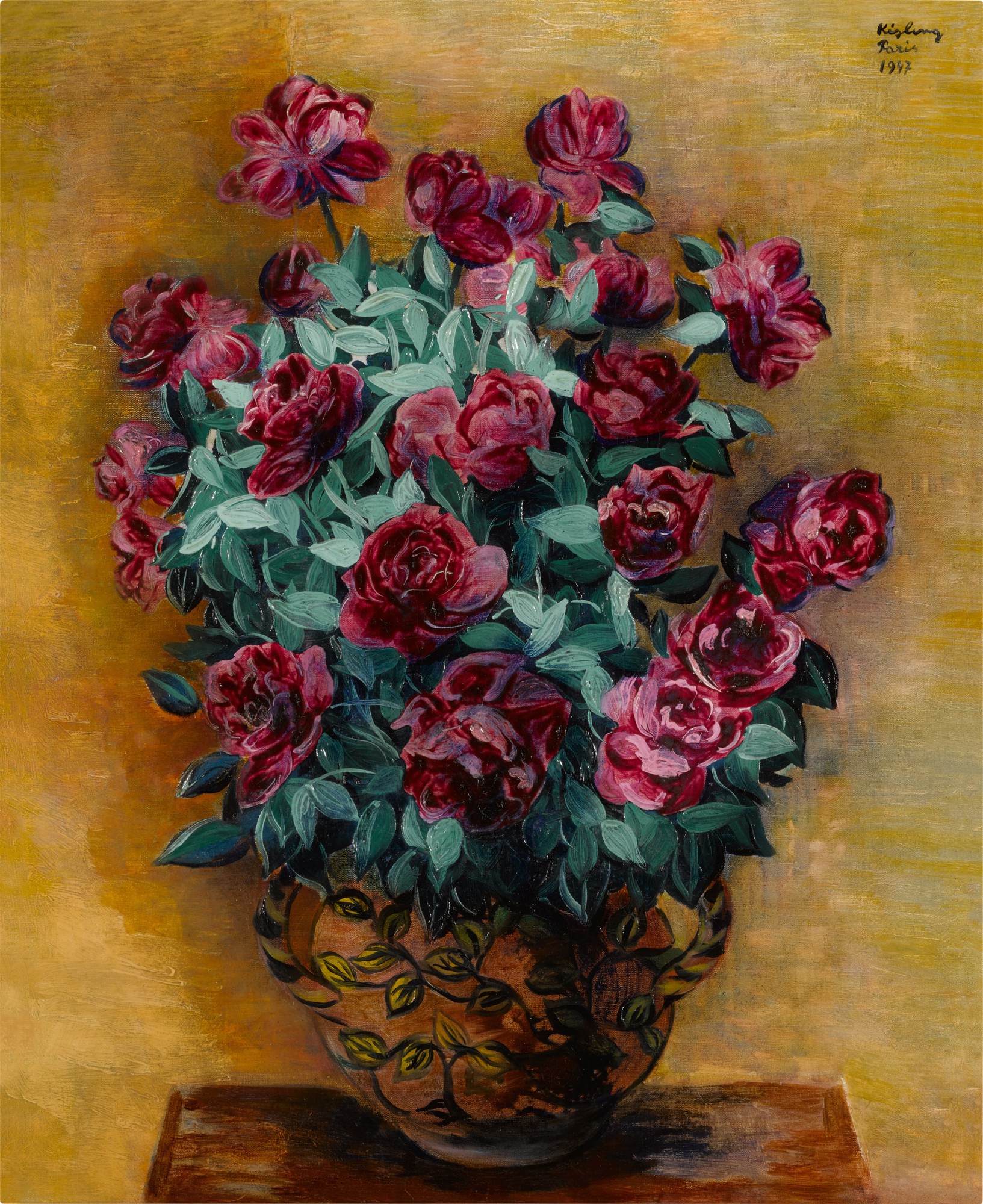
Bouquet de girofles
Kisling absorbed the structural lessons of Cézanne and engaged seriously with Cubism, but his sensibility ultimately pulled him toward something warmer and more lyrical than either tendency fully allowed. By the mid 1910s Kisling had found the distinctive voice that would make him one of the most sought after painters in Paris. His portraits and nudes became celebrated for a quality that is difficult to name precisely but immediately felt: a combination of formal refinement and emotional generosity. His figures breathe.
The women he painted, often reclining or gazing outward with an expression that is neither invitation nor reserve but something more complex and more honest, seem genuinely present rather than posed. Works such as Nu allongé from 1927 exemplify this quality perfectly. The figure occupies the canvas with serene authority, the flesh rendered in tones that move from warm ivory to shadow with the kind of confident, fluid brushwork that only comes from years of absolute dedication to observation. His still lifes and floral compositions reveal an equally accomplished sensibility.
Moïse Kisling
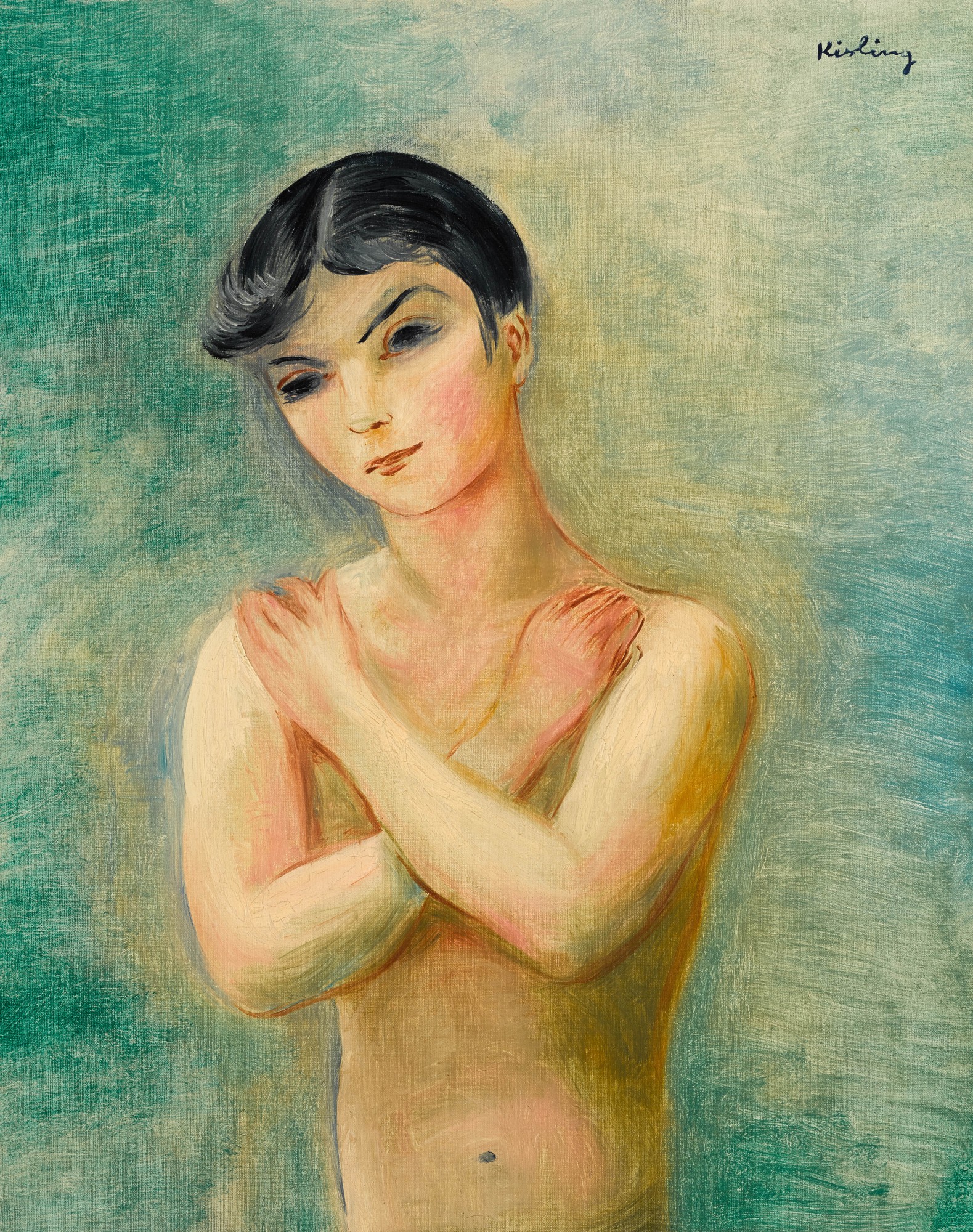
Buste nu aux bras croisés, 1935
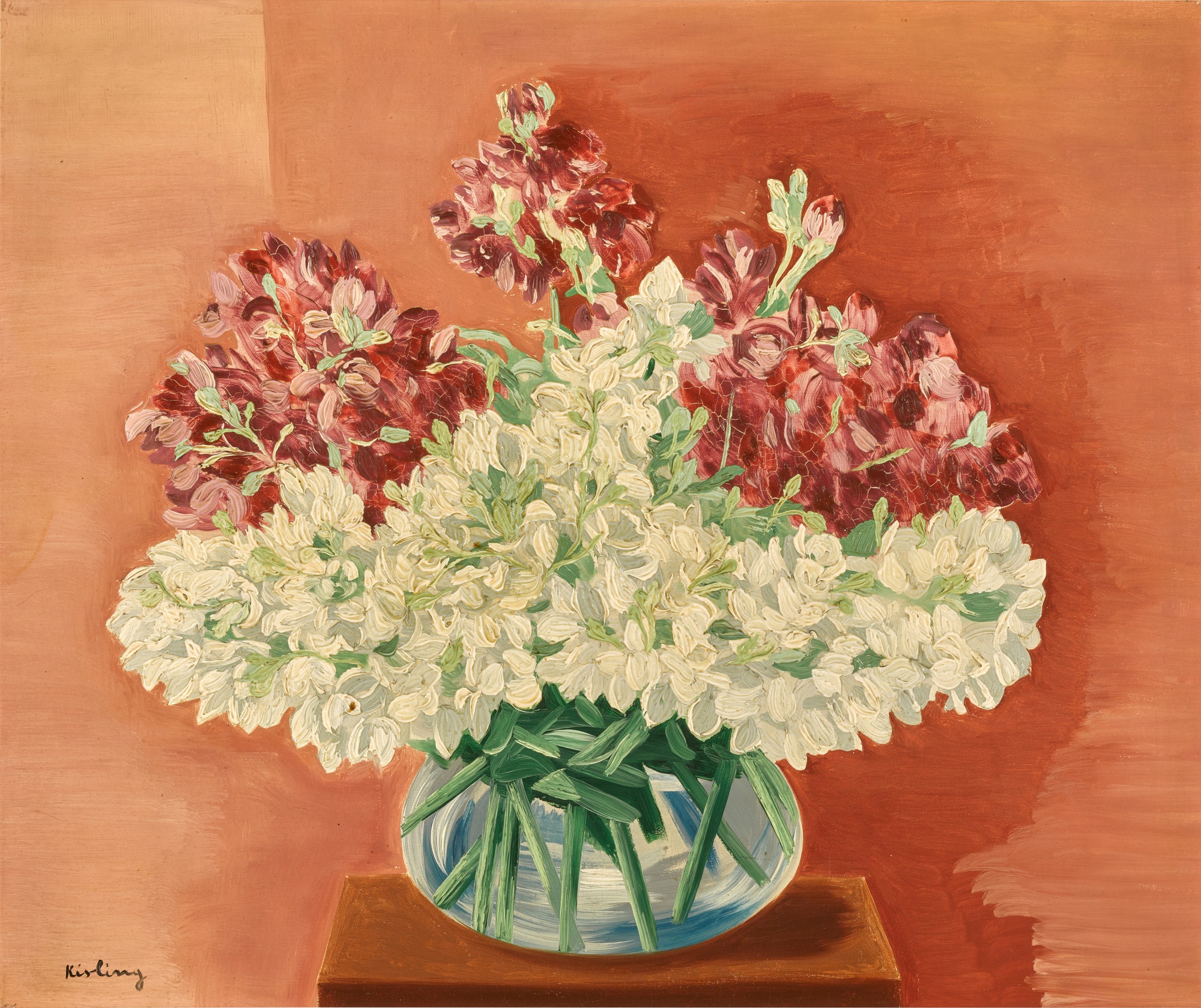
Fleurs blanches et grenat dans un vase transparent, painted in 1948, demonstrates how Kisling's late work achieved a kind of concentrated luminosity, the blooms arranged with apparent casualness but composed with the precision of a master. His bouquets are not decorative in any diminishing sense of the word. They carry the same psychological weight as his portraits, the same feeling that the painter brought his full attention and genuine feeling to the subject before him. The Bouquet de fleurs of 1936 and the paysage works from Saint Tropez and the surrounding countryside show an artist equally at home across genres, moving between the intimate and the expansive with effortless confidence.
Kisling's career was interrupted, as so many were, by the upheavals of the twentieth century. He served in the French Foreign Legion during the First World War and was wounded at the Battle of the Somme, a fact that speaks to his deep identification with his adopted country. During the Second World War, as a Jewish artist in occupied France, he fled to the United States, spending the war years in New York and California before returning to France in 1946. These years of exile gave his late work a particular emotional resonance.
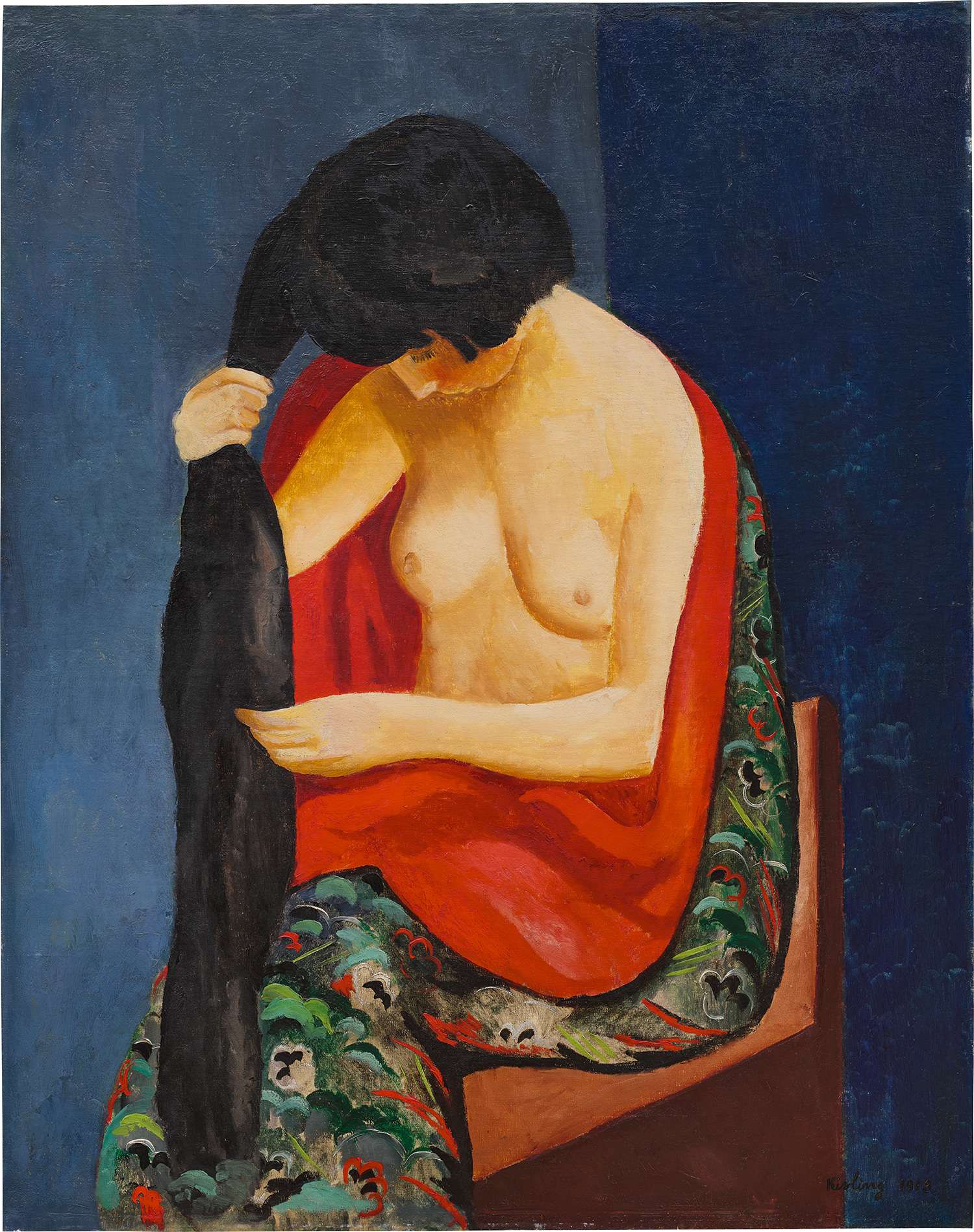
Moïse Kisling
Jeune femme assise se coiffant, 1918
The landscapes and floral pieces he produced after his return carry a quality of homecoming, of rediscovered pleasure in the light and warmth of the French south. For collectors, Kisling occupies an enviable position in the market. His work is well documented, with a significant body of scholarship and catalogue raisonné research supporting attribution and provenance. His portraits of named sitters, such as Mme Jacques Guérard from 1930, carry particular appeal, combining the art historical interest of a documented commission with the visual pleasure of his finest figural work.
His nudes consistently perform well at auction, and his floral canvases have attracted growing attention from collectors who recognize them as serious achievements rather than secondary subjects. Works on paper, including watercolors such as the Paysages de campagne of 1948, offer an accessible point of entry into his practice while demonstrating the same sureness of hand that characterizes his oils. To understand Kisling fully, it helps to place him within the broader constellation of the École de Paris. His closest artistic neighbors include Modigliani, whose elongated figures share something of Kisling's psychological intimacy, and Chaïm Soutine, whose expressionist intensity represents the more turbulent pole of the same Montparnasse energy.
Pascin, Foujita, and Survage were fellow travelers in the same world. What distinguishes Kisling within this remarkable group is his particular combination of sensuous warmth and classical composure. He was never the most radical painter in the room, but he was often the most accomplished, and his work has aged with extraordinary grace. Kisling died in Sanary sur Mer in 1953, leaving behind a body of work that spans portraiture, the nude, landscape, and still life with consistent distinction.
His legacy is that of an artist who brought enormous craft and genuine feeling to every canvas, who made the human figure and the natural world glow with an inner light that is entirely his own. In a moment when collectors and institutions are looking again at the full breadth of modernism, his work stands out as both historically significant and visually irresistible. To own a Kisling is to own a piece of the most vital artistic community of the twentieth century, seen through the eyes of one of its most gifted and generous members.
Featured Works
Explore books about Moïse Kisling