Mohammed Sami
Mohammed Sami Paints Memory Into Radiant Stillness
Artist Spotlight · The Collection Editorial
In the spring of 2023, Mohammed Sami's solo exhibition at Modern Art in London drew the kind of quiet, sustained attention that marks a genuine cultural moment. Visitors moved slowly through rooms hung with large canvases that seemed, at first glance, almost serene. Domestic objects, empty interiors, curtains catching an unseen light. Then the weight of the work settled in, and the rooms felt charged with something unspoken, something that had been held in the body for a very long time.
Mohammed Sami
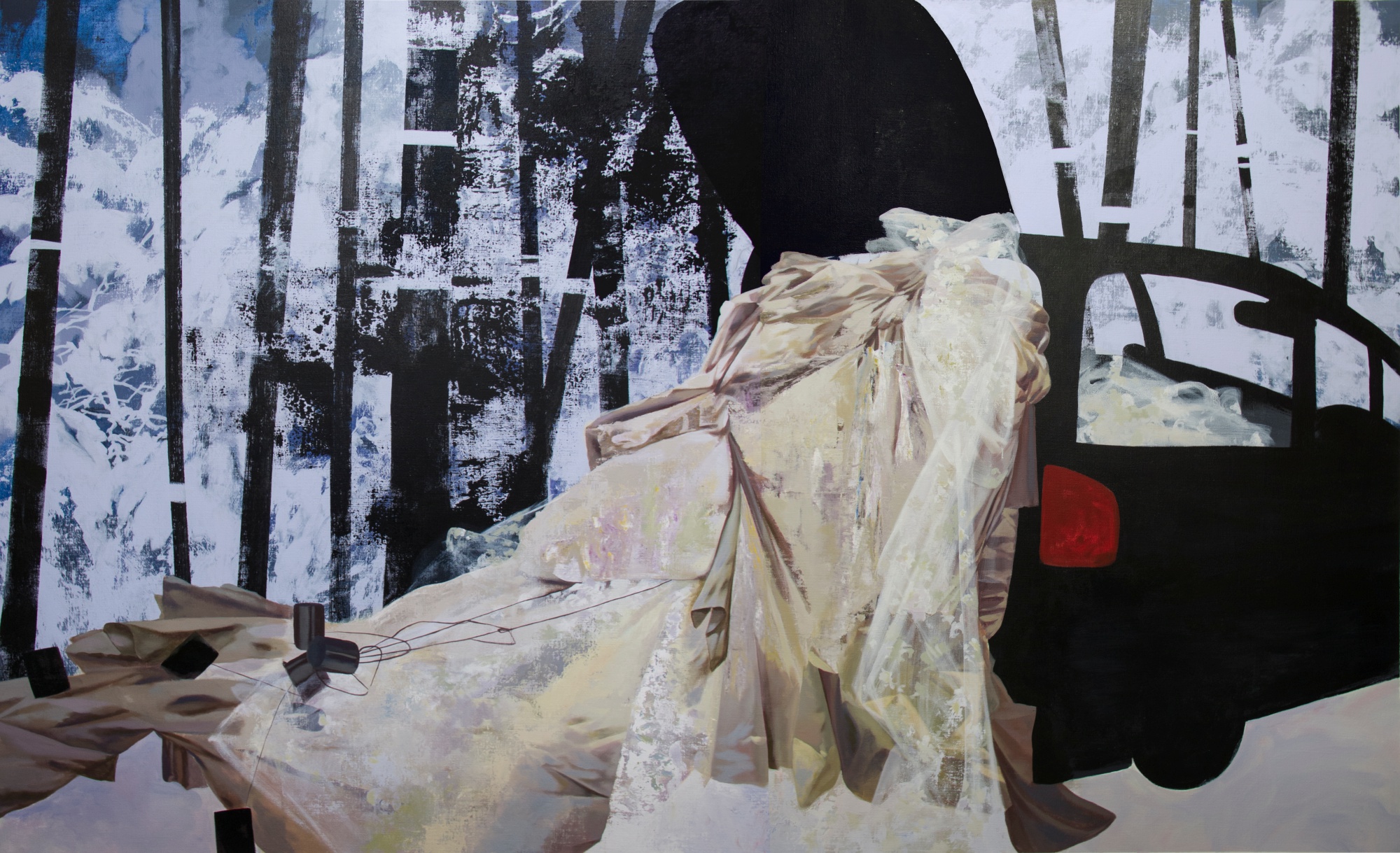
Wedding Dress, 2019
It was the response of an art world that had caught up, at last, with an artist whose singular vision had been quietly accumulating force for years. Mohammed Sami was born in Baghdad in 1984, and grew up inside the particular texture of life under Saddam Hussein's regime. That texture was not simply one of overt violence, though violence was always present. It was something more ambient, more psychological: the hum of surveillance, the discipline of self censorship, the way fear becomes indistinguishable from the furniture of daily life.
These are the sensations that Sami carries into his studio, and they are the sensations that make his paintings so unusually affecting. He studied art in Baghdad before eventually making his way to Europe, ultimately settling in Stockholm, where he lives and works today. The distance from Iraq has not diminished the pull of that early formation. If anything, the distance has sharpened it, allowing memory to crystallize into image with the precision of a painter who understands that the past is never truly past.
Mohammed Sami
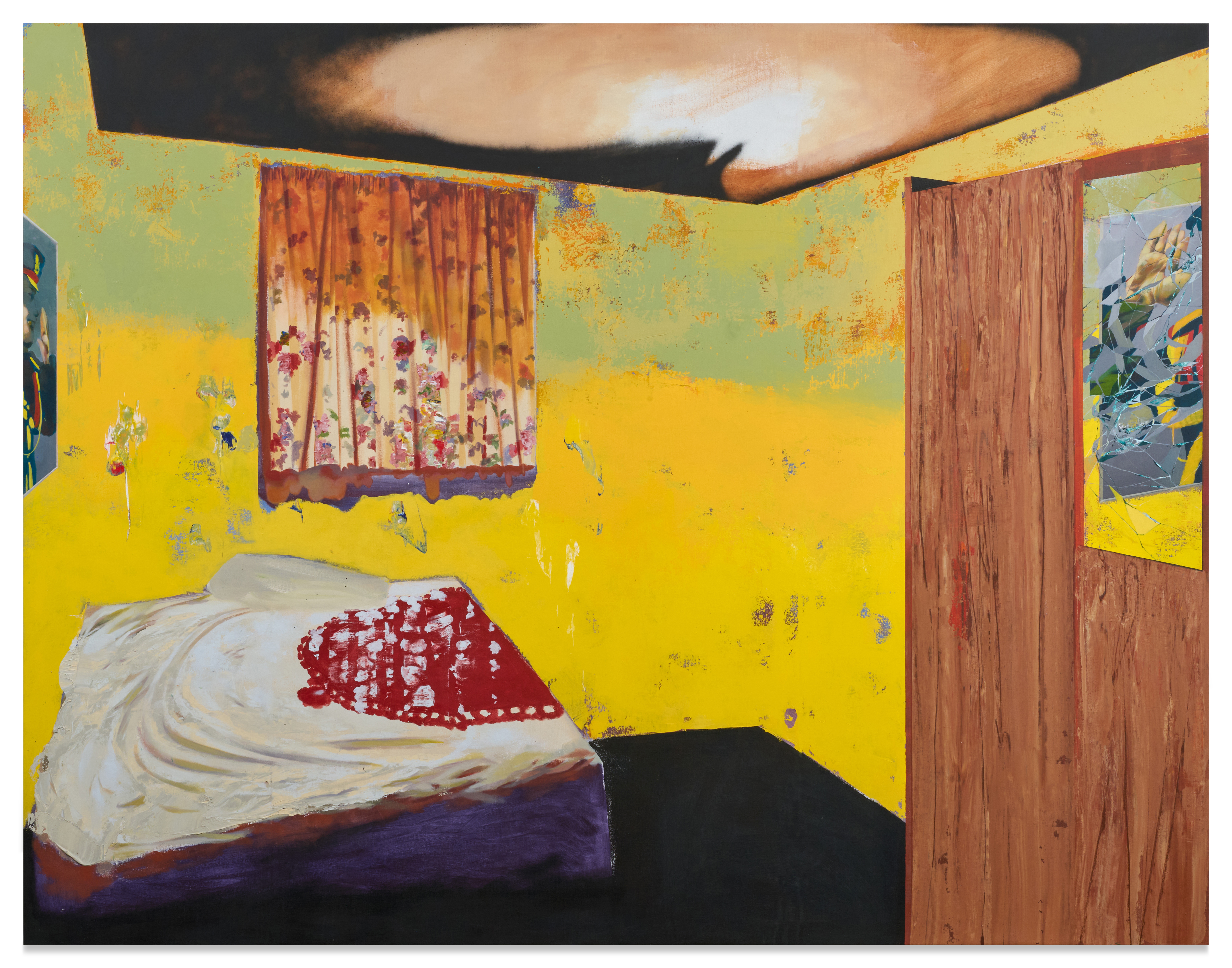
Poor Folk II, 2019
Sami's artistic development has moved with deliberate, unhurried confidence. He works in acrylic on linen and canvas, building surfaces that are simultaneously luminous and withdrawn. His palette is famously muted, favouring washed greys, faded ochres, and the bleached quality of things left too long in afternoon light. Yet these are not cold or clinical pictures.
There is warmth in them, the warmth of something remembered with tenderness even as it is remembered with dread. His compositions are characterised by an eerie stillness, objects and interiors rendered with a precision that stops just short of photographic, leaving space for the imagination to do its unsettling work. Sami has spoken about painting as a way of processing experience that cannot be processed through language alone, and this commitment to the image as a primary form of knowledge gives his work its particular authority. Among the works that have most clearly defined his practice are those produced around 2018 and 2019, a period of remarkable creative concentration.
Mohammed Sami
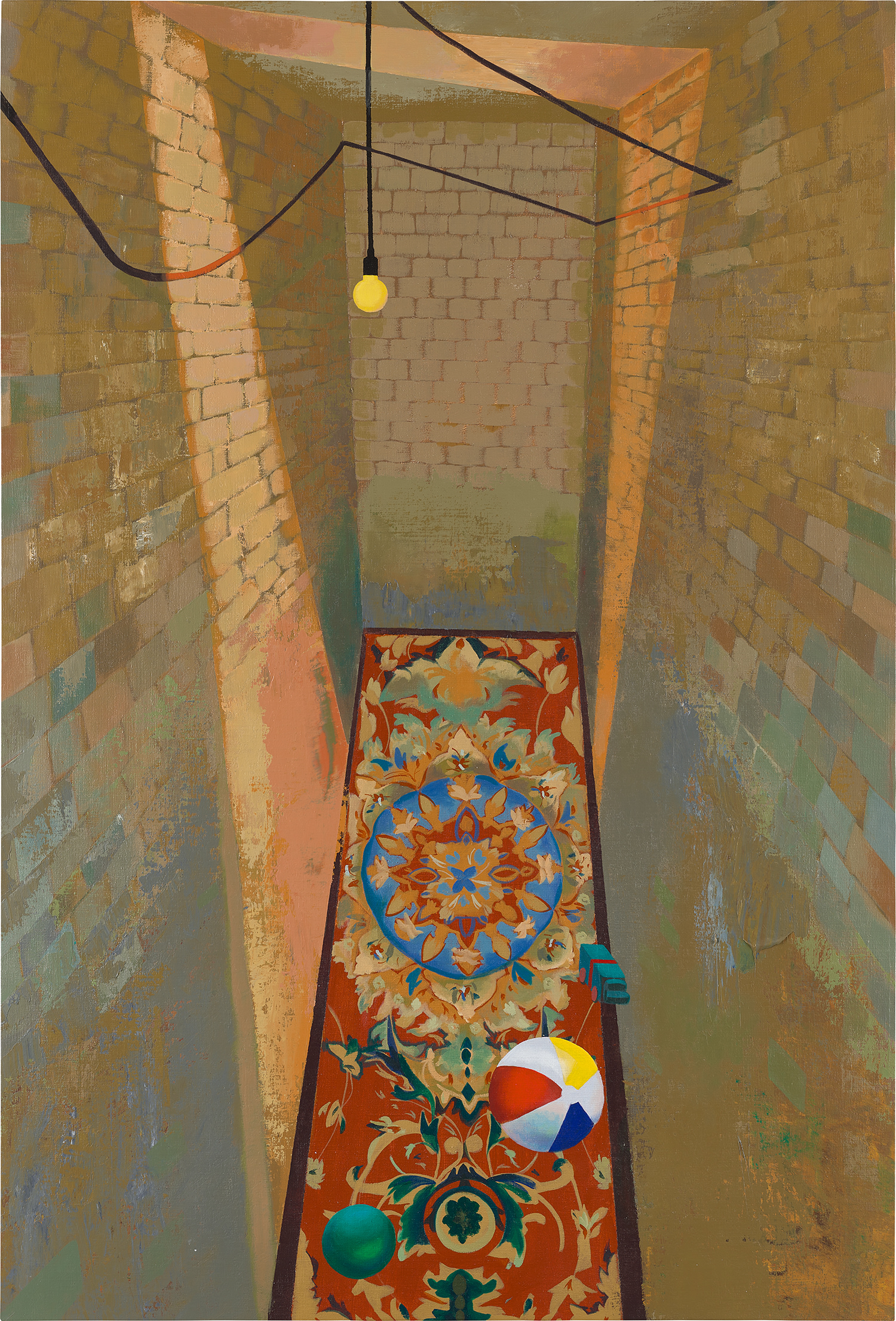
Childhood, 2018
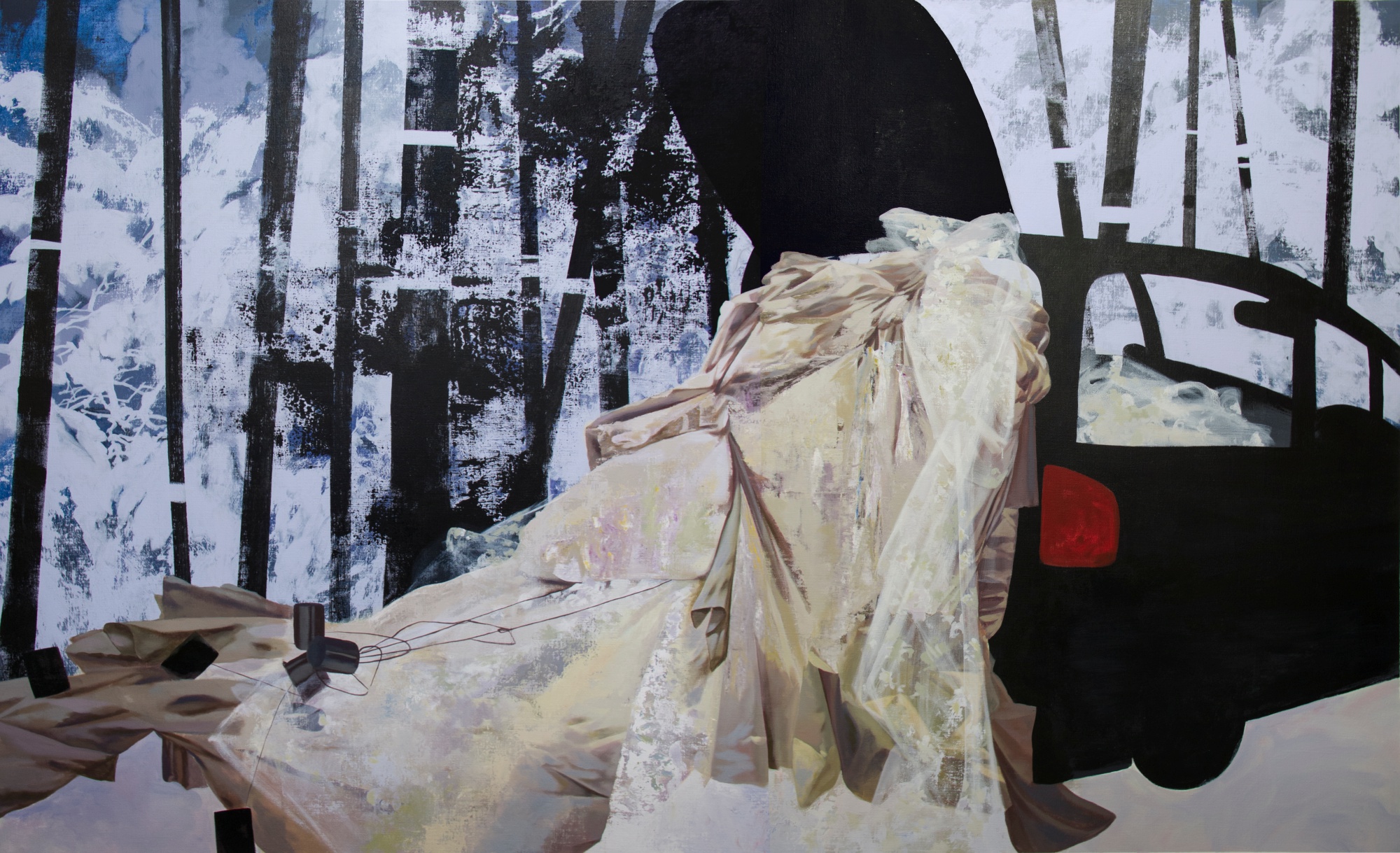
"Childhood" from 2018, acrylic on linen, is one of the most quietly devastating paintings of recent years. The work renders its subject with the kind of attentive stillness that transforms the ordinary into something inexplicably charged. "Wedding Dress," from 2019, operates with a similar logic: an object that should carry associations of joy and futurity instead hovers in a space of ambiguity, the lightness of the fabric in tension with the psychological gravity of its context. "Poor Folk II" and "Family Issues I," both from 2019 and also painted in acrylic on linen and canvas, extend this investigation into the domestic sphere, treating the interior as a space of psychological complexity rather than comfort.
These works share a compositional intelligence that is entirely Sami's own, a refusal of melodrama in favour of something more penetrating and more lasting. From a collecting perspective, Sami represents one of the most compelling propositions in contemporary painting. His work sits at an intersection of critical seriousness and emotional accessibility that is rare and genuinely valuable. Collectors who have come to his work through institutional channels, via exhibitions at Modern Art in London and through the sustained critical attention he has received in publications across Europe and the United States, are acquiring paintings that reward long acquaintance.
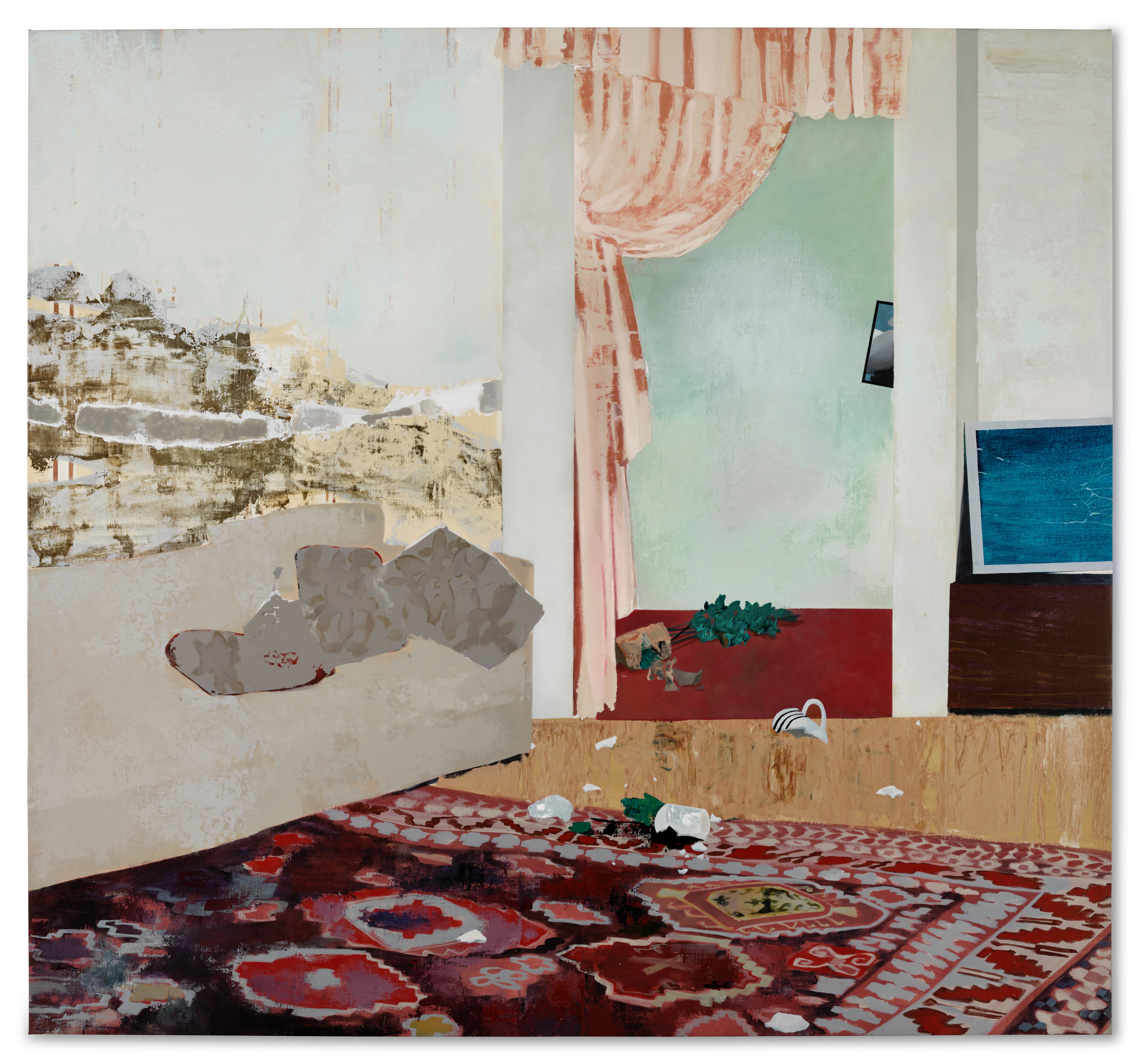
Mohammed Sami
Family Issues I, 2019
These are not works that give themselves up immediately. They ask to be lived with, and they repay that patience generously. The relatively intimate scale of Sami's output, combined with growing institutional recognition, means that works from his key periods carry genuine significance within any serious collection of contemporary painting. For collectors building coherent holdings in painting that engages with memory, displacement, and the psychological life of recent history, Sami belongs in essential company.
To understand Sami's position within the broader landscape of contemporary painting, it helps to think about the tradition he is in conversation with. His interest in the psychological charge of mundane objects places him in dialogue with artists such as Luc Tuymans, whose Belgian paintings similarly use the domestic and the ordinary as vehicles for historical and emotional weight. There are also resonances with the work of Neo Rauch, in the sense of a painted world that feels simultaneously specific and dreamlike, though Sami's register is more restrained, less theatrical. Within the context of painters working through the experience of displacement and political history, Sami stands alongside artists such as Kader Attia and Adrian Ghenie as a figure who insists on the personal and the psychological as legitimate and necessary sites of historical reckoning.
His work is not illustrational. It does not narrate events. Instead, it holds the feeling of events, which is a far more difficult and far more enduring achievement. What makes Mohammed Sami matter today, beyond the considerable pleasures of the paintings themselves, is the question his work poses about how we carry history inside us.
He is painting from within a biographical experience that many in the Western art world have encountered only as news, as abstracted geopolitical fact. Sami transforms that fact into felt experience, into the specific gravity of a domestic object in a room where fear has been a permanent resident. In doing so he enlarges the scope of painting and reminds us what the medium can do when wielded by an artist of genuine intelligence and genuine courage. The art world has recognised this with growing enthusiasm, and the sense now, looking at his trajectory, is that we are still in the early chapters of a significant career.
The best, one feels, is still ahead.