Mitch Epstein

Mitch Epstein Illuminates the American Dream
Artist Spotlight · The Collection Editorial
“I was trying to understand America's relationship to power, in every sense of the word.”
Mitch Epstein, interview on American Power
When the Museum of Modern Art in New York acquired works from Mitch Epstein's landmark series American Power, it confirmed what critics and collectors had long suspected: here was one of the defining photographic voices of his generation. Epstein had spent years traversing the United States, standing before cooling towers, coal plants, and reservoir landscapes with his large format camera, producing images of staggering formal beauty that also functioned as incisive documents of a nation reckoning with its own appetites. The series, developed between 2003 and 2008, arrived at precisely the moment when conversations about energy infrastructure, environmental consequence, and American identity were reaching a fever pitch. It has not lost a single degree of urgency since.

Mitch Epstein
Office Door from Family Business
Mitch Epstein was born in 1952 in Holyoke, Massachusetts, a working class mill town whose own industrial history would later resonate through much of his mature work. He studied at the Union Arts Center in Northampton before heading to New York, where he trained at the Cooper Union and later at the Rhode Island School of Design. These formative years introduced him to the rigorous visual thinking that would underpin his entire career. Like many American photographers of his cohort, he was shaped by the legacy of photographers such as Robert Frank and Stephen Shore, artists who understood that the vernacular landscape of the United States was not merely backdrop but subject, dense with social meaning and emotional charge.
Epstein first gained significant recognition through his early color work made in India during the 1970s and 1980s, a body of photographs marked by their warmth, intimacy, and chromatic richness. These images demonstrated from the outset his gift for rendering the world in colors that feel simultaneously heightened and completely true. Returning his attention to the United States, he began excavating the textures of everyday American life with the same attentiveness he had brought to the subcontinent. His series Family Business, made in collaboration with memories of his own family and their Holyoke department store, showed a photographer willing to turn the camera inward, using personal history as a lens for examining broader American narratives of commerce, aspiration, and loss.
Mitch Epstein
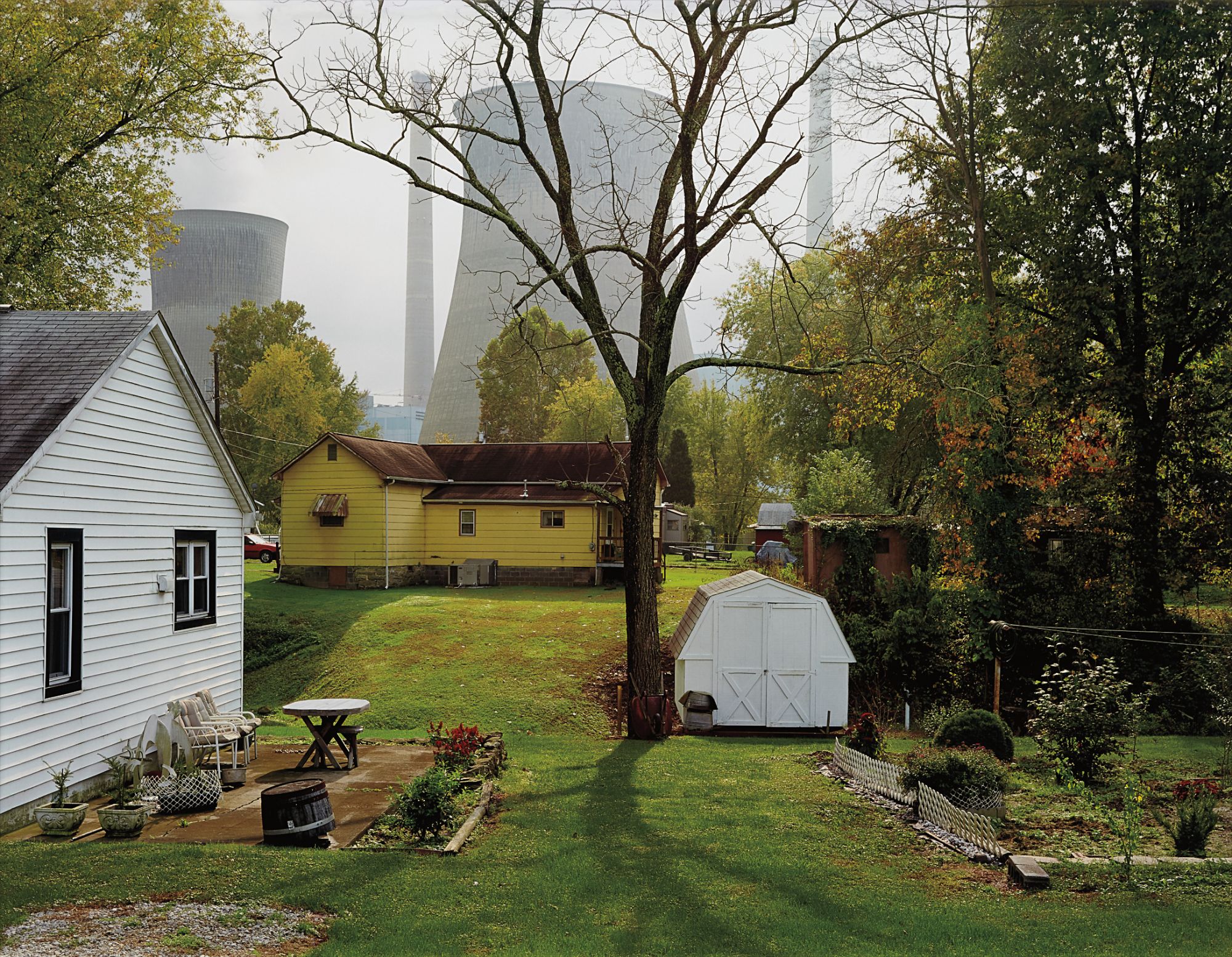
Amos Coal Power Plant, West Virginia from American Power
The American Power series remains the achievement for which Epstein is most celebrated, and it rewards close study. Works such as Amos Coal Power Plant, West Virginia and Hoover Dam and Lake Mead, Nevada are chromogenic prints of considerable scale, and their scale is not incidental. Epstein needs room to contain the enormity of what he is photographing, the vast industrial structures that Americans built to power their homes and factories, and the landscapes those structures have transformed. Yet these are not polemical images in any simple sense.
They are profoundly beautiful, shot with a painter's understanding of light and composition, so that a coal plant belching steam against a blue sky can appear almost sublime. This tension, between beauty and consequence, is the engine of the series and the source of its emotional power. A work like BP Carson Refinery, California brings that tension into sharp focus, the gleaming infrastructure of petroleum processing rendered with the same formal care one might lavish on a Constable sky. For collectors, Epstein's chromogenic prints offer something increasingly rare in contemporary photography: a genuinely coherent and historically significant body of work that spans decades without losing its conceptual thread.
Mitch Epstein
Mitch Epstein
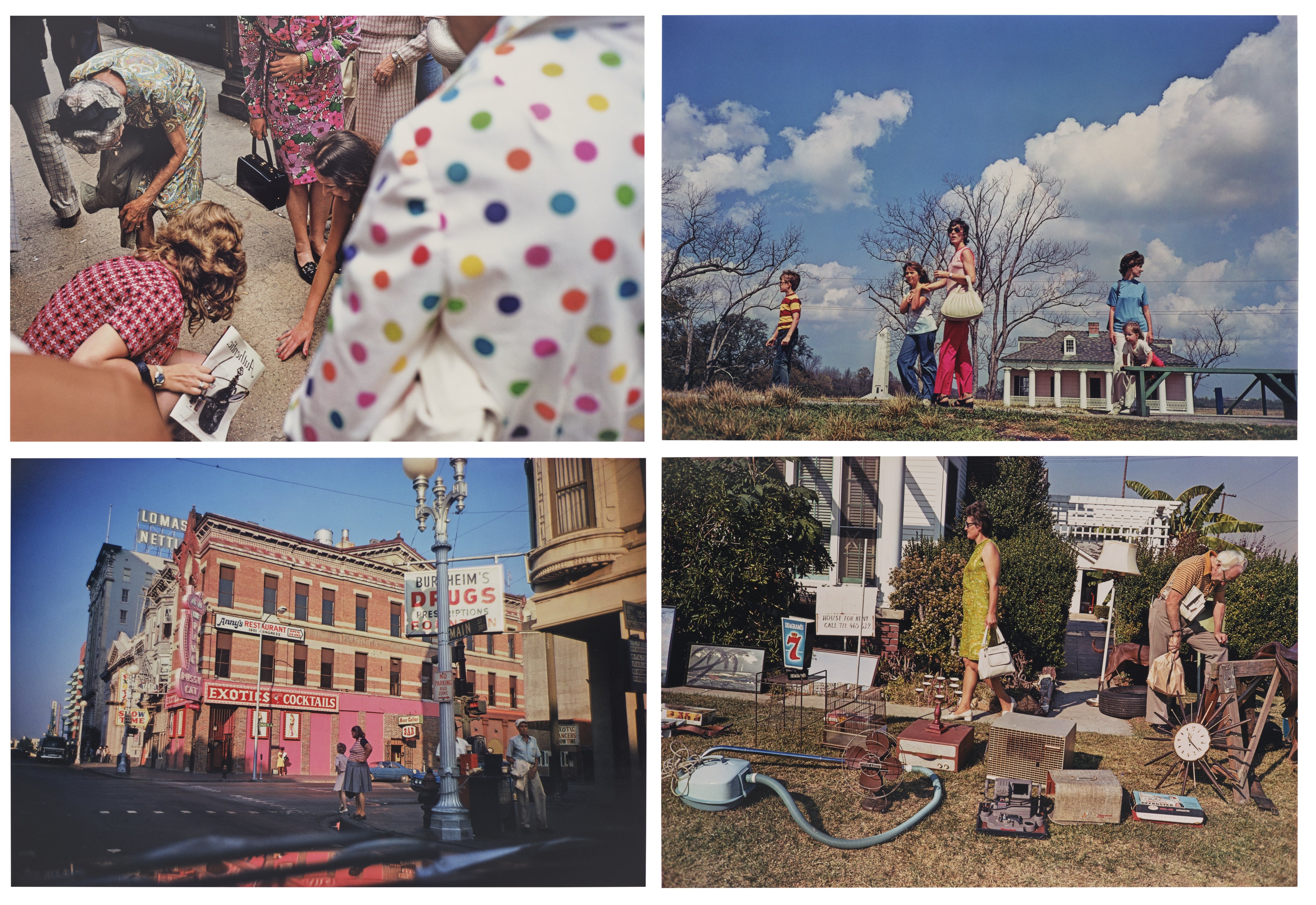
His prints are held in the permanent collections of institutions including the Museum of Modern Art, the Smithsonian American Art Museum, the Whitney Museum of American Art, and the San Francisco Museum of Modern Art, among others. This institutional depth provides important context for collectors assessing long term significance. The Recreation portfolios, among the most collectible of his editions, are exquisitely produced objects: clamshell bound, meticulously annotated, and issued in editions tight enough to sustain genuine scarcity. Printers' proofs from these editions, with their pencil annotations and accompanying colophons, represent the kind of material that serious photography collectors prize for both their documentary intimacy and their rarity.
Epstein's place within the broader tradition of American photography becomes clearer when considered alongside artists such as Joel Sternfeld, whose American Prospects similarly mapped the contradictions of the national landscape through richly saturated color, and Edward Burtynsky, the Canadian photographer whose industrial landscapes share Epstein's capacity for making environmental transformation look simultaneously ravishing and alarming. One might also invoke William Eggleston, whose influence on the use of color in documentary photography is felt across a generation, and Stephen Shore, whose Uncommon Places established a grammar of American space that younger photographers continue to work within and against. Epstein belongs in this company not as a follower but as a peer, someone who has extended the tradition by bringing to it a moral seriousness that never tips into didacticism. What makes Epstein particularly compelling for collectors today is the way his work has aged into the present moment.
Mitch Epstein
Recreation I
The questions posed by American Power have not been answered; if anything, they have multiplied. His images of energy infrastructure, made in the first decade of this century, now read as historical documents and as prophecy simultaneously. The Hoover Dam photographs, showing the vast concrete arc of that structure against the dwindling waters of Lake Mead, feel newly charged given the ongoing crisis of the American West's water supply. Epstein made these images with a patience and a formal intelligence that ensures they will continue to generate meaning as the contexts around them shift.
That is the mark of work built to last. Mitch Epstein has continued to exhibit internationally, with solo presentations at galleries and institutions across Europe and the United States. His books, published by Steidl among others, are considered essential volumes in any serious photography library. For a collector approaching his work for the first time, the American Power prints represent perhaps the clearest entry point: canonical, institutionally validated, and possessed of a visual authority that announces itself immediately.
But those who dig deeper into the Family Business work, the early color photographs, or the Recreation portfolios will find an artist of extraordinary range, someone who has spent more than five decades asking what it means to look carefully at the place he calls home. The answers, as his photographs make plain, are complicated, beautiful, and endlessly worth returning to.
Explore books about Mitch Epstein