Minor White
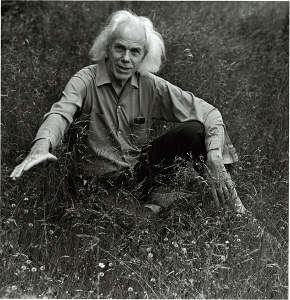
Minor White: Photography as Pure Inner Vision
Artist Spotlight · The Collection Editorial
“Be still with yourself until the object of your attention affirms your presence.”
Minor White, Mirrors Messages Manifestations, 1969
There is a photograph of frost on a windowpane, taken sometime in the 1960s, that stops you completely. It looks like nothing so much as a lunar landscape, or perhaps an aerial view of a river delta, or the surface of a dream just before waking. That Minor White made images which refused to settle into a single meaning was not an accident. It was his entire philosophy, his life's work, and the reason that institutions from the Museum of Modern Art in New York to the George Eastman Museum in Rochester continue to hold his prints among their most prized holdings.
Minor White
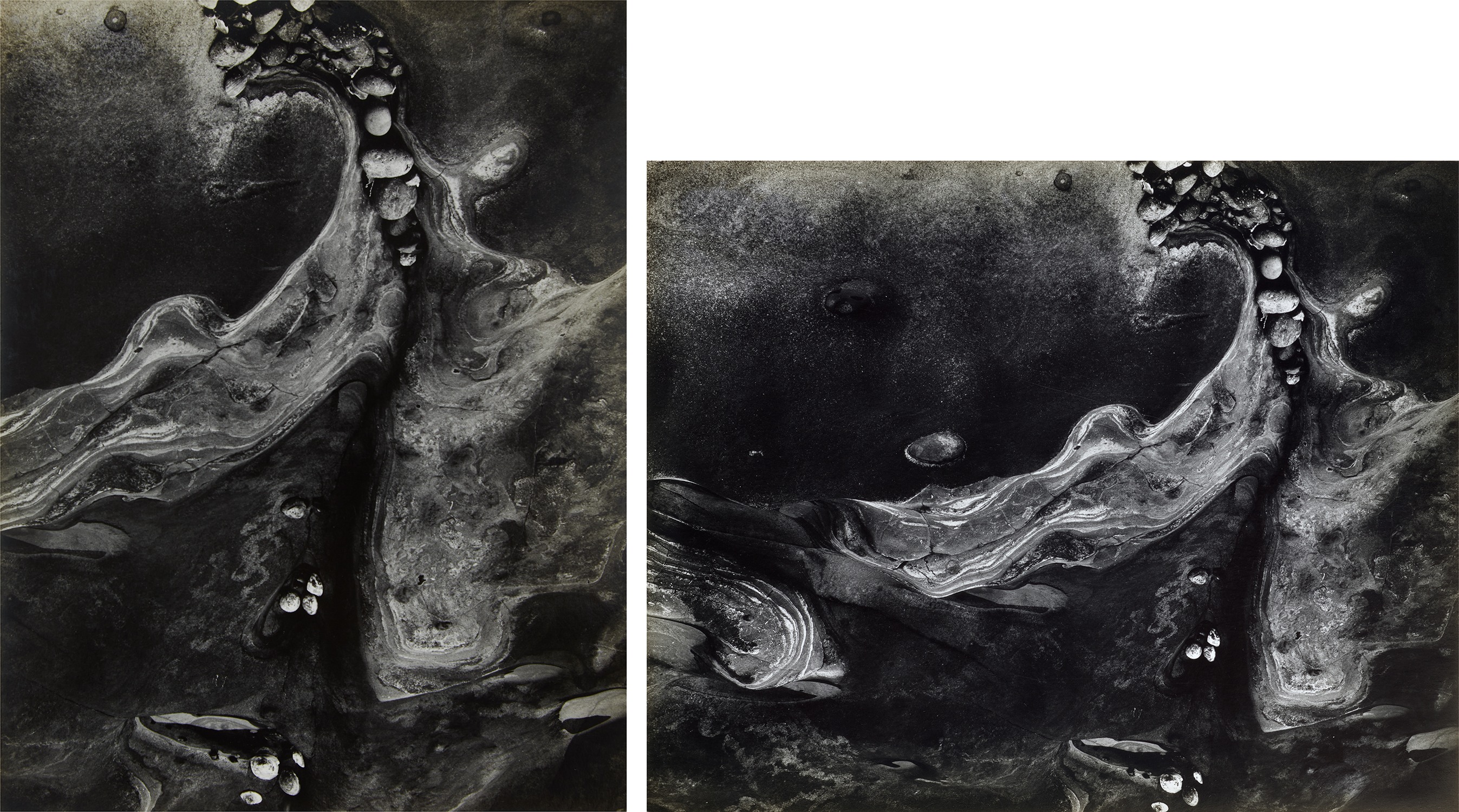
Selected Images of Point Lobos
His reputation has never faded so much as deepened, the way certain wines and certain truths become more themselves with time. Minor White was born in Minneapolis, Minnesota in 1908, and his early years gave little obvious indication of the visionary he would become. He studied botany at the University of Minnesota, a background that instilled in him a precise, patient attention to the natural world, a way of looking that would serve him for the rest of his life. He came to photography gradually, working for the Works Progress Administration in Portland, Oregon during the late 1930s, documenting cast iron architecture and the textures of urban life.
It was disciplined, purposeful work, and it taught him the craft before he was ready to transcend it. The decisive turn came when White moved to New York and encountered Alfred Stieglitz, whose concept of the Equivalent changed everything for him. Stieglitz had argued that a photograph of clouds could carry the emotional and spiritual weight of music, that the external subject was merely a vehicle for inner experience. White absorbed this idea completely and spent the rest of his career building upon it, pushing it further than Stieglitz himself had gone.
Minor White
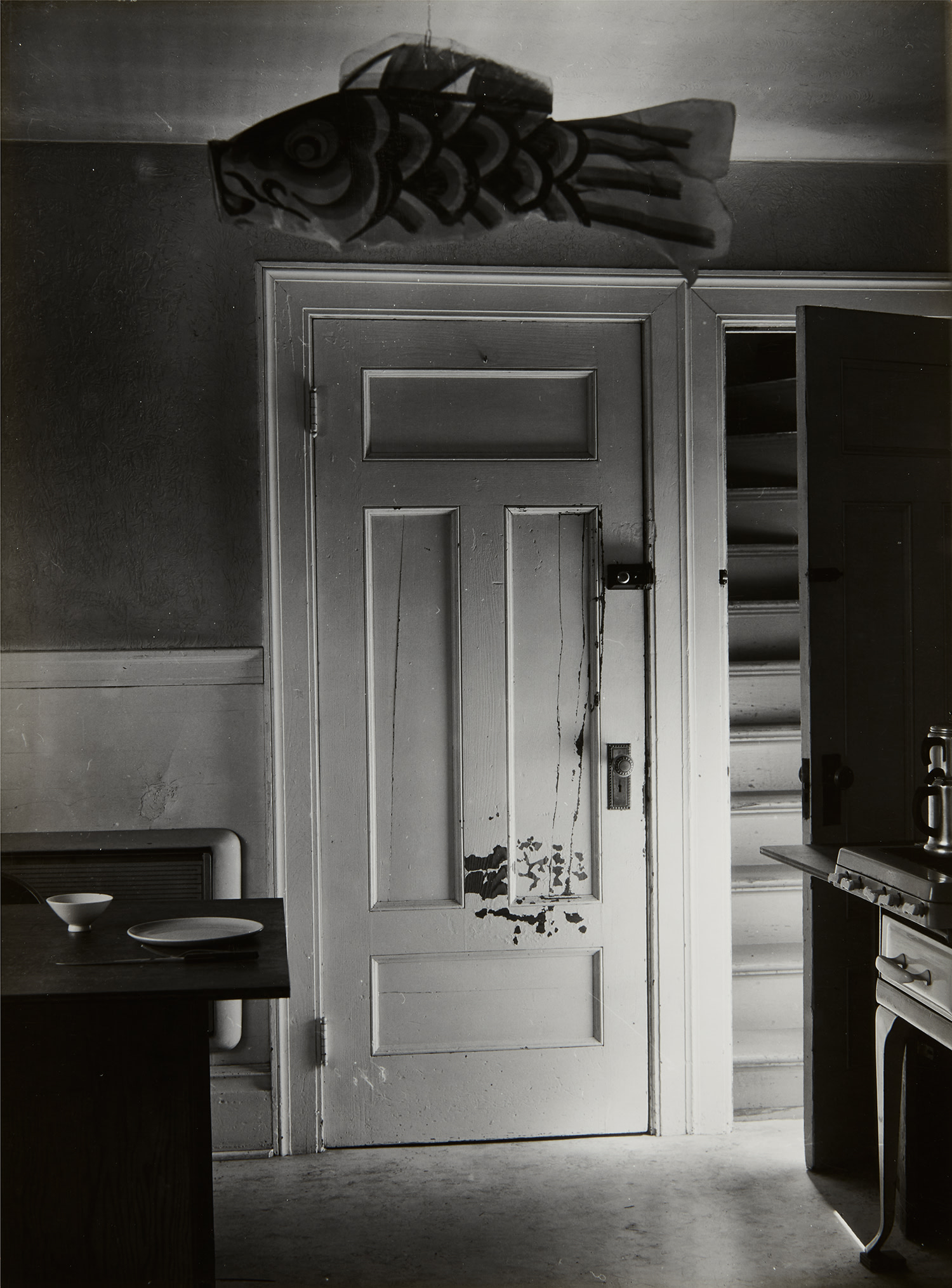
Attic Door, 72 N. Union Street, Rochester, New York
He also formed a profound friendship with Edward Weston, whose formal rigor and reverence for the natural world deepened White's own commitment to seeing with discipline and without sentimentality. Ansel Adams became another vital connection, and together these figures shaped a West Coast tradition of photographic seriousness that White would help carry into the academy. After serving in the United States Army during the Second World War, an experience that marked him deeply, White settled in Rochester, New York, where he joined the faculty of what would become the Rochester Institute of Technology. Later he moved to MIT, where he taught until near the end of his life.
“One should not only photograph things for what they are but for what else they are.”
Minor White
His classroom was legendary. He brought to photography teaching a kind of spiritual intensity borrowed partly from Zen Buddhism and the writings of G.I. Gurdjieff, asking his students not merely to take pictures but to examine their own states of consciousness.
Minor White
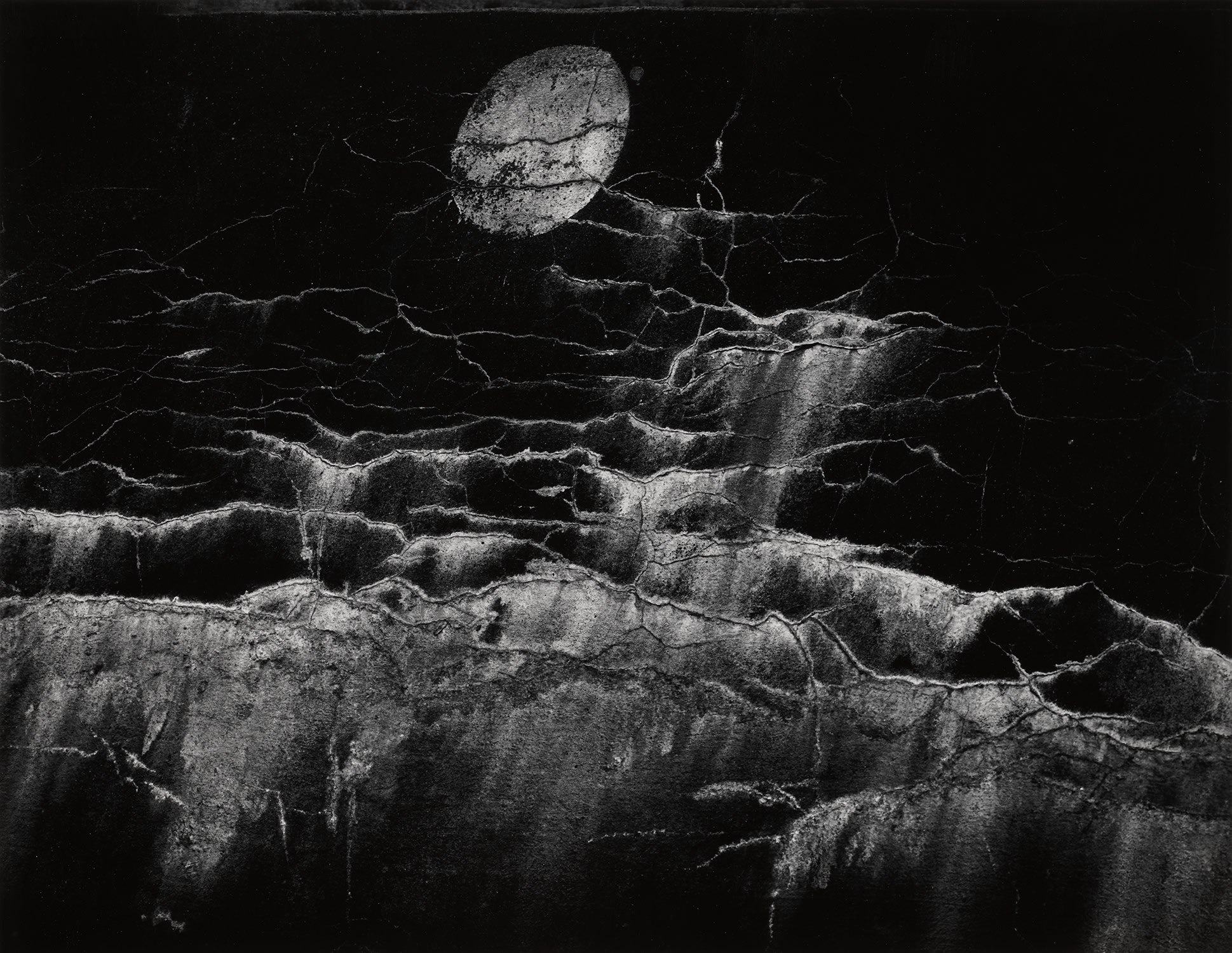
Moon and Wall Encrustations
He founded the influential journal Aperture in 1952 alongside Beaumont Newhall, Dorothea Lange, Ansel Adams, and Barbara Morgan, a publication that became the intellectual home of serious photography in America and remains essential reading today. The works available through The Collection offer a generous window into the range and depth of White's practice. "Found Sculpture (San Rafael Desert, Utah)" demonstrates his extraordinary gift for discovering form in the landscape, transforming rock and shadow into something approaching pure abstraction without losing the specific gravity of place. "Ice and Twigs, Stony Brook State Park, New York" shows his intimacy with the small and overlooked, his ability to make a gelatin silver print of ordinary natural debris feel like a contemplation of impermanence and structure simultaneously.
“No matter how slow the film, Spirit always stands still long enough for the photographer it has chosen.”
Minor White
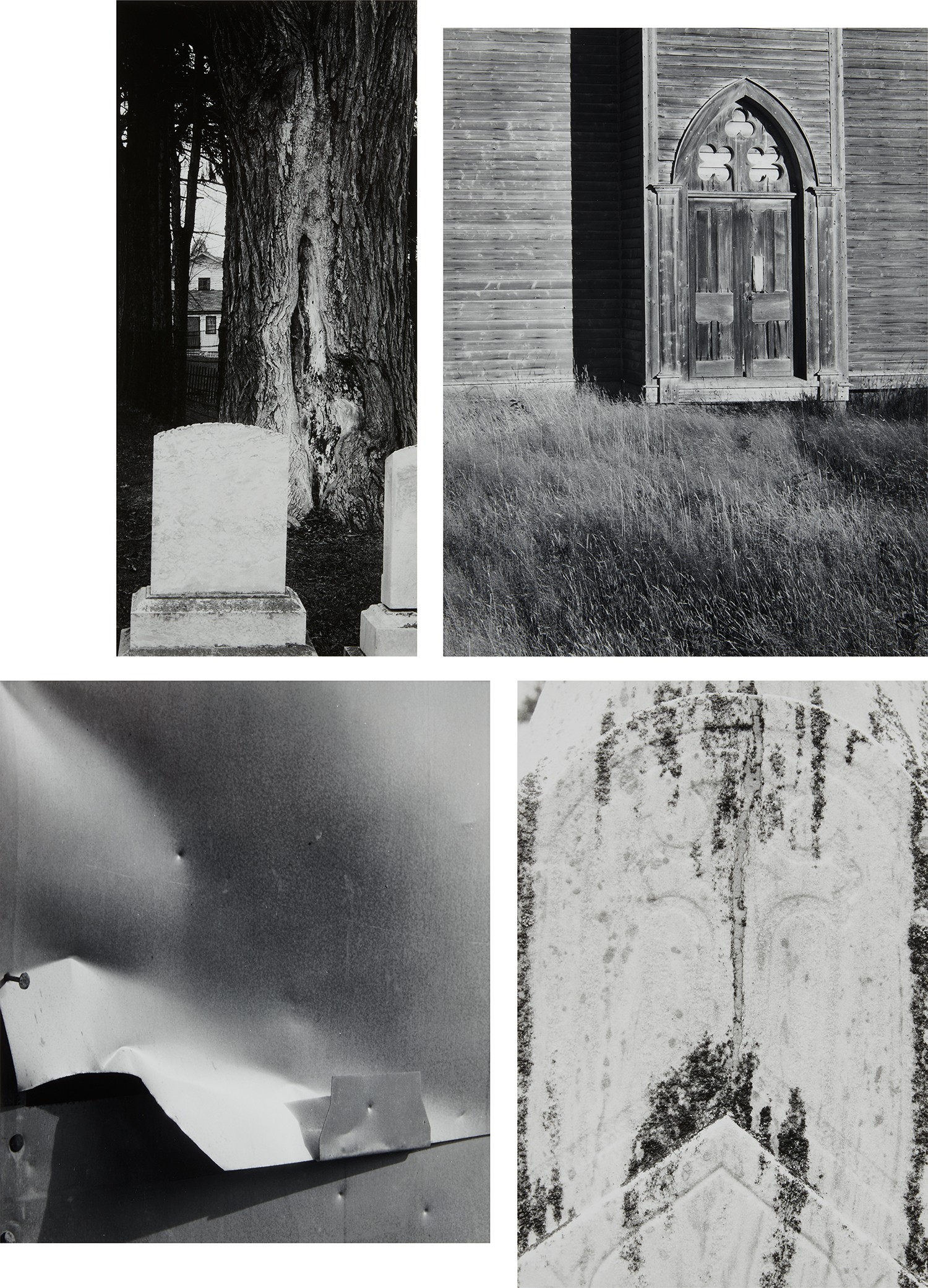
"Bullet Holes, Middle Canyon, Capitol Reef National Park, Utah" carries that characteristic White charge of the unexpected, where a mark of violence becomes something geometric, almost celestial, when seen through his eye. "Church, Hornitos, California" speaks to his ongoing meditation on silence, architecture, and the sacred, while works like "The Three Thirds (Pike, New York)" demonstrate his mature sequencing intelligence, his understanding that photographs speak most powerfully in relation to one another. For collectors, White's prints represent one of the genuinely significant and still accessible areas of postwar American photography. His gelatin silver prints, particularly those made between the late 1940s and the mid 1960s, are technically refined and emotionally potent in equal measure.
Minor White
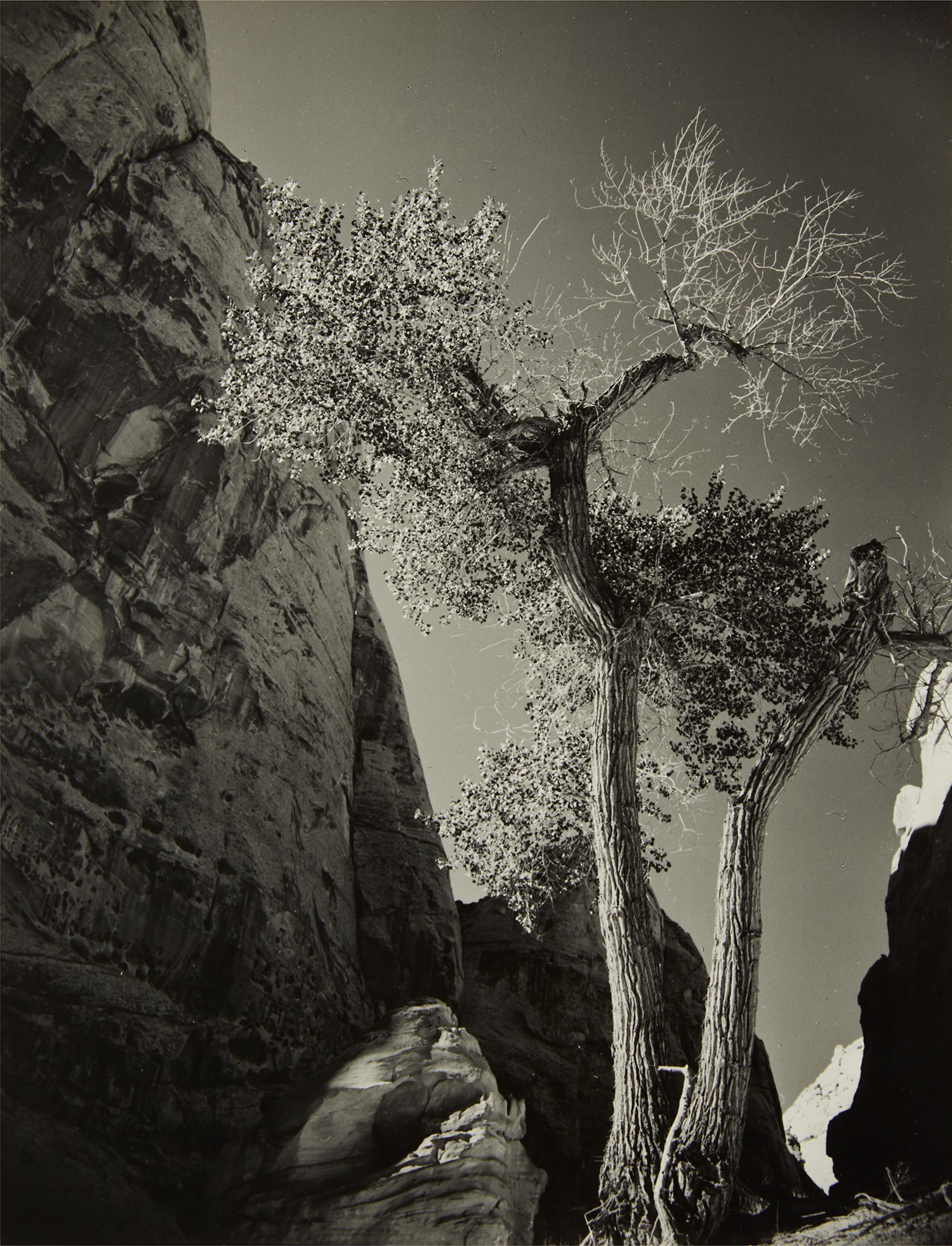
Tree and Canyon
Works from the Peter C. Bunnell Collection carry particular scholarly distinction, as Bunnell was White's most devoted critical champion and helped shape the canon of his legacy through curatorial work at the Museum of Modern Art and later at Princeton University Art Museum. Condition is paramount with White, as his attention to print quality was exacting, and the best examples retain a luminous tonal range that reproduction simply cannot convey. The market for White remains robust among collectors drawn to the intersection of American modernism and photographic conceptualism, and his works appear regularly at major auction houses including Christie's and Phillips, where strong examples command prices reflective of his historical importance.
To understand White fully is to understand the broader tradition of American photographic modernism in which he sits at a pivotal point. He stands between the formal clarity of Weston and Adams on one side and the more psychological, sequence based work of photographers like Harry Callahan and Aaron Siskind on the other. He was a contemporary and colleague of both Callahan and Siskind at various points, and all three helped establish photography as a medium worthy of the same serious attention given to painting and sculpture. Collectors who admire the introspective sensibility of Ralph Eugene Meatyard or the landscape meditations of Paul Caponigro will find in White a crucial predecessor whose influence runs through both.
Minor White died in Boston in 1976, but the conversation he started has never really ended. His insistence that photography could be a vehicle for spiritual inquiry, that the camera was not merely a recording device but an instrument of transformation, feels not dated but prescient in a moment when questions about presence, attention, and seeing are more urgent than ever. His archive is held by Princeton University Art Museum, a testament to the seriousness with which scholars and institutions regard his legacy. To collect Minor White is to participate in one of the defining philosophical projects of twentieth century American art, and to live with his prints is to understand, quietly and daily, what it means to truly look.
Featured Works
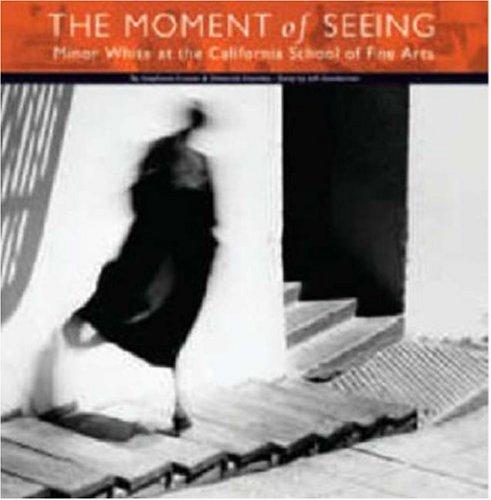
Explore books about Minor White
Minor White: A Living Remembrance
Peter C. Bunnell
Minor White: The Eye That Shapes
James Baker Hall
Rites and Passages: His Photographs
Minor White

The Zone System Manual
Minor White, Peter C. Bunnell
Light7
Minor White
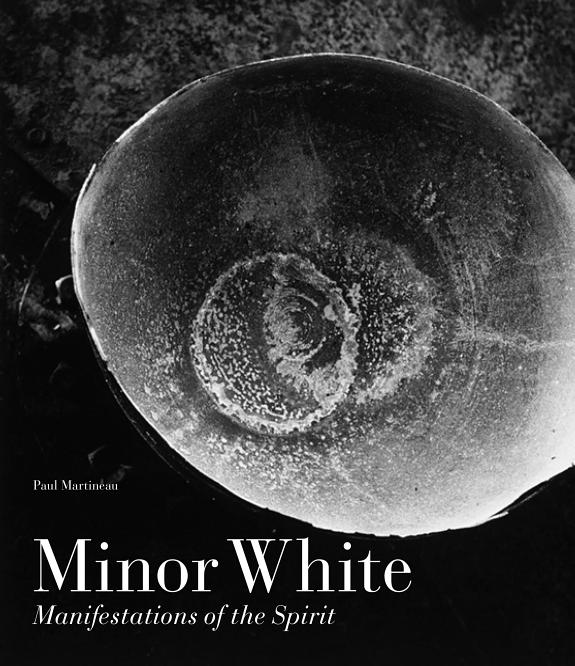
Minor White: Manifestations of the Spirit
Peter C. Bunnell, editor