Émile Bernard
Émile Bernard, The Visionary Who Shaped Modernism
Artist Spotlight · The Collection Editorial
“Art is above all a state of grace.”
Émile Bernard, correspondence
There is a particular kind of artist whose contributions to the history of painting exceed what their name recognition might suggest. Émile Bernard is precisely such a figure. Though the grand retrospectives and auction room fever that accompany household names have not always gathered around him with the same intensity, a growing community of serious collectors and art historians has spent recent decades reassessing his place in the story of modern art. Museum collections across France and the United States hold his works with quiet pride, and the scholarly literature around Post Impressionism increasingly acknowledges that Bernard was not simply present at the birth of a movement but was among its most restless and generative minds.
Émile Bernard
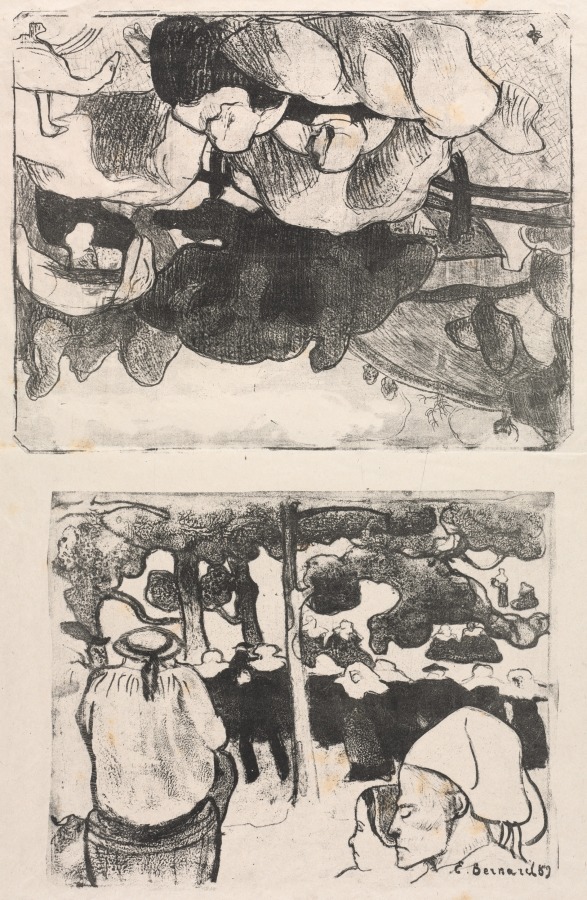
Les Bretonneries: Breton Women Making Haystacks (Bretonnes Faisant les Foins) and Wedding in Brittany (La Noce en Bretange), 1889
Bernard was born in Lille in 1868, the son of a textile merchant, and his earliest years unfolded against the industrial rhythms of northern France. His family moved to Paris when he was a child, and it was there that his artistic education began in earnest. He enrolled at the studio of Fernand Cormon in 1884, the same atelier where a young Vincent van Gogh and Henri de Toulouse Lautrec were also finding their footing. The atmosphere was charged with ambition and restlessness, and Bernard distinguished himself early as someone unwilling to accept the academic conventions that Cormon's teaching represented.
Expelled from the studio in 1886 for what his teacher considered insubordinate experimentation, Bernard was already becoming the kind of artist who could not be contained by inherited rules. His formative wanderings through Brittany in the mid to late 1880s proved transformative. The region's stark landscapes, deeply Catholic rural culture, and strong decorative folk traditions gave Bernard the raw material for some of his most important early work. It was in Pont Aven that his friendship with Paul Gauguin deepened into something creatively seismic.
Émile Bernard
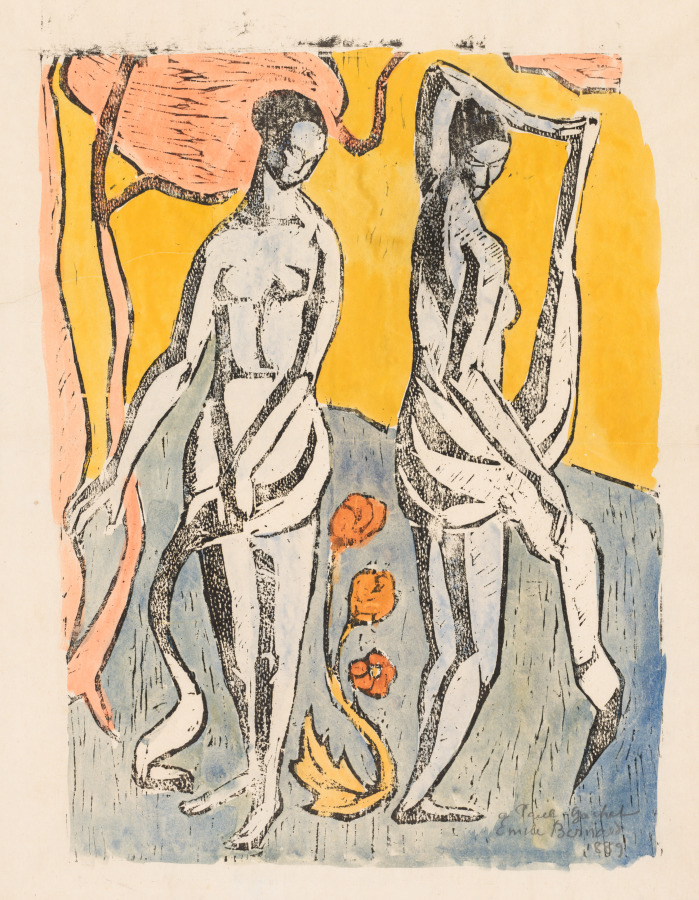
The Nymphs, 1890
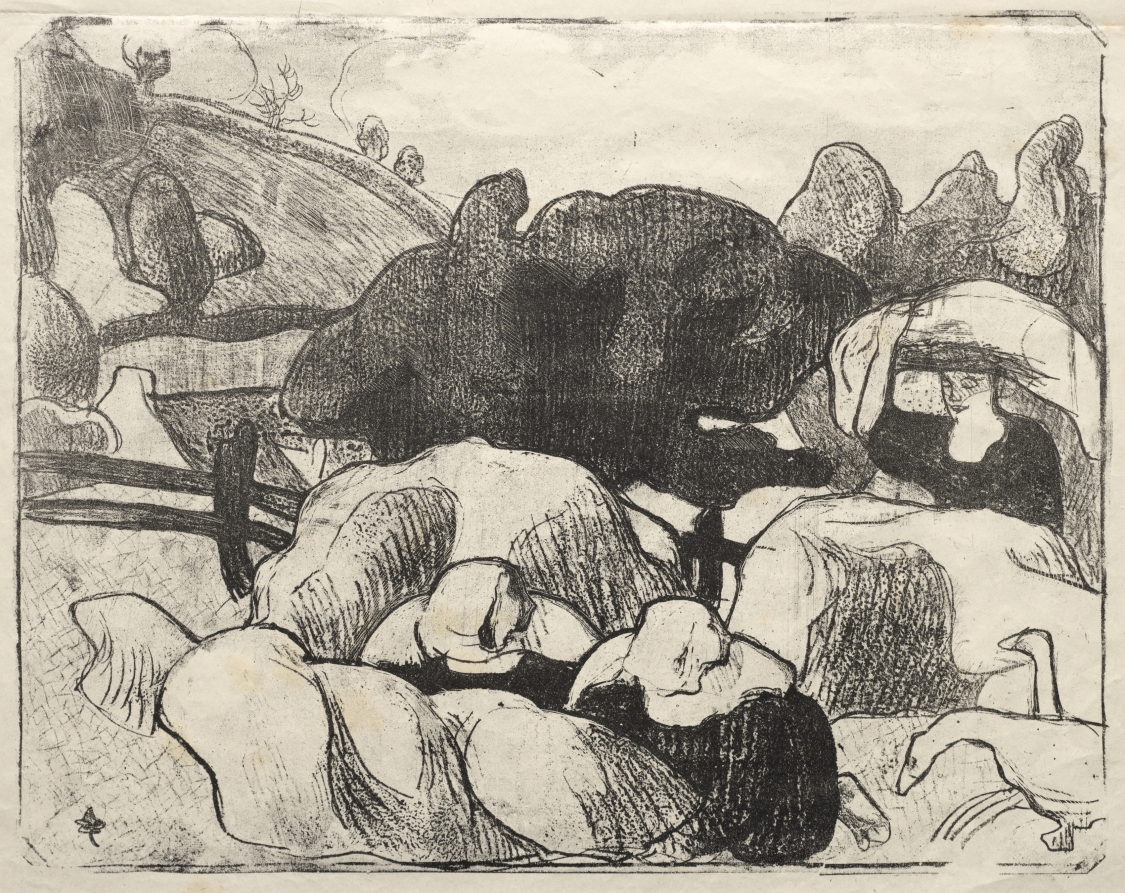
The two artists engaged in an exchange of ideas so intense and so productive that the question of who arrived first at Cloisonnism, the style defined by flat areas of color enclosed by bold dark outlines, has occupied art historians for well over a century. Bernard's own account, supported by the evidence of dated works and correspondence, places him at the leading edge of this innovation. His zincographs from the series known as Les Bretonneries, produced in 1889, demonstrate his mastery of flat patterning and simplified form with a confidence that feels anything but derivative. The works Bernard produced between 1887 and the early 1890s represent the concentrated heart of his most celebrated period.
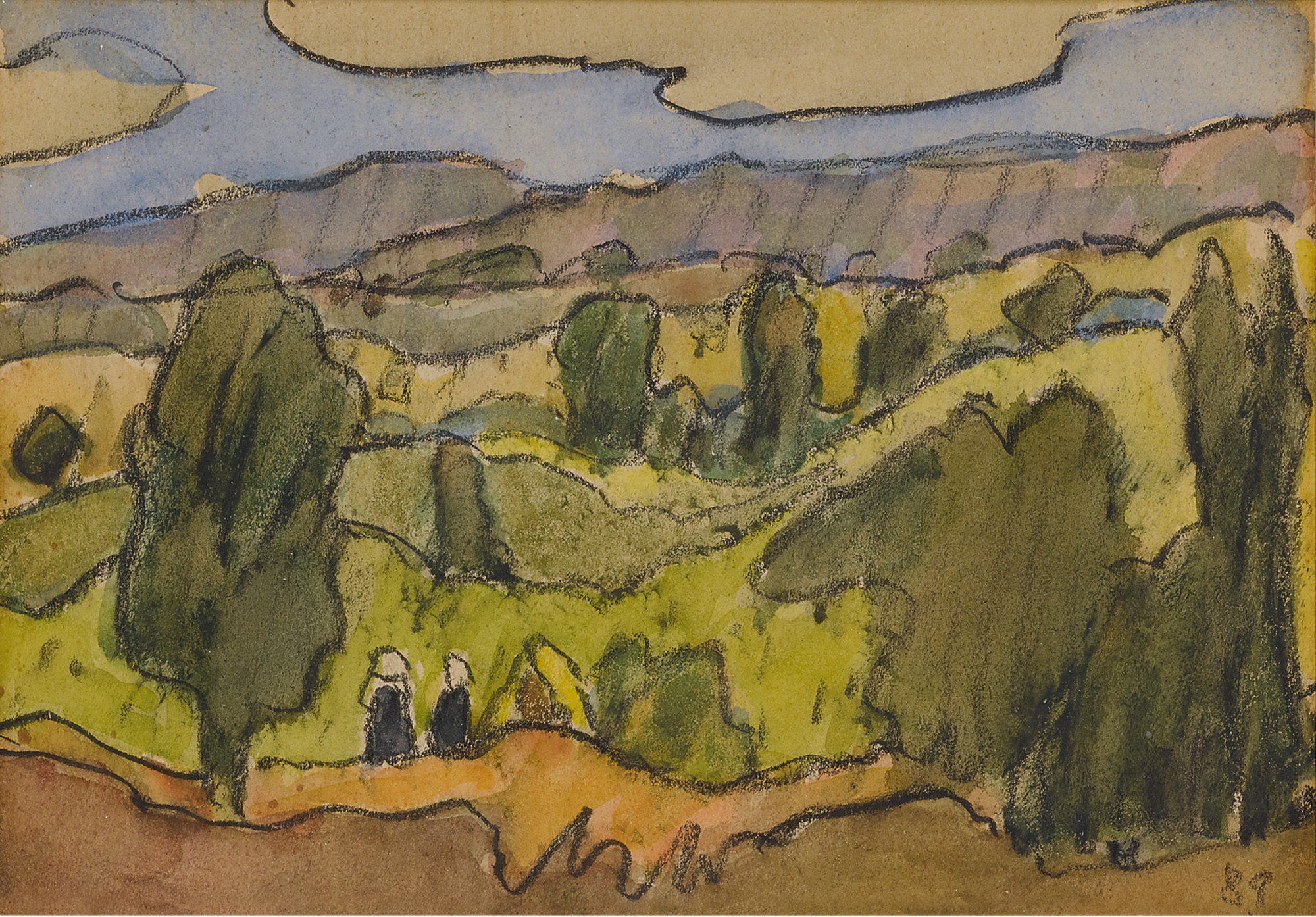
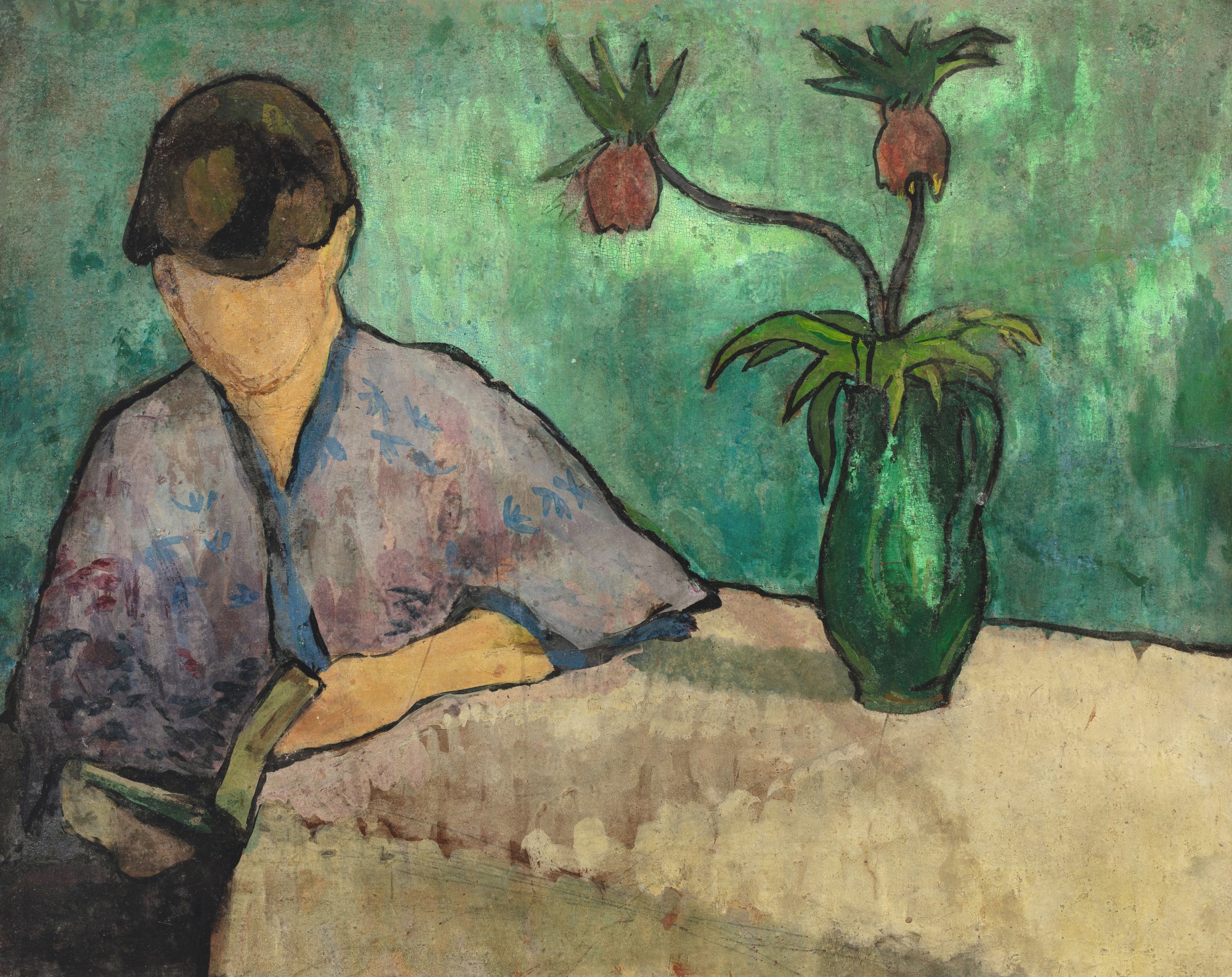
Jeune femme lisant en kimono, painted in 1887 on paper laid down on canvas, shows a young woman absorbed in reading, rendered with a freshness and decorative sensitivity that anticipates the Nabis by several years. Sept baigneuses from 1889 displays the bold, rhythmic simplification of the figure that became his signature during these years, the bodies arranged with an almost frieze like flatness against landscape elements that pulse with color. His Paysage aux alentours de Pont Aven of 1889, worked in watercolor and pastel, captures the Breton countryside with a lyrical looseness that sits beautifully alongside his more structured oil paintings. These works, taken together, make a compelling case for Bernard as one of the essential voices of the Post Impressionist generation.
Émile Bernard
Les Bretonneries: Breton Women Making Haystacks (Bretonnes Faisant les Foins), 1889
His friendship with Van Gogh was also significant during this period, and the correspondence between the two men stands as one of the great exchanges in the literature of art. Beyond his friendship with Gauguin and Van Gogh, Bernard was a connector and catalyst in the broader milieu of the Parisian avant garde. He knew Paul Signac and Georges Seurat, engaged with Symbolist writers including Joris Karl Huysmans and Stéphane Mallarmé, and later turned his attention toward the religious and classical traditions of Renaissance and Byzantine art during an extended sojourn in Egypt and the Mediterranean that began in 1893. This later phase of his career, which occupied the decades around the turn of the century and into the twentieth century, has sometimes been treated as a retreat from the radicalism of his youth.
A more generous and accurate reading recognizes it as a sincere spiritual and intellectual investigation, one that produced works of considerable beauty even if they sit at a remove from the revolutionary energy of the Pont Aven period. Vue sur Tonnerre avec l'église Notre Dame, painted in oil on canvas in 1904, reflects this more contemplative mode, the church tower anchoring a landscape suffused with a warm and meditative light. For collectors, Bernard represents a genuinely compelling proposition. His works appear across a range of media including oil painting, watercolor, pastel, printmaking through zincograph and lithograph, and drawing, which means that points of entry exist at various levels of the market.
Émile Bernard
Jeune femme lisant en kimono, 1887
The zincograph series Les Bretonneries is particularly prized among print collectors for its rarity and its historical importance as a document of the Cloisonnist aesthetic. Works on paper, such as the Caricature of Paul Gauguin from 1889, carry the additional appeal of intimacy and biographical connection, offering a direct line to the extraordinary circle of artists Bernard inhabited. His oil paintings from the Brittany period are the most keenly sought, and when they appear at auction they attract serious attention from collectors who understand that owning a major Bernard from those years means owning a piece of the foundation of modern painting. The artists who orbit Bernard in art historical terms are among the most celebrated names of the era.
Gauguin and Van Gogh are the obvious points of comparison, but Bernard's work also resonates with that of Paul Sérusier, Maurice Denis, and the broader Nabi circle he helped to inspire. His printmaking connects him to the rich tradition of late nineteenth century French graphic art, and his figure compositions of the Brittany years invite comparison with the monumental arrangements of Cézanne, whose importance Bernard also helped to publicize through his critical writing. Bernard was not only a painter but a writer, critic, and editor, founding the journal La Rénovation esthétique and contributing to the posthumous reputation of several of his contemporaries. To encounter Émile Bernard's work today is to encounter the full, complicated richness of a moment when painting was reinventing itself with tremendous urgency.
He was a young man of nineteen when he produced some of his most radical canvases, and the courage that required, the willingness to discard centuries of academic training in pursuit of something truer and more felt, deserves our enduring admiration. His legacy is woven into the fabric of everything that came after him in modern art, from the Nabis to Fauvism to the broader flattening of pictorial space that defines so much of twentieth century painting. To collect Bernard is to place oneself in direct contact with that founding energy, and to recognize an artist whose time, in the estimation of those who look most carefully, has very much arrived.
Featured Works
Les Bretonneries: Breton Women Making Haystacks (Bretonnes Faisant les Foins) and Wedding in Brittany (La Noce en Bretange)
1889
The Nymphs
1890
Les Bretonneries: Breton Women Making Haystacks (Bretonnes Faisant les Foins)
1889
Jeune femme lisant en kimono
1887
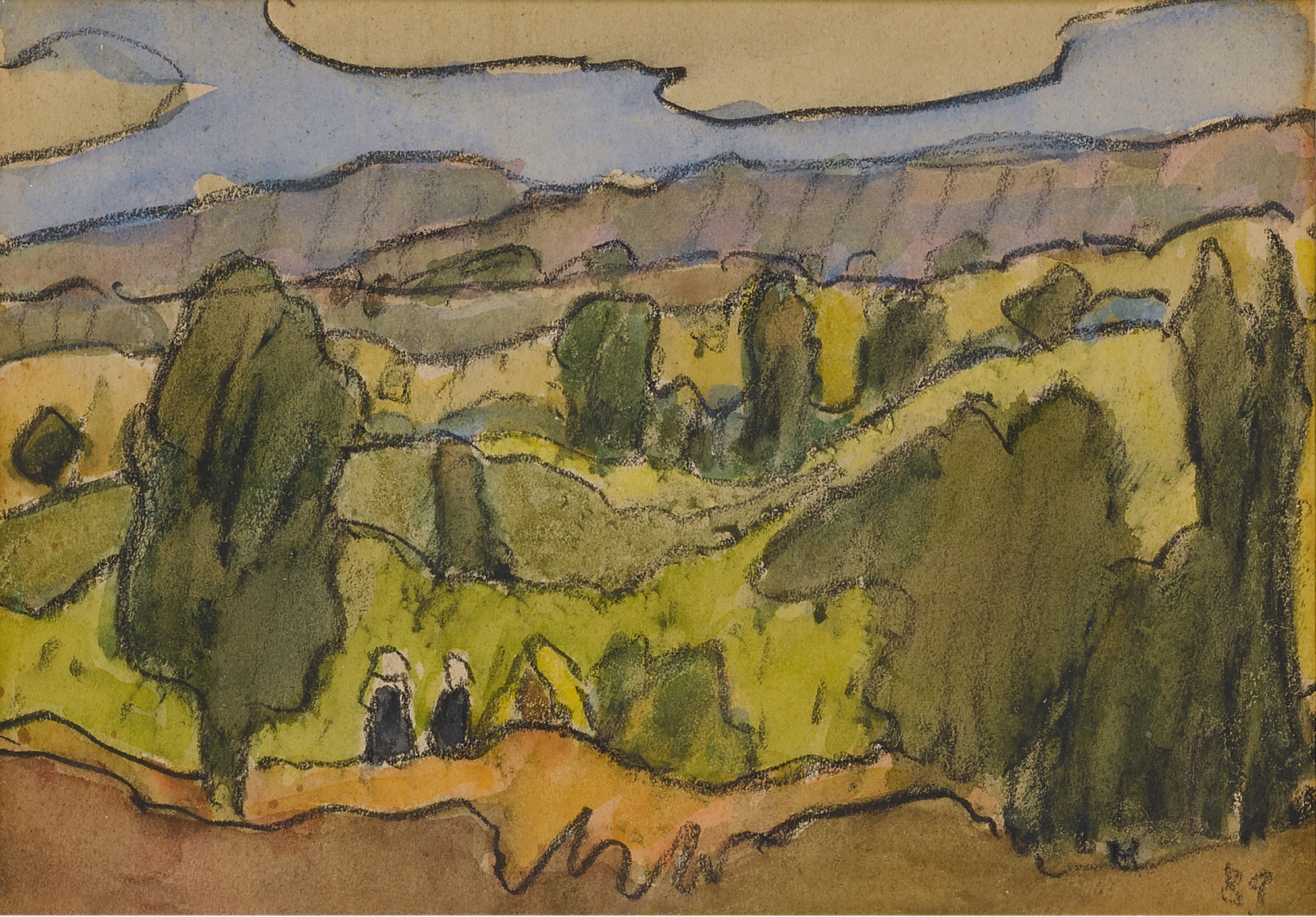
Paysage aux alentours de Pont Aven
1889
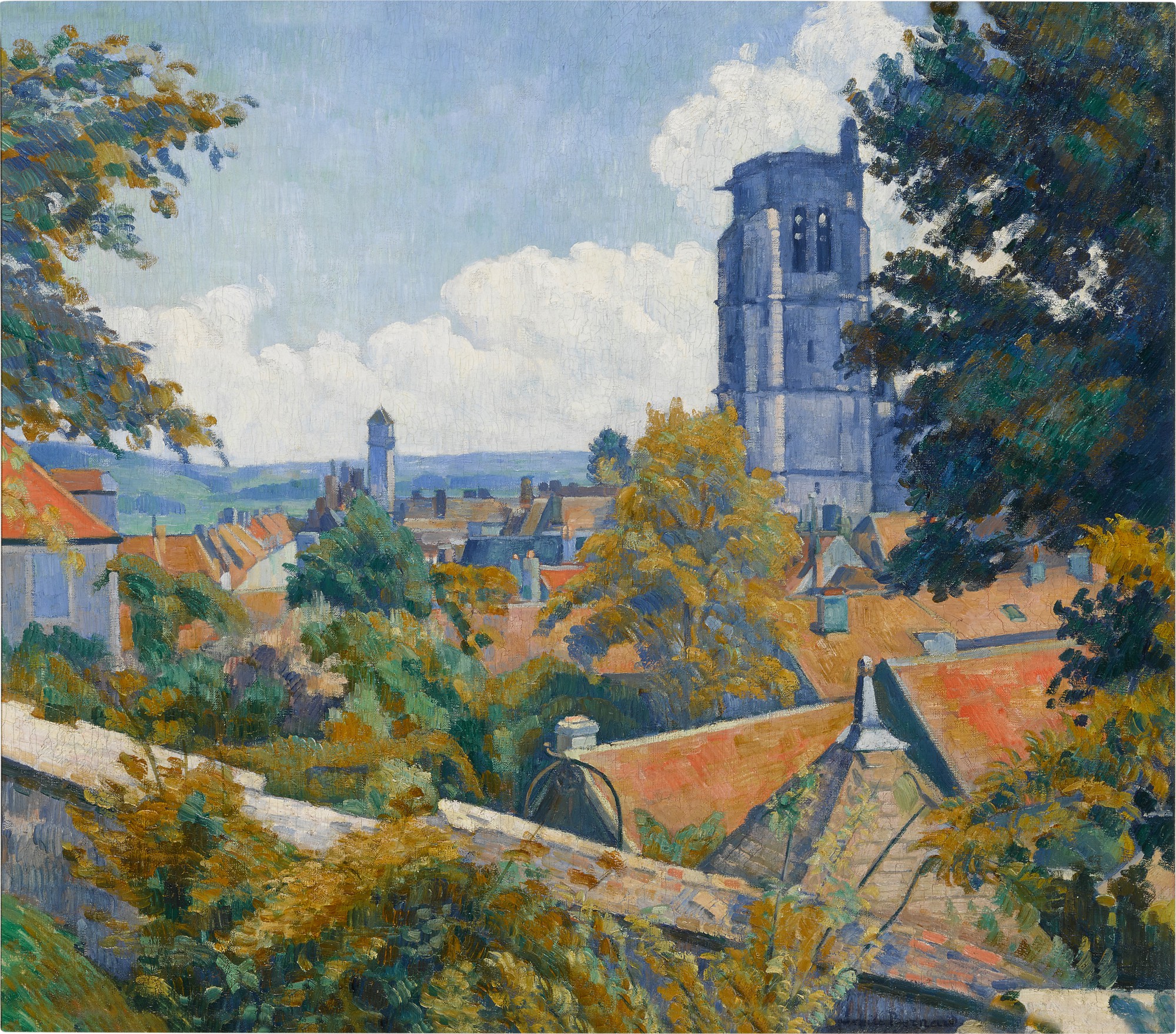
Vue sur Tonnerre avec l'église Notre Dame
1904
Explore books about Émile Bernard
Émile Bernard (1868-1941): A Pioneer of Modern Art
Françoise Cachin

Émile Bernard and the Pont-Aven School
Bogomila Welsh-Ovcharov
The Letters of Paul Gauguin and Émile Bernard
Anne Joly-Segalen
Émile Bernard: Catalogue Raisonné de l'Oeuvre Peint
Denise Delouche
Bernard and Symbolism
Robert L. Herbert
Émile Bernard: The Quest for Spiritual Art
Paul Verlaine and others
The Cloisonnist Technique: Émile Bernard's Innovation
Françoise Cachin and Charles S. Moffett