Mike Bidlo
Mike Bidlo Makes the Masters Entirely His Own
Artist Spotlight · The Collection Editorial
In the constellation of ideas that defined postmodern art in New York, few moves were as audacious or as philosophically loaded as Mike Bidlo's decision to repaint, by hand, some of the most recognizable images in the history of Western art. To stand before one of his meticulously executed recreations is to feel the ground shift beneath long held assumptions about what a painting is, who gets to make it, and what ownership of an image truly means. Decades after his emergence from the electric ferment of the East Village, Bidlo's work continues to provoke, delight, and unsettle in equal measure, finding new audiences among collectors and institutions who recognize his practice as one of the most intellectually rigorous and visually compelling of his generation. Born in Chicago in 1953, Bidlo came of age during a period when the art world's fixed hierarchies were beginning to crack under the pressure of conceptualism, feminism, and the first tremors of poststructuralist theory.
Mike Bidlo
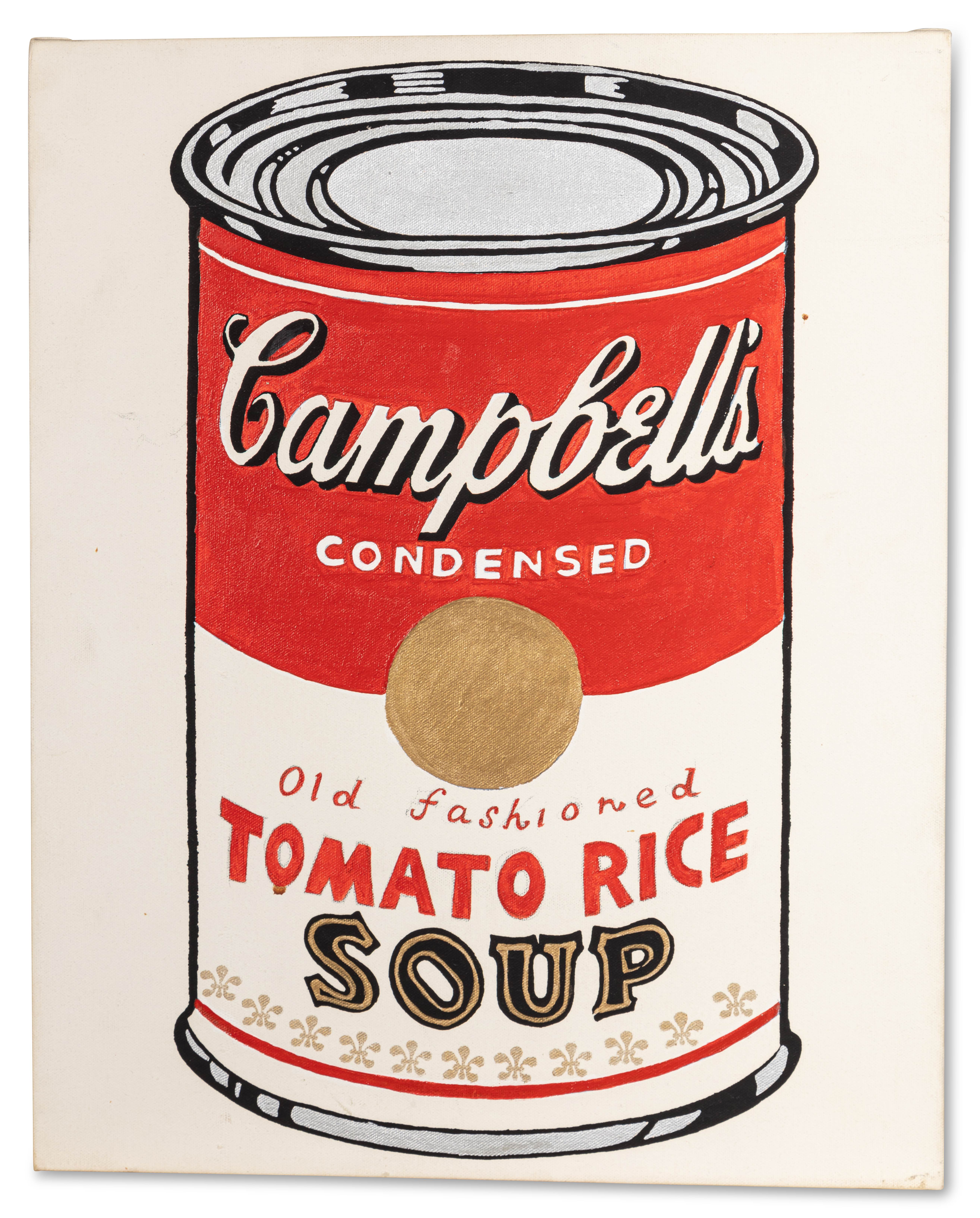
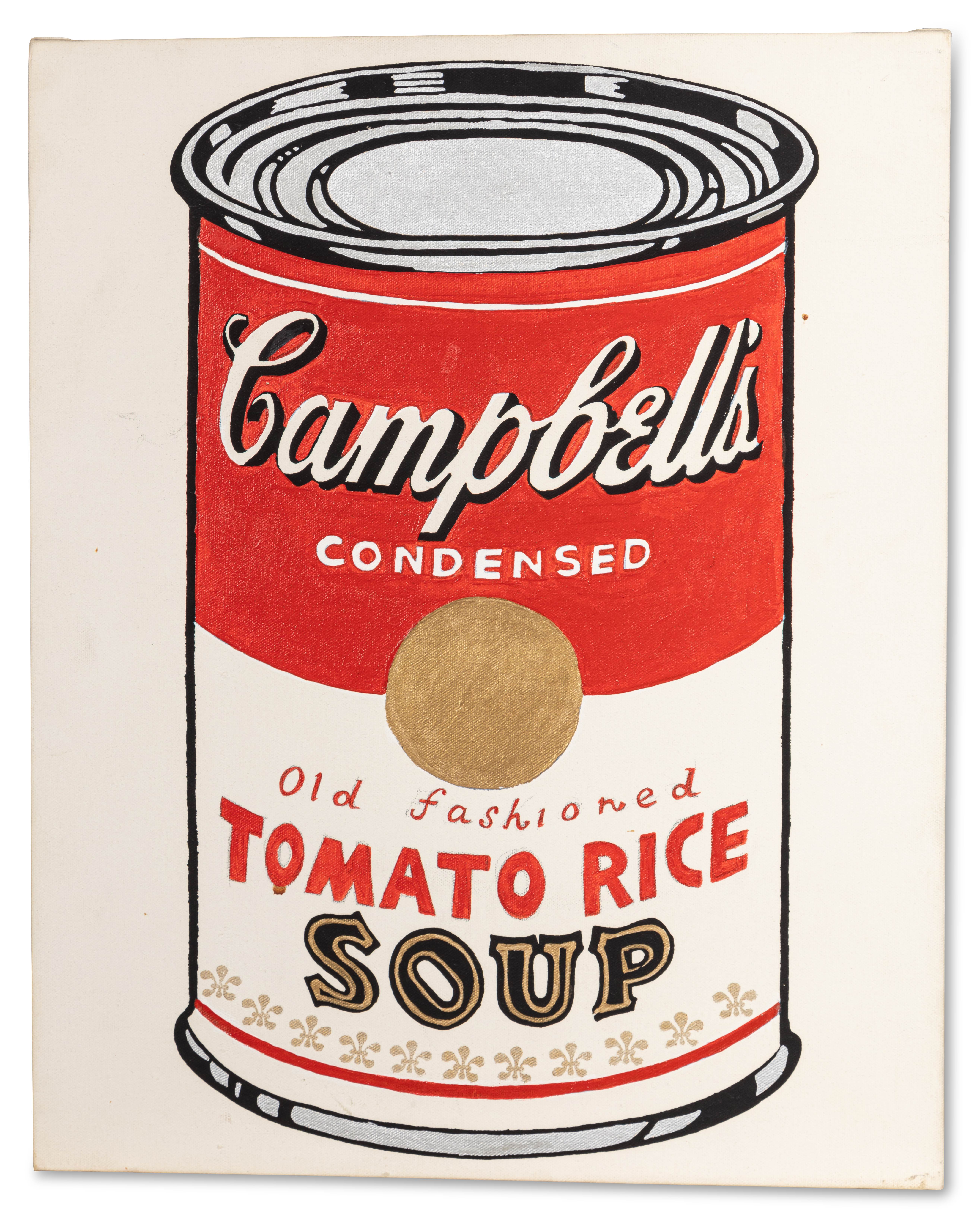
Campbell's Tomato Soup, 1984
He studied at the School of the Art Institute of Chicago and later at Southern Illinois University before eventually making his way to New York, where the real education was waiting. The city in the late 1970s and early 1980s was a crucible of creative energy and economic desperation, a place where artists, musicians, and performers shared lofts and ideas in roughly equal measure. It was precisely the kind of environment in which radical propositions could be tested in real time, without the cushion of institutional approval. The East Village scene that Bidlo joined in the early 1980s was a remarkable incubator for exactly the kind of irreverent, image conscious art he would come to make.
Galleries like Gracie Mansion and Civilian Warfare were showing work that deliberately blurred the line between street culture and fine art, between sincerity and irony. Bidlo found his footing within this world and soon began developing what would become his signature practice: the precise, painstaking recreation of canonical works by artists including Pablo Picasso, Francis Bacon, Marcel Duchamp, and Andy Warhol. These were not forgeries intended to deceive, nor were they merely academic exercises. They were conceptual propositions, asking with genuine philosophical seriousness who owns an image once it has entered the collective imagination.
Mike Bidlo
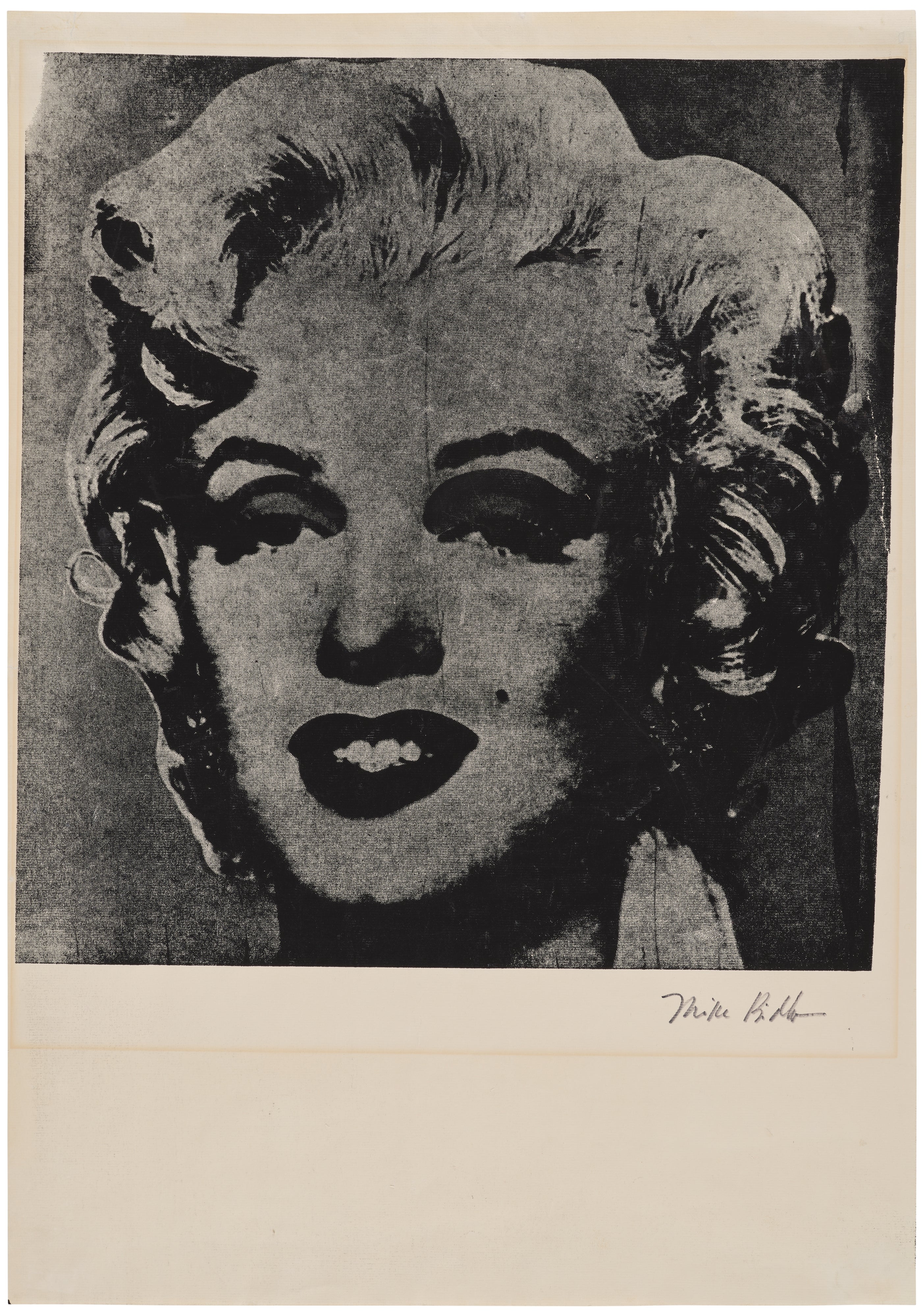
Not Warhol (Marilyn)
Bidlo's exhibitions carried titles that announced his intentions with elegant directness. Shows titled Not Picasso and Not Warhol presented these hand painted recreations openly and without apology, framing them as both homage and critique. The word "not" did enormous conceptual work. It acknowledged the original, deferred to it, and simultaneously claimed a distinct identity for the object on the wall.
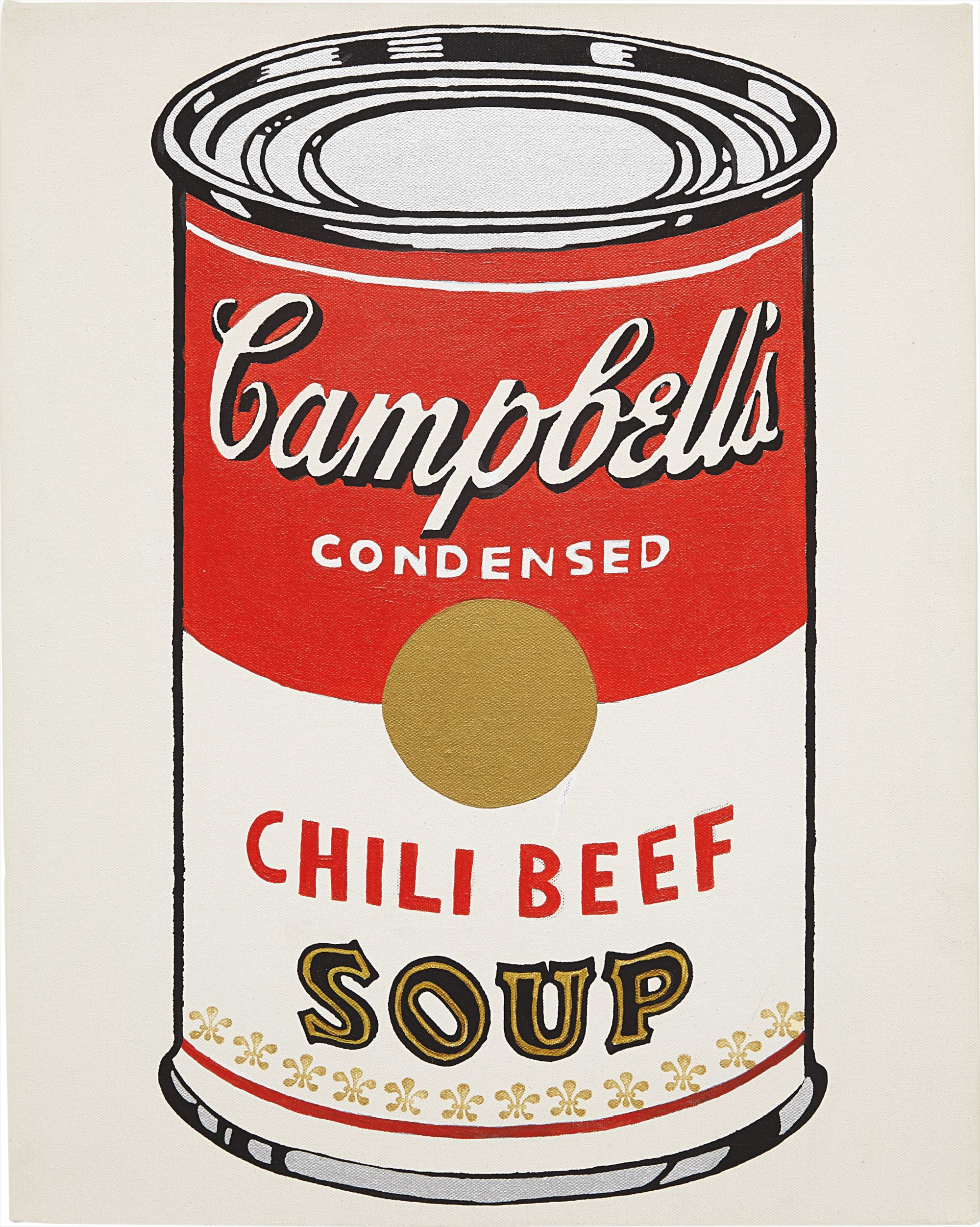
His 1988 exhibition at Leo Castelli Gallery, one of the most storied commercial spaces in New York history, brought considerable institutional weight to this proposition and confirmed that his practice was being taken seriously at the highest levels of the art world. To show at Castelli was to enter a lineage that included Jasper Johns, Roy Lichtenstein, and Robert Rauschenberg, artists who had themselves challenged conventional ideas about image, authorship, and reproduction. Among his most celebrated works are his recreations of Andy Warhol's iconic imagery, including his versions of the Marilyn portraits and the Campbell's Soup Cans. Bidlo's Campbell's Tomato Soup from 1984, rendered in oil and pencil on canvas, and his Campbell's Chili Beef Soup in acrylic, are particularly instructive examples of his method.
Mike Bidlo
Campbell's Chili Beef Soup
Where Warhol used silkscreen to introduce mechanical reproduction into the studio, Bidlo reversed the gesture, returning the labor of the hand to an image that had become synonymous with the erasure of that very labor. His Not Warhol (Marilyn) works, executed in synthetic polymer paint and silkscreen ink, add another layer of complexity still, using some of Warhol's own chosen materials while insisting on the difference between the two objects. These are paintings that think, and they reward careful looking. For collectors, Bidlo's work occupies a genuinely distinctive position in the postmodern canon.
His pieces function simultaneously as objects of beauty, instruments of theory, and documents of one of the most fertile periods in recent American art history. Works on paper, including his screenprints on laid paper with full margins, offer a particularly compelling entry point, combining the intimacy of the print medium with the full weight of his conceptual program. Collectors drawn to artists in the orbit of Sherrie Levine, Richard Prince, and Elaine Sturtevant will find in Bidlo a practice that is at once more painterly and more personally invested than many of his contemporaries in appropriation. His hand is always present, always legible, and always asking the viewer to consider what that presence means.
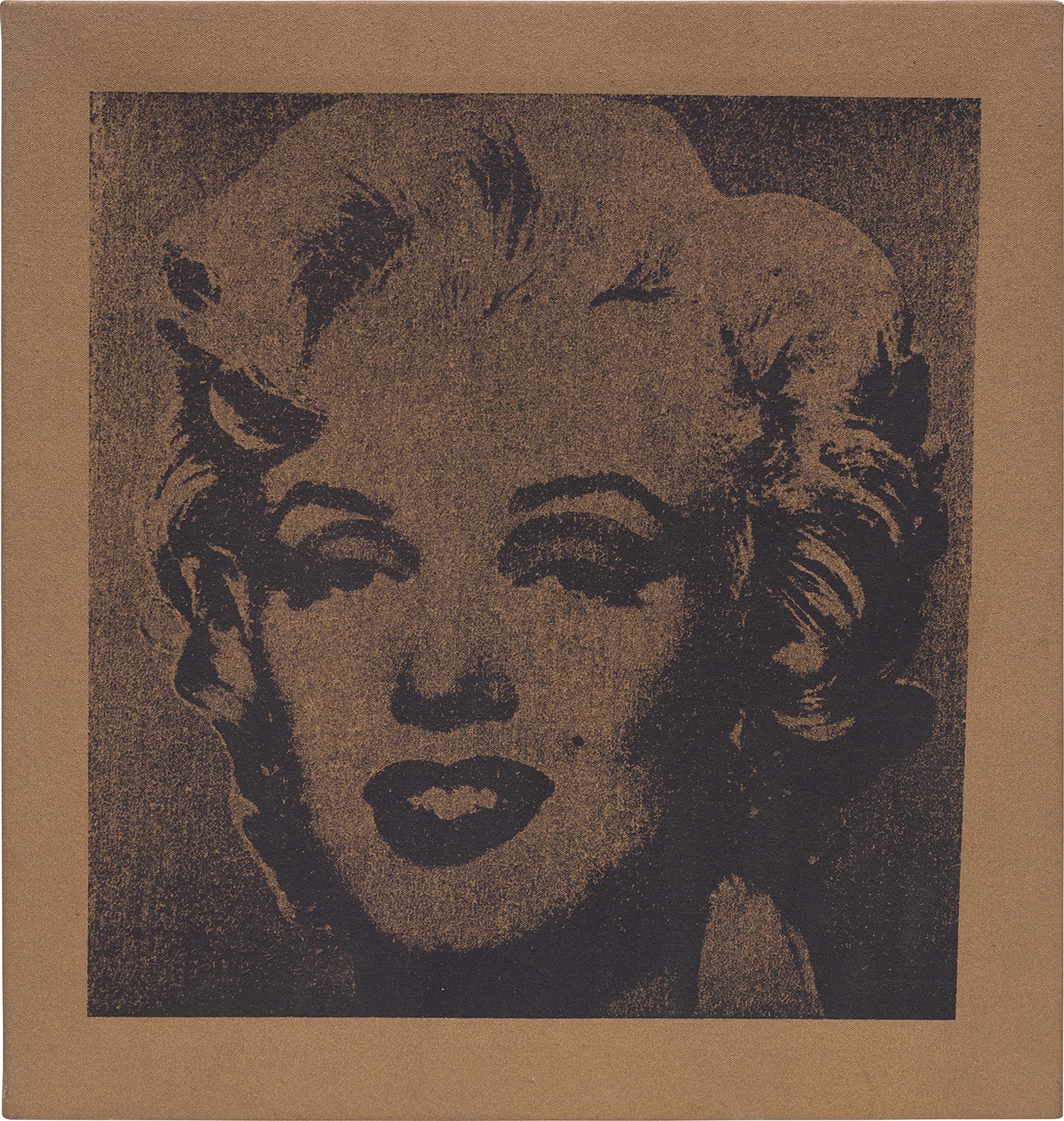
Mike Bidlo
Not Warhol (Marylin), 1984
The critical context in which Bidlo's work sits is rich and well documented. Appropriation as a strategy had deep roots by the time Bidlo took it up, running back through Duchamp's readymades and forward through the Pictures Generation artists who emerged from the late 1970s. But Bidlo's relationship to his sources was always more embodied than that of many of his peers. To repaint a Picasso from beginning to end, to sit with the composition and work through its problems with your own hand and eye, is a form of intimate knowledge that purely photographic or mechanical appropriation does not offer.
His practice is in this sense closer to the old tradition of the copy as a form of study, except that Bidlo never allowed that tradition to be innocent of its own implications. Mike Bidlo's legacy is that of an artist who asked the most fundamental questions available to a painter and found a way to make those questions visually thrilling. His work does not simply illustrate a theoretical position; it inhabits one, with all the risk and commitment that implies. As institutions and private collectors continue to reassess the achievements of the 1980s New York art world, Bidlo's place in that history looks increasingly essential.
He understood, before many others had fully articulated it, that the history of art is not a sequence of original moments but an ongoing conversation, and he joined that conversation on his own irreplaceable terms.