Miguel Calderón
Miguel Calderón Makes Mexico Laugh and Shudder
Artist Spotlight · The Collection Editorial
Few artists working in Latin America today command the kind of devoted cult following that Miguel Calderón has cultivated over three decades of relentlessly inventive, frequently discomfiting, and genuinely funny work. His practice sits at a crossroads that few artists dare to occupy: one foot planted in the darkly absurd traditions of Mexican popular culture, the other in the conceptual rigors of international contemporary art. His recent visibility in major institutional surveys of Mexican art, alongside continued gallery representation and a body of work that spans photography, video, painting, and installation, confirms that Calderón is not merely a product of the electric 1990s Mexico City scene but one of its most enduring and essential voices. Calderón was born in Mexico City in 1971, and the city never left him.
Miguel Calderón
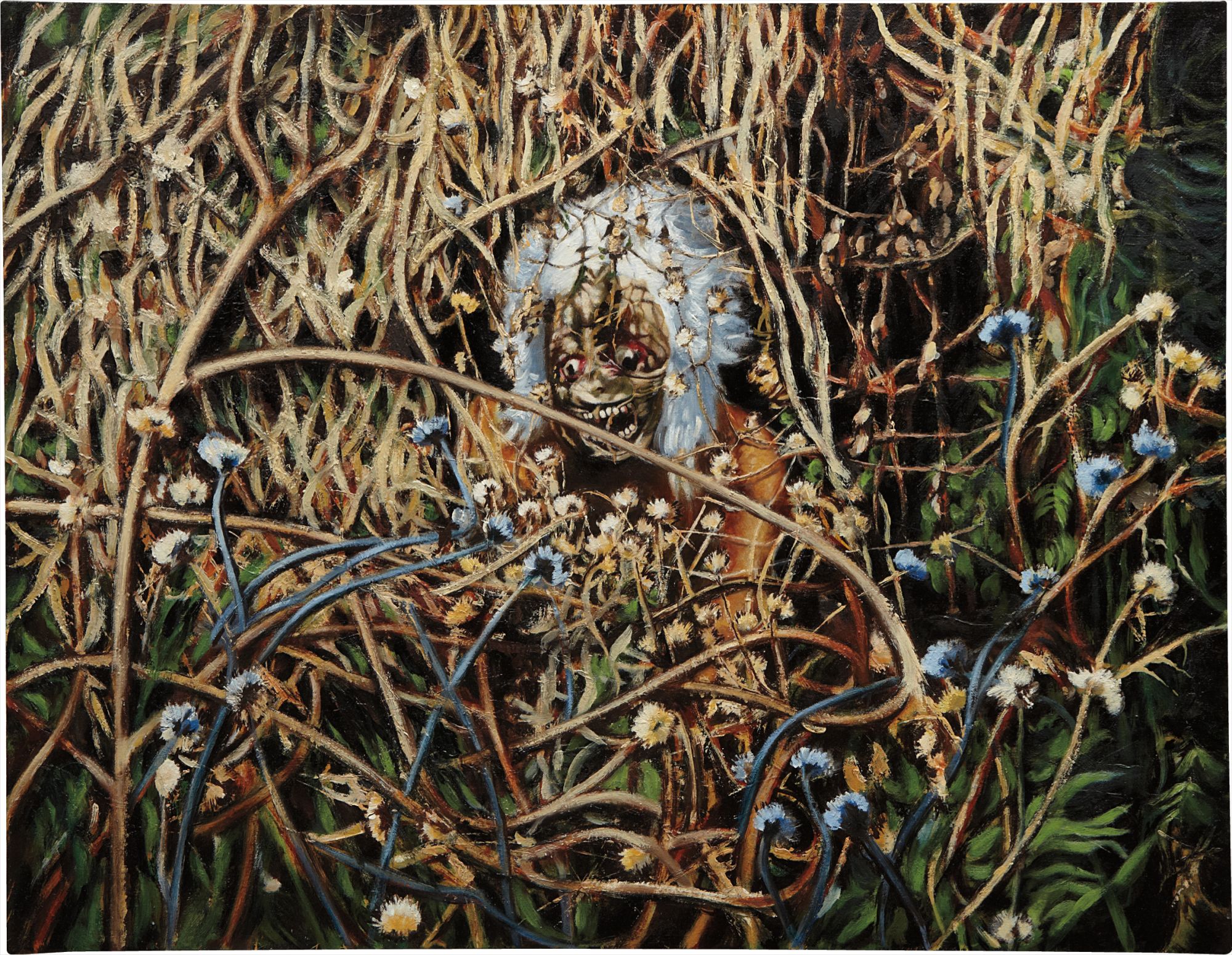
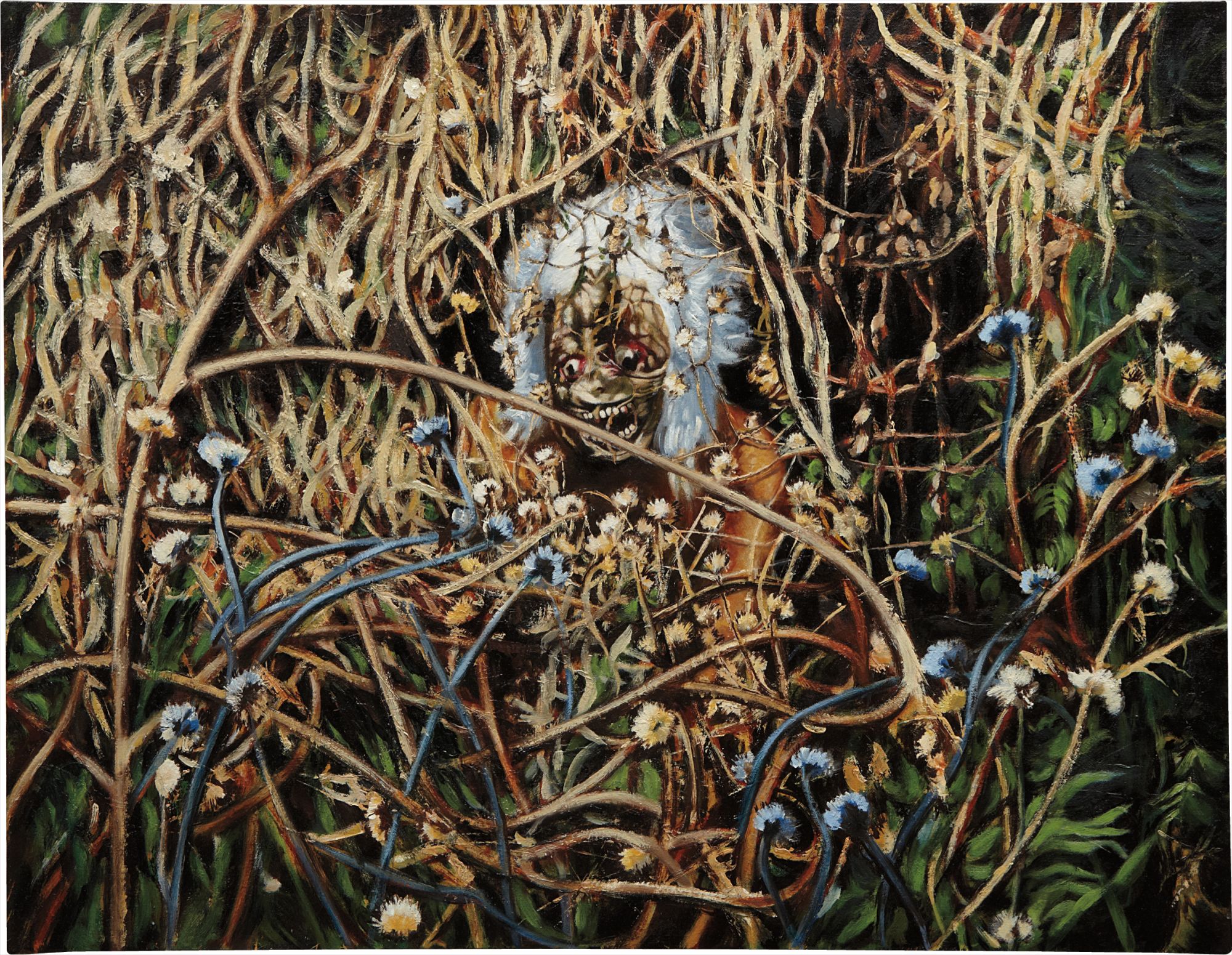
Tiempos oscuros I
He grew up in a megalopolis that was simultaneously a place of extraordinary creative ferment and deep social contradiction, a city where wealth and poverty pressed against each other on every block, where tabloid culture was vivid and omnivorous, and where machismo structured daily life in ways both mundane and violent. These textures became the raw material of his practice. He studied at the Centro de la Imagen in Mexico City and later at the San Francisco Art Institute, an experience that gave him fluency in the visual languages of North American conceptual and documentary art while keeping his gaze firmly anchored in the specifics of his home country. Calderón emerged as a significant figure in the mid to late 1990s, a period when Mexico City was producing one of the most exciting generations of contemporary artists anywhere in the world.
Alongside peers such as Francis Alÿs and Yoshua Okón, he helped define a mode of practice that was irreverent, politically sharp, and deeply attentive to the textures of everyday Mexican life. His early work in photography and video was already marked by the qualities that would define his mature practice: a willingness to use humor as a vehicle for serious critique, an eye for the grotesque detail hiding in plain sight, and a genuine love for the lowbrow aesthetics of lucha libre, sensationalist tabloids, and vernacular commercial imagery. Calderón was also a co founder of the influential art collective and magazine La Panadería, which operated as an alternative space in Mexico City from 1994 to 2002 and became a crucial hub for the generation of artists reimagining what Mexican contemporary art could be. The range of Calderón's output is one of the things that makes his practice so rewarding to follow.
Miguel Calderón
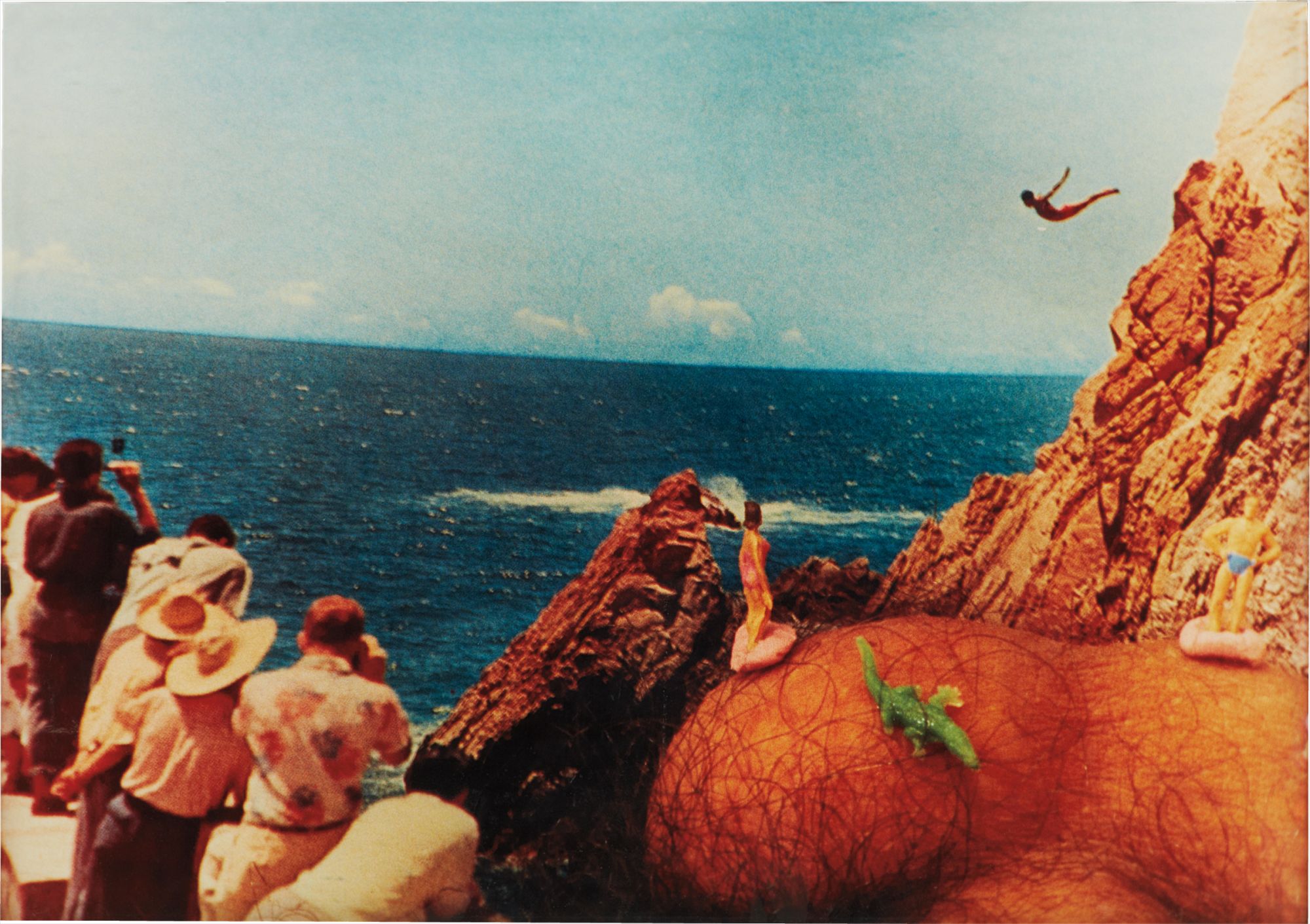
La quebrada (from the Greetings from My Hairy Nuts series)
His photographic series are perhaps his most widely recognized works, and they demonstrate a particular genius for finding the seam between comedy and catastrophe. The series known for its irreverent, bodily humor and its deadpan relationship to tourist imagery exemplifies his approach: taking the conventions of a familiar genre and quietly detonating them from within. His painting practice, represented by works such as Tiempos oscuros I, reveals another dimension of his sensibility entirely. Here the darkly atmospheric, almost cinematic quality of his imagery finds expression in oil on canvas, a medium he approaches with evident seriousness and considerable technical skill.
These paintings draw on the visual vocabulary of Mexican history painting, pulp fiction, and noir cinema simultaneously, producing images that feel simultaneously ancient and urgently contemporary. For collectors, the appeal of Calderón's work operates on multiple levels. There is first the immediate, visceral pleasure of the images themselves, which tend to be striking, memorable, and possessed of a kind of narrative pull that rewards extended looking. Then there is the conceptual architecture beneath the surface, the sustained engagement with questions of identity, representation, violence, and social performance that gives the work its intellectual weight.
Chromogenic prints from his major photographic series, including works such as La quebrada from the celebrated Greetings from My Hairy Nuts series, offer collectors an entry point into one of the defining bodies of photographic work produced in Mexico over the past thirty years. These prints carry both historical significance, as documents of a pivotal moment in Mexican contemporary art, and an aesthetic presence that holds its own in any context. His paintings, rarer in circulation and increasingly sought after, represent a more intimate and perhaps more vulnerable side of his practice that many collectors find particularly compelling. Calderón's place in the broader context of art history becomes clearer when you situate him alongside artists working in similar registers elsewhere.
The darkly comic documentary impulse in his work resonates with the practice of artists such as Paul McCarthy or Mike Kelley in its willingness to use the body and popular cultural detritus as sites of critical inquiry. But Calderón's work is also irreducibly specific to Mexico, and in this he belongs to a tradition of Mexican cultural production that includes the savage satirical energy of the muralists, the visceral psychic landscape of Frida Kahlo, and the wry conceptualism of more recent figures. His engagement with masculinity and violence in particular places him in conversation with a long history of Mexican artists and intellectuals who have attempted to reckon honestly with the culture of machismo and its costs. What makes Calderón matter today, perhaps more than ever, is his refusal of easy consolation.
His work insists on looking clearly at things that are uncomfortable to see, but it does so without self righteousness or despair. The humor is real, and so is the critique. In an art world that can sometimes feel overly earnest or strategically positioned, his practice is a reminder that genuine provocation and genuine warmth can coexist in the same frame. For collectors building serious collections of Latin American contemporary art, or indeed of international contemporary art more broadly, Calderón represents an artist whose significance is already established and whose work continues to generate new meaning with the passage of time.
To own one of his works is to hold a piece of a conversation about who we are and what we find funny about it, a conversation that shows no signs of ending.