Michel Comte
Michel Comte: The Eye That Transforms
Artist Spotlight · The Collection Editorial
There are photographers who document the world as it is, and then there are those who reshape it entirely through the force of their vision. Michel Comte belongs unmistakably to the second category. His name became synonymous with a particular strain of glamour during the 1980s and 1990s, a glamour that never felt hollow or manufactured but instead carried genuine emotional weight, psychological depth, and a formal beauty that has only grown more compelling with time. Today, as his prints command serious attention at auction and among private collectors worldwide, the full breadth of his achievement is being appreciated with fresh eyes.
Michel Comte
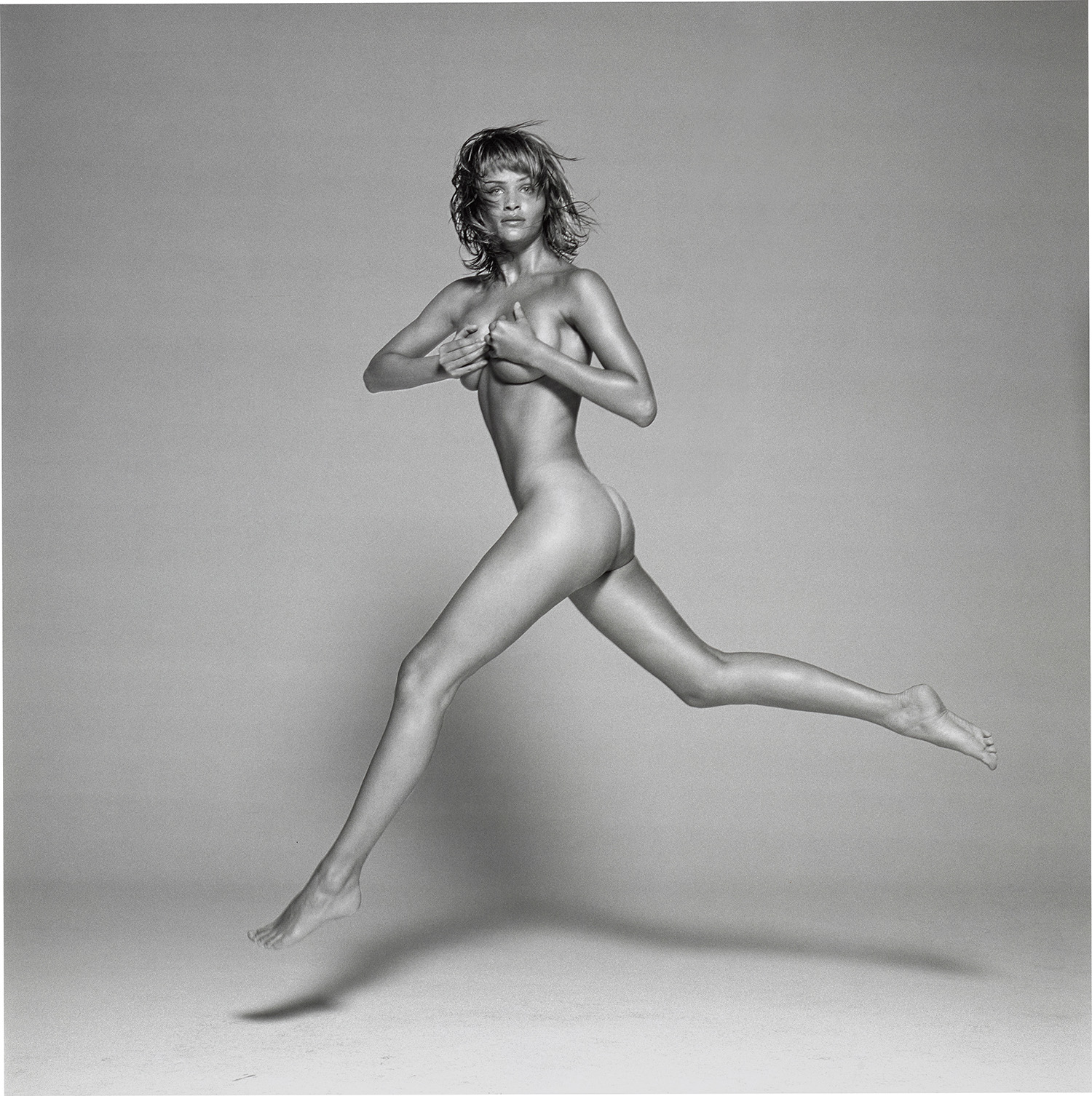
Helena Christensen II, Safe Sex Campaign
Born in Zurich in 1954, Comte grew up in a Switzerland that was prosperous, orderly, and quietly cosmopolitan. That upbringing gave him an outsider's clarity of vision, a sense that the world beyond those clean alpine borders was something to be pursued and interrogated. He came of age at a moment when photography was asserting itself as a fully serious art form, when figures such as Helmut Newton and Irving Penn were demonstrating that fashion and portraiture could carry genuine artistic and cultural ambition. Comte absorbed these lessons and eventually found his way to the highest levels of the international fashion and cultural worlds, working across Milan, New York, Paris, and London.
His artistic development accelerated dramatically when he began working for the major Italian and international editions of Vogue, as well as for publications including L'Uomo Vogue. These were not simply commercial assignments but genuine collaborative artistic endeavors, and Comte approached them with the seriousness of a fine art practitioner. His work from this period is distinguished by its mastery of light, its psychological intimacy with his subjects, and its ability to reveal rather than merely depict. The gelatin silver print became his preferred material language, and his darkroom practice brought a physicality and warmth to his images that purely digital work has rarely matched.

Michel Comte
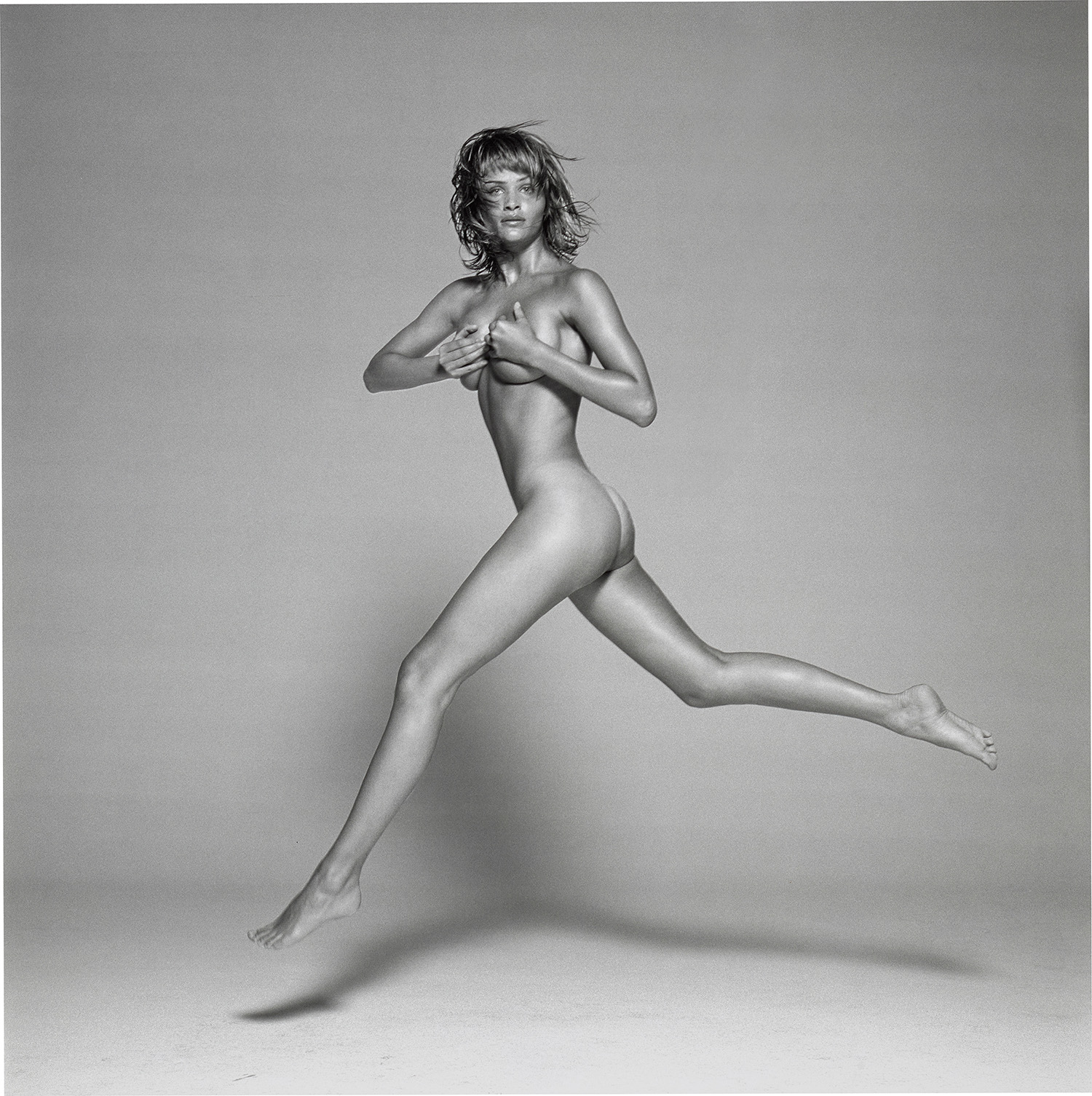
'Helena Christensen III', (from Safe Sex Campaign), 1993
Among his most celebrated bodies of work is the Safe Sex Campaign series featuring Helena Christensen, produced in 1993. These images are extraordinary on multiple levels. Commissioned at a moment when the AIDS crisis had reshaped public consciousness around sexuality and the body, the photographs navigate a profound tension between sensuality and vulnerability, between beauty and mortality. Christensen is photographed with an intimacy and a frankness that transcends the conventions of fashion imagery entirely.
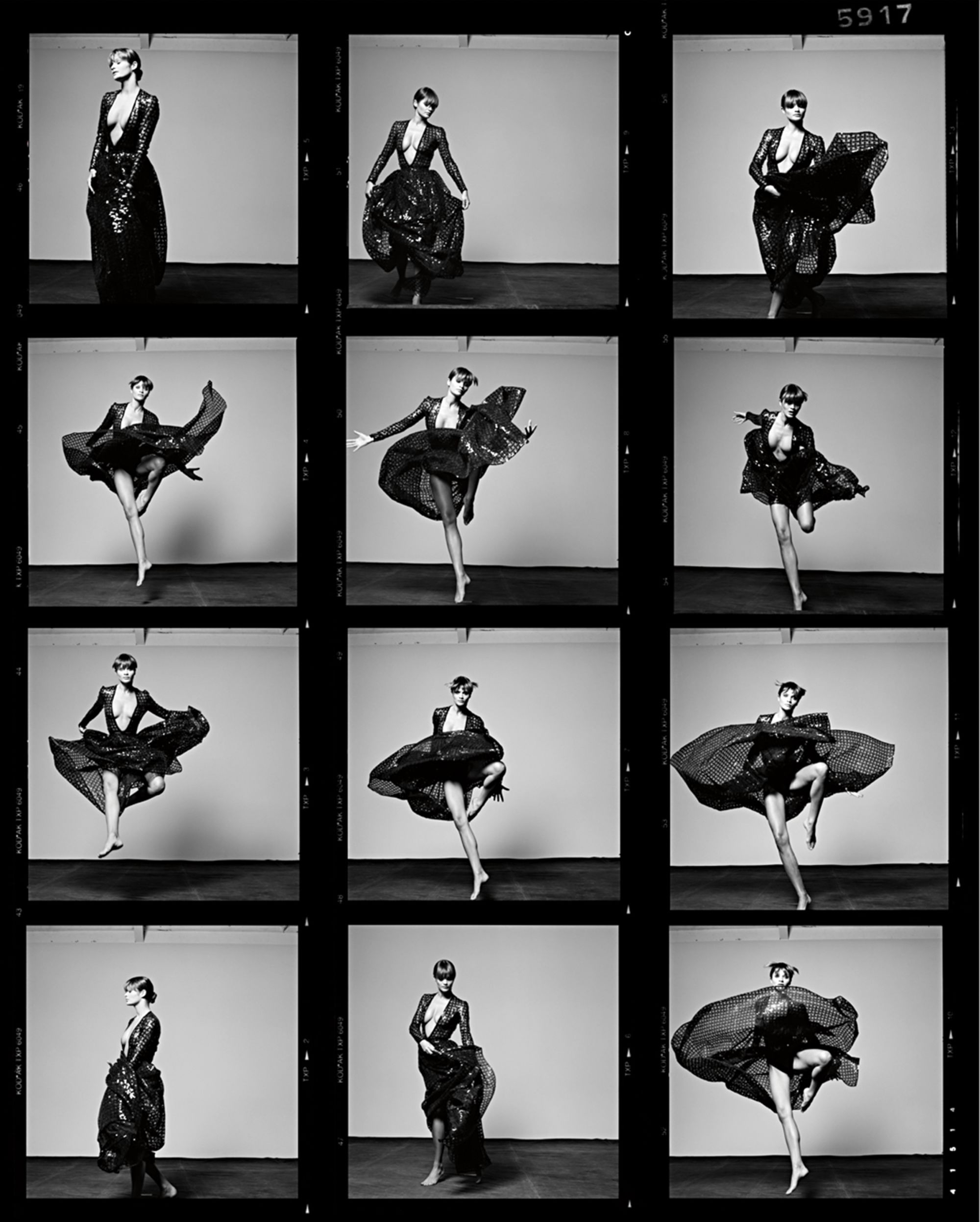
The series exists in multiple variants, including the haunting contact sheet format seen in Helena Christensen VII, which offers a behind the scenes transparency that deepens rather than diminishes the power of the images. These works are among the most significant photographic documents of their era, speaking directly to the cultural anxieties and aspirations of the early 1990s. Beyond the Christensen series, Comte's portrait work reveals the full range of his artistic sensibility. His image of Iggy Pop, created for L'Uomo Vogue in New York, is a masterclass in how to photograph a cultural icon without diminishing or sentimentalizing them.

Michel Comte
Helena Christensen III, (Safe Sex Campaign)
Pop is rendered with graphic force and psychological honesty, the rock and roll mythology neither inflated nor deflated but simply seen. The portrait of Iman, a hand coloured gelatin silver print, demonstrates Comte's willingness to move beyond strict documentary fidelity and into something approaching painterly intervention. That hand colouring transforms the already compelling photograph into an object of singular beauty, a meeting point between photography and the fine arts traditions that preceded it. His image of Cindy Crawford for Italian Vogue in London similarly reveals his gift for making the most photographed people in the world appear genuinely discovered.
For collectors, the appeal of Comte's work operates on several distinct registers simultaneously. His prints are visually commanding objects, works that hold a room and reward sustained looking. They also carry enormous art historical significance as primary documents of a specific and fascinating cultural moment. The 1980s and 1990s represented a particular confluence of fashion, celebrity, activism, and aesthetic ambition, and Comte was present at the centre of that confluence with his camera.
Michel Comte
Helena Christensen VII (Contact Sheet)
Works from the Safe Sex Campaign series in particular carry a poignancy and a historical resonance that ensures their continued relevance to institutions and serious private collectors alike. When considering acquisitions, collectors should pay particular attention to the distinction between prints made at the time and those printed later, as well as to the edition numbering and condition of accompanying documentation, all of which bear on both scholarly and market value. In terms of art historical context, Comte occupies a position alongside photographers such as Herb Ritts, Peter Lindbergh, and Steven Meisel, all practitioners who elevated fashion and celebrity photography into something that demanded consideration as fine art. Like Ritts, Comte worked with the great supermodels and cultural figures of the era with a sense of mutual respect and artistic collaboration.
Like Lindbergh, he understood that genuine beauty in photography often lies not in perfection but in revelation. His Swiss background and European sensibility also connect him to a tradition of rigorous formal thinking in photography that can be traced back through figures such as Robert Frank and René Burri. He is genuinely part of a distinguished lineage. The legacy of Michel Comte is still being written, and that is part of what makes collecting his work so compelling right now.
His photographs function simultaneously as pure aesthetic experience, as cultural history, and as formally sophisticated art objects. The gelatin silver print, in his hands, becomes something almost alchemical: light fixed permanently onto paper, a moment of human presence preserved with extraordinary fidelity and feeling. As the art market continues to reassess the full canon of late twentieth century photography, Comte's place within that canon looks increasingly secure and increasingly significant. For collectors with the discernment to recognise sustained artistic achievement, his work represents both a profound aesthetic pleasure and an intelligent long term commitment.
Explore books about Michel Comte