Michael Wolf
Michael Wolf, The City Seen Whole
Artist Spotlight · The Collection Editorial
“I am interested in the human being lost in the urban jungle, the anonymous person swallowed by the city.”
Michael Wolf
In the years since Michael Wolf's passing in 2019, the art world has continued to reckon with the full weight of what he built across a remarkable career. Major institutions have revisited his archives, and the secondary market for his most celebrated series has grown steadily, reflecting a collector community that recognizes his work as both historically significant and urgently contemporary. At a moment when questions of urban density, migration, and the psychological costs of modern city life dominate cultural conversation, Wolf's photographs feel less like documents of a past era and more like prophecies rendered in light and color. Wolf was born in Munich in 1954 and spent formative years moving between continents, a trajectory that would prove foundational to his practice.
Michael Wolf
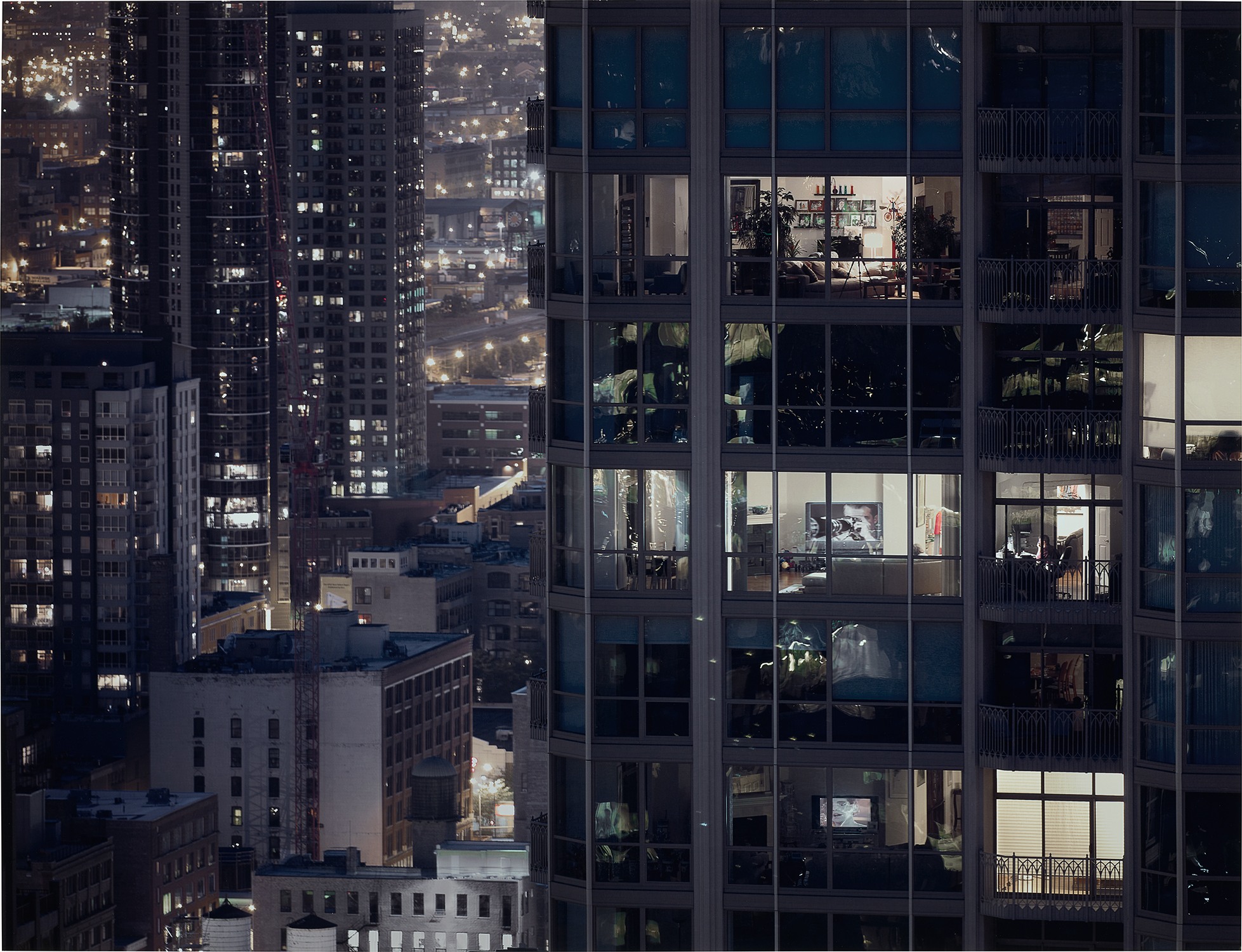
Transparent City #88
He studied at the University of California, Berkeley before completing his education at the Folkwang University of the Arts in Essen, Germany, where he trained under the legendary Otto Steinert. That grounding in the German humanist photography tradition gave Wolf a rigorous formal discipline, but his sensibility was always expansive and restless. He arrived in Hong Kong in 1994 as a photojournalist for Stern magazine, and the city claimed him entirely. For nearly two decades, Hong Kong served as Wolf's primary subject and his spiritual home.
What began as documentary work for a major European publication evolved into something far more ambitious and philosophically charged. Wolf began to look at the city not as a journalist cataloguing events but as an artist interrogating systems, the systems of capital that stack human beings into towers of glass and concrete, the systems of labor that route millions of people through corridors and turnstiles each morning. His eye grew more precise, his vision more conceptual, and the results were photographs of extraordinary power. The series that established Wolf's international reputation was Architecture of Density, developed across the early 2000s and continuing through 2014.
Michael Wolf
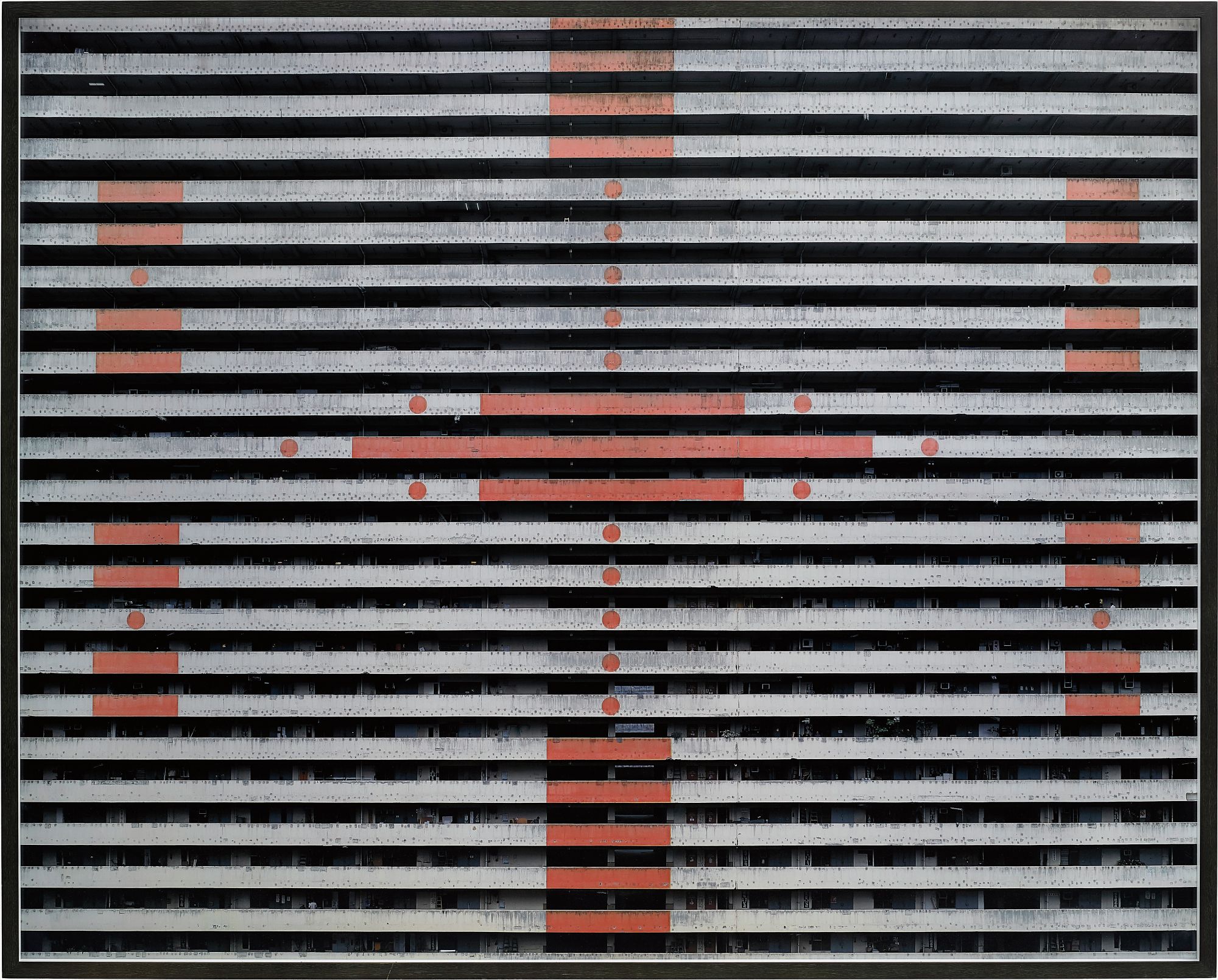
Industrial #1
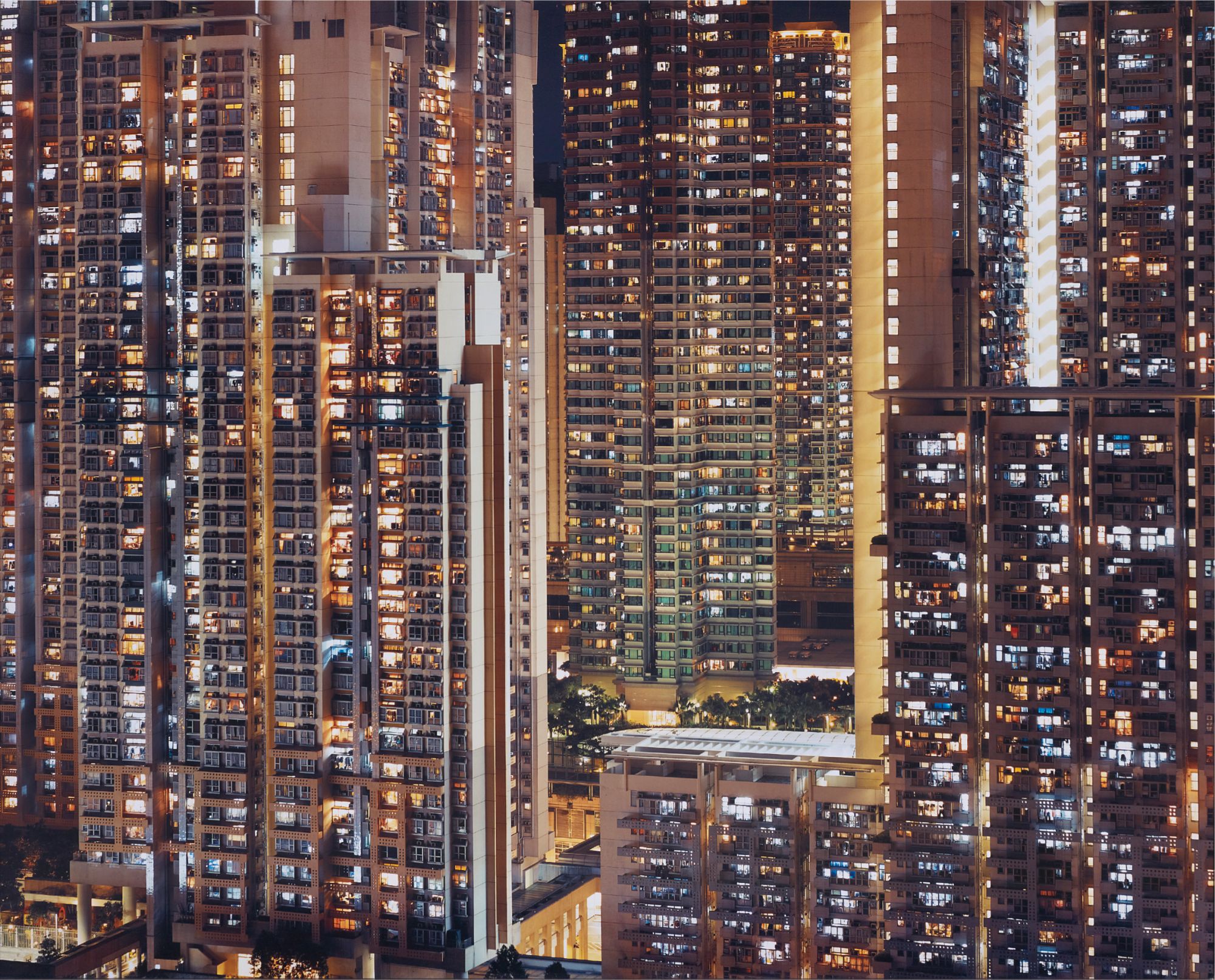
These images confront the viewer with the sheer verticality of Hong Kong's residential blocks, facades photographed so tightly and with such rigorous framing that they become something close to abstraction. Each window is a cell in a vast grid, each air conditioning unit a detail in an endlessly repeating pattern. The human beings who inhabit these structures are largely invisible, yet their presence saturates every frame. The works are monumental in scale and quietly devastating in their implications, asking how we organize collective life and at what cost to individual dignity.
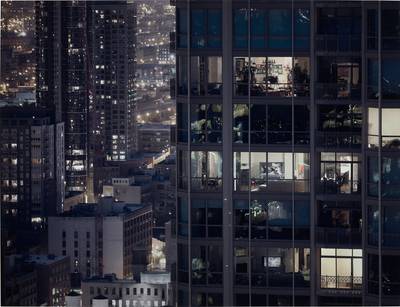
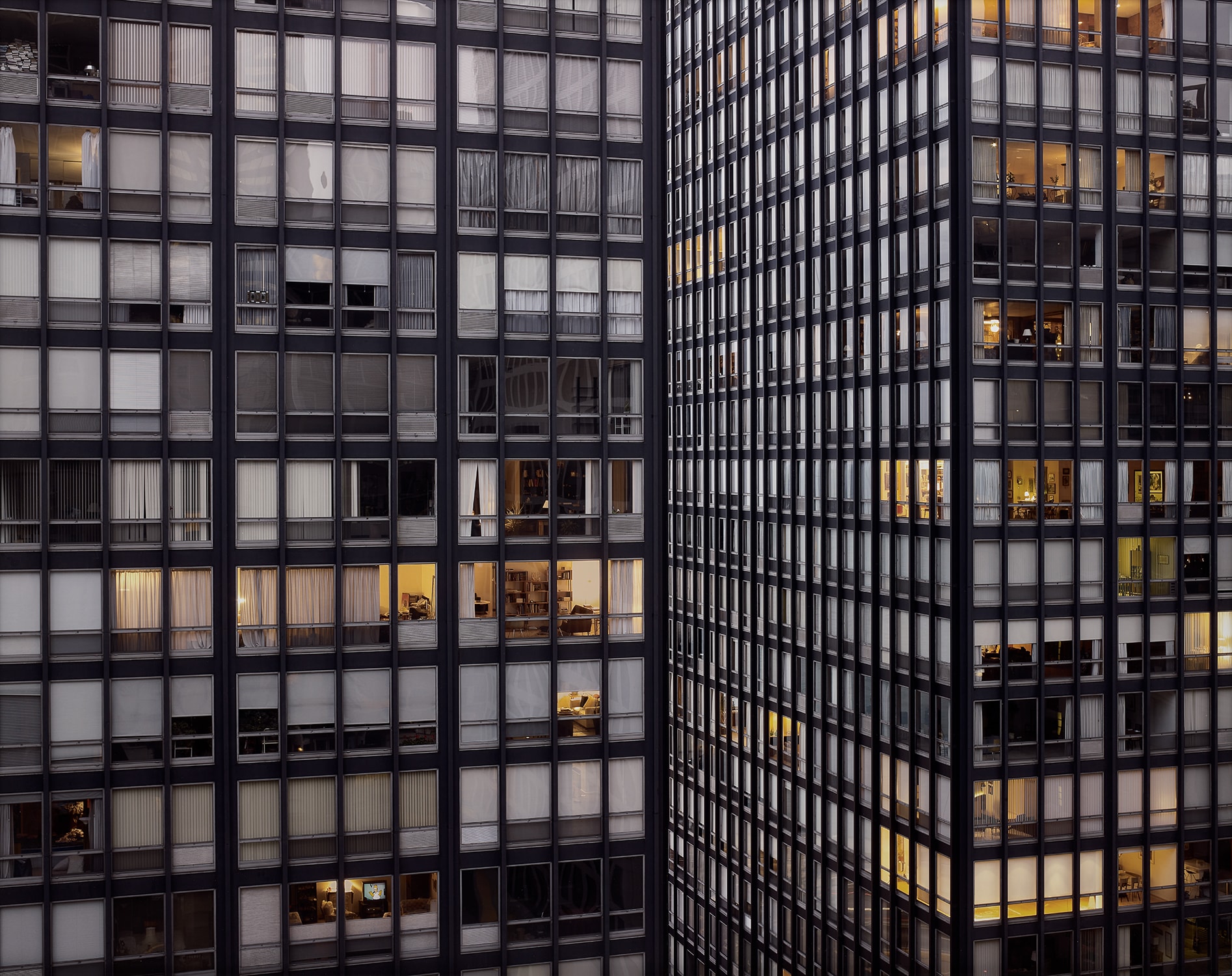
Night pieces from the series, including Night Number 3 and Night Number 16 from Architecture of Density, carry an additional layer of beauty and melancholy, the towers illuminated from within, glowing like lanterns against the dark. Wolf pursued parallel bodies of work with equal rigor. Tokyo Compression brought his lens inside the subway carriages of Japan's commuter rail system, capturing commuters pressed against train windows at rush hour, their expressions ranging from stoic endurance to something approaching anguish. The Transparent City, produced in Chicago, turned his gaze on the interiors of office towers photographed through glass, revealing the bureaucratic choreography of American corporate life with both wit and tenderness.
Michael Wolf
Night #3 from Architecture of Density
Works from this series, including Transparent City Number 88 and Transparent City Number 87A, have become among his most sought after by collectors, their warm light and compositional elegance making them among the most visually seductive of his achievements. Industrial Number 1 extends his inquiry into the textures and structures of the built environment, demonstrating the range of his formal curiosity. Wolf received the World Press Photo award on multiple occasions, recognition that situated him within the documentary tradition even as his practice consistently pushed against its conventions. He exhibited internationally at galleries and institutions across Europe, Asia, and North America, and his work entered significant private and institutional collections worldwide.
His photographs were shown at Art Basel and major photography fairs, where they attracted serious attention from collectors who understood that Wolf occupied a singular position: trained in photojournalism's ethical obligations, yet committed to an artistic vision that transcended reportage entirely. For collectors, Wolf's work represents one of the more compelling propositions in contemporary photography. His editions are relatively restrained in number, typically nine plus two artist's proofs, which ensures that serious collectors are entering a community of genuine rarity. The chromogenic prints, often flush mounted to board, are technically impeccable and hold their presence at scale in a way that rewards ambitious hanging.
Michael Wolf
Transparent City #87A
The Architecture of Density night works in particular carry a gravitas that places them in conversation with the great landscape and architectural photography of the twentieth century, from the Bechers' industrial typologies to Andreas Gursky's panoramic investigations of globalized space. Collectors drawn to Edward Burtynsky's meditations on industry and environment, or to Gursky's monumental examinations of contemporary capitalism, will find in Wolf a kindred and equally essential voice. Wolf belongs to a generation of photographers who inherited the rigorous conceptual framework of the Düsseldorf School while extending its concerns into an increasingly interconnected world. Where the Bechers documented the industrial monuments of a fading European era, Wolf turned his systematic eye toward the megacities of Asia and the Americas, finding in their density not despair but a kind of compressed humanity.
His work insists that every window contains a life, that every grid is made of people, and that the act of looking carefully and honestly at how we live together is itself a moral undertaking. The legacy Michael Wolf leaves is one of extraordinary discipline married to genuine compassion. He looked at cities that many found overwhelming or alienating and found within them pattern, beauty, and the stubborn persistence of human presence. His photographs do not sentimentalize poverty or spectacularize suffering; they observe with precision and allow the viewer to sit with what they see.
In an era when photography is abundant and attention is scarce, Wolf's best work commands sustained looking and rewards it generously. To collect Michael Wolf is to invest in one of the most coherent and consequential photographic visions of the past three decades, and to participate in keeping that vision alive for the next generation of eyes.
Explore books about Michael Wolf