Michael Williams
Michael Williams Paints the World We Live In
Artist Spotlight · The Collection Editorial
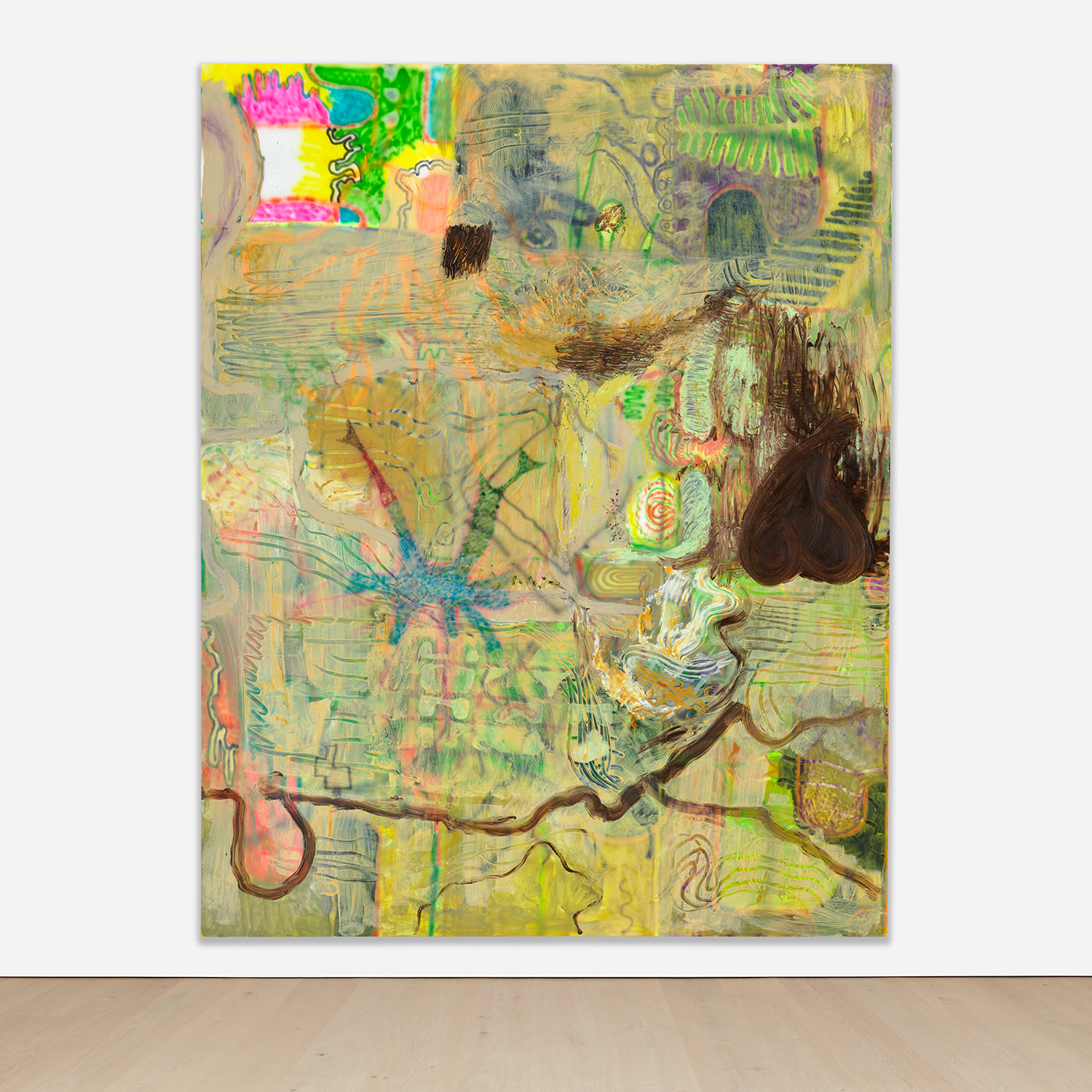
There is a particular moment in contemporary painting when an artist stops chasing the digital world and simply absorbs it, letting it reshape the grammar of their hand, their eye, their instincts. Michael Williams arrived at that moment earlier than almost anyone, and the results have been some of the most quietly influential paintings made in America over the past two decades. His canvases, dense with layered gesture, airbrushed color, and imagery drawn from computer interfaces and internet culture, feel less like critiques of screen life and more like honest portraits of how perception actually works now. They are warm, strange, and genuinely alive.
Michael Williams
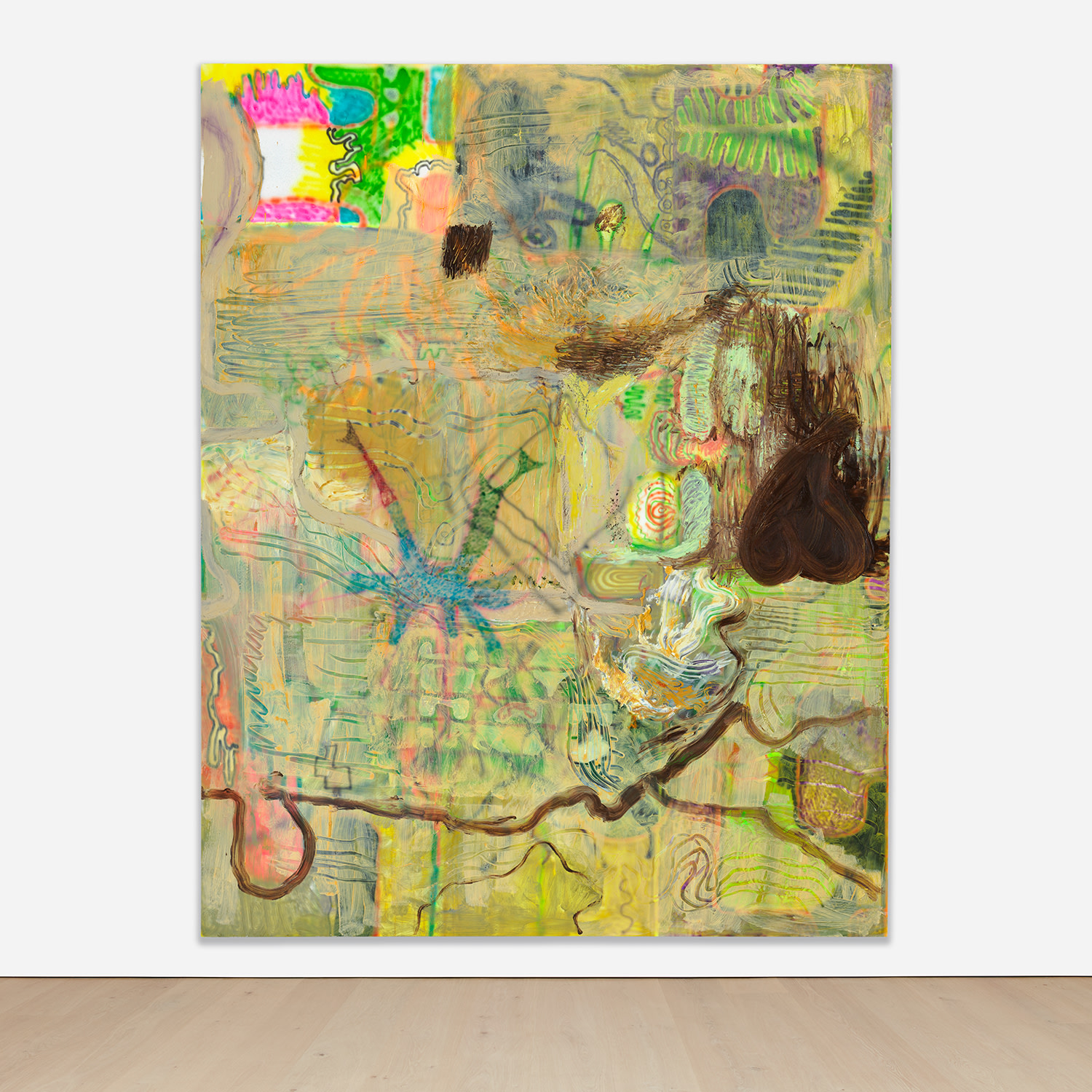
Cerebral TV from the 90's, 2012
Williams was born in 1978, which places him in a generation that came of age alongside the personal computer and the early internet rather than being born into them. That biographical timing matters enormously to understanding his work. He absorbed analog painting traditions through rigorous study while simultaneously watching the visual language of screens, video games, and digital interfaces colonize everyday life. Rather than treating those two worlds as opposites to be resolved, Williams found productive tension in their coexistence.
His formation as a painter took place in that gap, and he has never stopped mining it. His artistic development gained serious momentum in the late 2000s and early 2010s, when he began producing the layered, multimedia canvases that would define his reputation. Working with oil, airbrush, resin, and later inkjet printing directly onto canvas, Williams developed a technique that is instantly recognizable without ever becoming formulaic. The airbrush, a tool with roots in both fine art and commercial illustration, became central to his practice, allowing him to create passages of color that hover between the handmade and the mechanically produced.
Michael Williams
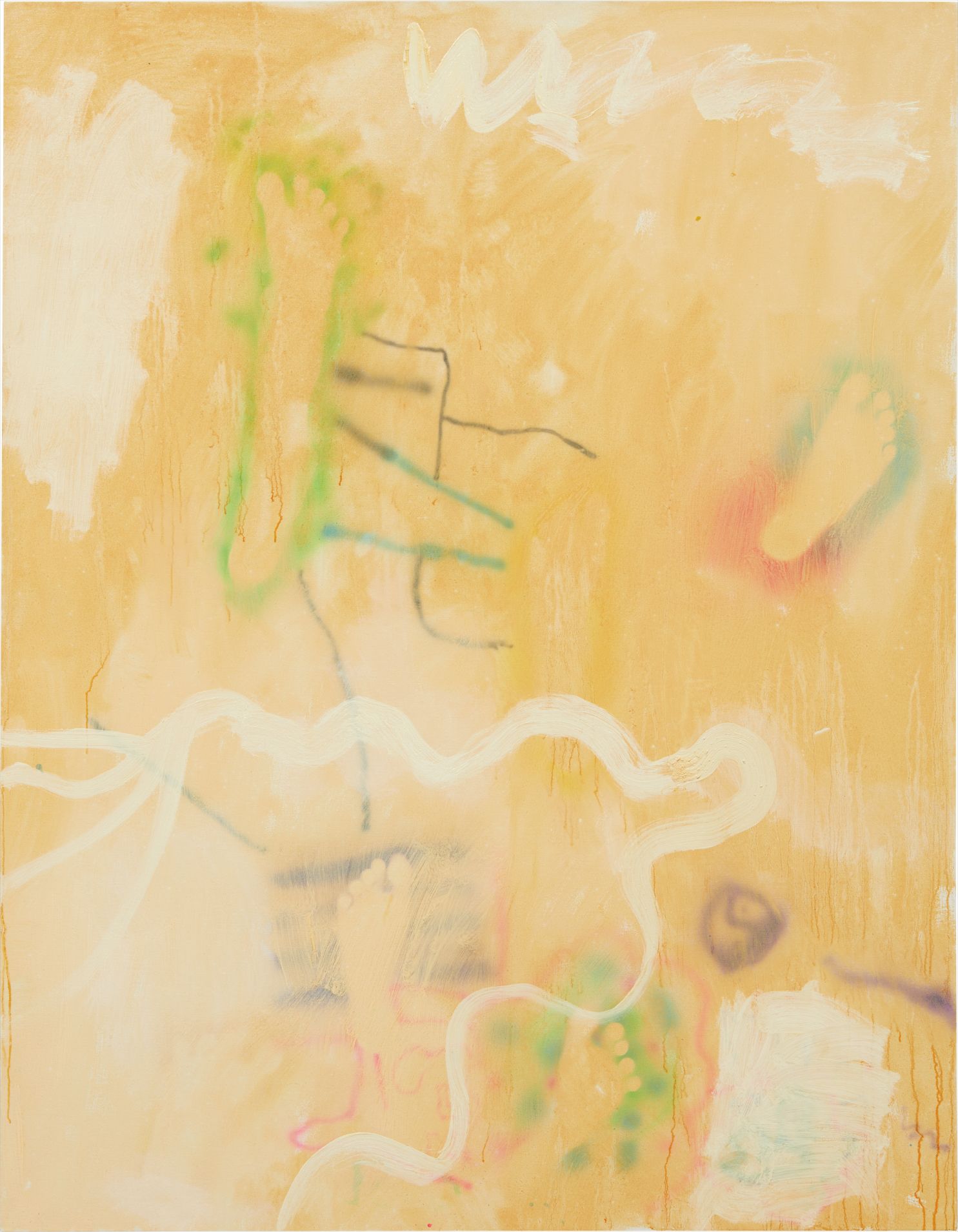
Code Nude, 2011
Each painting feels like an archaeological site, with imagery buried under subsequent layers of mark making, demanding close attention and rewarding patience. The works from the early 2010s represent a sustained peak of creative invention. "Code Nude" from 2011, made with oil and airbrush on canvas, takes the loaded tradition of the figure and runs it through the filtering logic of digital processing, arriving at something that is neither purely human nor purely technological but genuinely both. "Purity Control" from the same year and "Koyaanissmudgey," which incorporates oil and resin in its dense, shimmering surface, show Williams testing the material limits of his process with real confidence.
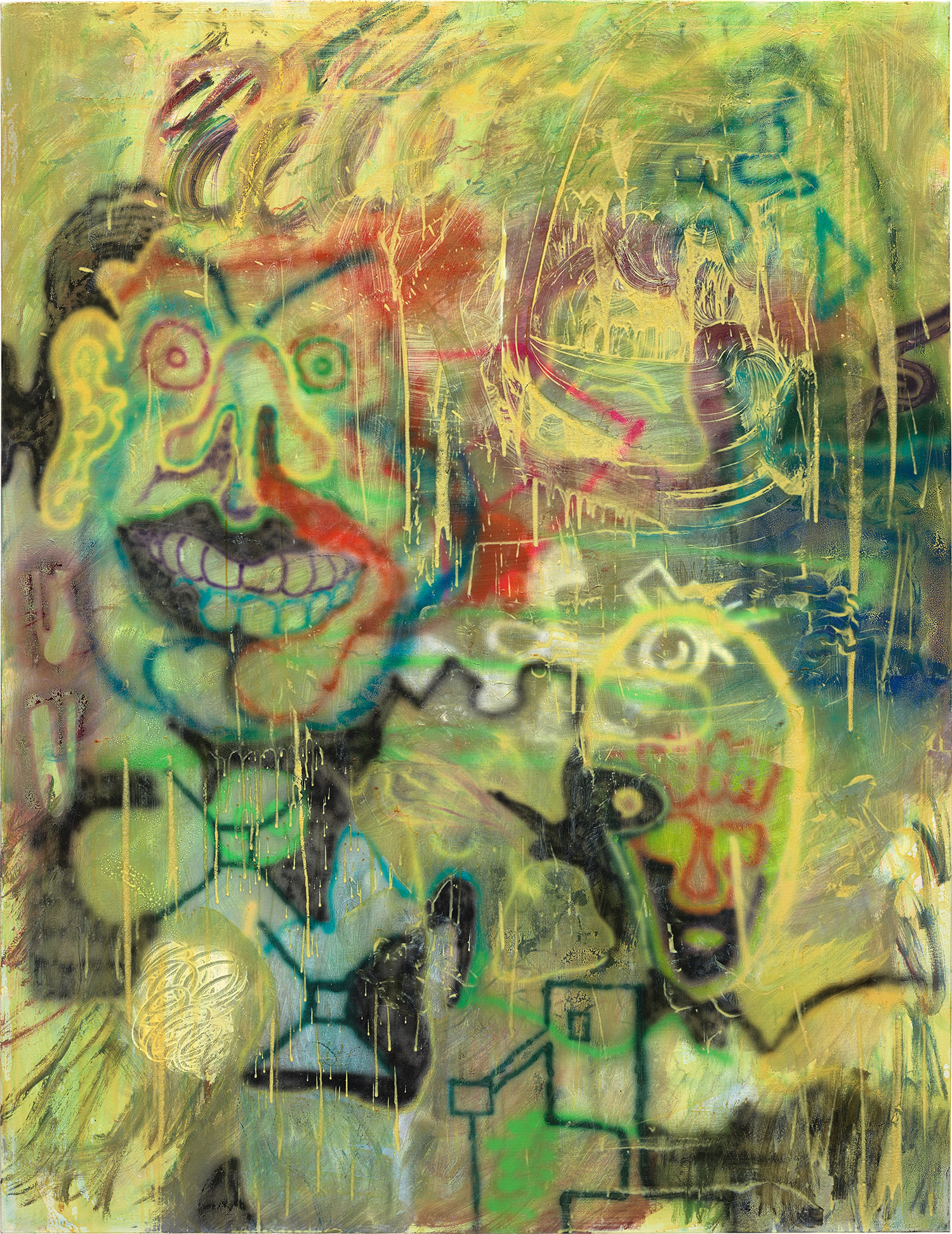
"Cerebral TV from the 90's," made in 2012 with oil, resin, and airbrush, captures a cultural mood with unusual precision, locating the particular psychic texture of that decade's relationship to broadcasting and information overload. "A Reasoned Case for Why You Should do an Inconvenient Thing," also from 2012, demonstrates his gift for titles that carry genuine conceptual weight while remaining accessible rather than academic. As the decade progressed, Williams continued to evolve without abandoning what made his earlier work so distinctive. "Pygmy Twylyte" from 2014, which incorporates inkjet alongside airbrush and oil, shows his expanding comfort with mixed process, and "Deserted Medieval Village" from the same year uses inkjet and acrylic to conjure a mood that feels simultaneously ancient and digitally mediated.
Michael Williams
A Reasoned Case for Why You Should do an Inconvenient Thing, 2012
By the time of "Golf Creek" in 2017, made with oil and pencil on canvas, a quieter, more contemplative register had entered his practice. The pencil work in particular signals a willingness to slow down, to let drawing assert itself against the more expansive gestures of his earlier canvases. It is the mark of an artist who is genuinely developing rather than refining a successful formula. Williams is represented by Anton Kern Gallery in New York, one of the more thoughtful and collector trusted galleries operating in the city today.
Anton Kern has long championed painters who work at the intersection of figuration, abstraction, and conceptual rigor, and Williams fits that program with a naturalness that speaks well of both parties. His work has been presented at major art fairs and international institutions, building a following among collectors who appreciate painting that rewards sustained looking. For those approaching his market, the works from 2011 to 2014 represent the core of his critical and commercial standing, though the later paintings offer compelling evidence of continued growth and should not be overlooked by collectors with a longer view. In the broader context of contemporary painting, Williams occupies a distinctive position.
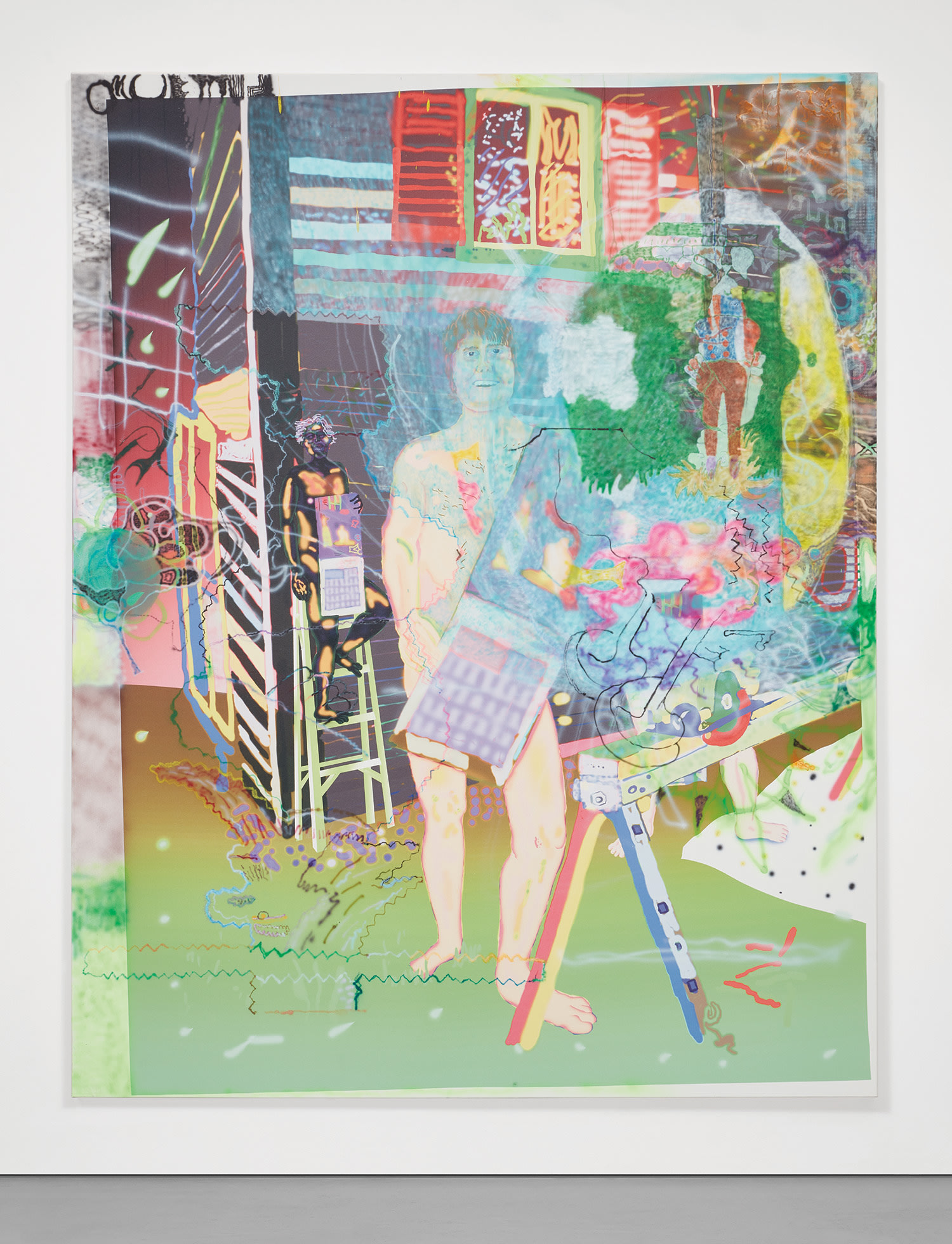
Michael Williams
Ikea Be Here Now, 2013
His engagement with digital culture connects him to artists like Jacqueline Humphries, whose work similarly interrogates the relationship between screen logic and painterly mark making, and to the generation of painters who emerged in the 2000s asking serious questions about what painting could still do in a world saturated with images. His use of the airbrush places him in a lineage that runs through artists like H.C. Westermann and Malcolm Morley, even as his content remains firmly rooted in the present.
He is, in the best sense, a painter's painter who has also managed to speak clearly to a broader audience. What makes Williams matter in 2024 and beyond is precisely the durability of the questions his paintings ask. As artificial intelligence reshapes image making and the boundaries between the handmade and the generated become newly contested, his long investigation of where the analog body meets the digital environment feels more timely than ever. His canvases do not offer easy answers, but they offer something more valuable: a record of genuine searching, conducted with extraordinary skill and an evident love for the possibilities of paint.
Collectors who spend time with his work tend to find that it grows in their estimation rather than diminishing, which is perhaps the most reliable measure of lasting quality in any medium.