Michael Taylor
Michael Taylor Paints America From the Inside
Artist Spotlight · The Collection Editorial
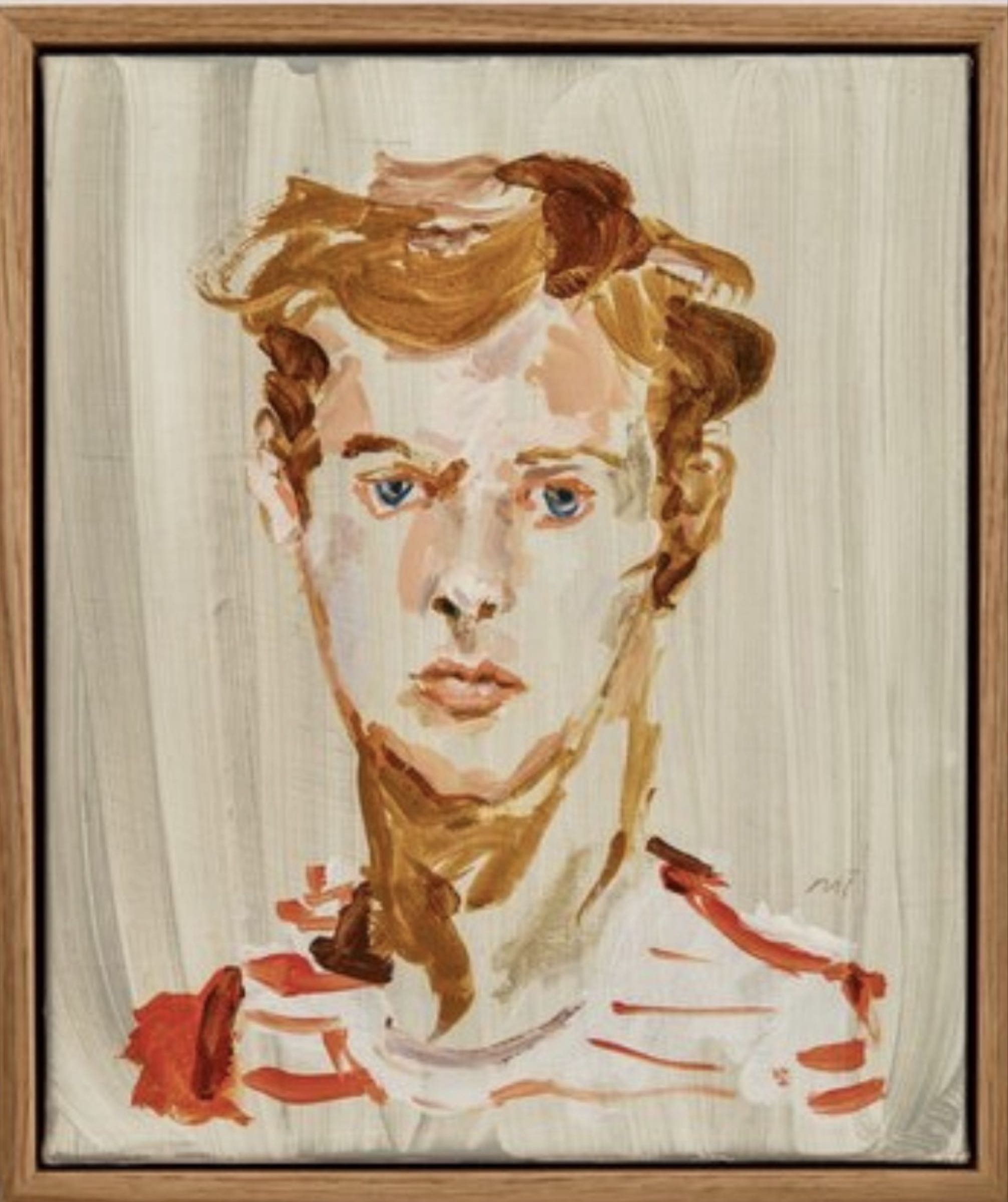
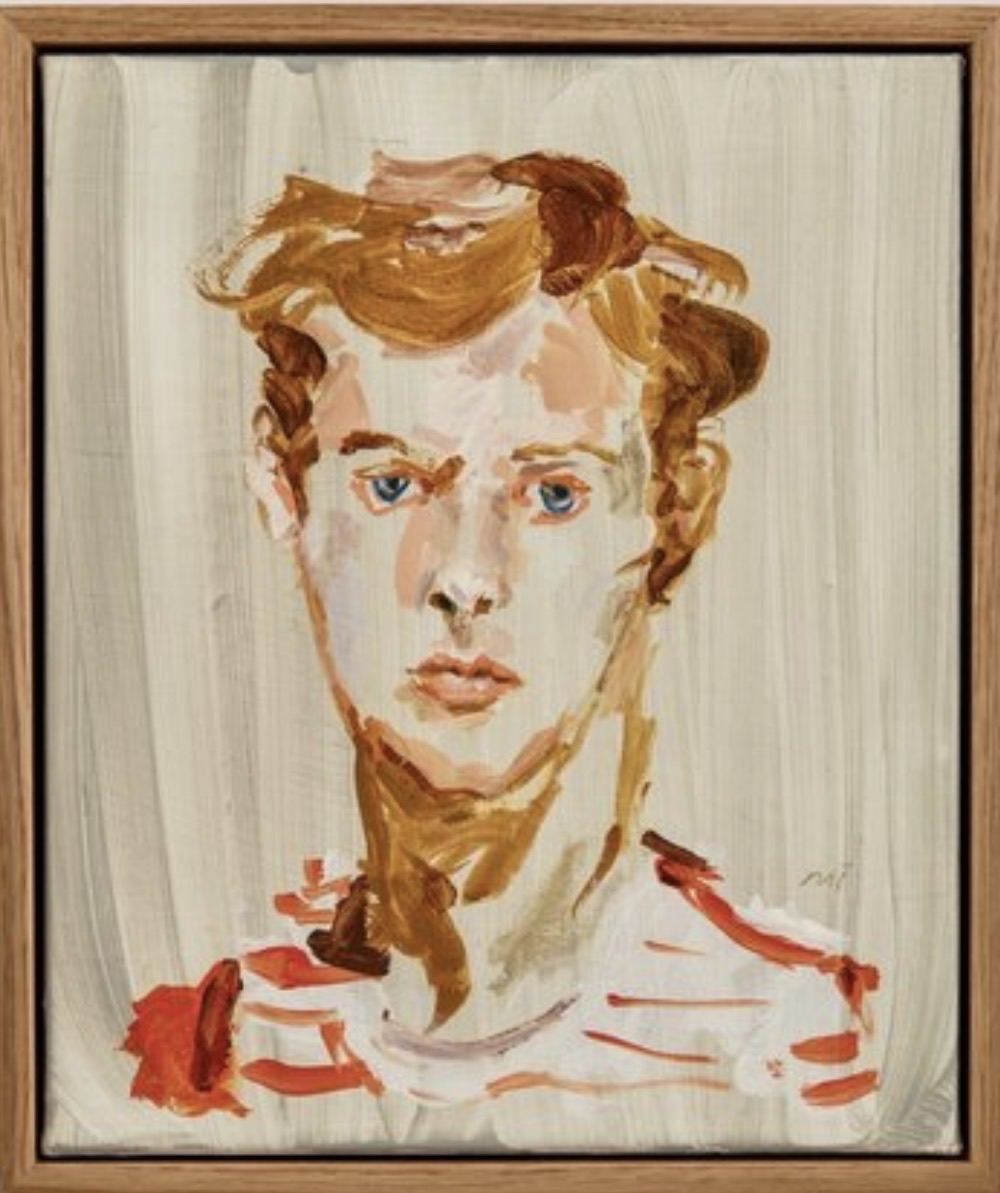
There is a particular kind of American painting that does not announce itself loudly. It arrives quietly, layered with accumulated feeling, asking you to lean in rather than step back. In 2025, Michael Taylor released "Little Holland," an acrylic on canvas that has drawn the attention of collectors and curators alike who recognize in it something rare: a work that holds its own history on the surface, where gesture and image coexist in a state of productive tension. For those already following Taylor's trajectory, the piece feels like a culmination.
Michael Taylor
Little Holland, 2025
For those encountering his work for the first time, it opens a door onto a practice that rewards sustained looking. Taylor is an American artist whose formation reflects the breadth and contradiction of the country he consistently investigates. Working across painting, sculpture, and mixed media, he has built a practice that refuses easy categorization, moving fluidly between gestural abstraction and figurative reference, between the personal and the culturally shared. His sensibility draws from the deep well of American visual culture, from its vernacular imagery and its landscape traditions, but also from the kind of intimate, psychological interiority that connects his work to European expressionist lineage.
What emerges is a body of work that feels genuinely of this moment while carrying the weight of art historical consciousness. The development of Taylor's practice has followed a path that many of the most compelling contemporary painters share: a deep engagement with art historical tradition that eventually becomes a source of liberation rather than constraint. He has been associated with neo expressionist tendencies, and one can feel in his layered surfaces an awareness of painters like Anselm Kiefer, whose mythological weight presses against the picture plane, and Philip Guston, who reintroduced figuration into an abstract landscape with sly, searching intelligence. Yet Taylor's American ness is not incidental.
It is structural. His compositions carry within them the specific textures of memory and place that belong to a sensibility shaped by this particular cultural geography. What distinguishes Taylor's approach is his use of layering as a conceptual as well as formal strategy. The accumulation of paint on his canvases is not merely technical bravado.
It is a way of thinking about how identity forms over time, how memory overlaps with experience, and how the American cultural landscape is itself a palimpsest of competing narratives and images. In "Little Holland," this approach reaches a kind of clarity. The title itself gestures toward the Dutch Golden Age, one of painting's great moments of domestic intimacy and optical precision, while the work reimagines that inheritance through a contemporary American lens. There is something tender and also probing in that gesture, an act of cultural translation that Taylor performs with both confidence and care.
For collectors, Taylor's work occupies an interesting position in the current market. Contemporary painting that operates in the space between abstraction and figuration has seen sustained institutional and commercial attention over the past decade, with artists navigating similar territory commanding serious prices at auction and in primary market sales. Taylor's practice, with its conceptual rigor and its emotional directness, aligns with a collecting appetite that prizes works capable of functioning on multiple registers simultaneously. His sculptures and mixed media works extend the same concerns across different material languages, giving collectors the opportunity to engage with a practice that is genuinely multidimensional.
The work does not simply fill a wall. It generates a sustained relationship. To situate Taylor within contemporary art history is to trace a lineage of American artists who have used painting and sculpture to think through questions of national identity and personal memory. One thinks of Kerry James Marshall's epic engagement with Black American experience, of Julie Mehretu's layered cartographies of history and abstraction, of Kehinde Wiley's interrogation of portraiture and cultural power.
Taylor's concerns are his own, but they participate in a broader conversation about what it means to make art in America now, to inherit a cultural landscape that is simultaneously rich with tradition and fractured by ongoing negotiation. His commitment to mixed media and installation work also connects him to a generation of artists for whom the boundaries between artistic disciplines are productive zones of inquiry rather than fixed borders. What ultimately makes Michael Taylor's practice matter is the quality of attention it demands and rewards. In an art world that often privileges spectacle and legibility, his work insists on complexity, on the kind of meaning that accumulates through looking rather than arriving instantly.
"Little Holland" is a painting that will repay every return visit, offering something new as the viewer's own experience and understanding evolve. That is the mark of work with genuine staying power. As Taylor continues to develop his practice, those who have had the foresight to engage early with his vision will find themselves in possession of something that grows more resonant with time. That is not a promise many artists can keep, but it is one that Taylor's body of work, in its layered, searching, deeply felt engagement with American life and art historical tradition, already seems to be making good on.
Explore books about Michael Taylor