Michael Lau
Michael Lau, The Man Who Made Toys Art
Artist Spotlight · The Collection Editorial
When Christie's Hong Kong brought a selection of Michael Lau's Gardener figures to auction in the early 2000s, something unexpected happened. Collectors who ordinarily spent their evenings debating Basquiat and Koons found themselves in spirited competition over palm sized vinyl figures dressed in baggy jeans and sneakers. The room, as those who were present recall, had a particular electricity to it, the kind that only arrives when a cultural category is being redefined in real time. That moment announced, without ambiguity, that the border between fine art and collectible culture had not merely been blurred but dissolved entirely, and that Michael Lau was the man holding the solvent.
Michael Lau
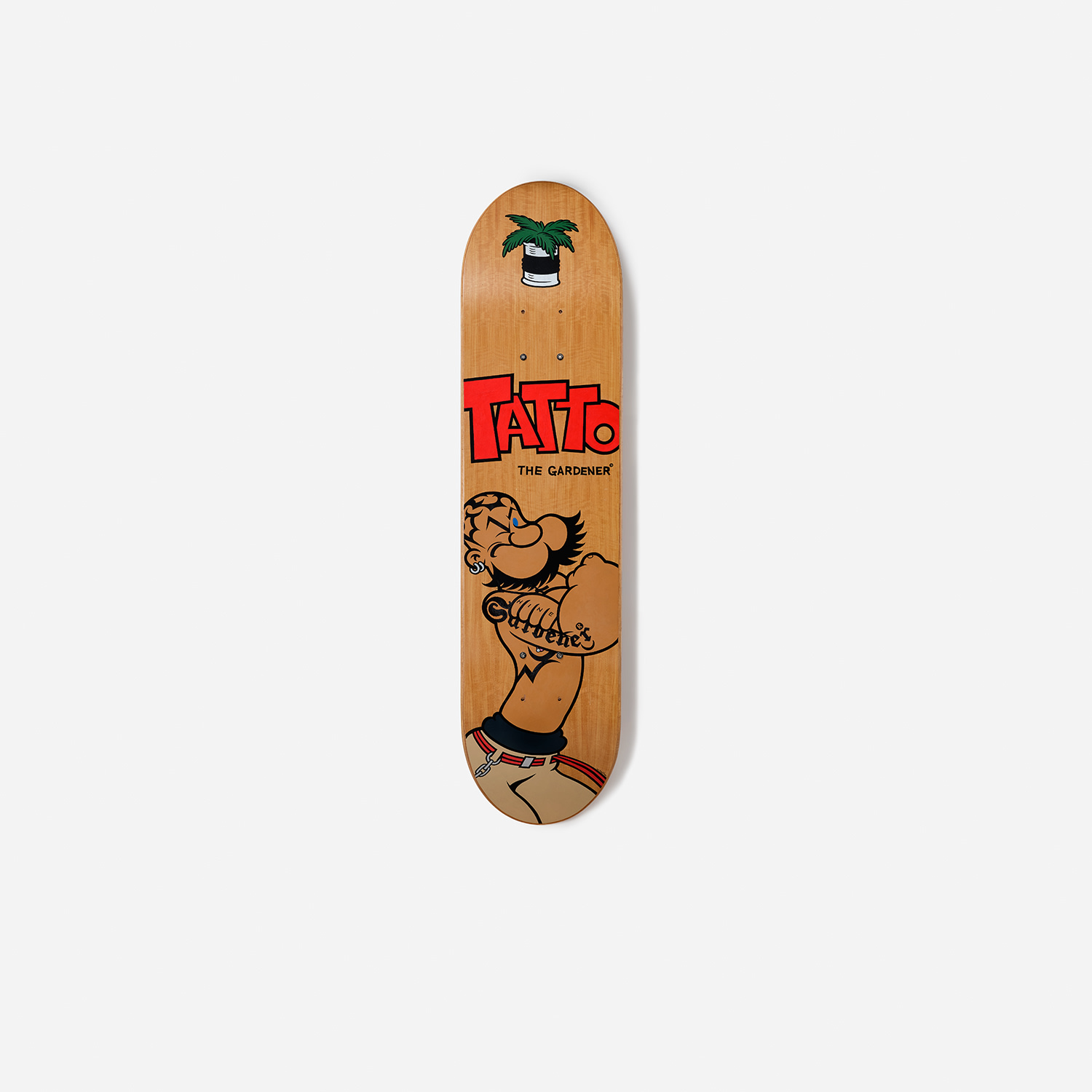
TATTO - Gardener series, 2013
Lau was born in Hong Kong in 1969, coming of age in a city that has always thrived on productive contradiction, where colonial heritage pressed against Chinese tradition, and where global pop culture arrived via cassette tapes, comic books, and bootleg VHS tapes with an urgency that felt almost biological. The city's Kowloon streets in the 1970s and 1980s were a living collage, and Lau absorbed all of it. He trained as a graphic designer and worked as an illustrator and comic artist throughout the early 1990s, building a visual vocabulary steeped in Japanese manga, American hip hop iconography, and the skateboarding subcultures that were quietly reshaping youth identity across Asia and the West simultaneously. It was in 1999 that Lau introduced the work that would reorder his career and, more broadly, the global conversation around collectible art.
Presented at a group exhibition in Hong Kong, the Gardener series comprised hand crafted twelve inch figures rendered with an almost obsessive attention to subcultural authenticity. Each figure wore custom sneakers, carried miniature skateboards, and bore the casual authority of a downtown New York streetwear devotee transplanted into a collectible format. The series was not a commercial product in any conventional sense. It was a sustained artistic statement about identity, community, and the aesthetics of street life, delivered through a medium that the art world had not yet learned to take seriously.
Michael Lau
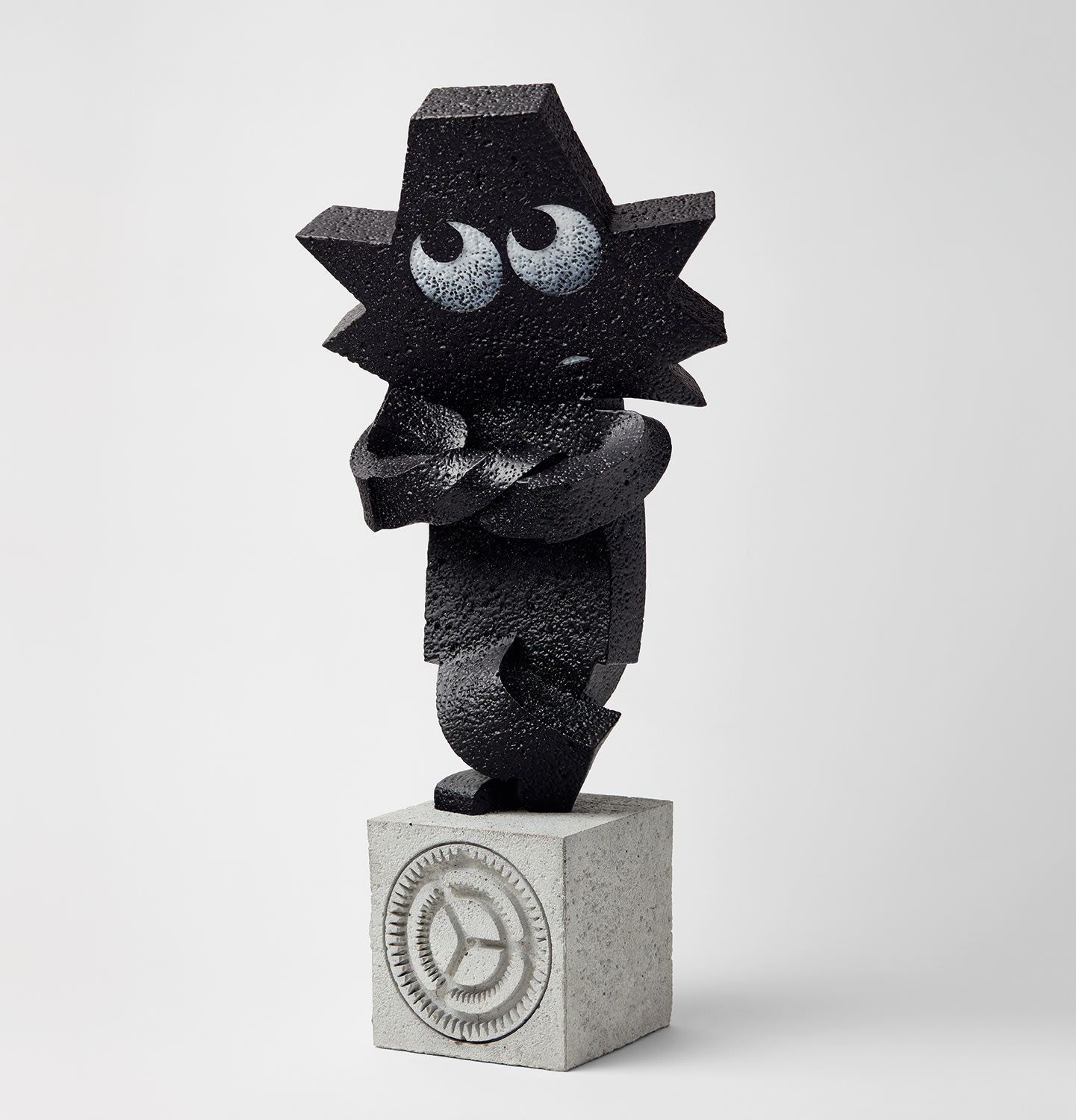
Thinking (What? We: Want! Series), 2018
Lau made sure it would. The Gardener series expanded across hundreds of individual figures over the years that followed, each one a distinct character with its own name, aesthetic logic, and emotional register. Lau's working method during this period combined illustration, sculpture, and the obsessive world building one associates more readily with literary fiction than with visual art. He was constructing a universe, complete with its own inhabitants and internal coherence, and doing so with materials and references that the established art world had conspicuously ignored.
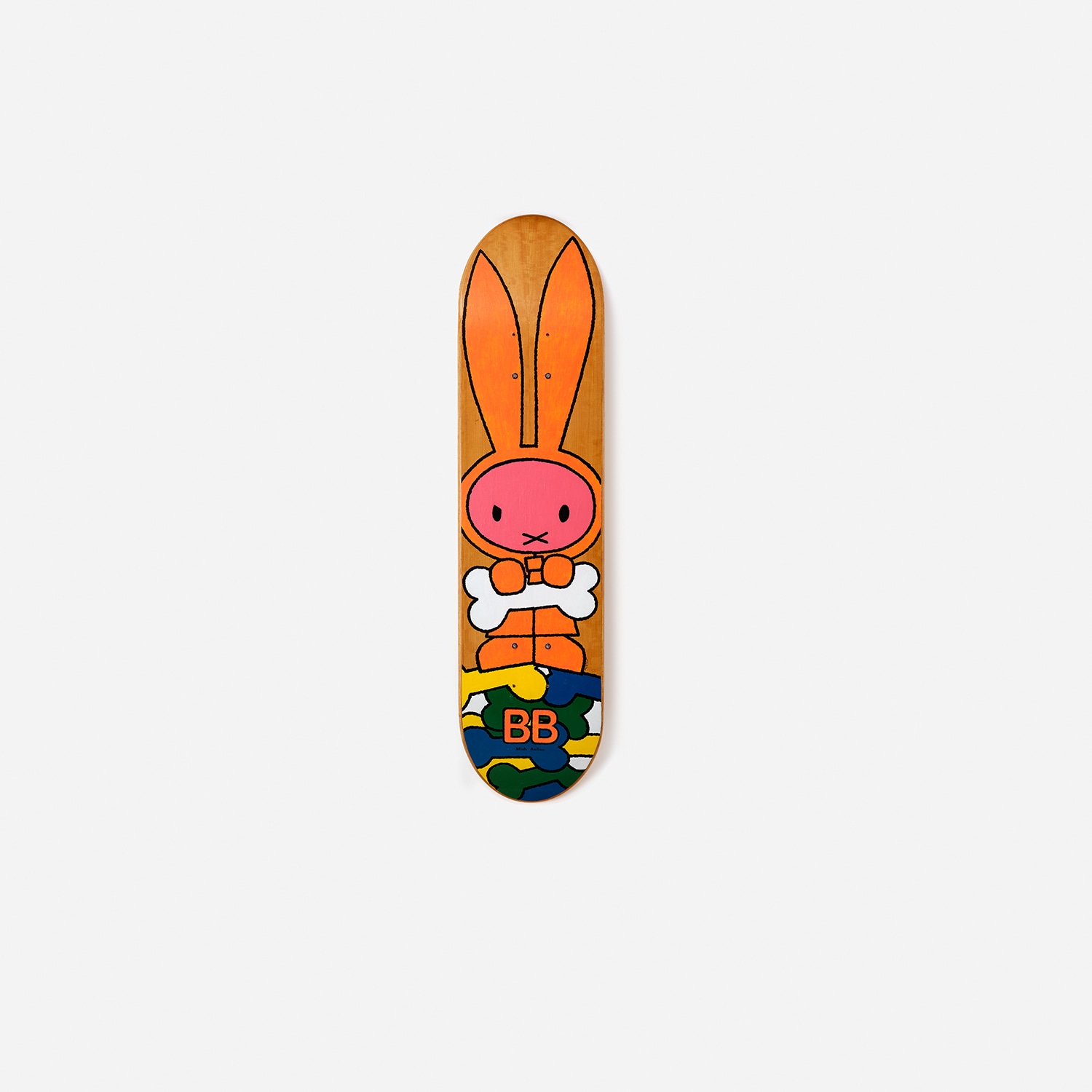
His influence on what became known as the designer toy movement, or urban vinyl, is so foundational that it is genuinely difficult to discuss the field without beginning with his name. Artists and studios across Japan, the United States, and Europe who came after him, including KAWS, Medicom Toy collaborators, and the broader constellation of figures associated with the Be@rbrick phenomenon, all emerged into a space that Lau had prepared. The works available on The Collection illuminate the breadth and ambition of his practice across different periods. The two Gardener series pieces from 2013, each rendered in acrylic on skateboard, are particularly compelling objects.
Michael Lau
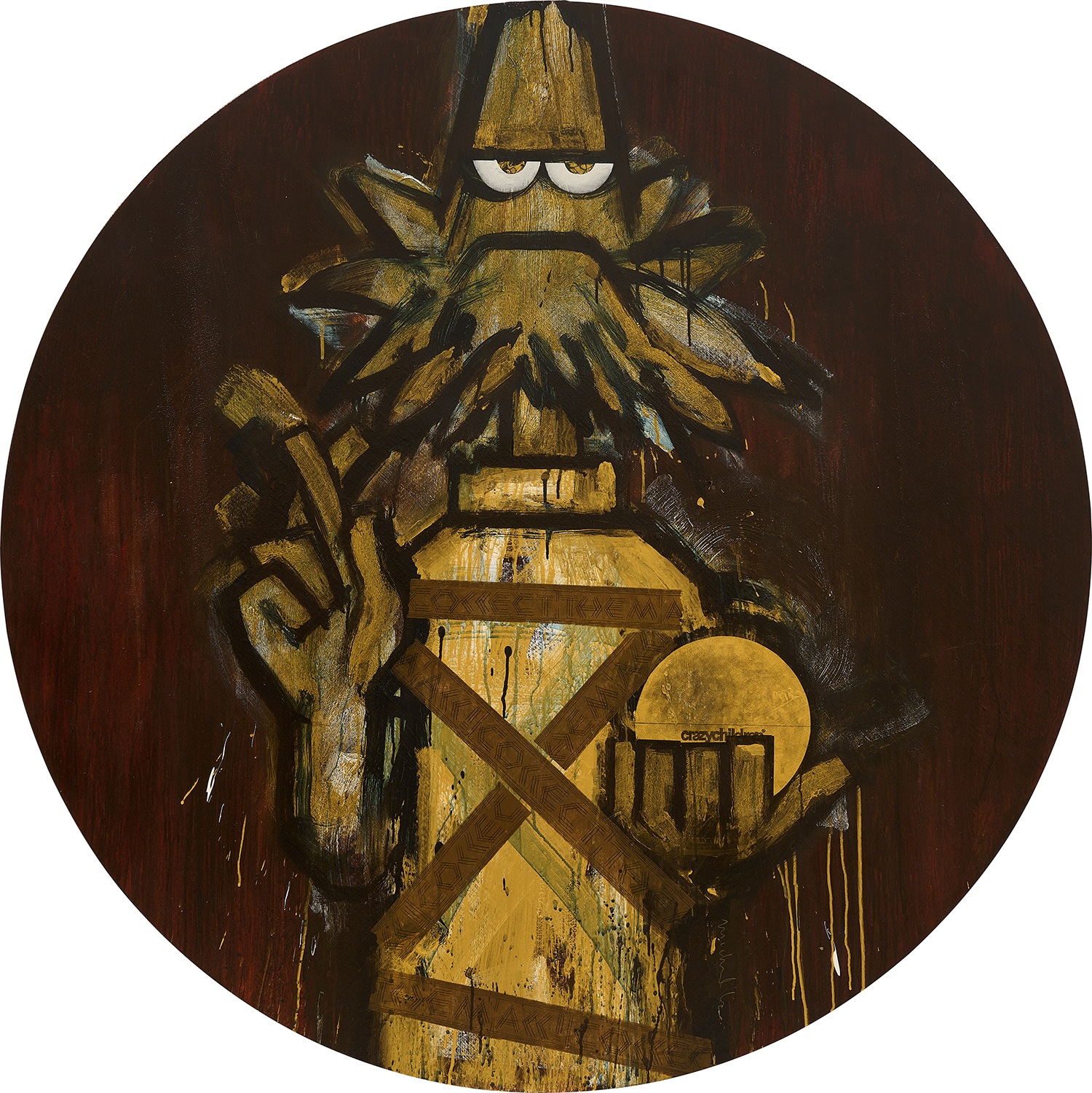
Salvator Michael Gold, 2018
The skateboard as a canvas carries enormous cultural freight in Lau's hands. It is not a neutral surface. It is a declaration of allegiance to a particular set of values around movement, freedom, and anti institutional creative energy, and Lau uses it with the same deliberateness that an Abstract Expressionist might choose a specific scale of canvas. The 2018 works, including Salvator Michael Gold and the pieces from the What?
We: Want series and the Package Change series, demonstrate the evolution of his practice toward more overtly painterly concerns. These canvases engage directly with art historical tradition, with Salvator Michael Gold functioning as a lucid and affectionate conversation with the iconography of Old Master portraiture, recasting its grandeur through the lens of street culture and personal mythology. For collectors approaching Lau's market, several things are worth understanding. His work occupies a genuinely unique position in that it commands serious attention at major auction houses while also carrying the emotional resonance of objects that people connect with on a deeply personal, often generational level.
Michael Lau
BB - Gardener series, 2013
Phillips and Christie's have both handled significant examples of his work, and prices for rare Gardener figures and unique painted works have risen consistently as the broader institutional recognition of street and urban art has grown. The most sought after pieces tend to be early Gardener figures in excellent condition, particularly those with documented exhibition histories, and unique works on canvas or on skateboard decks where Lau's hand is most directly present. Collectors who entered the market early, often guided by an instinct for cultural relevance rather than established critical consensus, have been rewarded both financially and in terms of the sheer pleasure of living with objects of such wit and vitality. The artists with whom Lau shares the most meaningful conversation include figures like Futura, whose career similarly bridged graffiti, fine art, and commercial culture across decades, and Takashi Murakami, whose Superflat movement drew on related impulses around the leveling of high and low cultural hierarchies.
There is also a productive connection to be drawn with the Pop Art generation, and specifically with Andy Warhol's insistence that the objects of consumer culture deserved the same seriousness of attention as any other subject. Lau arrives at a similar conclusion from a different direction, and with a different set of cultural references, but the underlying democratic generosity of vision is recognizable across the distance. What makes Michael Lau genuinely important, beyond the market metrics and the movement he catalyzed, is the quality of attention he has paid to communities and aesthetics that the mainstream art world spent decades systematically ignoring. His figures are portraits, in the deepest sense of the word, of a generation that found its values and its beauty in the street, in the record store, on the skateboard ramp.
He honored those communities with craft and seriousness and the full force of his imagination, and the art world, to its considerable credit, eventually caught up. To encounter his work today is to feel the particular pleasure of being shown something you thought you already understood and discovering that it contains far more than you knew.