Michael Kenna
Michael Kenna: Poetry Written in Silver Light
Artist Spotlight · The Collection Editorial
“I am trying to make photographs that are meditative, that slow people down and make them think.”
Michael Kenna, interview with LensCulture
There is a particular kind of stillness that arrives before dawn, when the world holds its breath and the boundary between land and sky dissolves into something approaching the infinite. It is precisely this hour that Michael Kenna has devoted much of his life to inhabiting, camera in hand, tripod planted in sand or snow or fog drenched earth. In recent years, major retrospective exhibitions in Japan, France, and across the United States have reaffirmed what collectors and curators have long understood: Kenna is among the most quietly radical photographers working today, an artist whose commitment to slowness and solitude has produced a body of work of extraordinary emotional depth. Kenna was born in 1953 in Widnes, Lancashire, a working class industrial town in the northwest of England.
Michael Kenna
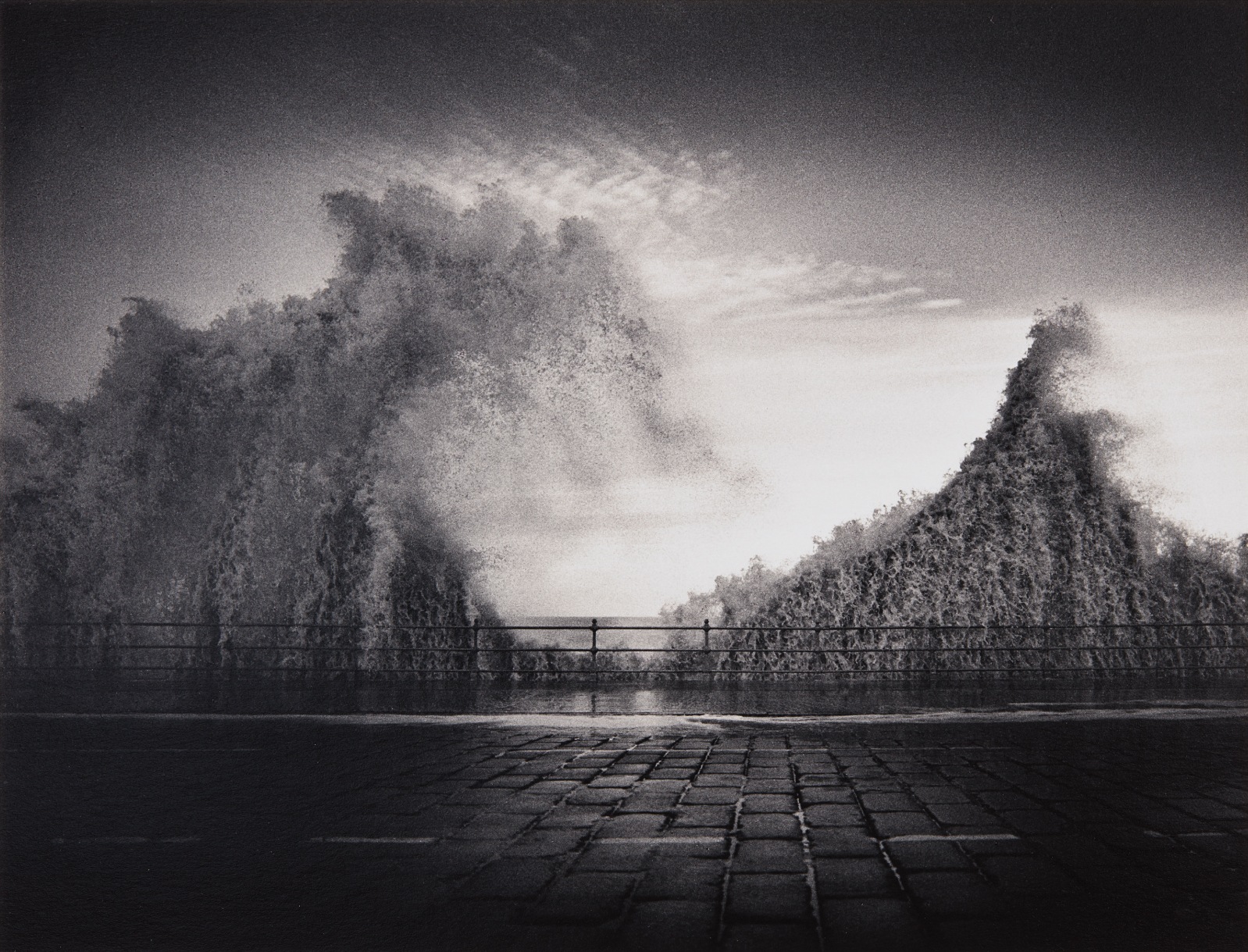
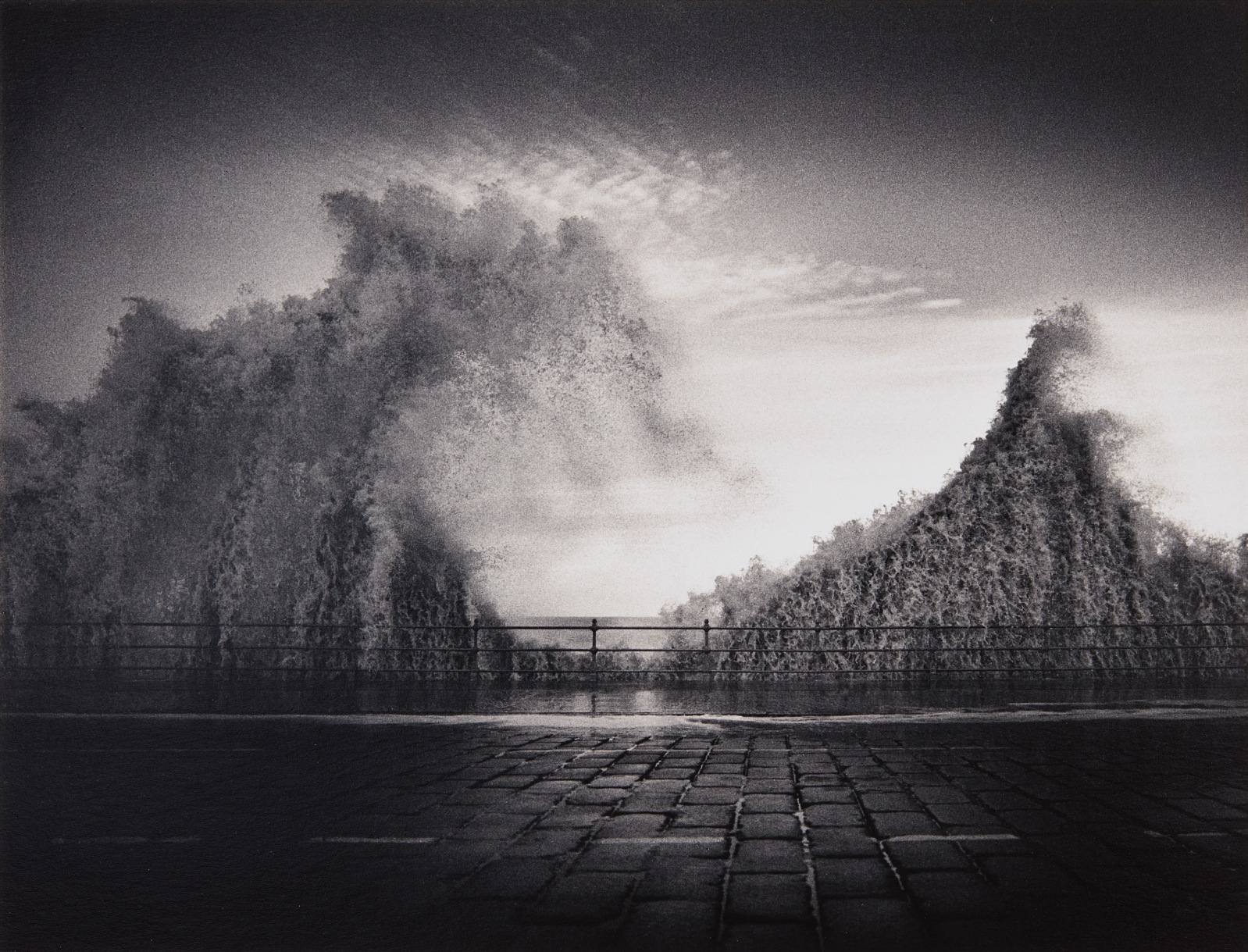
Wave, Scarborough, Yorkshire, England
The landscape of his childhood was shaped by factories, chemical plants, and the flat, grey light of the English north, an environment that instilled in him both a sensitivity to the poetic potential of industrial forms and a deep familiarity with the beauty that persists in overlooked places. He studied photography at the Banbury School of Art and later at the London College of Printing, where he encountered the work of Bill Brandt, whose atmospheric vision of Britain would prove a formative influence. After completing his studies in the late 1970s, Kenna moved to San Francisco, a city that would become his adopted home for decades and a base from which he would travel the world. It was in California that Kenna began his long and fruitful association with the Modernbook Gallery, which became one of the primary venues through which his work reached collectors in the United States.
His early period in San Francisco also brought him into contact with the rich tradition of American photography centered around Ansel Adams and the f64 group, artists whose reverence for the darkroom as a creative space resonated deeply with Kenna's own practice. He shoots exclusively on medium format film, often making exposures that last hours rather than seconds, and he prints every image himself in the darkroom. This devotion to craft is not nostalgia but conviction: the long exposure transforms moving water into silk, turns trees into wraiths, and compresses time into a single luminous surface. Kenna first achieved widespread critical recognition through his ongoing series documenting the Ratcliffe Power Station in Nottinghamshire, England.
Michael Kenna
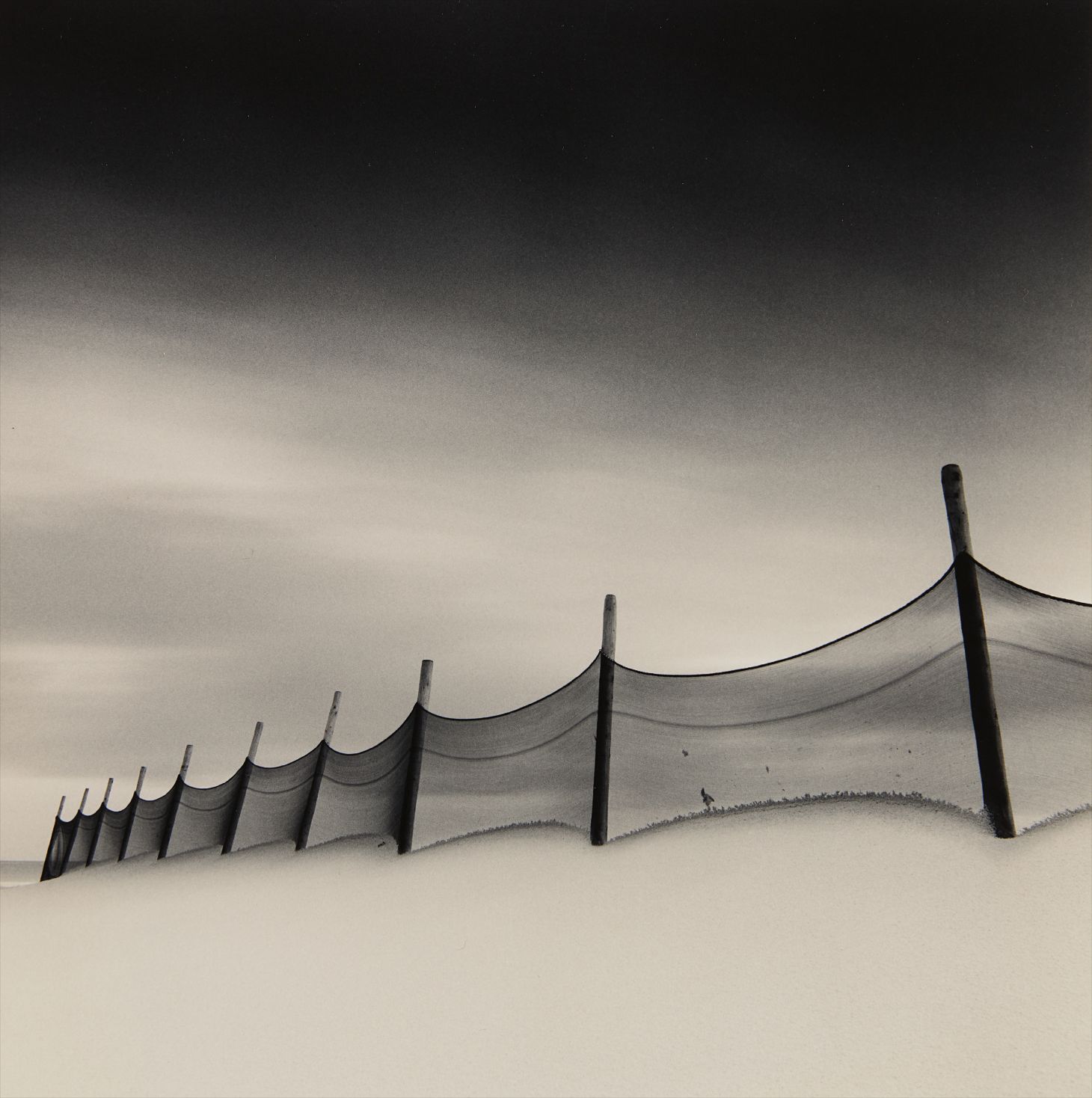
Wind-Swept Beach, Calais, France
Begun in the mid 1980s and continued over many years, the project turned the cooling towers and industrial structures of this electricity generating facility into forms of almost architectural grandeur, reminiscent of the drawings of Piranesi or the sublime landscapes of Caspar David Friedrich. Printed in editions of twenty, these images became among his most sought after works and established the template for much of what followed: a rigorous, long term engagement with a single site, pursued across seasons and years until its essential character was fully understood. The series demonstrated that Kenna's relationship with landscape was always as much philosophical as it was photographic. The works available through The Collection illuminate the breadth of his geographic and emotional range.
“The longer you look at something, the more it reveals itself to you.”
Michael Kenna
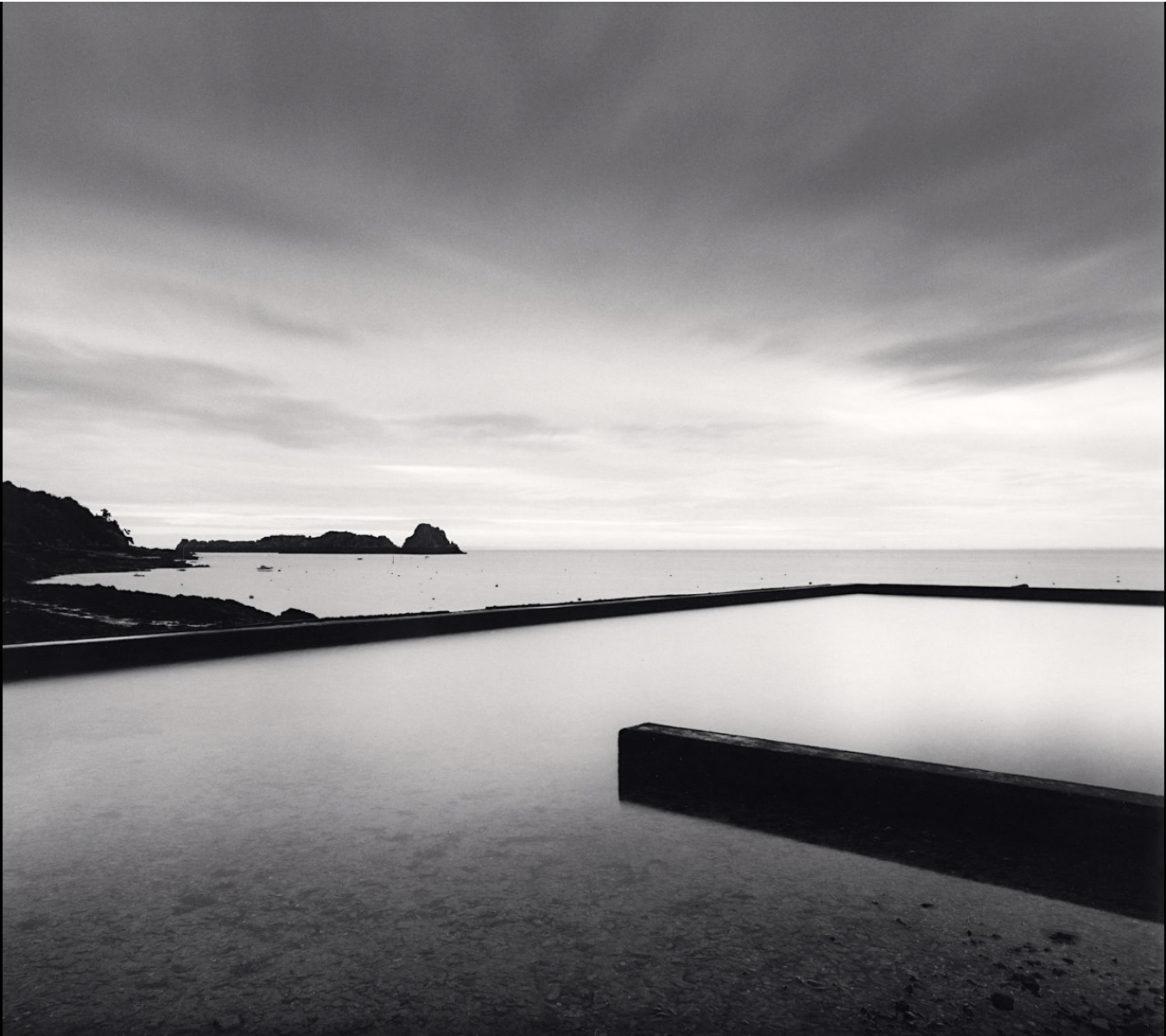
"Wave, Scarborough, Yorkshire, England," a sepia toned gelatin silver print from 1991, distills the drama of the North Sea into a gesture of almost calligraphic simplicity. "Wind Swept Beach, Calais, France" captures the elemental tension between land and weather that runs through so much of his European work. "Pool Walls, Cancale, France" from 2000 demonstrates his affinity for the Breton coastline, a landscape he has returned to repeatedly and which seems to answer something deep in his northern English sensibility. "Swings, Catskill Mountains, New York," toned in both sepia and selenium and printed in 1987, is an early and particularly tender example of his ability to find the uncanny in the domestic, transforming a playground in winter into something approaching elegy.
Michael Kenna
Pool Walls, Cancale, France , 2000
For collectors, Kenna's work presents a compelling combination of accessibility and depth. His prints are editioned carefully, typically in runs of no more than twenty five, and his involvement in every stage of the printing process means that each object carries an unmistakable integrity. His work has been acquired by major public institutions including the Victoria and Albert Museum in London, the Bibliotheque Nationale de France in Paris, the Museum of Fine Arts in Houston, and the National Museum of Modern Art in Tokyo. At auction, his most celebrated prints, particularly the Ratcliffe Power Station series and his Japanese landscape work, have achieved strong and consistent results, reflecting sustained demand from collectors in Europe, North America, and Asia.
Those beginning to collect Kenna should attend to the toning, which varies between sepia, selenium, and straight silver, and to the edition number and printing date, as earlier prints from the first decade of an edition often carry particular desirability. Kenna's closest affinities within the history of photography are with artists who share his devotion to the meditative and the handmade. The work of Hiroshi Sugimoto, with its long exposures and philosophical inquiry into time and perception, offers an illuminating parallel, as does the quieter strand of European landscape photography represented by figures such as Pentti Sammallahti and Lynn Davis. His debt to Bill Brandt has already been noted, but one might also invoke the spirit of Edward Weston in his dedication to the print as an object of intrinsic beauty.
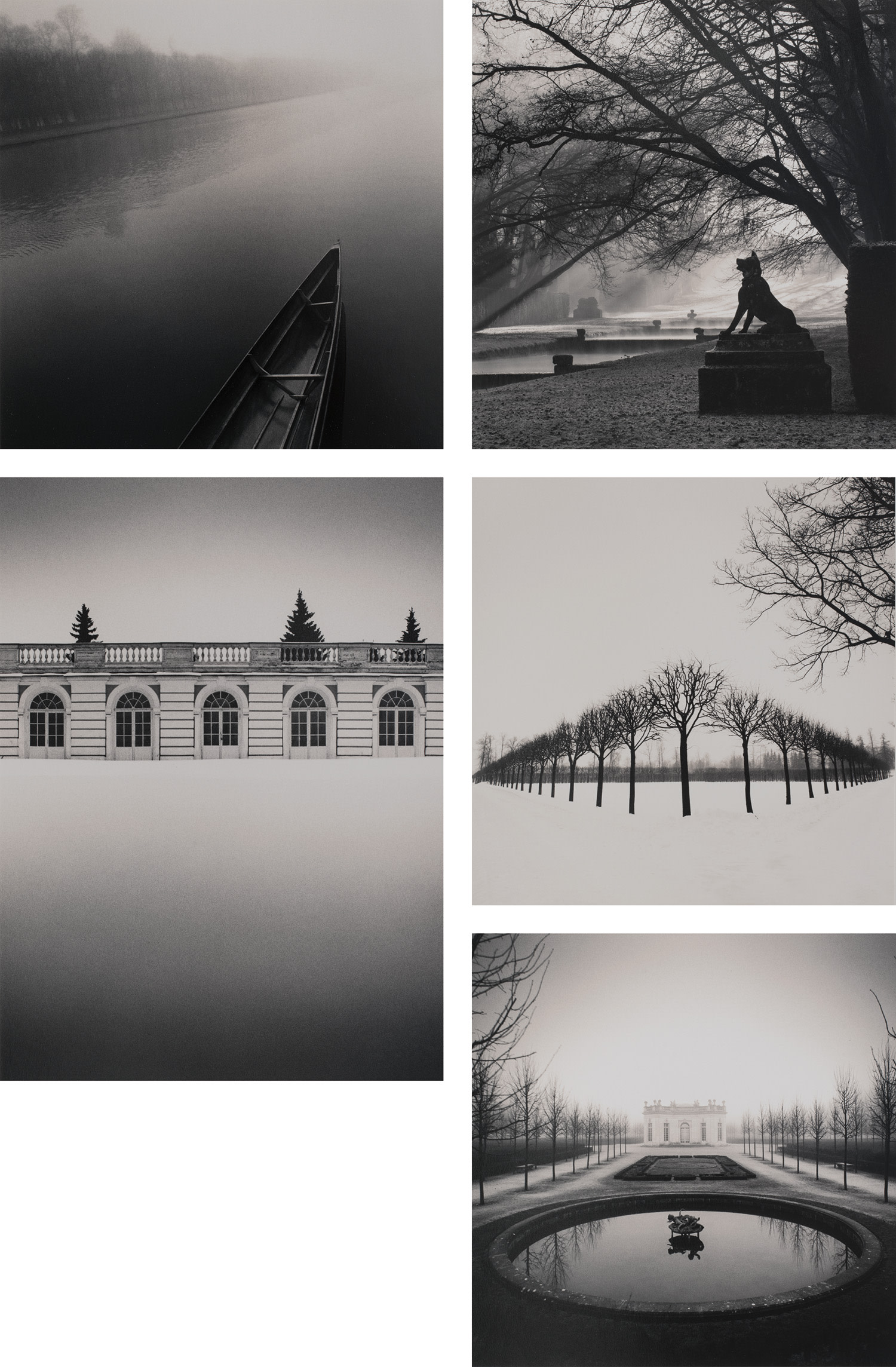
Michael Kenna
Selected Images of France and Russia
What distinguishes Kenna from all of these is his particular relationship with duration: his photographs do not capture a moment but rather accumulate time, becoming records of an extended act of attention. At a moment when photography is faster, more abundant, and more disposable than at any previous point in its history, Kenna's practice stands as a considered and deeply humane counterargument. His photographs remind us that looking is not a passive act but a discipline, and that the world rewards those who are willing to wait in the dark for the light to arrive. For collectors who value work made with patience, intelligence, and genuine feeling, his prints represent not merely an aesthetic choice but a statement of values.
To live with a Kenna is to have a window onto a world that is slower, quieter, and more beautiful than the one we usually inhabit, and that is no small gift.
Explore books about Michael Kenna
Michael Kenna: A Twenty Year Retrospective
Michael Kenna
Michael Kenna: Photographs
Michael Kenna
Michael Kenna: Bones of Trees
Michael Kenna
Michael Kenna: Italian Journeys
Michael Kenna
Michael Kenna: Hokkaido
Michael Kenna
Michael Kenna: Natural Moments
Michael Kenna