Michael Heizer
Michael Heizer: Earth, Scale, and Wonder
Artist Spotlight · The Collection Editorial
“I am interested in creating art that has real mass, real weight, and real scale.”
Michael Heizer
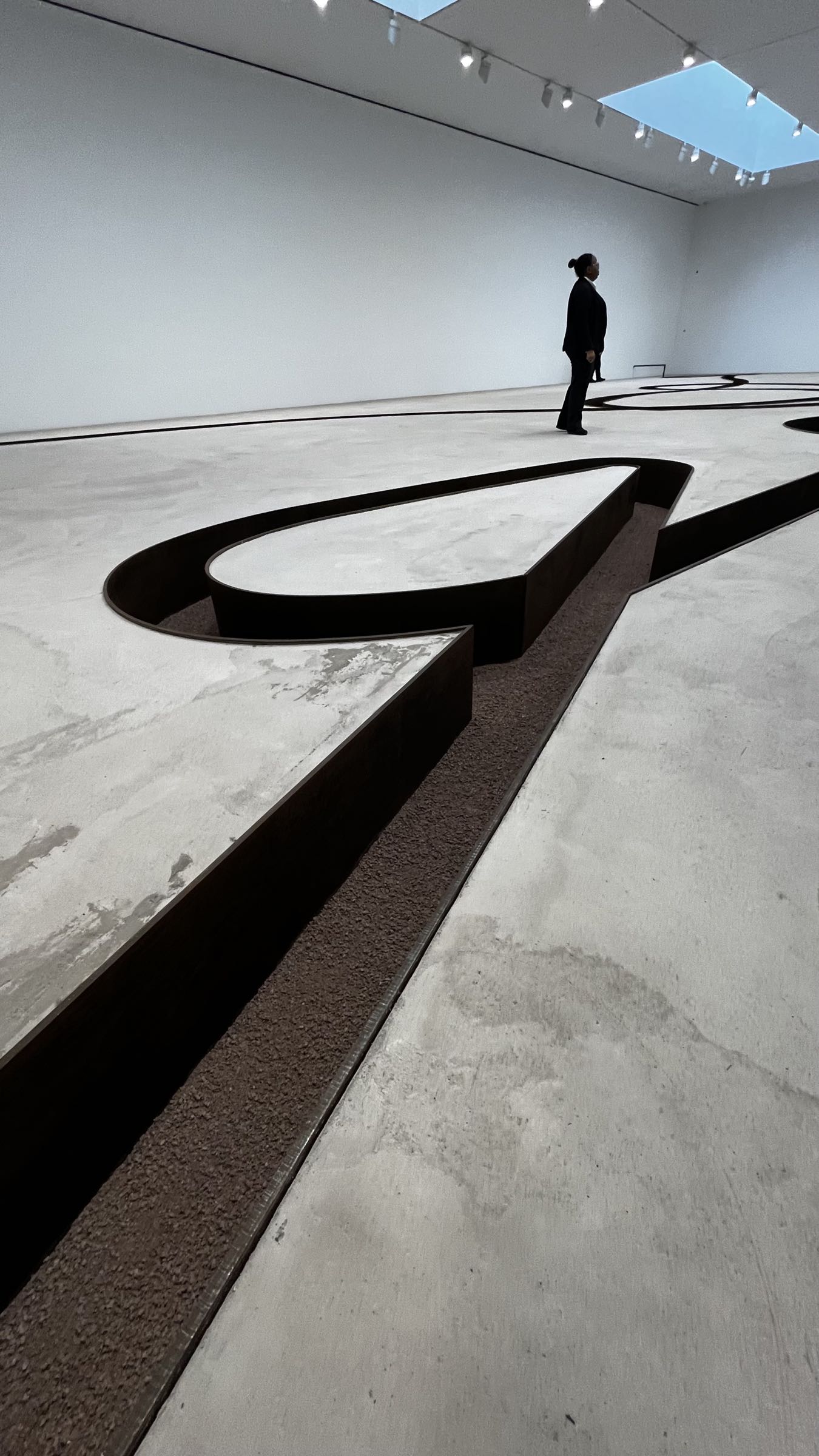
In the autumn of 2022, after more than fifty years of construction in the Nevada desert, Michael Heizer finally opened City to the public. The monumental earthwork, sprawling across nearly a mile and a half of remote high desert land and begun in 1972, instantly became one of the most discussed works of art in a generation. Its arrival was greeted not merely as an art world event but as a civilizational one, a structure so vast and so deeply embedded in the landscape that writers reached for comparisons to ancient Mesoamerican ceremonial complexes rather than anything found in a contemporary gallery. That a single artist spent five decades quietly shaping the Nevada earth into something of such breathtaking ambition tells you nearly everything you need to know about Michael Heizer.
Michael Heizer
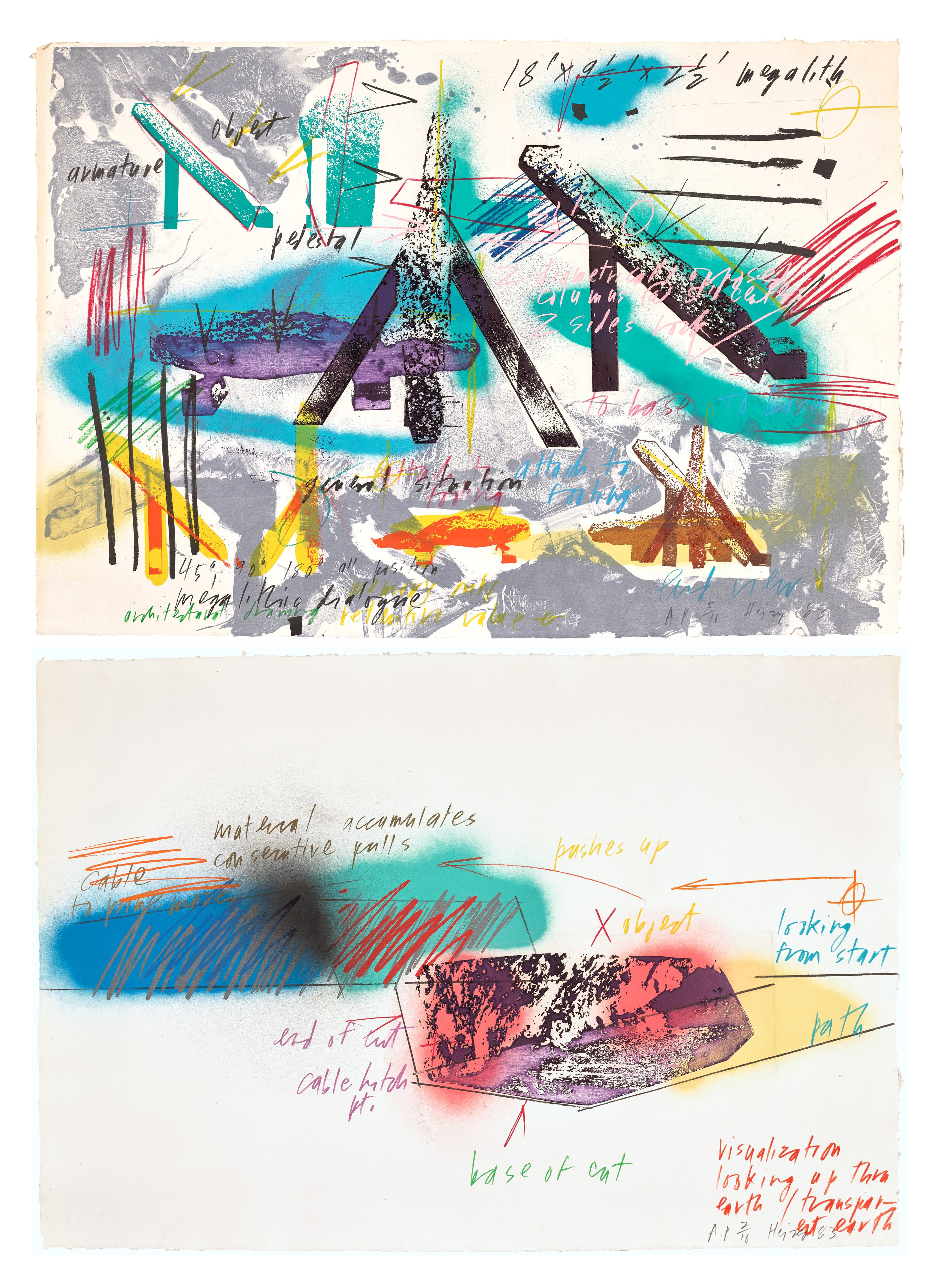
45°, 90°, 180°; and Dragged Mass (T. 233 & 235)
Heizer was born in Berkeley, California, in 1944, into a household where the deep past was a constant presence. His father, Robert Heizer, was a distinguished anthropologist and archaeologist at the University of California, Berkeley, whose fieldwork took the family to sites of ancient civilizations across the Americas and beyond. Growing up amid conversations about pre Columbian monuments, burial mounds, and the ways that ancient peoples inscribed meaning into the earth itself, young Michael absorbed an understanding of scale, permanence, and material that would prove utterly formative. Where other artists of his generation were shaped by the museums and galleries of New York, Heizer was shaped by the landscape itself, by the knowledge that human beings had always made art out of the ground beneath their feet.
He moved to New York in the mid 1960s, arriving at a moment when the art world was crackling with debate about the nature of the art object. Minimalism was reshaping the gallery space, and a younger generation of artists was beginning to push back against the white cube entirely. Heizer found himself gravitating toward the artists who wanted to break out into the world. By 1967 and 1968 he was making trips to the American West, to the Mojave and the Great Basin, to make works that could not be purchased, hung, or stored.
Michael Heizer
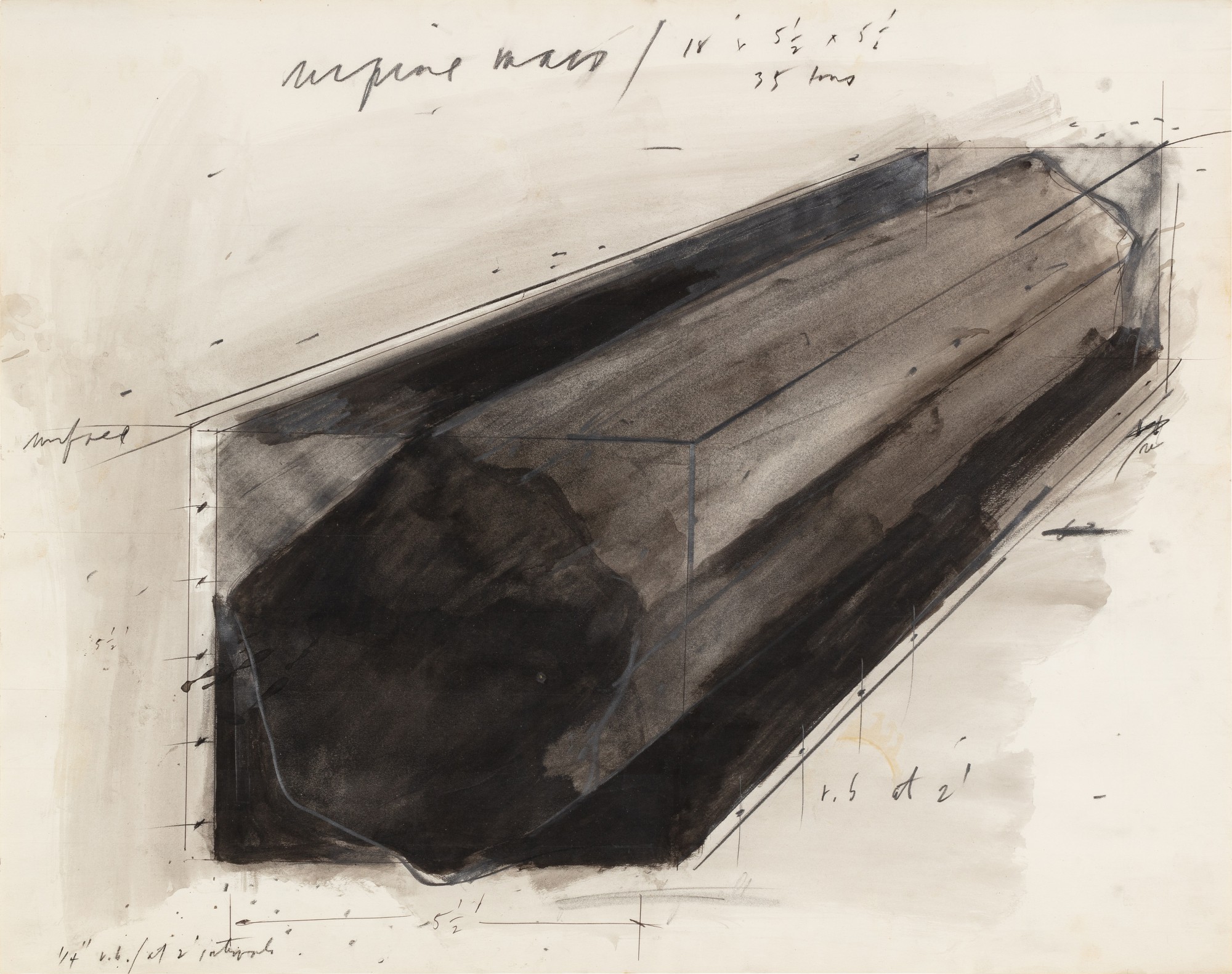
Study for Displaced Mass I, 1969
His early motorcycle drawings, made by riding a motorbike across a dry lakebed to trace geometric patterns in the cracked earth, announced an artist utterly uninterested in conventional object making. His Track Painting of 1967, polyvinyl latex and aluminum powder on canvas, shows the tension of that early period, the painter's surface still present but already being pushed toward something rawer, more direct, and more physical. The watershed moment came in 1969 with Double Negative, a work in which Heizer displaced 240,000 tons of rhyolite and sandstone from the edge of the Mormon Mesa in Nevada, cutting two massive trenches that faced each other across a natural canyon. The work exists as pure absence, as negative space on a geological scale, and it remains one of the most radical gestures in the history of postwar art.
“The work isn't finished until the land is finished with it.”
Michael Heizer
Double Negative announced the central obsessions of Heizer's practice: mass, displacement, the relationship between positive and negative form, and the ability of art to operate on a timescale that transcends the individual human life. It entered the collection of the Museum of Contemporary Art, Los Angeles, and has been a touchstone for generations of artists and critics ever since. Around the same time, his Study for Displaced Mass I from 1969, ink and graphite on paper, offers an intimate window into his working process, the drawings functioning not as preparatory sketches in any conventional sense but as independent investigations of force and form. Over the following decades Heizer developed a body of work that moved fluidly between the desert and the studio, between geological ambition and refined object making.
Michael Heizer
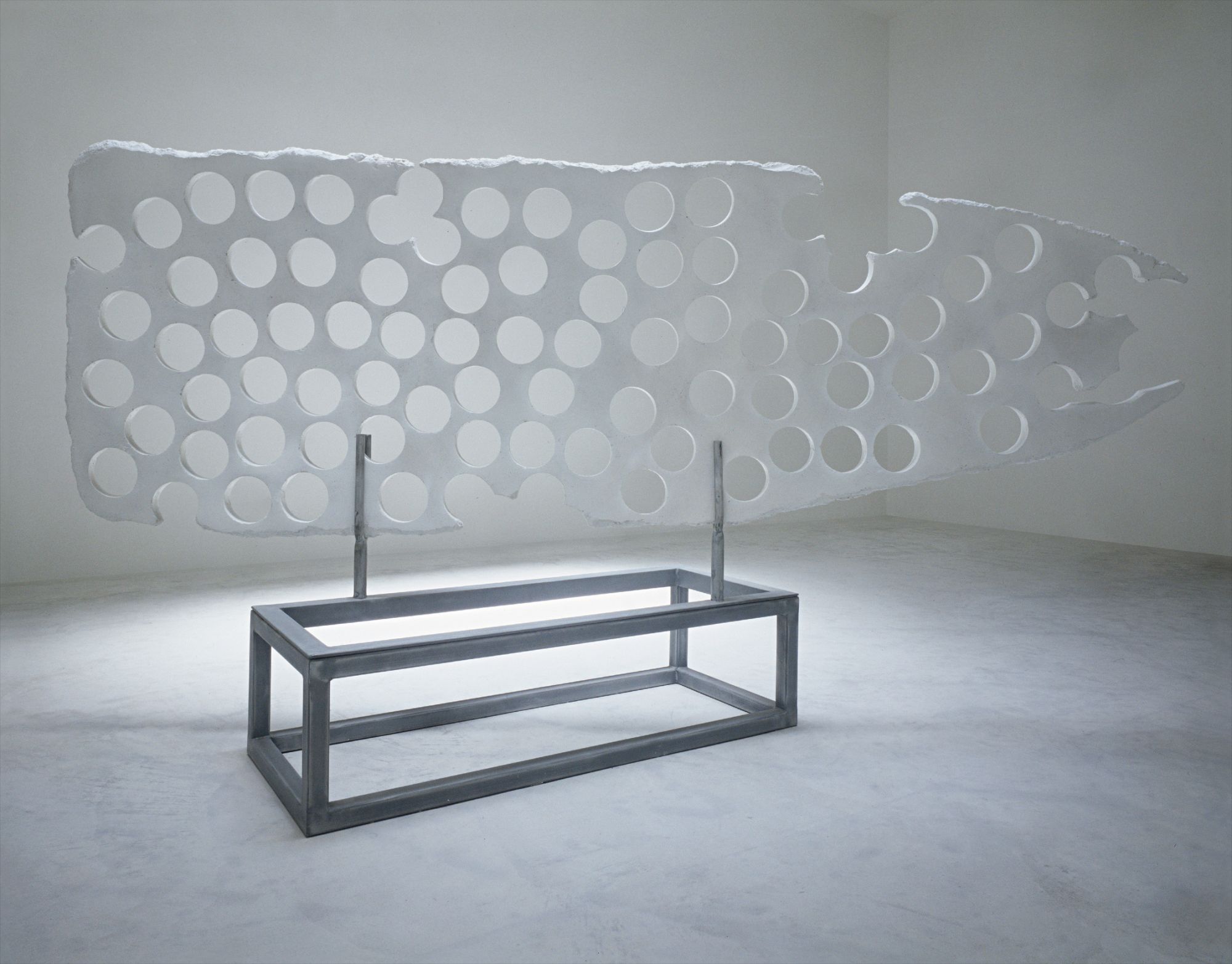
Perforated Object 11, 1990
His Perforated Object works, exemplified by the 1990 piece available on The Collection, demonstrate his abiding interest in mass and void, in the drama of material pierced and interrupted by negative space. His cast pigmented concrete sculptures, such as the Untitled work from 1992 with its artist's steel base, show a sculptor deeply engaged with weight, surface, and the way a material object occupies and commands its surroundings. His prints and works on paper, including the ambitious 45 degrees, 90 degrees, 180 degrees; and Dragged Mass series executed with the master printer Kenneth Tyler at Tyler Graphics, bring the formal language of displacement and geometric tension into the intimate register of works on paper with extraordinary technical sophistication. For collectors, Heizer's work on paper and his object scale sculptures represent a remarkable opportunity to engage with one of the truly transformative figures in American art.
His prints produced with Tyler Graphics are highly regarded both for their conceptual seriousness and for the exceptional quality of their making, Tyler's handmade papers and exacting production standards perfectly suited to Heizer's demanding formal investigations. Works that document or extend the ideas of his major earthworks carry particular art historical weight, serving as points of connection to a practice that cannot itself be owned or moved. Institutions including the Los Angeles County Museum of Art, the Museum of Modern Art in New York, and the Whitney Museum of American Art hold significant examples of his work, and his presence in major permanent collections around the world speaks to the enduring seriousness with which the art world has regarded him across more than half a century. Heizer belongs to a generation that includes Walter De Maria, Robert Smithson, Nancy Holt, and James Turrell, artists who collectively reinvented the relationship between art, land, and time.
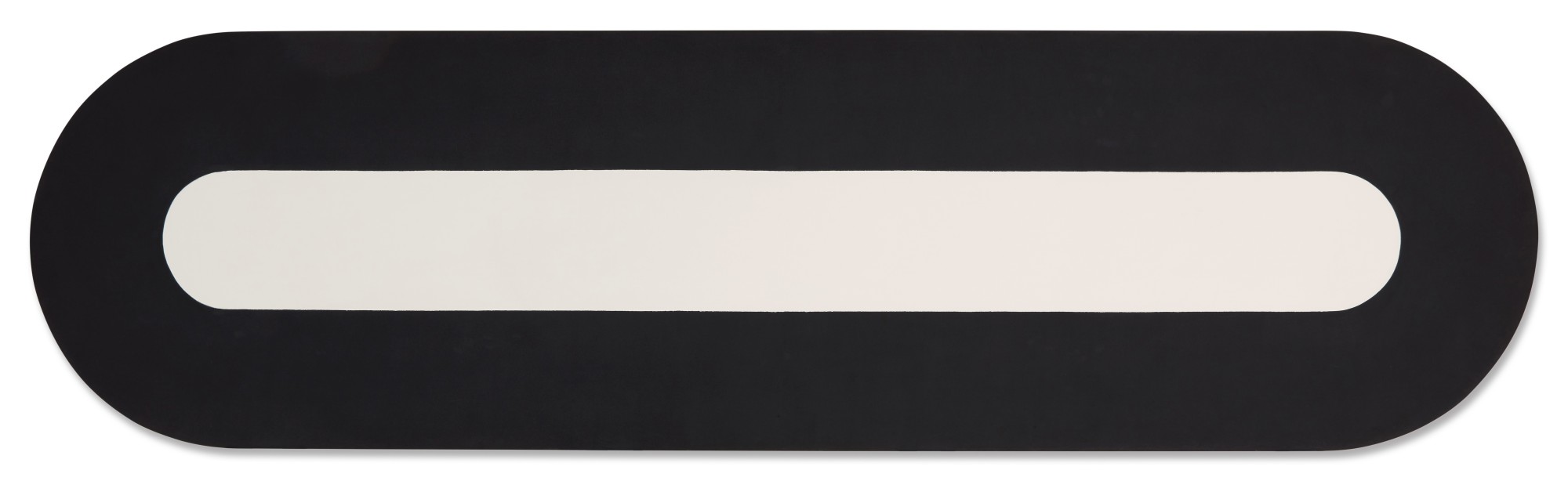
Michael Heizer
Track Painting , 1967
Where Smithson worked with entropy and process, and Turrell with light and perception, Heizer has remained committed above all else to mass, to the sheer physical fact of displaced and repositioned earth and material. His dialogue with ancient cultures, from the Nazca lines to the earthen mounds of the American Midwest, gives his work a depth of historical reference that distinguishes it from the more purely formal concerns of his Minimalist contemporaries. He is both of his moment and mysteriously outside of it, an artist whose true context sometimes feels less like the 1960s New York art world and more like the span of human civilization itself. The opening of City has confirmed what those who have followed Heizer's career have long understood: that he is one of the essential artists of the twentieth and twenty first centuries, a figure whose commitment to a singular vision has produced work of genuine and lasting consequence.
His insistence on operating outside the market, outside the gallery system, outside easy critical categorization has paradoxically made him more significant, not less. To collect Heizer is to hold a fragment of one of the most sustained and serious artistic inquiries of our time, an inquiry into nothing less than what it means for human beings to shape the world around them, and to leave something behind that might endure.
Explore books about Michael Heizer
Michael Heizer: Sculpture in Reverse
Julia Brown
Michael Heizer: The Art of Geology
Paul Virilio
Michael Heizer: Effigy Tumuli
Michael Heizer
Michael Heizer: Collected Writings 1963-1989
Michael Heizer
Michael Heizer: Sculpture in the Making
Julia Brown and Kevin Wolff
Michael Heizer: Double Negative
Michael Heizer and Julia Brown