Michael Goldberg
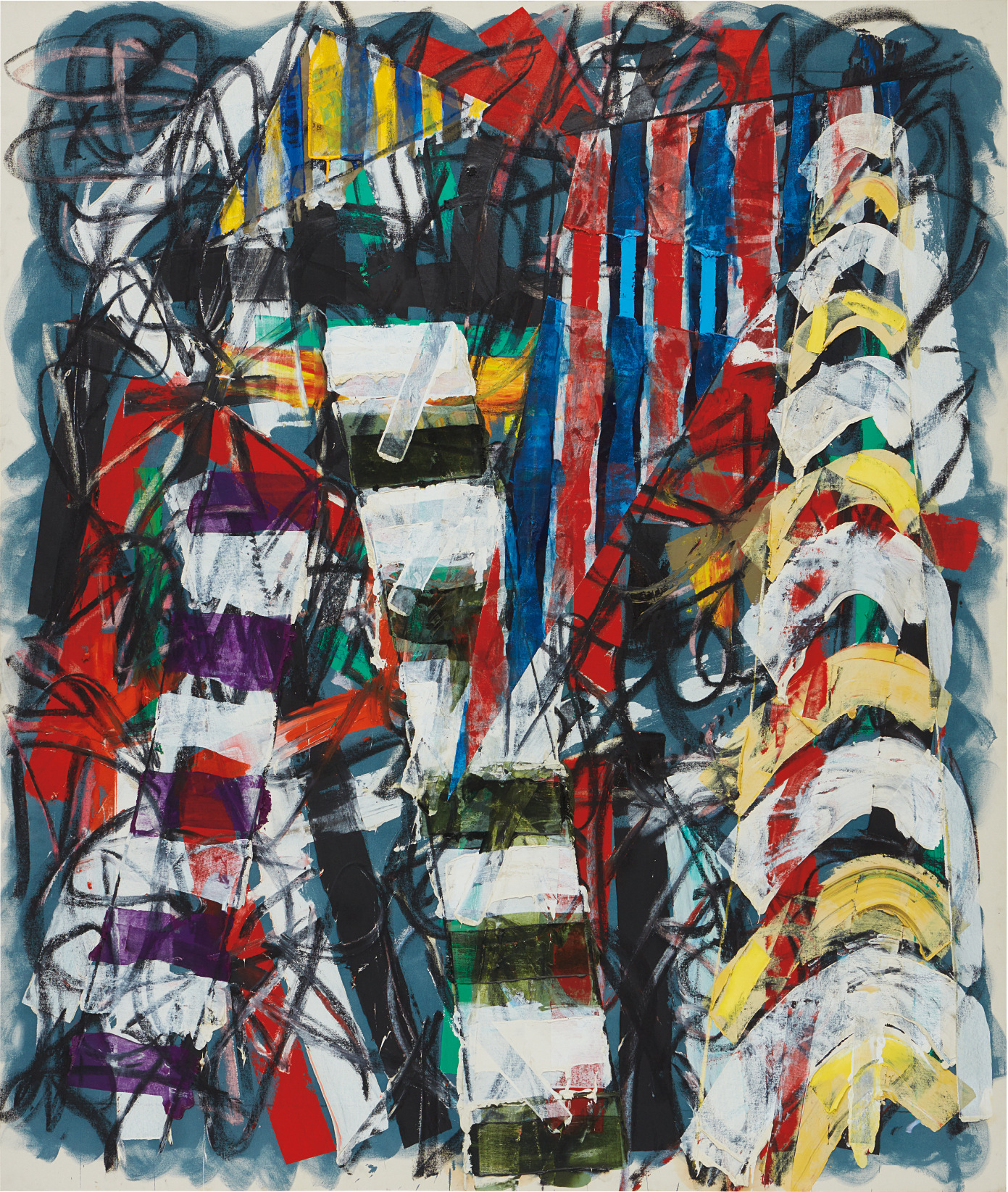
Michael Goldberg: Energy Made Visible Forever
Artist Spotlight · The Collection Editorial
There is a moment, standing before a Michael Goldberg canvas from the late 1950s or early 1960s, when the painting seems to breathe. The surface is alive with contradictions: raw urgency alongside considered placement, violence alongside lyricism, the mark of a single decisive instant alongside the evidence of sustained contemplation. That quality, so difficult to manufacture and so impossible to fake, is what keeps Goldberg's work returning to the walls of major institutions decades after it was made. The Whitney Museum of American Art, the Museum of Modern Art, and the Solomon R.
Michael Goldberg
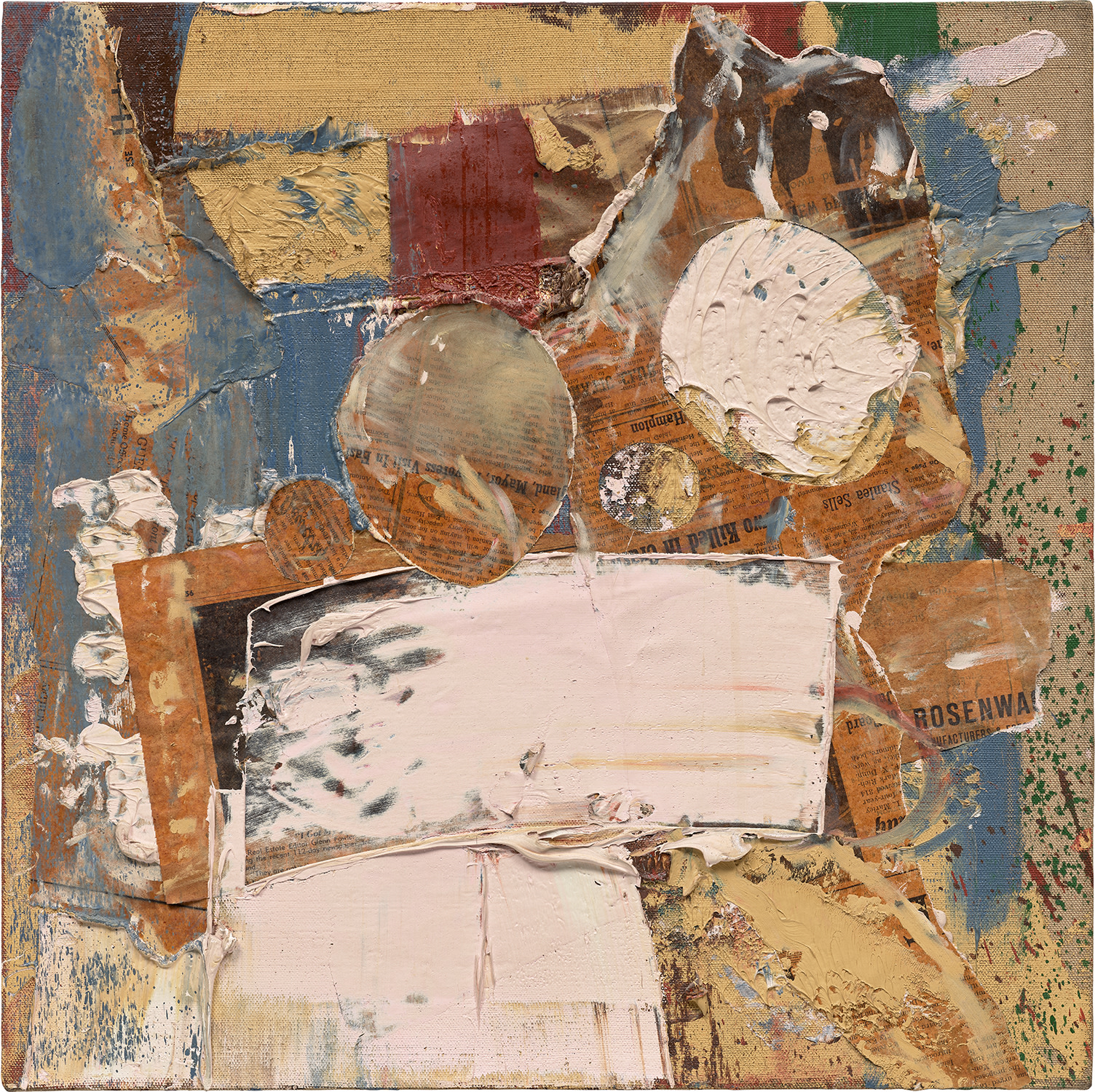
Still Life, 1963
Guggenheim Museum all hold his work in their permanent collections, a trio of institutional endorsements that speaks to the seriousness and staying power of his vision. Michael Goldberg was born in New York City in 1924, and the city never really left him, even as his paintings traveled across continents in their references and ambitions. Growing up in the Bronx, he came of age in a cultural moment of extraordinary ferment, when European modernism was washing ashore in America and a generation of young painters was deciding what to do with the inheritance. He studied at the Art Students League and later at the Hans Hofmann School of Fine Arts, and it was Hofmann's teachings about the push and pull of pictorial space that gave Goldberg a structural vocabulary for the emotional force he was already feeling his way toward.
Hofmann's influence was not simply technical but philosophical: the idea that a painting could be a living field of tensions rather than a window onto something else. By the early 1950s Goldberg had positioned himself at the heart of what would come to be known as the New York School. He was part of the circle that gathered around Cedar Tavern and the Club, rubbing shoulders with Franz Kline, Willem de Kooning, and Joan Mitchell, artists whose ambitions were reshaping what American painting could mean to the world. The poet Frank O'Hara, one of the great literary champions of Abstract Expressionism, was a close friend and collaborator, and that connection to the poetry world gave Goldberg's sensibility a particular literary charge.
Michael Goldberg
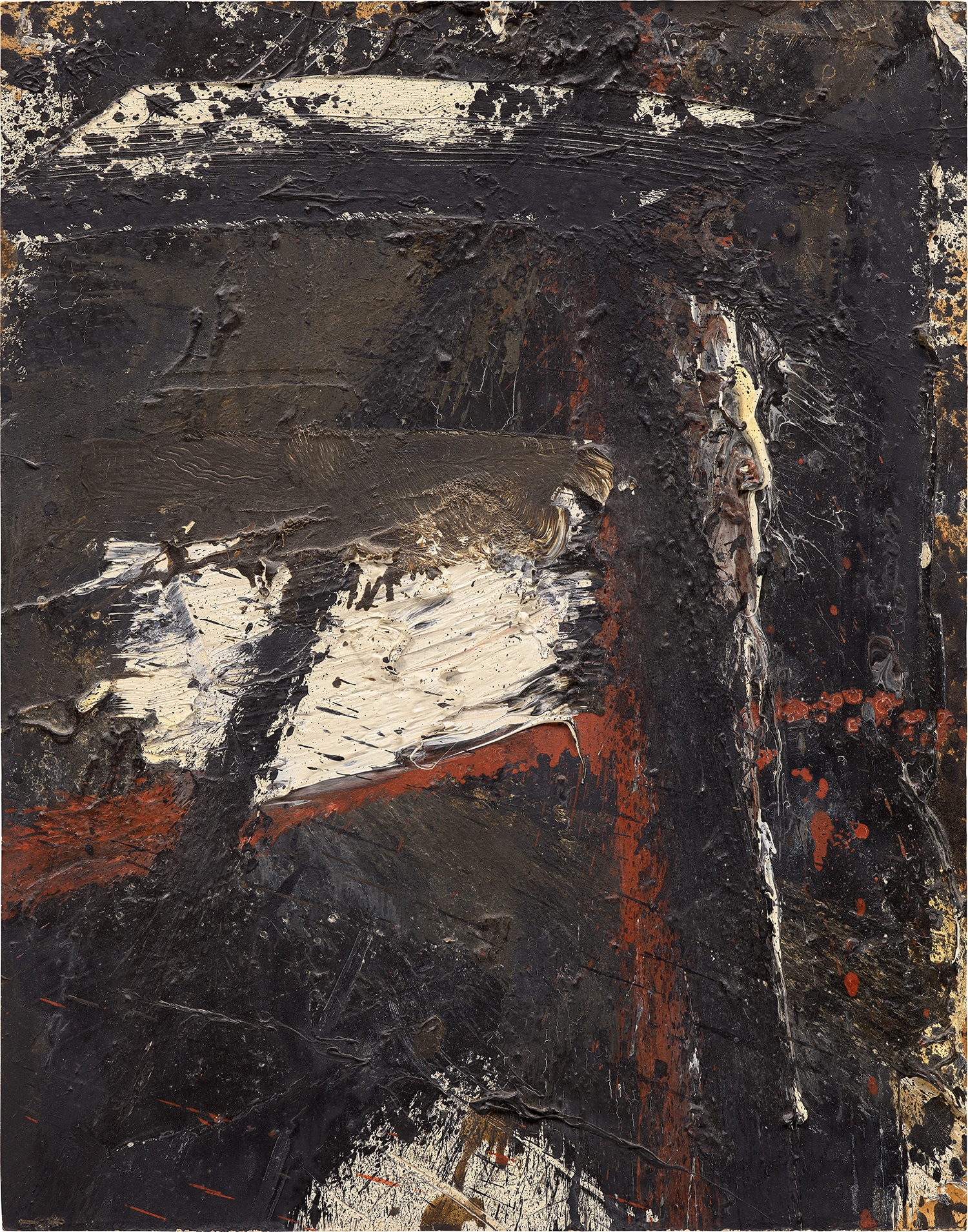
Rapids, 1961
His work of this period has the quality of speech: urgent, digressive, full of sudden emphases and unexpected tenderness. He exhibited at Tibor de Nagy Gallery, the downtown institution that served as a crucial meeting point between the visual arts and the literary avant garde, and those early shows established his reputation among the most discerning eyes in New York. The paintings Goldberg made in the late 1950s and early 1960s represent what many consider the apex of his achievement, and works like "House of Asher" from 1957 and "Rapids" from 1961 demonstrate exactly why. "House of Asher" has the compressed energy of something that could not be held back: the paint is applied with an aggression that borders on tenderness, the surface alternately dense and translucent, the composition held together by an almost gravitational force.
"Rapids" takes the energy implied by its title literally, the brushwork cascading across the paper mounted to board in movements that feel both inevitable and surprising. These are not calm works, but they reward the kind of sustained looking that calm works invite. By the early 1960s Goldberg was also incorporating collage into his practice, as seen in the 1963 "Still Life," an oil and paper collage on canvas that shows him thinking about the materiality of the picture surface as an extension of painterly gesture rather than a departure from it. The range of Goldberg's work across his long career is one of its most remarkable features.
Michael Goldberg
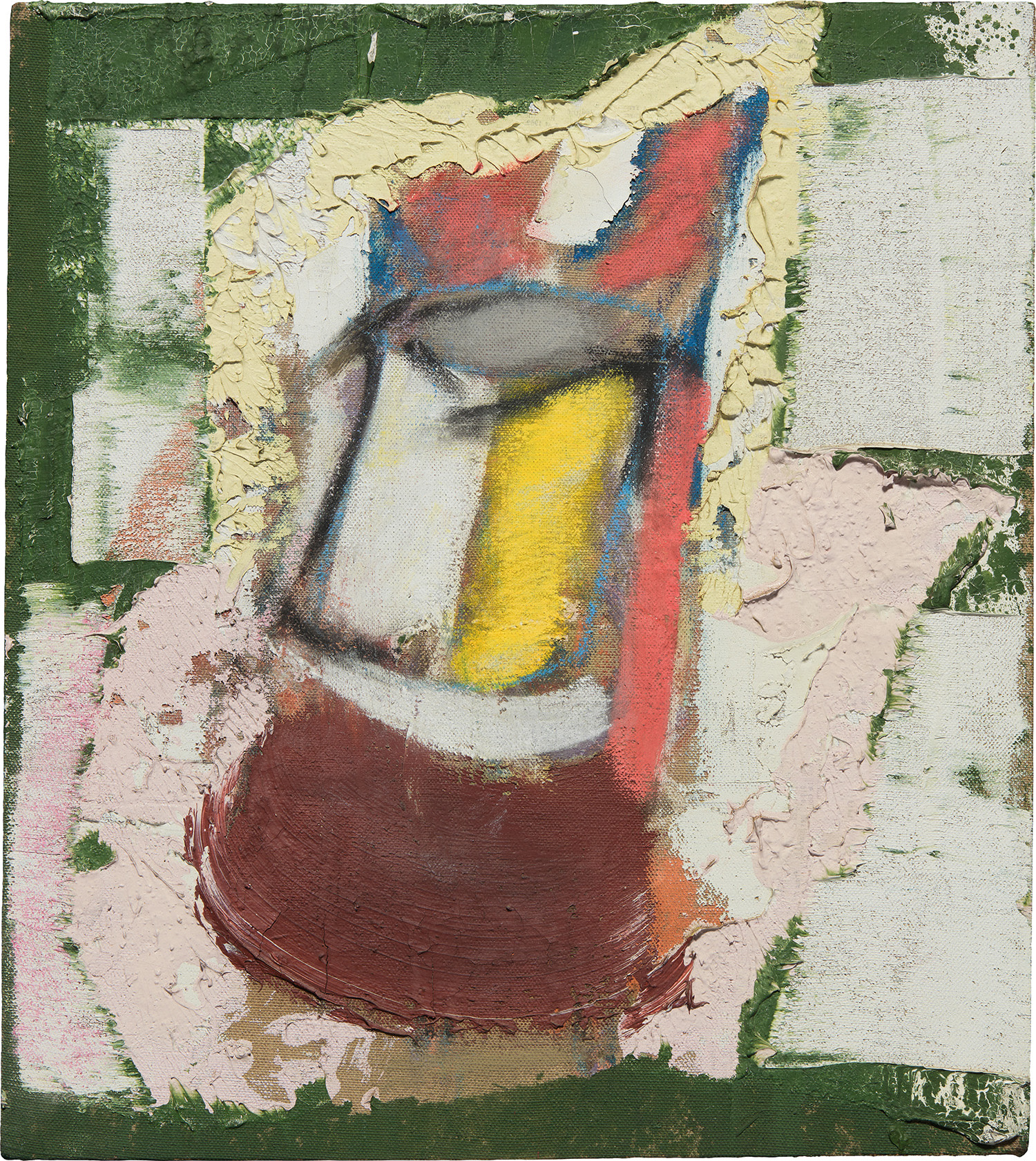
Kaiser Wilhelm Statue, 1963
"Kaiser Wilhelm Statue" from 1963 shows him engaging with the world outside the studio, bringing historical and political imagery into contact with the abstract language he had developed over a decade. "Seascape Number 1," also from 1963, reveals the same gestural vocabulary applied to landscape, the horizon dissolved into fields of chromatic intensity. By the time of "Still Life With Drape" in 1967 and the monumental "La Caduta Dei Giganti" in 1989, with its oil and pastel chalk on canvas surface, Goldberg had developed a confidence in his own syntax that allowed him to range freely across subject matter without ever losing the thread of his essential self. The late work, including "Linger Awhile" from 1997, shows an artist still fully engaged with the possibilities of paint, still capable of surprise and still unwilling to settle into repetition.
For collectors, Goldberg represents a genuinely compelling opportunity within the history of American abstraction. He is firmly and correctly positioned as a second generation Abstract Expressionist, which means his work participates in one of the most celebrated movements in the history of modern art while remaining somewhat more accessible than the canonical first generation figures. His closest peers and contemporaries include Joan Mitchell, Grace Hartigan, Alfred Leslie, and Larry Rivers, artists whose market profiles have risen significantly in recent decades as collectors and institutions have worked to give the full picture of that extraordinary New York moment. Goldberg's work holds up in any company: technically accomplished, emotionally genuine, and visually compelling in the way that only the best painting achieves.
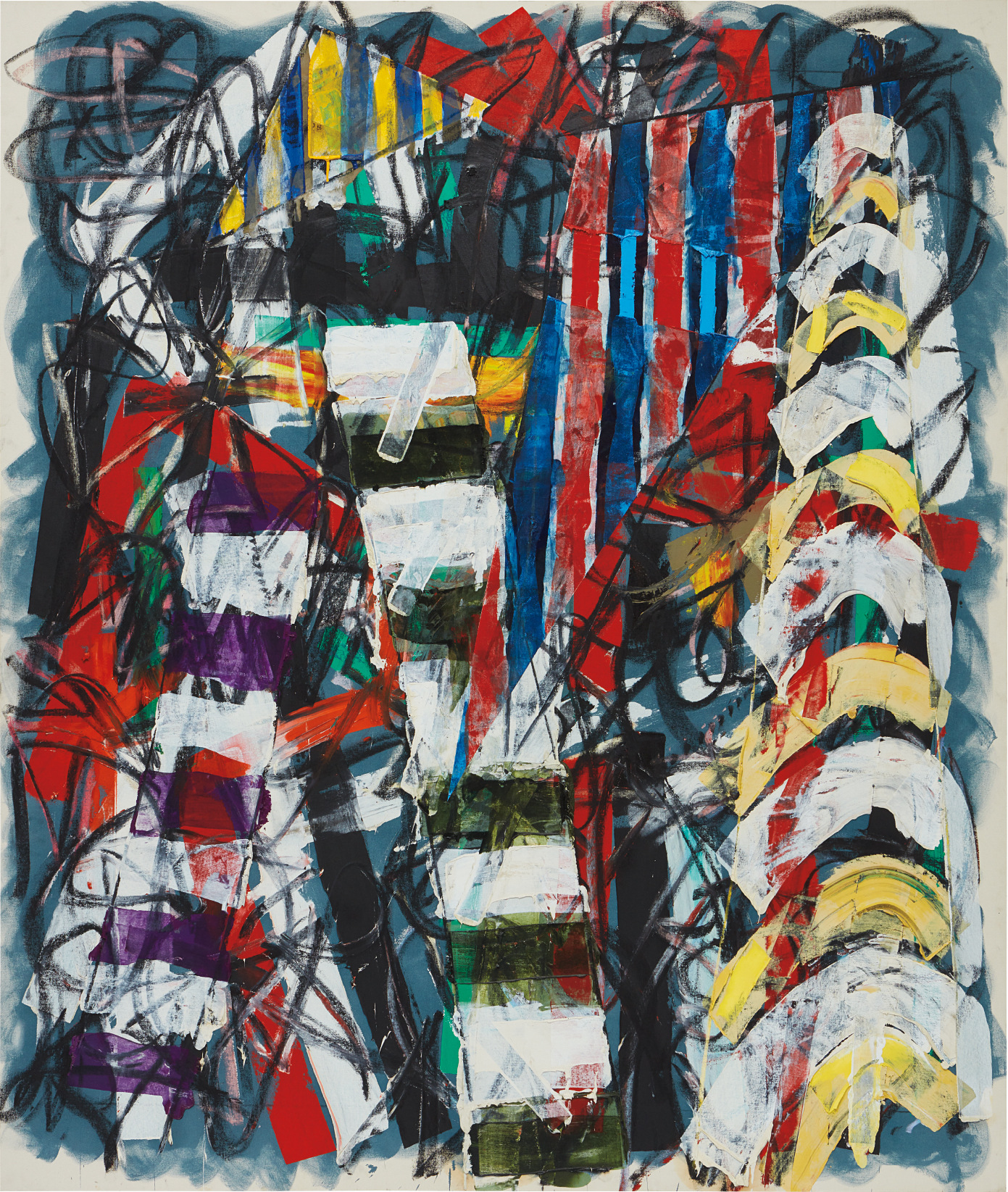
Michael Goldberg
La Caduta Dei Giganti, 1989
Works on paper and paper mounted to board from his peak period offer an entry point for collectors building a position, while the major oil on canvas works from the late 1950s through the 1960s represent the heart of his achievement and the strongest long term case. Michael Goldberg died in 2007, leaving behind a body of work that spans more than five decades of sustained engagement with the possibilities of paint and gesture. His legacy is not only the paintings themselves but the way they document a particular vision of what abstract art could be: not a retreat from the world but a more honest confrontation with it, one that refuses the consolation of easy beauty while producing something more durable in its place. In the current moment, when collectors and institutions are reassessing and expanding the canon of mid century American art, Goldberg's work feels not like a rediscovery but like a recognition long overdue.
These are paintings that have always known their own worth, waiting patiently for the rest of us to catch up.