Michael Dahl
Michael Dahl, Master of English Elegance
Artist Spotlight · The Collection Editorial
Stand before any of Michael Dahl's painted ladies and you feel it immediately: a quality of stillness, of private dignity, that sets his work apart from the bustle of the Baroque world that surrounded him. In the grand rooms of the National Portrait Gallery in London, his canvases hold their own with a quiet authority, the silks luminous, the gazes composed, the handling of light across skin and fabric speaking to a sensibility both deeply European and unmistakably refined. It is a sensibility that collectors and curators have returned to again and again across three centuries, and one that continues to reward close attention. Michael Dahl was born in Stockholm in 1659, into a city that was then a capital of considerable ambition.
Michael Dahl
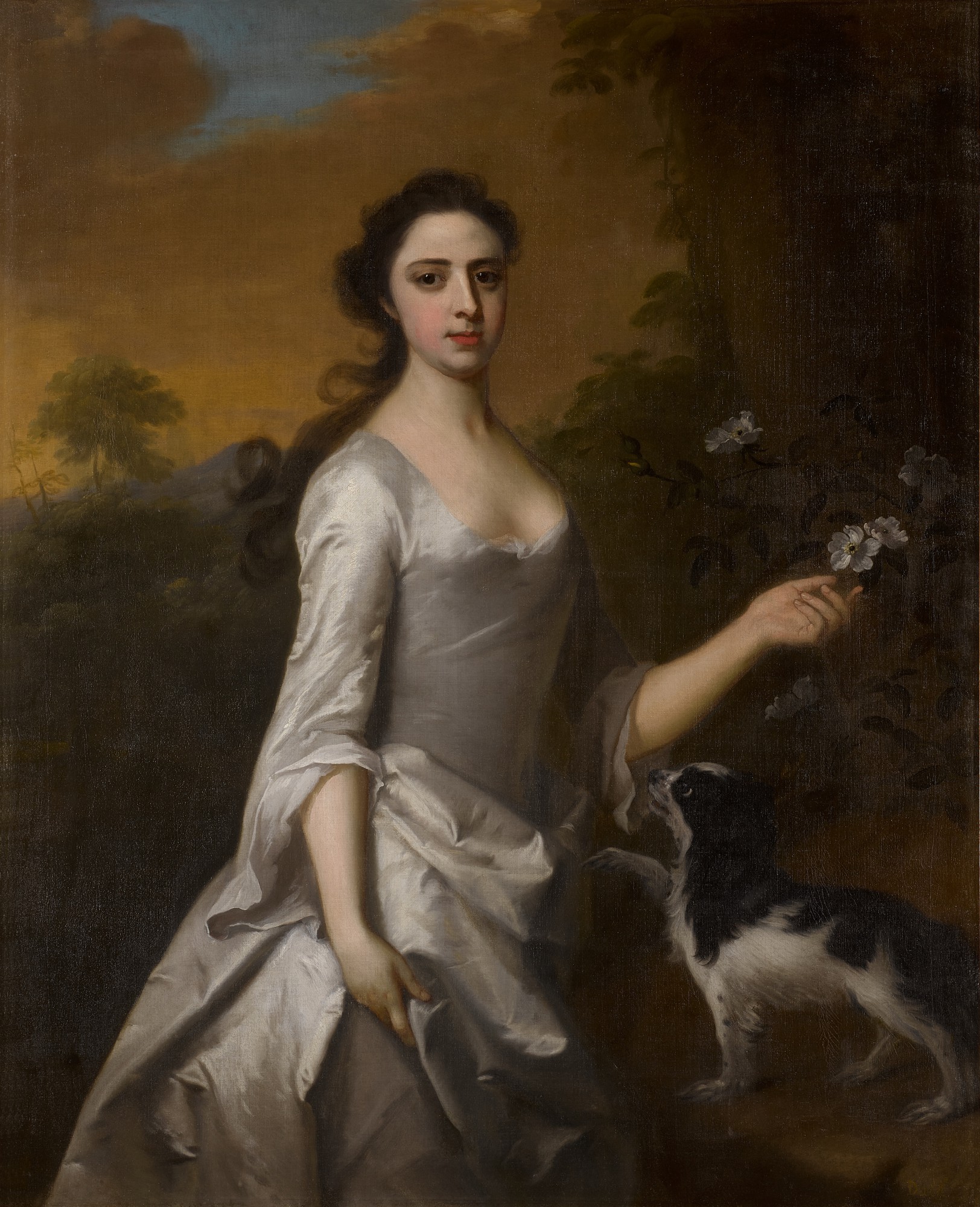
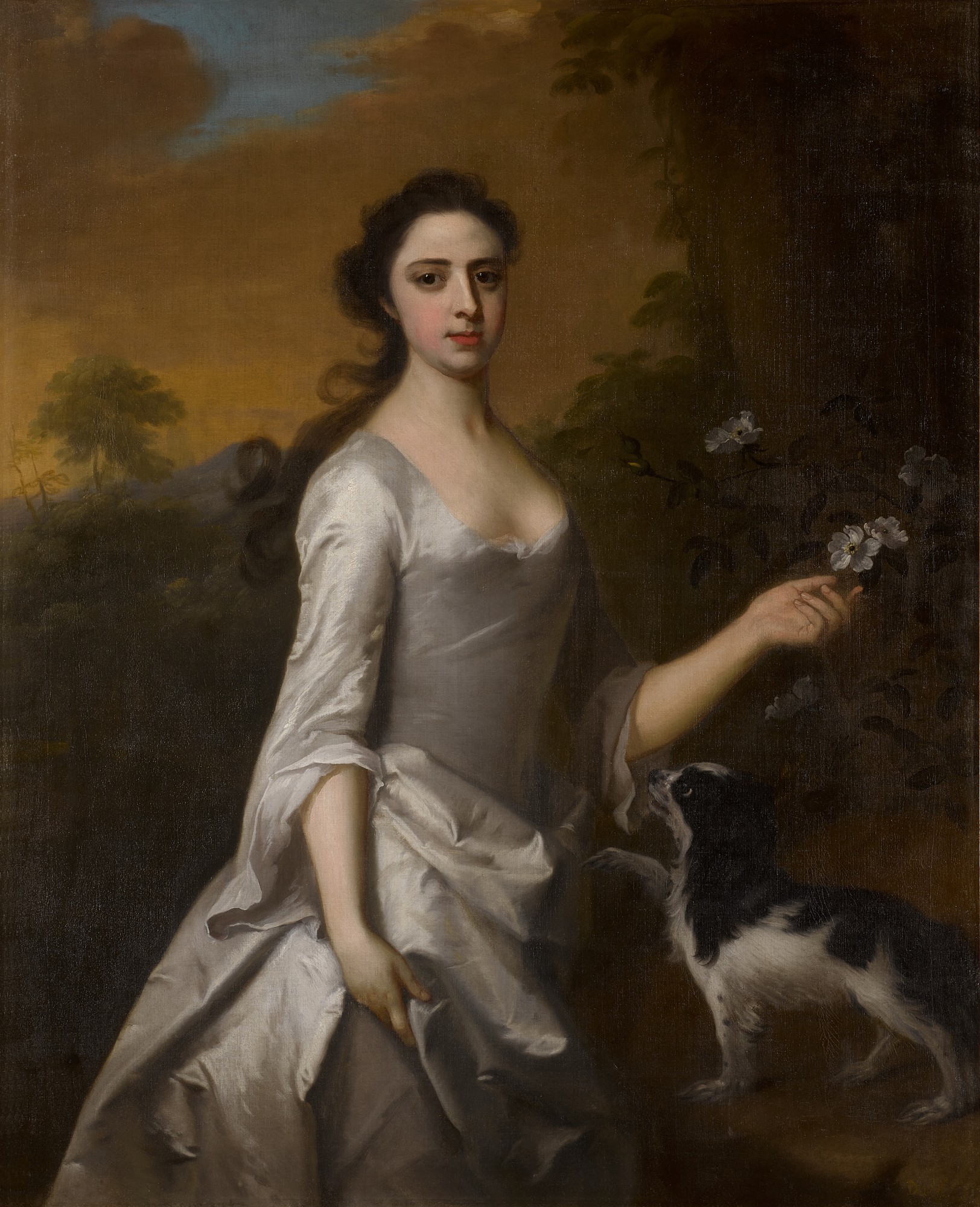
Portrait of a lady, said to be Frances Bristow, three-quarter length, in a white dress with a spaniel
Sweden in the mid seventeenth century was a European power of real weight, and Stockholm nurtured artists, craftsmen, and intellectuals with the confidence of a court that understood patronage. Dahl trained locally before embarking on the Grand Tour that shaped so many Northern European painters of his generation. He traveled through France and Italy in the 1680s, spending meaningful time in Rome where the lessons of the great Italian masters were still vivid in the city's churches and palaces. These years gave him a fluency with Continental technique that would distinguish his work throughout his career.
His arrival in London in 1688 was well timed. The Glorious Revolution brought William and Mary to the English throne that same year, and the cultural atmosphere shifted toward a more restrained, Dutch influenced elegance that suited Dahl's temperament perfectly. He quickly found favor among the aristocracy, receiving patronage from some of the most distinguished families in England. Queen Anne sat for him, as did members of the Kit Cat circle, that celebrated gathering of Whig grandees whose portraits by Kneller now hang in the National Portrait Gallery.
Michael Dahl
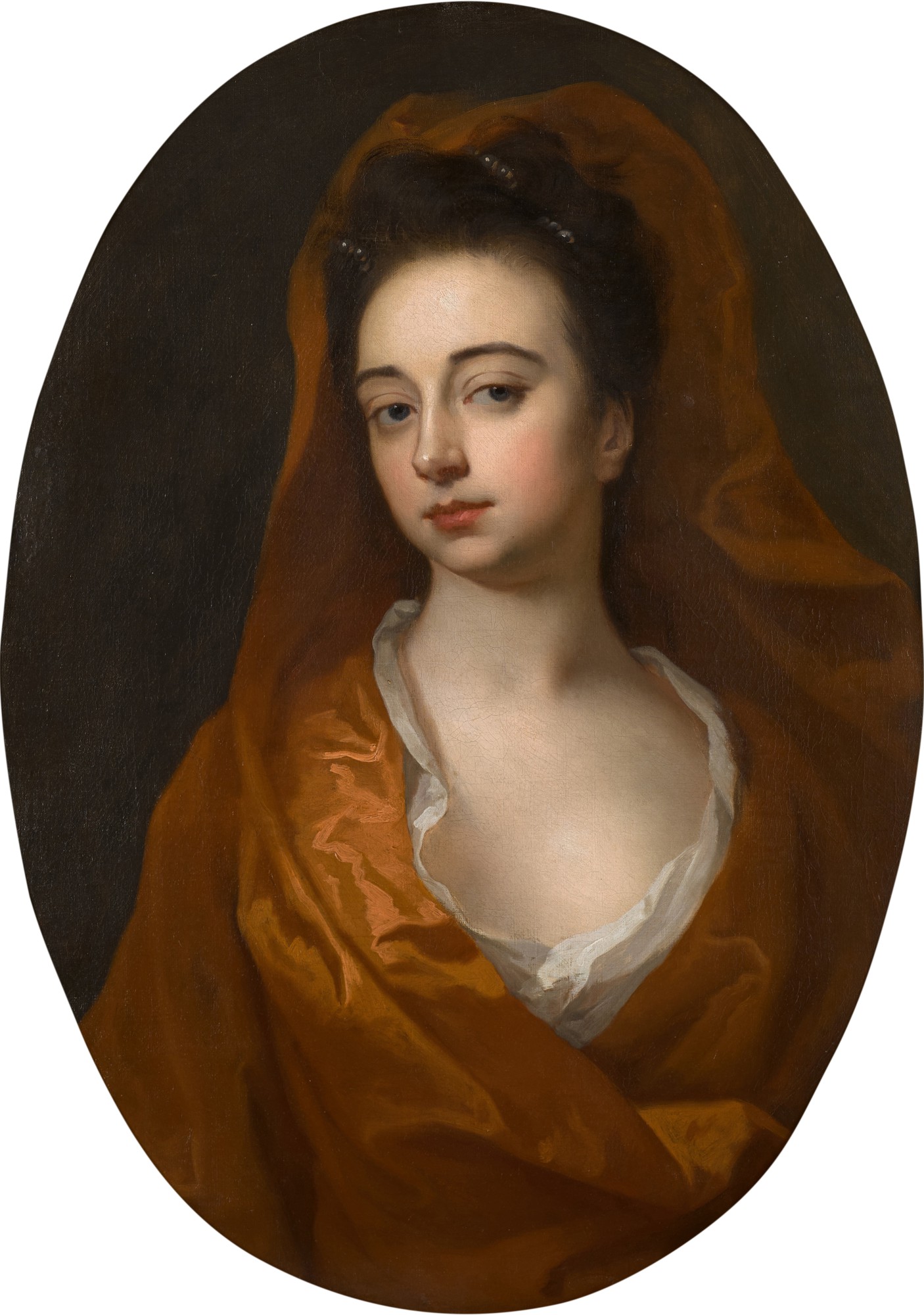
Portrait of a lady, half-length, in an orange dress
Dahl moved in these circles with ease, his Swedish origins apparently adding a certain Continental cachet to his already considerable reputation. The name most often paired with Dahl's is that of Sir Godfrey Kneller, the German born portraitist who dominated English court painting for decades. The two were genuine rivals, and the comparison is instructive. Where Kneller could be swift and sometimes formulaic in the face of enormous demand, Dahl was more deliberate, more attentive to individual character.
His surfaces are more gently handled, his color harmonies more poetic. Critics of the period noted that Dahl's women especially seemed to breathe on the canvas, their expressions carrying a thoughtful interiority that Kneller's more assertive manner did not always achieve. This distinction made Dahl the preferred choice for many patrons who wanted something more contemplative than ceremonial. Among the works that best demonstrate his gifts are his portraits of women in richly described dress.
The painting known as Portrait of a Lady, Said to be Frances Bristow captures everything that makes Dahl essential. Painted in oil on canvas, the work shows a three quarter length figure in a white dress, accompanied by a spaniel whose presence adds warmth and narrative to the composition. The white gown is rendered with exceptional delicacy, the fabric convincingly weighted and luminous at once. The spaniel, a recurring motif in aristocratic portraiture of the period, is painted with affection rather than mere convention.
The overall effect is of intimacy achieved through technical mastery. A second outstanding canvas, the Portrait of a Lady in an Orange Dress, presented in an elaborately carved frame that is itself a work of decorative art, demonstrates his command of color relationships. The vivid orange of the gown against cooler shadow tones shows a colorist instinct that places him comfortably alongside the finest practitioners of the form. For collectors, Dahl represents a compelling opportunity within the broader field of British and Northern European Old Master portraiture.
His work occupies a distinguished position in the tradition that runs from Van Dyck through Lely and Kneller and on toward Reynolds and Gainsborough. To own a Dahl is to hold a point of continuity in that long and glorious lineage, a work that bridges the Baroque confidence of the seventeenth century and the emerging elegance of the Georgian era. Collectors drawn to Kneller will find in Dahl a deeper intimacy; those who admire the later Reynolds will discover in Dahl an important precursor to that painter's sensitivity to female sitters. Condition and provenance are, as always, paramount in assessing works from this period, and Dahl's canvases, when properly cared for, retain a freshness of surface that speaks to the quality of his materials and technique.
Dahl belongs to a constellation of portrait painters working in England and Northern Europe during the late seventeenth and early eighteenth centuries whose collective achievement shaped the course of Western portraiture. Alongside Kneller, he shares company with artists such as Jan van der Vaardt, with whom he maintained a studio connection in London, and with the broader tradition of court portraiture that stretched from the studios of Anthony van Dyck to the fashionable rooms of Thomas Hudson a generation later. Understanding Dahl within this context enriches both his individual achievement and our sense of how English portraiture developed during one of its most fertile periods. Michael Dahl lived to the remarkable age of eighty four, dying in London in 1743 after more than five decades of productive work in his adopted country.
He outlived virtually all of his major contemporaries and rivals, and by the end of his life had witnessed the very beginnings of the Georgian era in art that his own refinement had helped to make possible. His legacy is one of grace sustained across a long career, of an immigrant artist who found in England not just a home but a calling, and who left behind a body of work that continues to speak, quietly and beautifully, to anyone willing to look carefully. For collectors who prize elegance, historical depth, and the enduring pleasures of fine portraiture, Michael Dahl remains one of the most rewarding discoveries that the Old Master market has to offer.
Explore books about Michael Dahl
Michael Dahl: A Study of His Life and Work
David Solkin
Michael Dahl and the English Rococo
Aileen Ribeiro
The Paintings of Michael Dahl: A Catalogue Raisonné
Richard Wendorf
Michael Dahl: Swedish Master of English Portraiture
Jane Turner
Dahl and His Contemporaries: Early 18th Century British Portraiture
Nicholas Penny